⚡ FLASH SALE: Get 60% OFF All Premium 3D & STL Models! ⚡

In the vast and intricate world of 3D modeling, few subjects capture the imagination quite like automobiles. From the gleaming chrome of a vintage classic to the sharp, aerodynamic lines of a contemporary supercar, cars present a unique blend of organic curves and precise mechanical engineering. However, the approach to digitally recreating these automotive icons varies significantly depending on their era. Are you striving to capture the nostalgic elegance of a 1950s grand tourer or the futuristic aggression of a 21st-century hypercar? Understanding the fundamental differences in their design philosophy, material science, and manufacturing techniques is paramount to achieving unparalleled realism in your 3D car models. This comprehensive guide will delve deep into the distinct modeling workflows, UV mapping strategies, PBR material creation, and rendering techniques required to master both classic and modern vehicle types, equipping 3D artists, game developers, and visualization professionals with the insights needed to bring any automotive vision to life. By the end, you’ll possess a robust understanding of how to tackle the unique challenges each era presents, ensuring your models stand out in any professional portfolio or project.
Topology, the underlying structure of polygons that defines a 3D model, is arguably the most critical factor in achieving a believable car surface. The way light reflects off a vehicle’s body, the smoothness of its curves, and the crispness of its edges are all direct consequences of thoughtful topology. When comparing classic and modern cars, their topological demands diverge significantly, mirroring the evolution of automotive design and manufacturing.
Classic cars, particularly those from the pre-1970s era, are characterized by their flowing, often hand-formed body panels. These vehicles boast compound curves and soft transitions that seem to melt into one another, creating a timeless elegance. For these models, maintaining impeccable surface continuity and a clean, uninterrupted edge flow is crucial. Artists must prioritize smooth light reflections across broad, sweeping panels. This often means relying heavily on subdivision surface modeling techniques, where a relatively low-polygon base mesh is smoothed at render time. The edge loops must meticulously follow the natural contours of the body, allowing for subtle yet precise chamfers around openings like wheel wells, door seams, and window frames. The goal is to capture the artisanal craftsmanship of the era, where panel gaps were often wider and less uniform than today, and the overall form was dictated by aesthetic grace rather than aerodynamic efficiency. Achieving this requires a deep understanding of how to sculpt with polygons, ensuring that every vertex contributes to the overall aesthetic without introducing pinching or distortion. Careful attention must be paid to areas like fender flares and headlight bezels, where organic blends are key to their charm.
In stark contrast, modern cars, especially those designed from the 1990s onwards, often feature highly complex geometries, sharp creases, and extremely tight panel gaps. Aerodynamics, structural rigidity, and manufacturing precision play a much larger role in contemporary design. Modeling these vehicles demands a different approach to topology, emphasizing hard edges and precise intersections. Artists frequently employ techniques that blend subdivision surfaces with strategic use of holding edges to create crisp transitions. The challenge lies in maintaining surface integrity and preventing unwanted ripples or wobbles when creating sharp lines that cut across a curved panel. Features like aggressive diffusers, intricate headlight arrays, and complex character lines that define the vehicle’s “stance” require surgical precision in edge placement. Modern cars also often feature multiple intersecting surfaces and vents, demanding meticulous planning for polygon flow to avoid unsightly pinching. For game assets or real-time visualization, controlling polygon counts (e.g., 50,000 to 150,000 triangles for a detailed in-game vehicle) while retaining sharp detail is critical. This often involves baking high-resolution details from a sculpt onto a lower-polygon game mesh, ensuring that even subtle design elements like a defined crease or a ventilation slot are accurately represented without excessive geometry.
UV mapping is the process of flattening a 3D model’s surface onto a 2D plane, allowing textures to be applied accurately. The effectiveness of your UV layout directly impacts the quality of your materials and the realism of your final render. Just as with topology, the approach to UV mapping classic and modern cars requires different considerations due to their unique design characteristics and material requirements.
For classic cars, the focus of UV mapping is often on maintaining seamless paint surfaces, pristine chrome reflections, and accurately representing subtle imperfections like minor dents or rust. The expansive, flowing panels of vintage vehicles require UV layouts that minimize stretching and distortion across large, continuous areas. Typically, this means large, contiguous UV islands for main body panels, allowing for high-resolution paint textures that flow smoothly without visible seams. Chrome elements, which are often prominent on classic cars (bumpers, trim, grilles), also demand careful UV unwrapping. While chrome itself might not have intricate painted details, accurate UVs are crucial for creating precise masking for dirt, scratches, and, importantly, for ensuring proper environment reflections and anisotropic highlights if using advanced shaders. Texel density should be consistent across major surfaces to prevent blurriness in high-resolution renders, especially in areas frequently viewed up close. Sometimes, specific components like a dashboard with unique gauges or a vintage logo on the hubcaps might require dedicated, higher-resolution UV space to capture intricate details effectively. The objective is to facilitate the application of materials that convey a sense of age, craftsmanship, and the rich, deep reflections characteristic of well-maintained classic finishes.
Modern cars, with their intricate panel designs, numerous vents, complex lighting elements, and often vibrant graphics, demand a more segmented and precise UV mapping strategy. The tighter panel gaps and sharp creases mean that UV seams can sometimes be placed more strategically along these natural breaks without being visually disruptive. A common approach for high-detail modern cars, especially for visualization or cinematic purposes, is a multi-UDIM workflow. This allows different parts of the car (e.g., body, interior, wheels, engine) to have their own dedicated UV tiles, significantly increasing overall texel density and enabling extremely detailed textures (e.g., 8K or 16K) without exceeding a single texture map’s resolution limit. This is particularly useful for showcasing intricate carbon fiber weaves, complex headlight assemblies, or highly detailed brake calipers. For game assets, where performance is key, UV atlasing is often preferred. This involves packing multiple smaller UV islands from different parts of the car onto a single texture sheet to reduce draw calls. Decal projection is also a vital technique for modern cars, allowing for the placement of intricate graphics, logos, and warning labels without needing to embed them directly into the primary UV map. Accurate UVs are also essential for advanced material features like clear coat masks, which define layers of paint and lacquer, and for specific effects like rain streaks or dirt accumulation that follow the airflow over the body. The goal here is to support the highly detailed and technologically advanced materials that define contemporary automotive design.
Physically Based Rendering (PBR) materials are the industry standard for achieving photorealistic results. They mimic how light interacts with real-world surfaces, providing consistent and believable renders across different lighting conditions. However, the specific parameters and texture maps used for classic versus modern cars differ significantly to capture their distinct material characteristics.
Modeling classic car materials goes beyond just creating a shiny surface; it’s about conveying history and character. Vintage paint jobs often exhibit subtle imperfections: minor orange peel texture, faint swirl marks from polishing, or even a delicate patina of age. These are typically achieved using roughness maps that vary slightly across the surface, coupled with subtle normal or bump maps for paint texture. Chrome, a hallmark of many classic vehicles, requires meticulous attention. A high metallic value (close to 1.0) and extremely low roughness are essential for a mirror-like finish. However, to prevent a sterile look, subtle imperfections like micro-scratches, smudges, and even slight pitting or rust are introduced via specific roughness, normal, or even displacement maps. The unique reflection properties of chrome often benefit from anisotropic shaders, which simulate the brushed or polished grain lines on the metal. Interior materials for classics might involve worn leather, fabric with visible weave, and specific types of wood grain, each requiring tailored PBR setups that account for their unique reflectivity and texture. Artists frequently use tools like Substance Painter to layer these effects, building up complex wear and tear that tells a story. The metallic/roughness workflow is generally favored for its intuitive control over metallic surfaces and its widespread adoption across rendering engines.
Modern car materials are defined by advanced manufacturing and high-tech finishes. Flake paint, common on many performance cars, is a complex shader requiring specific techniques, often involving a clear coat layer with embedded metallic flakes, controlled by a dedicated map or procedural noise. Carbon fiber, another prevalent material, demands a detailed normal map to show the woven pattern, alongside a carefully calibrated roughness map to simulate the clear coat over the fibers. Anisotropic reflections are also crucial for carbon fiber to accurately represent how light catches its weave. Plastics, prevalent in modern interiors and exteriors, range from matte and textured to glossy and smooth, each requiring precise control over roughness and sometimes even subsurface scattering for transparent or translucent elements like modern headlight lenses. Modern vehicle interiors often feature complex blends of soft-touch plastics, premium leathers, and digital displays. Accurate glass shaders with controlled transmission and reflections are also vital for windshields and windows, often incorporating subtle dirt or water droplet effects for added realism. Render engines like Corona, V-Ray, Cycles, and Arnold excel at handling these complex shader networks, allowing for physically accurate light interactions. When working in Blender, for instance, understanding nodes for Principled BSDF and incorporating layers of clear coat and emission for screens is crucial. You can find detailed explanations of Blender’s shader nodes and material creation workflows in the official Blender 4.4 documentation, available at https://docs.blender.org/manual/en/4.4/. The emphasis for modern cars is on precision, high fidelity, and the pristine, often manufactured perfection of contemporary materials.
The rendering phase is where all your hard work in modeling, UV mapping, and texturing comes to life. The choice of rendering software, lighting setup, and post-processing techniques are paramount in creating images that accurately reflect the unique aesthetics of classic versus modern cars.
Classic cars often look best bathed in soft, elegant lighting that accentuates their flowing lines and gleaming chrome. Studio lighting setups are a popular choice, typically involving large, diffused area lights to create gentle reflections and highlight the complex curves without harsh shadows. HDRIs (High Dynamic Range Images) featuring overcast skies or a “golden hour” sunset environment are excellent for providing realistic, warm ambient lighting and appealing reflections on polished surfaces. Depth of field is often used subtly to draw the viewer’s eye to specific details, like a chrome emblem or a vintage headlight. The goal is to evoke a sense of nostalgia and timeless beauty, almost as if the car is a piece of art on display. Rendering engines like V-Ray and Corona Renderer in 3ds Max, or Cycles and Arnold in Blender and Maya respectively, offer advanced capabilities for realistic light transport and material scattering that are perfect for this. When setting up your scene, consider the emotional impact – a classic car often speaks of heritage and craftsmanship, and your lighting should reinforce that narrative. Pay close attention to reflections on the bodywork; these should be clean and undistorted, showcasing the impeccable topology and surface continuity. Post-processing often involves subtle color grading to enhance warmth, a slight vignette, and perhaps a touch of film grain to achieve a classic photographic look.
Modern cars, with their aggressive styling and technological prowess, often benefit from dynamic and impactful rendering. This could involve action shots in realistic environments, emphasizing speed and performance, or photorealistic integration into real-world backplates. Lighting for modern cars often leans towards sharper contrasts and more directional light sources to emphasize crisp body lines and intricate details. HDRIs of urban environments, race tracks, or dramatic natural landscapes work well, providing rich reflections and varied lighting conditions. Beyond ambient lighting, strategic use of powerful spotlights can highlight specific features like brake calipers or intricate headlight designs. Motion blur, accurately calculated by the renderer for both the vehicle and the environment, is crucial for conveying speed in action shots. Physically accurate camera settings, including realistic f-stops and shutter speeds, are essential for achieving a photographic look. Rendering engines like Arnold in Maya or Cycles in Blender are excellent for their physically accurate light paths, crucial for replicating the complex clear-coat and metallic flake effects of modern paints. Integration into a real-world photograph (backplate) requires precise camera matching, shadow casting onto the plate, and accurate reflection capture from the environment. This often involves creating a shadow catcher plane and using HDRIs captured at the same location as the backplate. The aim is to create imagery that is vibrant, cutting-edge, and showcases the vehicle’s engineering and performance. Post-processing for modern car renders can include more aggressive color correction, lens flares, and advanced compositing techniques to seamlessly blend the 3D model into its environment, creating a truly hyper-realistic final image.
Beyond stunning beauty renders, many 3D car models find their purpose in interactive applications such as video games, virtual reality (VR), and augmented reality (AR). Optimizing these models for real-time performance and ensuring compatibility across various platforms is a distinct and crucial aspect of the production pipeline, with unique considerations for classic versus modern vehicles.
When preparing classic car models for game engines like Unity or Unreal Engine, the optimization strategy often involves a careful balance between visual fidelity and performance. While classic cars might have fewer intricate external details compared to modern counterparts, their flowing surfaces still demand sufficient polygon density to maintain smooth curvature without appearing faceted. A common approach is to implement Level of Detail (LODs) – multiple versions of the model with decreasing polygon counts – for optimal performance as the car moves further from the camera. For example, a high-detail LOD0 might be 80,000-120,000 triangles, while an LOD3 for distant views could be as low as 5,000-10,000 triangles. Interiors of classic cars often benefit from simplification for game use, focusing on key elements like the dashboard and steering wheel, rather than every intricate dial or lever, unless it’s a prominent feature or cinematic camera angle. Texture budgeting is also critical; while classic cars often feature simpler material palettes (paint, chrome, leather), ensuring efficient texture atlases can reduce draw calls. Platforms like 88cars3d.com offer a wide array of high-quality 3D car models, many of which are already optimized or designed with optimization in mind, providing a solid foundation for game developers. The goal for classic cars in games is to evoke a sense of nostalgia and character without bogging down the rendering pipeline, making judicious use of baked ambient occlusion and normal maps to maintain detail on lower-poly meshes.
Modern cars, with their higher geometric complexity and intricate material details, present a greater optimization challenge for real-time applications. For cutting-edge games and high-fidelity AR/VR experiences, models often need to maintain a higher polygon count even at LOD0 (e.g., 150,000-300,000 triangles for hero vehicles) to preserve the sharp creases and detailed components. Advanced LOD strategies become even more vital, often requiring more aggressive simplification for distant LODs. Modularity is key here; breaking down the car into separate components (body, wheels, interior, lights) can allow for more efficient culling and instancing, further reducing draw calls. Texture atlasing is used extensively, combining various texture maps into a few large sheets to minimize material changes. For AR/VR, specific considerations apply. File formats like GLB (for glTF) and USDZ are gaining prominence due to their efficiency and native support on AR platforms (e.g., iOS ARKit). These formats package models, textures, and animations into single, optimized files, making deployment simpler. AR/VR models often require further optimization, sometimes targeting polygon counts below 50,000 triangles for an entire vehicle, depending on the platform and desired experience. This often involves baking extensive detail from high-poly models into normal and ambient occlusion maps. When sourcing models from marketplaces such as 88cars3d.com, game developers and AR/VR creators should specifically look for models tagged as “game-ready” or “optimized for real-time” to ensure they meet these stringent performance requirements. The emphasis for modern cars in real-time is on delivering visually stunning, highly detailed experiences that leverage the latest rendering technologies while maintaining smooth framerates.
The journey through modeling classic versus modern cars reveals a fascinating interplay of design philosophy, technical execution, and artistic interpretation. From the nuanced topology required to capture the sweeping curves of a vintage roadster to the precise, hard-surface detailing demanded by a contemporary supercar, every stage of the 3D production pipeline presents unique challenges and opportunities. We’ve explored how UV mapping strategies adapt to different surface complexities, how PBR materials bring forth the distinct finishes of various eras, and how rendering workflows are tailored to evoke specific aesthetic moods. Furthermore, the critical considerations for game engine optimization and cross-platform compatibility underscore the diverse applications for these highly detailed 3D assets.
Mastering both classic and modern automotive modeling requires not only technical skill but also a deep appreciation for automotive design history. By understanding these key differences, artists can approach each project with informed strategies, ensuring their creations are not just geometrically accurate but also imbued with the authentic spirit of the vehicles they represent. Whether you’re a seasoned professional or an aspiring 3D artist, continually honing your skills in topology, UV mapping, material authoring, and rendering will elevate your automotive visualizations to new heights. For those seeking a head start or inspiration, platforms like 88cars3d.com offer a curated selection of high-quality 3D car models, meticulously crafted to industry standards for rendering, game development, AR/VR, and visualization. Embrace the challenge, pay attention to the details, and let your passion for automotive design drive your creative journey forward.

Meta Description:
Texture: Yes
Material: Yes
Download the Cadillac CTS-V Coupe 3D Model featuring detailed exterior styling and realistic interior structure. Includes .blend, .fbx, .obj, .glb, .stl, .ply, .unreal, and .max formats for rendering, simulation, AR VR, and game development.
Price: $13.9

Texture: Yes
Material: Yes
Download the Cadillac DTS-005 3D Model featuring its iconic luxury design, detailed interior, and realistic exterior. Includes .blend, .fbx, .obj, .glb, .stl, .ply, .unreal, and .max formats for rendering, simulation, and game development.
Price: $10.79

Texture: Yes
Material: Yes
Download the Buick LeSabre 1998 3D Model featuring a classic American full-size sedan design. Includes .blend, .fbx, .obj, .glb, .stl, .ply, .unreal, and .max formats for rendering, simulation, and game development.
Price: $10.79
Texture: Yes
Material: Yes
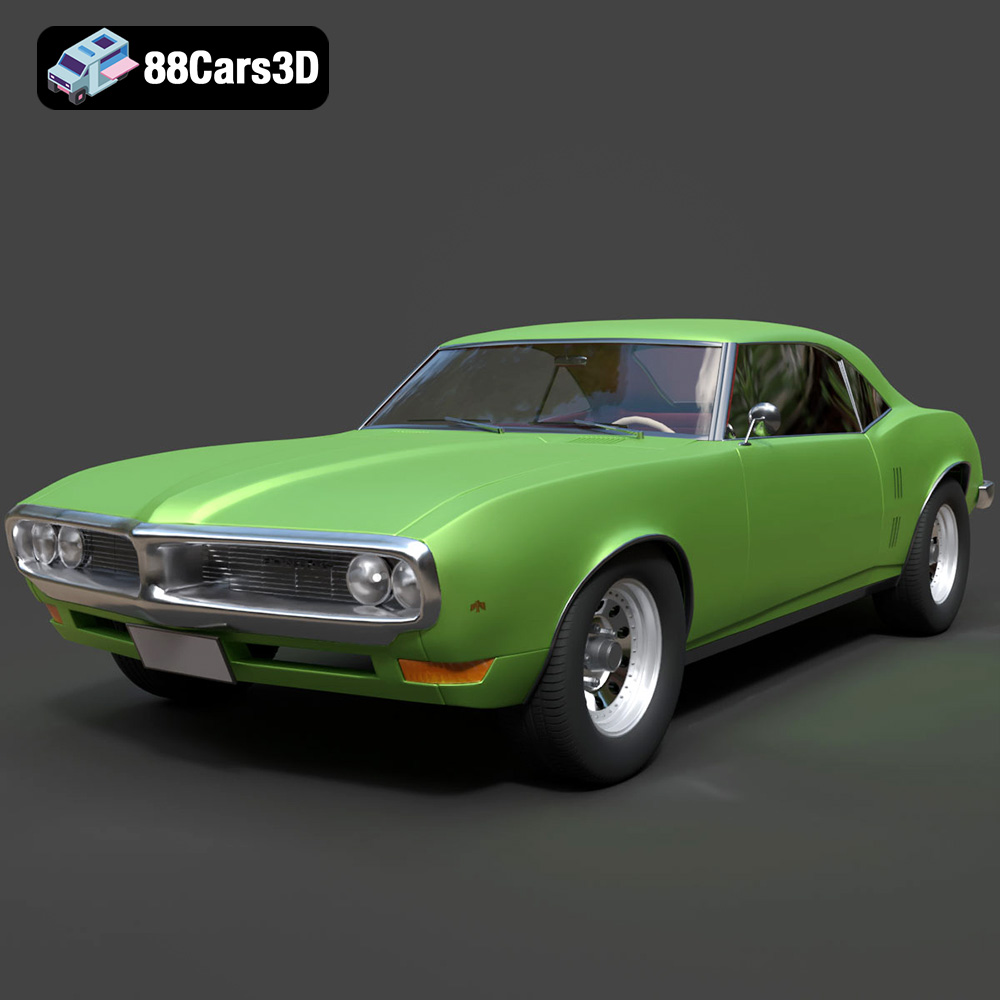
Download the Pontiac Firebird 1998 3D Model featuring clean geometry, realistic detailing, and a fully modeled interior. Includes .blend, .fbx, .obj, .glb, .stl, .ply, .unreal, and .max formats for rendering, simulation, and game development.
Price: $10

Texture: Yes
Material: Yes
Download the Opel Astra 2008 3D Model featuring clean geometry, realistic detailing, and a fully modeled interior. Includes .blend, .fbx, .obj, .glb, .stl, .ply, .unreal, and .max formats for rendering, simulation, and game development.
Price: $10

Texture: Yes
Material: Yes
Download the Mercedes Benz Joaquin-007 3D Model featuring clean geometry, realistic detailing, and a fully modeled interior. Includes .blend, .fbx, .obj, .glb, .stl, .ply, .unreal, and .max formats for rendering, simulation, and game development.
Price: $19.99
Texture: Yes
Material: Yes
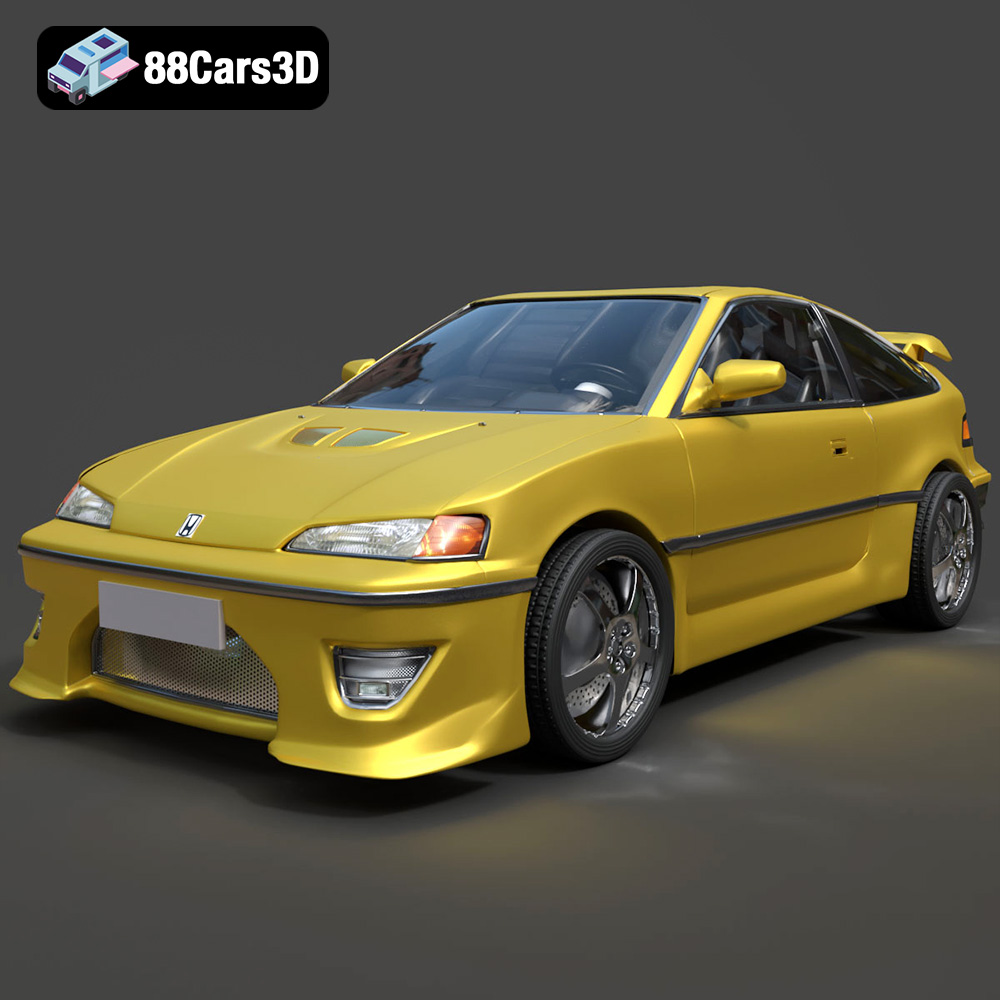
Download the Honda CRX 1980 3D Model featuring clean geometry, realistic detailing, and a fully modeled interior. Includes .blend, .fbx, .obj, .glb, .stl, .ply, .unreal, and .max formats for rendering, simulation, and game development.
Price: $11.99
Texture: Yes
Material: Yes
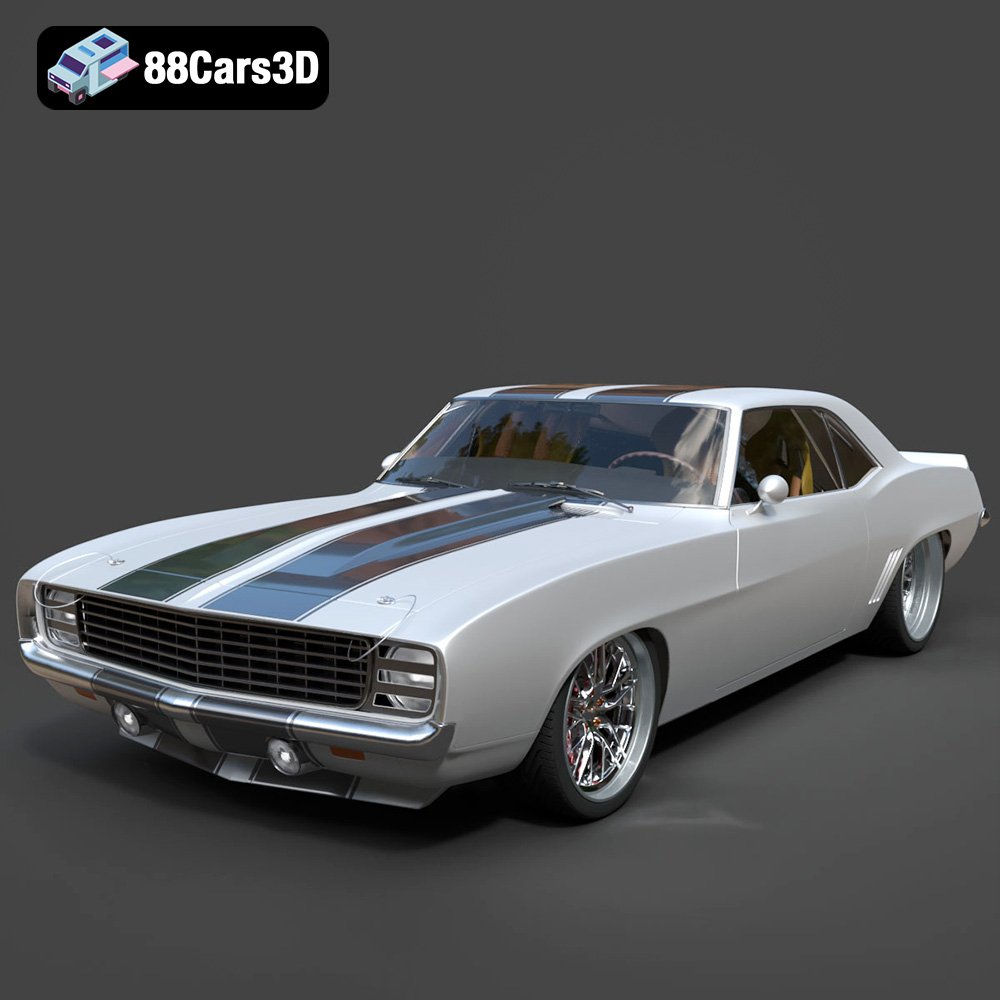
Download the Chevrolet Camaro 69 Pro-007 3D Model featuring classic muscle car design and custom performance aesthetics. Includes .blend, .fbx, .obj, .glb, .stl, .ply, .unreal, and .max formats for rendering, simulation, and game development.
Price: $20.79

Texture: Yes
Material: Yes
Download the Honda Fit 2008 3D Model featuring a compact, versatile design with detailed exterior and interior components. Includes .blend, .fbx, .obj, .glb, .stl, .ply, .unreal, and .max formats for rendering, simulation, and game development.
Price: $10.79
Texture: Yes
Material: Yes
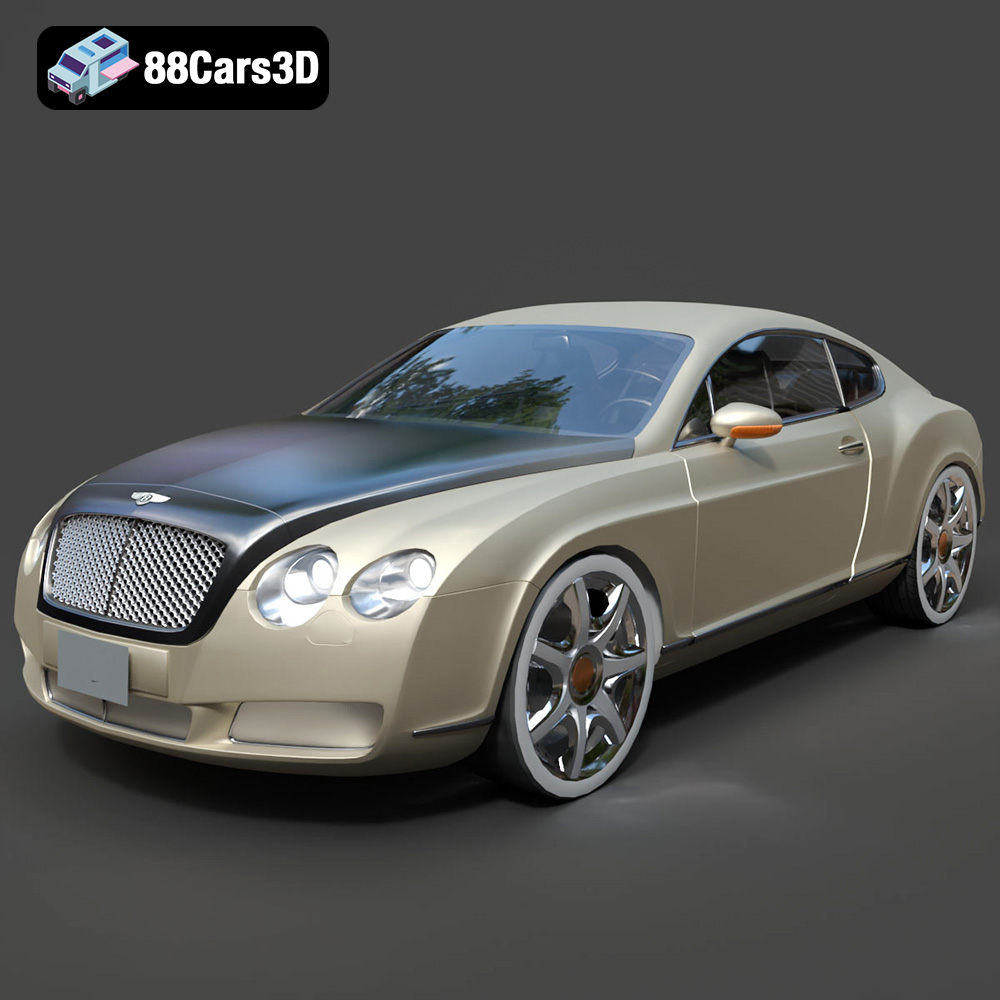
Download the Bentley Continental GT-002 3D Model featuring a luxurious grand touring design and high-quality details. Includes .blend, .fbx, .obj, .glb, .stl, .ply, .unreal, and .max formats for rendering, simulation, and game development.
Price: $20.79

