⚡ FLASH SALE: Get 60% OFF All Premium 3D & STL Models! ⚡

In the fast-evolving landscape of digital design, the quality of a 3D car model is more than just a visual detail; it’s the fundamental building block for photorealistic renders, immersive game experiences, cutting-edge AR/VR applications, and precise manufacturing prototypes. From the sleek curves of a supercar to the rugged utility of an off-roader, every angle and surface must be meticulously crafted to convey realism and functionality. This technical deep dive explores the critical role of high-fidelity 3D car models, dissecting their creation, application across various industries, and the profound impact they have on visual integrity and project efficiency. Whether you’re a seasoned 3D artist, a game developer, an automotive designer, or an architectural visualizer, understanding the nuances of these digital assets is paramount. For those seeking a reliable source of premium assets, marketplaces like 88cars3d.com stand as invaluable hubs for professional-grade 3D car models that meet the most stringent technical demands.
The journey from concept sketch to a fully realized digital vehicle is paved with intricate details and complex technical considerations. A superior 3D car model isn’t just about aesthetics; it’s about the underlying mesh, the accuracy of its dimensions, the integrity of its topology, and its readiness for diverse applications. These factors collectively determine a model’s versatility and performance across various pipelines.
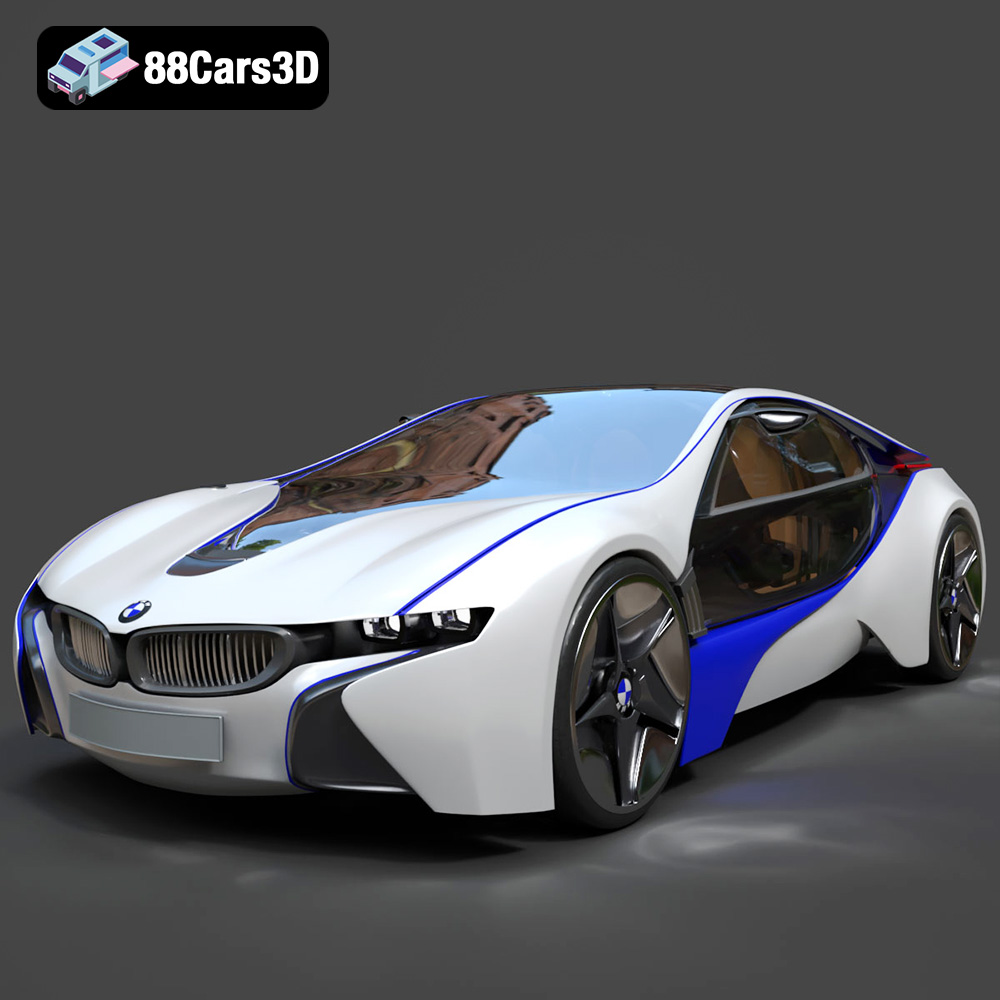
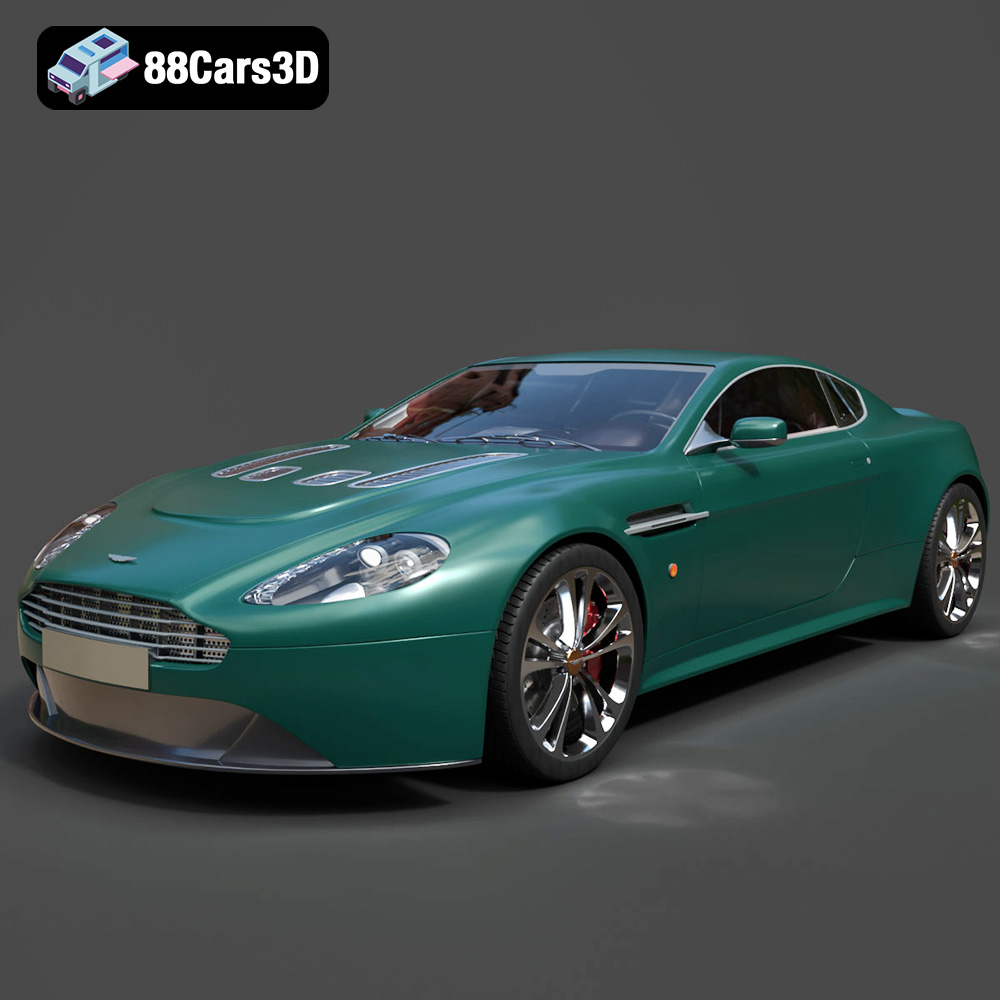
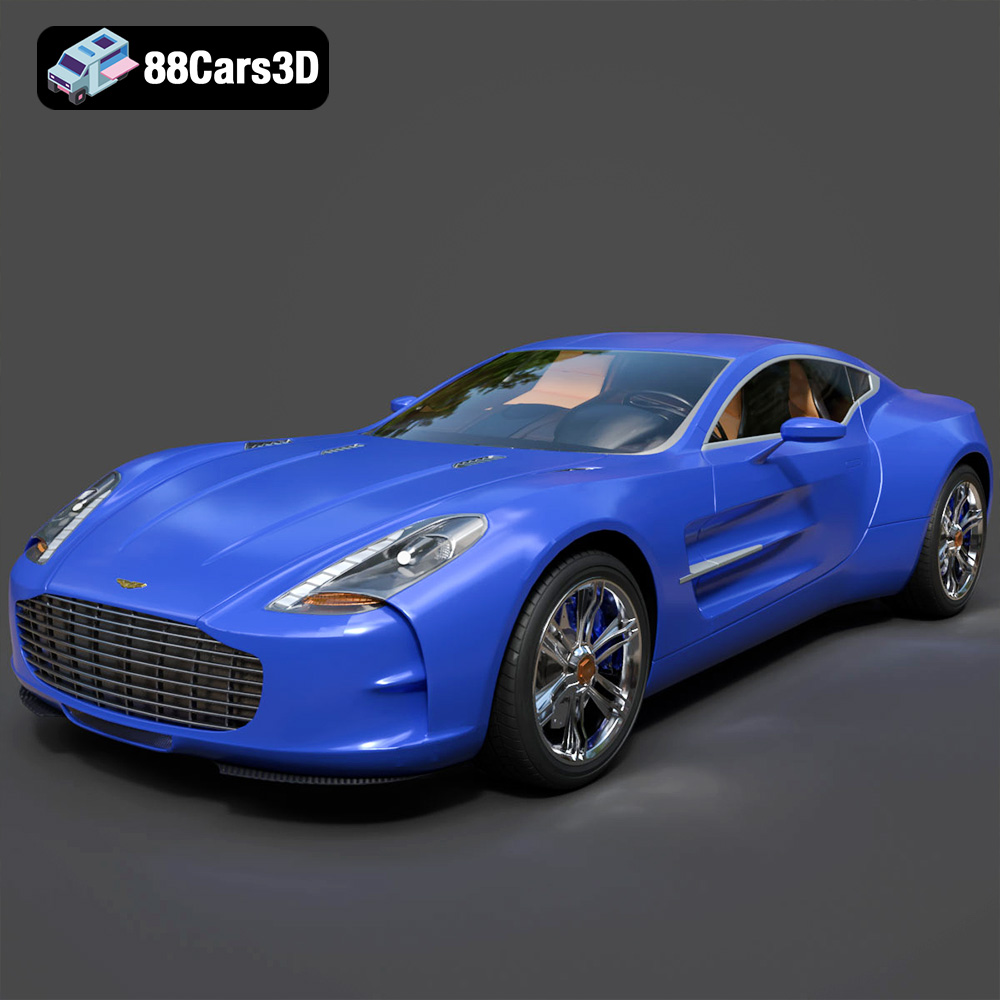
Accuracy in a 3D car model begins with meticulous attention to reference material, whether blueprints, CAD data, or real-world scans. Every curve, panel gap, and vent must replicate its real-world counterpart with pinpoint precision. This level of detail is crucial for automotive designers who use these models for prototyping, aerodynamics testing, and design iterations. Even a subtle inaccuracy can throw off reflections in a render or compromise the structural integrity in a simulation. High-resolution models capture the nuanced interplay of light and shadow, revealing the designer’s intent and the vehicle’s unique character.
For automotive manufacturers, 3D models serve as a vital bridge between initial concepts and mass production. They facilitate rapid prototyping, allowing designers to visualize and iterate on designs without the cost and time associated with physical mock-ups. Engineers use these models to simulate performance, crash tests, and aerodynamic flows, long before a single physical component is manufactured. This digital workflow dramatically accelerates the development cycle, reduces errors, and ultimately delivers better vehicles to market. The versatility of a well-constructed 3D car model allows it to seamlessly transition from an aesthetic study to an engineering analysis tool.
Topology refers to the arrangement of polygons and edges that make up a 3D model’s surface. Good topology is clean, uniform, and follows the natural contours of the vehicle. It’s essential for smooth deformations during animation, efficient UV mapping, and preventing shading artifacts during rendering. Poor topology, often characterized by stretched or triangular polygons, can lead to visual imperfections and make the model difficult to work with.
Polycount, or the number of polygons, is another critical technical specification. High-poly models, often ranging from hundreds of thousands to several million polygons, offer incredible detail and are ideal for close-up renders, film, and high-fidelity visualization. However, such models are unsuitable for real-time applications like games or AR/VR due to performance limitations. Game-ready models typically feature optimized polycounts, often between 50,000 to 150,000 triangles per vehicle, achieved through careful decimation, baking normal maps from high-poly versions, and strategic use of Level of Detail (LODs). Understanding the target application dictates the necessary polycount and the topological optimization required.
The choice of file format for a 3D car model is far from arbitrary; it dictates compatibility, embedded data, and suitability for specific workflows. Each format is engineered for particular use cases, and knowing their strengths and limitations is crucial for any professional working with 3D assets.
The .blend format is the native file type for Blender, the popular open-source 3D creation suite. A .blend file is a comprehensive package, capable of storing not just the 3D geometry of a car, but also its materials, textures, lighting setups, camera positions, animations, physics simulations, and even custom scripts. This makes it a fully editable scene file, ideal for artists who primarily work within the Blender ecosystem. When you purchase a .blend file, you gain access to the complete project, allowing for deep customization, modification of internal components, and detailed rendering directly within Blender using its Cycles or Eevee render engines. Its self-contained nature ensures that all scene data remains consistent.
.fbx (Filmbox) is arguably the most widely adopted 3D exchange format in the entertainment industry, making it ideal for Unreal Engine, Unity, and real-time pipelines. Developed by Autodesk, FBX excels at preserving a broad range of data beyond just geometry, including meshes, materials (often as placeholders that need re-linking), textures, cameras, lights, and crucially, animations, skeletal rigging, and blend shapes. This rich data retention makes it perfect for transferring animated car models between different 3D software (e.g., 3ds Max to Unreal) or integrating complex animated sequences into game engines. While FBX can embed textures, it’s often more efficient to package them separately and re-link them in the target application. Its robust support for hierarchies and animation makes it indispensable for interactive applications.
The .obj (Wavefront Object) format is a classic and highly universal choice for 3D geometry exchange. It’s a plain-text format primarily focused on storing vertices, UV coordinates, normals, and polygon faces. While it can reference external material files (.mtl) for basic color and texture information, it doesn’t embed animations, rigging, or complex material properties. This simplicity is its strength; almost every 3D software application can import and export .obj files reliably, making it an excellent fallback for cross-software compatibility. It’s perfect for static meshes where the focus is purely on the car’s geometric form, and materials will be re-created or assigned in the destination software.
.glb (GL Transmission Format Binary) is the binary version of glTF, a royalty-free specification for the efficient transmission and loading of 3D scenes and models by applications. Optimized for AR, VR, and browser-based display, .glb files are highly compact and contain all necessary data—geometry, materials, textures, and animation—within a single binary file. This makes them incredibly fast to load and ideal for web-based viewers, e-commerce product configurators, and mobile AR applications where file size and performance are critical. If your project involves showcasing a 3D car model interactively on a website or in an augmented reality experience, .glb is often the best choice for its efficiency and embedded asset structure.
.stl (Stereolithography) is the de facto standard file format for 3D printing output. It represents a 3D model as a series of connected triangles, describing only the surface geometry of an object without color, texture, or material information. The simplicity of STL makes it universally compatible with 3D printing software (slicers). When using a 3D car model for physical prototyping or manufacturing, converting it to an .stl is a crucial step. It’s important that the mesh is “manifold” (water-tight, without holes or intersecting geometry) to ensure a successful print.
The .ply (Polygon File Format or Stanford Triangle Format) is designed to store graphical objects as a list of polygons. It supports a wider range of properties than .obj or .stl, including color, transparency, surface normals, and range data. This makes it particularly useful for models generated from 3D scanners or for storing high-precision mesh data used in scientific analysis, CAD, or reverse engineering workflows. While less common for general 3D car model exchange, it’s invaluable when working with point clouds or highly detailed scan data where attribute preservation is key.
While not a direct file format in the same way as .fbx or .blend, an .unreal asset refers to a 3D car model that has been fully imported, configured, and optimized within Unreal Engine. This means the model has appropriate collision meshes, Level of Detail (LOD) setups, physically based materials defined with Unreal’s shader graph, and potentially animations or physics assets. When purchasing an “Unreal-ready” asset, such as those found on 88cars3d.com, it implies that the asset is provided in a format (typically FBX) and accompanied by all necessary textures and instructions for immediate integration into an Unreal Engine project, often including pre-built materials and blueprints, saving significant setup time.
The .max format is the native file type for Autodesk 3ds Max, a leading software for 3D modeling, animation, and rendering. Similar to .blend, a .max file is a complete project scene, containing the 3D car model’s geometry, modifiers, materials, textures, lighting, cameras, animation timelines, and rendering settings. It offers full editability within 3ds Max, making it the preferred format for users of this software who require complete control over every aspect of the scene for advanced animation, rigging, and high-fidelity rendering using engines like V-Ray or Corona.
Achieving photorealistic automotive renders is an art form that blends technical proficiency with an acute eye for detail. It’s about more than just a good model; it’s about light, materials, environment, and post-production.
Physically Based Rendering (PBR) is the cornerstone of modern photorealism. PBR materials accurately simulate how light interacts with surfaces in the real world, based on physical properties like roughness, metallicness, and albedo (base color). A typical PBR workflow involves creating multiple texture maps:
These maps are then applied to the 3D car model within a PBR-compatible rendering engine like V-Ray, Corona Renderer, Arnold, Cycles (Blender), or Octane Render. The environment is typically set up using a High Dynamic Range Image (HDRI), which provides both realistic background visuals and crucial lighting information for global illumination.
Beyond the basics, achieving truly convincing automotive surfaces requires advanced material techniques. Car paint, for example, is complex, often involving multiple layers: a base color coat, a metallic flake layer, a clear coat (varnish), and sometimes even a pearl effect. These are recreated using layered shaders, controlling properties like clear coat reflectivity (Fresnel effect), flake size and density, and subtle color shifts. Tire rubber requires specific roughness and subtle displacement for tread patterns, while glass needs accurate refraction and absorption properties. Small details like headlight lenses, interior fabrics, and chrome accents each demand dedicated material setups to reflect light authentically.
Lighting is paramount in automotive rendering, transforming a good model into a captivating image. Common setups include:
Understanding how light interacts with curves and polished surfaces is key. Strategic placement of lights can accentuate body lines, emphasize reflections, and sculpt the vehicle’s form.
The rendering process doesn’t end when the image is calculated. Post-production in software like Adobe Photoshop or Affinity Photo is vital for adding that final layer of polish. This includes:
These steps elevate a raw render into a professional-grade visualization, often making the difference between a good image and an outstanding one.
For game developers, 3D car models are central to racing simulations, open-world environments, and interactive experiences. However, unlike high-end renders, game assets must be meticulously optimized for real-time performance without sacrificing visual fidelity.
The primary challenge in game development is balancing visual quality with performance. Key optimization strategies include:
Beyond visual assets, game development requires functional integration. Car physics are paramount for a realistic driving experience. This involves setting up:
Game engines like Unreal Engine and Unity provide robust physics engines (e.g., Chaos Physics in Unreal, PhysX in Unity) that facilitate the implementation of complex vehicle dynamics.
Level of Detail (LOD) systems are critical for maintaining performance in games. An LOD system automatically swaps out higher-detail models for lower-detail versions as the player character moves further away from the object. A 3D car might have 3-5 LOD levels, with the lowest poly version used for distant views.
Instancing is another powerful optimization technique where multiple copies of the same 3D car model use the same geometry data in memory, significantly reducing memory footprint and improving rendering speed, especially in scenes with many identical vehicles.
For Unreal Engine, the workflow for integrating 3D car models often involves:
Assets from 88cars3d.com often provide pre-configured Unreal Engine assets, streamlining this complex process for developers.
The utility of high-quality 3D car models extends far beyond traditional rendering and gaming, empowering innovative applications across various industries.
In AR/VR, 3D car models create immersive and interactive experiences.
Performance optimization is crucial for AR/VR, demanding highly efficient models and textures to maintain high frame rates and prevent motion sickness.
High-fidelity 3D car models are the digital blueprints for physical fabrication.
For 3D printing, the model must be “manifold” (a closed, water-tight mesh) and properly scaled. The .stl format is the most common choice for this application.
3D car models are powerful tools for marketing and sales, offering dynamic visualization options that traditional photography cannot match.
The ability to render a car in any environment, with perfect lighting, at any angle, offers unparalleled creative freedom for marketing professionals.
Efficient workflow and robust asset management are crucial for maximizing the utility and longevity of 3D car models, particularly in large-scale projects or collaborative environments.
Chaos in file management can quickly cripple a project. A consistent and logical naming convention for 3D models, textures, materials, and scene files is non-negotiable. For instance, a common approach might be:
CarModel_Make_Model_Year_Version_LOD00.fbxCarModel_Make_Model_Year_Albedo.pngCarModel_Make_Model_Year_Material_Glass.maxThis ensures that artists can quickly identify and locate assets, understand their purpose, and integrate them into pipelines without confusion. It also helps in version control and preventing accidental overwrites.
Building a centralized asset library where all 3D car models and associated textures are stored and cataloged is fundamental for efficiency. Such libraries allow for easy searching, previewing, and reuse of assets across multiple projects. Each asset should ideally be accompanied by metadata detailing its polycount, format, intended use, and any special requirements.
Version control systems (like Git, Perforce, or specialized DCC tools) are essential for teams. They track changes, allow rollbacks to previous versions, and manage concurrent edits, preventing data loss and ensuring that everyone is working with the most up-to-date assets. For individual artists, simply keeping dated backups of major milestones is a good practice.
In collaborative environments, clear communication and standardized pipelines are key. This includes:
Online marketplaces like 88cars3d.com inherently contribute to pipeline efficiency by providing high-quality, pre-optimized assets in various formats, ready for immediate use, significantly reducing the initial modeling and optimization overhead for studios and individual creators.
The world of 3D car models is a testament to the blend of artistic vision and technical prowess. From the intricate topology of a render-ready supercar to the optimized meshes designed for real-time game engines, each digital vehicle is a complex asset with diverse applications. Understanding the various file formats, mastering rendering techniques, optimizing for performance, and adopting robust workflow practices are all crucial for success in digital automotive design. The demand for high-quality 3D car models will only continue to grow as industries from entertainment to engineering increasingly rely on these powerful digital representations. For professionals seeking to elevate their projects with meticulously crafted assets, exploring trusted sources like 88cars3d.com can provide the foundation needed to drive innovation and deliver truly stunning results. The digital garage is open, and with the right assets and knowledge, the possibilities are limitless.