⚡ FLASH SALE: Get 60% OFF All Premium 3D & STL Models! ⚡

The allure of a perfectly rendered automobile, gleaming under a virtual spotlight, is undeniable. From high-octane game environments to hyper-realistic architectural visualizations, and even the intricate details of a 3D-printed collectible, a meticulously crafted 3D car model is a testament to both artistic skill and technical mastery. But what does it take to transform a mere concept into a stunning digital reality? This comprehensive guide will take you through the entire 3D modeling workflow for automotive subjects, from the initial blueprinting to the final, breathtaking render, equipping you with the knowledge and techniques to achieve professional-grade results.
Whether you’re an aspiring 3D artist, a game developer, an automotive designer, or a visualization professional, understanding the nuances of clean topology, efficient UV mapping, physically-based rendering (PBR) materials, and optimized assets is crucial. This journey demands precision, patience, and a deep understanding of various software tools and industry best practices. By the end of this article, you’ll have a clear roadmap to create compelling 3D car models that stand out in any application.
Every exceptional 3D car model begins with a solid foundation. This initial phase is less about artistic flair and more about meticulous planning and technical precision. Rushing this stage often leads to headaches down the line, requiring extensive rework. A well-planned base mesh is the backbone of a successful project, ensuring smooth surfaces, clean deformations, and efficient downstream processes.
The first step is always reference gathering. For automotive models, this means sourcing high-quality blueprints, orthographic photographs (front, back, top, side), and detailed shots of specific components. Look for blueprints that are dimensionally accurate and provide consistent views. When setting up your scene in software like 3ds Max, Blender, or Maya, these blueprints will be imported as image planes, meticulously aligned to your world origin. Accuracy at this stage is paramount; any slight misalignment will propagate through your entire model, leading to distorted proportions. It’s often beneficial to cross-reference blueprints with actual photographic references to ensure real-world accuracy, especially for subtle curves and design elements that might be simplified in a schematic drawing. Establishing a consistent unit scale (e.g., meters or centimeters) from the outset is also critical, particularly if the model will be used for 3D printing or integrated into specific game engines.
Topology, the arrangement of polygons (specifically quads) on your mesh, is arguably the most critical aspect of automotive modeling. Clean, quad-only topology is essential for several reasons: it ensures smooth subdivision surfaces (which are typically used to achieve the high detail and curvature of car bodies), facilitates UV mapping, and allows for clean deformations if the model is ever animated. For cars, edge loops must precisely follow the contours and design lines of the vehicle – around wheel arches, along panel gaps, and defining the crisp edges of character lines. Avoiding N-gons (polygons with more than four sides) and triangles (unless absolutely necessary for optimization) is a golden rule for organic and subdivision surface modeling. Strategic placement of “poles” (vertices with more or less than four connecting edges) is key; they should be hidden in flatter areas or where curvature transitions naturally. A common challenge in automotive modeling is managing the intricate curves and sharp creases without introducing pinching or artifacts. This is often achieved through the careful placement of “support loops” or “holding edges” that tighten the subdivision surface in specific areas, giving the impression of a sharp edge while maintaining a smooth underlying mesh. For rendering, a higher polygon count (hundreds of thousands to millions of polygons after subdivision) is acceptable, while game assets demand a much stricter budget, often requiring optimization techniques to achieve a balance between visual fidelity and real-time performance.
With the base mesh established, the focus shifts to refining the overall form, carving out intricate details, and preparing the model for the texture artist. This stage involves a blend of precision modeling and an artistic eye to capture the nuances of the vehicle’s design.
For achieving the pristine, flowing surfaces of a car, subdivision surface modeling (often referred to as SubD or Catmull-Clark subdivision) is the dominant technique. It allows artists to work with a relatively low-polygon base mesh and then smooth it out to a high-resolution, organic surface at render time. This non-destructive workflow offers immense flexibility for making adjustments. Crafting perfect panel gaps, a hallmark of realistic automotive models, requires careful attention. These are typically created by duplicating edge loops, slightly extruding them, and ensuring consistent spacing and depth. Boolean operations can be tempting for complex cuts, but they often result in messy topology that requires significant cleanup. A more controlled approach involves using precise edge loops and manual sculpting. Interior modeling, while often less visible, demands the same level of detail, from the stitching on seats to the texture of the dashboard, often utilizing separate, optimized meshes for components like switches, vents, and screens. Understanding the real-world manufacturing processes can often inform your modeling decisions, helping you create details that feel authentic.
UV mapping is the process of flattening the 3D surface of your model into 2D space so that textures can be applied. For complex objects like cars, efficient and clean UVs are absolutely critical for avoiding distortion and maximizing texture resolution. The primary goal is to minimize seams while strategically placing them in less visible areas (e.g., along natural panel breaks, underneath the car, or along hidden edges). A common strategy for the car body involves separating large panels (hood, doors, roof) into individual UV islands, or cleverly unwrapping the entire body with as few large seams as possible. Tools within 3ds Max, Blender, or Maya allow you to mark seams and then “unwrap” the mesh. For instance, in Blender 4.4, you can mark edges as seams and use the ‘Unwrap’ or ‘Smart UV Project’ functions to flatten the mesh. Once unwrapped, it’s crucial to arrange the UV islands within the 0-1 UV space without overlapping, ensuring uniform pixel density across all islands (using tools like “Average Island Scale” and “Pack Islands” in Blender helps with this), and leaving adequate padding between islands to prevent texture bleeding. Checking for distortion using a checkerboard pattern is an essential step to ensure textures will appear correctly.
Once the model’s form is complete and UVs are prepared, it’s time to breathe life into it with physically-based rendering (PBR) materials. PBR is the industry standard for achieving photorealistic results, simulating how light interacts with surfaces in the real world.
PBR relies on a set of texture maps that describe the surface properties of an object in a physically accurate way. The two primary workflows are Metallic/Roughness and Specular/Glossiness. The Metallic/Roughness workflow, widely adopted, uses a Base Color map (albedo), a Metallic map (0 for dielectric, 1 for metal), and a Roughness map (0 for smooth/shiny, 1 for rough/matte). Other crucial maps include Normal maps (for fine surface detail without adding geometry), Height/Displacement maps (for actual surface displacement), and Ambient Occlusion (AO) maps (for simulating soft shadows in crevices). These maps work in conjunction to tell the rendering engine precisely how light should behave when it hits each pixel of the model, leading to consistent and predictable results under any lighting conditions. Understanding the interplay between these maps is crucial for creating convincing materials, whether it’s the subtle imperfections of painted metal or the deep reflectivity of polished chrome. For instance, a highly reflective metallic surface would have a high metallic value and a very low roughness value.
Automotive shaders are among the most challenging to create due to the complex interplay of reflections, clear coats, and specific material properties. Car paint, for example, is not a simple color. It typically consists of a base color, a metallic flake layer, and a clear coat layer. To replicate this, artists often layer multiple shaders or use advanced node-based material setups in software like 3ds Max (with Corona/V-Ray), Blender (Cycles), or Maya (Arnold). The clear coat adds depth and highly reflective properties, often controlled by a Fresnel effect to simulate how reflectivity changes with viewing angle. Tire rubber requires a balance of subtle roughness variations, micro-scratches, and appropriate normal mapping to convey its texture and wear. Glass materials demand accurate Index of Refraction (IOR) values, tint, and realistic reflections, often with a slight falloff in opacity. Chrome and other polished metals require high metallic values, very low roughness, and an understanding of how their reflections interact with the environment. Services like 88cars3d.com often provide models with pre-configured, high-quality PBR materials, saving artists significant time and effort in this intricate stage.
The best 3D model and materials can fall flat without proper lighting and a well-executed render. This stage is where the artistic vision truly comes to life, culminating in a captivating image or animation.
Effective lighting is paramount for showcasing the form and materials of an automotive model. High Dynamic Range Image (HDRI) lighting is a cornerstone of modern rendering, providing realistic global illumination and environment reflections from a single image. Combining an HDRI with a traditional 3-point lighting setup (a key light for the main illumination, a fill light to soften shadows, and a back/rim light to define edges) creates a studio-quality look. Area lights are excellent for soft, even illumination, mimicking studio softboxes. Physical lights within your 3D software (e.g., Corona Lights, V-Ray Lights, Blender’s Area/Point/Spot Lights) can be positioned and shaped to highlight specific features or create dramatic effects. For interiors, mesh lights or portal lights can be used to simulate light coming through windows, creating a natural feel. Experimentation with light temperature, intensity, and shadow hardness is key to achieving the desired mood and realism.
The choice of rendering engine significantly impacts both the final output and the workflow. Popular options include Corona Renderer and V-Ray (often used with 3ds Max for architectural and product visualization), Cycles (Blender’s powerful physically-based renderer), and Arnold (favored in film and animation, available for Maya, 3ds Max, Houdini). Each engine offers a unique set of features and optimizations. Corona, for instance, is known for its ease of use and realistic results with minimal tweaking. V-Ray offers extensive controls for complex scenes. Cycles in Blender 4.4, with its GPU acceleration (CUDA, OptiX, HIP), delivers impressive speed and quality. Understanding core rendering concepts like samples per pixel, ray depth (for reflections/refractions), and global illumination solvers (e.g., Irradiance Map, Brute Force, Path Tracing) is crucial for optimizing render times while maintaining quality. Denoising technologies, often integrated into modern renderers, can significantly reduce noise in lower-sample renders, speeding up the overall process without sacrificing too much detail.
Raw renders, no matter how good, almost always benefit from post-processing. This is where the image truly comes alive, adding that final polish that makes it pop. Compositing software like Adobe Photoshop or After Effects is typically used. Key techniques include color correction and grading to establish mood and consistency, adding subtle chromatic aberration and lens distortion for realism, and enhancing depth of field (using Z-depth passes from your render) to draw the viewer’s eye. Glare and bloom effects can add a photographic quality to highlights. Render passes (also known as AOVs – Arbitrary Output Variables), such as reflection, refraction, ambient occlusion, and Cryptomatte masks, are invaluable. They allow for non-destructive adjustments to specific elements of the image without re-rendering the entire scene. For example, you can adjust the intensity of reflections or the color of specific materials long after the initial render, providing immense flexibility for fine-tuning the final image.
A beautifully rendered car model for a static image needs different considerations than an asset intended for a real-time game, an augmented reality experience, or even 3D printing. Understanding how to optimize your model for various platforms is a critical professional skill.
Integrating 3D car models into game engines like Unity or Unreal Engine demands rigorous optimization. The primary goals are to maintain high visual fidelity while ensuring smooth frame rates. Level of Detail (LOD) models are essential here: creating multiple versions of the same asset, each with a progressively lower polygon count. The engine dynamically switches between these LODs based on the camera’s distance, ensuring that distant objects consume fewer resources. For example, a high-poly render model might have 500,000 polygons, while its closest LOD for a game could be 80,000, decreasing to 20,000 and then 5,000 for further distances. Reducing draw calls (the number of times the CPU tells the GPU to draw something) is another major optimization. This is achieved by combining meshes (e.g., merging all small interior parts into one mesh) and using texture atlasing, where multiple smaller textures are packed into a single, larger texture map. Baking high-polygon details (like panel gaps or intricate vents) onto the normal map of a low-polygon mesh allows the low-poly model to appear highly detailed without the heavy geometry.
Augmented Reality (AR) and Virtual Reality (VR) applications have stringent performance requirements due to the need for real-time rendering on potentially mobile hardware. This means aggressive polygon budgets (often under 50,000-100,000 triangles for an entire car model), highly optimized PBR materials (sometimes simplified for mobile), and efficient use of texture memory. Specific file formats are preferred for these emerging technologies. GLB (GL Transmission Format Binary) is excellent for web-based AR and VR, bundling geometry, materials, and animations into a single file. USDZ (Universal Scene Description Zip) is Apple’s proprietary format for ARKit, optimized for iOS devices. When sourcing models from marketplaces such as 88cars3d.com, ensure they offer models specifically optimized for AR/VR, often including these specialized file formats like FBX, OBJ, GLB, and USDZ to ensure broad compatibility and ease of integration into your chosen platform.
For artists looking to bring their digital car models into the physical world through 3D printing, a different set of optimizations and preparations is required. The most critical aspect is ensuring the mesh is “watertight” or “manifold.” This means that the model must be a completely enclosed volume, without any holes, inverted normals, internal geometry, or self-intersecting faces. Printing software needs a clear definition of what is “inside” and “outside” the object. Common issues include non-manifold edges, disconnected vertices, and zero-thickness surfaces, which must be identified and repaired. Software tools like Blender’s 3D Print Toolbox addon, MeshMixer, or Netfabb are invaluable for analyzing and repairing mesh errors. Additionally, consider the physical properties of the printed object: ensure sufficient wall thickness (typically a minimum of 1-2mm depending on the print material and scale) to prevent fragility, and plan for any necessary support structures. Dividing a complex car model into smaller, interlocking parts can also facilitate printing larger objects and simplify support removal.
The journey from a conceptual sketch to a final, photorealistic or game-ready 3D car model is a complex yet immensely rewarding endeavor. It demands a blend of artistic vision, technical precision, and a thorough understanding of an intricate workflow. We’ve explored the critical steps: from establishing a robust foundation with accurate blueprints and clean topology, through the meticulous process of UV mapping and crafting physically-based materials, to the art of lighting, rendering, and post-processing. Furthermore, we delved into the essential optimization techniques required to adapt models for diverse applications, whether it’s for high-performance game engines, immersive AR/VR experiences, or precision 3D printing.
Mastering this workflow requires continuous learning and practice. Each stage presents its own challenges, but by adhering to industry best practices and leveraging powerful software tools, you can consistently produce high-quality results. Remember that the quality of your base assets is paramount. Platforms like 88cars3d.com serve as an excellent resource for sourcing expertly crafted 3D car models that already adhere to many of these professional standards, providing a solid foundation or inspiration for your projects. Embrace the technical details, refine your artistic eye, and you’ll be well on your way to creating stunning automotive 3D models that captivate and inspire.

Meta Description:
Texture: Yes
Material: Yes
Download the Cadillac CTS-V Coupe 3D Model featuring detailed exterior styling and realistic interior structure. Includes .blend, .fbx, .obj, .glb, .stl, .ply, .unreal, and .max formats for rendering, simulation, AR VR, and game development.
Price: $13.9
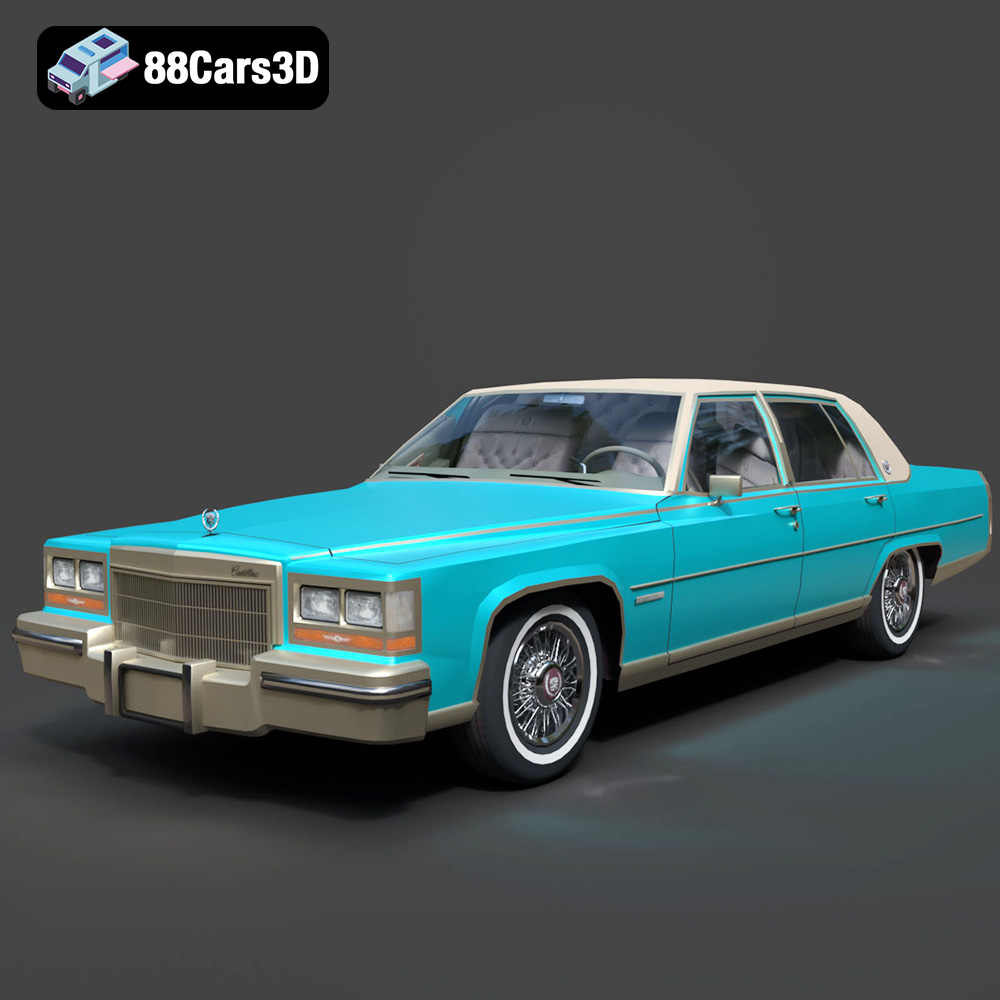
Texture: Yes
Material: Yes
Download the Cadillac Fleetwood Brougham 1985 3D Model featuring its iconic classic luxury design and detailed craftsmanship. Includes .blend, .fbx, .obj, .glb, .stl, .ply, .unreal, and .max formats for rendering, simulation, and game development.
Price: $10.79
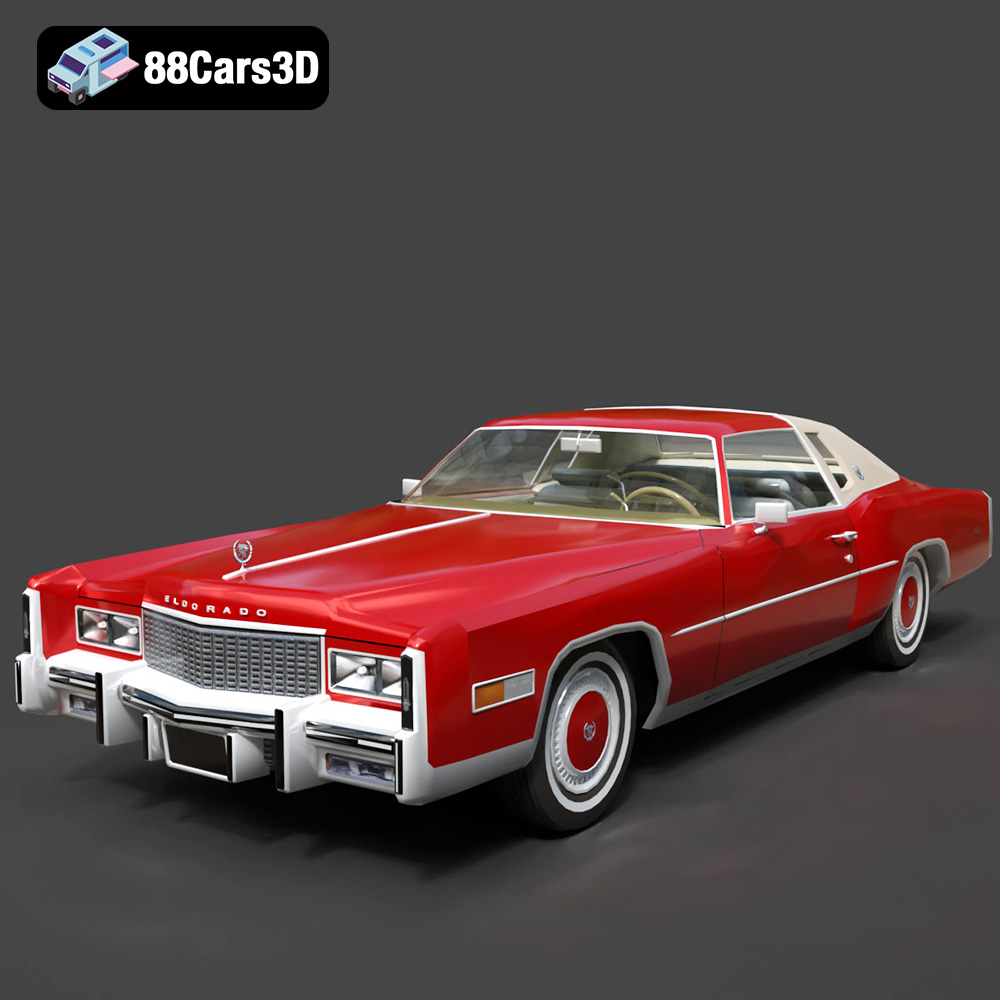
Texture: Yes
Material: Yes
Download the Cadillac Eldorado 1978 3D Model featuring accurately modeled exterior, detailed interior, and period-correct aesthetics. Includes .blend, .fbx, .obj, .glb, .stl, .ply, .unreal, and .max formats for rendering, simulation, and game development.
Price: $10.79
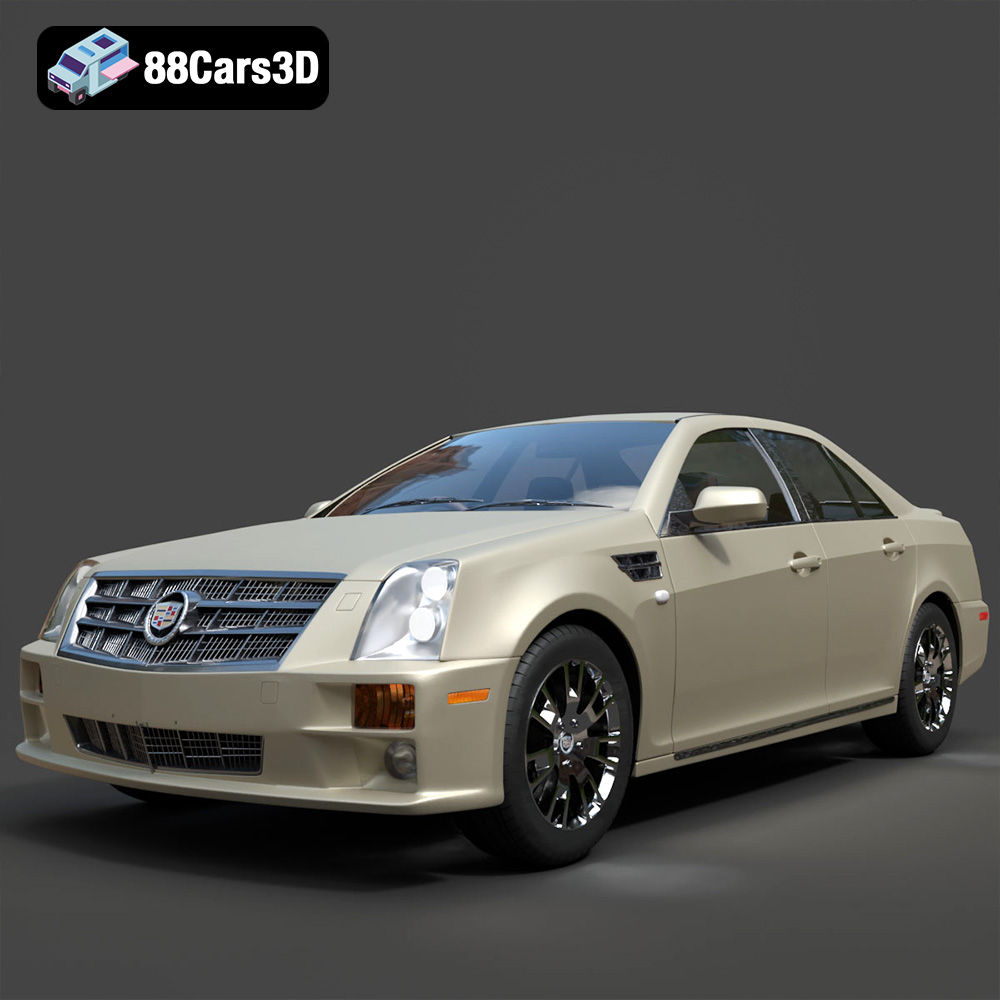
Texture: Yes
Material: Yes
Download the Cadillac STS-005 3D Model featuring a detailed exterior and interior. Includes .blend, .fbx, .obj, .glb, .stl, .ply, .unreal, and .max formats for rendering, simulation, and game development.
Price: $22.79
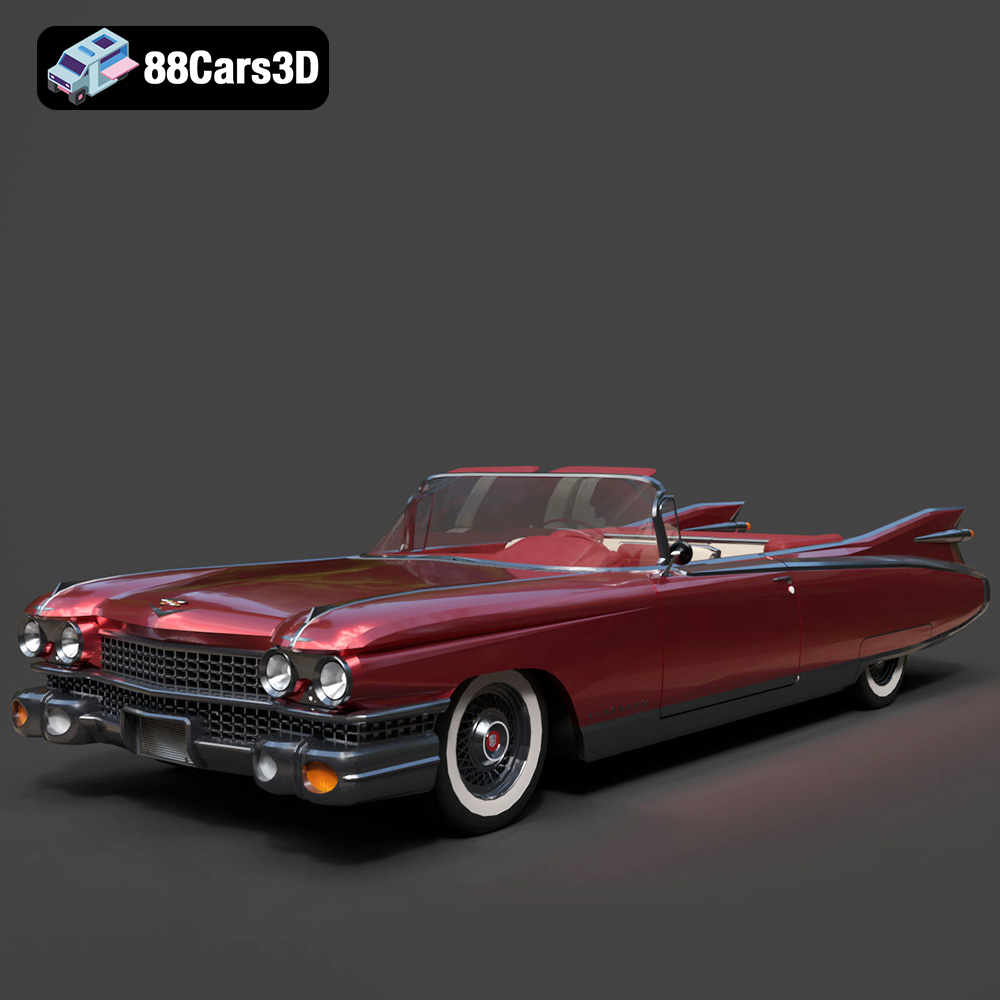
Texture: Yes
Material: Yes
Download the Cadillac Eldorado Convertible (1959) 3D Model featuring iconic fins, luxurious chrome details, and a classic vintage design. Includes .blend, .fbx, .obj, .glb, .stl, .ply, .unreal, and .max formats for rendering, simulation, and game development.
Price: $20.79

Texture: Yes
Material: Yes
Download the Cadillac DTS-005 3D Model featuring its iconic luxury design, detailed interior, and realistic exterior. Includes .blend, .fbx, .obj, .glb, .stl, .ply, .unreal, and .max formats for rendering, simulation, and game development.
Price: $10.79

Texture: Yes
Material: Yes
Download the Buick LeSabre 1998 3D Model featuring a classic American full-size sedan design. Includes .blend, .fbx, .obj, .glb, .stl, .ply, .unreal, and .max formats for rendering, simulation, and game development.
Price: $10.79
Texture: Yes
Material: Yes
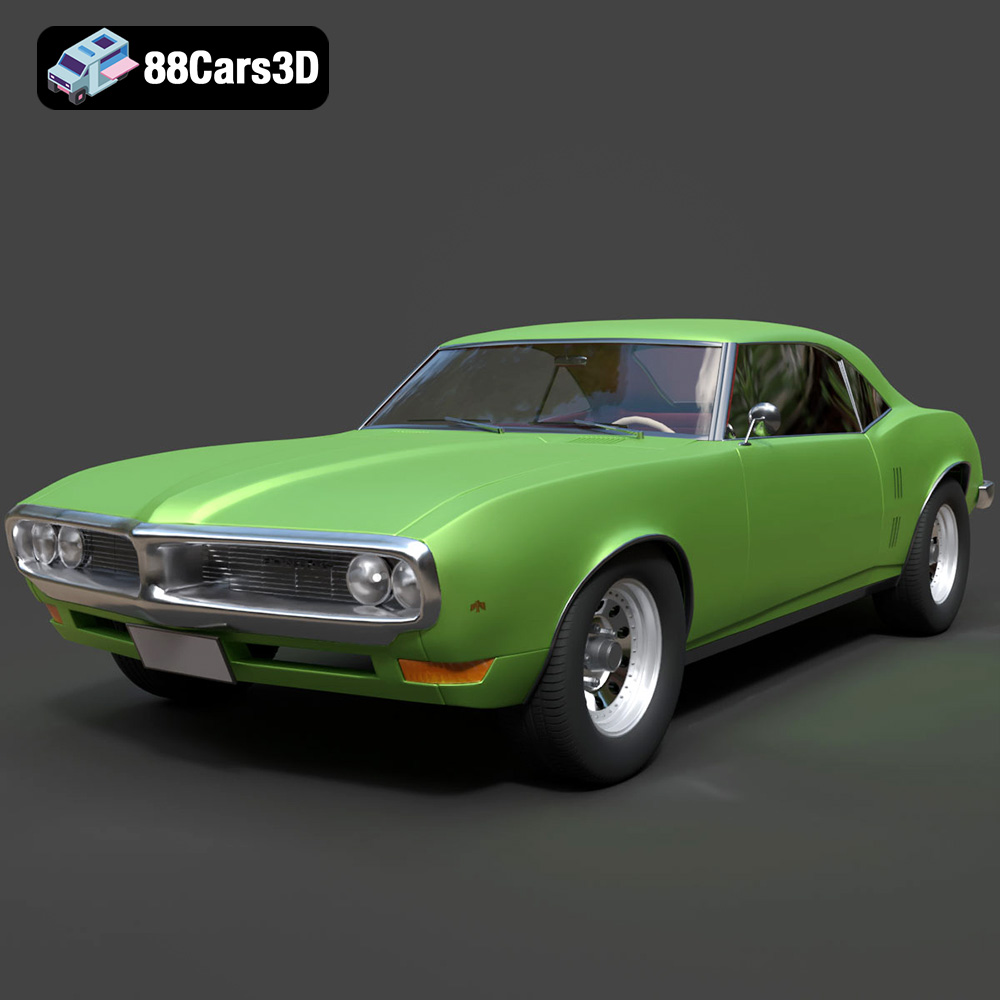
Download the Pontiac Firebird 1998 3D Model featuring clean geometry, realistic detailing, and a fully modeled interior. Includes .blend, .fbx, .obj, .glb, .stl, .ply, .unreal, and .max formats for rendering, simulation, and game development.
Price: $10

Texture: Yes
Material: Yes
Download the Opel Astra 2008 3D Model featuring clean geometry, realistic detailing, and a fully modeled interior. Includes .blend, .fbx, .obj, .glb, .stl, .ply, .unreal, and .max formats for rendering, simulation, and game development.
Price: $10

Texture: Yes
Material: Yes
Download the Mercedes Benz Joaquin-007 3D Model featuring clean geometry, realistic detailing, and a fully modeled interior. Includes .blend, .fbx, .obj, .glb, .stl, .ply, .unreal, and .max formats for rendering, simulation, and game development.
Price: $19.99

