⚡ FLASH SALE: Get 60% OFF All Premium 3D & STL Models! ⚡

In the exhilarating world of 3D automotive design, where precision meets passion, the quest for realism often hinges on mastering intricate details. Among the most critical yet frequently underestimated aspects is the accurate modeling of aerodynamic car body panels. These aren’t just aesthetic flourishes; they are engineering marvels that dictate a vehicle’s performance, efficiency, and visual identity. For 3D artists, game developers, and visualization professionals, understanding how to translate these complex, curvature-driven forms into flawless digital assets is paramount.
This comprehensive guide delves deep into the technical workflows required to model aerodynamic car body panels, transforming raw geometry into highly optimized, visually stunning 3D models. We’ll explore everything from the foundational aerodynamic principles that shape a car’s exterior to advanced topology strategies, PBR material creation, rendering techniques, and optimization for various platforms, including real-time engines and even 3D printing. Whether you’re aiming for photorealistic renders, immersive game environments, or detailed AR/VR experiences, mastering these techniques will elevate your automotive 3D projects to professional standards. Let’s embark on a journey to sculpt digital masterpieces that truly capture the spirit of speed and design.
Before even touching a single polygon, a deep understanding of automotive aerodynamics is crucial. A car’s body is not merely a shell; it’s a meticulously sculpted form designed to interact with air in specific ways. Key principles like drag (resistance to motion), lift (upward force), and downforce (downward force) dictate every curve, vent, and spoiler. Airflow management is critical – designers aim to minimize turbulence, channel air efficiently for cooling, and generate stability at high speeds. For a 3D artist, this translates directly into the subtle nuances of surface continuity, the precise radii of curves, and the purposeful integration of vents and ducts. Without this foundational knowledge, even technically perfect models can look “off” or unrealistic, failing to convey the engineering intent behind the design.
Considering the high-performance vehicles often found on platforms like 88cars3d.com, these aerodynamic considerations are magnified. Supercars and race cars are essentially finely tuned aerodynamic instruments. Modeling their bodies requires an appreciation for how every surface contributes to the overall airflow, influencing how light reflects and how the vehicle appears to slice through the air. This understanding informs everything from the large, sweeping forms of the main body panels to the subtle creases that define air intake paths or exhaust vents. It’s about more than just copying a blueprint; it’s about understanding the ‘why’ behind the design decisions.
Every part of a car’s exterior plays an aerodynamic role, and recognizing these roles is essential for accurate 3D modeling:
The foundation of any high-quality 3D car model, especially one with complex aerodynamic surfaces, lies in its topology and edge flow. Topology refers to the arrangement of polygons (faces, edges, and vertices) that make up your 3D mesh. For automotive modeling, especially with organic, curvilinear forms, quad-based topology (meshes primarily made of four-sided polygons) is almost universally preferred. This is because quads deform predictably, allow for smooth subdivision (using modifiers like Subdivision Surface in Blender or Turbosmooth in 3ds Max), and are easier to manage when creating complex surface transitions.
Edge flow is the path that edges take across your model’s surface. Good edge flow follows the natural contours, creases, and lines of curvature of the object. For aerodynamic car panels, this means edges should gracefully trace the sweep of a fender, define the crispness of a body line, and smoothly transition around curves. Poor edge flow can lead to unsightly pinches, unwanted bumps, or “wobbly” surfaces when subdivided, which are particularly egregious on reflective car paint. The goal is to create a mesh that is efficient (using no more polygons than necessary), clean, and allows for perfect surface continuity, ensuring that light reflects realistically across the complex aerodynamic forms.
Subdivision surface modeling is the industry standard for creating smooth, high-resolution organic shapes from a relatively low-polygon base mesh. The technique relies on the principle that a polygon mesh can be smoothed by subdividing its faces and averaging the positions of its vertices. This allows artists to work with a manageable polygon count while achieving incredibly smooth final surfaces.
The journey from reference images to a meticulously sculpted aerodynamic car body involves specific tools and workflows within your chosen 3D software. While the core principles of topology and edge flow remain constant, each software offers unique advantages and approaches. Regardless of the tool, the initial setup is critical: accurately importing and aligning blueprint images or reference photographs to guide your modeling efforts. This foundational step ensures that proportions and curves are captured faithfully from the very beginning.
For car modeling, a hybrid approach often yields the best results. You might start with spline-based methods for initial curves and then convert them to polygon meshes, or begin with basic box modeling to establish the overall volume before refining with poly-by-poly techniques. The key is to iteratively refine your mesh, constantly checking for surface consistency, reflections, and the integrity of your edge flow, especially under subdivision. Using tools like “Viewport Canvas” or “Texture Paint” for quick visual checks of curvature can also highlight surface imperfections early on.
The subtle details of panel gaps, vents, and grilles are crucial for realism. They define the fit and finish of a car and contribute significantly to its perceived quality. Achieving these details while maintaining clean topology is an art in itself:
Even the most perfectly modeled aerodynamic surfaces will fall flat without compelling materials. This is where Physically Based Rendering (PBR) comes into play. PBR materials are designed to react to light in a way that mimics real-world physics, resulting in far more believable and consistent renders across different lighting conditions. Understanding PBR is non-negotiable for achieving photorealism in automotive rendering. The core idea behind PBR is that material properties (like color, shininess, and bumpiness) are defined by maps that represent physical characteristics, rather than arbitrary artistic values. This consistency allows for a seamless integration of your 3D car models into any scene, from a sterile studio render to a gritty urban environment.
Car paint, in particular, is one of the most challenging materials to replicate due to its complex layered structure. It’s not just a simple color; it involves a base coat, metallic flakes, a clear coat, and often subtle imperfections like orange peel. Crafting a convincing car paint shader requires a node-based approach, layering different effects and textures to achieve the desired depth and reflectivity. This is where advanced shader networks become essential, allowing you to meticulously control every aspect of how light interacts with the car’s surface, enhancing the perceived aerodynamics through realistic reflections and highlights.
Before you can apply detailed PBR textures, your model needs proper UV mapping. UV mapping is the process of flattening the 3D surface of your model into a 2D space, much like unfolding a cardboard box. This 2D representation (the UV map) tells the rendering engine how to project your textures onto the 3D model. For complex car surfaces, careful UV unwrapping is critical to avoid stretching, distortion, and visible seams, which can significantly detract from realism.
Once your aerodynamic car model is perfectly sculpted and textured, the final step is to bring it to life through rendering. This process transforms your 3D data into a stunning 2D image or animation. Automotive rendering is an art form that demands a keen eye for detail, an understanding of photographic principles, and mastery of rendering software. The goal is to make the digital car indistinguishable from a real photograph, capturing the essence of its design, materials, and aerodynamic form.
Effective rendering isn’t just about hitting the render button; it’s about meticulously setting up lighting, environment, camera angles, and post-processing. Every choice influences how the viewer perceives the model’s surfaces, curves, and reflections. The choice of renderer (V-Ray, Corona, Cycles, Arnold) will impact your workflow and the specific features you leverage, but the underlying principles of lighting and composition remain universal. For automotive renders, particular attention is paid to how highlights glide across curved surfaces, emphasizing the carefully sculpted aerodynamic forms and the quality of the car paint.
Lighting is arguably the most critical element in automotive rendering:
The raw render from your 3D software is just the beginning. Post-processing and compositing in software like Adobe Photoshop, Affinity Photo, or Nuke can elevate a good render to an exceptional one. This non-destructive editing phase allows for fine-tuning that is difficult or impossible to achieve directly in the 3D renderer.
While film and visualization often prioritize absolute fidelity, game development, AR/VR, and other real-time applications demand a careful balance between visual quality and performance. An aerodynamic car model destined for a game engine like Unity or Unreal Engine needs significant optimization to run smoothly at interactive frame rates. This means making strategic compromises on polygon count, texture resolution, and shader complexity without sacrificing the essential visual appeal and the integrity of the aerodynamic design. The goal is to make the model look as good as possible given the performance budget of the target platform.
Optimization is not a one-size-fits-all solution; it depends heavily on the specific requirements of the project. A car model for a high-end PC racing simulator will have a much higher polygon budget than one for a mobile AR experience. Understanding these constraints early in the development cycle is crucial. Many high-quality 3D car models available on marketplaces such as 88cars3d.com are often provided in multiple levels of detail or with clean topology that facilitates easy optimization, making them excellent starting points for real-time projects.
Several key strategies are employed to optimize 3D car models for real-time:
These emerging technologies present unique challenges and requirements for 3D car models:
The journey of modeling aerodynamic car body panels in 3D is a testament to the blend of technical skill, artistic vision, and an appreciation for automotive engineering. From understanding the nuanced principles of aerodynamics to meticulously crafting clean topology, applying realistic PBR materials, and optimizing for diverse platforms, each step is crucial in creating truly compelling 3D car models. We’ve traversed the intricate workflows, explored software-specific techniques, and delved into the critical considerations for rendering, real-time applications, and even 3D printing.
The pursuit of perfection in 3D automotive design is an ongoing learning process. It requires continuous practice, a keen eye for detail, and a willingness to embrace new technologies and methodologies. By focusing on fundamental principles like pristine topology and physically accurate materials, you lay a robust foundation for any project. Whether you aspire to create photorealistic renders for advertising, high-performance assets for game development, or detailed models for AR/VR experiences, the techniques outlined here will serve as your guide.
As you continue to refine your craft, remember that access to high-quality reference and foundational models can accelerate your learning and inspire new creations. Platforms like 88cars3d.com offer an excellent resource for sourcing professional-grade 3D car models, providing a benchmark for quality and a rich library to study. Dive in, experiment, and let your passion for automotive design drive your journey to become a master of the digital garage. The road ahead is filled with endless creative possibilities.

Meta Description:
Texture: Yes
Material: Yes
Download the Cadillac CTS-V Coupe 3D Model featuring detailed exterior styling and realistic interior structure. Includes .blend, .fbx, .obj, .glb, .stl, .ply, .unreal, and .max formats for rendering, simulation, AR VR, and game development.
Price: $13.9

Texture: Yes
Material: Yes
Download the Cadillac DTS-005 3D Model featuring its iconic luxury design, detailed interior, and realistic exterior. Includes .blend, .fbx, .obj, .glb, .stl, .ply, .unreal, and .max formats for rendering, simulation, and game development.
Price: $10.79

Texture: Yes
Material: Yes
Download the Buick LeSabre 1998 3D Model featuring a classic American full-size sedan design. Includes .blend, .fbx, .obj, .glb, .stl, .ply, .unreal, and .max formats for rendering, simulation, and game development.
Price: $10.79
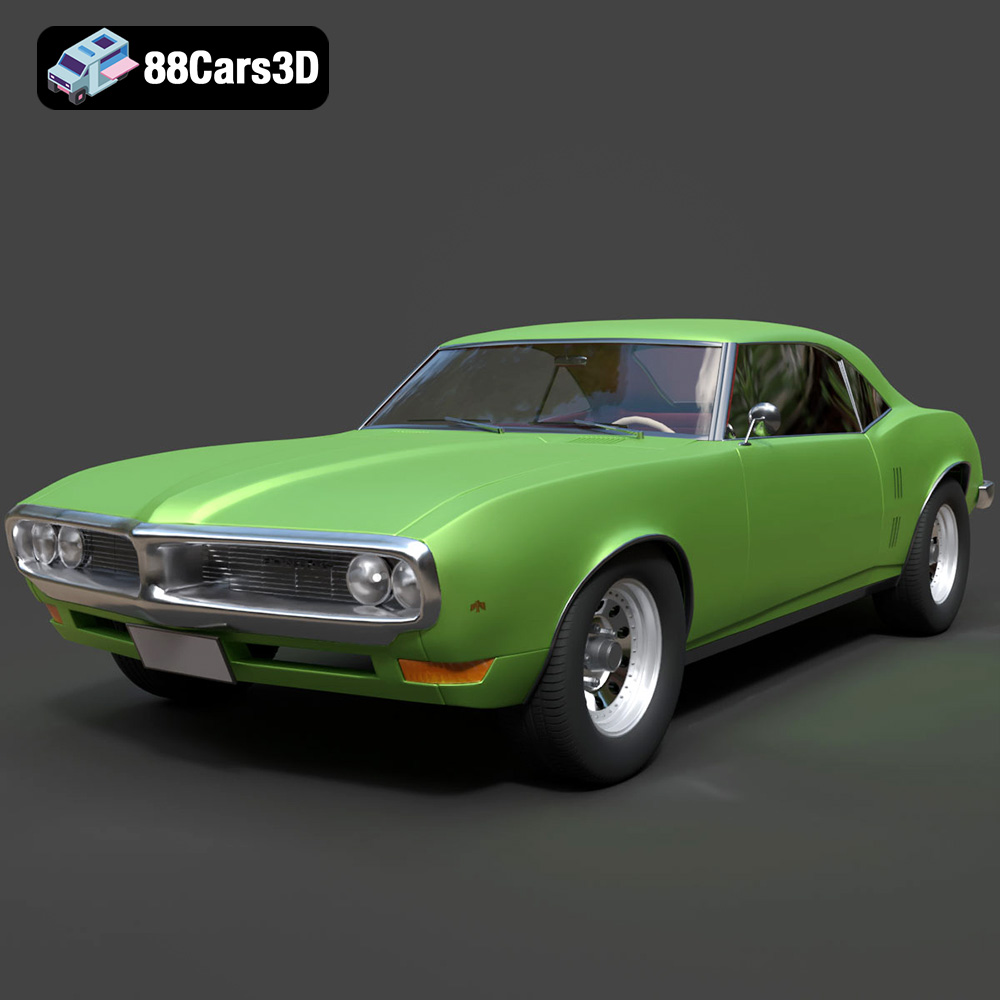
Texture: Yes
Material: Yes
Download the Pontiac Firebird 1998 3D Model featuring clean geometry, realistic detailing, and a fully modeled interior. Includes .blend, .fbx, .obj, .glb, .stl, .ply, .unreal, and .max formats for rendering, simulation, and game development.
Price: $10

Texture: Yes
Material: Yes
Download the Opel Astra 2008 3D Model featuring clean geometry, realistic detailing, and a fully modeled interior. Includes .blend, .fbx, .obj, .glb, .stl, .ply, .unreal, and .max formats for rendering, simulation, and game development.
Price: $10

Texture: Yes
Material: Yes
Download the Mercedes Benz Joaquin-007 3D Model featuring clean geometry, realistic detailing, and a fully modeled interior. Includes .blend, .fbx, .obj, .glb, .stl, .ply, .unreal, and .max formats for rendering, simulation, and game development.
Price: $19.99
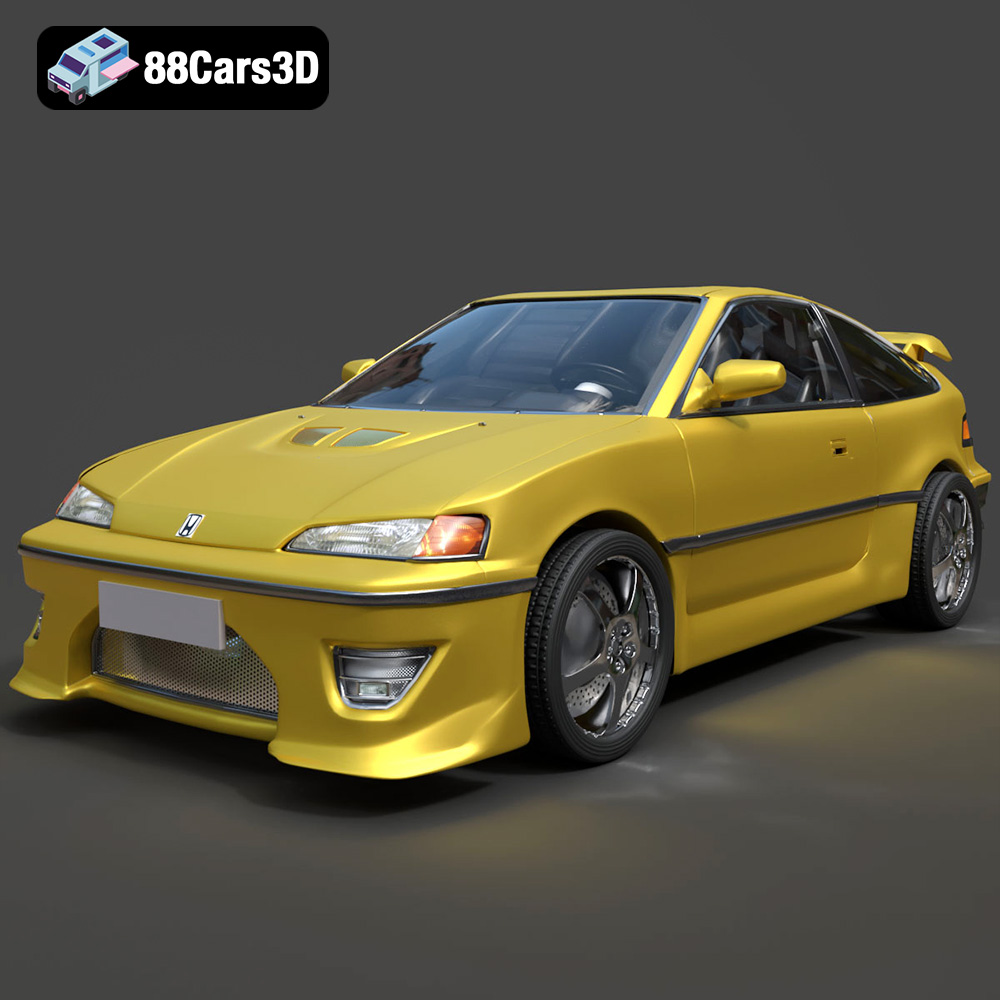
Texture: Yes
Material: Yes
Download the Honda CRX 1980 3D Model featuring clean geometry, realistic detailing, and a fully modeled interior. Includes .blend, .fbx, .obj, .glb, .stl, .ply, .unreal, and .max formats for rendering, simulation, and game development.
Price: $11.99
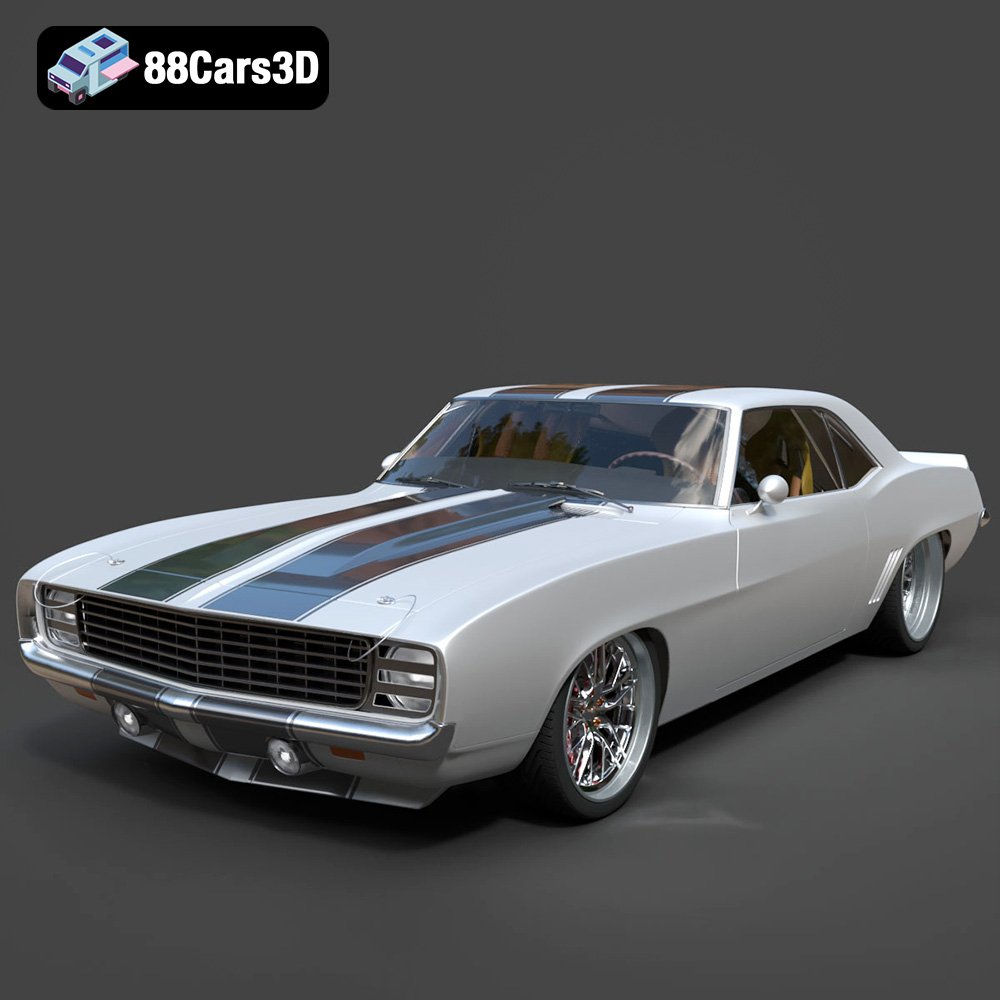
Texture: Yes
Material: Yes
Download the Chevrolet Camaro 69 Pro-007 3D Model featuring classic muscle car design and custom performance aesthetics. Includes .blend, .fbx, .obj, .glb, .stl, .ply, .unreal, and .max formats for rendering, simulation, and game development.
Price: $20.79

Texture: Yes
Material: Yes
Download the Honda Fit 2008 3D Model featuring a compact, versatile design with detailed exterior and interior components. Includes .blend, .fbx, .obj, .glb, .stl, .ply, .unreal, and .max formats for rendering, simulation, and game development.
Price: $10.79
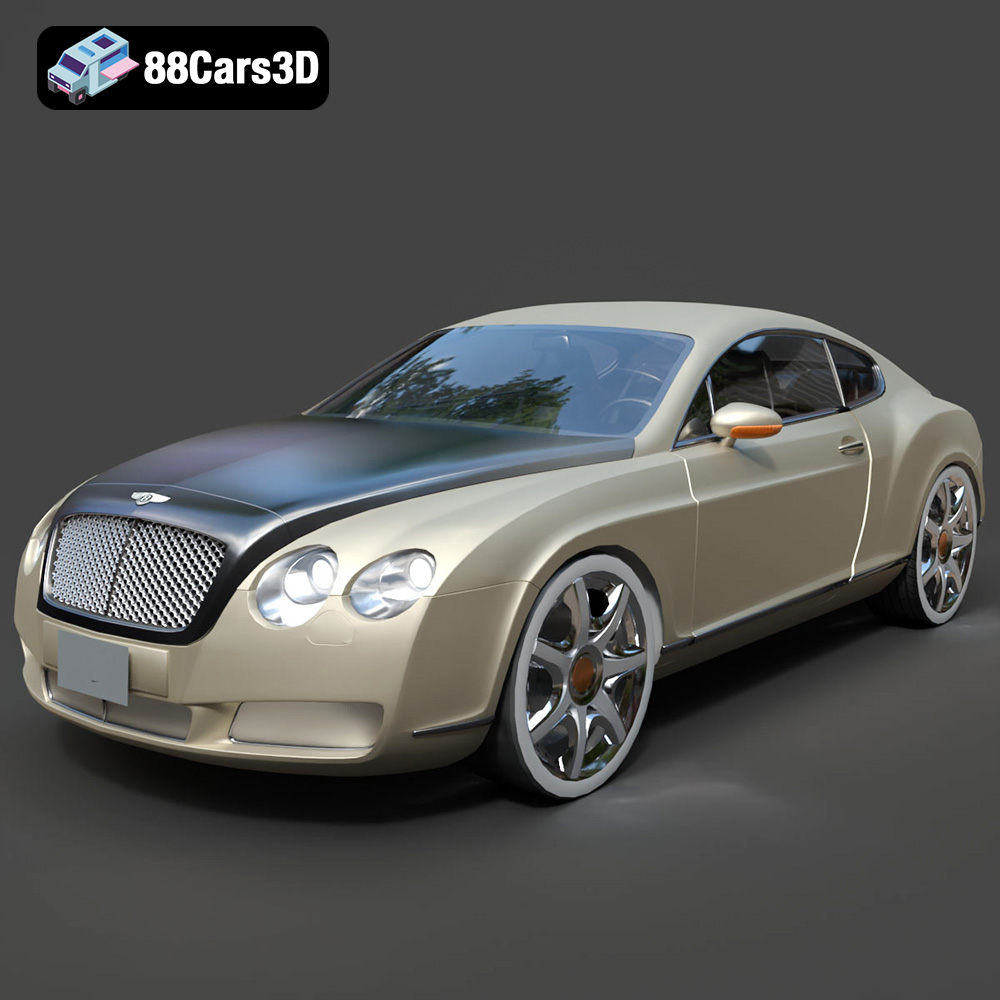
Texture: Yes
Material: Yes
Download the Bentley Continental GT-002 3D Model featuring a luxurious grand touring design and high-quality details. Includes .blend, .fbx, .obj, .glb, .stl, .ply, .unreal, and .max formats for rendering, simulation, and game development.
Price: $20.79

