⚡ FLASH SALE: Get 60% OFF All Premium 3D & STL Models! ⚡

The pursuit of photorealism has always been at the forefront of automotive visualization and cinematic content creation. While real-time rendering technologies like Unreal Engine’s Lumen deliver incredible results for interactive experiences, sometimes the absolute pinnacle of visual fidelity is required for marketing assets, high-end configurators, or virtual production. This is where Path Tracing in Unreal Engine steps in, offering a physically accurate, unbiased rendering solution that elevates your automotive scenes to an unparalleled level of realism. It’s the closest you can get to offline renderers like V-Ray or Arnold, directly within the Unreal Engine ecosystem.
For 3D artists, game developers, and visualization professionals leveraging Unreal Engine, understanding Path Tracing is crucial for pushing the boundaries of what’s possible. From meticulously crafted 3D car models sourced from marketplaces like 88cars3d.com to complex studio lighting setups, Path Tracing ensures every detail, every reflection, and every shadow is rendered with breathtaking accuracy. In this comprehensive guide, we’ll delve into the intricacies of Unreal Engine’s Path Tracing, covering everything from initial project setup and material optimization to advanced lighting techniques and cinematic rendering workflows, ensuring your automotive visualizations achieve truly stunning, physically accurate results.
At its core, Path Tracing is an advanced rendering technique that simulates the physical behavior of light. Unlike traditional rasterization or even real-time ray tracing solutions, Path Tracing samples numerous light paths per pixel, bouncing rays throughout the scene until they hit a light source or reach a maximum bounce limit. This method inherently produces physically accurate global illumination, reflections, refractions, and soft shadows, making it the gold standard for photorealistic imagery, especially in demanding fields like automotive visualization.
For an automotive scene, this means exquisite details such as the subtle caustics cast by headlights, the precise reflections on polished chrome, the intricate scattering within car paint flakes, and the accurate refraction through windshields and windows are all handled automatically and correctly. The result is an image that looks indistinguishable from a photograph, capturing the true essence and aesthetic of a high-end vehicle. It’s the go-to choice when uncompromising quality is paramount, and the rendering budget allows for longer processing times compared to interactive real-time experiences.
Path Tracing operates by simulating individual photons of light traveling through a scene. From the camera’s perspective, rays are shot into the scene. When a ray hits a surface, a new ray is randomly sampled in a direction based on the surface’s material properties (e.g., diffuse reflection, specular reflection, refraction). This process, known as Monte Carlo integration, continues for multiple “bounces” until the ray either hits a light source, escapes the scene, or reaches a predefined maximum bounce count. The cumulative contribution of these paths determines the final color of each pixel.
Because it’s an unbiased renderer, Path Tracing doesn’t rely on approximations. Every light interaction, from subtle ambient occlusion to complex inter-reflections, is calculated based on real-world physics. The more samples per pixel (SPP) you use, the more accurate the light simulation becomes, and the less noise will be present in the final image. This iterative refinement is key to its quality, where increasing the sample count continuously improves fidelity.
The advantages of Path Tracing for automotive visualization are profound. It delivers:
While Unreal Engine offers real-time Ray Tracing and its revolutionary Lumen global illumination system, it’s important to understand their distinction from Path Tracing. Real-time Ray Tracing and Lumen are optimized for interactive performance, employing various spatial and temporal denoising techniques and approximations to achieve high frame rates. They deliver stunning results and are perfect for games and interactive experiences.
Path Tracing, conversely, prioritizes absolute accuracy over speed. It is an offline rendering solution, meaning it takes time to render each frame, often seconds or minutes depending on complexity and desired quality. It’s best suited for single-frame renders, cinematic sequences, or high-fidelity marketing content where performance is not a real-time constraint. While Lumen offers impressive dynamic global illumination and reflections, Path Tracing provides the mathematically precise, unbiased solution, particularly excelling in complex multi-bounce light scenarios and highly reflective environments.
Embarking on a Path Tracing journey in Unreal Engine requires specific project configurations to harness its full potential. The setup is relatively straightforward but essential for ensuring your project is ready to deliver those stunning, photorealistic automotive renders. By properly configuring your project, you’ll lay the groundwork for a stable and efficient rendering workflow.
Before diving into scene creation or asset import, it’s crucial to enable the necessary rendering features within Unreal Engine. This involves activating Ray Tracing globally and then selecting Path Tracing as your preferred rendering method. While modern GPUs have significantly accelerated ray tracing capabilities, Path Tracing still demands considerable computational power. Understanding the hardware requirements and managing console variables will be key to optimizing your workflow and achieving the desired visual quality without excessive render times.
To begin, you need to enable Ray Tracing features in your Unreal Engine project. This is a one-time setup:
For more detailed information on configuring ray tracing, refer to the official Unreal Engine documentation at dev.epicgames.com/community/unreal-engine/learning.
Path Tracing is GPU-intensive. To effectively utilize it, you’ll need a modern NVIDIA RTX or AMD Radeon RX 6000 series (or newer) graphics card with dedicated Ray Tracing cores and ample VRAM. The more VRAM, the better, especially for complex automotive scenes with high-resolution textures and detailed 3D car models. Generally, 8GB VRAM is a minimum, with 12GB+ being recommended for serious production work.
Render times are directly proportional to the scene complexity, desired sample count, and your GPU’s power. It’s an iterative process: lower sample counts for quick previews, then ramp up for final renders. Be prepared for rendering frames that can take anywhere from a few seconds to several minutes, depending on your quality target. This is a common characteristic of unbiased renderers, a trade-off for their superior image quality.
To fine-tune Path Tracing, you’ll frequently interact with console variables (CVars). You can access these via the console (press `~` in the editor) or by placing them in your `DefaultEngine.ini` or `ConsoleVariables.ini` files for persistent settings. Here are some critical ones:
r.PathTracing.SamplesPerPixel [Number]: Controls the number of light paths traced per pixel. Higher values reduce noise but increase render time. Start with 64-256 for previews, go 512-4096+ for final renders.r.PathTracing.MaxBounces [Number]: Sets the maximum number of times a light ray can bounce. Higher values improve global illumination and reflections/refractions but significantly increase render time. For automotive, 10-20 bounces is a good starting point, sometimes even higher for complex transparent materials.r.PathTracing.MaxPathLength [Number]: Similar to MaxBounces but can be more specific.r.PathTracing.Denoiser [0/1]: Enables/disables the NVIDIA OptiX denoiser. Set to 1 for efficient noise reduction, especially useful for lower sample counts. It can dramatically cut down render times for achieving clean images.r.PathTracing.TemporalDenoiser [0/1]: Controls if the denoiser uses temporal information (multiple frames) for smoother results in animations.r.PathTracing.ForceInvisibleLights [0/1]: Controls whether light sources are visible in reflections or directly. Useful for studio setups where you want the light’s effect without seeing the mesh.Experimenting with these CVars is crucial for balancing visual quality and render efficiency for your specific automotive visualization needs.
The quality of your final Path Traced render is inextricably linked to the quality of your source assets. For automotive visualization, this means starting with meticulously crafted 3D car models and carefully engineered PBR materials. Path Tracing, being an unbiased renderer, unforgivingly exposes flaws in geometry, UV mapping, and material setups. It demands accuracy because it simulates light physically; therefore, any deviation from physical realism in your assets will be highlighted.
This is where sourcing high-quality, pre-optimized assets from reputable marketplaces becomes incredibly beneficial. Platforms like 88cars3d.com offer 3D car models specifically designed for demanding rendering environments like Unreal Engine, ensuring clean topology, proper UVs, and PBR-ready materials. Leveraging such assets significantly reduces prep time and guarantees a strong foundation for your photorealistic projects.
Path Tracing relies on accurate surface normals and precise light interaction. This makes clean, watertight geometry paramount. Jagged edges, non-manifold geometry, overlapping faces, or inverted normals will lead to rendering artifacts, light leaks, and incorrect reflections. Ensure your 3D car models have:
When sourcing automotive assets from marketplaces such as 88cars3d.com, pay attention to the model’s topology and UV layout specifications to ensure they meet the stringent demands of Path Tracing.
Physically Based Rendering (PBR) materials are the backbone of photorealism in Path Tracing. They are designed to interact with light in a physically plausible way, mimicking real-world material properties. For automotive visualization, mastering PBR materials is essential:
When creating or adjusting PBR materials in Unreal Engine’s Material Editor, remember that Path Tracing will faithfully render every nuance. Use real-world reference values for your material properties. Utilize the Path Tracer viewport mode while tweaking materials to get immediate, accurate feedback on how light interacts with your surfaces.
Universal Scene Description (USD) is becoming an increasingly vital format in professional visualization pipelines. For automotive projects, USD allows for robust exchange of complex scene data, including geometry, animation, and critically, materials, between different software packages. When working with high-fidelity 3D car models, especially those from professional marketplaces, USD can ensure that PBR material definitions remain consistent from the DCC tool where they were authored into Unreal Engine. This minimizes translation errors and ensures that the physically accurate materials you’ve painstakingly crafted (or acquired) behave correctly under Path Tracing, maintaining visual integrity across your entire production pipeline.
Lighting is the soul of any render, and with Path Tracing, you have an unparalleled level of control and fidelity to craft truly breathtaking automotive scenes. Because Path Tracing simulates light physically, every light source, every reflection, and every shadow contributes accurately to the final image. This section explores how to leverage various lighting techniques and manage reflective surfaces to bring out the best in your 3D car models.
The beauty of Path Tracing lies in its ability to handle complex lighting scenarios naturally. Unlike traditional rendering where you might need to fake global illumination or ambient occlusion, Path Tracing computes these inherently. This allows artists to focus more on creative lighting design, knowing that the engine will deliver physically correct results. From soft studio lighting to dynamic outdoor environments, Path Tracing translates your vision into stunning reality.
The choice and placement of your light sources are critical. For automotive visualization, a common strategy is to replicate real-world studio or outdoor environments:
Always consider the three-point lighting setup (key, fill, back) as a starting point, even for complex studio environments. Path Tracing ensures that the light from all sources interacts harmoniously and accurately.
Automotive design is heavily reliant on the interplay of light and reflective surfaces. Path Tracing excels at rendering these materials:
With Path Tracing, reflections will naturally pick up all scene elements, including other vehicles, surrounding environment, and light sources, creating dynamic and realistic visual interest.
Emissive materials can act as legitimate light sources in Path Tracing, making them perfect for digital dashboards, LED strips, or instrument clusters. Simply set a high ‘Emissive Color’ value in your material. Path Tracing will calculate their contribution to global illumination and reflections correctly.
However, with such accuracy comes the need for clean models. Path Tracing is very sensitive to geometry gaps or non-watertight meshes. Small gaps can lead to “light leakage,” where light escapes or enters areas it shouldn’t, causing artifacts or unrealistic illumination. Always ensure your 3D car models are fully enclosed and watertight, especially for interior spaces or any area where light interaction is critical.
Once you’ve set up your project and refined your assets and lighting, the next step is to master the advanced techniques that elevate your Path Traced renders from excellent to truly exceptional. This involves not only understanding how to get a clean image but also how to integrate Path Tracing into cinematic workflows and apply the final polish through post-processing. These steps are crucial for delivering high-quality, professional-grade automotive visualizations.
The iterative nature of Path Tracing, combined with the power of modern denoising algorithms, allows artists to achieve incredible quality with manageable render times. Integrating these techniques into Unreal Engine’s Sequencer unlocks the ability to create breathtaking animated sequences, pushing the boundaries of virtual production and cinematic rendering within the engine.
Path Tracing, by its nature, generates noise, especially at lower sample counts. The process is one of iterative refinement: the more samples per pixel (SPP), the less noise, but the longer the render time. Finding the sweet spot is key:
r.PathTracing.Denoiser 1, Unreal Engine leverages NVIDIA’s powerful AI-driven denoiser to remove noise from the image while preserving details. This allows you to use significantly lower sample counts (e.g., 256-512 SPP instead of thousands) and still achieve clean results, drastically reducing render times. It’s highly recommended for most production workflows.Experimentation is key to understanding how many samples and what denoiser settings work best for your specific scene and desired output quality.
Unreal Engine’s Sequencer is the engine’s powerful non-linear cinematic editor, and it’s your go-to tool for rendering Path Traced animations. Here’s a typical workflow:
Leveraging Sequencer with Path Tracing allows you to produce stunning, high-fidelity marketing videos, virtual showrooms, and animated sequences directly from Unreal Engine.
Even with perfect Path Tracing, a final touch of post-processing is essential to achieve that professional cinematic look. Use an Unreal Engine Post-Process Volume, set to ‘Unbound’ for scene-wide effects, to make these adjustments:
Remember, less is often more with post-processing. Use these tools to enhance, not to overwhelm, the photorealistic quality already delivered by Path Tracing. These final tweaks can significantly impact the emotional impact and perceived quality of your automotive visualization.
While Path Tracing prioritizes quality over real-time performance, efficiency is still paramount, especially when dealing with large automotive scenes, complex environments, or rendering long cinematic sequences. Optimizing your scene can drastically reduce render times and memory usage, allowing for faster iterations and higher output quality within reasonable timeframes. Furthermore, knowing how to troubleshoot common Path Tracing artifacts is crucial for maintaining visual fidelity.
The key to effective optimization lies in intelligent asset management, understanding how scene complexity impacts rendering, and leveraging Unreal Engine’s tools to streamline the process. Even with powerful hardware, a poorly optimized scene can lead to frustratingly long render times and potential crashes. Mastering these optimization techniques will make your Path Tracing workflow smoother and more productive.
Even with Path Tracing, managing scene complexity is vital for efficient rendering. While it handles geometry differently than rasterization, excessively complex scenes can still strain your GPU’s memory and computation:
Despite its accuracy, Path Tracing can sometimes produce artifacts. Here’s how to address common issues:
r.PathTracing.SamplesPerPixel.r.PathTracing.Denoiser 1 is enabled.r.PathTracing.SamplesPerPixel significantly.r.PathTracing.MaxBounces is high enough (e.g., 10-20+) to allow sufficient light bounces for complex reflections/refractions.For automotive configurators or presentations that require showing multiple vehicle variants (different paint colors, wheel options, interior trims), Unreal Engine’s Data Layers feature (especially in UE5) can be incredibly powerful. Instead of loading entirely new levels or managing complex Blueprint visibility toggles for every variant, you can assign different components (e.g., various wheel sets, different interior material swaps) to separate Data Layers. You can then dynamically load and unload these layers at render time, making it efficient to render multiple versions of the same car model without re-setting up the entire scene. This streamlines the workflow for batch rendering different car configurations with Path Tracing, saving significant time and resources.
Path Tracing in Unreal Engine represents the pinnacle of offline rendering quality achievable within a real-time engine. For automotive visualization, it provides an indispensable tool for creating photorealistic imagery that stands shoulder-to-shoulder with traditional offline renderers. By accurately simulating the physical behavior of light, Path Tracing delivers breathtaking global illumination, crisp reflections, precise refractions, and exquisitely soft shadows, capturing the true essence and beauty of meticulously crafted 3D car models.
Throughout this guide, we’ve explored the foundational principles of Path Tracing, walked through essential project setup and configuration, and delved into the critical aspects of optimizing your 3D car models and PBR materials. We’ve uncovered techniques for strategic lighting, mastered the rendering of complex reflective surfaces, and discussed advanced workflows for cinematic animations with Sequencer, all while offering practical tips for performance optimization and troubleshooting. Embracing Path Tracing empowers you to push the boundaries of visual fidelity, transforming your automotive visions into stunning, high-definition realities.
The journey to photorealism is one of continuous learning and refinement. By applying the techniques outlined here, you’re well-equipped to unlock the full potential of Path Tracing in Unreal Engine. Start experimenting, refine your workflows, and most importantly, remember that high-quality source assets are the foundation of any stunning render. Explore the diverse collection of high-quality 3D car models on 88cars3d.com to kickstart your next photorealistic automotive project and bring your creations to life with unparalleled realism.

Meta Description:
Texture: Yes
Material: Yes
Download the Cadillac CTS-V Coupe 3D Model featuring detailed exterior styling and realistic interior structure. Includes .blend, .fbx, .obj, .glb, .stl, .ply, .unreal, and .max formats for rendering, simulation, AR VR, and game development.
Price: $13.9

Texture: Yes
Material: Yes
Download the Cadillac DTS-005 3D Model featuring its iconic luxury design, detailed interior, and realistic exterior. Includes .blend, .fbx, .obj, .glb, .stl, .ply, .unreal, and .max formats for rendering, simulation, and game development.
Price: $10.79

Texture: Yes
Material: Yes
Download the Buick LeSabre 1998 3D Model featuring a classic American full-size sedan design. Includes .blend, .fbx, .obj, .glb, .stl, .ply, .unreal, and .max formats for rendering, simulation, and game development.
Price: $10.79
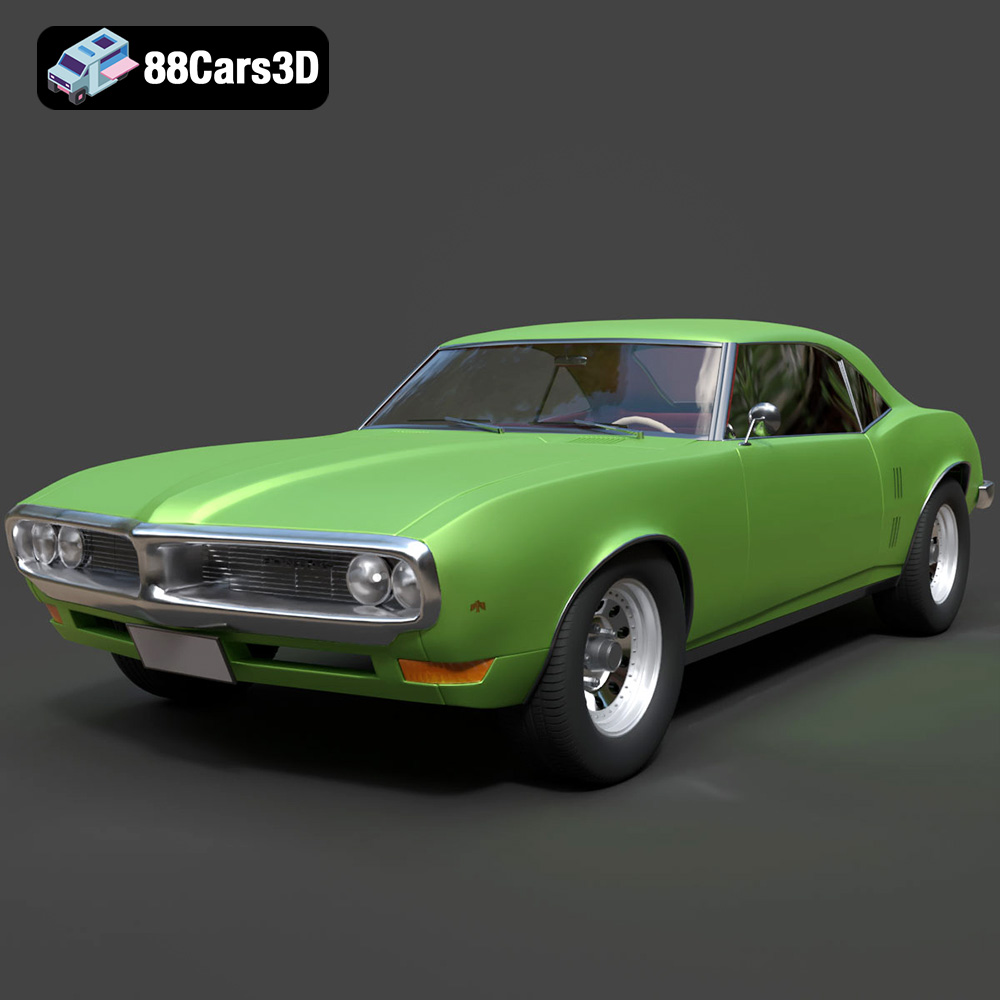
Texture: Yes
Material: Yes
Download the Pontiac Firebird 1998 3D Model featuring clean geometry, realistic detailing, and a fully modeled interior. Includes .blend, .fbx, .obj, .glb, .stl, .ply, .unreal, and .max formats for rendering, simulation, and game development.
Price: $10

Texture: Yes
Material: Yes
Download the Opel Astra 2008 3D Model featuring clean geometry, realistic detailing, and a fully modeled interior. Includes .blend, .fbx, .obj, .glb, .stl, .ply, .unreal, and .max formats for rendering, simulation, and game development.
Price: $10

Texture: Yes
Material: Yes
Download the Mercedes Benz Joaquin-007 3D Model featuring clean geometry, realistic detailing, and a fully modeled interior. Includes .blend, .fbx, .obj, .glb, .stl, .ply, .unreal, and .max formats for rendering, simulation, and game development.
Price: $19.99
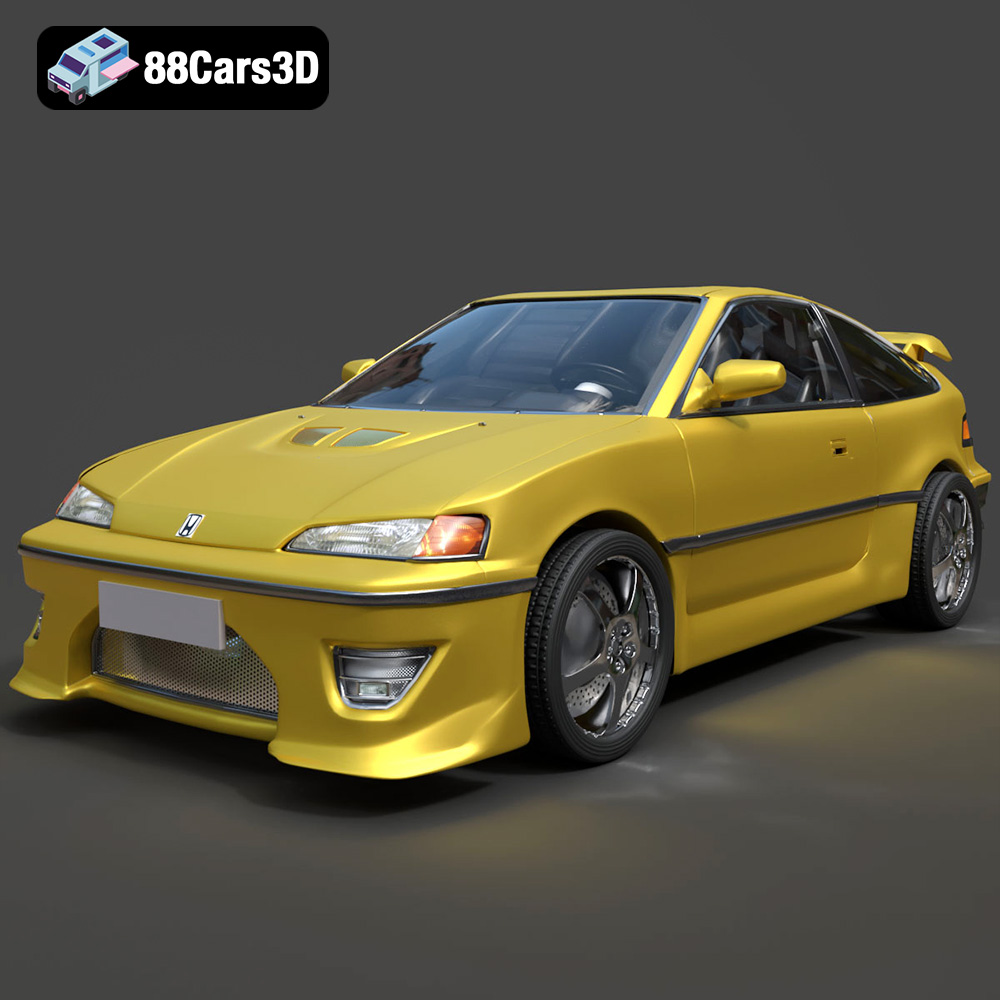
Texture: Yes
Material: Yes
Download the Honda CRX 1980 3D Model featuring clean geometry, realistic detailing, and a fully modeled interior. Includes .blend, .fbx, .obj, .glb, .stl, .ply, .unreal, and .max formats for rendering, simulation, and game development.
Price: $11.99
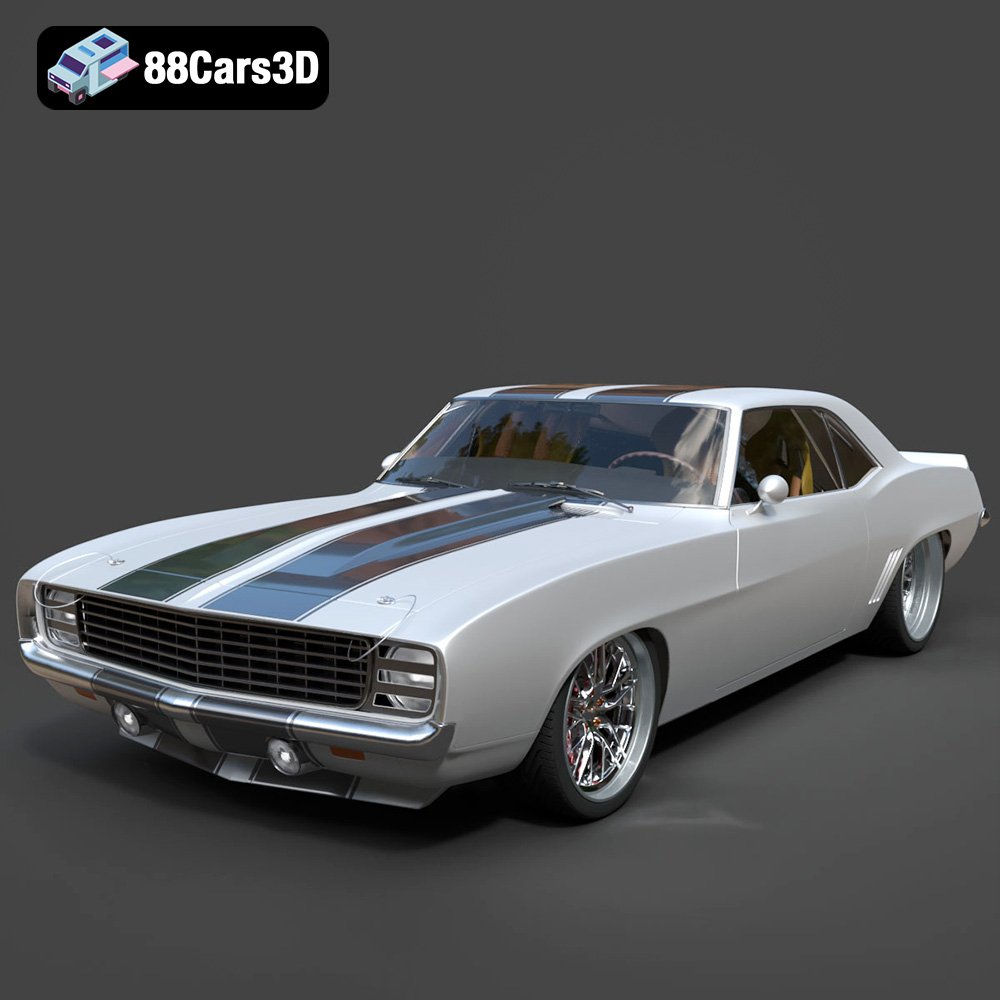
Texture: Yes
Material: Yes
Download the Chevrolet Camaro 69 Pro-007 3D Model featuring classic muscle car design and custom performance aesthetics. Includes .blend, .fbx, .obj, .glb, .stl, .ply, .unreal, and .max formats for rendering, simulation, and game development.
Price: $20.79

Texture: Yes
Material: Yes
Download the Honda Fit 2008 3D Model featuring a compact, versatile design with detailed exterior and interior components. Includes .blend, .fbx, .obj, .glb, .stl, .ply, .unreal, and .max formats for rendering, simulation, and game development.
Price: $10.79
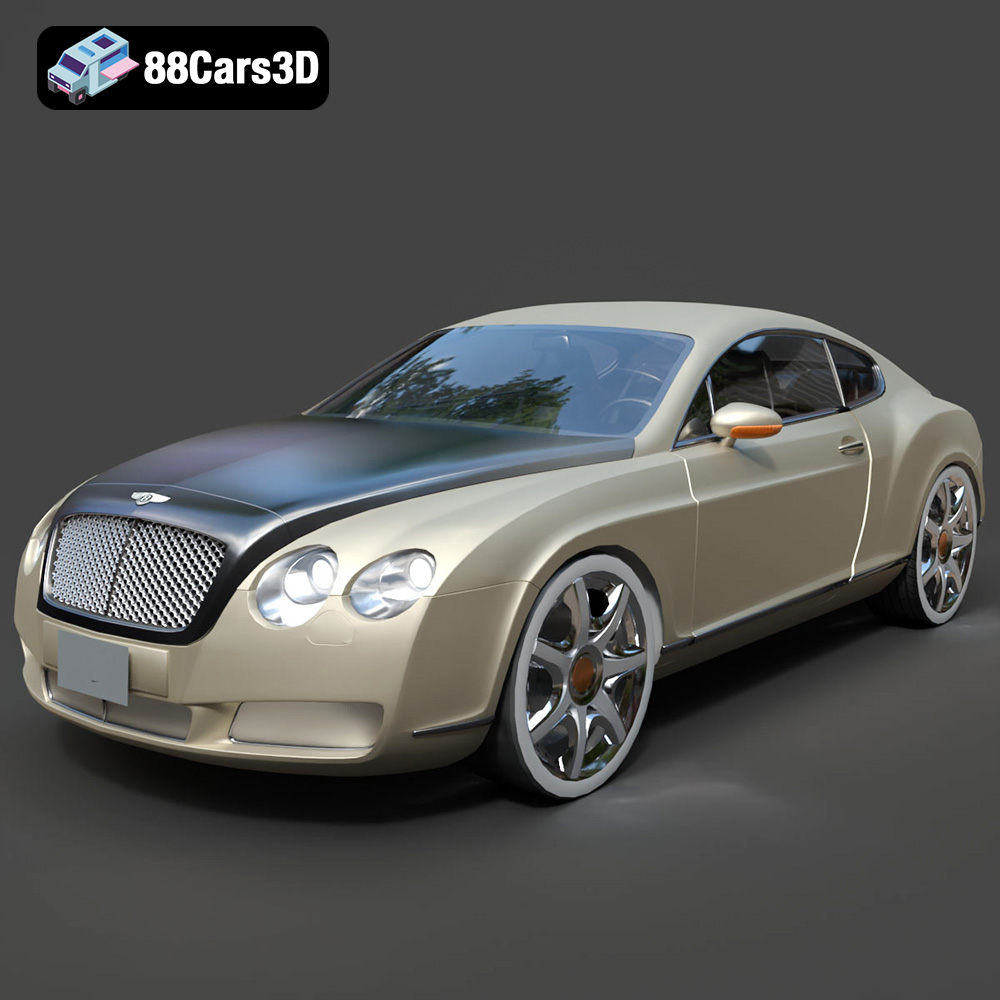
Texture: Yes
Material: Yes
Download the Bentley Continental GT-002 3D Model featuring a luxurious grand touring design and high-quality details. Includes .blend, .fbx, .obj, .glb, .stl, .ply, .unreal, and .max formats for rendering, simulation, and game development.
Price: $20.79

