⚡ FLASH SALE: Get 60% OFF All Premium 3D & STL Models! ⚡

The allure of a perfectly smooth, factory-finish surface on a 3D printed car model is a significant driver for hobbyists and collectors alike. Whether you’re meticulously recreating a classic supercar or prototyping a custom automotive design, the final aesthetic of your 3D printed object hinges on the quality of its surfaces. At 88cars3d.com, we understand the importance of delivering high-quality, print-ready STL files that serve as the foundation for stunning models. However, achieving that coveted smooth finish requires more than just a good model; it demands a deep understanding of 3D printing principles, meticulous slicing, and careful printer management. This comprehensive guide will walk you through the intricate process of transforming your raw 3D prints into masterpieces with surfaces so smooth, they’ll rival traditionally manufactured models. We’ll delve into everything from the fundamental structure of STL files to advanced post-processing techniques, equipping you with the knowledge to elevate your printable car models from good to extraordinary.
Before we can even think about hitting ‘print’, it’s crucial to understand the digital blueprint we’re working with: the STL file. This format, while ubiquitous in 3D printing, is fundamentally a tessellation of a 3D surface into a collection of triangles. The resolution and accuracy of this tessellation directly influence the smoothness of the final print. A model with a low triangle count will have a visibly faceted or “stair-stepped” appearance, even before the printer adds its own layer lines. Conversely, an STL file with an extremely high triangle count can lead to excessively large file sizes and potentially slow down slicing software, without necessarily yielding a proportional improvement in print quality if other factors aren’t optimized.
The way triangles are arranged (mesh topology) and their density (triangle count) are paramount. For smooth, curved surfaces common in automotive designs, a sufficiently dense mesh is required to approximate the curve accurately. Imagine trying to draw a perfect circle using only straight lines; the more lines you use, the smoother the approximation becomes. For detailed automotive models, especially those with subtle body curves and aerodynamic features, a higher polygon count is generally beneficial. However, there’s a point of diminishing returns. STL files from reputable sources, like those found on 88cars3d.com, are often optimized to provide a good balance between detail and file manageability, ensuring clean geometry that translates well to the printing process.
A common issue with STL files, especially those downloaded from less curated sources or created through complex modeling processes, is the presence of non-manifold geometry. This can include holes, inverted normals, or intersecting faces, all of which can cause significant problems during slicing and printing, leading to surface defects. Mesh repair is an essential preliminary step. Software like Meshmixer, Blender, or Netfabb are invaluable tools for diagnosing and fixing these issues. Ensuring your mesh is “watertight” and manifold is a prerequisite for achieving clean prints. This involves checking for holes, ensuring all faces have outward-pointing normals, and correcting any internal intersections. A well-formed manifold mesh provides a solid foundation for accurate layer-by-layer deposition.
The slicer is your primary tool for translating a 3D model into instructions for your 3D printer. The settings you choose here have a profound impact on the surface finish. It’s a delicate balancing act between speed, strength, and surface quality. For automotive models where visual appeal is key, prioritizing surface finish often means making trade-offs in print time.
The most direct way to influence surface smoothness is by adjusting the layer height. Standard FDM printers might operate with layer heights of 0.2mm or 0.3mm, which are great for speed and general-purpose prints. However, for car models demanding a smooth exterior, significantly reducing the layer height is essential. Layer heights of 0.1mm, 0.08mm, or even 0.05mm can dramatically reduce the visibility of layer lines. While this leads to longer print times, the resulting surface detail is often worth the wait. For example, a car body printed at 0.1mm layer height will appear considerably smoother than the same model printed at 0.3mm. Many high-resolution resin printers can achieve even finer layer heights, measured in microns, offering unparalleled smoothness straight off the build plate.
Printing too fast is a common culprit behind rough surfaces, ringing, or ghosting artifacts. While faster print speeds are desirable for efficiency, reducing speed, particularly for outer walls, can yield much smoother results. Lowering the print speed allows the molten plastic more time to cool and adhere properly, reducing inconsistencies. Similarly, adjusting acceleration and jerk settings can mitigate vibrations that manifest as subtle ripples or waves on the print surface. Experiment with slowing down the outer wall speed to around 30-50 mm/s and observe the difference. For very detailed sections or delicate curves, consider a dedicated “slow” print profile specifically for the outer layers.
While not directly about surface smoothness, the number of outer walls (or perimeters) plays a role. More walls can contribute to a more robust print and can sometimes help mask minor inconsistencies. However, for the smoothest surface, it’s the quality of those outer walls that matters most. Ensure your slicer is set up to produce clean, consistent lines for the outer shell. Avoid overly aggressive retraction settings, which can lead to under-extrusion at the start of a line, creating gaps or discontinuities on the surface.
Support structures are the unsung heroes (and sometimes villains) of 3D printing. Their purpose is to hold up overhangs and bridges, but their presence and removal process can significantly impact the final surface finish, especially on detailed car models where clean lines and smooth curves are paramount.
The goal is to use supports only where absolutely necessary and to choose types that are easy to remove cleanly. For overhangs and steep curves on car bodies, supports are often unavoidable. Tree supports (or organic supports in some slicers) can be incredibly effective for car models. They tend to branch out and connect to the model at fewer points, often at less critical surfaces, making them easier to snip away cleanly. Standard linear supports can leave more noticeable marks on the surface where they attach. When using standard supports, consider adjusting the support-to-model contact distance. A slightly larger gap can make removal easier, but too large a gap can compromise the stability of the overhang, leading to sagging.
How you orient your car model on the build plate is arguably one of the most critical decisions for surface quality. Consider the direction of your layer lines. On a car, these lines can be most noticeable along curved body panels. By orienting the model so that major curves are printed with their primary curvature parallel to the build plate, you minimize the “stair-stepping” effect. For example, printing a car body upright will result in horizontal layer lines wrapping around the curved fenders and roof. However, printing it on its side might allow for a smoother finish on the most visible side panels, although it will require more support. Carefully examining the model in your slicer and visualizing how the layers will be laid down is essential for choosing the optimal orientation.
A print that detaches from the build plate mid-print is disastrous, but even minor issues with bed adhesion can lead to the first few layers being slightly warped or uneven, affecting the base surface quality. Ensure your build plate is clean and level. Using adhesion aids like glue stick, hairspray, or specialized build surfaces can help. For materials like ABS, an enclosed printer and potentially a heated bed are crucial for preventing warping, which can ruin the smooth finish of the car’s underbody or chassis.
The filament or resin you choose, coupled with a well-calibrated printer, forms the bedrock of print quality. Different materials behave differently, and a printer that isn’t dialed in will struggle to produce smooth, consistent results regardless of the material or slicer settings.
PLA is often the go-to for beginners due to its ease of printing and low warping. It can produce good surface finishes, especially with fine layer heights. However, it can be brittle. PETG offers better layer adhesion and toughness but can be more prone to stringing, which can mar surfaces. ABS provides excellent strength and temperature resistance but requires higher print temperatures, a heated bed, and often an enclosure to combat warping, making it more challenging to achieve smooth finishes without careful control. For the absolute smoothest surfaces, especially for highly detailed models, resin printing (SLA, DLP, or MSLA) is often the preferred method. Resins allow for incredibly fine detail and smooth, almost injection-molded-like surfaces straight off the printer, with minimal visible layer lines. However, resin prints typically require more involved post-processing, including washing and curing.
A properly calibrated printer is non-negotiable for smooth prints. This involves several key areas:
For resin printers, calibration involves adjusting exposure times and ensuring the build plate is perfectly parallel to the screen.
While smaller nozzle sizes (e.g., 0.3mm or 0.25mm) can theoretically create finer details and smoother curves, they also significantly increase print times. For most FDM car models, a standard 0.4mm nozzle is often sufficient when combined with fine layer heights. The crucial factor is the nozzle’s condition. A worn or partially clogged nozzle can lead to inconsistent extrusion, resulting in rough lines, blobs, and gaps on the surface.
Even with meticulous slicing and printing, some level of post-processing is often necessary to achieve a truly professional, smooth finish on your 3D printed car models. This is where raw prints are transformed into display-worthy pieces.
Sanding is the most common method for removing layer lines and smoothing surfaces. Start with coarser grit sandpaper (e.g., 120-220 grit) to remove major imperfections and layer visibility, progressively moving to finer grits (400, 600, 800, 1000, and even higher). Wet sanding, using sandpaper with water or a lubricant, can help prevent clogging and produce a smoother finish. For FDM prints, sanding can sometimes reveal the internal structure if the layer adhesion is weak. Some materials, like ABS, can be smoothed using vapor smoothing with acetone (use extreme caution and proper ventilation). For resin prints, wet sanding is highly effective.
After initial sanding, you might notice small gaps between layers or minor surface defects. These can be filled using various modeling putties, wood filler, or specialized 3D printing fillers like XTC-3D. Apply the filler, let it cure, and then sand it smooth. Multiple applications might be necessary for larger imperfections. This layering of filling and sanding is key to achieving a truly seamless surface.
Once the surface is smooth and all imperfections are filled, priming is essential. A good quality primer (automotive primer works exceptionally well) will reveal any remaining flaws and provide an even base for paint. Apply thin, even coats. After priming, you may need to do some final light sanding (e.g., 800-1000 grit) to ensure a perfectly smooth surface before painting. Painting itself is an art form. Using an airbrush allows for very thin, even coats of paint, which are crucial for maintaining the smooth finish. Multiple thin coats are always better than one thick coat. Consider using automotive-grade paints for the best results and durability.
Many complex car models, especially highly detailed ones from platforms like 88cars3d.com, come as multi-part kits. Careful alignment and bonding are critical for a seamless final appearance. Use appropriate adhesives (e.g., CA glue or specific plastic cements) and consider using clamps or jigs to hold parts in place while they cure. Any gaps or misalignments at this stage will be highly visible once painted and will detract from the overall smooth finish.
Achieving a perfectly smooth surface on your 3D printed car models is a journey that involves understanding your digital files, mastering your slicer’s capabilities, tuning your printer meticulously, and employing effective post-processing techniques. By paying close attention to mesh quality, optimizing settings like layer height and print speed, strategically using supports, selecting the right materials, and embracing post-processing, you can elevate your 3D prints from functional prototypes to stunning display pieces. Remember that patience and practice are key; each print is an opportunity to learn and refine your process. The world of 3D printable car models offers endless possibilities for customization and creation, and with these techniques, you can ensure your finished models possess the smooth, flawless finish they deserve.

Meta Description:
Texture: Yes
Material: Yes
Download the Cadillac CTS-V Coupe 3D Model featuring detailed exterior styling and realistic interior structure. Includes .blend, .fbx, .obj, .glb, .stl, .ply, .unreal, and .max formats for rendering, simulation, AR VR, and game development.
Price: $13.9
Texture: Yes
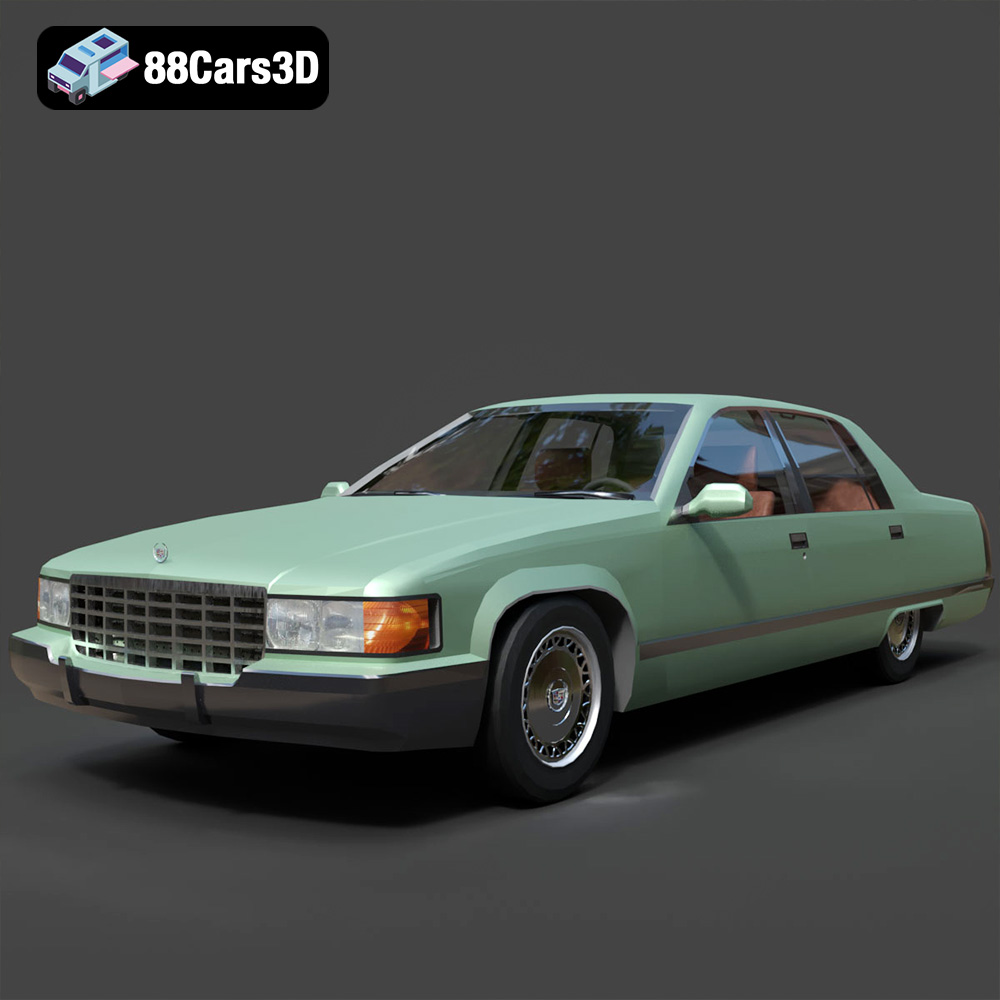
Material: Yes
Download the Cadillac Fleetwood Brougham 3D Model featuring its iconic classic luxury design and detailed exterior and interior. Includes .blend, .fbx, .obj, .glb, .stl, .ply, .unreal, and .max formats for rendering, simulation, and game development.
Price: $10.79
Texture: Yes
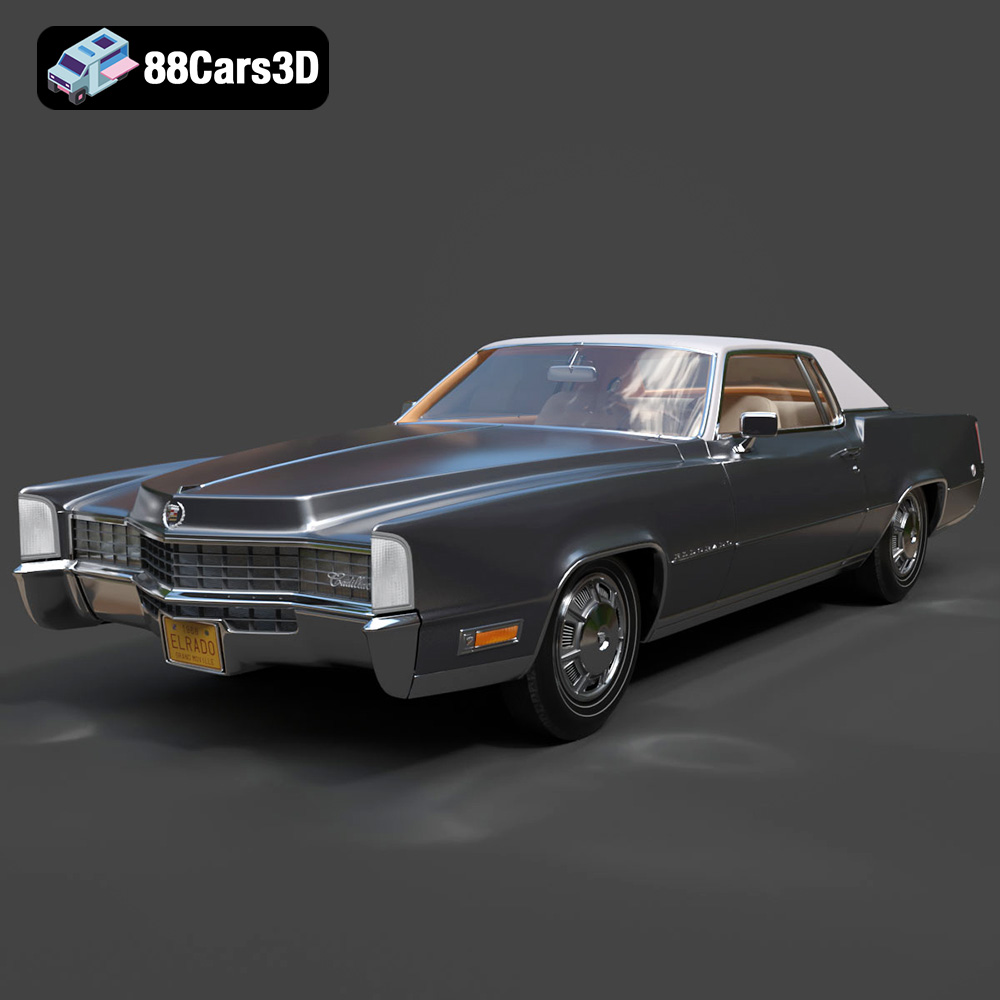
Material: Yes
Download the Cadillac Eldorado 1968 3D Model featuring its iconic elongated body, distinctive chrome accents, and luxurious interior. Includes .blend, .fbx, .obj, .glb, .stl, .ply, .unreal, and .max formats for rendering, simulation, and game development.
Price: $20.79

Texture: Yes
Material: Yes
Download the Cadillac CTS SW 2010 3D Model featuring a detailed exterior, functional interior elements, and realistic materials. Includes .blend, .fbx, .obj, .glb, .stl, .ply, .unreal, and .max formats for rendering, simulation, and game development.
Price: $10.79
Texture: Yes
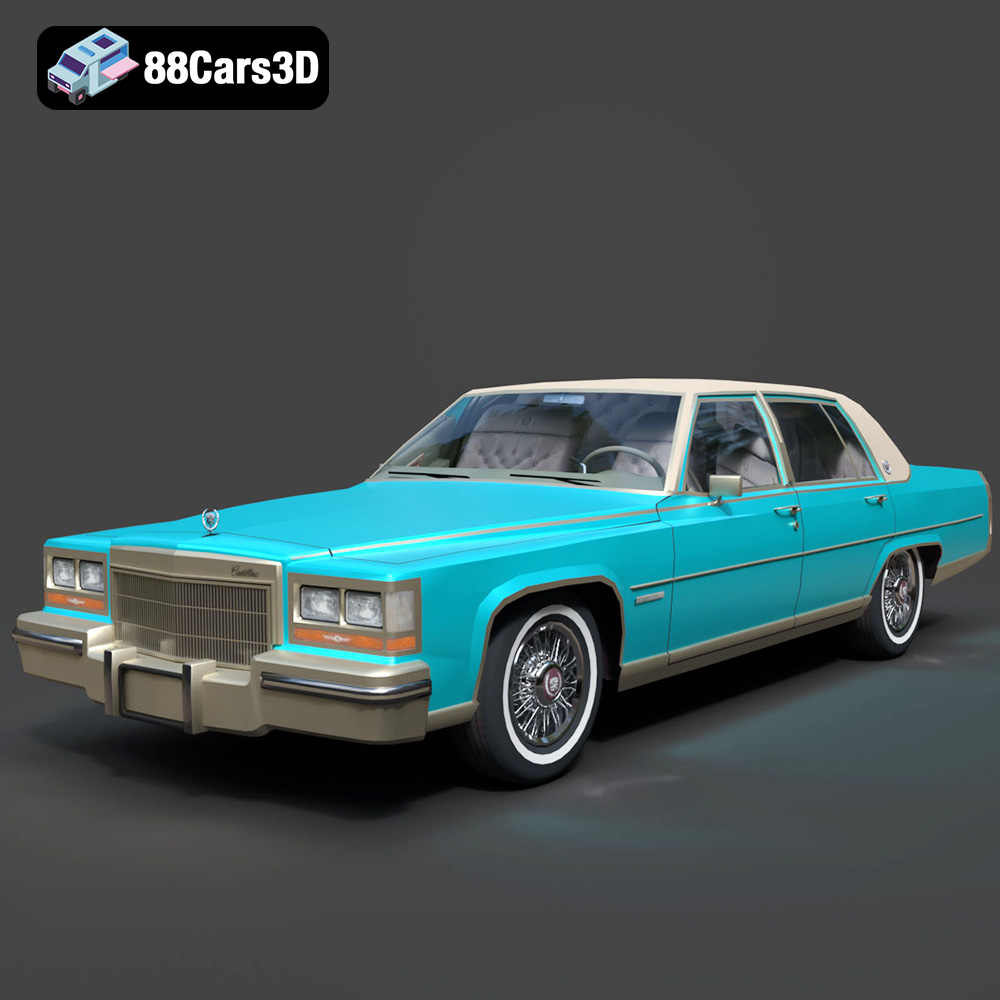
Material: Yes
Download the Cadillac Fleetwood Brougham 1985 3D Model featuring its iconic classic luxury design and detailed craftsmanship. Includes .blend, .fbx, .obj, .glb, .stl, .ply, .unreal, and .max formats for rendering, simulation, and game development.
Price: $10.79

Texture: Yes
Material: Yes
Download the Cadillac Eldorado 1978 3D Model featuring accurately modeled exterior, detailed interior, and period-correct aesthetics. Includes .blend, .fbx, .obj, .glb, .stl, .ply, .unreal, and .max formats for rendering, simulation, and game development.
Price: $10.79
Texture: Yes
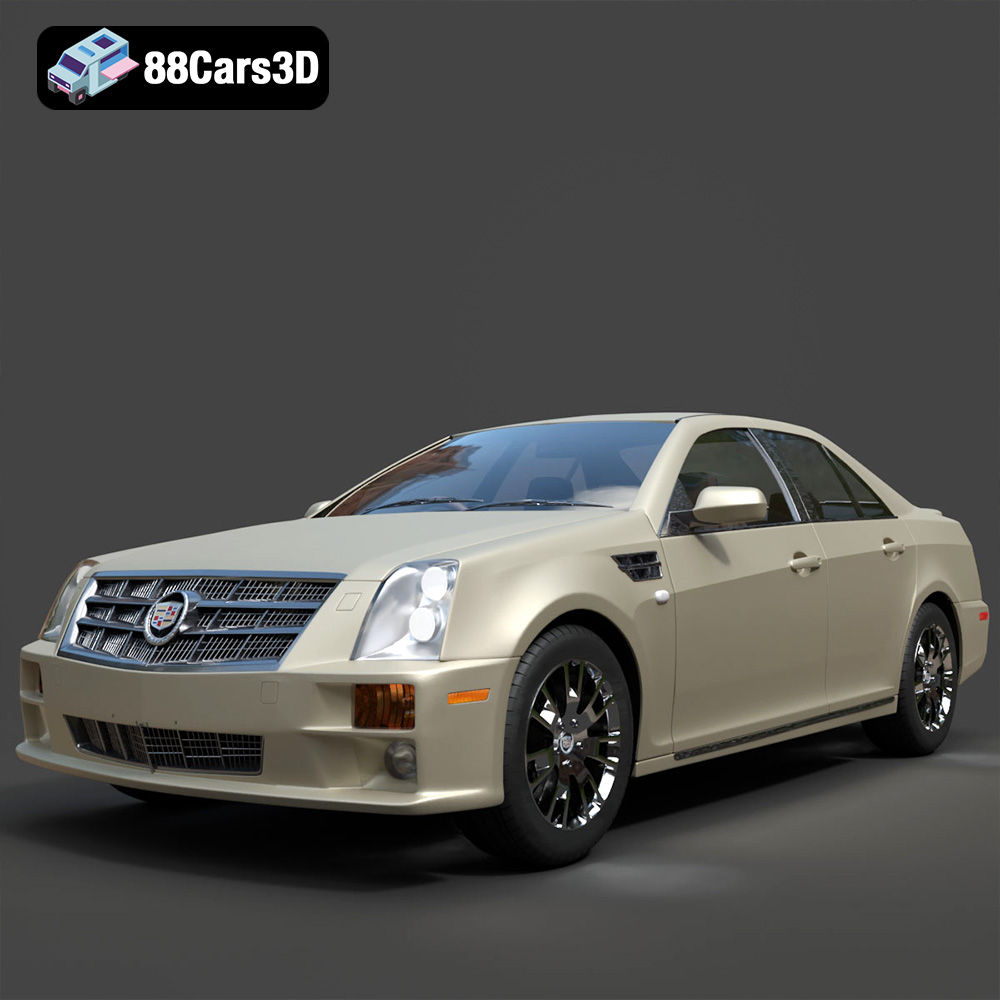
Material: Yes
Download the Cadillac STS-005 3D Model featuring a detailed exterior and interior. Includes .blend, .fbx, .obj, .glb, .stl, .ply, .unreal, and .max formats for rendering, simulation, and game development.
Price: $22.79
Texture: Yes
Material: Yes
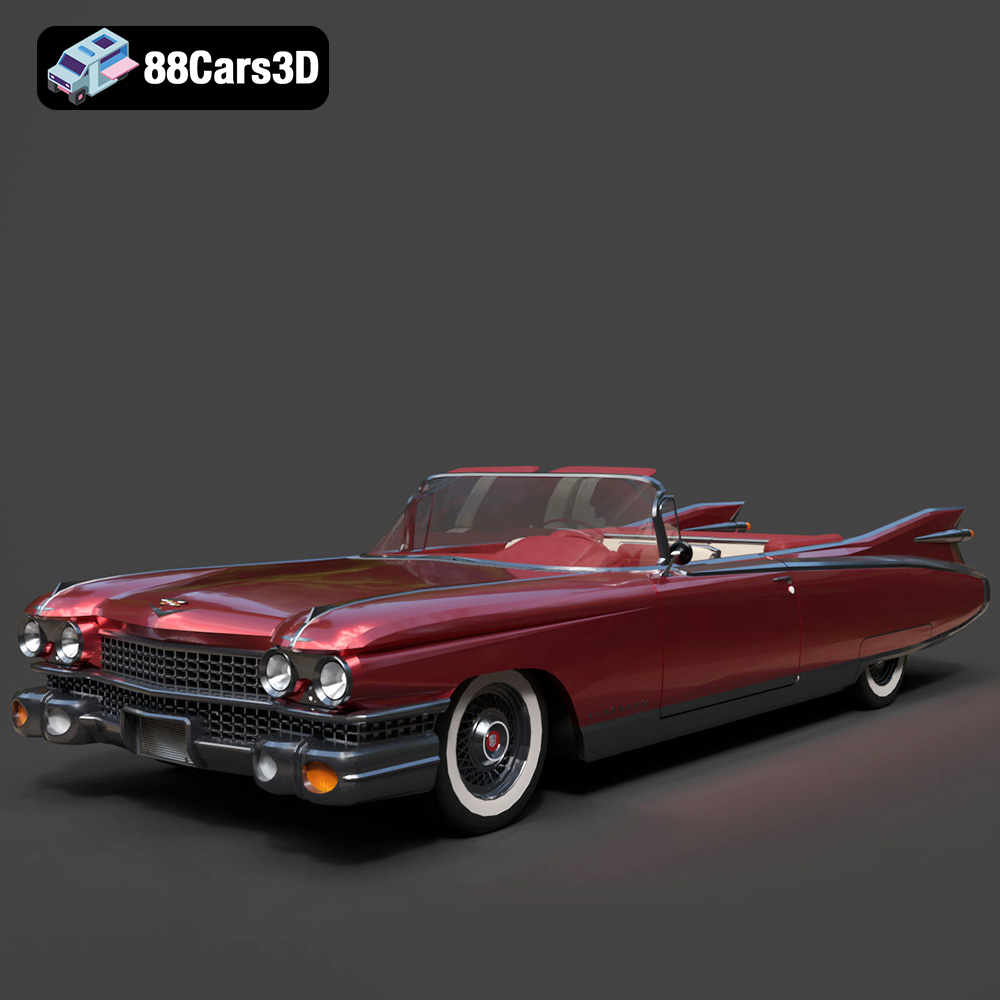
Download the Cadillac Eldorado Convertible (1959) 3D Model featuring iconic fins, luxurious chrome details, and a classic vintage design. Includes .blend, .fbx, .obj, .glb, .stl, .ply, .unreal, and .max formats for rendering, simulation, and game development.
Price: $20.79

Texture: Yes
Material: Yes
Download the Cadillac DTS-005 3D Model featuring its iconic luxury design, detailed interior, and realistic exterior. Includes .blend, .fbx, .obj, .glb, .stl, .ply, .unreal, and .max formats for rendering, simulation, and game development.
Price: $10.79

Texture: Yes
Material: Yes
Download the Buick LeSabre 1998 3D Model featuring a classic American full-size sedan design. Includes .blend, .fbx, .obj, .glb, .stl, .ply, .unreal, and .max formats for rendering, simulation, and game development.
Price: $10.79

