⚡ FLASH SALE: Get 60% OFF All Premium 3D & STL Models! ⚡

The automotive industry has been dramatically transformed by the advent of real-time rendering, moving from static, pre-rendered images to dynamic, interactive experiences. Unreal Engine stands at the forefront of this revolution, offering unparalleled visual fidelity, performance, and flexibility for automotive visualization, game development, virtual production, and interactive configurators. Achieving photorealistic results, however, requires a deep understanding of Unreal Engine’s capabilities and best practices for asset integration.
This comprehensive guide will take you on a technical journey, demonstrating how to leverage high-quality 3D car models from platforms like 88cars3d.com and integrate them seamlessly into Unreal Engine projects. We’ll cover everything from initial project setup and advanced material creation to cutting-edge features like Nanite and Lumen, empowering you to create breathtaking automotive experiences. Whether you’re an Unreal Engine developer, a 3D artist, or an automotive designer, this article provides the insights and actionable steps needed to push the boundaries of real-time automotive rendering. Prepare to unlock the full potential of your automotive visualization projects.
Embarking on an automotive visualization project in Unreal Engine begins with a solid foundation: proper project setup and configuration. The choices you make at this stage will significantly impact performance, workflow efficiency, and visual fidelity throughout your development cycle. While a “Blank” project offers maximum flexibility, templates like “Film/Video/Live Events” or even specific game templates can provide a good starting point with pre-configured settings tailored for visual quality or interactivity. The key is to understand and adjust these settings to suit the demanding nature of high-fidelity automotive rendering.
Crucially, modern automotive visualization heavily relies on advanced rendering features. For dynamic global illumination and reflections, **Lumen** is indispensable. Similarly, for handling high-polygon vehicle meshes without performance crippling, **Nanite** virtualized geometry is a game-changer. Both of these technologies, along with **Hardware Ray Tracing**, need to be enabled in your Project Settings early on. A well-organized folder structure from the outset is also vital for managing the numerous assets (meshes, textures, materials, Blueprints, maps) that comprise a complex automotive scene, ensuring a clean and collaborative workflow.
To begin, create a new Unreal Engine project, perhaps opting for a “Blank” template to ensure full control over all settings. Once inside, navigate to Edit > Project Settings. Under the “Engine” category, locate “Rendering.” Here, ensure “Lumen Global Illumination” and “Lumen Reflections” are enabled. For Hardware Ray Tracing, scroll down to “Ray Tracing” and tick the “Ray Tracing” checkbox. Enabling these features might require a restart of the editor. While these are essential for high-quality visuals, they are also computationally intensive.
Beyond specific features, managing overall engine scalability is critical. Go to Settings > Engine Scalability Settings (or View > Engine Scalability Settings in older versions) and set everything to “Epic” or “Cinematic” quality for development. This allows you to visualize your assets at their best. However, be prepared to adjust these downwards during optimization for specific target platforms (e.g., AR/VR, lower-end PCs). For profiling and identifying bottlenecks, getting familiar with console commands like `stat unit` and `stat gpu` will be invaluable, providing real-time performance metrics that guide your optimization efforts.
An organized asset pipeline is the backbone of any professional Unreal Engine project, especially when dealing with detailed **3D car models**. Start by establishing a consistent and logical folder structure within your Content Browser. A common approach involves creating top-level folders such as “Vehicles,” “Environments,” “Materials,” “Textures,” “Blueprints,” “Maps,” “Sequences,” and “UI.” Within “Vehicles,” you might further categorize by manufacturer or model. For instance, `Content/Vehicles/Audi/R8/Meshes`, `Content/Vehicles/Audi/R8/Materials`, and `Content/Vehicles/Audi/R8/Textures`.
Adopting clear naming conventions (e.g., `SM_Car_Body_AudiR8`, `T_Car_Paint_BaseColor`, `MI_Car_Paint_Red`) is equally important. This ensures quick identification of assets and simplifies searching, especially as your project grows. For collaborative environments, implementing a version control system like Perforce or Git LFS is highly recommended. These systems track changes, prevent conflicts, and allow teams to work on the same project simultaneously. When sourcing automotive assets from marketplaces such as 88cars3d.com, it’s beneficial to integrate their provided folder structures or adapt them to your established conventions, ensuring consistency and ease of management.
The visual fidelity of your automotive visualization hinges on the quality of your base 3D models. Marketplaces like 88cars3d.com specialize in providing high-quality **3D car models** specifically designed for real-time rendering, featuring clean topology, proper UV mapping, and realistic material setups. Importing these models into Unreal Engine correctly and applying the right optimizations are crucial steps to achieve both visual excellence and optimal performance. The process involves more than just dragging and dropping; it requires careful attention to import settings, scale, and the strategic application of Unreal Engine’s powerful tools like Nanite.
High-fidelity models often come with substantial polygon counts, which historically posed significant performance challenges in real-time engines. However, with the advent of **Nanite**, Unreal Engine has revolutionized how complex geometric detail is handled, making it feasible to use cinematics-grade assets directly in real-time. Understanding how to enable and utilize Nanite, alongside traditional optimization techniques, ensures that your meticulously crafted **automotive visualization** assets from 88cars3d.com truly shine without bogging down your project.
When importing your **3D car models** from 88cars3d.com, you’ll typically receive them in formats like FBX or USD (Universal Scene Description). In Unreal Engine, simply drag and drop the `.fbx` or `.usd` file into your Content Browser, or use the “Import” button. The “FBX Import Options” dialog box is where critical decisions are made. For a complete car model, you’ll generally want to enable “Skeletal Mesh” if the car has rigging for suspension/wheels (less common for static visualization, more for drivable vehicles), or simply “Static Mesh” if it’s a fixed model. Important settings include:
* **Combine Meshes:** Often disabled for cars, allowing individual components (body, doors, wheels) to be separate Static Meshes, which is ideal for interactivity and material assignments.
* **Generate Lightmap UVs:** Essential for proper static lighting and ambient occlusion, even when using Lumen. Unreal Engine can generate a second UV channel (UV Channel 1) automatically.
* **Import Materials:** Usually enabled to bring in basic material slots, which you’ll then refine using Unreal’s PBR system.
* **Import Textures:** Enabled if textures are embedded or in the same folder.
* **Transform:** Ensure “Convert Scene Unit” and “Convert Scene Y-Up to Z-Up” are correctly handled based on your source software (e.g., Maya/3ds Max often uses centimeters and Y-up, Unreal uses meters and Z-up). Confirm the imported scale matches real-world dimensions by placing a known reference object (e.g., a standard human character) next to the car.
**Nanite** virtualized geometry is a cornerstone feature for handling the extremely high polygon counts often associated with **3D car models** designed for extreme detail, such as those found on 88cars3d.com. Traditional methods relied heavily on Level of Detail (LODs) and aggressive polygon reduction, often sacrificing detail. Nanite eliminates this trade-off by intelligently streaming and rendering only the necessary geometric detail at any given moment, regardless of the original polygon count. A single car body might have millions of triangles, and Nanite handles it with ease.
To enable Nanite on an imported Static Mesh, open the Static Mesh Editor (double-click the mesh in the Content Browser). In the “Details” panel, under the “Nanite Settings” section, simply tick the “Enable Nanite” checkbox. Unreal Engine will then process the mesh, converting it to a Nanite representation. Key benefits include:
* **Massive Polycount Support:** You can import incredibly detailed CAD models or high-poly sculpts without manual optimization.
* **Automatic LODs:** Nanite automatically handles LODs and culling, simplifying workflow.
* **Efficient Streaming:** Only visible and necessary triangles are streamed and rendered, vastly improving performance compared to traditional high-poly meshes.
It’s important to note that Nanite currently supports Static Meshes only and has some limitations with features like mesh deformation or specific material effects. For more information, including detailed setup and troubleshooting, consult the official Unreal Engine documentation at https://dev.epicgames.com/community/unreal-engine/learning.
The true magic of **automotive visualization** in Unreal Engine comes to life through physically based rendering (PBR) materials. PBR materials accurately simulate how light interacts with surfaces in the real world, allowing you to create incredibly realistic car paint, glass, chrome, and interior fabrics. Understanding the core principles of PBR and mastering Unreal Engine’s Material Editor are essential skills for any artist aiming for photorealism. High-quality **3D car models** from 88cars3d.com come with clean UV mapping, providing an excellent foundation for applying detailed PBR textures.
Unreal Engine’s Material Editor is a powerful node-based system that allows for complex material creation. For automotive surfaces, this means going beyond simple diffuse textures and delving into layers, clear coats, and advanced physically accurate properties. From the subtle metallic flakes in a paint finish to the intricate reflections on polished chrome, every surface demands meticulous attention to its PBR parameters. Properly setting up these materials is not just about aesthetics; it’s also crucial for how they react to **Lumen** global illumination and reflections, ensuring a cohesive and believable scene.
Physically Based Rendering (PBR) relies on several key texture maps and parameters to define a surface’s properties:
* **Base Color (Albedo):** Defines the diffuse color of the surface, stripped of any lighting information.
* **Metallic:** A binary value (0 or 1) for non-metals or metals. Car bodies, chrome trim are metallic (1); plastic, rubber, glass are non-metallic (0).
* **Specular:** Controls the intensity of non-metallic reflections. In Unreal, it’s often set to a default value (0.5) for most non-metals.
* **Roughness:** Defines how sharp or blurry reflections are (0 for perfectly smooth/glossy, 1 for completely rough/matte).
* **Normal Map:** Adds surface detail without adding geometry, simulating bumps and grooves.
* **Ambient Occlusion (AO):** Simulates self-shadowing in crevices, adding depth.
* **Emissive Color:** For glowing elements like headlights or displays.
In the Material Editor, you’ll connect these texture maps (typically 2K, 4K, or 8K resolution depending on the size and importance of the surface) to the corresponding inputs of the main Material node. For car paint, a common approach involves creating a “Master Material” with various parameters (color, metallic, roughness, flake intensity) exposed as Material Instance Parameters. This allows artists to create countless variations of car paint (e.g., Red Metallic, Blue Matte) from a single base material by simply adjusting parameters in a Material Instance, optimizing workflow and resource usage.
Achieving ultimate realism for **automotive visualization** requires specialized material techniques:
* **Car Paint:** This is often the most complex material. It typically involves a blend of a base metallic/roughness layer and a clear coat layer. The clear coat can be simulated by using two separate `Clear Coat` and `Clear Coat Roughness` inputs in the Material node, or by manually blending two sets of PBR values. For metallic flakes, techniques include using a `Custom` node with HLSL code for anisotropic reflections or a micro-normal map combined with a subtle Fresnel effect. Exposing parameters like Clear Coat Strength, Flake Density, and Flake Color allows for immense customization.
* **Glass:** For transparent elements like windows, set the Material’s “Blend Mode” to “Translucent” and “Shading Model” to “Default Lit” or “Thin Translucent.” Inputs for Opacity, Refraction (using `Refraction` node and `ScreenPosition`), and Color are crucial. Tinted glass can be achieved by multiplying a color with the `Base Color` and adjusting opacity. For headlights, an emissive component is added.
* **Tires:** Tires benefit from detailed normal maps for tread patterns, roughness variations for worn areas, and often an additional ambient occlusion pass. A subtle **Blueprint** script could also dynamically adjust tire deformation based on physics.
* **Chrome/Polished Metals:** These are typically `Metallic` = 1, `Roughness` close to 0, and `Base Color` usually a very light gray or white. The key here is the accuracy of **Lumen** reflections and the environment map.
By meticulously crafting these advanced materials, leveraging the clean UVs and geometry from assets like those on 88cars3d.com, you can achieve a level of photorealism that truly impresses.
Lighting is the soul of any **automotive visualization**, and in Unreal Engine, **Lumen** has revolutionized the way we approach real-time global illumination and reflections. Gone are the days of baking static lighting with Lightmass for every scene change; Lumen offers fully dynamic, real-time bounce lighting that reacts instantly to light source movements, material changes, and geometry alterations. This capability is paramount for interactive experiences like **car configurators** and virtual production where flexibility and immediacy are key.
While Lumen provides excellent dynamic global illumination, it often works in conjunction with other lighting techniques, including hardware ray tracing, to achieve the highest possible fidelity. Understanding how Lumen operates, its strengths, limitations, and how to optimize it for performance is crucial. It’s about creating a believable and immersive environment where your **3D car models** are showcased under the most flattering and accurate lighting conditions, enhancing their realism and aesthetic appeal.
**Lumen** is Unreal Engine’s next-generation global illumination and reflections system, designed for next-gen consoles and high-end PCs. It primarily works by casting software rays against signed distance fields (generated from scene geometry) and screen traces to gather indirect lighting information. To enable Lumen, navigate to Project Settings > Engine > Rendering and ensure “Lumen Global Illumination” and “Lumen Reflections” are checked. You’ll also need a Post Process Volume in your scene, with “Global Illumination Method” and “Reflection Method” set to “Lumen.”
Lumen’s greatest strength lies in its ability to deliver fully dynamic indirect lighting, meaning light bounces realistically from surfaces, illuminating areas not directly hit by a light source. This is vital for automotive scenes, as car bodies are highly reflective and metallic, and their surfaces drastically influence the lighting of the surrounding environment and vice-versa. Emissive materials (e.g., car headlights, dashboard screens) also contribute to Lumen’s global illumination, making interactive lighting effects incredibly convincing.
However, Lumen also comes with performance considerations and potential artifacts like noise or light leaks. Debugging tools such as `r.Lumen.Visualize 1` (to see the Lumen scene representation) or `r.Lumen.ScreenTraces 0` (to disable screen traces for debugging) are invaluable. Optimizing Lumen often involves ensuring your scene geometry is solid (no gaps), adjusting quality settings in the Post Process Volume (e.g., “Max Traces,” “Exposure Compensation”), and judicious use of emissive materials. For a deeper dive into Lumen’s technical intricacies and advanced settings, refer to the official Unreal Engine documentation at https://dev.epicgames.com/community/unreal-engine/learning.
While Lumen handles dynamic global illumination and reflections efficiently, for specific high-quality effects, blending it with **Hardware Ray Tracing** (HWRT) can push visual fidelity even further. HWRT excels at very sharp, accurate reflections and shadows, particularly on highly polished surfaces like car paint and chrome. In your Post Process Volume, you can set “Reflection Method” to “Lumen” but then use “Ray Tracing Reflections” for specific objects or layers by overriding individual mesh settings or material properties. This hybrid approach allows for targeted quality boosts where it matters most, without incurring the full performance cost of HWRT for every effect.
Traditional lighting elements remain essential. A **Directional Light** simulates the sun, providing strong primary shadows. A **Skylight** captures the ambient lighting of the environment, crucial for realistic reflections on car bodies. Using High Dynamic Range Images (HDRIs) as the source for your Skylight (and sometimes as an environment sphere) provides rich, accurate global illumination and reflections. **Point Lights** and **Spot Lights** are used for specific accents, such as headlights, brake lights, or studio lighting setups. For interiors, where Lumen might struggle with very small, enclosed spaces, adding a few strategically placed Rectangle Lights can significantly improve illumination, ensuring your **3D car models** are perfectly lit from every angle.
Beyond stunning static renders, Unreal Engine empowers creators to build rich, interactive experiences around **3D car models**. This is where **Blueprint** visual scripting and **Sequencer** cinematic tools become indispensable. Whether you’re developing a sophisticated **automotive configurator** where users can customize a vehicle in real-time, or crafting a captivating product showcase film, Unreal Engine provides the tools to bring your creative vision to life. The ability to combine logical scripting with powerful animation capabilities opens up a world of possibilities for engagement and storytelling.
Blueprint allows artists and designers to add complex interactivity without writing a single line of code, while Sequencer provides a robust timeline editor for orchestrating cinematic camera moves, animations, and dynamic events. Together, these tools enable dynamic demonstrations of vehicle features, interactive showrooms, and virtual production workflows, making the **automotive visualization** process far more dynamic and compelling. Furthermore, integrating physics simulation for realistic vehicle dynamics can elevate the user experience significantly, especially for drivable prototypes or **game assets**.
**Blueprint** is Unreal Engine’s powerful visual scripting system, enabling non-programmers to create complex gameplay and interactive logic. For automotive applications, Blueprints are central to developing interactive **car configurators** and dynamic demonstrations. You can start by creating a Blueprint Actor that encapsulates your car model (or its individual components). This allows you to define custom events and functions specific to the vehicle.
Common Blueprint functionalities for cars include:
* **Material Swapping for Paint Colors:** Create an array of `Material Instance Dynamic` references for different paint colors. When a UI button is pressed (from a UMG widget), the Blueprint can set the material of the car body mesh to the selected instance.
* **Opening Doors/Trunk/Hood:** Use `Timeline` nodes to linearly interpolate the rotation or translation of individual door meshes from their closed to open positions. Input events (e.g., keyboard presses, mouse clicks on specific components) can trigger these animations.
* **Toggling Lights:** Switch the visibility or intensity of light components (Point Lights, Spot Lights) attached to headlights or taillights.
* **Wheel Rotation/Suspension:** For drivable vehicles, Blueprints handle complex vehicle physics (using Unreal’s Chaos Vehicle system) to simulate wheel rotation, suspension compression, and steering. For static configurators, simple rotation over time can add subtle realism.
By combining `Event Graph` logic with `Variables` and `Functions`, you can build sophisticated interactive experiences. For instance, a function could take a `Color` input and apply it to a specific `Material Instance Parameter` on the car body, allowing for infinite color variations within your configurator UI.
**Sequencer** is Unreal Engine’s multi-track cinematic editor, analogous to a non-linear video editing suite. It’s the go-to tool for crafting high-quality **cinematic content** and product showcases for **automotive visualization**. Within Sequencer, you can orchestrate camera movements, character animations, environmental effects, and even trigger Blueprint events over time.
To create a car showcase, you’d typically:
1. **Create a New Level Sequence:** Right-click in the Content Browser > Animation > Level Sequence.
2. **Add Your Car Actor:** Drag your car’s Blueprint Actor into the Sequencer timeline.
3. **Animate Cameras:** Create `Cine Camera Actors` and add them to Sequencer. Keyframe their `Transform` properties to create smooth, dynamic camera paths around the vehicle, highlighting specific details. Adjust `Focal Length` and `Focus Settings` for cinematic depth of field.
4. **Animate Car Components:** Keyframe properties like door rotations, wheel spins, or even material parameter changes (e.g., transitioning between different paint finishes) to tell a story or demonstrate features.
5. **Add Lighting Changes:** Animate light intensities, colors, or even the sun position (Directional Light) to create different moods or day/night cycles.
6. **Render the Sequence:** Once your cinematic is complete, use the `Render Movie` feature in Sequencer (or the `Movie Render Queue` plugin for advanced options) to export it as an image sequence (EXR, PNG) or video file. The Movie Render Queue offers superior anti-aliasing, motion blur, and frame consistency, ideal for high-fidelity output. This makes Sequencer an invaluable tool for creating marketing materials, product reveals, and **virtual production** content.
While Unreal Engine excels at visual fidelity, achieving peak performance, especially for demanding applications like **AR/VR** and high-end **automotive visualization**, requires diligent optimization. A beautifully rendered **3D car model** that runs at a low frame rate provides a poor user experience. Effective optimization strategies encompass everything from managing geometric complexity and texture memory to fine-tuning rendering settings and understanding target platform limitations. This becomes even more critical when deploying interactive experiences across diverse hardware, from powerful workstations to mobile devices or complex **LED wall** setups for **virtual production**.
The ultimate goal is to strike a balance between visual quality and performance, ensuring that your automotive projects are not only stunning but also responsive and accessible on their intended platforms. This section will delve into practical techniques and considerations for optimizing your Unreal Engine projects, preparing them for seamless deployment, and maximizing reach for your **game assets** or visualization tools.
Effective optimization is a continuous process throughout development. While **Nanite** handles high-poly meshes automatically, other assets and scene elements still require attention:
* **Level of Detail (LODs):** For non-Nanite meshes (e.g., small interior parts, environmental elements), generate multiple LODs. Unreal Engine can automatically generate these, or you can create them manually in your 3D software for more control. LODs swap out higher-detail meshes for lower-detail versions as the camera moves away, drastically reducing polygon count. Set appropriate screen size thresholds for each LOD to ensure smooth transitions.
* **Texture Streaming:** Ensure all textures have mipmaps enabled (default) to allow Unreal to stream lower-resolution versions when needed, saving VRAM. Adjust texture group settings (e.g., `Car_Body_Textures`, `UI_Textures`) to prioritize quality for critical assets.
* **Draw Call Reduction:** Merging multiple small Static Meshes into a single mesh (e.g., small engine components) reduces draw calls. Instancing (using `Instanced Static Mesh Components` or `Hierarchical Instanced Static Mesh Components`) for repetitive objects like bolts or tire treads is also highly efficient.
* **Shader Complexity:** Overly complex materials can be performance bottlenecks. Use the “Shader Complexity” view mode (View Mode > Optimization Viewmodes) to identify expensive shaders and simplify them where possible.
* **Profiling Tools:** Leverage Unreal Engine’s built-in profilers: `Stat Unit` (overall frame time, CPU/GPU/Game thread), `Stat GPU` (detailed GPU breakdown), `GPU Visualizer` (detailed per-pass GPU cost). These are crucial for pinpointing performance bottlenecks.
* **Lighting Optimization:** While **Lumen** is dynamic, it can be expensive. Reduce the number of dynamic light sources where possible, use baked lighting for static elements if Lumen isn’t strictly necessary for that part of the scene, and adjust Lumen quality settings in the Post Process Volume.
Deploying **automotive visualization** projects to specialized platforms like **AR/VR** and **Virtual Production** (e.g., LED walls) introduces unique optimization challenges.
* **AR/VR Optimization:** AR/VR demands extremely high and stable frame rates (e.g., 90 FPS per eye) to prevent motion sickness. This often means sacrificing some visual fidelity for performance.
* **Forward Rendering:** Enable “Forward Shading” in Project Settings for improved performance in VR.
* **Reduced Lights:** Use fewer dynamic lights. Bake static lights wherever possible.
* **Optimized Shaders:** Avoid complex shader instructions, extensive clear coats, or multiple translucent layers.
* **Aggressive LODs:** Even with Nanite, non-Nanite meshes need robust LODs. For mobile AR, consider even lower-poly base meshes.
* **Occlusion Culling:** Ensure proper occlusion culling is working to prevent rendering hidden geometry.
* **Mobile Specifics:** For mobile AR (iOS/Android), use specific mobile rendering paths and tailor settings (e.g., “Mobile HDR” off for maximum performance on older devices).
* **Virtual Production (LED Walls):** These setups involve rendering content across multiple displays, often with specific color management and synchronization requirements.
* **nDisplay:** Unreal Engine’s nDisplay system is purpose-built for multi-display setups, handling perspective correction and synchronization across multiple render nodes.
* **Performance:** LED walls require consistent high frame rates (e.g., 30-60 FPS) across all render nodes. Optimization is similar to VR, focusing on maximizing GPU efficiency.
* **Color Management (ACES):** Implement ACES (Academy Color Encoding System) workflow for consistent color reproduction across the entire pipeline, from content creation to LED wall display.
* **Synchronization:** Ensure all render nodes are perfectly synchronized, often via hardware frame lock, to prevent visual tearing or stuttering on the LED wall.
* **Light Spill:** Be mindful of real-world light spill from the LED wall onto physical objects (and vice-versa) and try to match the lighting as closely as possible in your virtual scene.
The journey through integrating high-quality **3D car models** into Unreal Engine for **automotive visualization** is a testament to the power and flexibility of real-time rendering. From the foundational project setup to leveraging cutting-edge features like **Nanite** and **Lumen**, and then building interactive experiences with **Blueprint** and **Sequencer**, we’ve explored the comprehensive pipeline required to achieve stunning photorealism and engaging interactivity. The ability to source meticulously crafted assets from marketplaces like 88cars3d.com provides an invaluable starting point, allowing artists and developers to focus their efforts on creative implementation and optimization.
Ultimately, mastering Unreal Engine for automotive projects is about balancing artistic vision with technical execution. It’s about crafting PBR materials that truly reflect reality, orchestrating dynamic lighting that breathes life into your scenes, and optimizing every aspect to ensure a smooth, high-performance experience across diverse platforms, from high-end configurators to immersive AR/VR applications and advanced virtual production stages. By applying the strategies and techniques outlined in this deep dive, you are well-equipped to create captivating automotive experiences that push the boundaries of real-time rendering. The future of automotive visualization is real-time, and with Unreal Engine, you hold the keys to unlock its full potential. We encourage you to explore the vast library of meticulously crafted 3D car models available at 88cars3d.com and embark on your next Unreal Engine project.

Meta Description:
Texture: Yes
Material: Yes
Download the Cadillac CTS-V Coupe 3D Model featuring detailed exterior styling and realistic interior structure. Includes .blend, .fbx, .obj, .glb, .stl, .ply, .unreal, and .max formats for rendering, simulation, AR VR, and game development.
Price: $13.9
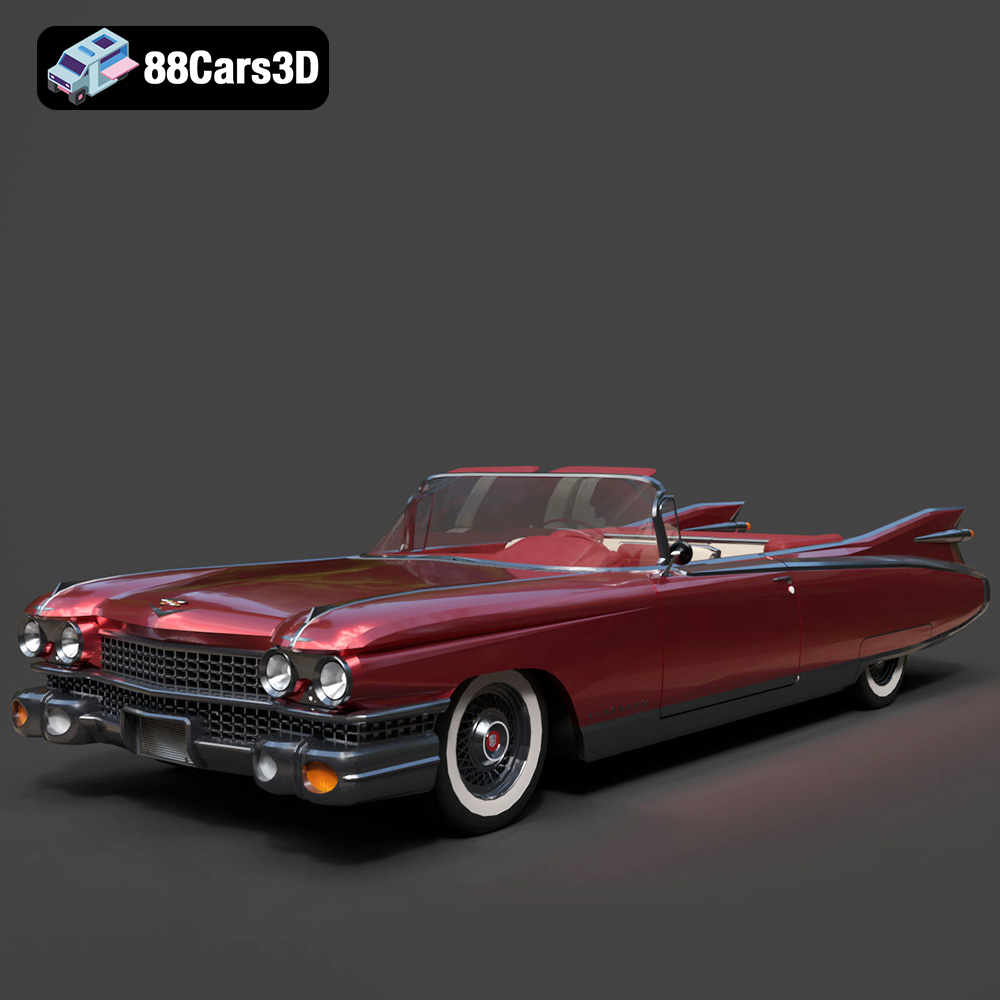
Texture: Yes
Material: Yes
Download the Cadillac Eldorado Convertible (1959) 3D Model featuring iconic fins, luxurious chrome details, and a classic vintage design. Includes .blend, .fbx, .obj, .glb, .stl, .ply, .unreal, and .max formats for rendering, simulation, and game development.
Price: $20.79

Texture: Yes
Material: Yes
Download the Cadillac DTS-005 3D Model featuring its iconic luxury design, detailed interior, and realistic exterior. Includes .blend, .fbx, .obj, .glb, .stl, .ply, .unreal, and .max formats for rendering, simulation, and game development.
Price: $10.79

Texture: Yes
Material: Yes
Download the Buick LeSabre 1998 3D Model featuring a classic American full-size sedan design. Includes .blend, .fbx, .obj, .glb, .stl, .ply, .unreal, and .max formats for rendering, simulation, and game development.
Price: $10.79
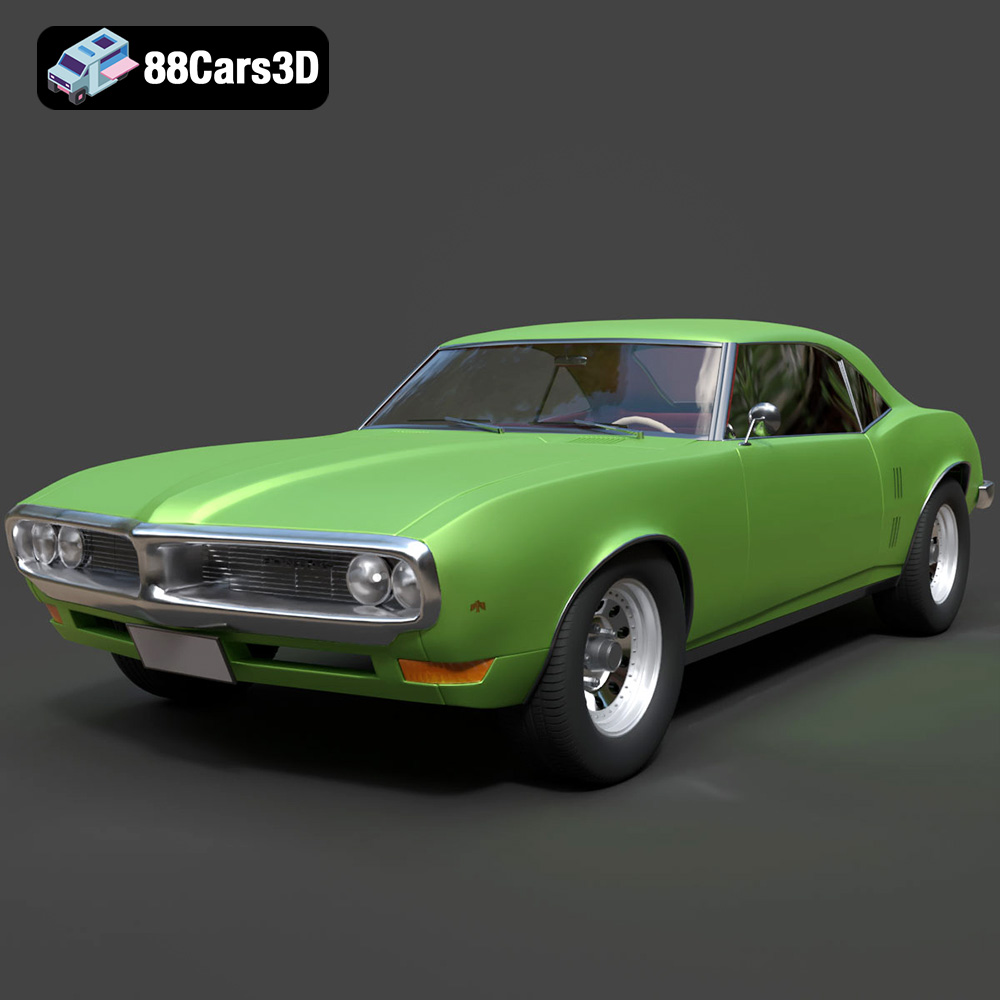
Texture: Yes
Material: Yes
Download the Pontiac Firebird 1998 3D Model featuring clean geometry, realistic detailing, and a fully modeled interior. Includes .blend, .fbx, .obj, .glb, .stl, .ply, .unreal, and .max formats for rendering, simulation, and game development.
Price: $10

Texture: Yes
Material: Yes
Download the Opel Astra 2008 3D Model featuring clean geometry, realistic detailing, and a fully modeled interior. Includes .blend, .fbx, .obj, .glb, .stl, .ply, .unreal, and .max formats for rendering, simulation, and game development.
Price: $10

Texture: Yes
Material: Yes
Download the Mercedes Benz Joaquin-007 3D Model featuring clean geometry, realistic detailing, and a fully modeled interior. Includes .blend, .fbx, .obj, .glb, .stl, .ply, .unreal, and .max formats for rendering, simulation, and game development.
Price: $19.99
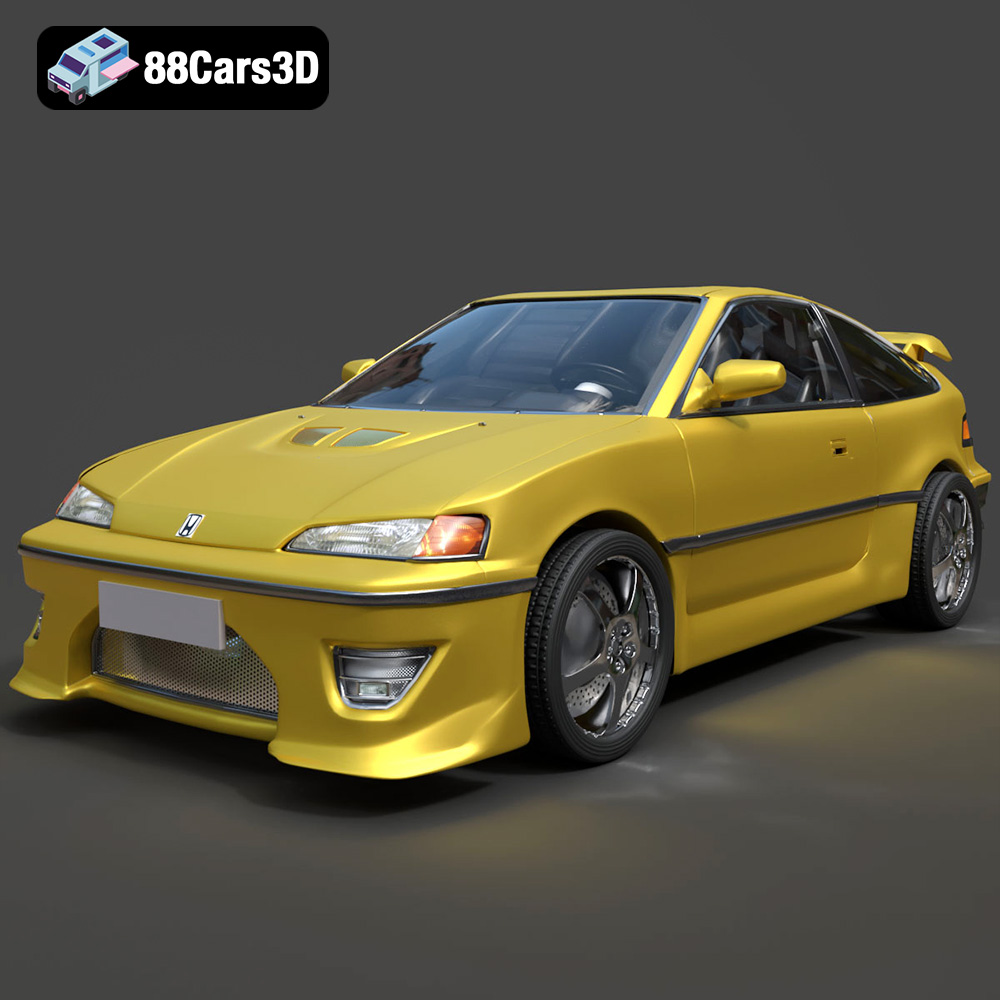
Texture: Yes
Material: Yes
Download the Honda CRX 1980 3D Model featuring clean geometry, realistic detailing, and a fully modeled interior. Includes .blend, .fbx, .obj, .glb, .stl, .ply, .unreal, and .max formats for rendering, simulation, and game development.
Price: $11.99
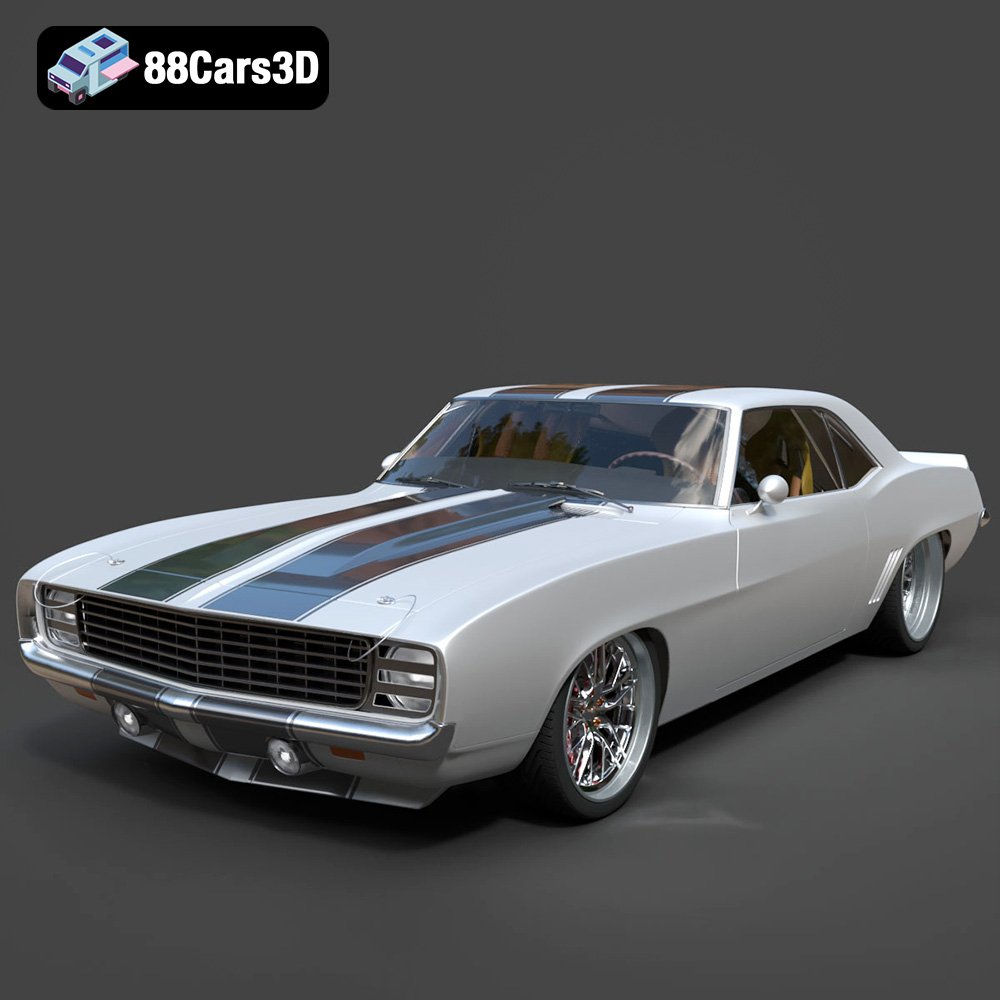
Texture: Yes
Material: Yes
Download the Chevrolet Camaro 69 Pro-007 3D Model featuring classic muscle car design and custom performance aesthetics. Includes .blend, .fbx, .obj, .glb, .stl, .ply, .unreal, and .max formats for rendering, simulation, and game development.
Price: $20.79

Texture: Yes
Material: Yes
Download the Honda Fit 2008 3D Model featuring a compact, versatile design with detailed exterior and interior components. Includes .blend, .fbx, .obj, .glb, .stl, .ply, .unreal, and .max formats for rendering, simulation, and game development.
Price: $10.79

