Unleashing Detail: How Unreal Engine 5’s Nanite Revolutionizes 3D Car Model Workflows for Automotive Visualization
For decades, the pursuit of photorealism in real-time 3D graphics has been a delicate balancing act between visual fidelity and performance. Artists and developers have constantly wrestled with polygon budgets, baking normal maps, and meticulously creating Level of Detail (LOD) assets to ensure their creations ran smoothly. This challenge was particularly acute in automotive visualization, where capturing the intricate curves, reflections, and minute details of a vehicle demands immense geometric complexity.
Enter Unreal Engine 5 (UE5) and its groundbreaking Nanite virtualized geometry system. Nanite isn’t just an improvement; it’s a paradigm shift, fundamentally altering how we approach high-fidelity 3D assets, especially for complex models like cars. It virtually eliminates the traditional polygon budget, allowing artists to import and render film-quality source assets – think millions, even billions of polygons – directly into their scenes without noticeable performance degradation. For creators working with 3D car models, game developers, and automotive visualization professionals, Nanite unlocks unprecedented levels of detail and creative freedom. This comprehensive guide will delve deep into Nanite, exploring its technical underpinnings, integrating it into your Unreal Engine workflows, and leveraging its power to transform automotive visualization.
The Bottleneck Solved: Understanding Traditional Geometry vs. Nanite
Before Nanite, managing geometric complexity was a constant battle. Every polygon, every vertex, contributed to the computational burden on the GPU. Developers had to make difficult choices, often sacrificing intricate details for the sake of real-time performance. This was especially painful for automotive assets, where even the smallest imperfections or simplified forms could break immersion.
Limitations of Traditional Polygon Budgets
In traditional real-time rendering, high-polygon models led to several performance bottlenecks:
- Draw Calls: Each object or material typically generated a draw call, and highly detailed models often required many, bogging down the CPU.
- Memory Overhead: Storing and processing vast amounts of vertex data required significant GPU memory, which could quickly become a limitation for complex scenes.
- Level of Detail (LODs): To mitigate performance issues, artists spent countless hours creating multiple versions of an asset, each with progressively fewer polygons, to be swapped out based on distance from the camera. This was a labor-intensive, error-prone process that often resulted in visible popping or reduced detail up close.
- Normal Map Baking: Fine surface details were often faked using normal maps baked from high-polygon sculpts onto low-polygon meshes. While effective, this process had limitations and could lead to artifacts, especially at glancing angles or with complex shapes.
These constraints meant that truly photorealistic car models, often derived from CAD data with millions of polygons, had to undergo significant decimation and optimization before they could be used in a real-time engine. The process was time-consuming, expensive, and inevitably led to a compromise in fidelity.
Nanite’s Virtualized Geometry Paradigm
Nanite fundamentally rethinks how geometry is processed and rendered. Instead of traditional triangle meshes, it converts static meshes into a proprietary internal format composed of hierarchical clusters of micro-polygons. The key innovation lies in its ability to stream and render geometry on demand, at a pixel-perfect level of detail.
Here’s how it works:
- On-Demand Streaming: Nanite only processes and renders the geometric detail that is truly necessary for each pixel on screen, and only for the parts of the mesh that are visible. This means that a car model with millions of polygons might only have a fraction of those polygons actively rendered at any given moment, based on camera distance and angle.
- Automatic LODs: Nanite effectively generates infinite, seamless LODs dynamically. Artists no longer need to manually create LOD chains. The system intelligently determines the optimal level of detail for each part of the mesh based on its screen-space size, ensuring perfect detail up close and efficient rendering from afar.
- Cluster-Based Rendering: Geometry is organized into small clusters. During rendering, Nanite efficiently culls invisible clusters and selects the appropriate detail level for visible ones, sending only the necessary micro-polygons to the GPU.
- Reduced Draw Calls: By batching many small geometric clusters into fewer, larger draw calls, Nanite significantly reduces CPU overhead, freeing up resources for other tasks.
This virtualized geometry approach liberates artists from polygon constraints, allowing them to focus purely on visual quality without worrying about real-time performance implications for static meshes. For detailed information on Nanite’s architecture, refer to the official Unreal Engine documentation at dev.epicgames.com/community/unreal-engine/learning.
Preparing High-Fidelity 3D Car Models for Nanite in Unreal Engine
The beauty of Nanite is that it simplifies the asset preparation pipeline for static meshes. While traditional workflows demanded extensive decimation and normal map baking, Nanite embraces raw, high-polygon data. This is particularly advantageous for automotive assets, which often originate from CAD software with extremely dense meshes.
Importing and Enabling Nanite
The process of getting your high-fidelity 3D car models into Unreal Engine with Nanite enabled is remarkably straightforward:
- Source High-Quality Models: Begin with the highest quality source model you have. This could be a CAD export, a heavily sculpted mesh, or a premium asset from marketplaces like 88cars3d.com, which provides models already optimized for Unreal Engine compatibility. Ensure your model is exported in a compatible format like FBX, USD, or USDZ. FBX is a widely supported interchange format, while USD (Universal Scene Description) and its mobile variant USDZ are gaining traction for their robust scene description capabilities.
- Import into Unreal Engine: In Unreal Engine 5, drag and drop your FBX (or other supported format) file directly into the Content Browser, or use the “Import” button. In the Import Options dialog, make sure “Skeletal Mesh” is unchecked unless your car has complex animations that require bone-driven deformations (Nanite currently does not support skeletal meshes).
- Enable Nanite: Once imported, open the Static Mesh Editor for your car model. In the “Details” panel, navigate to the “Nanite Settings” section. Simply check the “Enable Nanite” checkbox. Unreal Engine will then process the mesh for Nanite. This might take some time for extremely dense models.
- Adjust Nanite Settings (Optional): While often not necessary for initial setup, you can fine-tune Nanite’s behavior. The “Fallback Relative Error” property controls the maximum screen-space error (in pixels) allowed for a given Nanite cluster before it’s forced to higher detail. A lower value means more detail, but potentially more processing. “Proxy Triangle Percent” allows you to set a percentage of triangles to generate for non-Nanite fallback, useful for very distant views or systems that don’t support Nanite.
After enabling Nanite, you’ll immediately notice the transformation. Your high-polygon car model will render smoothly in the viewport, and the complexity will be handled entirely by the engine. You can verify Nanite’s status in the viewport using the “Nanite Visualization” modes (e.g., “Overview,” “Triangles”) accessible via the “Lit” dropdown menu.
Essential Pre-Nanite Model Optimization (Even Less Necessary)
While Nanite removes the polygon count as a primary performance concern for static meshes, good modeling practices still have their place:
- Clean Topology: Even with Nanite, clean, quad-based topology is beneficial. It ensures better UV unwrapping, makes material assignments more straightforward, and allows for cleaner deformations if the mesh ever needs to be converted to a skeletal mesh or used in a non-Nanite context.
- Manifold Geometry: Ensure your mesh is “watertight” with no open edges or flipped normals. Nanite can handle some non-manifold geometry, but clean geometry generally leads to better processing and fewer potential rendering artifacts, especially with features like Lumen global illumination.
- UV Mapping: Proper UV mapping is absolutely crucial, regardless of Nanite. It’s how your PBR materials and textures are applied accurately to the model. Ensure your car model has clean, non-overlapping UV channels for diffuse, normal, roughness, metallic, and ambient occlusion maps. You might also want additional UV channels for lightmaps if you intend to bake static lighting, though Lumen largely alleviates this need.
- Material IDs: Grouping different parts of your car (e.g., body, wheels, interior, glass) into separate material IDs in your 3D software before export will streamline material assignment within Unreal Engine.
The beauty is that tasks like decimation, manual LOD creation, and extensive normal map baking are largely eliminated for static, Nanite-enabled meshes. This frees up artists to focus on artistic quality and design, rather than technical constraints.
Unleashing Unprecedented Detail: Nanite’s Impact on Visual Fidelity
The most immediate and striking benefit of Nanite is the sheer level of detail it allows in real-time. This is particularly transformative for automotive visualization, where every curve, seam, and emblem contributes to the perception of realism.
Eliminating LODs for Static Meshes
One of Nanite’s most significant contributions to workflow efficiency is its automatic handling of LODs for static meshes. In pre-Nanite workflows, artists would typically:
- Create a high-resolution model.
- Manually decimate it to create 3-5 (or more) lower-resolution versions.
- Import all LODs into Unreal Engine and configure their screen-size thresholds.
- Constantly test and tweak to avoid visible pop-in or detail loss.
This was a time-consuming, repetitive, and often frustrating process. With Nanite, this entire pipeline is largely obsolete for static meshes. Nanite generates an internal hierarchical mesh representation that allows it to stream and render geometry at the perfect, pixel-accurate resolution, regardless of distance. This means:
- Seamless Detail: As the camera approaches a Nanite-enabled car model, the detail seamlessly increases to match the pixel resolution on screen, without any visible LOD transitions.
- Artist Time Saved: Hours of manual decimation, UV repackaging for lower LODs, and LOD configuration are eliminated, allowing artists to focus on creating the highest quality master asset.
- Consistent Visuals: The problem of inconsistent detail across different LODs, where close-up shots might reveal baked-in normal map limitations, is gone. The true geometric detail is always present when needed.
This allows designers and visualizers to bring car models into Unreal Engine with the same geometric fidelity they would use for offline renders, a feat previously unimaginable in real-time.
Sculpted Details and CAD Data Integration
For automotive artists, Nanite opens up incredible possibilities:
- Direct CAD Import: Automobile manufacturers often work with extremely detailed CAD data, which can contain millions or even billions of polygons. Previously, this data required extensive processing and decimation to be usable in real-time. Nanite allows for near-direct import and rendering of this raw, high-density CAD data. This ensures maximum fidelity for showcasing designs, prototyping, and creating marketing materials, directly from the source engineering data.
- Intricate Surface Details: Think about the subtle curves, sharp creases, intricate grilles, meticulously crafted badges, and detailed interior stitching of a luxury car. With Nanite, these elements can be represented with true geometry rather than relying solely on normal maps. This leads to more accurate reflections, shadows, and parallax, significantly enhancing realism.
- For example, the finely perforated leather seats in a high-end car, previously faked with normal maps, can now have actual geometric perforations.
- Complex wheel designs with sharp edges and intricate spoke patterns can be rendered with unprecedented accuracy.
- Eliminating Normal Map Limitations: While normal maps still have their place for certain details, Nanite reduces reliance on them for major geometric forms. This bypasses issues like normal map stretching, aliasing, and the inherent “flatness” that can occur at glancing angles, especially noticeable on reflective car surfaces.
The ability to work with such high-fidelity geometry directly empowers automotive designers and marketers to showcase their vehicles with an unmatched level of precision and visual grandeur, truly realizing the potential of their designs in a real-time environment.
The Synergistic Power: Nanite, Lumen, and Other UE5 Features
Nanite doesn’t operate in a vacuum; its true power is unleashed when combined with other cutting-edge features of Unreal Engine 5, most notably Lumen, UE5’s fully dynamic global illumination and reflections system. This combination transforms the visual quality attainable in real-time scenes.
Real-time Global Illumination with Lumen
Lumen provides fully dynamic global illumination and reflections, meaning light bounces, diffuses, and reflects realistically throughout a scene without the need for pre-baked lightmaps. For automotive visualization, this is critical for conveying the quality of materials and the form of the vehicle under various lighting conditions. Here’s how Nanite and Lumen work together:
- Accurate Light Bounces: Lumen relies on accurate scene geometry to calculate how light interacts and bounces. With Nanite providing extremely high-detail geometry for car models, Lumen can perform much more precise and realistic global illumination calculations. This means light will subtly color surfaces, reflect off chrome, and illuminate interiors with unprecedented accuracy, directly influencing the car’s perceived material quality.
- Realistic Reflections: Car surfaces are highly reflective. Lumen’s real-time reflections benefit immensely from Nanite, as the reflection calculations can use the full geometric detail of the car and its environment. This results in sharper, more detailed reflections that accurately mirror the surrounding world and the car’s own complex forms, without the softening or artifacts often seen with simplified geometry.
- Dynamic Lighting Scenarios: Together, Nanite and Lumen enable dynamic time-of-day changes, moving car doors, or even real-time damage simulations, all with correct global illumination and reflections updating in real-time. This is invaluable for interactive configurators and virtual production environments where flexibility is key.
The synergy between Nanite’s geometric fidelity and Lumen’s lighting realism creates an incredibly immersive and visually stunning experience, making real-time automotive scenes indistinguishable from offline renders.
Beyond Aesthetics: Nanite in Virtual Production & Configurators
The combination of Nanite and Lumen extends far beyond just pretty pictures, powering advanced real-world applications:
- Virtual Production and LED Walls: In virtual production, where actors perform on a stage surrounded by LED walls displaying real-time environments, Nanite ensures that foreground vehicles and props are rendered with film-quality detail. This seamless integration of physical and virtual elements is crucial for believable in-camera visual effects. The high-detail car models facilitated by Nanite look perfect, whether viewed directly or through a camera lens. For example, during a car commercial shoot, the hero vehicle on set can be virtually placed into a high-fidelity Nanite environment, with correct reflections and lighting, all rendered in real-time on an LED wall.
- Advanced Automotive Configurators: Nanite elevates interactive car configurators to new heights. Users can switch between paint colors, wheel designs, interior trims, and accessories, seeing every minute detail of the changes in real-time. The ability to load incredibly high-polygon assets for each option (e.g., different wheel types, dashboard variations) without performance drops means a richer, more engaging user experience. Blueprint visual scripting can be used to drive these interactions, allowing users to customize their dream car with immediate, photorealistic feedback.
- Cinematic Content with Sequencer: When creating promotional videos or short films for automotive brands, Nanite and Lumen, combined with Unreal Engine’s Sequencer tool, enable film-quality cinematics directly within the engine. Artists can animate cameras, lights, and car components, leveraging the full geometric detail of Nanite assets to produce stunning visual sequences without the need for traditional offline rendering farms.
This powerful combination democratizes high-end visual content creation, making it accessible and flexible for a wider range of industry applications.
Performance Optimization with Nanite: Best Practices and Caveats
While Nanite dramatically shifts the paradigm for geometric complexity, it’s not a magic bullet that makes all performance concerns disappear. Understanding how Nanite operates and its specific performance characteristics is crucial for building optimized and efficient Unreal Engine projects.
Nanite’s Performance Profile
Nanite fundamentally changes the performance bottleneck from raw polygon count to other factors:
- Overdraw: Because Nanite renders at a pixel-perfect level of detail, areas with extremely dense geometry and complex inter-occlusion (like a tightly packed engine bay or an intricate grille) can lead to significant overdraw. Overdraw occurs when multiple layers of pixels are drawn on top of each other, even if only the top-most one is visible. While Nanite is optimized to minimize this, excessive detail in complex, transparent, or overlapping structures can still impact performance.
- Material Complexity: Nanite offloads geometric complexity, but it doesn’t simplify material calculations. Heavy, complex materials with many texture lookups, intricate shader graphs, or extensive calculations will still impact GPU performance, regardless of whether the mesh is Nanite-enabled or not. This is a crucial area for optimization.
- Shadow Map Costs: Nanite geometry is used for generating shadow maps, which can be computationally intensive if scenes contain many high-detail Nanite objects casting shadows. Unreal Engine provides various shadow settings and optimizations to manage this.
- Memory Usage (Different Kind): While Nanite streams data, the underlying high-resolution source data still needs to be stored. While it’s optimized, scenes with an immense number of unique, high-poly Nanite assets can still consume significant disk space and potentially memory, depending on streaming budgets.
The key takeaway is that performance optimization with Nanite shifts focus from vertex count to pixel shading, material efficiency, and overall scene complexity, particularly concerning lighting and transparency.
Strategic Use of Nanite & Common Pitfalls
Knowing when and how to use Nanite effectively is vital:
- When NOT to Use Nanite:
- Skeletal Meshes: Nanite currently does not support skeletal meshes. Any animated character or deformable part of a car (like suspension springs that compress and extend) will need traditional LODs and optimization.
- Translucent Materials: Nanite generally works best with opaque meshes. Transparent or translucent materials (e.g., car glass, headlights) typically don’t benefit from Nanite and can even introduce rendering challenges if they have extremely high geometric complexity. Use traditional meshes for these.
- Tiny, Distant Props: For very small objects that will always be far from the camera and occupy only a few pixels, the overhead of Nanite processing might outweigh the benefits. Traditional optimized meshes are often better here.
- Deforming Meshes via World Position Offset: While Nanite supports WPO, it should be used judiciously for minor effects. Significant mesh deformation via WPO on Nanite meshes can be costly.
- Best Practices for Material Optimization:
- Minimize Material Slots: Try to consolidate materials where possible to reduce draw calls. For example, instead of separate materials for every bolt, combine them with a shared material and use masks.
- Texture Packing: Combine multiple grayscale textures (e.g., roughness, metallic, ambient occlusion) into the RGB channels of a single texture to reduce texture samples.
- Efficient Shaders: Design your PBR (Physically Based Rendering) materials using efficient shader graphs in the Unreal Engine Material Editor. Avoid overly complex calculations that aren’t visually impactful. For high-quality PBR materials for automotive surfaces, consider the standards used by models from 88cars3d.com, which prioritize realism and efficiency.
- Managing Nanite Settings:
- Fallback Relative Error: For specific meshes that cause overdraw issues, slightly increasing this value can allow Nanite to simplify them more aggressively, reducing pixel processing.
- Proxy Triangle Percent: Adjust this for distant views or non-Nanite fallbacks if needed, though typically Nanite handles this seamlessly.
- AR/VR Optimization: Even with Nanite, AR/VR experiences demand extreme performance. While Nanite handles geometry, rendering resolution and frame rate are paramount. Focus on:
- Aggressive Material Optimization: Keep shaders as simple as possible.
- Careful Lighting: Use fewer dynamic lights; prefer baked or precomputed solutions where appropriate.
- Post-Processing: Minimize expensive post-process effects.
- Occlusion Culling: Ensure your scene effectively uses occlusion culling to prevent rendering objects that are hidden behind others.
By understanding these nuances, you can harness Nanite’s power without inadvertently creating new performance bottlenecks, ensuring your high-fidelity car models run smoothly across various platforms and applications.
Advanced Workflows: Blueprint, Physics, and Interactive Automotive Experiences
The true potential of Nanite-enabled, high-fidelity car models in Unreal Engine is realized when combined with interactive systems. Blueprint visual scripting, physics simulations, and advanced rendering techniques converge to create immersive and dynamic automotive experiences.
Interactive Configurators with Blueprint
Blueprint visual scripting is a powerful tool in Unreal Engine, enabling non-programmers to create complex interactive systems. For automotive configurators, Nanite’s ability to handle high-detail geometry makes Blueprint-driven interactivity truly shine:
- Modular Car Design: Break down your car model into modular components (body, wheels, interior, paint, accessories). Each component can be a separate Nanite-enabled static mesh. When sourcing assets, look for modularity, like the kits often provided on 88cars3d.com.
- Blueprint for Customization:
- Component Swapping: Use Blueprint to create functions that swap out static mesh components. For instance, clicking a UI button could trigger an event that hides one set of wheels and spawns another, both rendered with full Nanite detail.
- Material Instance Parameters: For paint colors, create a Master Material with exposed parameters (e.g., “Base Color,” “Roughness,” “Metallic”). Then, create multiple Material Instances for different colors. Blueprint can then dynamically assign these Material Instances to the car’s body material, offering real-time paint changes. This allows for an infinite palette without creating endless textures.
- Interior Customization: Similarly, use Blueprint to swap interior trims (leather, fabric, wood paneling) or assign different material instances for seat colors.
- Dynamic Environments: Beyond the car itself, Blueprint can also drive interactive environment changes. Imagine changing the time of day, swapping out background elements, or triggering weather effects, all to showcase the car in different realistic settings, fully benefiting from Lumen’s dynamic global illumination.
These interactive configurators, powered by Nanite’s detail and Blueprint’s flexibility, offer an unparalleled user experience for car buyers, designers, and marketing professionals, allowing them to explore every facet of a vehicle in a photorealistic, real-time environment.
Physics Simulation and Vehicle Dynamics
While Nanite itself doesn’t directly handle physics (as it doesn’t support skeletal meshes or dynamic rigid bodies out-of-the-box), it plays a crucial role in the visual fidelity of physics-driven automotive simulations:
- High-Fidelity Visuals for Physics: When you have a complex vehicle physics system (whether it’s a simple wheel collider setup or a more advanced vehicle dynamics plugin), Nanite ensures that the visual representation of the car body, wheels, and interior remains incredibly detailed. This creates a more convincing and immersive simulation. For example, as a car goes over bumps, the Nanite-enabled body will retain its precise shape and reflections, even as the underlying physics system simulates the suspension movement.
- Collision Meshes: For accurate physics, you’ll still need simplified collision meshes (often convex hulls or simplified primitives) for the car’s components. These are separate from the Nanite visualization mesh. Unreal Engine’s built-in physics system (Chaos) can leverage these simplified meshes for efficient collision detection while the Nanite mesh provides the visual detail.
- Integrating Visuals with Dynamics: Blueprint can be used to link the outputs of the physics simulation (e.g., wheel rotation, suspension compression) to the visual Nanite components. For instance, the rotation of a physics-driven wheel could be applied to a Nanite-enabled wheel mesh to make it spin realistically.
- Niagara Particle Effects: Enhance realism with Niagara for particle effects. Imagine a Nanite-enabled car kicking up dust or water spray during a high-speed chase, or exhaust fumes billowing from the tailpipe. Niagara’s flexible particle system can interact with the detailed Nanite geometry, adding another layer of visual sophistication to the simulation.
By intelligently combining Nanite’s visual power with robust physics and interactivity, developers can create automotive experiences that are not only stunning to look at but also engaging and realistic to interact with, pushing the boundaries of real-time simulation and visualization.
Conclusion
Unreal Engine 5’s Nanite virtualized geometry technology represents a monumental leap forward for real-time graphics. For the automotive visualization industry, it is nothing short of revolutionary. The era of agonizing over polygon counts, laboriously baking normal maps, and manually creating LODs for static meshes is largely behind us. Instead, artists and designers are now empowered to directly import and render film-quality, multi-million-polygon 3D car models, unlocking unprecedented levels of detail and creative freedom.
From showcasing intricate CAD designs with pixel-perfect precision to powering dynamic, interactive configurators and supporting cinematic-grade virtual production workflows, Nanite, in conjunction with Lumen’s real-time global illumination, is redefining what’s possible in real-time. It streamlines workflows, accelerates iteration, and ultimately delivers a more immersive and visually stunning experience for every viewer.
The future of automotive visualization is here, and it’s driven by detail, performance, and the boundless potential of Unreal Engine 5. We encourage all 3D artists, game developers, and visualization professionals to dive deep into Unreal Engine 5, experiment with Nanite, and discover how this incredible technology can elevate your projects. When sourcing your next high-quality automotive assets, remember that platforms like 88cars3d.com offer models designed to leverage these advanced Unreal Engine capabilities, ensuring you have the perfect foundation to build your next masterpiece. Embrace the detail, and let your creativity soar.
Featured 3D Car Models

Meta Description:
Texture: Yes
Material: Yes
Download the Cadillac CTS-V Coupe 3D Model featuring detailed exterior styling and realistic interior structure. Includes .blend, .fbx, .obj, .glb, .stl, .ply, .unreal, and .max formats for rendering, simulation, AR VR, and game development.
Price: $13.9
View Product
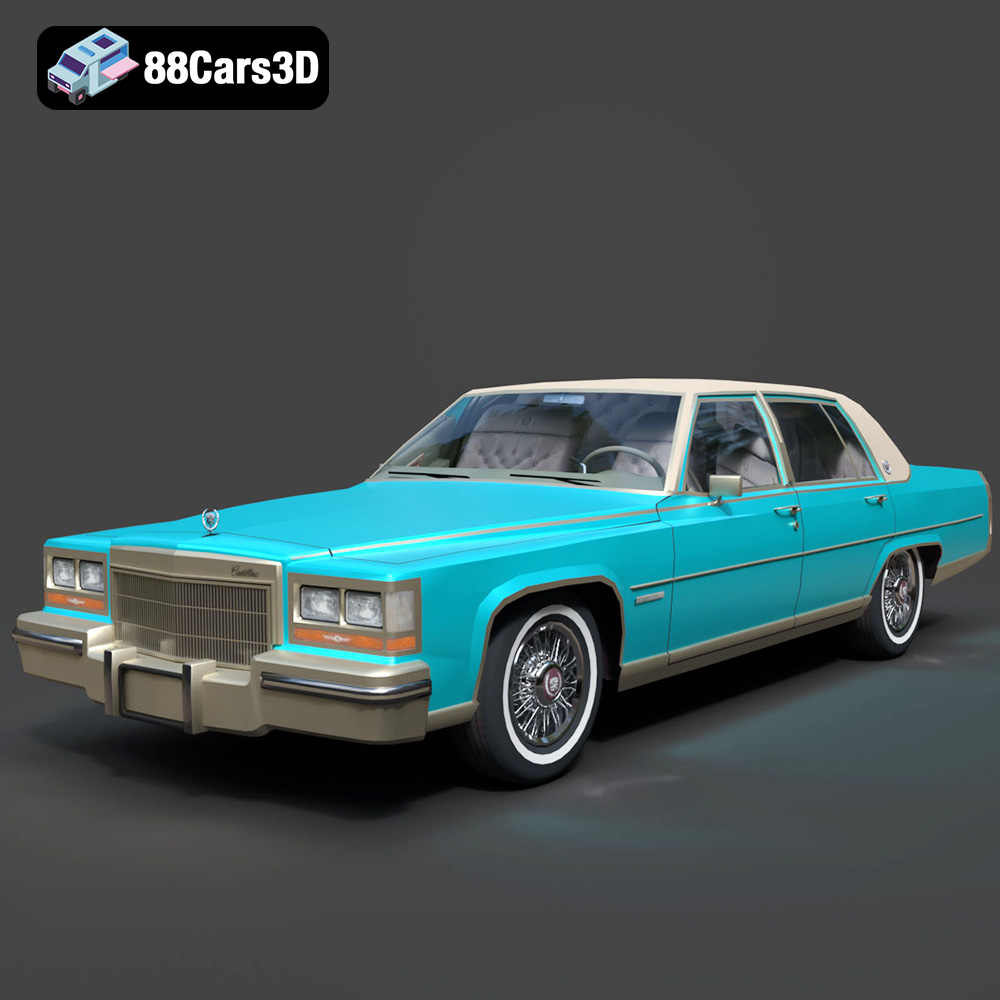
Texture: Yes
Material: Yes
Download the Cadillac Fleetwood Brougham 1985 3D Model featuring its iconic classic luxury design and detailed craftsmanship. Includes .blend, .fbx, .obj, .glb, .stl, .ply, .unreal, and .max formats for rendering, simulation, and game development.
Price: $10.79
View Product
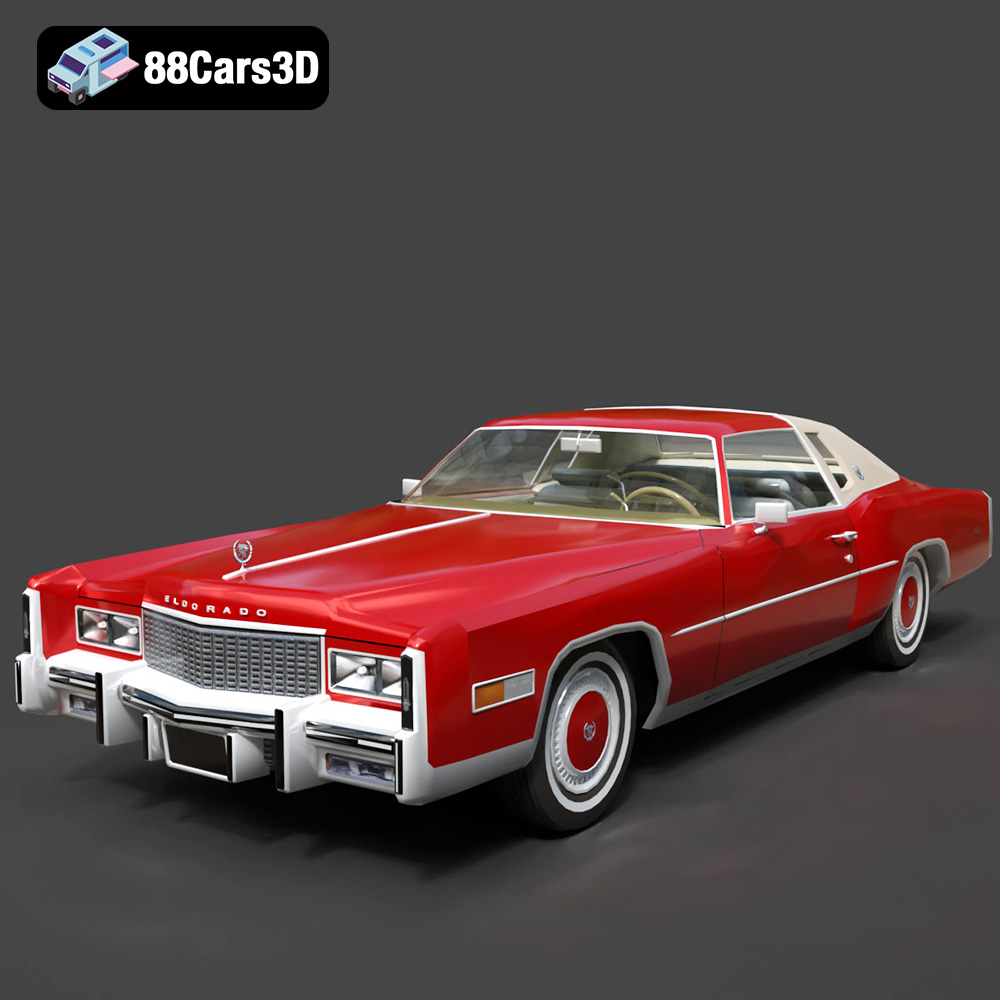
Texture: Yes
Material: Yes
Download the Cadillac Eldorado 1978 3D Model featuring accurately modeled exterior, detailed interior, and period-correct aesthetics. Includes .blend, .fbx, .obj, .glb, .stl, .ply, .unreal, and .max formats for rendering, simulation, and game development.
Price: $10.79
View Product
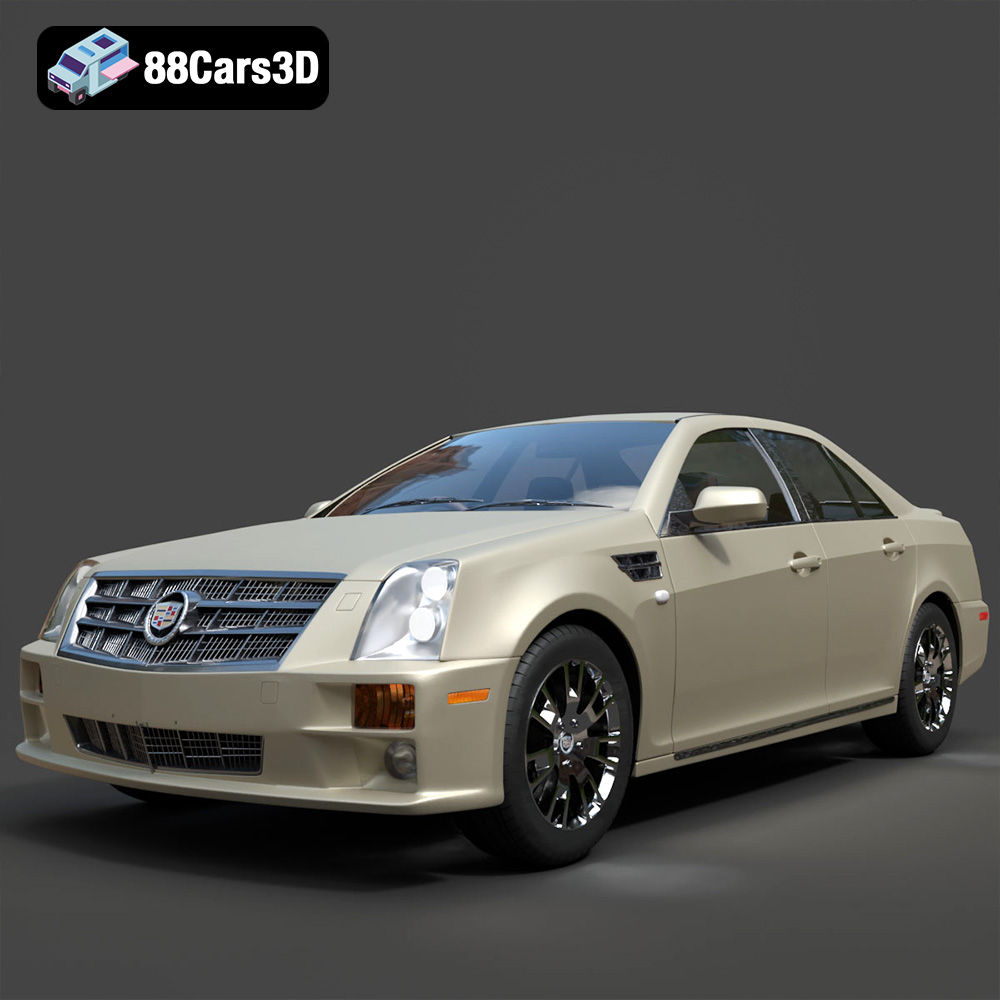
Texture: Yes
Material: Yes
Download the Cadillac STS-005 3D Model featuring a detailed exterior and interior. Includes .blend, .fbx, .obj, .glb, .stl, .ply, .unreal, and .max formats for rendering, simulation, and game development.
Price: $22.79
View Product
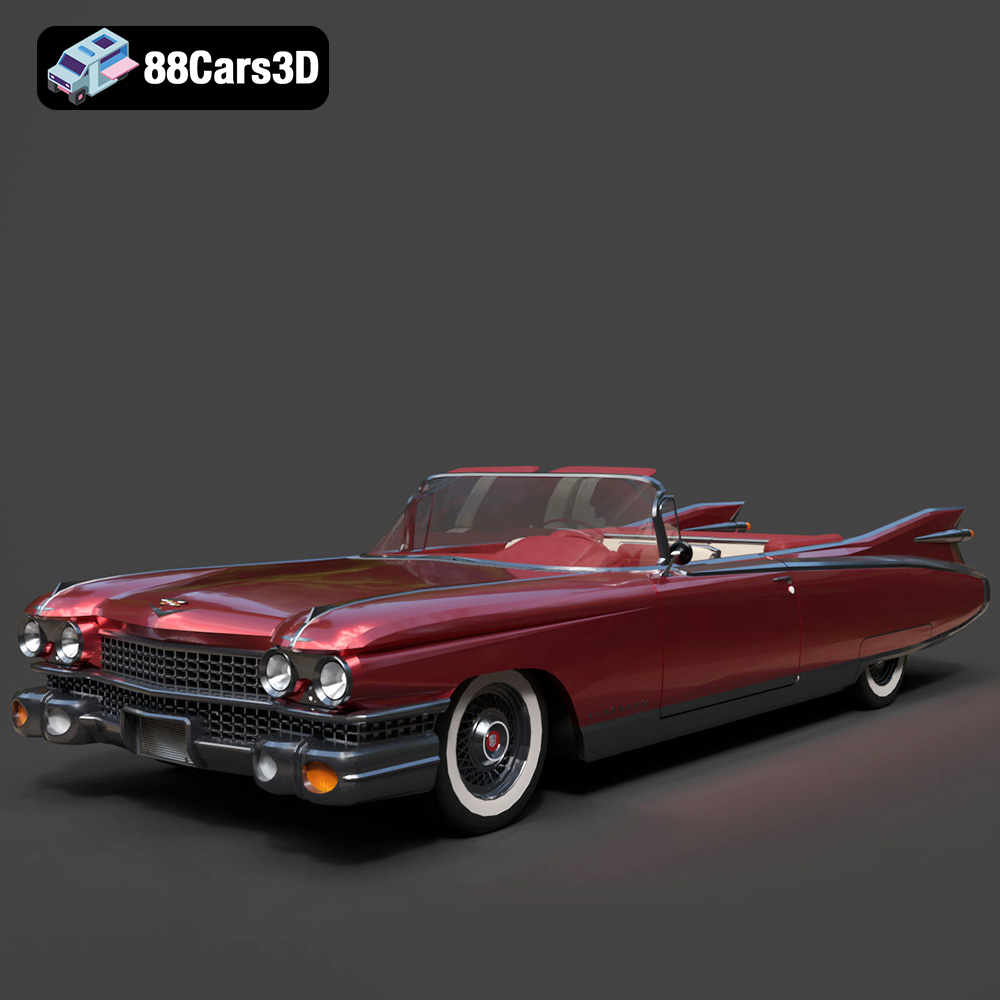
Texture: Yes
Material: Yes
Download the Cadillac Eldorado Convertible (1959) 3D Model featuring iconic fins, luxurious chrome details, and a classic vintage design. Includes .blend, .fbx, .obj, .glb, .stl, .ply, .unreal, and .max formats for rendering, simulation, and game development.
Price: $20.79
View Product

Texture: Yes
Material: Yes
Download the Cadillac DTS-005 3D Model featuring its iconic luxury design, detailed interior, and realistic exterior. Includes .blend, .fbx, .obj, .glb, .stl, .ply, .unreal, and .max formats for rendering, simulation, and game development.
Price: $10.79
View Product

Texture: Yes
Material: Yes
Download the Buick LeSabre 1998 3D Model featuring a classic American full-size sedan design. Includes .blend, .fbx, .obj, .glb, .stl, .ply, .unreal, and .max formats for rendering, simulation, and game development.
Price: $10.79
View Product
Texture: Yes
Material: Yes
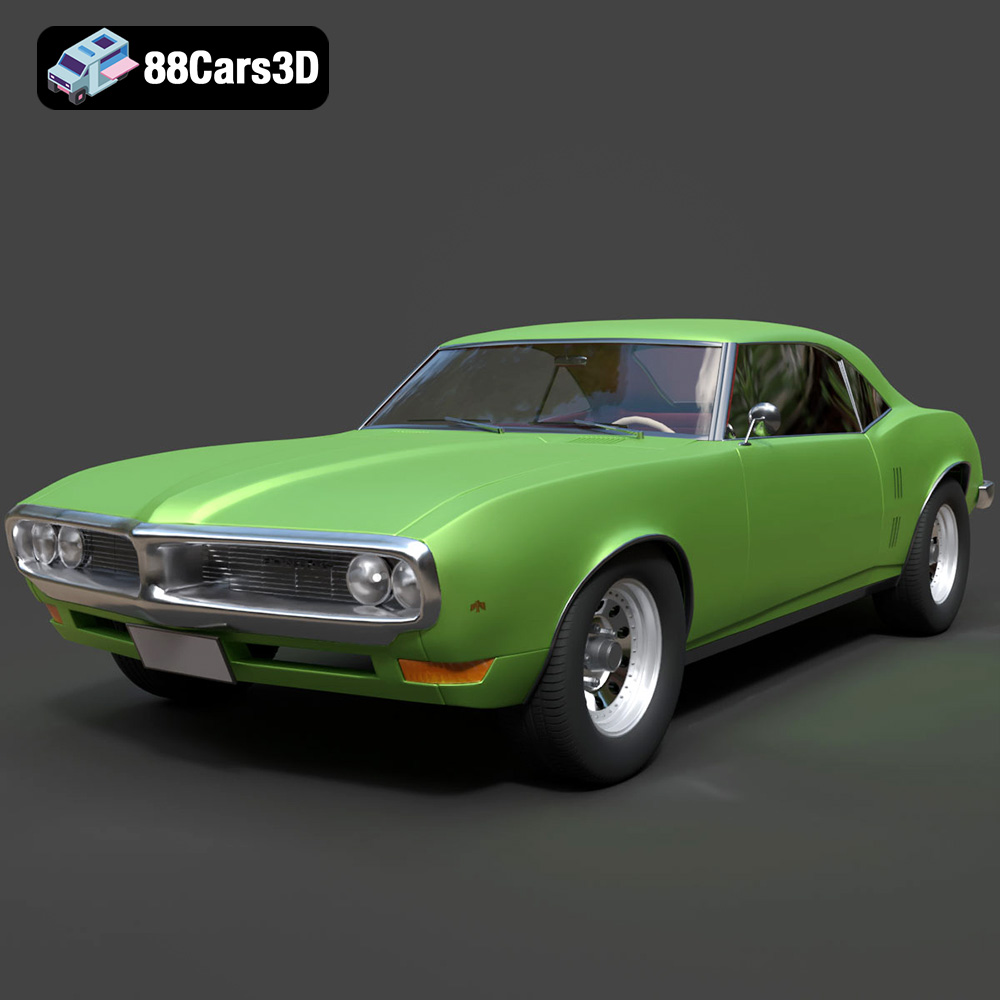
Download the Pontiac Firebird 1998 3D Model featuring clean geometry, realistic detailing, and a fully modeled interior. Includes .blend, .fbx, .obj, .glb, .stl, .ply, .unreal, and .max formats for rendering, simulation, and game development.
Price: $10
View Product

Texture: Yes
Material: Yes
Download the Opel Astra 2008 3D Model featuring clean geometry, realistic detailing, and a fully modeled interior. Includes .blend, .fbx, .obj, .glb, .stl, .ply, .unreal, and .max formats for rendering, simulation, and game development.
Price: $10
View Product

Texture: Yes
Material: Yes
Download the Mercedes Benz Joaquin-007 3D Model featuring clean geometry, realistic detailing, and a fully modeled interior. Includes .blend, .fbx, .obj, .glb, .stl, .ply, .unreal, and .max formats for rendering, simulation, and game development.
Price: $19.99
View Product


