⚡ FLASH SALE: Get 60% OFF All Premium 3D & STL Models! ⚡

In the fiercely competitive world of automotive design, marketing, and visualization, stunning visuals are paramount. For decades, achieving photorealistic car renders meant long hours of offline rendering, static imagery, and a linear production pipeline. However, with the advent of real-time rendering engines, particularly Unreal Engine, the game has changed dramatically. Artists and developers can now create breathtaking, interactive, and fully dynamic cinematic content that was once the exclusive domain of multi-million dollar film studios.
At the heart of Unreal Engine’s cinematic prowess lies Sequencer – a powerful, non-linear editing tool designed to orchestrate complex scene animations, camera movements, effects, and audio into polished, high-fidelity cinematic sequences. For automotive professionals, game developers, and visualization artists, mastering Sequencer means unlocking the ability to produce compelling marketing materials, engaging configurators, immersive VR experiences, and captivating game cinematics with unprecedented speed and visual quality. Imagine showcasing a new vehicle’s design details, animating its features, or simulating a dynamic driving experience, all in real time.
This comprehensive guide will take you on a deep dive into leveraging Unreal Engine Sequencer for creating cinematic automotive content. We’ll cover everything from preparing your high-quality 3D car models (which you can readily find on platforms like 88cars3d.com) to mastering advanced Sequencer features, lighting, materials, and optimization techniques. Prepare to transform your automotive visualization workflow and bring your vehicles to life like never before.
Before diving into the intricacies of Sequencer, a solid foundation is essential. This involves setting up your Unreal Engine project correctly and efficiently importing high-quality 3D car models. The quality of your source assets significantly impacts the final cinematic output, making choices from reputable marketplaces crucial. For professionals, 88cars3d.com stands out as a prime source for production-ready, optimized 3D car models, designed for seamless integration into Unreal Engine projects. These models typically feature clean topology, proper UV mapping, and a logical material setup, minimizing prep work and maximizing visual fidelity.
When starting a new project in Unreal Engine, you’ll typically select a template. For automotive visualization and cinematics, the ‘Blank’ or ‘Automotive, Product Design, and Manufacturing’ templates offer excellent starting points. These templates often include basic lighting setups and post-processing volumes configured for photorealistic rendering, saving you valuable time. Once your project is created, the next critical step is importing your 3D car model. Unreal Engine supports various formats, with FBX being the most common and versatile, offering robust support for meshes, materials, and animation. USD (Universal Scene Description) and USDZ are also gaining traction, providing powerful capabilities for scene composition and interchange.
During the import process, pay close attention to critical settings such as coordinate system conversion, unit scale, and whether to combine meshes. Ensuring the model is imported at the correct scale (usually centimeters in Unreal Engine) and has a clean pivot point (ideally at the base or center of the car for easy manipulation) will streamline your workflow significantly. Furthermore, a well-structured model with clearly named material slots will simplify material assignment later. Remember, a high-quality model is the canvas for your cinematic masterpiece.
Optimizing your Unreal Engine project settings from the outset is crucial for achieving photorealistic automotive visuals. Navigate to Edit > Project Settings and then to the ‘Engine’ section. Here, enable key features such as Lumen Global Illumination and Lumen Reflections under ‘Rendering’ for dynamic, realistic lighting and reflections. For handling extremely high-polygon models, enabling Nanite under ‘Virtual Geometry’ is a game-changer. These features dramatically enhance visual fidelity but also have performance implications, which we’ll address in later sections. Additionally, configure your ‘Engine Scalability Settings’ (found under ‘Settings’ in the main editor toolbar) to ‘Cinematic’ for the best visual quality during development, then adjust as needed for performance targets. A well-configured Post Process Volume in your scene is also essential, allowing fine-grained control over exposure, color grading, bloom, and other visual effects that contribute to a polished automotive aesthetic.
Importing your meticulously crafted 3D car models from marketplaces like 88cars3d.com is a straightforward process, yet one that benefits from careful attention to detail. Once you’ve downloaded your FBX model, drag and drop it directly into the Unreal Engine Content Browser, or use the ‘Import’ button. In the FBX Import Options dialog, make sure ‘Skeletal Mesh’ is unchecked (unless it’s a rigged chassis), and ‘Static Mesh’ is checked. Crucially, ensure ‘Combine Meshes’ is deselected if you want to maintain the car’s individual components (doors, wheels, interior) as separate meshes, which is vital for animating them independently in Sequencer. Verify that ‘Import Materials’ and ‘Import Textures’ are checked, as this will bring in the initial material setup and associated PBR texture maps. For comprehensive guidance on importing assets, refer to the official Unreal Engine documentation on Importing Assets. After import, organize your imported assets (meshes, materials, textures) into logical folders within the Content Browser to maintain a clean project structure, which is invaluable for complex automotive projects.
The visual appeal of a car in real time hinges on incredibly realistic materials and sophisticated lighting. Unreal Engine’s Physically Based Rendering (PBR) system allows artists to recreate virtually any real-world material with astounding accuracy, while its advanced lighting solutions like Lumen deliver dynamic global illumination and reflections. When combined with Nanite virtualized geometry, these technologies enable a level of detail and realism previously unimaginable in real-time applications, particularly crucial for showcasing the intricate designs of automotive models.
PBR materials rely on a set of texture maps that define how light interacts with a surface. Key maps include Base Color (Albedo), Normal (for surface detail without extra geometry), Roughness (how shiny or matte a surface is), Metallic (whether a surface is metal or dielectric), and Ambient Occlusion (for soft shadowing in crevices). Crafting realistic car paint, for instance, involves complex layered materials, often incorporating a clear coat shader with varying degrees of reflectivity and metallic flakes to simulate the depth and sparkle of real-world automotive finishes. Glass requires careful handling of transparency, refraction, and reflections, while tires demand a balance of roughness and normal detail to convey their texture. Understanding the Unreal Engine Material Editor and creating master materials with instances allows for efficient tweaking and iteration across different car models or color variants.
Lighting is the soul of any visual presentation. Lumen, Unreal Engine’s fully dynamic global illumination and reflections system, revolutionizes how light behaves in real time. It enables diffuse interreflection with infinite bounces, detailed specular reflections, and cinematic-quality lighting without the need for lightmaps or pre-baked solutions. Supplementing Lumen with high-dynamic-range image (HDRI) backgrounds provides environmental lighting and reflections that accurately represent real-world outdoor or studio conditions. For models with extremely high polygon counts, Nanite ensures that every detail, from subtle body lines to interior stitching, is rendered efficiently without compromising performance. This combination of PBR, Lumen, and Nanite empowers artists to achieve true photorealism for automotive visualization, setting the stage for stunning cinematics.
Achieving truly photorealistic automotive paint in Unreal Engine requires moving beyond basic PBR setups. A sophisticated car paint material often involves a layered approach within the Material Editor. Start with a base layer for the metallic flakes, using a textured normal map for micro-scratches and a high metallic value. Overlay this with a clear coat layer, which involves adjusting the material’s ‘Clear Coat’ and ‘Clear Coat Roughness’ inputs. The ‘Clear Coat’ input typically comes from a constant value (e.g., 0.5-1.0), while ‘Clear Coat Roughness’ can be driven by a texture or a small scalar parameter for subtle variations. Metallic flake effects can be achieved using a small, tiling texture or procedural noise node connected to the Base Color and Normal inputs, with subtle variations to create sparkle. Parameterization of colors, flake density, and clear coat properties through Material Instances allows for rapid iteration of different paint finishes and ensures consistency across multiple vehicle models. Understanding the nuances of these parameters is key to making your car models truly shine, whether sourced from 88cars3d.com or elsewhere.
Lumen is a cornerstone of real-time photorealism in Unreal Engine 5 and beyond. To utilize Lumen effectively, ensure it’s enabled in your Project Settings (under Rendering > Global Illumination and Reflections). In your scene, a Sky Light is crucial for capturing ambient lighting from your environment. Pair this with a high-resolution HDRI texture (cubemap) to drive the Sky Light, providing accurate environmental lighting and reflections. A Directional Light typically simulates the sun, casting crisp shadows and highlights. Adjust its intensity and angle to sculpt the form of your vehicle. The Post Process Volume, placed in your scene and set to ‘Infinite Extent (Unbound)’, is your primary tool for fine-tuning the final look. Here, you can control exposure, White Balance, Color Grading, Bloom, and most importantly, Lumen’s various settings (e.g., Final Gather Quality, Trace Distance) to balance visual quality and performance. For outdoor scenes, a volumetric cloud system (like Unreal Engine’s native Volumetric Clouds) can add depth and realism, influencing the lighting and shadow quality.
Nanite revolutionizes the handling of high-polygon assets, making it possible to render cinematic-quality models in real-time without the traditional performance hit. When importing high-detail car models, especially those with intricate interior details or complex bodywork, enable Nanite support during the import process or via the mesh editor’s ‘Nanite Settings’. Nanite works by intelligently streaming and rendering only the necessary detail for each pixel, regardless of the original polygon count (which can easily be in the millions for automotive assets). This not only boosts performance but also eliminates the need for manual LOD (Level of Detail) creation for most static meshes, allowing artists to focus on artistic quality rather than polygon budgets. While Nanite greatly simplifies managing complex geometry, it’s important to remember that it primarily optimizes triangles for rendering; it doesn’t directly optimize material complexity or overdraw. Ensure your UVs are clean, especially for textures that will be visible up close, as Nanite primarily affects geometry rendering, not texture resolution. Understanding how Nanite streamlines your workflow is crucial for leveraging its power in automotive visualization.
Unreal Engine Sequencer is more than just a timeline; it’s a comprehensive, non-linear editor that empowers artists to craft dynamic, captivating cinematic experiences directly within the engine. Think of it as your virtual film studio, where you can choreograph every aspect of your scene, from camera movements and character animations to lighting changes, particle effects, and audio cues. For automotive visualization, Sequencer is indispensable for creating stunning vehicle reveals, interactive feature tours, and compelling promotional videos, all rendered in real time with the visual fidelity of offline solutions.
At its core, Sequencer operates on a track-based system. You add “tracks” for actors in your scene (like your car model, cameras, or lights) and then add “sections” within those tracks to define their behavior over time. These sections are where you’ll place keyframes to animate properties such as position, rotation, scale, material parameters, or even trigger Blueprint events. The interface is intuitive, resembling professional video editing software, making it accessible to artists with a background in traditional post-production. Mastering Sequencer begins with understanding how to organize your cinematic into logical units, control cameras with precision, and animate your vehicle components to tell a compelling story.
The ability to work with cinematic camera actors is a standout feature, allowing you to replicate real-world camera properties like focal length, aperture (for depth of field), and sensor size. This level of control ensures your virtual footage has the authentic look and feel of a professional film. Whether you’re planning a dramatic fly-around or a subtle interior pan, Sequencer provides the tools to execute your vision with unparalleled accuracy and real-time feedback. This real-time iteration is a massive advantage over traditional workflows, allowing for rapid experimentation and refinement of your cinematic shots.
To access Sequencer, navigate to the ‘Cinematics’ menu in the Unreal Engine toolbar and select ‘Add Level Sequence’. This creates a new Level Sequence asset, which you can then open. The Sequencer interface features a timeline where time progresses horizontally, and tracks are stacked vertically. Each track represents an actor or a specific type of animation. Key tracks you’ll use include ‘Actor’ tracks (to add your car, cameras, lights), ‘Transform’ tracks (for position, rotation, scale animation), ‘Material’ tracks (to animate material parameters), and ‘Event’ tracks (to trigger custom Blueprint logic). Sections within these tracks define the duration of an animation or action. Keyframes are placed within sections to define specific property values at different points in time. Interpolation between keyframes (linear, cubic, constant) dictates the smoothness of the animation, which can be fine-tuned in the Curve Editor. Understanding this fundamental hierarchy of tracks, sections, and keyframes is the first step towards building complex cinematics. For a deeper dive into the Sequencer UI and its capabilities, consult the official Unreal Engine documentation on Sequencer.
A compelling automotive cinematic begins with expert camera work. Within Sequencer, add a ‘Cine Camera Actor’ to your scene. Unlike a standard camera, the Cine Camera Actor offers a wealth of real-world camera parameters. Experiment with ‘Focal Length’ (e.g., 24mm for wide shots, 85mm for flattering close-ups) and ‘Current Aperture’ to control depth of field (lower f-numbers like f/2.8 create shallower depth of field, blurring the background). Use the ‘Focus Method’ to automatically or manually control the point of focus. To animate the camera, add it to your Sequencer timeline, then add a ‘Transform’ track. Keyframe its position and rotation to create smooth camera movements. For complex paths, create a ‘Spline’ component on an empty actor, then attach your Cine Camera Actor to that spline using a ‘Attach to Component’ track, animating the ‘Track Position’ to move it along the path. Pay attention to cinematic framing principles like the rule of thirds, leading lines, and negative space to compose visually striking shots that highlight your vehicle’s design.
Animating your 3D car model in Sequencer can range from simple static poses to dynamic driving sequences. To animate the car’s overall movement, add the car’s main skeletal mesh or static mesh (if it’s a single unit) to Sequencer as an ‘Actor’ track. Then, add a ‘Transform’ track. At different points in time, move or rotate your car in the viewport and hit the ‘+’ button next to the position/rotation properties to add keyframes. Unreal Engine will smoothly interpolate between these keyframes. For more precise or complex movements, such as a car driving along a road, consider using a ‘Spline Component’ attached to an empty actor. You can then attach your car to this spline and animate its ‘Track Position’ parameter to make it follow the path. This method is excellent for ensuring smooth, controlled motion. You can also animate individual car parts (like opening doors, rotating wheels, or turning headlights on/off) by adding their respective static meshes to Sequencer as separate actor tracks and animating their ‘Transform’ or ‘Visibility’ properties. Precision in keyframing and understanding interpolation curves will make your automotive animations look polished and professional.
Once you’ve grasped the fundamentals of Sequencer, it’s time to elevate your automotive cinematics from mere animation to compelling storytelling. Advanced techniques allow you to orchestrate intricate scenes, integrate dynamic gameplay elements, and achieve a truly polished, broadcast-quality output. This involves managing multiple sequences, leveraging Blueprint for interactivity, incorporating particle effects, and finessing the final visual presentation through post-processing and render settings. For complex productions, understanding how to organize and render your work efficiently becomes paramount, especially when working with high-fidelity assets like those found on 88cars3d.com.
One of the most powerful features for managing complex cinematics is the use of ‘subsequences’ and ‘shots’. Rather than having one monolithic sequence, you can break your cinematic down into smaller, manageable ‘shots’ or ‘sequences’ for individual scenes or camera cuts. This modular approach not only keeps your project organized but also facilitates collaborative workflows and allows for greater flexibility in editing. Furthermore, Sequencer’s robust integration with Unreal Engine’s Blueprint visual scripting system opens up a world of dynamic possibilities. You can trigger custom Blueprint events directly from Sequencer, allowing you to control aspects like interactive car features (opening doors, activating headlights), dynamic weather systems, or even vehicle physics simulations at precise moments in your cinematic.
Beyond animation, the atmospheric elements and audio design significantly impact the viewer’s experience. Integrating particle systems (like Niagara for smoke, dust, or water effects) and carefully timed audio tracks (engine sounds, music, environmental ambiance) can add incredible depth and realism to your automotive presentation. Finally, ensuring a high-quality render output is crucial. Unreal Engine’s Movie Render Queue provides advanced options for exporting cinematics, including support for professional codecs, multi-pass rendering, and motion blur, ensuring your final deliverable meets industry standards for visual excellence.
For extensive automotive presentations, managing a single Sequencer timeline can quickly become unwieldy. The solution lies in using ‘Shot Tracks’ and ‘Subsequences’. A ‘Shot Track’ allows you to lay out multiple distinct ‘Shots’ (each a mini-sequence) linearly on your main timeline. Each Shot can then contain its own specific camera, car animations, and effects, making it easier to manage individual cuts and camera angles. To create a Shot Track, right-click on your main Level Sequence and select ‘Add Shot Track’. Then, right-click on the Shot Track and choose ‘Insert Shot’. This will create a new Level Sequence asset for that shot, allowing you to edit it independently. Alternatively, you can directly add a ‘Subsequence Track’ and drop existing Level Sequences into it, allowing you to reuse animations or create modular components. This modular approach is invaluable for managing complex car reveals, feature presentations, or long-form cinematic narratives, enabling seamless transitions between different camera perspectives and animated sequences.
Sequencer’s true power shines when integrated with Unreal Engine’s Blueprint visual scripting and Niagara particle system. For instance, imagine a cinematic where a car’s lights turn on as it drives into a garage, or its doors gracefully open to reveal the interior. You can achieve this by using an ‘Event Track’ in Sequencer. Create a custom event in your car’s Blueprint (e.g., ‘TurnOnHeadlights’, ‘OpenDriverDoor’). Then, in Sequencer, add an ‘Event Track’, right-click on it, and ‘Add Event Trigger’ at the desired timestamp. Select your car actor as the target and choose the custom event. This allows Sequencer to call Blueprint functions at precise moments. Similarly, for dynamic effects like tire smoke, dust kicking up, or exhaust fumes, you can create Niagara particle systems. Add these Niagara systems to your Sequencer as ‘Actor’ tracks, and then animate their ‘Visibility’ or control their parameters directly within the sequence. You can even use event tracks to trigger Niagara emitters, creating highly dynamic and responsive visual effects that enhance the realism and drama of your automotive cinematics.
Post-processing and color grading are critical steps in achieving a professional, cinematic look for your automotive visuals. Within Sequencer, you can add a ‘Post Process Volume’ to your scene and then add it to your Sequencer as an ‘Actor’ track. This allows you to animate almost every parameter of the Post Process Volume over time. For example, you can animate the ‘Exposure’ to simulate changes from bright daylight to dusk, or animate ‘Lens Flares’ and ‘Vignette’ for dramatic effect. ‘Color Grading’ options allow you to adjust saturation, contrast, and color temperature for specific shots, creating a distinct mood or matching external branding guidelines. You can also apply ‘LUTs’ (Look Up Tables) for quick cinematic looks. For scene-specific color grading, consider having multiple Post Process Volumes and animating their ‘Blend Weight’ to fade between them, or simply adding a new Post Process Volume directly to a specific shot’s subsequence. This granular control over post-processing ensures that every frame of your automotive cinematic is visually optimized and evokes the desired emotional response, making your high-quality car models truly stand out.
The versatility of Unreal Engine, especially when paired with Sequencer, extends far beyond traditional cinematic rendering. From interactive configurators to cutting-edge virtual production and immersive AR/VR experiences, the real-time capabilities empower automotive professionals with dynamic tools. However, to leverage these applications effectively, understanding performance optimization is crucial. Achieving high frame rates for interactivity or smooth playback for virtual production requires careful management of assets and engine features. When working with detailed 3D car models, such as those available on 88cars3d.com, optimization strategies become even more critical to ensure a seamless and high-quality user experience.
One of the most compelling applications is the creation of automotive configurators. Using Blueprint to drive interactions and Sequencer to animate feature reveals or material changes, users can customize a vehicle in real time, exploring different paint colors, wheel options, and interior finishes with cinematic transitions. This not only enhances the customer experience but also provides a powerful sales and marketing tool. Another burgeoning field is virtual production, where Unreal Engine and Sequencer are used for in-camera VFX on LED walls, allowing real-time backgrounds to be rendered behind physical vehicles or actors. Sequencer orchestrates camera moves, lighting changes, and environmental effects, blending virtual and physical worlds seamlessly. For AR/VR, where performance is paramount, Sequencer can be used to animate guided tours or product demonstrations, but stringent optimization techniques are required to maintain the high frame rates necessary for comfortable immersion.
Regardless of the application, optimization is a continuous process. Strategies include judicious use of Level of Detail (LODs) for meshes, efficient texture streaming, proper culling volumes, and minimizing draw calls. Leveraging features like Nanite can significantly help with geometric complexity, but artists must also optimize materials and lighting. A well-optimized project not only performs better but also allows for greater creative freedom and faster iteration, making the most of your investment in high-quality 3D car models and Unreal Engine’s powerful toolset.
Interactive automotive configurators are a powerful application of Unreal Engine, combining the visual fidelity of real-time rendering with user-driven interactivity. At the core, Blueprint visual scripting handles the user interface (UI) and logic for changing car parts (e.g., wheels, spoilers) or materials (e.g., paint colors, interior fabrics). Sequencer can then be integrated to provide cinematic transitions and animations for these changes. For example, when a user selects a new paint color, a Blueprint event can trigger a short Sequencer animation that smoothly fades the current paint material to the new one, or even shows a dynamic camera move to highlight the change. Similarly, selecting different wheel options can trigger a Sequencer animation that gracefully swaps out the wheels with a smooth transition. You can also use Sequencer to create “feature tours” – pre-defined cinematic sequences that highlight specific aspects of the car, which users can trigger via UI buttons. This synergy between Blueprint for logic and Sequencer for cinematic polish creates highly engaging and informative product experiences.
Even with powerful features like Nanite, careful optimization is essential for smooth real-time performance and efficient delivery of automotive cinematics. For meshes that aren’t Nanite-enabled (e.g., animated skeletal meshes, small props), generating multiple Levels of Detail (LODs) is crucial. Unreal Engine can auto-generate LODs, but manual refinement often yields better results, reducing polygon count as objects get further from the camera. Implement Culling Distance Volumes to prevent rendering objects outside the camera’s view. Optimize textures by using appropriate compression settings and ensuring resolutions match their importance (e.g., 4K for primary body panels, 2K for interior details, 512 for unseen underside elements). Enable Texture Streaming in Project Settings. Review your materials for complexity; simplify shader graphs where possible, and avoid excessive transparent or masked materials, as these can increase overdraw. Profile your scene using Unreal Engine’s built-in tools (Stat GPU, Stat RHI, Stat Unit) to identify performance bottlenecks. For final delivery, the Movie Render Queue offers robust settings for output quality, including anti-aliasing methods, motion blur, and professional codecs, ensuring your high-quality car models are presented at their best.
Unreal Engine and Sequencer are at the forefront of virtual production (VP) and extended reality (XR) workflows. In VP, particularly for in-camera VFX with large LED volumes, Sequencer is used to pre-visualize and precisely control the virtual background, synchronizing it with the physical camera movement via real-time camera tracking. This allows for seamless blending of real foreground elements (like a car on a stage) with dynamic virtual environments. Sequencer choreographs the virtual environment’s animation, lighting changes, and even triggers dynamic effects based on the live action. For AR/VR automotive applications, Sequencer can drive guided tours or interactive product showcases. However, for XR, performance is paramount, typically requiring a constant 90 FPS or higher. This means even more aggressive optimization: using lower-poly versions of assets (perhaps even from 88cars3d.com that offer optimized variants), baking static lighting for performance where Lumen might be too heavy, simplifying materials, and careful management of render features. Sequencer provides the control for complex animations, but the underlying assets and engine configuration must be rigorously optimized for the specific XR platform to ensure a smooth, immersive experience.
Unreal Engine Sequencer stands as an unparalleled tool for automotive visualization, empowering artists and developers to create stunning, dynamic cinematic content in real time. We’ve journeyed through the essential steps, from setting up your project and importing high-quality 3D car models from trusted sources like 88cars3d.com, to mastering PBR materials, Lumen lighting, and the geometric power of Nanite. We then delved into the core functionalities of Sequencer, exploring how to choreograph camera movements, animate vehicles, and integrate powerful features like Blueprint and Niagara for truly dynamic and interactive experiences.
The ability to iterate rapidly, achieve photorealistic results, and deploy across diverse applications—from marketing cinematics and interactive configurators to virtual production and immersive XR experiences—makes Unreal Engine and Sequencer an indispensable combination for anyone in the automotive industry. The days of static renders and lengthy production cycles are giving way to a new era of real-time creativity and engagement. By embracing these workflows, you not only elevate the visual quality of your automotive presentations but also gain unprecedented flexibility and efficiency.
The journey to mastering cinematic automotive content in Unreal Engine is one of continuous learning and experimentation. We encourage you to put these techniques into practice, explore the vast possibilities Sequencer offers, and continue pushing the boundaries of what’s achievable in real time. To kickstart your projects with industry-leading assets, be sure to explore the extensive collection of meticulously crafted 3D car models available on 88cars3d.com. The future of automotive visualization is real-time, dynamic, and cinematic – and with Unreal Engine Sequencer, that future is now firmly within your grasp.
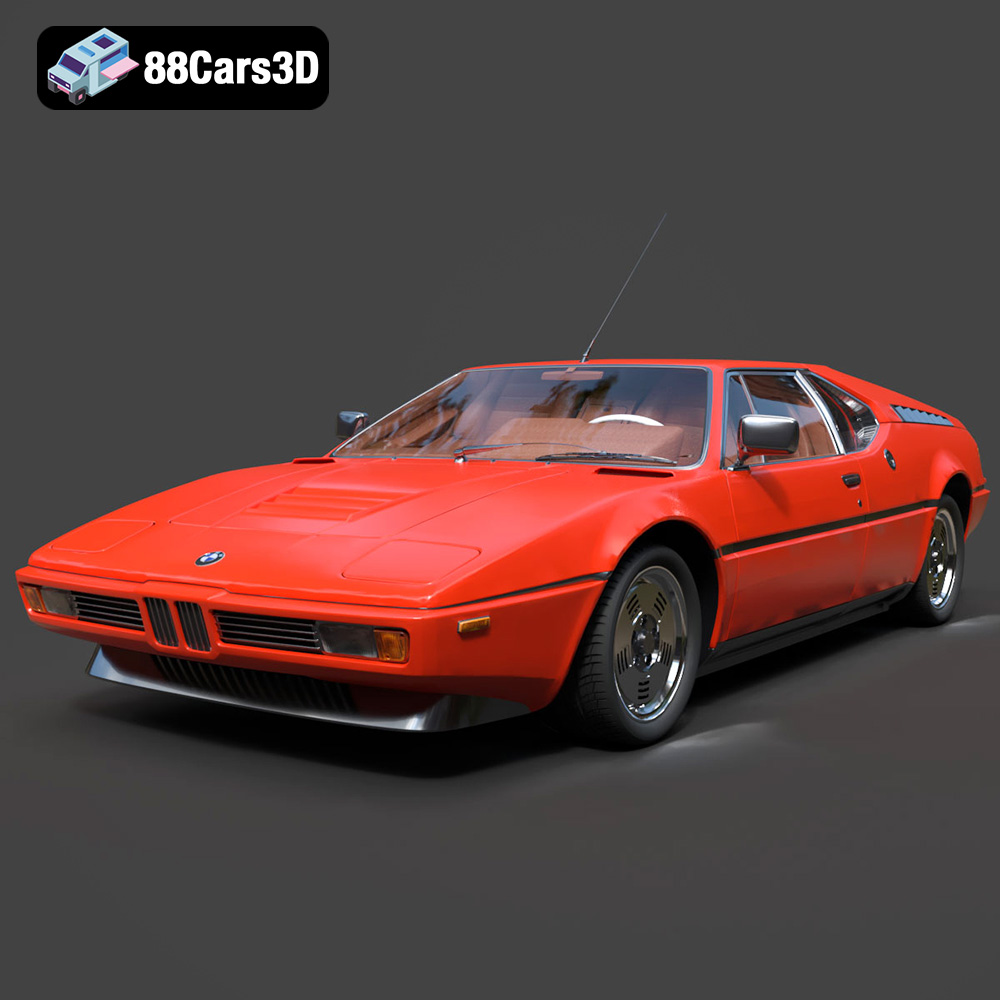
Texture: Yes
Material: Yes
Download the BMW Motorsport M1 E26 1981 3D Model featuring its iconic design, race-bred aerodynamics, and meticulously crafted details. Includes .blend, .fbx, .obj, .glb, .stl, .ply, .unreal, and .max formats for rendering, simulation, and game development.
Price: $20.79

Meta Description:
Texture: Yes
Material: Yes
Download the Cadillac CTS-V Coupe 3D Model featuring detailed exterior styling and realistic interior structure. Includes .blend, .fbx, .obj, .glb, .stl, .ply, .unreal, and .max formats for rendering, simulation, AR VR, and game development.
Price: $13.9
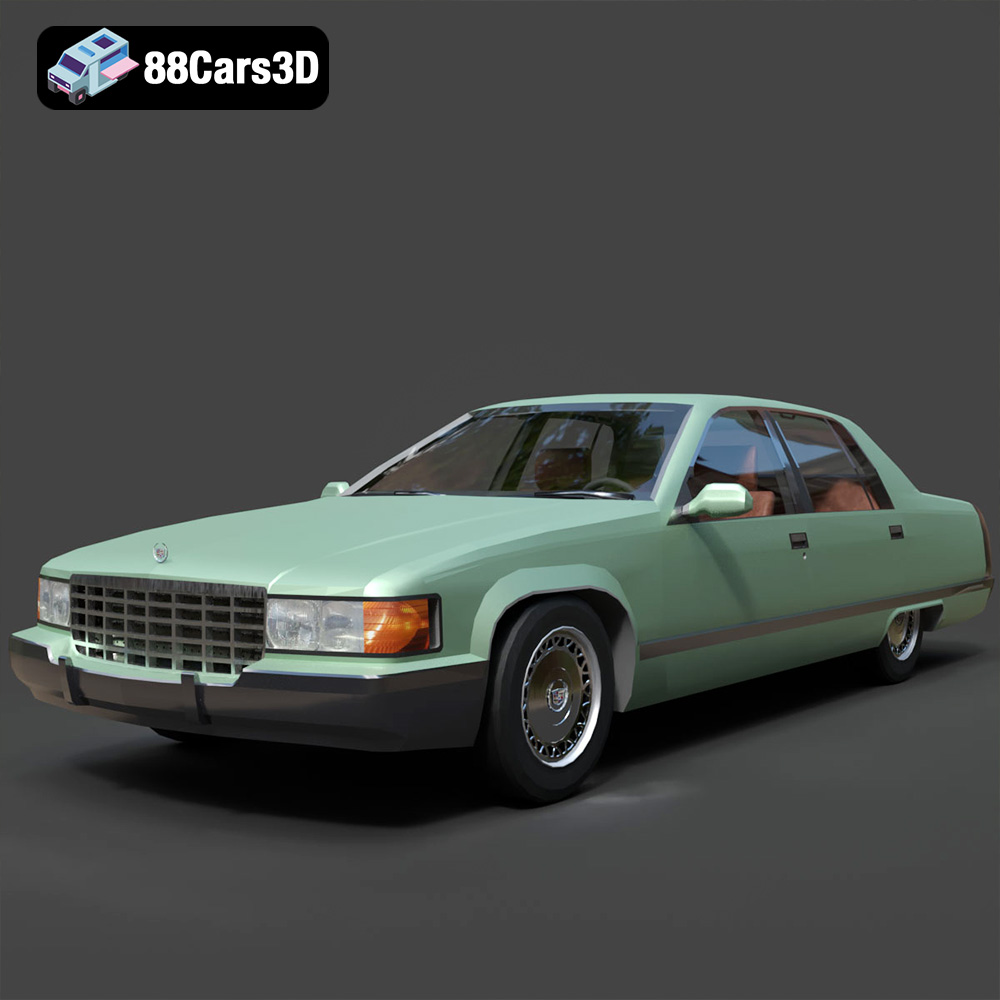
Texture: Yes
Material: Yes
Download the Cadillac Fleetwood Brougham 3D Model featuring its iconic classic luxury design and detailed exterior and interior. Includes .blend, .fbx, .obj, .glb, .stl, .ply, .unreal, and .max formats for rendering, simulation, and game development.
Price: $10.79
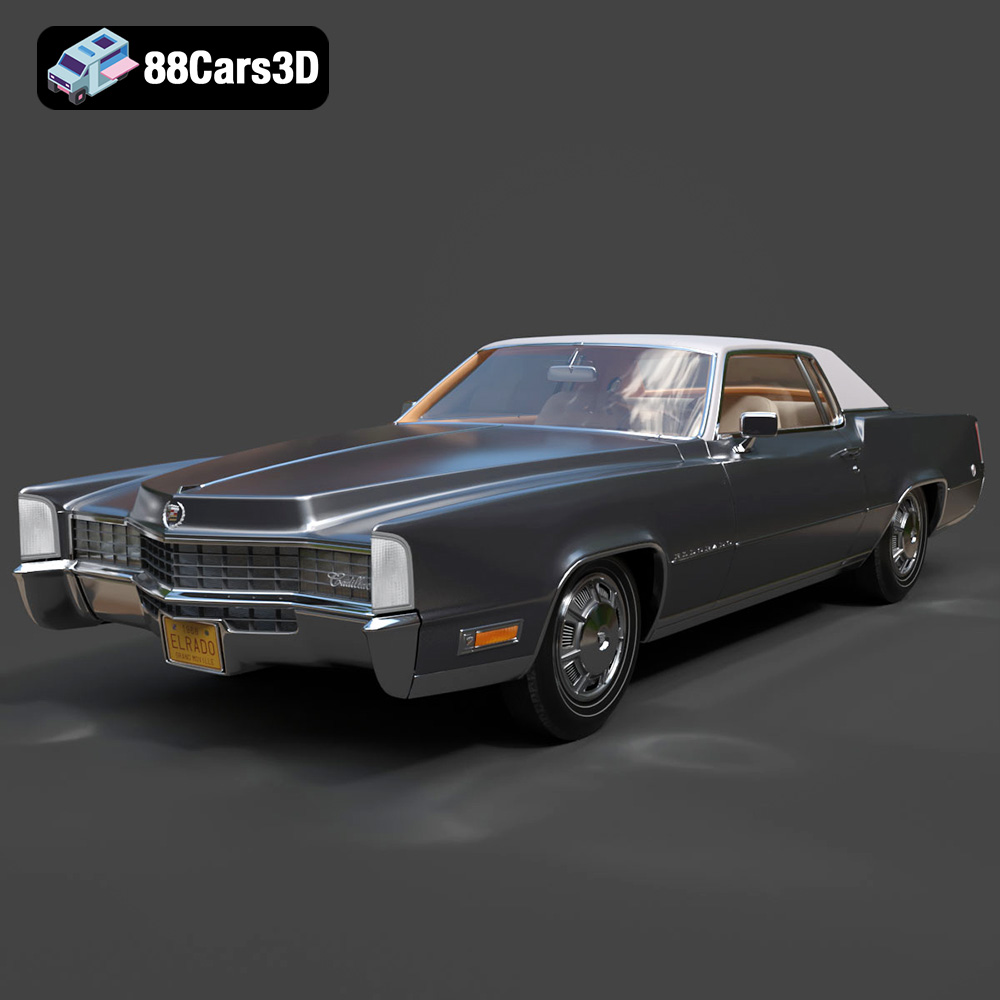
Texture: Yes
Material: Yes
Download the Cadillac Eldorado 1968 3D Model featuring its iconic elongated body, distinctive chrome accents, and luxurious interior. Includes .blend, .fbx, .obj, .glb, .stl, .ply, .unreal, and .max formats for rendering, simulation, and game development.
Price: $20.79

Texture: Yes
Material: Yes
Download the Cadillac CTS SW 2010 3D Model featuring a detailed exterior, functional interior elements, and realistic materials. Includes .blend, .fbx, .obj, .glb, .stl, .ply, .unreal, and .max formats for rendering, simulation, and game development.
Price: $10.79
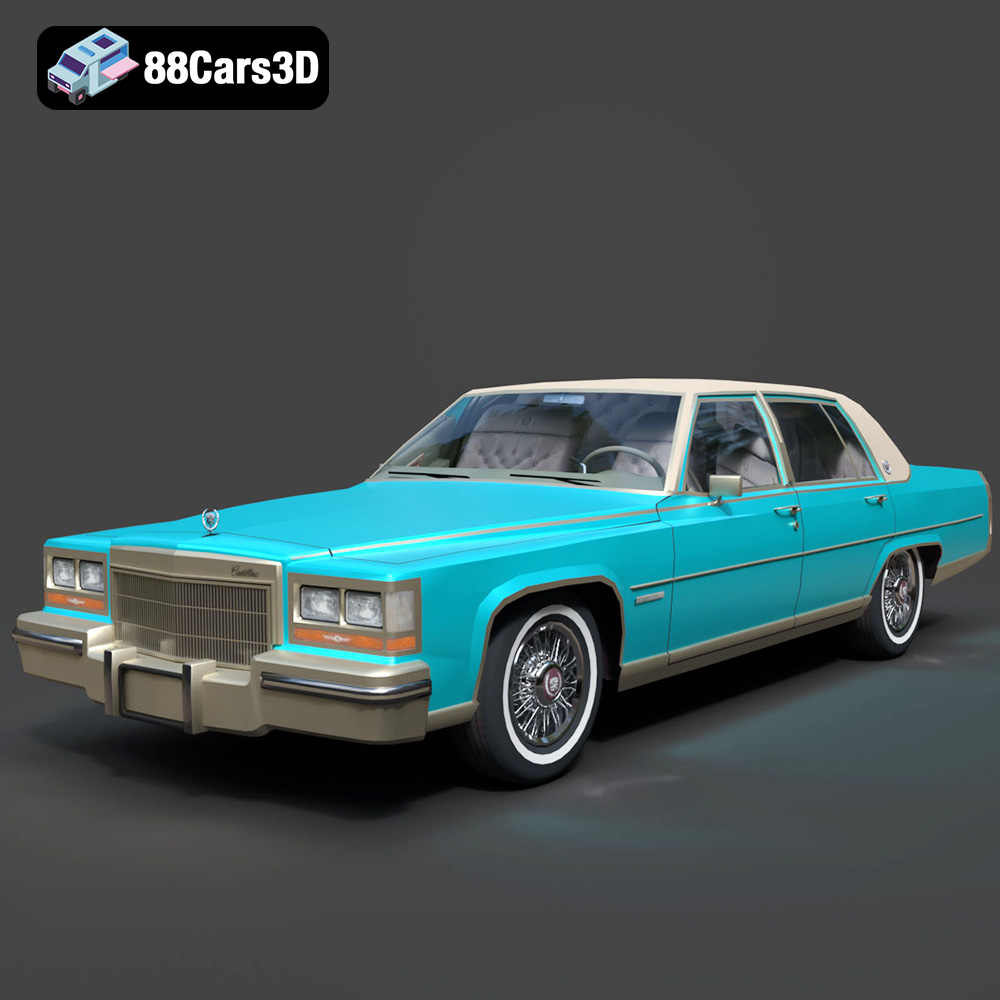
Texture: Yes
Material: Yes
Download the Cadillac Fleetwood Brougham 1985 3D Model featuring its iconic classic luxury design and detailed craftsmanship. Includes .blend, .fbx, .obj, .glb, .stl, .ply, .unreal, and .max formats for rendering, simulation, and game development.
Price: $10.79
Texture: Yes
Material: Yes
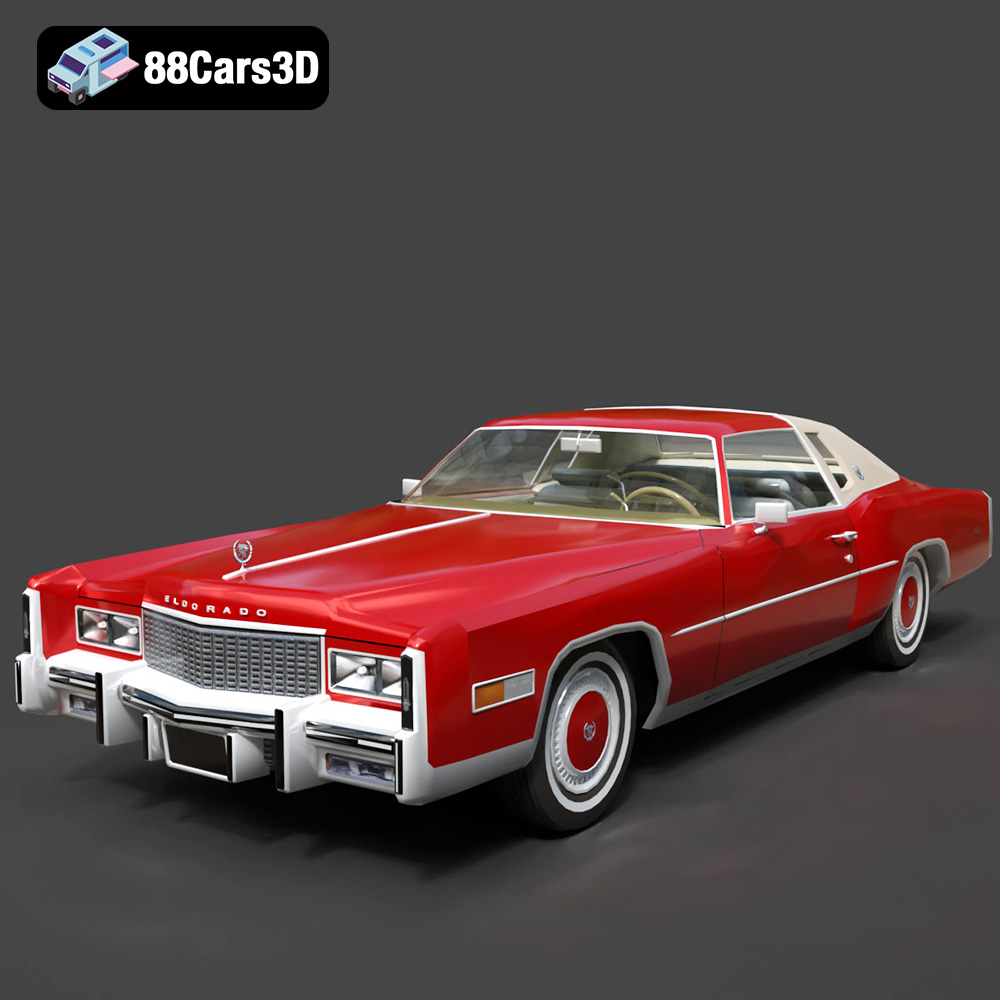
Download the Cadillac Eldorado 1978 3D Model featuring accurately modeled exterior, detailed interior, and period-correct aesthetics. Includes .blend, .fbx, .obj, .glb, .stl, .ply, .unreal, and .max formats for rendering, simulation, and game development.
Price: $10.79
Texture: Yes
Material: Yes
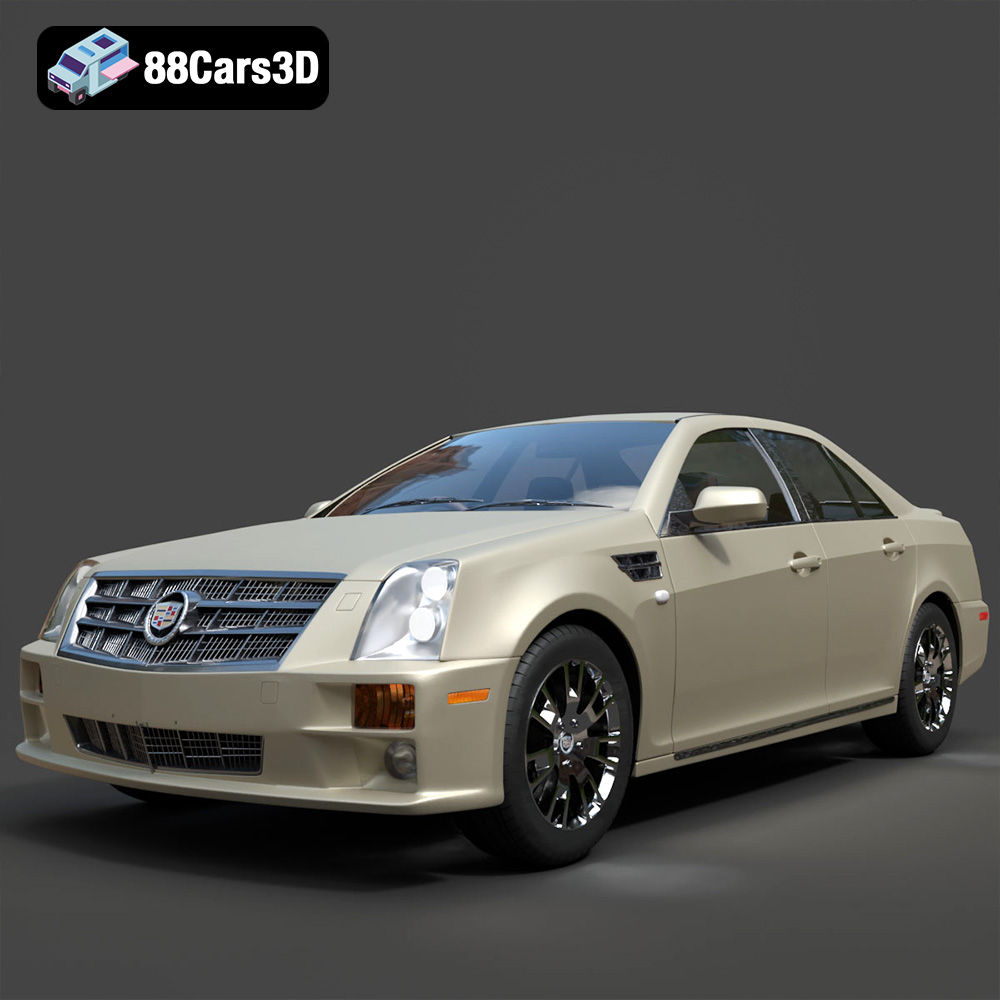
Download the Cadillac STS-005 3D Model featuring a detailed exterior and interior. Includes .blend, .fbx, .obj, .glb, .stl, .ply, .unreal, and .max formats for rendering, simulation, and game development.
Price: $22.79
Texture: Yes
Material: Yes
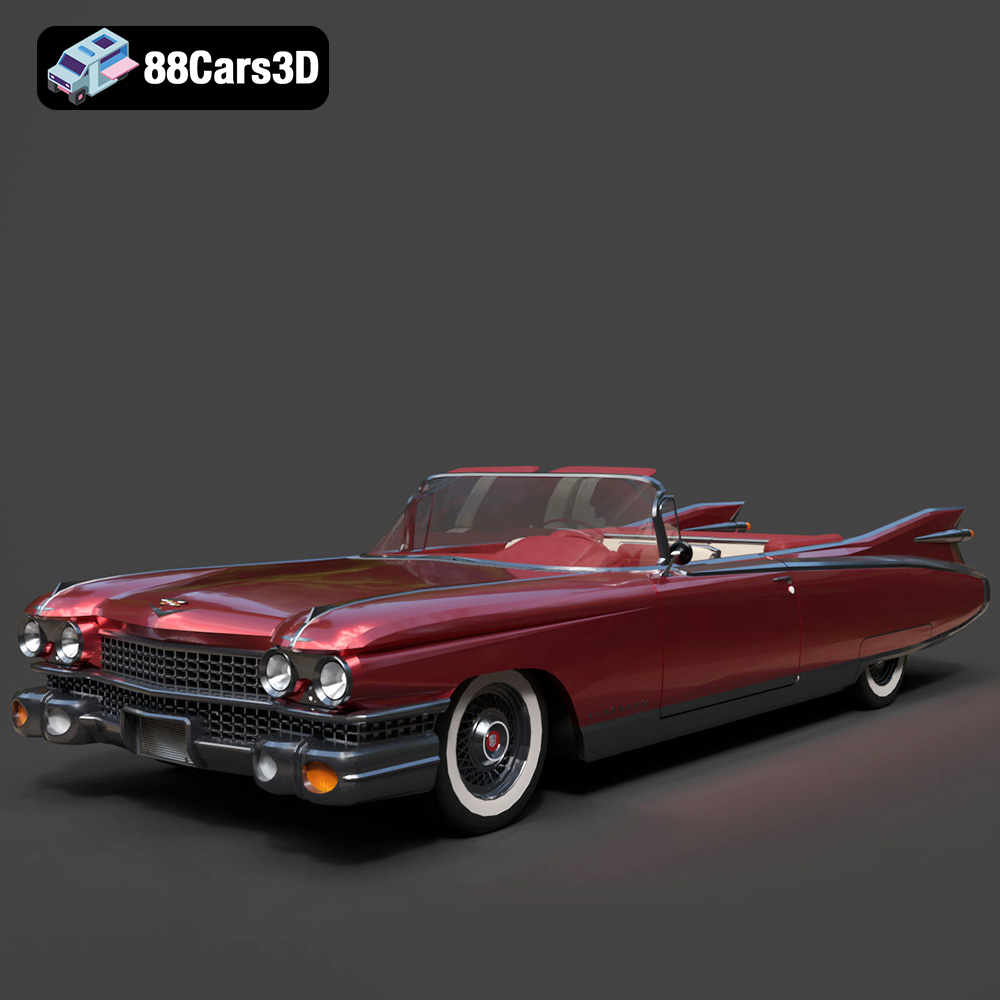
Download the Cadillac Eldorado Convertible (1959) 3D Model featuring iconic fins, luxurious chrome details, and a classic vintage design. Includes .blend, .fbx, .obj, .glb, .stl, .ply, .unreal, and .max formats for rendering, simulation, and game development.
Price: $20.79

Texture: Yes
Material: Yes
Download the Cadillac DTS-005 3D Model featuring its iconic luxury design, detailed interior, and realistic exterior. Includes .blend, .fbx, .obj, .glb, .stl, .ply, .unreal, and .max formats for rendering, simulation, and game development.
Price: $10.79

