⚡ FLASH SALE: Get 60% OFF All Premium 3D & STL Models! ⚡

In the dynamic world of 3D visualization, the demand for high-quality, meticulously crafted digital assets is ever-growing. From the sweeping vistas of cinematic productions to the intricate environments of game worlds and precise engineering simulations, the foundation of any compelling visual experience lies in the fidelity of its models. Capturing the essence of complex machinery, historical artifacts, or futuristic vehicles requires not just artistic flair but also a deep understanding of technical precision and practical application.
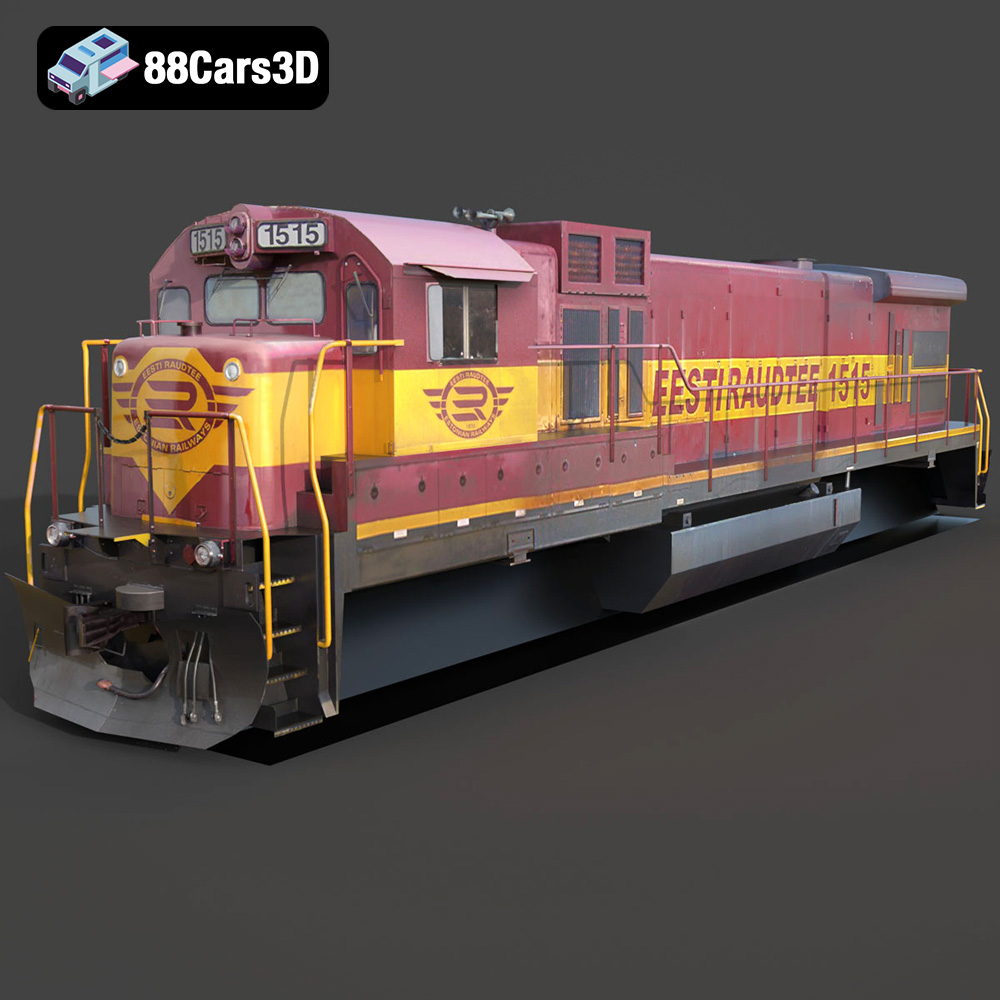
Today, we’re delving into a prime example of such artistry meeting engineering: the Locomotive C36-004 3D Model. This exceptional asset, available on 88cars3d.com, is far more than just a digital representation; it’s a testament to the power of detailed 3D modeling, offering unparalleled versatility for a wide array of professional applications. Whether you’re a game developer seeking authentic historical game assets, a film studio aiming for cinematic realism in automotive rendering, or an architect integrating contextual elements into visualizations, the C36-004 stands ready to elevate your projects.
Join us as we explore the technical intricacies of acquiring, utilizing, and maximizing the potential of such a detailed 3D model, ensuring it seamlessly integrates into your most ambitious creative and technical workflows.
Navigating the landscape of 3D modeling often begins with a fundamental decision: which file format best suits your project’s needs? The choice of format significantly impacts compatibility, performance, and the scope of a model’s utility. Understanding the nuances of each is crucial for seamless integration into various software, engines, and pipelines. The Locomotive C36-004 3D model, for instance, comes equipped with a comprehensive suite of formats, ensuring maximum flexibility.
The .blend format is native to Blender, the powerful open-source 3D creation suite. When you acquire a .blend file, you’re getting a fully editable scene, complete with the model’s geometry, materials, textures, lighting setups, and even animation data, all within the Blender ecosystem. This format is ideal for artists and studios that primarily use Blender, offering the highest level of native control and ease of modification. For the C36-004, the .blend file provides a direct gateway to understanding its construction and customizing its appearance without losing any data fidelity.
Autodesk’s .fbx (Filmbox) format is a widely adopted standard for exchanging 3D data between various applications. Its strength lies in its ability to store not just geometry, but also materials, textures, animation, and even rigging information in a robust, interoperable package. This makes .fbx an industry workhorse, particularly for game development. Both Unreal Engine and Unity, the leading real-time engines, rely heavily on .fbx for importing complex game assets like the Locomotive C36-004. Its efficiency and comprehensive data support make it the go-to choice for transferring animated objects into real-time environments.
The .obj (Wavefront Object) format is one of the oldest and most universally compatible 3D formats. It excels at storing geometric data (vertices, normals, texture coordinates, and faces) in a plain text file, often accompanied by a .mtl (material) file for basic material properties. While it doesn’t typically support animation or advanced rigging, its simplicity and widespread support make it excellent for mesh interchange across virtually all 3D software – from 3ds Max to Maya, Cinema 4D, and beyond. If you need a clean mesh to start fresh with materials or rigging in a different application, .obj is a reliable choice.
.glb (GL Transmission Format Binary) is the binary version of .glTF, an emerging standard for 3D model delivery on the web and in AR/VR applications. This format efficiently encapsulates geometry, materials, textures, and animation into a single, self-contained file. Its primary advantage is optimization for fast loading and rendering in real-time environments, making it perfect for showcasing interactive 3D content directly in browsers, augmented reality apps, or virtual reality experiences. The C36-004 in .glb ensures seamless deployment for modern interactive visualization.
The .stl (Stereolithography) format is the de facto standard for 3D printing. It represents a 3D model as a collection of unconnected triangular facets, defining only the surface geometry of an object. While it contains no color, texture, or material information, its simplicity makes it universally readable by 3D printers and slicing software. For creators looking to bring the Locomotive C36-004 into the physical world as a scale model, the .stl file provides the necessary clean, watertight mesh for successful 3D printing.
The .ply (Polygon File Format) is designed for storing 3D data from 3D scanners, particularly useful for applications requiring precise mesh data, often including color information per vertex or face. It can handle more complex data than .stl, such as vertex normals, color, and transparency, making it suitable for CAD (Computer-Aided Design) applications, scientific visualization, or detailed mesh analysis. For engineering or historical documentation purposes, the C36-004 in .ply offers a robust data set.
A dedicated .unreal file (often a .uasset or a project folder containing one) implies an asset pre-configured and optimized specifically for Unreal Engine. This often means textures are correctly imported, materials are set up with Unreal’s Physically Based Rendering (PBR) system, and sometimes even basic blueprints or scene setups are included. This format dramatically reduces setup time, allowing users to drop the Locomotive C36-004 directly into their Unreal projects with minimal fuss, ready for game development or high-fidelity cinematic rendering.
The .max format is the native file type for Autodesk 3ds Max, a powerful 3D modeling, animation, and rendering software widely used in architectural visualization, product design, and game development. A .max file contains the complete scene, including geometry, modifiers, materials, textures, lights, cameras, and animation. For users deeply integrated into the 3ds Max ecosystem, the C36-004 in .max offers the highest degree of editability and customization, allowing for complex animation rigging or scene integration tailored to specific rendering pipelines.
By providing such a diverse range of formats, the Locomotive C36-004 3D model ensures that regardless of your preferred software, engine, or end application, you have the right tool for the job. This foresight in asset packaging is a hallmark of truly professional 3D car models and vehicle assets.
The true value of a premium 3D model lies not just in its visual appeal but in the underlying technical craftsmanship. The Locomotive C36-004 3D model exemplifies this principle, offering a blend of aesthetic fidelity and practical engineering that makes it a standout asset. This isn’t merely a static image; it’s a dynamic, versatile tool designed for rigorous professional use.
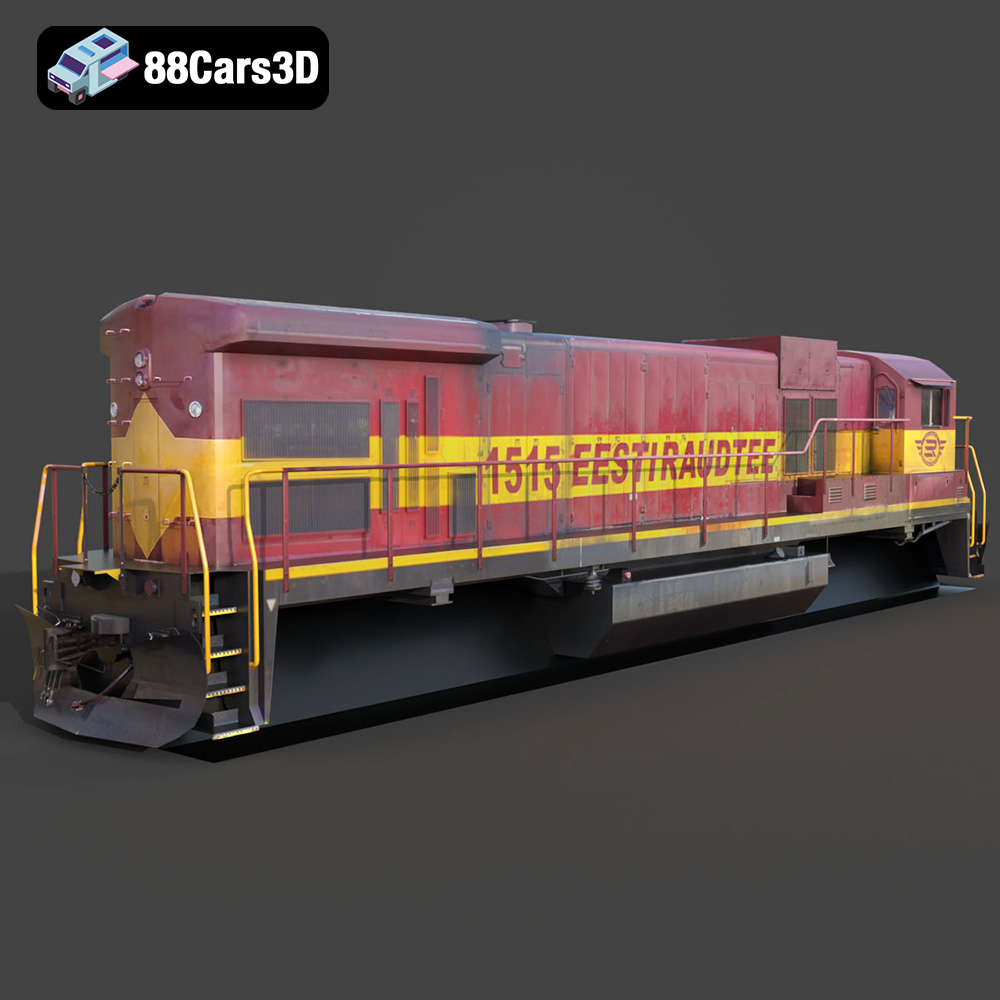
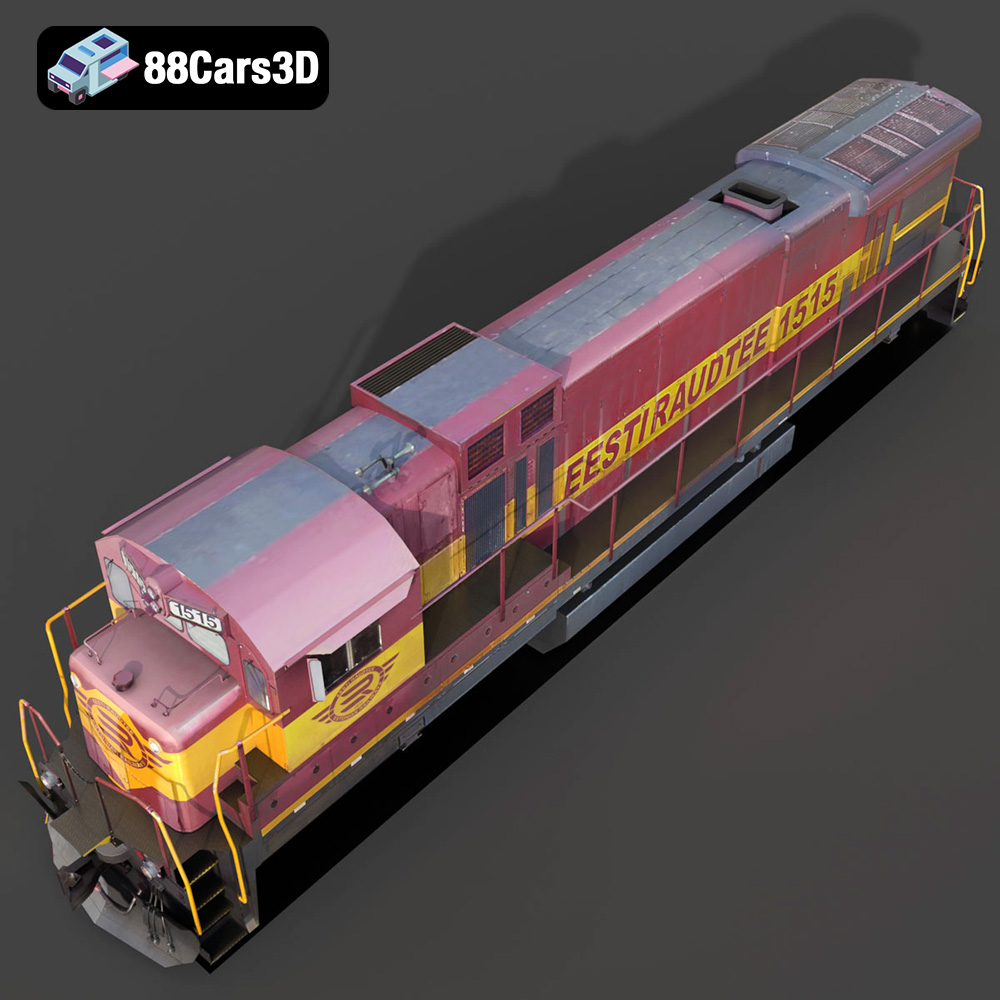
One of the immediate impressive aspects of the C36-004 model is its commitment to external realism. The powerful steam engine chassis forms the core, accurately proportioned to real-world scale, a critical factor for integration into simulations and visualizations. Every element, from the detailed running gear—including connecting rods, pistons, and valve gear—to the realistic wheels and bogies, has been individually modeled. This level of granular detail is essential for close-up renders and allows for the accurate simulation of mechanical motion. Furthermore, functional coupling mechanisms and authentic exterior piping and gauges add layers of believable complexity. Importantly, components are separated for animation purposes, meaning wheels, doors, and buffers are ready to be rigged and brought to life without extensive preparatory work. The realistic materials for metal, wood, and glass elements are not just textures but carefully crafted shaders that react appropriately to light, crucial for stunning automotive rendering.
While the exterior captures immediate attention, the interior and underlying mechanical features of the C36-004 model truly showcase its depth. The accurately modeled locomotive cab, complete with controls, gauges, and operator seating, provides an immersive experience. This attention to interior detail is vital for virtual reality (AR/VR) applications, where users might experience the locomotive from a first-person perspective. Beyond the cab, detailed boiler and firebox elements hint at the internal workings of the steam engine, enriching any visualization with a sense of hidden complexity. Crucially, despite this high level of detail, the model boasts optimized mesh quality. This ensures efficient performance across various platforms, preventing unnecessary computational overhead in demanding real-time environments like game engines.
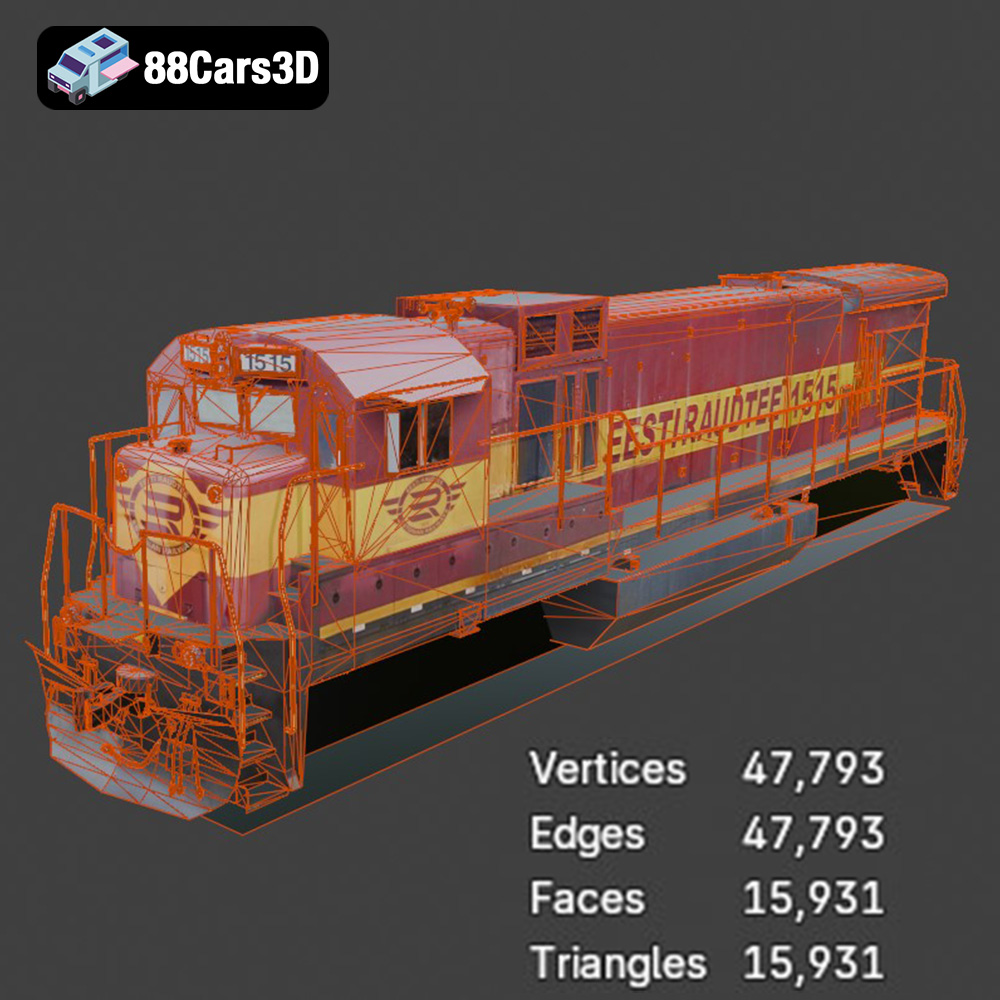
The underlying technical advantages of the C36-004 are what truly set it apart as a professional-grade asset. The clean, quad-dominant topology is a gold standard in 3D modeling. This means the mesh is composed primarily of four-sided polygons, which are much easier to edit, deform, and subdivide smoothly compared to triangulated meshes. This is invaluable for artists who may need to make modifications or create different levels of detail (LODs). Modeled to real-world scale, the locomotive can be dropped into any scene and immediately fit within its environment without needing cumbersome resizing. Finally, the logically organized hierarchy with proper pivot points for animation (e.g., wheels, doors, levers) is a game-changer for animators. This foresight significantly reduces rigging time, allowing for immediate and intuitive control over the model’s articulated parts, a critical feature for any game asset or cinematic production.
The true power of a meticulously crafted 3D model like the Locomotive C36-004 is realized through its seamless integration into various professional pipelines. Whether you’re working with industry-standard software for animation and rendering or optimizing for real-time engines, the quality and preparation of the asset are paramount.
For professionals leveraging Autodesk 3ds Max, the C36-004’s native .max file offers immediate advantages. The logically organized hierarchy and proper pivot points are already established, meaning animators can dive straight into setting up complex steam engine movements. Inverse kinematics (IK) chains can be quickly applied to the connecting rods and valve gear, allowing for realistic and controllable motion. The clean quad-dominant topology makes it easy to add further detailing with modifiers like TurboSmooth or OpenSubdiv for incredibly high-fidelity renders, a common requirement in automotive rendering and cinematic sequences. Material customization, using physical materials or V-Ray/Corona shaders, is straightforward, enabling artists to fine-tune the metallic sheens, worn wood textures, and the unique properties of glass and coal, perfectly simulating different environmental conditions or time periods. This level of preparation ensures that the C36-004 can be the centerpiece of any high-end visualization.
Blender users will find the .blend file for the Locomotive C36-004 equally robust. The asset comes ready to be explored within Blender’s intuitive interface. Its clean topology and established pivot points facilitate rapid rigging with Blender’s armature system, allowing for custom animations of wheels, doors, and internal cab mechanisms. The included materials can be adjusted using Blender’s powerful node-based shader editor, enabling artists to create bespoke weathering effects, adjust paint finishes for historical accuracy, or even create fictional liveries. For those looking to integrate the model into a larger scene, Blender’s Cycles or Eevee render engines can produce stunning results, whether for realistic product shots or stylized historical recreations. The C36-004, as a pre-optimized asset, significantly shortens production cycles, allowing artists to focus on creative storytelling rather than remedial model cleanup.
The inclusion of a dedicated .unreal file and an optimized .fbx format makes the C36-004 a perfect fit for Unreal Engine. Importing the asset is streamlined, with textures and materials often set up to work directly with Unreal’s Physically Based Rendering (PBR) system. This means realistic lighting and material responses out-of-the-box. For game development, the model’s optimized mesh quality ensures it performs efficiently in real-time without excessive poly counts, allowing for smooth framerates even in complex environments. Animators can import the pre-animated FBX or set up new animations within Unreal’s sequencer, driving dynamic movement for the locomotive. Furthermore, for AR/VR applications, the C36-004 provides a solid foundation for immersive experiences. Imagine a virtual tour of the locomotive’s cab or an interactive historical railway simulation – the model’s level of detail and optimization are crucial for delivering convincing, lag-free interactions.
A high-quality 3D asset transcends the singular purpose of creating beautiful images. Its true value lies in its versatility across multiple industries and applications, providing a robust foundation for a wide spectrum of creative and technical endeavors. The Locomotive C36-004 3D model is a prime example of an asset built for multi-purpose deployment.
For game developers, the C36-004 is a dream game asset. Its optimized mesh quality, coupled with clean topology and pre-set pivot points, makes it ready for integration into railway simulators, historical strategy games, or even open-world adventures. Imagine a scene where players must operate this steam engine, navigating controls within its detailed cab, or witnessing it pass by as an ambient element in a vast landscape. The inclusion of .fbx and .unreal formats specifically caters to the needs of game engines like Unity and Unreal, significantly reducing development time. Developers can implement adjustable paint finishes and customizable materials to represent different eras or fictional company liveries, adding depth and replayability to their titles. Such detailed 3D car models and vehicle assets contribute immensely to the realism and immersion of game environments.
Augmented Reality (AR) and Virtual Reality (VR) thrive on rich, interactive 3D content. The C36-004, with its detailed interior and exterior, is perfect for immersive AR/VR experiences. Using the .glb format, developers can easily deploy the locomotive into web-based AR applications, allowing users to place a virtual steam engine in their living room, scaled to real-world dimensions. In VR, the accurately modeled cab could become a virtual museum exhibit, enabling users to “step inside” and explore its intricate controls and mechanisms, learning about historical machinery firsthand. This provides an unparalleled educational and entertainment experience, leveraging the model’s high fidelity to bridge the gap between digital and physical realms.
Beyond entertainment, the C36-004 offers significant utility in simulation and training. Mechanical engineering students could use the model to study the complex workings of a steam engine’s running gear and valve mechanisms, visualizing concepts that are difficult to grasp from diagrams alone. Railway operations training programs could develop virtual scenarios where trainees learn to operate the locomotive, understanding gauge readings, control inputs, and the physics of steam power in a safe, simulated environment. The model’s real-world scale and detailed components make it an invaluable tool for hands-on learning, enhancing comprehension and practical skill development. Its .ply format could also be used for more analytical and CAD-related studies, further cementing its academic value.
The digital realm often inspires tangible creations. With its clean geometry and robust construction, the C36-004 is suitable for conversion to .stl for 3D printing. Enthusiasts, model makers, or educators can transform this digital asset into a physical scale model. While some preparation for printing supports and division into smaller parts might be necessary for larger scales, the underlying mesh quality ensures a solid foundation for a detailed physical replica. This capability extends the model’s life cycle beyond screens, allowing for a unique blend of digital and physical appreciation of this classic steam engine.
In professional 3D production, it’s not enough for a model to simply look good; it must also be efficient and adaptable. The Locomotive C36-004 3D model is designed with both performance and customization in mind, ensuring it can meet the rigorous demands of any project, from high-fidelity cinematic renders to real-time game engines.
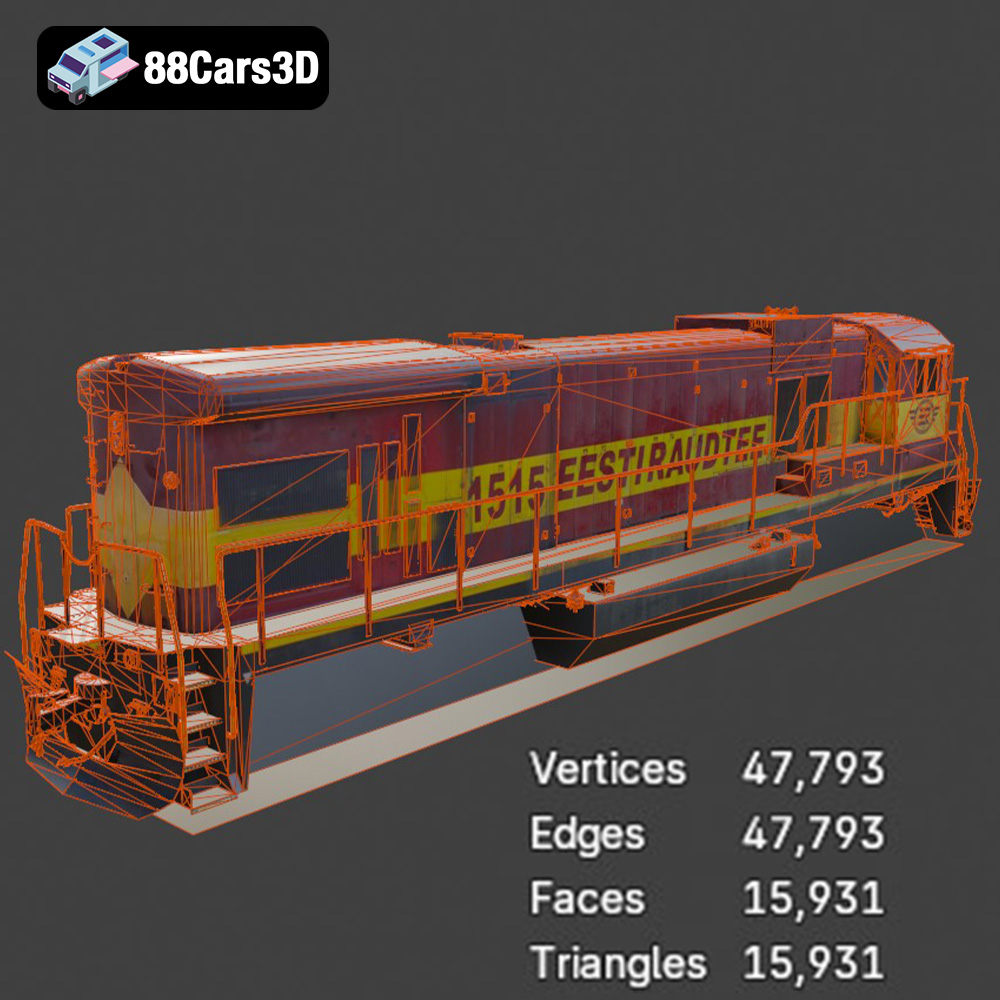
The core of an efficient 3D model lies in its mesh. The C36-004’s “optimized mesh quality for efficient performance” speaks to a balanced polygon count. While detailed for close-ups, it avoids excessive geometry that can bog down real-time engines. For projects requiring even greater optimization, such as mobile AR/VR or high-density game scenes, the clean quad-dominant topology facilitates the creation of Levels of Detail (LODs). Artists can easily generate lower-polygon versions of the model, which are automatically swapped in by game engines when the locomotive is further from the camera. This dynamic approach ensures visual fidelity where it’s needed most while maintaining smooth performance across the entire application. The organized hierarchy also assists in baking complex animations or simulations into more performant game assets.
The C36-004 provides “customizable materials for metal, coal, wood, and glass elements.” This is crucial for achieving visual realism and artistic control. Modern rendering engines and game engines heavily rely on Physically Based Rendering (PBR) workflows, which define materials based on real-world light interaction. The included materials likely adhere to PBR principles, meaning they will react realistically to varying lighting conditions. Artists can easily adjust properties like roughness, metallicness, albedo (color), and normal maps to simulate different states of wear, grime, or specific paint finishes. For example, recreating a newly restored locomotive would involve adjusting roughness values for a polished sheen, while a battle-worn or historically aged version would require increased roughness and dirt overlays. This flexibility ensures the locomotive can fit into any desired aesthetic, whether pristine, weathered, or fictional.
Beyond the model itself, the way it interacts with its environment is vital for realism. The “modifiable lighting setups to simulate different environmental conditions or time periods” allows artists to truly integrate the C36-004 into their scenes. Whether it’s the harsh midday sun on a desert track, the soft glow of dawn in a misty valley, or the dramatic artificial lighting of a studio render, the model’s materials will respond accurately. Combining this with environmental effects like volumetric steam, smoke, and particle systems can bring the locomotive to life. For automotive rendering, placing this magnificent machine in a photorealistic environment, complete with reflections and global illumination, elevates the entire scene. The robust nature of this 3D train model allows it to convincingly sit within any created world.
In the vast ocean of digital assets, discerning the difference between a passable model and a truly professional-grade asset can make or break a project. Investing in high-quality 3D car models and vehicle assets, such as the Locomotive C36-004 from 88cars3d.com, is an investment in efficiency, fidelity, and future-proofing.
The most immediate benefit of a pre-built, high-quality asset is the significant time and resource savings. Creating a model of the C36-004’s complexity and detail from scratch would require hundreds of hours of a skilled 3D artist’s time, including extensive research, modeling, UV mapping, texturing, and rigging. By purchasing a ready-to-use model, project timelines are drastically shortened, allowing teams to allocate resources to other critical areas like scene development, animation, or interactive programming. The cost of a premium asset is often a fraction of the expense of in-house development.
Professional assets are built to industry standards. This means clean, quad-dominant topology, accurate real-world scale, logically organized hierarchies, and proper pivot points. These technical foundations are crucial for smooth workflows, ease of modification, and reliable performance across different software and engines. Low-quality models often come with messy geometry, poor UVs, and unorganized scenes, requiring extensive cleanup work that can negate any initial cost savings. The comprehensive file format support (from .blend and .max for native editing to .fbx and .unreal for engines, and .glb for web/AR) of the C36-004 guarantees maximum compatibility and minimal conversion headaches.
Ultimately, the quality of a 3D model directly impacts the visual fidelity of the final output. Whether it’s a cinematic render, a game, or an AR/VR experience, a highly detailed and accurately textured model like the C36-004 elevates the entire production. The meticulous exterior and interior features, combined with realistic materials, ensure that the locomotive looks convincing from every angle, under any lighting condition. This level of realism enhances immersion, communicates professionalism, and captivates audiences, giving your project a significant competitive edge.
The world of 3D modeling and visualization is constantly evolving, demanding assets that are not only visually stunning but also technically robust and highly adaptable. The Locomotive C36-004 3D Model stands as a shining example of such an asset, meticulously engineered to meet the diverse needs of professionals across industries. From its clean quad-dominant topology and real-world scale to its comprehensive file format support and ready-for-animation hierarchy, every aspect of this model speaks to a commitment to quality and utility.
Whether you’re developing the next generation of railway simulators, crafting immersive historical narratives for AR/VR, or producing breathtaking cinematic sequences, the C36-004 offers an unparalleled foundation. Its detailed exterior and interior features, coupled with optimized mesh quality, ensure seamless integration into workflows ranging from 3ds Max and Blender to Unreal Engine, delivering exceptional performance and visual fidelity. By choosing such a high-caliber 3D asset, creators not only save invaluable time and resources but also elevate the overall quality and impact of their projects.
For those seeking to infuse their creations with the grandeur and historical significance of a classic steam locomotive, the Locomotive C36-004 is an indispensable tool. Explore this remarkable asset and a wide array of other premium 3D car models and vehicle designs at 88cars3d.com, where quality meets innovation.
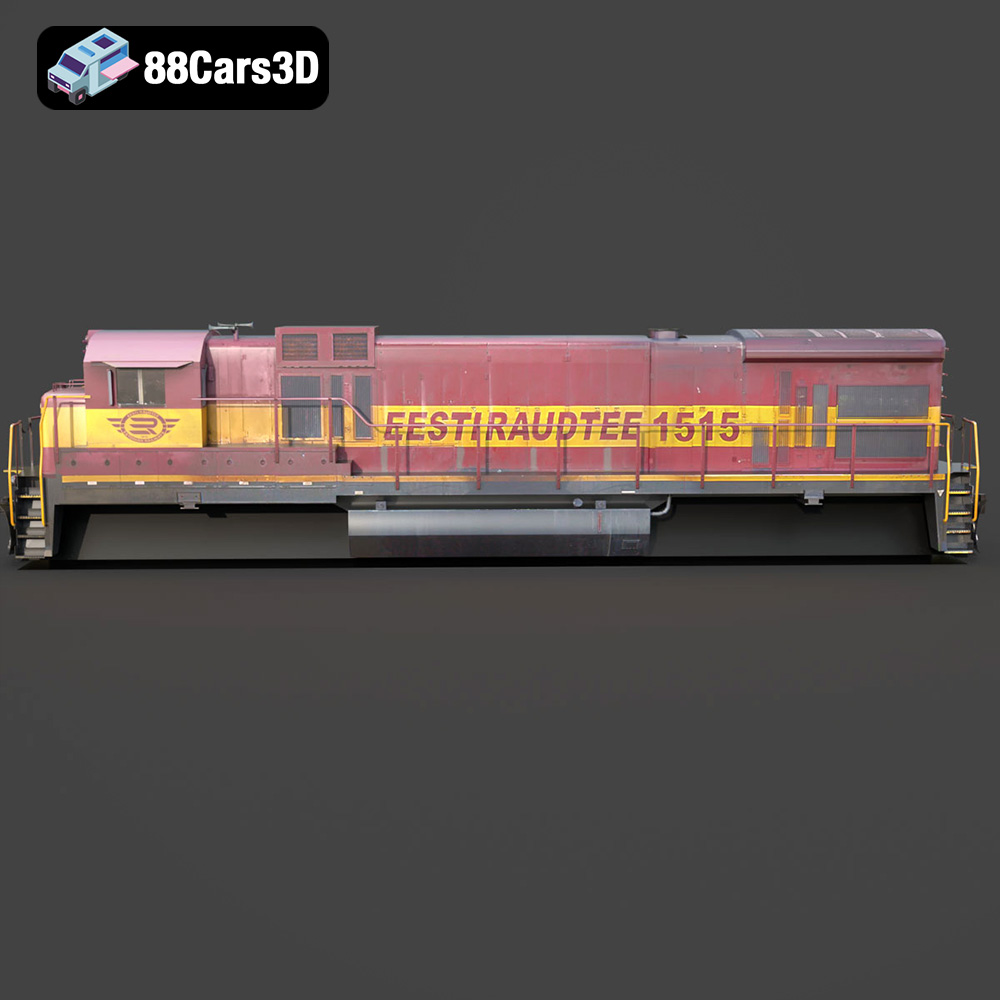
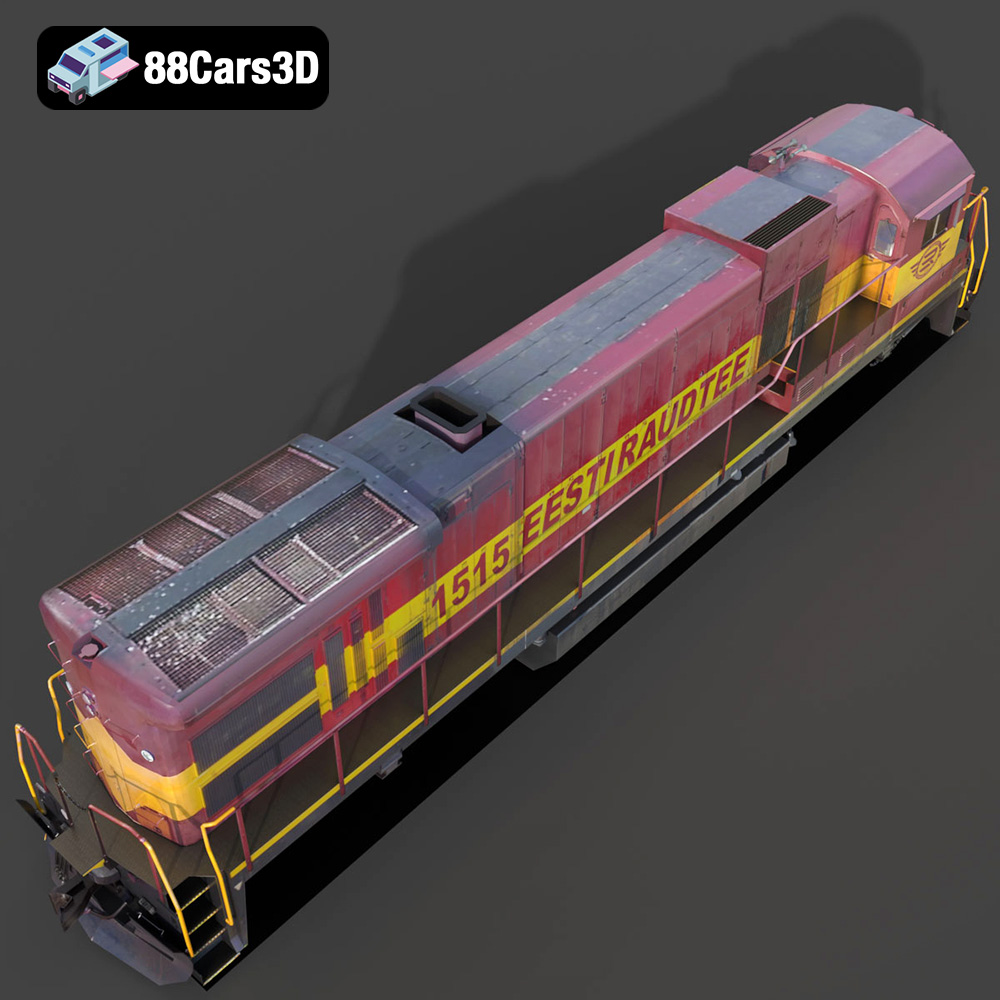
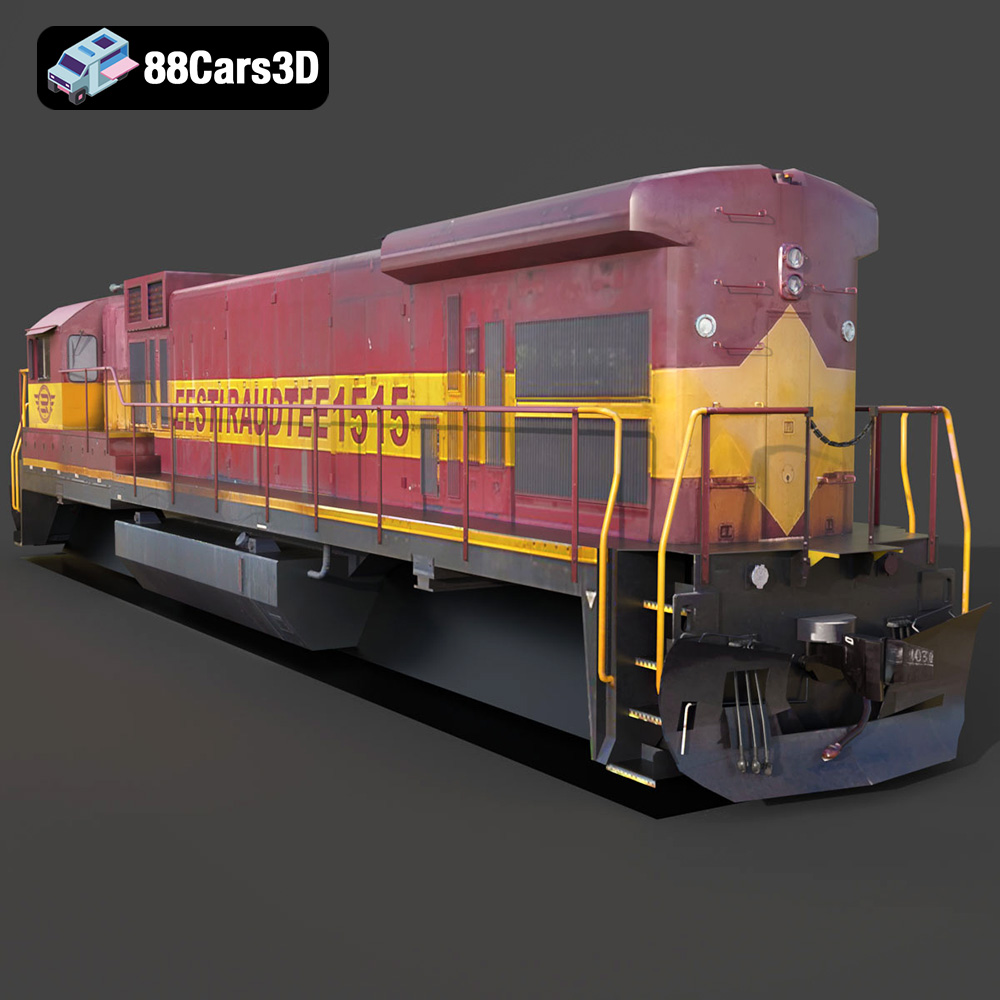
Presenting the highly detailed Locomotive C36-004 3D model, a meticulously crafted digital replica of a classic steam locomotive. This model captures the robust engineering and historical aesthetic of the C36 class, designed with clean geometry and a balanced level of detail suitable for close-up renders and dynamic animations. Perfect for railway simulations, historical visualizations, game development, and cinematic scenes.Exterior Features:
Interior / Mechanical Features:
Technical Advantages:
Applications:
Customization Options:
This Locomotive C36-004 3D model offers unparalleled quality and versatility, making it an essential asset for any project requiring a historically accurate and highly detailed steam engine.Included File Formats:
$10.79
.arvr
.blend
.c36-004
.fbx
.gameasset
.glb
.max
.obj
.ply
.railroad
.rendering
.simulation
.steamengine
.stl
.train
.unreal
locomotive