⚡ FLASH SALE: Get 60% OFF All Premium 3D & STL Models! ⚡

In the rapidly evolving landscape of digital media, the demand for incredibly realistic and versatile 3D assets has never been higher. From breathtaking cinematic sequences to immersive real-time experiences, a high-quality 3D car model is often the cornerstone of compelling visual content. Professionals across industries—automotive design, game development, architectural visualization, and marketing—rely on these assets to bring their visions to life with unparalleled accuracy and fidelity.
The journey from a blank canvas to a fully realized digital vehicle is intricate, requiring meticulous attention to detail in modeling, texturing, and optimization. It’s about more than just aesthetics; it’s about technical precision, compatibility across diverse platforms, and ensuring the asset performs flawlessly in various pipelines. This commitment to excellence is precisely what distinguishes truly professional 3D car models, and it’s vividly exemplified by products like the Mini Cooper Countryman 2025 3D Model available on 88cars3d.com.
This article will delve deep into the technical intricacies of high-quality 3D car models, exploring their fundamental components, the diverse file formats that dictate their utility, and how they seamlessly integrate into professional workflows. We’ll uncover why an asset like the Mini Cooper Countryman 2025 3D Model is not just a digital representation but a powerful tool designed to elevate projects to the next level, whether for demanding cinematic rendering or efficient real-time applications.
The utility of any 3D model, especially complex assets like vehicles, is heavily dependent on the file formats it supports. Each format is designed with specific use cases and software ecosystems in mind, offering distinct advantages for different stages of a production pipeline. A comprehensive asset, such as the Mini Cooper Countryman 2025 3D Model, provides a broad spectrum of these formats to ensure maximum compatibility and flexibility for professionals.
The .blend format is the native file type for Blender, an open-source 3D creation suite. A .blend file is incredibly powerful as it stores an entire Blender scene, including the 3D mesh, materials, textures, lighting setups, camera positions, animations, and even physics simulations. For artists and studios primarily working within Blender, this format offers the most editable and robust version of the model. It allows for direct manipulation of geometry, full control over PBR (Physically Based Rendering) materials using Blender’s shader nodes, and the ability to tweak lighting for perfect renders using Cycles or Eevee. The Mini Cooper Countryman 2025 3D Model, provided as a .blend file, ensures that Blender users have a complete, ready-to-render scene right out of the box.
.fbx (Filmbox) is one of the most widely adopted proprietary file formats for 3D data exchange, especially prevalent in game development and real-time visualization. Developed by Autodesk, FBX is highly versatile, capable of storing not just mesh data but also materials (though often simplified), textures, animations, rigging, and even entire scene hierarchies. Its strength lies in its ability to efficiently transfer complex animated and static models between different 3D software applications and game engines like Unreal Engine and Unity. When integrating the Mini Cooper Countryman 2025 3D Model into a game, the .fbx format is the go-to choice, offering optimized geometry and reliable material assignments for a smooth pipeline.
.obj (Wavefront OBJ) is a fundamental, widely supported geometry definition file format. It’s known for its simplicity and robustness, making it an excellent universal format for transmitting static 3D mesh data between virtually all 3D software packages. An .obj file typically stores polygon and vertex information, along with UV coordinates, and often references external .mtl (material) files for basic material properties. While it doesn’t support animation or complex material setups like PBR networks, its universal compatibility makes it invaluable for cross-software workflows, ensuring that the core geometry of the Mini Cooper Countryman 2025 can be imported and worked on in almost any 3D environment.
.glb (GL Transmission Format Binary) is an increasingly important format, especially for augmented reality (AR), virtual reality (VR), and web-based 3D applications. It’s a binary version of the glTF (GL Transmission Format), designed to be a compact, efficient, and runtime-deliverable format. A .glb file packages 3D model data, textures, and animations into a single file, making it incredibly easy to share and load. Its optimization for real-time rendering on various devices and platforms means that the Mini Cooper Countryman 2025 in .glb format is perfect for interactive web viewers, AR experiences on mobile devices, or lightweight VR presentations.
.stl (Stereolithography) is almost universally used for 3D printing. This format describes only the surface geometry of a 3D object using a tessellated representation of its exterior, composed entirely of triangles. While it doesn’t carry color or texture information, its simplicity and widespread support by 3D printers and slicing software make it essential for physical prototyping. If the goal is to produce a physical scale model of the Mini Cooper Countryman 2025, the .stl file is the critical output.
.ply (Polygon File Format or Stanford Triangle Format) is another format for storing 3D data, particularly useful for scanned data and scientific applications. It can store a variety of properties including color, transparency, surface normals, and texture coordinates, in addition to the geometric mesh itself. While less common for general artistic exchange than FBX or OBJ, .ply is valued for its precision in representing complex geometric data and is often used in CAD, reverse engineering, and advanced analysis tools. It provides a highly detailed polygon mesh, ideal for specific analytical or prototyping needs.
The .unreal file is not a traditional standalone 3D format but typically refers to assets specifically configured and exported for direct import into Unreal Engine projects. This might involve an FBX file that has been meticulously set up with proper naming conventions, PBR material assignments, collision meshes, and LODs (Levels of Detail) that adhere to Unreal’s best practices, or even a pre-packaged Unreal Asset (like a .uasset). For the Mini Cooper Countryman 2025 3D Model, providing an “.unreal” option means significant time savings, as the model is already optimized and configured to drop straight into an Unreal project, complete with engine-ready materials and potential blueprint setups.
Finally, the .max format is the native file type for Autodesk 3ds Max, a powerful 3D modeling, animation, rendering, and compositing software. Similar to .blend files, a .max file contains the complete scene data, including geometry, modifiers, materials (V-Ray, Corona, Arnold, etc.), lighting, cameras, and animations. For professionals working in architectural visualization, product design, or complex animation within 3ds Max, the .max version of the Mini Cooper Countryman 2025 3D Model provides full editability and access to all the original scene components, allowing for deep customization and high-end rendering.
The availability of such a diverse range of formats for the Mini Cooper Countryman 2025 3D Model underscores its versatility and professional readiness, catering to virtually any pipeline a designer or developer might utilize.
Achieving photorealistic results with 3D car models is a blend of artistic skill and technical precision. It’s not enough for a model to simply look good from a distance; it must withstand close scrutiny, respond accurately to lighting, and maintain fidelity across various applications. The Mini Cooper Countryman 2025 3D Model exemplifies these principles, showcasing the critical components that define a truly professional asset.
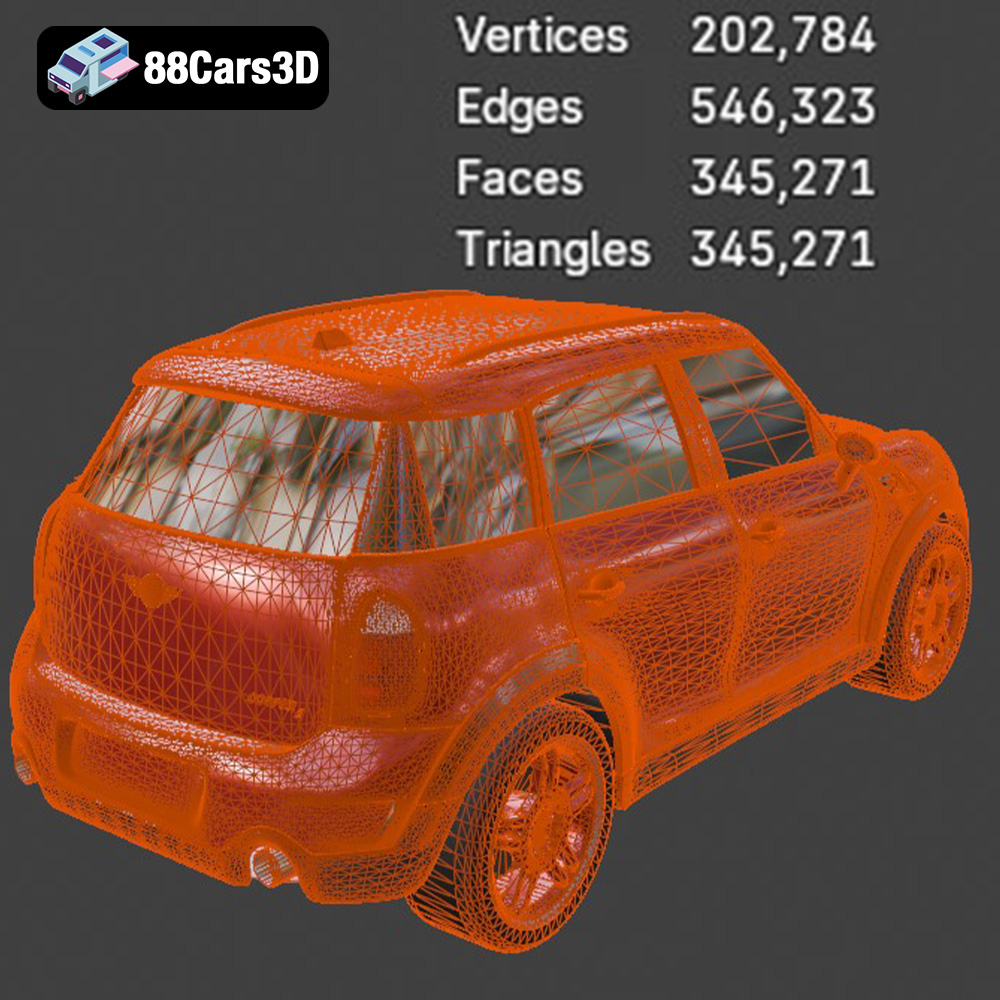
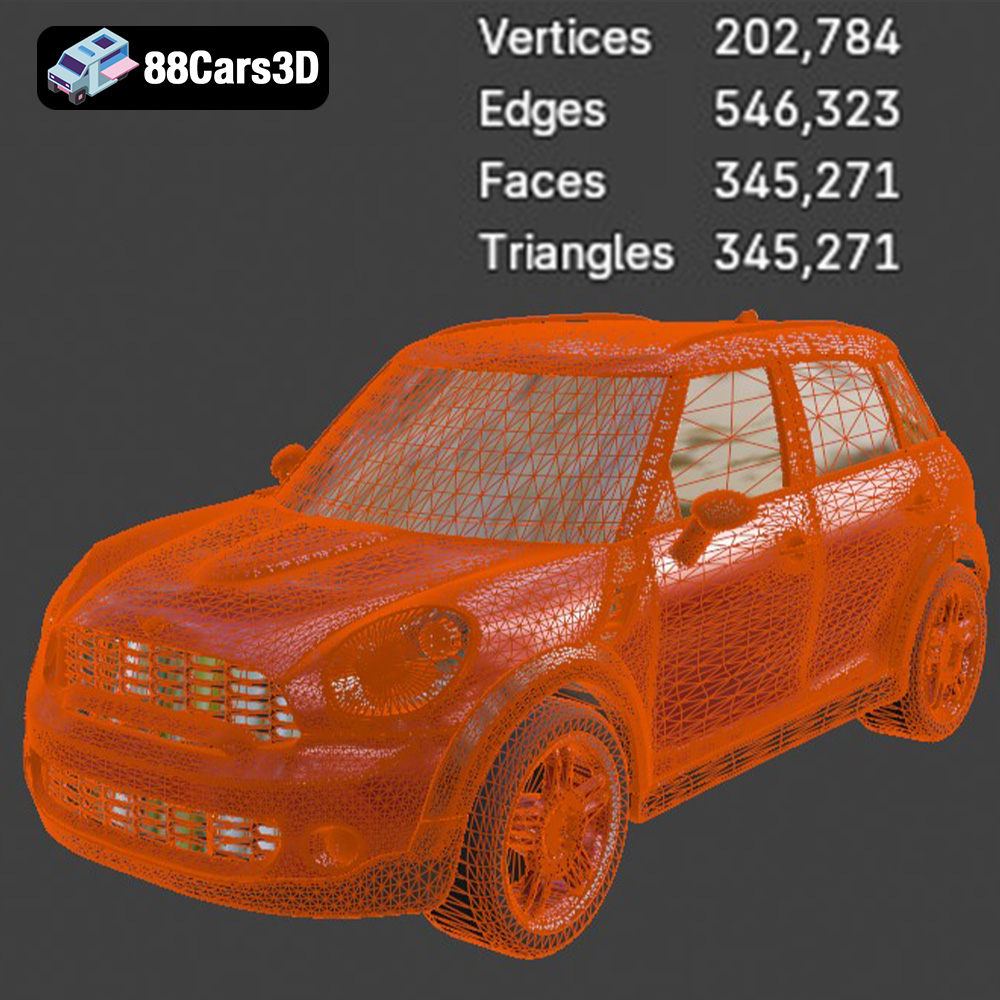
At the heart of any high-quality 3D model is its geometry and topology. For the Mini Cooper Countryman 2025, this means meticulously crafted surfaces with clean quad-based polygons. Quads (four-sided polygons) are preferred over tris (triangles) for organic shapes and smooth subdivision, ensuring predictable deformation during animation and flawless surfacing under various lighting conditions. “Optimized, clean geometry” signifies a balance: enough polygons to capture the distinctive styling and robust proportions without being excessively heavy, making it suitable for both demanding cinematic rendering (where higher poly counts are acceptable) and efficient real-time applications (where poly budgets are stricter). Proper edge flow is crucial for maintaining crisp lines and smooth curves, especially around body panels, headlights, and wheel arches, which define the car’s iconic look.
Realistic surfacing is paramount for bringing a 3D car model to life. The Mini Cooper Countryman 2025 3D Model utilizes fully textured surfaces and realistic PBR (Physically Based Rendering) materials. PBR materials accurately simulate how light interacts with different surfaces in the real world, producing highly believable results. This involves a suite of texture maps:
These maps, combined with carefully crafted shaders for paint (with clear coat effects), glass, rubber, chrome, and plastics, ensure that the Mini Cooper Countryman 2025 reflects light, refracts through windows, and casts shadows with photographic accuracy. Furthermore, high-resolution UV mapping ensures that textures are applied without stretching or distortion across the entire model.
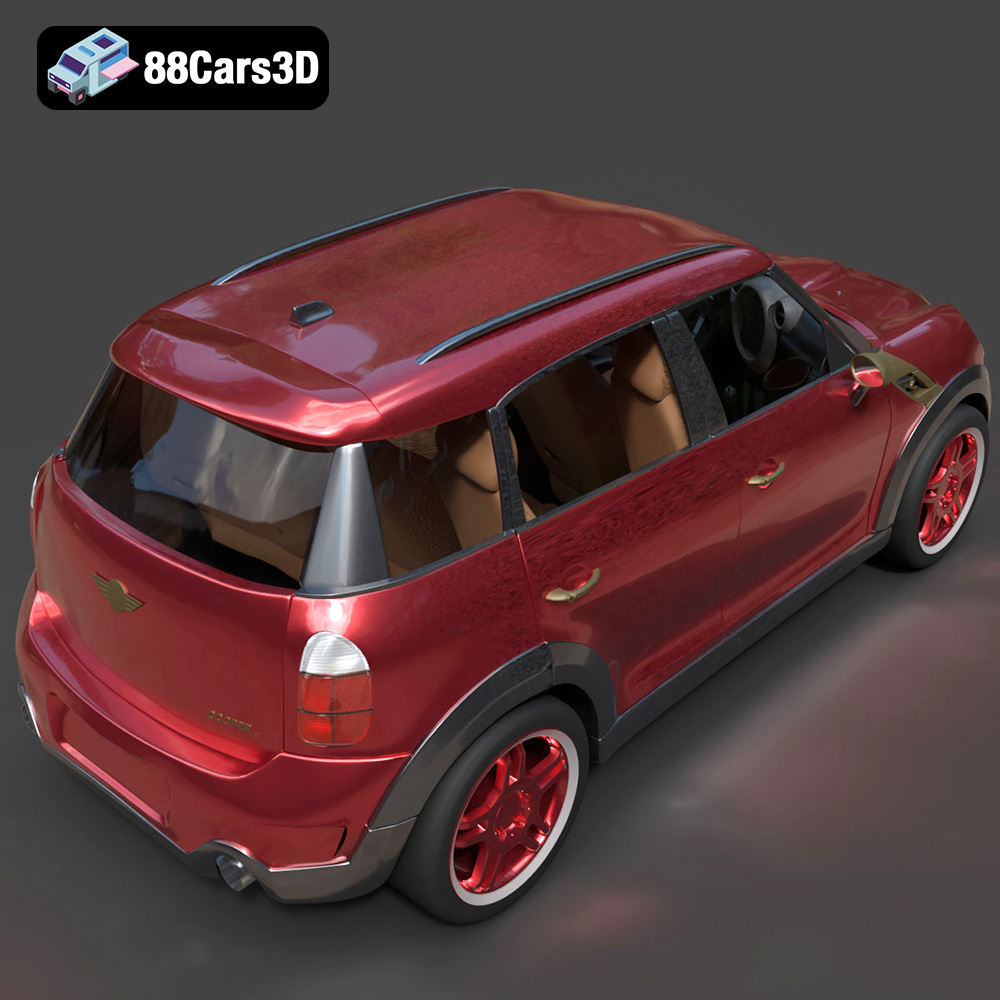
A truly comprehensive 3D car model isn’t just about the exterior. The inclusion of a “complete, detailed interior” in the Mini Cooper Countryman 2025 3D Model is a critical feature. This level of detail allows for realistic cockpit views, essential for virtual production, simulation training, and even cinematic shots that pan into the cabin. This means meticulously modeled dashboards, seats, steering wheel, door panels, and all the intricate buttons and displays. For game development and interactive experiences, detailed interiors enhance immersion significantly. Beyond the interior, other functional components like wheels, tires, brakes, and even undercarriage elements (if specified for the product) are modeled with precision, contributing to the model’s overall authenticity and versatility.
The versatility of a well-engineered 3D asset like the Mini Cooper Countryman 2025 3D Model makes it indispensable across a multitude of professional applications. Its design for immediate integration is key to accelerating production and achieving high-quality outcomes in diverse pipelines.
For automotive manufacturers and marketing agencies, high-quality 3D car models are central to modern visualization and promotional strategies. The Mini Cooper Countryman 2025 3D Model is an ideal asset for creating stunning product configurators, digital showrooms, and advertising materials. Imagine a website where potential buyers can customize the car’s color, wheels, and interior in real-time, all rendered with photo-realistic fidelity. Or consider a dynamic video commercial showcasing the Countryman navigating various environments, from urban streets to rugged landscapes, rendered with exceptional detail and dynamic lighting. The clean geometry and PBR materials of this model ensure it shines in high-resolution renders for print ads or 4K video campaigns, presenting the vehicle in its best light without the need for expensive physical prototypes or photoshoots.
The demanding environment of game development requires assets that are not only visually impressive but also highly optimized for real-time performance. The “engineered for efficiency” aspect of the Mini Cooper Countryman 2025 3D Model means it’s suitable for integration into popular game engines like Unreal Engine and Unity. This involves careful polygon budgeting, efficient UV mapping, and the availability of LODs (Levels of Detail) if needed (though not explicitly stated, implied by “optimized” and “game-engine ready format”). Developers can use this model to populate open-world environments, create compelling racing simulations, or provide dynamic vehicles for interactive experiences. Its game-engine ready .fbx and .unreal formats drastically reduce the time spent on asset preparation, allowing artists to focus on level design and gameplay mechanics rather than extensive mesh cleanup or material conversions.
As augmented reality (AR) and virtual reality (VR) become more mainstream, the need for optimized 3D assets for immersive experiences grows. The Mini Cooper Countryman 2025 3D Model, with its .glb format, is perfectly suited for AR/VR and virtual production workflows. In AR, users can place a life-sized virtual Countryman in their driveway using a smartphone, exploring its features from any angle. In VR, it can serve as a highly realistic vehicle for driving simulators, virtual tours, or interactive training modules. For virtual production, the model can be integrated into LED volumes for real-time filmmaking, allowing filmmakers to place the vehicle in dynamic virtual environments and achieve impossible shots with precision. The robust asset, with its PBR materials and detailed interior, provides a solid foundation for creating truly convincing virtual experiences.
To truly appreciate the utility of a high-quality 3D model like the Mini Cooper Countryman 2025, it’s beneficial to examine its integration into common professional 3D software workflows. Each program offers unique strengths, and the provided file formats cater to these specific environments.
For Blender artists, the provided .blend file is a goldmine. Upon opening, the Mini Cooper Countryman 2025 3D Model typically loads with its full material setup, lights, and possibly even a basic camera, making it render-ready. Artists can immediately:
Integrating the Mini Cooper Countryman 2025 into Unreal Engine typically leverages the .fbx or the specialized .unreal format. The workflow usually involves:
For professionals using 3ds Max, the provided .max file offers full native compatibility. This is particularly valuable for architectural visualization (arch-viz) firms or animation studios:
The utility of a meticulously crafted 3D car model extends far beyond traditional rendering and real-time visualization. Its precise geometry and multi-format availability open doors to highly specialized applications that leverage the model’s technical integrity.
While often associated with digital screens, the Mini Cooper Countryman 2025 3D Model also serves as an excellent foundation for physical output. The inclusion of .stl and .ply formats is crucial for 3D printing and rapid prototyping. Engineers and designers can use these files to:
The inherent cleanliness and optimized nature of the model ensure that the mesh is watertight and manifold—critical requirements for successful 3D printing without errors.
The automotive industry heavily relies on simulation for development, testing, and training. A highly accurate 3D model like the Mini Cooper Countryman 2025 is an invaluable asset in these scenarios:
The technical precision and complete nature of the Mini Cooper Countryman 2025 3D Model make it a robust and reliable choice for these demanding, data-driven applications.
In the dynamic world of 3D content creation, the bedrock of successful projects lies in the quality and versatility of their core assets. A truly professional 3D car model is more than just a visual prop; it is a meticulously engineered digital twin, capable of performing across a spectrum of demanding applications, from cinematic rendering to real-time interactive experiences.
We’ve explored how fundamental elements like optimized geometry, PBR materials, and detailed interiors contribute to the realism and usability of such models. Furthermore, the critical role of diverse file formats—from .blend and .max for comprehensive editing to .fbx and .unreal for game engines, and .glb for web/AR/VR—ensures that these assets are universally adaptable and future-proof. Whether for automotive visualization, game development, virtual production, 3D printing, or advanced simulations, the right 3D model streamlines workflows and empowers creators.
The Mini Cooper Countryman 2025 3D Model stands as a prime example of such a premium asset. Its authentic digital replica, engineered for efficiency and delivered with a comprehensive suite of file formats, makes it an indispensable tool for any professional seeking superior realism and accuracy. By investing in high-quality 3D car models from trusted sources like 88cars3d.com, artists and developers gain a significant advantage, freeing them to focus on innovation and creativity rather than grappling with substandard assets. Elevate your projects and drive digital excellence with models that meet the highest technical and artistic standards.
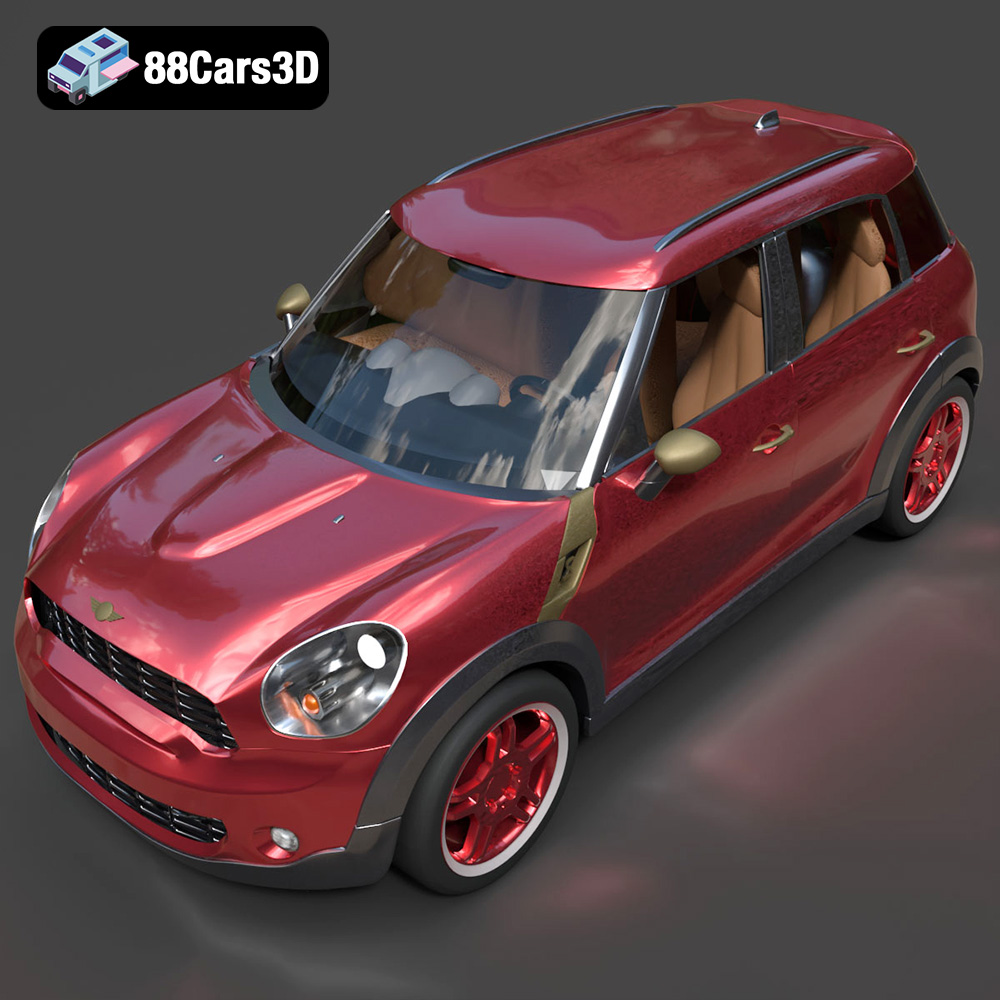
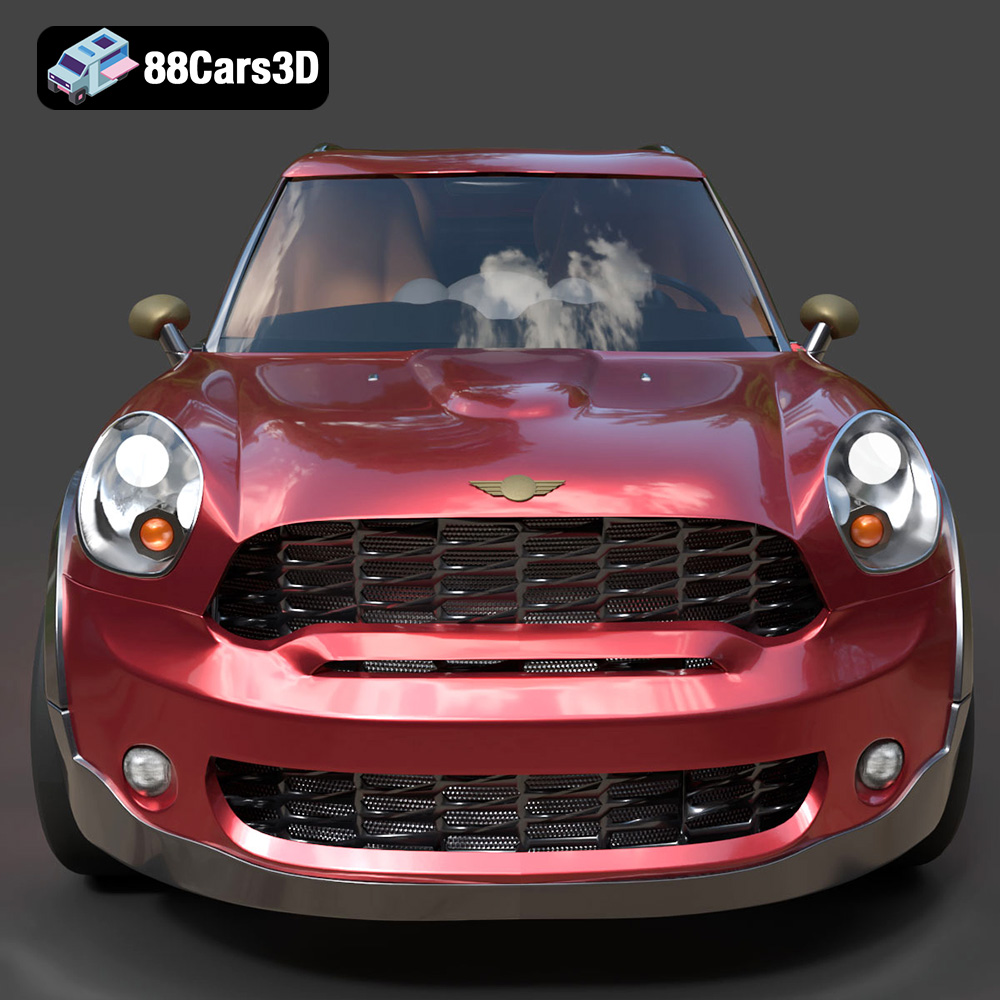
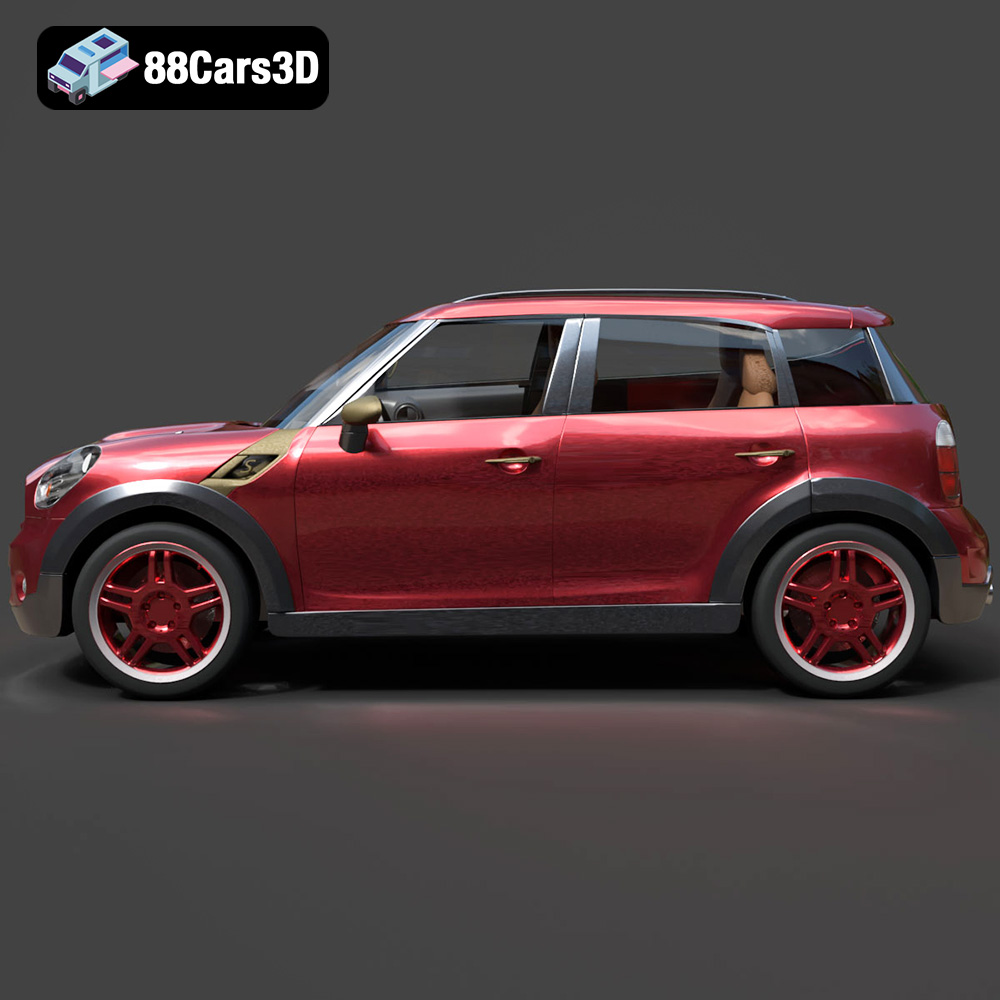
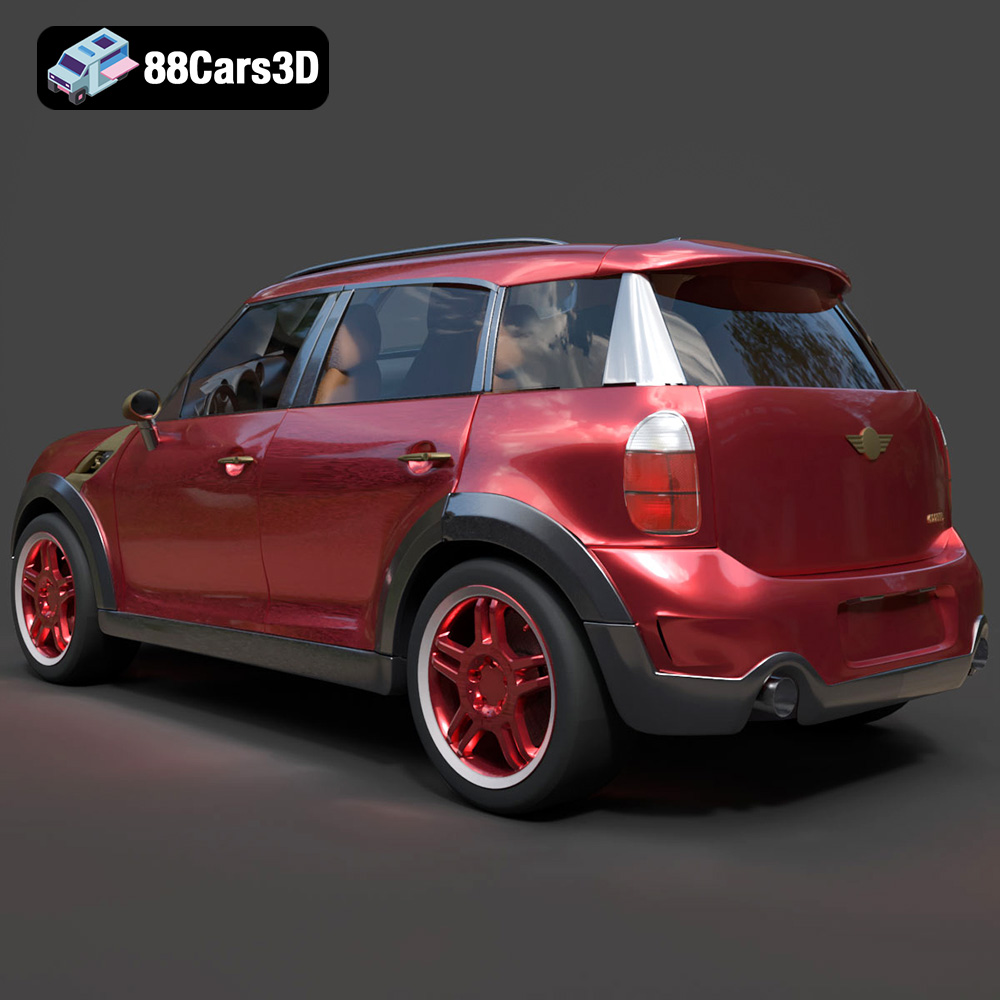
The Mini Cooper Countryman 2025 3D Model offers an authentic digital replica of the iconic compact crossover SUV. This model captures the distinctive styling and robust proportions of the modern Countryman, ensuring superior realism and accuracy for all professional visualization needs.
This asset is engineered for efficiency, featuring optimized, clean geometry suitable for real-time applications and demanding cinematic rendering. It utilizes fully textured surfaces and realistic PBR materials, designed for immediate integration into any rendering pipeline. A complete, detailed interior is included, allowing for realistic cockpit views and complex environment setup.
This versatile model is ready for implementation across various digital platforms. It is an ideal asset for automotive visualization, marketing materials, virtual production (AR/VR/XR), architectural visualization, simulation training, and use as a sophisticated asset in large-scale game development projects.
$29.9
.arvr
.blend
.car3dmodel
.compactSUV
.coopercountryman
.countryman
.crossover
.fbx
.gameasset
.glb
.max
.mini
.moderncar
.obj
.ply
.rendering
.simulation
.stl
.unreal
SUV