⚡ FLASH SALE: Get 60% OFF All Premium 3D & STL Models! ⚡

“`html
Welcome to the fascinating world of 3D printing! As you embark on your journey into additive manufacturing, whether you’re a seasoned maker or just starting, you’ll quickly encounter the ubiquitous STL file format. But what exactly makes STL the go-to standard for turning digital designs into tangible objects? Why is it so prevalent in platforms like 88cars3d.com, which offers a curated collection of high-quality 3D printable car models? This comprehensive guide will delve deep into the technical underpinnings of the STL format, exploring its origins, its strengths, its limitations, and why, despite newer alternatives, it remains the undisputed champion for 3D printing applications. We’ll cover everything from the fundamental structure of STL files to how they interact with slicer software, printer hardware, and your specific printing workflow, equipping you with the knowledge to harness its full potential.
The Stereolithography (STL) file format, developed by 3D Systems in the mid-1980s, is intrinsically linked to the very invention of 3D printing. Its primary purpose was to serve as the native file format for stereolithography apparatus (SLA) printers, the pioneering 3D printing technology. SLA printers work by curing liquid photopolymer resin layer by layer using a UV laser. To define these layers, the system needed a way to represent the surface geometry of a 3D object. The solution was to approximate the complex curves and surfaces of a 3D model using a mesh of interconnected triangles. This triangular facet representation became the core of the STL format, and its simplicity and effectiveness quickly made it a de facto industry standard, extending far beyond SLA to encompass other 3D printing technologies like FDM and SLS.
At its heart, an STL file describes the surface geometry of a 3D object using a collection of triangular facets. Each facet is defined by three vertices (points in 3D space) and a normal vector. The normal vector, a line perpendicular to the surface of the triangle, indicates which side of the triangle is considered the “outside” of the object, crucial for the slicing software to understand the solid volume. The software then aggregates these triangles to reconstruct the overall shape of the model. This method, while effective for representing surfaces, means that STL files do not store information about color, texture, or material properties, focusing solely on the geometric boundaries. The way these triangles are connected—or not connected—can significantly impact the printability of the model. A “watertight” or manifold mesh, where all triangles form a closed surface with no holes or self-intersections, is paramount for successful slicing and printing.
STL files can exist in two primary forms: ASCII and Binary. The ASCII STL format is human-readable, meaning you can open it in a text editor and see the coordinates of the vertices and the normal vectors for each triangle. This makes debugging easier for simple issues. However, ASCII files are significantly larger and can be slower to parse. The Binary STL format, on the other hand, is more compact and efficient. It stores the same data but in a binary representation, resulting in smaller file sizes and faster processing times for slicers. For most 3D printing workflows, binary STL is preferred due to its efficiency. When downloading models from marketplaces such as 88cars3d.com, you’ll typically find them provided in the more efficient binary format, optimized for rapid processing by your slicing software.
The STL file, while a universal language for 3D model geometry, is not directly understood by 3D printers. It needs to be processed by a crucial piece of software called a “slicer.” The slicer takes the 3D model’s surface representation from the STL file and “slices” it into hundreds or thousands of thin, horizontal layers. For each layer, it generates the toolpath instructions (G-code) that the 3D printer’s motors will follow to deposit material precisely.
Slicing software, such as Cura, PrusaSlicer, or Simplify3D, reads the STL file and identifies the boundaries of the object for each defined layer height. Algorithms within the slicer trace the edges of the triangular facets that intersect with the current layer’s plane. It then generates the necessary movements for the print head (for FDM printers) or the laser/projector (for resin printers) to build up the object layer by layer. The quality of the STL mesh directly impacts the slicer’s ability to perform this task accurately. Holes, non-manifold edges, or inverted normals in the STL can lead to slicing errors, resulting in missing sections, incorrect geometry, or failed prints.
Once the STL is loaded, you’ll configure a host of slicing parameters that dictate how the object is built. These settings are critical for achieving desired print quality, strength, and speed. Common parameters include:
The “print-ready” aspect of an STL file is paramount. Many 3D models, especially those created through complex modeling processes or conversions from other formats, can suffer from geometric imperfections that hinder the slicing process. Mesh repair software plays a vital role in ensuring a successful print.
The most common errors in STL files that can cause printing problems include:
These issues can lead to slicers producing incorrect toolpaths, missing parts of the model, or creating infinitely thin walls. Platforms like 88cars3d.com invest significant effort in ensuring their STL files are clean and watertight, minimizing the need for extensive user-level repair.
Fortunately, several software tools are available to diagnose and repair STL files. For basic cleanup, many slicers have built-in repair functions that can automatically fix common issues. More advanced repair and manipulation can be done using dedicated software:
The workflow typically involves importing the STL into one of these programs, running an automatic repair function, and then manually inspecting and fixing any remaining errors before exporting a clean, manifold STL file for slicing.
How you position your 3D model on the print bed and ensure it adheres properly are critical factors that influence print success, part strength, and surface quality. The orientation of the STL on the build plate affects the amount of support material needed, the direction of layer lines, and the potential for warping or detachment.
The orientation of the model on the build plate is a strategic decision. Consider these points:
Most slicers provide an intuitive interface to rotate and move the STL file on a virtual build plate. Experimenting with different orientations can often lead to significantly better print results.
Poor bed adhesion is one of the most common causes of 3D print failure, leading to prints detaching from the build plate mid-print, resulting in spaghetti-like failures or completely ruined models. Several factors contribute to good bed adhesion:
For detailed models like those found on 88cars3d.com, ensuring the first layer is perfectly laid down is crucial for the integrity of the entire print.
The choice between FDM and resin printing, and the specific material used, will profoundly impact the final look, feel, and structural integrity of your 3D printed car models. Each technology and material has its own strengths and weaknesses, influencing slicing settings and post-processing requirements.
FDM printing, the most common type for hobbyists, works by extruding melted thermoplastic filament layer by layer. Common FDM materials include:
FDM printers typically have nozzle sizes of 0.4mm, but smaller nozzles (0.2mm or 0.1mm) can be used for printing finer details, albeit at the cost of significantly increased print time. Layer heights for FDM commonly range from 0.1mm to 0.3mm.
Resin printing technologies use UV light to cure liquid photopolymer resin layer by layer. This process generally achieves much higher resolution and smoother surface finishes than FDM, making it ideal for intricate models.
Resin printing requires careful handling of chemicals and post-processing, including washing the printed parts in isopropyl alcohol (IPA) and curing them under a UV light source. While resin printers can achieve finer details, they often have smaller build volumes compared to FDM printers, and the material can be more expensive and brittle.
Once your 3D print is complete, the journey isn’t over. Post-processing is where you refine the raw print, enhance its appearance, and bring out the best in your model. For detailed car models, this stage is crucial for achieving a professional, display-worthy finish.
Careful removal of support structures is the first step. This often involves using pliers, flush cutters, or hobby knives. For FDM prints, supports can leave small marks or “nubs” on the surface. These can be smoothed out through sanding. Start with a coarse grit sandpaper (e.g., 120-220 grit) to remove larger imperfections and work your way up to finer grits (e.g., 1000-2000 grit or even higher for a mirror finish). For resin prints, supports are often thinner and leave smaller contact points, but careful removal is still essential to avoid damaging fine details.
Depending on the desired finish and the printing technology used, you might need to fill gaps or layer lines. For FDM prints, specialized 3D print fillers or even automotive body filler can be used. Repeated sanding and priming cycles are key to achieving a perfectly smooth surface. Once the surface is prepared, painting can begin. Using a primer coat ensures better paint adhesion and reveals any remaining imperfections. Acrylic paints are common for hobbyists, and airbrushing can provide a very smooth, professional finish. For resin prints, the surface is often smooth enough that extensive filling is not required, though priming is still recommended before painting.
Many complex models, especially multi-part car kits, will require assembly. Using appropriate adhesives like super glue (cyanoacrylate) or plastic cement is essential. For intricate models, consider dry-fitting parts before applying glue to ensure proper alignment. Adding details like small decals, custom window tints, or even small LEDs can elevate your 3D printed creation to the next level, transforming a basic print into a showpiece.
In conclusion, the STL file format, with its foundation in triangular meshes, remains the bedrock of 3D printing due to its simplicity, broad compatibility, and historical significance. While it has limitations, understanding its structure, the role of slicers, the importance of mesh repair, and the nuances of print orientation, materials, and post-processing allows you to overcome challenges and achieve stunning results. Whether you’re printing intricate automotive masterpieces from 88cars3d.com or any other 3D model, mastering these technical aspects will elevate your 3D printing endeavors.
“`

Texture: Yes
Material: Yes
Download the Buick Roadmaster Hardtop Coupe 1957 3D Model featuring a classic American design with detailed exterior and interior. Includes .blend, .fbx, .obj, .glb, .stl, .ply, .unreal, and .max formats for rendering, simulation, and game development.
Price: $10.79
Texture: Yes
Material: Yes
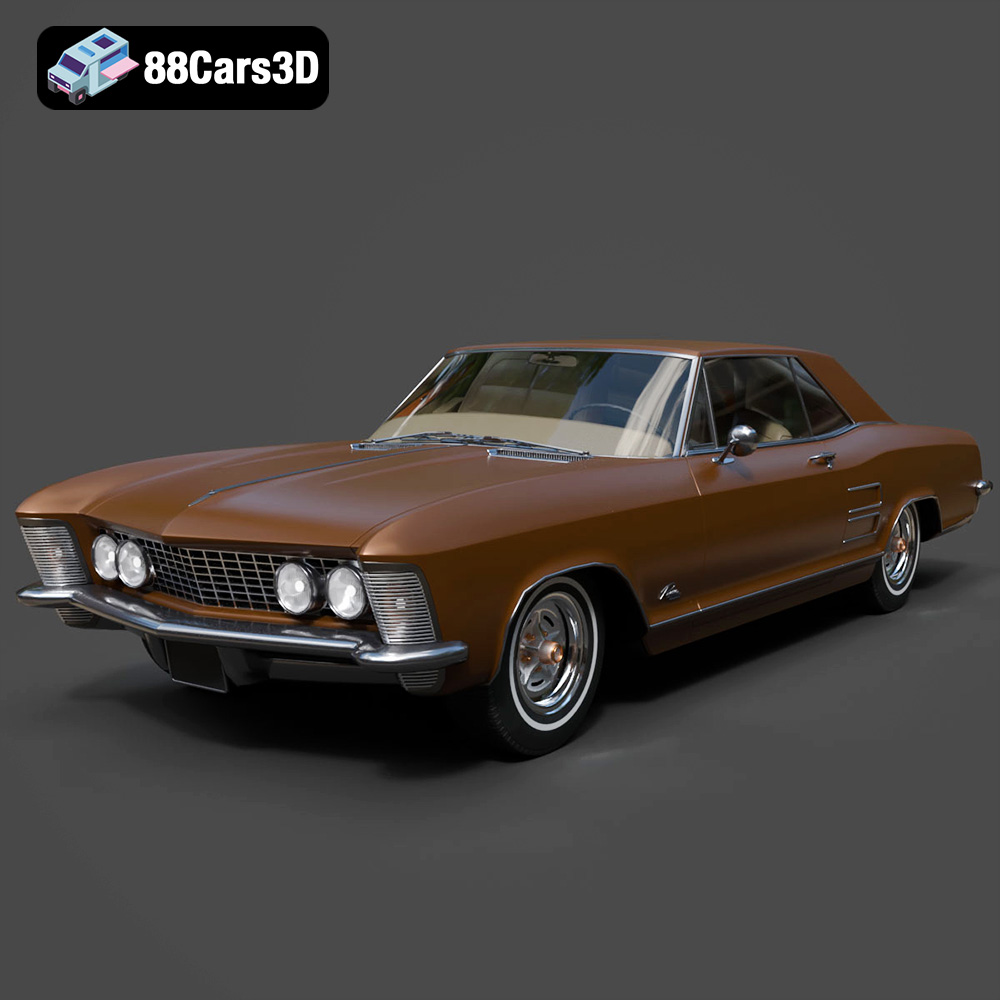
Download the Buick Riviera 1963 3D Model featuring classic American muscle car design and iconic styling. Includes .blend, .fbx, .obj, .glb, .stl, .ply, .unreal, and .max formats for rendering, simulation, and game development.
Price: $10.79

Texture: Yes
Material: Yes
Download the Buick Regal 3D Model featuring a classic American sedan design, detailed exterior, and optimized interior. Includes .blend, .fbx, .obj, .glb, .stl, .ply, .unreal, and .max formats for rendering, simulation, and game development.
Price: $10.79

Texture: Yes
Material: Yes
Download the Buick LaCrosse 3D Model featuring professional modeling and texture work. Includes .blend, .fbx, .obj, .glb, .stl, .ply, .unreal, and .max formats for rendering, simulation, and game development.
Price: $10.79
Texture: Yes
Material: Yes
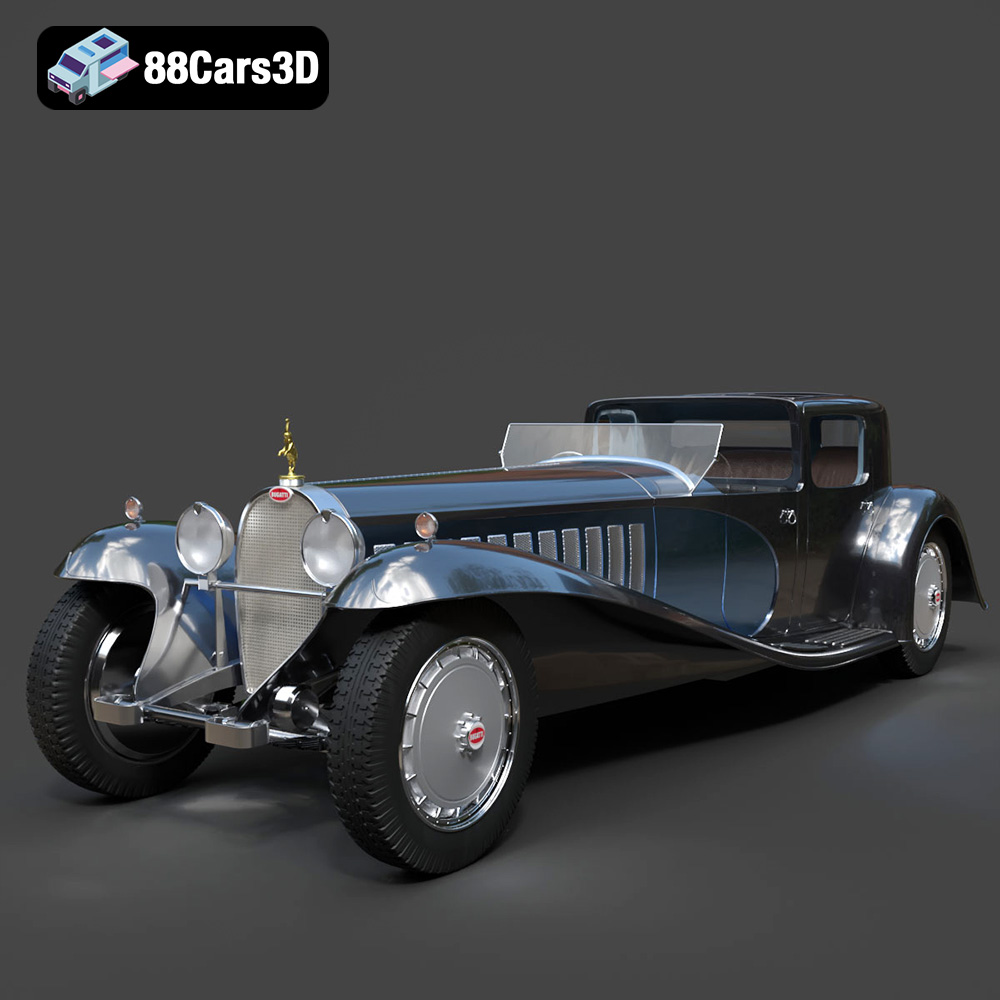
Download the Bugatti Type 41 Napoleon 3D Model featuring its iconic luxury design, detailed exterior, and opulent interior. Includes .blend, .fbx, .obj, .glb, .stl, .ply, .unreal, and .max formats for rendering, simulation, and game development.
Price: $10.79

Texture: Yes
Material: Yes
Download the Bugatti Type 57SC Atlantic Coupe 3D Model featuring its iconic streamlined body and classic design. Includes .blend, .fbx, .obj, .glb, .stl, .ply, .unreal, and .max formats for rendering, simulation, and game development.
Price: $10.79

Texture: Yes
Material: Yes
Download the Bugatti 16C Galibier-006 3D Model featuring its luxurious sedan design, detailed interior, and sophisticated exterior. Includes .blend, .fbx, .obj, .glb, .stl, .ply, .unreal, and .max formats for rendering, simulation, and game development.
Price: $10.79
Texture: Yes
Material: Yes
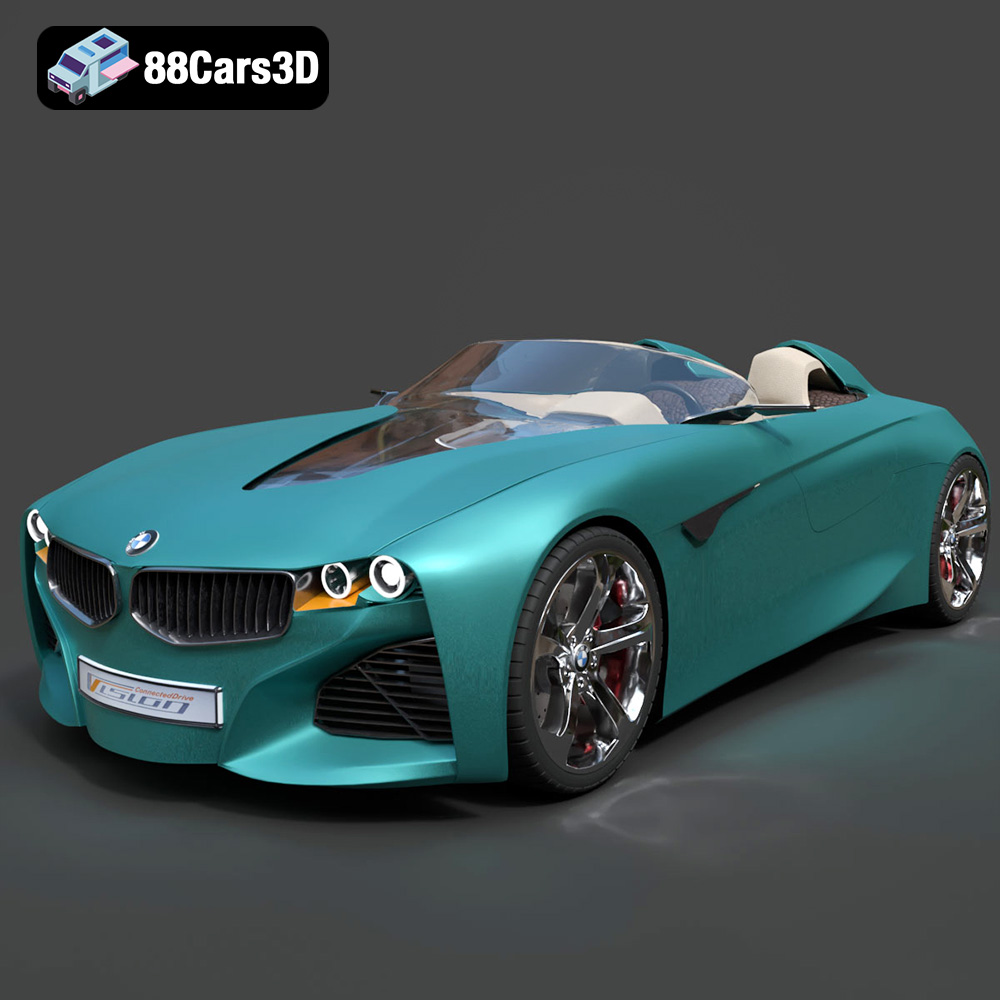
Download the BMW Vision Connected Drive Concept 3D Model featuring its innovative design, advanced connectivity, and sleek aesthetics. Includes .blend, .fbx, .obj, .glb, .stl, .ply, .unreal, and .max formats for rendering, simulation, and game development.
Price: $19.79
Texture: Yes
Material: Yes
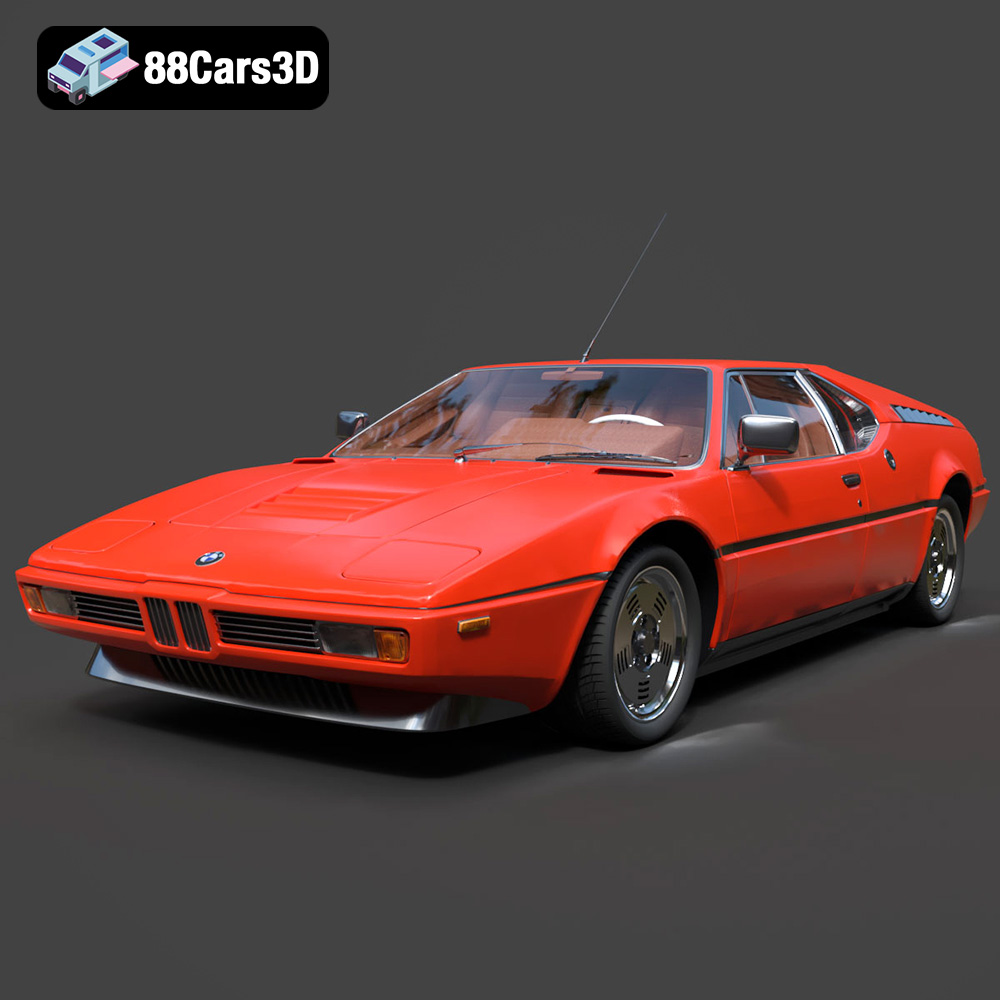
Download the BMW Motorsport M1 E26 1981 3D Model featuring its iconic design, race-bred aerodynamics, and meticulously crafted details. Includes .blend, .fbx, .obj, .glb, .stl, .ply, .unreal, and .max formats for rendering, simulation, and game development.
Price: $20.79

Meta Description:
Texture: Yes
Material: Yes
Download the Cadillac CTS-V Coupe 3D Model featuring detailed exterior styling and realistic interior structure. Includes .blend, .fbx, .obj, .glb, .stl, .ply, .unreal, and .max formats for rendering, simulation, AR VR, and game development.
Price: $13.9

