⚡ FLASH SALE: Get 60% OFF All Premium 3D & STL Models! ⚡

“`html
Welcome to the world of 3D printing, where digital designs transform into tangible objects. For enthusiasts of detailed automotive replicas, like those found on 88cars3d.com, understanding the fundamental file format is crucial for achieving perfect prints. The STL file format, despite its ubiquity, is often misunderstood. It’s the bedrock upon which your intricate car models are built, and a deep dive into its structure – the mesh, the triangles, and how they translate to precision – will unlock higher quality prints and fewer frustrating failures. This article will demystify the STL format, covering its inner workings, how it’s prepared for printing, and best practices for ensuring your 3D printable car models come to life exactly as intended.
By the end of this guide, you’ll have a solid grasp of:
Whether you’re using FDM or resin printing technology, a thorough understanding of the STL file format will elevate your hobby, from printing classic car exteriors to the most intricate interior details.
At its core, the STL (STereoLithography or Standard Tessellation Language) file format is a simple yet powerful way to describe the three-dimensional surface geometry of an object. It does this by approximating the object’s shape using a collection of connected triangles. Imagine building a smooth, curved car fender not with a single, complex surface, but by approximating that curve using many small, flat triangles. This process is called tessellation, and it’s the fundamental principle behind how STL files represent virtually any 3D shape, from a simple cube to the complex curves of a sports car body.
An STL file doesn’t store information about color, texture, or material properties. Its sole purpose is to define the shape. Each triangle in the mesh is defined by three vertices (corner points) and a normal vector. The normal vector is crucial; it’s a vector perpendicular to the face of the triangle, pointing outwards from the object’s surface. This normal indicates which side of the triangle is the “outside” of the model, which is vital for slicing software to understand the model’s volume and determine where the outer walls and inner structure should be printed.
The resolution of an STL file is determined by the number and size of these triangles. A model with a very large number of small triangles can represent curves and details much more accurately than a model with fewer, larger triangles. However, more triangles mean a larger file size and can potentially lead to longer processing times in slicing software and even cause issues with some 3D printers if the mesh becomes excessively complex. Finding the right balance between detail and file size is a key aspect of preparing STL files for optimal printing.
Each triangle in an STL file is defined by three coordinates (X, Y, Z) for each of its three vertices. These vertices are connected to form the triangle. Alongside these vertices, a normal vector is specified for each triangle. This vector, represented by its own X, Y, and Z components, points perpendicularly away from the surface of the triangle. The correct orientation of these normals is paramount. If normals are pointing inwards for some triangles and outwards for others, or if they are inconsistent, the slicing software will not be able to correctly interpret the model’s surface, leading to printing errors such as holes, gaps, or inverted sections. Inconsistent normals are a primary cause of non-manifold geometry, which we’ll discuss later.
The process of converting a smooth, mathematically defined surface (like those created in CAD software or 3D modeling programs) into a mesh of triangles is called tessellation. For curved surfaces, like the aerodynamic curves of a car, this means breaking down the curve into a series of connected flat planes (triangles). The more triangles used, the smoother the resulting approximation will appear. For instance, a cylindrical wheel well might be represented by dozens of small triangles to create a near-perfect circle when printed, whereas a simpler model might use only six triangles, resulting in a hexagonal approximation.
For a 3D printer to successfully interpret an STL file and extrude material correctly layer by layer, the underlying geometry must represent a solid, enclosed volume. This is where the concepts of a “watertight” mesh and “manifold” geometry become critical. Think of it like a physical object: it needs to be completely sealed to hold water. If there are holes or gaps in the surface, the water (or in our case, the printed plastic) would leak out.
A watertight mesh means that the collection of triangles completely encloses a volume without any holes. Every edge of a triangle must be shared by exactly one other triangle. If an edge is part of only one triangle, it represents an open hole. If an edge is shared by more than two triangles, it creates an internal intersection or a non-manifold condition.
Manifold geometry is a related but slightly more technical concept. A manifold mesh is one where every edge is shared by exactly two faces (triangles), and the faces connected to a vertex form a continuous loop without self-intersections or T-junctions. Imagine the corner of a room; the edges where walls meet are shared by two walls. In 3D printing, this ensures that the surface is unambiguous and can be reliably sliced into printable layers. Non-manifold geometry can manifest as faces with zero thickness, internal faces, or edges shared by more than two faces, all of which can confuse the slicing software.
Models from reputable sources, such as those found on 88cars3d.com, are typically designed with these principles in mind, offering print-ready STL files. However, even well-designed models can sometimes encounter issues during export or conversion, making mesh repair a valuable skill.
Holes in an STL file are usually caused by missing faces where two surfaces should have met. This can happen during the modeling process or if there are issues exporting the STL. Slicing software often has basic tools to detect and sometimes automatically repair these holes. However, for complex models, manual intervention using mesh editing software like Meshmixer, Blender, or Autodesk Netfabb might be necessary. These programs allow you to visually inspect the mesh, identify gaps, and manually add or repair the missing triangles to create a watertight surface.
Non-manifold conditions are more subtle and can be harder to spot. They include:
Again, specialized software is the best tool for identifying and correcting these errors. Most slicers will flag non-manifold errors during the import process, often with a warning or by refusing to process the file correctly. Running a mesh repair tool before slicing is a crucial step for ensuring print success.
The STL file, defining the model’s shape, is only half the story. To translate this geometric data into instructions for a 3D printer, we use slicing software (often called a “slicer”). Popular examples include Cura, PrusaSlicer, Simplify3D, and ChiTuBox (for resin printers). The slicer reads the STL file and “slices” the model into hundreds or thousands of thin, horizontal layers. For each layer, it generates a toolpath – the precise path the printer’s nozzle (FDM) or laser/projector (resin) will follow to deposit material.
The quality and success of the final print are heavily influenced by the slicing parameters chosen. These parameters interact directly with how the STL’s geometry is interpreted. For instance, the layer height directly dictates the resolution of the Z-axis. A smaller layer height (e.g., 0.1 mm) will capture more vertical detail from the STL, resulting in a smoother finish on curved surfaces, but will significantly increase print time. A larger layer height (e.g., 0.3 mm) will print much faster but will result in more visible layer lines, especially on angled surfaces represented by relatively large triangles in the STL.
Infill is another critical setting. While the STL defines the outer shell (the walls), the slicer determines how the interior of the model is filled. For structural integrity or weight reduction, you can choose different infill patterns (grid, honeycomb, gyroid) and densities (percentage of the volume to be filled). For detailed car models, especially those intended for display, a lower infill percentage (10-20%) is often sufficient, as the primary goal is often visual fidelity rather than load-bearing strength.
This is perhaps the most fundamental tradeoff in 3D printing. The STL file provides the geometry, and the slicer determines how finely it’s dissected vertically. A model with many subtle curves and details, like the body panels of a high-performance car, benefits immensely from smaller layer heights. However, reducing layer height by half (e.g., from 0.2 mm to 0.1 mm) effectively doubles the number of layers and thus approximately doubles the print time. You need to assess the complexity of the STL and the desired output. For display models, a layer height of 0.1 mm to 0.15 mm is common for FDM printers to achieve a good balance. Resin printers, with their inherent higher resolution, often use layer heights between 0.025 mm and 0.05 mm.
For display car models sourced from platforms like 88cars3d.com, the goal is usually surface quality and detail retention. Therefore, high infill densities are rarely needed. An infill density of 10-20% is typically adequate to provide support for the outer walls and prevent them from collapsing. The choice of infill pattern can also impact print time and strength. Patterns like Gyroid offer good strength in all directions and are aesthetically pleasing if the infill is visible, but they can sometimes be slower to print than simpler patterns like Grid. For models that might be handled or require some basic structural integrity, a density of 20-30% with a robust pattern like Grid or Cubic might be considered.
Many 3D printable car models feature overhangs – parts of the model that extend horizontally outwards beyond the layer below. Without support, these overhangs would sag or collapse during printing, ruining the detail and integrity of the part. Slicing software automatically generates these temporary structures, typically from the build plate or other stable parts of the model, up to the point where the overhang begins. These supports are designed to be removed after printing.
The STL file’s geometry dictates where supports are needed. Steep overhangs (generally beyond 45-60 degrees, depending on the printer and material) require support. The quality and ease of support removal are heavily influenced by how the supports are generated and attached to the model. Poorly generated supports can leave unsightly marks on the model’s surface, requiring significant post-processing. Conversely, supports that are too sparse or weakly attached may fail, leading to print failure.
For intricate car models with complex underbodies, spoilers, or delicate mirrors, carefully configuring support settings is essential. This often involves adjusting support density, pattern, contact Z distance (the gap between the support and the model), and overhead angle. The goal is to provide just enough support to hold the geometry without making removal overly difficult or damaging the fine details.
The “Overhang Angle” setting in your slicer is key. Most slicers default to around 45 degrees. For most car models, this is a good starting point. However, some designs might have specific features that require adjustments. For example, a very subtle curve that dips downwards slightly might need support even if it’s below 45 degrees, while a sharp, well-defined edge might hold itself up at a slightly steeper angle. It’s often a balancing act between preventing failure and minimizing visible support scarring.
Many slicers offer “support interface layers.” These are dense, solid layers printed just below the actual model surface where supports touch. They create a smoother, more consistent surface for the model to adhere to, making removal cleaner and leaving a better finish. Using interfaces can significantly improve the quality of the surface where supports were attached. When it comes to removal, patience is key. Small tools like hobby knives, pliers, and picks are invaluable. For resin prints, supports are often removed before the final UV cure, making them more brittle and easier to snap off cleanly. For FDM prints, supports might need gentle wiggling or cutting.
The way you orient your STL model on the virtual build plate of your slicer software has a profound impact on print quality, strength, and the amount of support material needed. For car models, this often means deciding whether to print them upright, on their side, or even upside down.
Upright printing is intuitive for many models, but it can lead to excessive support material for elements like wheel arches, spoilers, and the undercarriage. It also places layer lines parallel to the ground, which might not be ideal for showcasing the car’s curves. Printing on its side can reduce support needs and showcase the car’s profile better, but it can also create challenges for bed adhesion and may result in a less visually appealing surface finish on one side.
Printing upside down (on the roof) is often a preferred strategy for car bodies. This places the most detailed and critical exterior surfaces facing downwards, allowing them to be printed directly onto the build plate or a raft, minimizing the need for supports on the roof and hood, and potentially leading to a smoother finish on the top surfaces. However, this approach requires careful attention to bed adhesion to ensure the large, flat roof area sticks firmly.
Bed adhesion itself is crucial regardless of orientation. A model needs to stick firmly to the build plate during the entire printing process. Poor bed adhesion is a leading cause of print failures, leading to warping, layer shifts, or the entire print detaching from the bed. Techniques like using a brim or raft in the slicer, ensuring the build plate is clean and level, and using appropriate build surface materials (like PEI, glass, or specialized coatings) are vital, especially for larger car models.
When downloading a detailed car model from 88cars3d.com, take a moment to consider its orientation. For many models, printing the main body upside down is optimal. This means the chassis and underside details will be printed first, directly on the build plate, minimizing the need for supports under these areas. The wheels might need to be printed separately and attached later. For parts like spoilers or mirrors, consider if they can be printed attached to the main body or if they are better printed individually and assembled post-printing to optimize orientation and minimize supports.
A brim adds a single layer of extruded material around the base of your model, increasing its surface area contact with the build plate. This is excellent for improving adhesion without significantly impacting the ease of removal. A raft prints a thicker, multi-layered base underneath the entire model, providing a stable foundation. Rafts are useful for very small contact areas or when dealing with materials prone to warping, but they consume more material and can leave a rougher surface finish on the bottom of the print. Always experiment to find what works best for your specific printer, material, and model.
While the STL file defines the shape, the material you choose and the post-processing you undertake are what truly bring your 3D printed car model to life. Different materials offer varying levels of detail, durability, and ease of finishing.
PLA (Polylactic Acid) is the most common filament for FDM printing. It’s easy to print, affordable, and comes in many colors. It’s great for beginners and general-purpose models but can be brittle and has a lower heat resistance. PETG is more durable and heat-resistant than PLA, making it a good choice for models that might see more handling. However, it can be stringier and slightly harder to print cleanly. ABS offers excellent strength and temperature resistance but requires a heated enclosure and good ventilation due to fumes, making it more challenging for hobbyists.
For resin printers, Standard Resins are common for highly detailed models, offering incredible smoothness and sharp edges suitable for capturing the intricacies of automotive designs. Tough Resins or ABS-like Resins provide increased durability if the models need to withstand more handling.
Once the print is complete, the real artistry of model making begins. This post-processing stage is crucial for achieving a professional finish. For FDM prints, this typically involves removing supports, sanding to smooth out layer lines and imperfections, filling gaps with putty, priming, and then painting. Resin prints often require washing in isopropyl alcohol or a resin cleaner, removing supports (often easier when uncured), and then a final UV cure. Detailed painting, airbrushing, and adding decals can transform a raw 3D print into a stunning display piece.
Achieving a showroom-quality finish on a 3D printed car model requires meticulous sanding. Start with a coarser grit sandpaper (e.g., 150-220 grit) to remove support marks and significant layer lines, then progressively move to finer grits (400, 600, 800, 1000+). For FDM prints, especially those with visible layer lines, applying a filler primer and wet-sanding can yield excellent results. This process fills in the tiny gaps between layers, creating a smooth, uniform surface ready for paint. For resin prints, the sanding process is often much simpler due to the inherently smoother surface finish.
The painting stage is where your 3D printed car model truly comes alive. For automotive finishes, achieving a smooth, even coat is key. Applying primer is essential for paint adhesion and revealing any remaining surface imperfections. Use thin, even coats of your chosen paint color. For metallic finishes or complex paint jobs (like two-tone schemes or racing stripes), an airbrush offers greater control and a more professional result. Consider using automotive-grade paints or hobby acrylics. Finally, a clear coat (gloss, satin, or matte) will protect the paint job and give the model its final sheen.
Understanding the STL file format is more than just a technicality; it’s the foundation for unlocking the full potential of 3D printing for intricate projects like collectible car models. By appreciating how meshes, triangles, and normals define your digital designs, you gain the knowledge to select optimal STL files, prepare them effectively in your slicer, and troubleshoot common issues. Whether you’re downloading a classic muscle car or a futuristic concept vehicle from marketplaces like 88cars3d.com, this understanding will empower you to achieve cleaner prints, finer details, and a more rewarding 3D printing experience. Remember to always check your models for watertightness and manifold integrity, pay close attention to slicing parameters like layer height and supports, and consider orientation carefully. With practice and this technical insight, you’ll be well on your way to creating stunning, high-quality 3D printed automotive masterpieces.
“`

Texture: Yes
Material: Yes
Download the BMW M5 F10 3D Model featuring high-performance luxury sedan design, detailed interior, and realistic PBR textures. Includes .blend, .fbx, .obj, .glb, .stl, .ply, .unreal, and .max formats for rendering, simulation, and game development.
Price: $10.79

Texture: Yes
Material: Yes
Download the BMW M3 Coupe E92-002 3D Model featuring authentic styling, detailed exterior, and a faithful interior. Includes .blend, .fbx, .obj, .glb, .stl, .ply, .unreal, and .max formats for rendering, simulation, and game development.
Price: $10.79

Texture: Yes
Material: Yes
Download the BMW 6 Series Gran Coupe 2013 3D Model featuring a sophisticated design, detailed exterior, and well-appointed interior. Includes .blend, .fbx, .obj, .glb, .stl, .ply, .unreal, and .max formats for rendering, simulation, and game development.
Price: $20.79

Texture: Yes
Material: Yes
Download the BMW 7 Series 750 F01 3D Model featuring a detailed exterior and a luxurious interior. Includes .blend, .fbx, .obj, .glb, .stl, .ply, .unreal, and .max formats for rendering, simulation, and game development.
Price: $10.79

Texture: Yes
Material: Yes
Download the Buick Skylark Convertible 1953 3D Model featuring iconic 1950s styling, a detailed exterior with chrome accents, and an accurately modeled interior. Includes .blend, .fbx, .obj, .glb, .stl, .ply, .unreal, and .max formats for rendering, simulation, and game development.
Price: $10.79

Texture: Yes
Material: Yes
Download the Buick Roadmaster Hardtop Coupe 1957 3D Model featuring a classic American design with detailed exterior and interior. Includes .blend, .fbx, .obj, .glb, .stl, .ply, .unreal, and .max formats for rendering, simulation, and game development.
Price: $10.79
Texture: Yes
Material: Yes
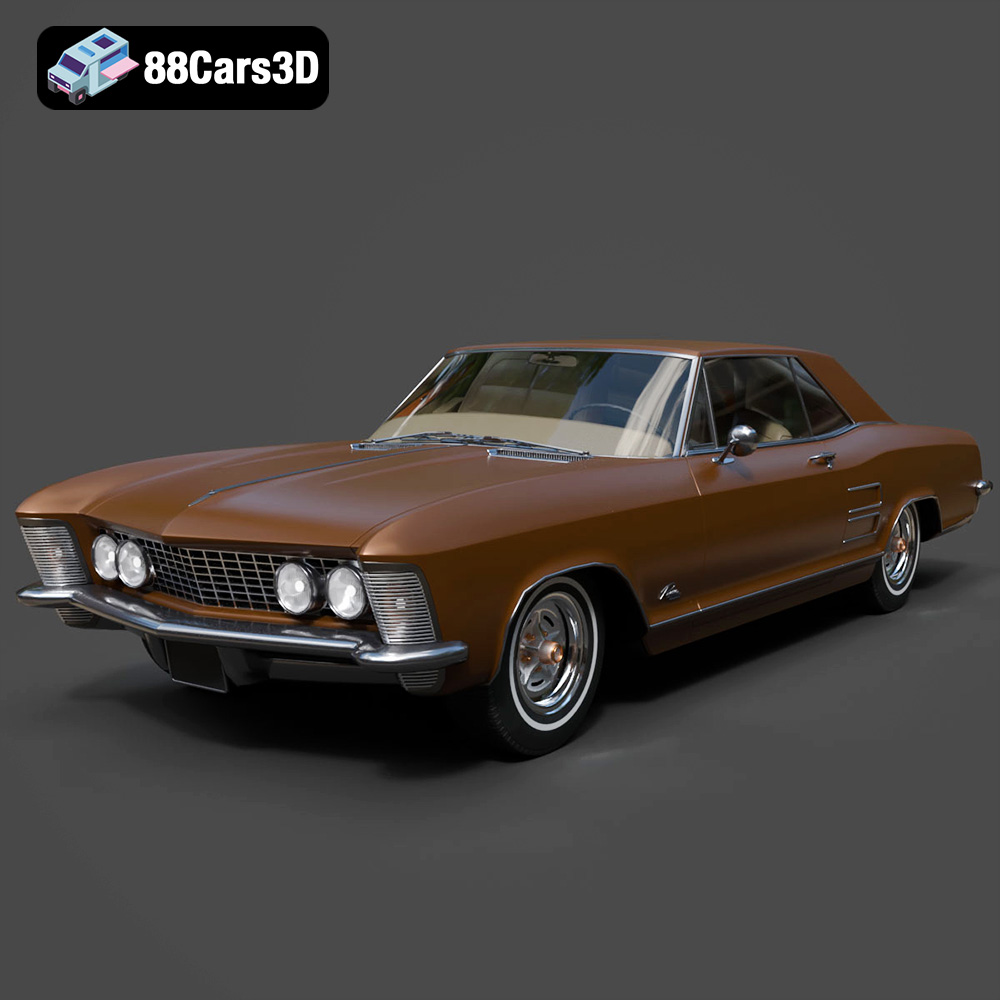
Download the Buick Riviera 1963 3D Model featuring classic American muscle car design and iconic styling. Includes .blend, .fbx, .obj, .glb, .stl, .ply, .unreal, and .max formats for rendering, simulation, and game development.
Price: $10.79

Texture: Yes
Material: Yes
Download the Buick Regal 3D Model featuring a classic American sedan design, detailed exterior, and optimized interior. Includes .blend, .fbx, .obj, .glb, .stl, .ply, .unreal, and .max formats for rendering, simulation, and game development.
Price: $10.79

Texture: Yes
Material: Yes
Download the Buick LaCrosse 3D Model featuring professional modeling and texture work. Includes .blend, .fbx, .obj, .glb, .stl, .ply, .unreal, and .max formats for rendering, simulation, and game development.
Price: $10.79

Texture: Yes
Material: Yes
Download the Bugatti Type 41 Napoleon 3D Model featuring its iconic luxury design, detailed exterior, and opulent interior. Includes .blend, .fbx, .obj, .glb, .stl, .ply, .unreal, and .max formats for rendering, simulation, and game development.
Price: $10.79

