⚡ FLASH SALE: Get 60% OFF All Premium 3D & STL Models! ⚡

In the relentless pursuit of hyper-realism and unique visual storytelling, game developers and visualization professionals constantly push the boundaries of real-time rendering. For automotive projects, where every curve, reflection, and material nuance matters, standard PBR (Physically Based Rendering) materials, while powerful, sometimes fall short of achieving truly distinctive and groundbreaking visual effects. This is where the true power of custom High-Level Shading Language (HLSL) shaders within Unreal Engine comes into play.
HLSL offers direct access to the GPU’s rendering pipeline, granting unparalleled control over how light interacts with surfaces, how effects are rendered, and how the final pixels appear on screen. For artists and developers working with high-quality 3D car models, such as those found on 88cars3d.com, mastering HLSL is the next frontier. It allows you to move beyond default rendering behaviors, crafting bespoke car paint flakes that shimmer just right, anisotropic reflections that accurately depict brushed metal, or procedural wear and tear that dynamically adapts to environments. This comprehensive guide will demystify HLSL shader development in Unreal Engine, empowering you to unlock new levels of visual fidelity and interactive experiences for your automotive visualizations and game projects.
Unreal Engine’s Material Editor is an incredibly robust and intuitive tool, allowing artists to create stunning PBR materials through a node-based interface. For the vast majority of assets and scenarios, it provides ample flexibility and artistic control. However, there are specific, highly specialized cases, particularly in automotive visualization, where even the most complex Material Editor setups cannot achieve the desired effect or provide the necessary performance optimizations. This is where custom HLSL shaders become indispensable, offering a level of precision and programmatic control that is simply unattainable through node-based graphs alone.
While the Material Editor excels at layering textures, mixing materials, and implementing common PBR parameters, it operates on a set of predefined functions and operations. When you need to implement highly specialized algorithms for light scattering, advanced microfacet distributions, complex procedural textures, or intricate multi-layered surface responses, you might hit a wall. For instance, simulating realistic multi-flake car paint, a notoriously challenging material, requires precise control over flake distribution, orientation, and interaction with light at a sub-pixel level – something that can be incredibly complex, if not impossible, to achieve efficiently and artistically through standard material nodes. Similarly, highly optimized, non-standard tessellation or custom post-processing effects often necessitate direct shader code access.
HLSL is Microsoft’s proprietary shading language, closely related to GLSL and Cg, used to program the GPU. In Unreal Engine, HLSL shaders are the fundamental building blocks of almost everything you see on screen, from the most basic mesh rendering to sophisticated post-processing effects. When you create a material in the Material Editor, Unreal Engine translates your node graph into HLSL code behind the scenes. By writing custom HLSL, you are essentially taking control of this process, directly instructing the GPU on how to process vertices (Vertex Shaders), calculate colors for pixels (Pixel/Fragment Shaders), or perform general-purpose computation (Compute Shaders). This direct access allows for fine-grained control over every aspect of the rendering process, enabling truly unique visual effects and highly optimized rendering solutions.
The automotive industry demands unparalleled visual fidelity, making custom HLSL shaders a game-changer. Consider the following applications:
These advanced techniques allow developers to create truly immersive and visually stunning automotive experiences, often leveraging the detailed 3D car models available on platforms like 88cars3d.com as a robust starting point.
Diving into HLSL development within Unreal Engine requires a foundational understanding of its rendering architecture and a proper setup of your development environment. Unlike simply creating a material in the editor, custom shaders involve C++ code and specific project configurations to integrate your HLSL files into the engine’s build process.
Unreal Engine’s rendering pipeline is complex and highly optimized, built on top of a powerful Render Hardware Interface (RHI). The RHI provides an abstraction layer that allows Unreal Engine to communicate with different graphics APIs like DirectX, Vulkan, and OpenGL. When you write custom HLSL, you are essentially writing code that runs directly on the GPU, orchestrated by the RHI. Core to this is the Render Graph, a modern, highly efficient system for managing render passes and resources, minimizing CPU overhead and maximizing GPU utilization. Your custom shaders will typically hook into this pipeline, either as part of a custom render pass, a post-process effect, or through specific Material Editor nodes that compile your HLSL. Understanding this architecture is crucial for writing efficient shaders and integrating them seamlessly.
To write custom HLSL shaders, you’ll need to create a C++ plugin or module within your Unreal Engine project. This module will handle the compilation and registration of your custom shader files. Here’s a simplified overview of the steps:
YourPluginName.Build.cs file. You need to ensure it includes the ‘RenderCore’ and ‘RHI’ modules, which are essential for shader development. You also need to define a shader directory:
PublicDependencyModuleNames.AddRange(new string[] { "Core", "CoreUObject", "Engine", "RenderCore", "RHI" });
PrivateDependencyModuleNames.AddRange(new string[] { "Renderer" }); // For access to private rendering features

// Add the path to your shader files
// Adjust "Shaders" to your desired folder name for HLSL files within the plugin directory
string ShaderDirectory = Path.Combine(PluginDirectory, "Shaders");
// Add this path to the engine's shader source directory map
// This makes your .usf files visible to the engine's shader compiler
AdditionalShaderSourceDirectoryMap.Add("/AutomotiveShaders", ShaderDirectory);
YourShaderName.usf: This is the main shader file, containing your entry points (e.g., MainVertexShader, MainPixelShader).YourShaderName.ush: This is a shader header file, similar to a C++ header, where you can define common functions, structs, and uniforms that can be included by multiple .usf files. This promotes code reusability.YourPluginName.cpp), you’ll need to define a C++ struct that represents your shader. This struct will inherit from FGlobalShader (for global shaders) or FMaterialShader (for material-bound shaders) and register it with the engine’s shader map. This is a complex step involving boilerplate code to define shader parameters and implement the ConstructPermutation and SetParameters methods. For a comprehensive guide on this, refer to the official Unreal Engine documentation on custom shaders, which provides detailed examples for setting up different shader types.Once your HLSL shader is compiled and registered, you’ll often want to expose its functionality to artists through the Material Editor. This is typically done using a “Custom” expression node in the Material Editor. While this node allows you to directly paste small snippets of HLSL code, for larger, more complex shaders developed as separate .usf files, you’ll use it to include your external shader code and call its functions.
The custom expression node allows you to:
Texture2D MyInputTexture;, float MyScalarParam;).#include "/AutomotiveShaders/MyCommonFunctions.ush" to bring in code from your shared header files..usf files (if they are bound to the material and properly registered in C++).This bridging mechanism enables artists to intuitively control complex shader parameters exposed through your C++ code, blending the power of HLSL with the flexibility of the Material Editor.
With your development environment set up, you can now delve into writing sophisticated HLSL code for automotive materials. This section will explore the core structure of HLSL and demonstrate how to implement complex visual effects tailored for vehicles.
At its core, HLSL development for rendering involves two primary shader types:
A typical HLSL shader file (.usf) will contain entry points for both, often defined with the VSMain and PSMain naming convention, though you can use any name and specify it during registration. Within these, you’ll define input and output structs that map to the data flowing between shader stages and from your C++ code.
// Example .ush header for common data
struct FVertexInput
{
    float4 Position : ATTRIBUTE0; // Position data from mesh
    float3 Normal   : ATTRIBUTE1; // Normal data
    float4 Tangent  : ATTRIBUTE2; // Tangent data
    float2 UV0      : ATTRIBUTE3; // UVs
};

struct FVertexOutput
{
    float4 Position : SV_POSITION; // Clip-space position
    float3 WorldNormal : TEXCOORD0; // Interpolated world normal
    float2 UV        : TEXCOORD1; // Interpolated UVs
};

// Example .usf shader for a basic pass-through
void MainVS(
    FVertexInput Input,
    out FVertexOutput Output
)
{
    Output.Position = mul(Input.Position, WorldViewProjectionMatrix); // Transform to clip space
    Output.WorldNormal = mul(Input.Normal, (float3x3)WorldInverseTransposeMatrix); // Transform normal to world space
    Output.UV = Input.UV0;
}

float4 MainPS(
    FVertexOutput Input
) : SV_Target0
{
    // Simple output based on interpolated normal
    return float4(Input.WorldNormal * 0.5 + 0.5, 1.0);
}
Realistic automotive paint is a complex material, often requiring multiple layers and specialized reflection models. A common approach involves a base metallic layer, a flake layer, and a clear coat layer.
// Simplified flake generation (Conceptual)
float3 GetFlakeNormal(float2 UV, float3 WorldNormal)
{
    float Seed = dot(UV, float2(12.9898, 78.233));
    float RandX = frac(sin(Seed) * 43758.5453);
    float RandY = frac(cos(Seed) * 23758.5453);
    float3 FlakeDir = normalize(float3(RandX - 0.5, RandY - 0.5, 0.1)); // Simple arbitrary direction
    // Rotate flake normal to align with surface normal
    float3 Tangent = GetTangent(WorldNormal); // Assume a function to get surface tangent
    float3 Bitangent = cross(WorldNormal, Tangent);
    FlakeDir = FlakeDir.x * Tangent + FlakeDir.y * Bitangent + FlakeDir.z * WorldNormal;
    return normalize(FlakeDir);
}

// In Pixel Shader:
float3 FlakeN = GetFlakeNormal(Input.UV, Input.WorldNormal);
float FlakeSpecular = max(0, dot(FlakeN, normalize(CameraVector))); // Simplified reflection
This multi-layered approach provides the flexibility to control the metallic sheen, the sparkle of flakes, and the deep, glossy reflections of the clear coat independently, leading to highly realistic automotive paint. When dealing with models from 88cars3d.com, these advanced shaders can elevate the visual quality of already meticulously crafted geometry and UVs.
Anisotropic reflections are crucial for materials like brushed metal, hair, or carbon fiber, where the highlight stretches in a specific direction due to microscopic parallel grooves on the surface.
To implement this, you need:
// In Pixel Shader
float3 Tangent = normalize(Input.WorldTangent); // From vertex shader
float3 Bitangent = normalize(cross(Input.WorldNormal, Tangent));

// Simplified Anisotropic GGX (more complex in full implementation)
float AlphaX = Roughness; // Roughness along tangent
float AlphaY = Roughness * AnisotropyValue; // Roughness along bitangent
float3 H = normalize(L + V); // Half vector
float NdotH = dot(N, H);
float TdotH = dot(Tangent, H);
float BdotH = dot(Bitangent, H);
float Denom = (AlphaX*AlphaX * TdotH*TdotH + AlphaY*AlphaY * BdotH*BdotH + NdotH*NdotH);
float D = (1.0 / (PI * AlphaX * AlphaY)) * (1.0 / (Denom*Denom));
// D is the anisotropic Normal Distribution Function
By adjusting the AnisotropyValue (often mapped to a texture or parameter), you can control the direction and strength of the stretch, creating convincing brushed metal or carbon fiber patterns. This technique adds significant visual richness, especially for close-up shots in automotive configurators.
Generating wear and tear procedurally in the shader allows for dynamic effects that respond to runtime conditions (e.g., driving on dirt roads). This avoids the need for multiple texture maps and offers more flexibility.
This method is powerful for creating realistic environments where vehicles accumulate dirt or show damage dynamically, enhancing immersion in game development and virtual production scenarios.
Writing advanced HLSL shaders is only half the battle; the other half is integrating them effectively into Unreal Engine’s existing material and rendering pipelines. This involves using custom material expressions, creating post-process materials, and exposing parameters for Blueprint control.
For many custom shader effects, especially those modifying how a surface reflects light or computes a specific color, the most common integration point is the “Custom” expression node within the Material Editor. This node allows artists to inject small snippets of HLSL code directly into a material graph. While it’s suitable for contained logic, for larger, pre-compiled shaders, you’d use it to call functions from your registered .usf/.ush files. The key benefit here is that artists can continue to use the familiar node-based workflow, wiring outputs from your custom HLSL into standard PBR inputs like Base Color, Roughness, or Normal, giving them fine-grained control over material properties.
To use an external shader file via a custom expression, you would include it:
// Custom Material Expression node code
#include "/AutomotiveShaders/MyAdvancedCarPaint.ush" // Path mapped in Build.cs

// Input parameters exposed via the Custom node
float3 AlbedoInput;
float RoughnessInput;
float MetallicInput;

// Function call from your external shader
float3 FinalColor = CalculateCarPaint(AlbedoInput, RoughnessInput, MetallicInput, ScreenPosition);

return FinalColor;
This allows you to encapsulate complex HLSL logic into reusable functions, making your materials cleaner and easier to manage. You would define inputs in the Custom node’s details panel and ensure they match the types expected by your HLSL function.
Beyond individual material surfaces, custom HLSL shaders can be implemented as post-process materials. These shaders operate on the entire rendered scene after all geometry has been drawn, allowing for global visual effects like unique color grading, custom anti-aliasing algorithms, stylized rendering, or advanced depth-of-field effects. For automotive visualization, post-process shaders can simulate specific camera lenses, create unique artistic styles for marketing materials, or add subtle imperfections to the final image to enhance realism.
To create a custom post-process shader:
This method offers incredible flexibility for artistic control over the final image, allowing you to imbue your automotive scenes with a distinctive visual signature.
For truly dynamic and interactive automotive experiences, you need the ability to control your custom shader parameters at runtime. Unreal Engine’s Blueprint visual scripting system provides a seamless way to do this.
This integration is vital for automotive configurators, where users might change car paint color, material finishes, or even apply procedural damage in real-time. By leveraging Blueprint, even complex HLSL parameters become accessible to designers and non-programmers, significantly enhancing interactivity and workflow efficiency.
While custom HLSL shaders offer unparalleled power, they also demand careful attention to performance and a robust debugging strategy. In real-time rendering, inefficient shaders can quickly become bottlenecks, especially for high-fidelity automotive visualization and interactive applications. Therefore, profiling, optimizing, and debugging are crucial steps in the development process.
Unreal Engine provides several powerful tools to help identify shader performance bottlenecks:
stat gpu): Type stat gpu into the console to bring up detailed timing information for all GPU tasks, including individual draw calls and shader passes. This can help pinpoint exactly which shader or render pass is taking the most time. You can expand the entries to see shader names and their individual timings.Regularly profiling your custom shaders throughout development is paramount to ensure they meet performance targets, especially for demanding applications like AR/VR or high-resolution virtual production.
Writing efficient HLSL requires conscious effort. Here are key optimization strategies:
float4 operations) instead of scalar operations where possible, as GPUs are highly optimized for parallel vector math.if/else) can cause pipeline stalls on GPUs. If possible, use lerp (linear interpolation) or step functions instead of explicit branches, or ensure branches are coherent (all pixels in a warp take the same path).min16float (half) or min10float (minprecision) where full float (32-bit) precision isn’t required (e.g., for UVs, colors, or intermediate calculations that don’t accumulate errors significantly). This can save memory bandwidth and improve performance on some hardware.Optimized custom shaders allow you to maintain high frame rates even with the incredibly detailed 3D car models often sourced from platforms like 88cars3d.com.
Debugging HLSL can be challenging due to its parallel nature and execution on the GPU.
return float4(MyNormal, 1.0); to visualize the calculated normal.return float4(MyRoughness, 0, 0, 1.0); to see the roughness value across the surface.return float4(DerivativeX, DerivativeY, 0, 1.0); to debug derivatives.This allows you to visually inspect the data at different stages of your shader and pinpoint where calculations are going wrong.
Patience and a methodical approach are key when debugging complex HLSL issues. Remember to save and recompile your shaders frequently after making changes to catch errors early.
The mastery of custom HLSL shaders opens doors to cutting-edge applications in automotive visualization and real-time production. From virtual production stages to data-driven design, these techniques are integral to the future of interactive automotive experiences.
Virtual Production (VP) using LED walls has revolutionized filmmaking and broadcast, offering real-time in-camera visual effects. For automotive commercials or cinematic sequences, vehicles are often placed in front of these LED volumes. Custom shaders play a vital role in enhancing this workflow:
These techniques push the boundaries of realism in VP, ensuring that the digital background seamlessly integrates with the physical car and talent, allowing for more creative freedom and efficiency on set.
Beyond aesthetic rendering, custom shaders are invaluable for visualizing complex engineering and design data directly on 3D car models. This is particularly relevant in the automotive design and engineering pipeline, transforming static models into interactive analytical tools.
By integrating these data visualization capabilities, particularly with robust and accurately modeled vehicles from marketplaces like 88cars3d.com, designers and engineers can gain deeper insights and make more informed decisions during the development cycle, bridging the gap between design and analysis.
Unreal Engine’s latest innovations, Nanite and Lumen, represent significant advancements in real-time rendering, and custom shaders can be designed to complement them:
Understanding how your custom HLSL interacts with these cutting-edge features is crucial for building future-proof automotive experiences that leverage the full power of Unreal Engine’s rendering capabilities. This means staying updated with the official Unreal Engine documentation on these features and their shader integration points.
The journey into custom HLSL shader development in Unreal Engine is a deep dive into the heart of real-time rendering. While the Material Editor offers incredible flexibility, mastering HLSL unlocks a level of artistic control and technical optimization that is essential for pushing the boundaries of visual fidelity, especially in demanding fields like automotive visualization. From crafting multi-layered car paints with shimmering flakes to implementing dynamic wear and tear, or integrating complex engineering data, custom shaders provide the tools to create truly unique and high-impact visual experiences.
By understanding Unreal Engine’s rendering pipeline, setting up your development environment, and meticulously crafting optimized HLSL code, you gain the power to transcend conventional rendering limits. This expertise is not just about aesthetics; it’s about performance, innovation, and creating interactive, data-rich applications that captivate audiences and inform decisions. Remember that starting with a solid foundation—like the meticulously prepared 3D car models from 88cars3d.com—can significantly streamline your development process, allowing you to focus your energy on the intricate details of shader creation. Embrace the challenge of HLSL, and prepare to elevate your automotive projects to an entirely new level of realism and interactivity.
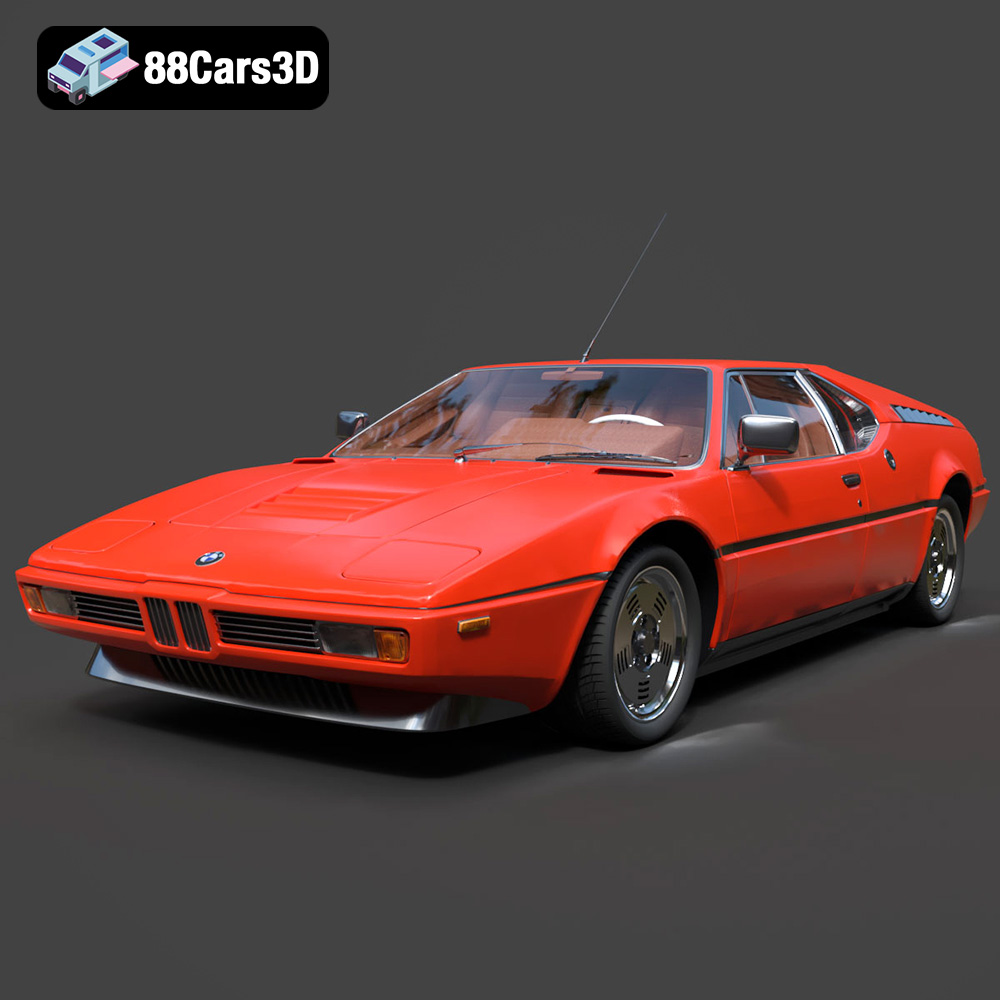
Texture: Yes
Material: Yes
Download the BMW Motorsport M1 E26 1981 3D Model featuring its iconic design, race-bred aerodynamics, and meticulously crafted details. Includes .blend, .fbx, .obj, .glb, .stl, .ply, .unreal, and .max formats for rendering, simulation, and game development.
Price: $20.79

Meta Description:
Texture: Yes
Material: Yes
Download the Cadillac CTS-V Coupe 3D Model featuring detailed exterior styling and realistic interior structure. Includes .blend, .fbx, .obj, .glb, .stl, .ply, .unreal, and .max formats for rendering, simulation, AR VR, and game development.
Price: $13.9
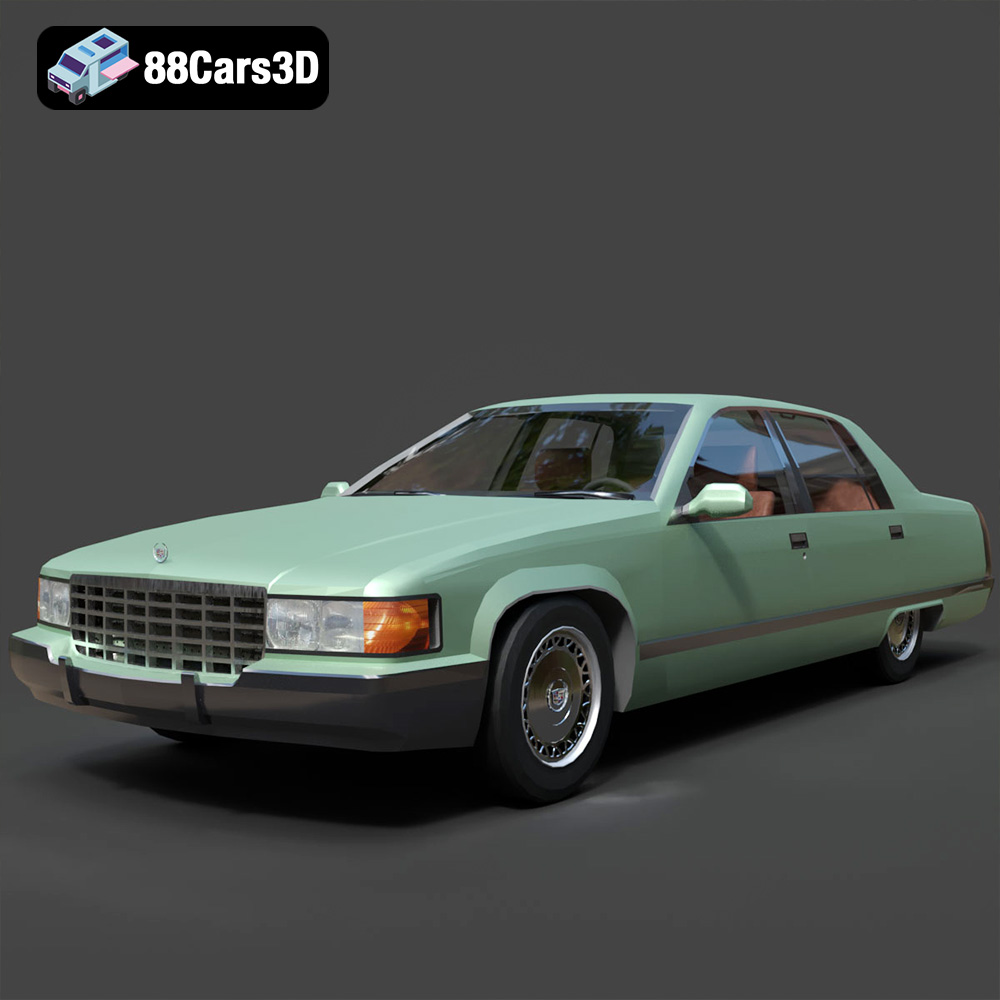
Texture: Yes
Material: Yes
Download the Cadillac Fleetwood Brougham 3D Model featuring its iconic classic luxury design and detailed exterior and interior. Includes .blend, .fbx, .obj, .glb, .stl, .ply, .unreal, and .max formats for rendering, simulation, and game development.
Price: $10.79
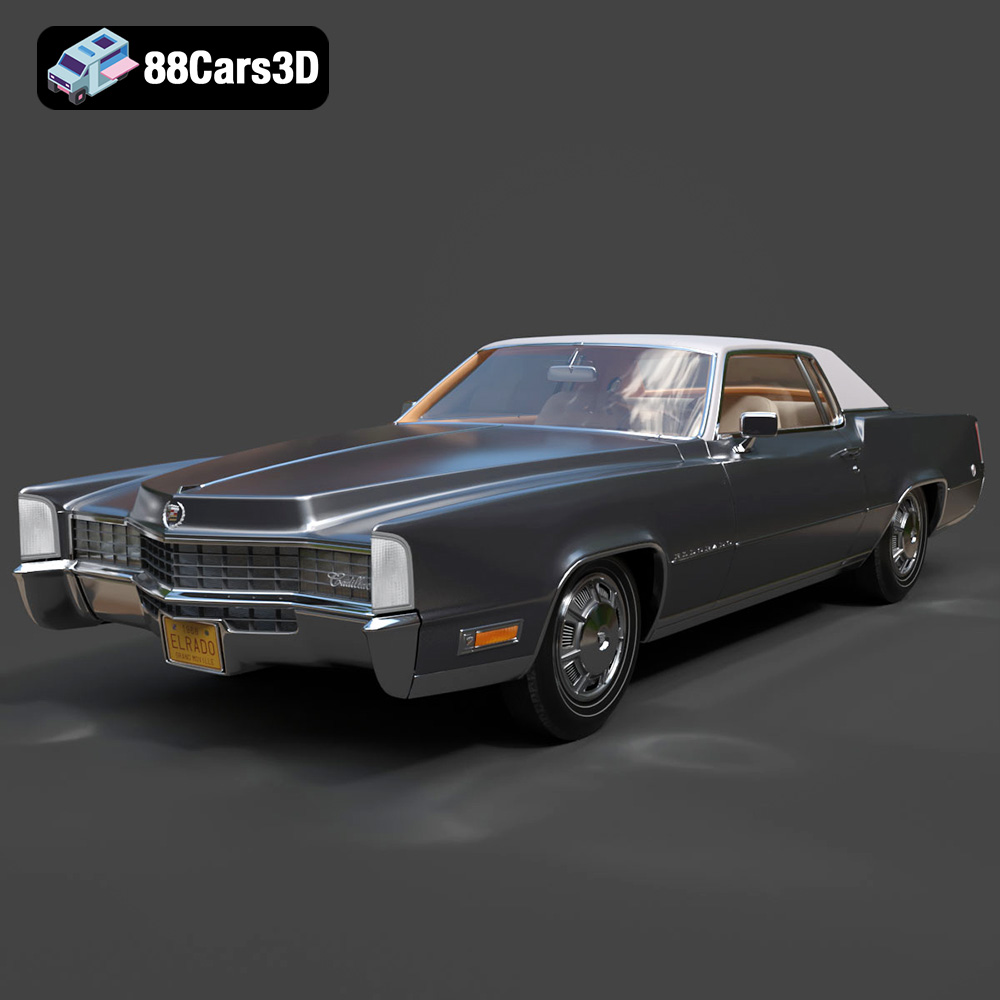
Texture: Yes
Material: Yes
Download the Cadillac Eldorado 1968 3D Model featuring its iconic elongated body, distinctive chrome accents, and luxurious interior. Includes .blend, .fbx, .obj, .glb, .stl, .ply, .unreal, and .max formats for rendering, simulation, and game development.
Price: $20.79

Texture: Yes
Material: Yes
Download the Cadillac CTS SW 2010 3D Model featuring a detailed exterior, functional interior elements, and realistic materials. Includes .blend, .fbx, .obj, .glb, .stl, .ply, .unreal, and .max formats for rendering, simulation, and game development.
Price: $10.79
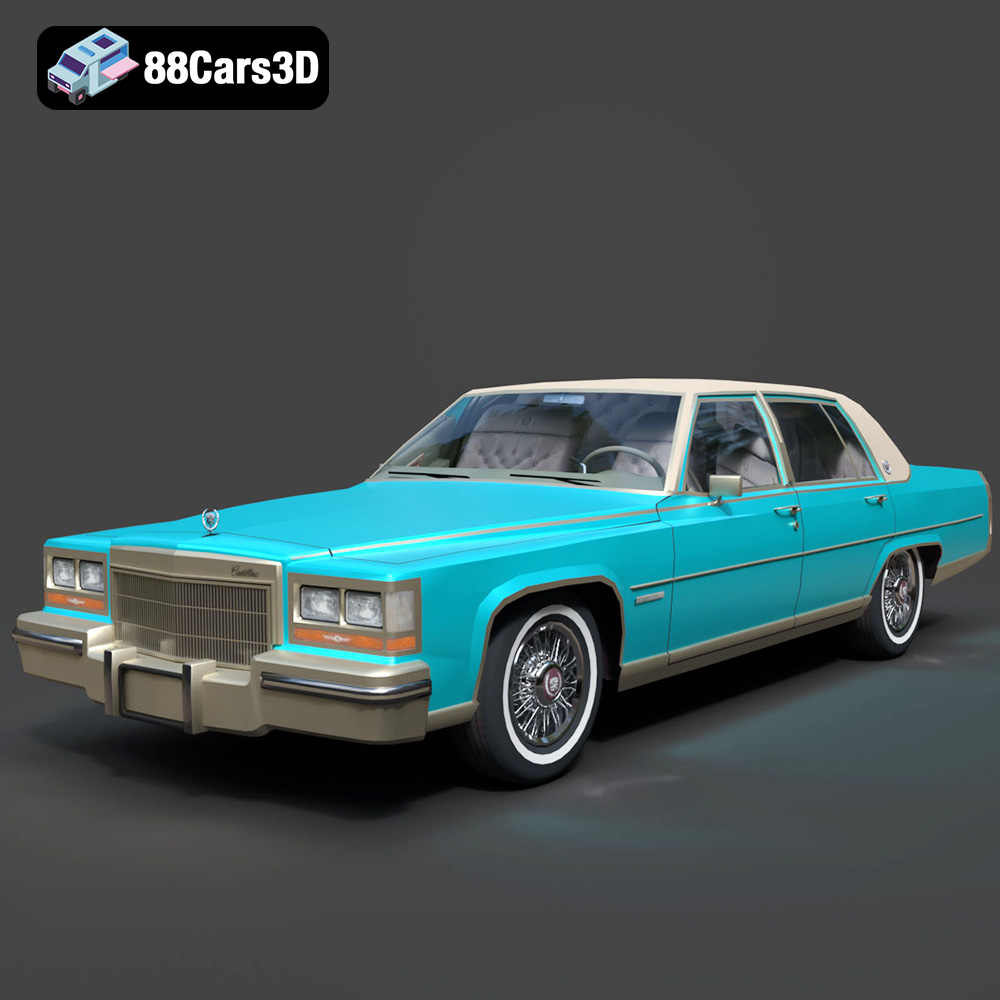
Texture: Yes
Material: Yes
Download the Cadillac Fleetwood Brougham 1985 3D Model featuring its iconic classic luxury design and detailed craftsmanship. Includes .blend, .fbx, .obj, .glb, .stl, .ply, .unreal, and .max formats for rendering, simulation, and game development.
Price: $10.79
Texture: Yes
Material: Yes
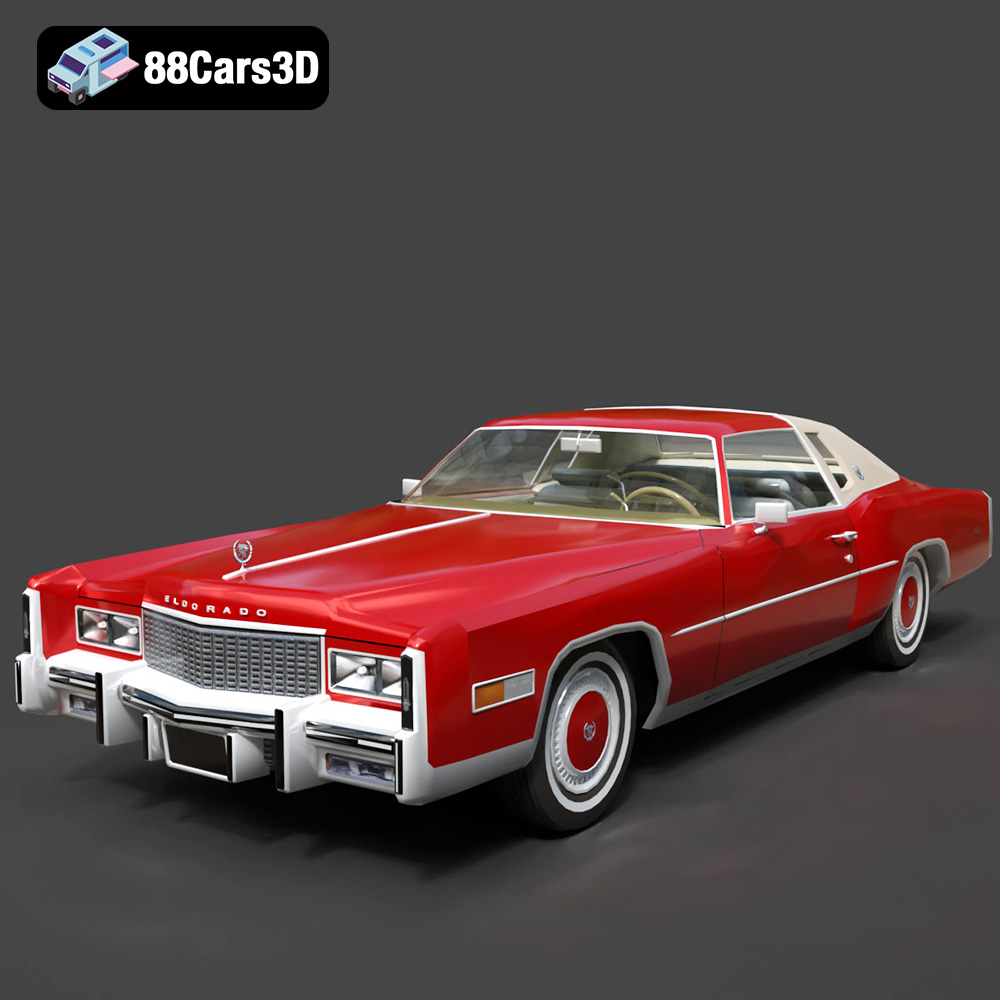
Download the Cadillac Eldorado 1978 3D Model featuring accurately modeled exterior, detailed interior, and period-correct aesthetics. Includes .blend, .fbx, .obj, .glb, .stl, .ply, .unreal, and .max formats for rendering, simulation, and game development.
Price: $10.79
Texture: Yes
Material: Yes
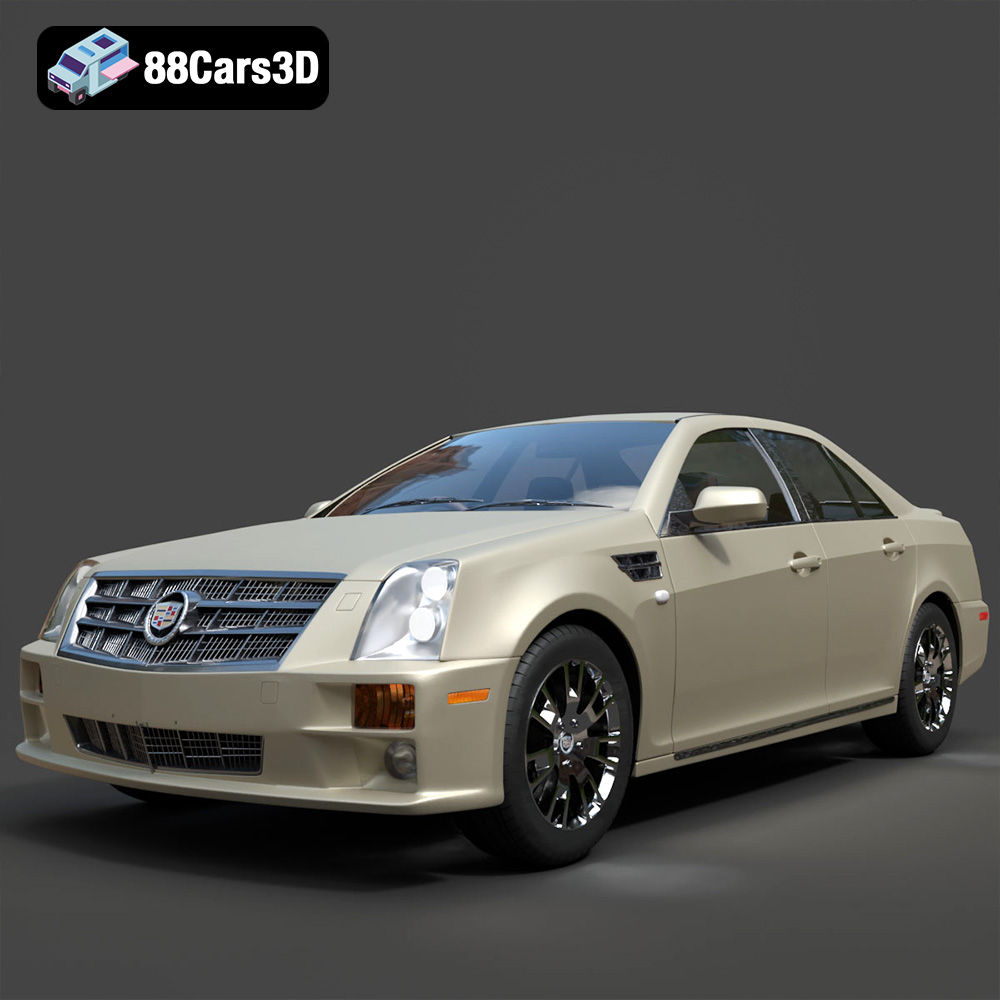
Download the Cadillac STS-005 3D Model featuring a detailed exterior and interior. Includes .blend, .fbx, .obj, .glb, .stl, .ply, .unreal, and .max formats for rendering, simulation, and game development.
Price: $22.79
Texture: Yes
Material: Yes
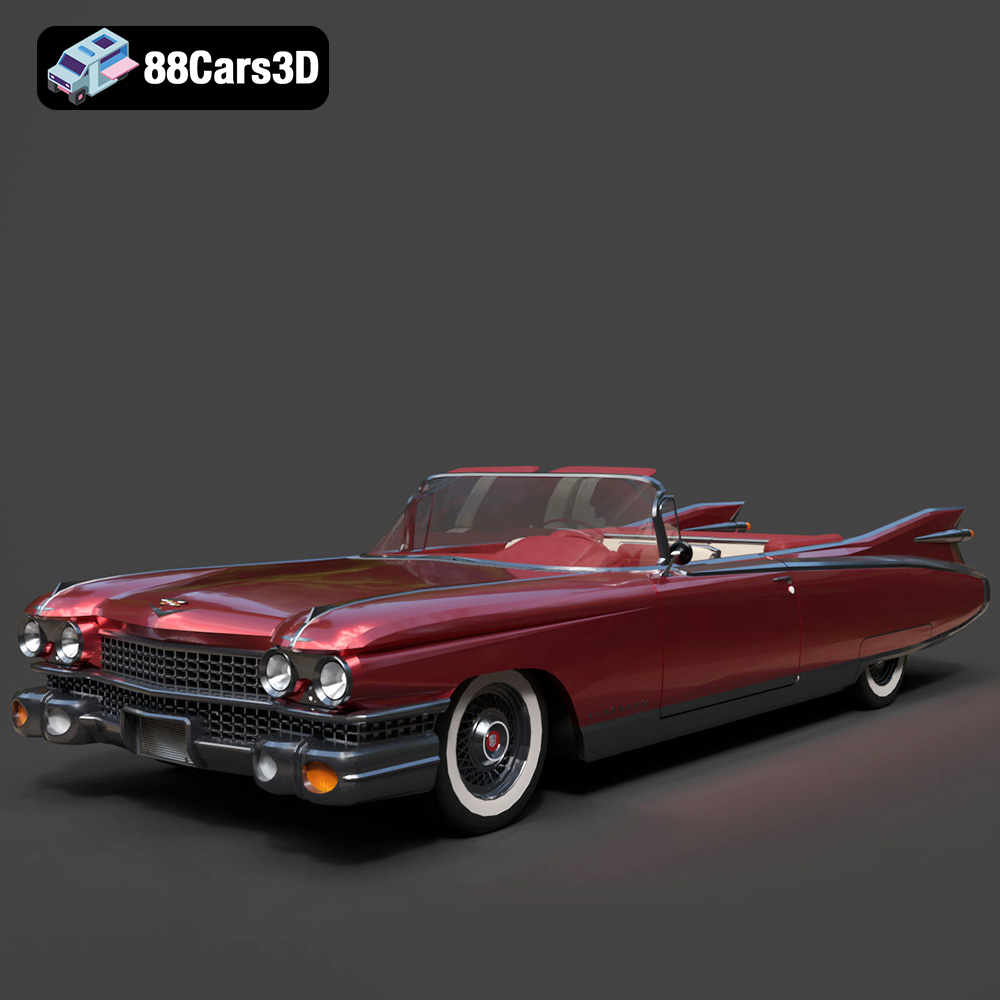
Download the Cadillac Eldorado Convertible (1959) 3D Model featuring iconic fins, luxurious chrome details, and a classic vintage design. Includes .blend, .fbx, .obj, .glb, .stl, .ply, .unreal, and .max formats for rendering, simulation, and game development.
Price: $20.79

Texture: Yes
Material: Yes
Download the Cadillac DTS-005 3D Model featuring its iconic luxury design, detailed interior, and realistic exterior. Includes .blend, .fbx, .obj, .glb, .stl, .ply, .unreal, and .max formats for rendering, simulation, and game development.
Price: $10.79

