⚡ FLASH SALE: Get 60% OFF All Premium 3D & STL Models! ⚡

In the exhilarating world of 3D automotive design and visualization, the choice of a 3D model file format is far more than a technicality – it’s a strategic decision that impacts everything from project efficiency to final output quality. For 3D artists, game developers, product designers, and visualization specialists, selecting the right format for their 3D car models is paramount for seamless workflow, optimal performance, and stunning realism. Whether you’re aiming for photorealistic renders, smooth in-game performance, or compelling augmented reality experiences, understanding the nuances of formats like FBX, OBJ, GLTF, and USDZ is essential.
This comprehensive guide delves deep into the leading file formats used for automotive rendering and game asset development. We’ll explore their strengths, limitations, and specific applications, providing you with the technical insights needed to make informed decisions. From the intricate details of mesh topology to the complexities of PBR materials and game engine optimization, we’ll equip you with the knowledge to harness these formats effectively, ensuring your 3D car models shine in every scenario. Prepare to unlock the full potential of your digital automotive creations.
Before diving into specific file formats, it’s crucial to establish a solid foundation in the core principles of 3D model construction: topology and UV mapping. These two elements dictate the quality, performance, and versatility of any 3D car model, regardless of its eventual file format. A well-constructed model is easier to animate, deform, texture, and optimize, making it a valuable asset for any project, from high-fidelity visualizations to interactive game environments.
Topology refers to the arrangement of vertices, edges, and faces that form the surface of your 3D model. For automotive models, which are characterized by sleek, often reflective surfaces, clean and efficient topology is absolutely critical. The goal is to achieve smooth, artifact-free surfaces while maintaining a manageable polygon count. This typically involves using an all-quad workflow (quadrilateral polygons) as they deform better than triangles and are easier to work with during modeling and sculpting. Good edge flow is equally important, meaning edges should follow the natural contours and curvature of the car body. This prevents pinching and allows for precise control over surface details and creasing, especially when applying subdivision surface modifiers (like TurboSmooth in 3ds Max or Subdivision Surface in Blender).
For high-quality production models, polygon counts for a detailed 3D car model can range from 200,000 to over a million polygons, depending on the level of detail (e.g., interior, engine bay). However, for game assets, these numbers must be significantly lower, often requiring multiple Levels of Detail (LODs) to manage performance. Industry best practices dictate avoiding n-gons (polygons with more than four sides) and ensuring a uniform distribution of polygons. Excessive polygon density in flat areas is inefficient, while too few polygons in curved areas will result in a faceted appearance. Achieving this balance is a hallmark of professional 3D car models found on platforms like 88cars3d.com.
UV mapping is the process of unwrapping the 3D surface of a model into a 2D plane, allowing textures to be applied accurately. For complex automotive surfaces with intricate paint jobs, decals, and material variations, meticulous UV mapping is essential for realistic texturing. A well-executed UV layout minimizes distortion, prevents seams from being visible, and efficiently utilizes texture space. Common strategies for car models involve breaking down the car into logical pieces (body panels, wheels, windows, interior elements) and unwrapping them individually. Hard surface models often benefit from projection methods like planar or box mapping for simpler components, while organic or complex curved surfaces require more sophisticated unwrapping techniques to avoid stretching.
When working in Blender, for instance, artists utilize tools like ‘Smart UV Project’, ‘Cube Projection’, or manually ‘Seam’ and ‘Unwrap’ specific parts for optimal results. Referencing the official Blender 4.4 documentation on UV unwrapping provides detailed insights into these techniques, emphasizing how to create efficient and clean UV layouts. Texture resolution is another key consideration; high-resolution textures (e.g., 4K or 8K for primary body panels) are often paired with smaller textures (e.g., 1K or 2K) for less prominent components to optimize memory usage without sacrificing visual fidelity. Overlapping UV islands for symmetrical parts can save texture space, but caution must be exercised if unique decals or baked ambient occlusion maps are required.
When discussing file formats for 3D car models, FBX and OBJ invariably come to the forefront. These two formats have served as the backbone of 3D asset exchange for decades, each offering distinct advantages and widespread compatibility across a vast array of 3D software and engines. Understanding their respective strengths and limitations is key to choosing the most appropriate format for your project’s needs.
FBX (Filmbox) is a proprietary file format developed by Autodesk, making it the de facto standard for interoperability between Autodesk applications like 3ds Max, Maya, and MotionBuilder, as well as many other major 3D software packages (e.g., Cinema 4D, Blender, Unity, Unreal Engine). Its primary strength lies in its ability to store a comprehensive range of 3D data within a single file. This includes not only mesh geometry (vertices, faces, UVs) but also materials, textures, animations (including skeletal animation and blend shapes), cameras, lights, and even scene hierarchy. This “all-in-one” capability makes FBX incredibly efficient for transferring complex animated scenes and detailed game assets, especially those with multiple components and interdependencies.
For automotive rendering and game development, FBX is invaluable. A typical workflow involves modeling a high-poly car in 3ds Max, Maya, or Blender, then exporting it as an FBX with baked animations (if any), PBR material assignments, and LODs ready for import into game engines like Unity or Unreal Engine. While FBX is robust, it can sometimes be version-sensitive, meaning an FBX file saved in an older version of a software might not fully support all features when opened in a newer version, or vice-versa. Users often convert FBX files to a common interchange version (e.g., FBX 2018) to ensure maximum compatibility. File sizes can vary greatly depending on the complexity of the model, texture resolutions, and included animation data, often ranging from tens of megabytes to several hundred megabytes for a full-detail 3D car model.
OBJ (Object) is an open, non-proprietary file format developed by Wavefront Technologies, renowned for its simplicity and near-universal compatibility. Almost every 3D software application can import and export OBJ files, making it an excellent choice when maximum accessibility is the priority. Unlike FBX, OBJ primarily stores geometry data – vertices, UV coordinates, vertex normals, and faces. It supports simple material definitions through an accompanying MTL (Material Template Library) file, which references texture maps (diffuse, specular, normal) and basic material properties (color, shininess). However, OBJ does not inherently support advanced features like animation, rigging, or complex PBR material networks.
Despite its limitations in handling advanced features, OBJ remains a highly valuable format for transferring static 3D car models, especially when the primary focus is on mesh geometry for sculpting, retopology, or simple rendering setups. For example, if an artist needs to transfer a base mesh of a car body between different modeling software for detailing, OBJ is a reliable choice. Its text-based nature (though it can also be binary) makes it relatively easy to inspect and even edit manually for experienced users. The downside is that for a complete scene, you’d need to transfer animations, lights, and complex materials separately, which can fragment workflows. For professionals on 88cars3d.com, OBJ often serves as a foundational format for clean geometry, with material and animation data being handled by more feature-rich formats or set up directly within the target application.
As the landscape of 3D interaction expands beyond traditional desktop applications into web browsers, augmented reality (AR), and virtual reality (VR), new file formats have emerged to meet the specific demands of these platforms. GLTF/GLB and USDZ are at the forefront of this evolution, designed for efficiency, richness, and optimized delivery in real-time environments.
GLTF (GL Transmission Format), often referred to as the “JPEG of 3D,” is an open-standard, royalty-free specification for efficient transmission and loading of 3D scenes and models by applications. Developed by the Khronos Group, GLTF is designed to be a compact, interoperable format, specifically optimized for web-based 3D applications, metaverse experiences, and real-time engines. It supports a comprehensive range of data including mesh geometry, PBR materials (with support for metallic-roughness and specular-glossiness workflows), animations, skinning, cameras, and scene hierarchy. The binary version, GLB, bundles all assets (JSON, binary data, images) into a single file, making it incredibly convenient for distribution and embedding.
For 3D car models destined for interactive web viewers, e-commerce product configurators, or compact game assets, GLTF/GLB is an unparalleled choice. Its efficient design means faster loading times and reduced bandwidth consumption, which are critical for smooth user experiences online. Furthermore, its native support for PBR materials ensures that models render accurately and consistently across different GLTF-compatible viewers and engines. Many 3D software packages (Blender, 3ds Max via plugins, Maya, Substance Painter) offer robust GLTF export options. When preparing models for GLTF, it’s essential to optimize geometry (decimation, merging similar materials), bake textures, and ensure proper UV layouts to maximize efficiency. File sizes for optimized GLTF/GLB car models can be remarkably small, often just a few megabytes for a decent quality representation, making them ideal for mobile and web deployment.
USDZ is a proprietary, uncompressed, and unencrypted file format developed by Apple in collaboration with Pixar, specifically tailored for augmented reality (AR) experiences on Apple devices (iOS, iPadOS, macOS). Based on Pixar’s Universal Scene Description (USD) framework, USDZ bundles 3D models, textures, and animations into a single, easily shareable archive, optimized for quick viewing in AR Quick Look and integration into ARKit applications. Its key advantages include robust support for PBR materials, animations, and efficient performance within Apple’s ecosystem, making it a powerful tool for bringing 3D car models into the real world through AR.
For automotive companies looking to showcase their vehicles in AR, allow customers to visualize custom configurations on their driveway, or provide interactive repair manuals, USDZ is the go-to format. When creating a USDZ car model, artists typically start with a high-fidelity model in their preferred 3D software, optimize it for real-time viewing (LODs, efficient texture packing), and then export it using tools that support USD export (e.g., Blender with a USD export add-on, Maya, Substance Painter) or convert it using Apple’s command-line tools or online converters. While primarily focused on AR for Apple devices, the underlying USD framework is gaining traction as a universal scene description format, promising broader interoperability in the future. The optimization requirements are similar to GLTF: aim for balanced polygon counts (e.g., 50k-150k for a hero model in AR), efficient UVs, and compressed textures to ensure smooth performance on mobile devices.
Achieving photorealism in automotive rendering hinges significantly on the quality of PBR (Physically Based Rendering) materials and the chosen rendering workflow. PBR materials accurately simulate how light interacts with surfaces in the real world, producing consistent and believable results across different lighting conditions and rendering engines. Understanding how various file formats support and convey these complex material properties is vital for any 3D artist.
PBR materials are defined by a set of texture maps that describe a surface’s properties, rather than just its color. The two most common workflows are Metallic-Roughness and Specular-Glossiness. The Metallic-Roughness workflow typically uses:
The Specular-Glossiness workflow uses similar concepts but separates the specular reflectivity into a dedicated map and uses a glossiness map (inverse of roughness). Modern file formats like FBX (with appropriate shader export options), GLTF/GLB, and USDZ are designed to efficiently store and transmit these PBR texture sets and their associated material properties. When sourcing 3D car models from marketplaces like 88cars3d.com, you can expect models to come with expertly crafted PBR materials, ensuring a consistent and high-quality starting point for your projects. Textures are typically PNG, JPG, or TGA files, often packed into channels (e.g., roughness, metallic, AO in RGB channels of a single texture) to optimize memory.
The choice of rendering engine dramatically influences the final look of your automotive rendering. Offline renderers like Chaos Group V-Ray, Corona Renderer (for 3ds Max and Cinema 4D), Autodesk Arnold (for Maya, 3ds Max), and Blender Cycles are renowned for their ability to produce photorealistic results with complex global illumination, accurate reflections, and advanced caustics. These renderers handle PBR materials with high fidelity, allowing artists to fine-tune every aspect of a car’s appearance, from the metallic flakes in the paint to the subtle imperfections on glass and chrome. A typical high-quality render might involve setting up intricate studio lighting, HDR (High Dynamic Range) environment maps for realistic reflections, and multiple render passes for post-processing and compositing.
In contrast, real-time engines like Unity and Unreal Engine focus on delivering high frame rates while maintaining visual quality. They also fully support PBR materials, but the assets and scenes must be optimized more aggressively. For instance, game engine materials often utilize shader graphs or nodes to create custom PBR shaders optimized for performance. While the underlying PBR principles are the same, the implementation and optimization strategies differ. When importing FBX or GLTF models into these engines, their PBR material properties are generally recognized and translated, though some manual tweaking might be necessary to match the exact look from the source DCC application. Texture sizes for game engines are typically kept lower (e.g., 2K for primary components, 512px for smaller details) and utilize techniques like texture atlasing to minimize draw calls and optimize rendering performance.
The transition of 3D car models from high-fidelity rendering environments to interactive real-time applications like game engines and AR/VR experiences demands rigorous optimization. Performance is paramount, as smooth frame rates and responsive interactions are critical for user engagement. This section explores key strategies for optimizing 3D automotive assets for these demanding platforms.
For game assets, balancing visual quality with performance is a constant challenge. One of the most effective optimization techniques is implementing Levels of Detail (LODs). This involves creating multiple versions of the same 3D car model, each with a progressively lower polygon count. The highest detail LOD (LOD0) is used when the car is close to the camera, while progressively lower detail versions (LOD1, LOD2, etc.) are swapped in as the car moves further away. This dramatically reduces the computational load on the GPU without a noticeable drop in visual quality for the player. For instance, a hero car might have LOD0 at 150,000 polygons, LOD1 at 50,000, and LOD2 at 10,000, each with corresponding optimized textures. Tools in software like Blender (e.g., the Decimate modifier, detailed in the Blender 4.4 documentation for mesh editing) or dedicated plugins in other DCCs facilitate this process.
Another critical optimization is reducing draw calls. A draw call is a command sent from the CPU to the GPU to draw objects. Each unique material, mesh, or texture often generates a separate draw call, which can quickly bottleneck performance. Strategies to reduce draw calls include:
These techniques are crucial for ensuring smooth gameplay, especially in racing games or open-world environments where many vehicles might be rendered simultaneously. FBX and GLTF are excellent formats for exporting these optimized assets, carrying over the LOD information and PBR material assignments efficiently into game engines.
AR/VR optimization presents unique challenges due to the need for extremely high frame rates (typically 90 FPS or higher to prevent motion sickness) and the varying capabilities of target devices (from high-end PC VR setups to mobile AR on smartphones). For 3D car models in AR/VR, every polygon and every pixel counts. Key considerations include:
USDZ and GLTF/GLB are the preferred formats for AR/VR due to their inherent optimizations for real-time delivery. When developing models for AR/VR, testing on target devices throughout the development cycle is crucial to identify and address performance bottlenecks early on. Models available on 88cars3d.com often provide optimized versions specifically designed for these real-time applications, saving developers valuable time.
While digital rendering and interactive experiences are primary applications for 3D car models, their utility extends into tangible realms like 3D printing and high-fidelity static visualization for design reviews. These applications demand a different set of considerations for file formats and model preparation, focusing on watertight geometry and absolute accuracy.
3D printing converts a digital 3D model into a physical object layer by layer. For this process, the model must be “watertight” – a completely closed mesh with no holes, inverted normals, or self-intersecting geometry. Unlike rendering, where minor mesh imperfections might be forgiving, 3D printing requires an absolutely flawless mesh for successful fabrication. The most common file formats for 3D printing are STL (STereoLithography) and OBJ, with increasing support for AMF (Additive Manufacturing File Format).
When preparing a 3D car model for printing, several critical steps are involved:
OBJ is a good intermediate format for transferring geometry for repair, while STL is the final standard for most hobbyist and professional 3D printers. The success of 3D printing a car model largely depends on the meticulous preparation of the mesh, transforming it from a visual asset into a manufacturable blueprint.
Beyond interactive experiences, 3D car models are indispensable for static, high-fidelity visualization, particularly in automotive design and engineering reviews. These visualizations aim for absolute photorealism, often surpassing the requirements of game engines or even AR/VR in terms of detail, lighting complexity, and material accuracy. The goal is to accurately represent design concepts, material finishes, and aesthetic details before physical prototypes are created.
For such applications, formats like FBX and occasionally OBJ (for pure geometry) are often used to transfer models into powerful rendering engines like V-Ray, Corona, or Arnold. The workflow emphasizes:
The focus here is entirely on visual fidelity, with performance being a secondary concern during the rendering process itself (though render times can be extensive). The ability to faithfully translate complex geometry and advanced PBR materials through formats like FBX is crucial for ensuring that the design intent is perfectly conveyed in these critical visualization stages. This level of detail is precisely what many expect when acquiring models for high-end visualization from platforms that specialize in quality, such as 88cars3d.com.
The journey of a 3D car model, from its initial concept to its final application, is significantly influenced by the file formats chosen along the way. As we’ve explored, there’s no single “best” format; rather, the optimal choice is always context-dependent, dictated by the project’s specific requirements, target platform, and desired outcome. Understanding the technical intricacies of each format – from FBX’s comprehensive data handling to OBJ’s universal simplicity, GLTF’s web optimization, and USDZ’s AR prowess – empowers artists and developers to navigate the complex landscape of 3D asset pipelines with confidence.
Whether you’re crafting high-detail assets for automotive rendering, optimizing for peak performance in game assets, or preparing for interactive AR/VR experiences and precise 3D printing, the underlying principles of clean topology, efficient UV mapping, and robust PBR materials remain constant. By carefully considering polygon counts, texture resolutions, and format-specific features, you can ensure your 3D car models not only look exceptional but also perform flawlessly in their intended environments. Leverage the strengths of each format and embrace industry best practices to streamline your workflows and achieve truly professional results.
Invest in quality models that are thoughtfully structured and prepared for diverse applications, much like those found on platforms specializing in high-quality assets. By making informed decisions about file formats, you unlock the full potential of your 3D automotive creations, driving innovation and delivering captivating experiences across all mediums.
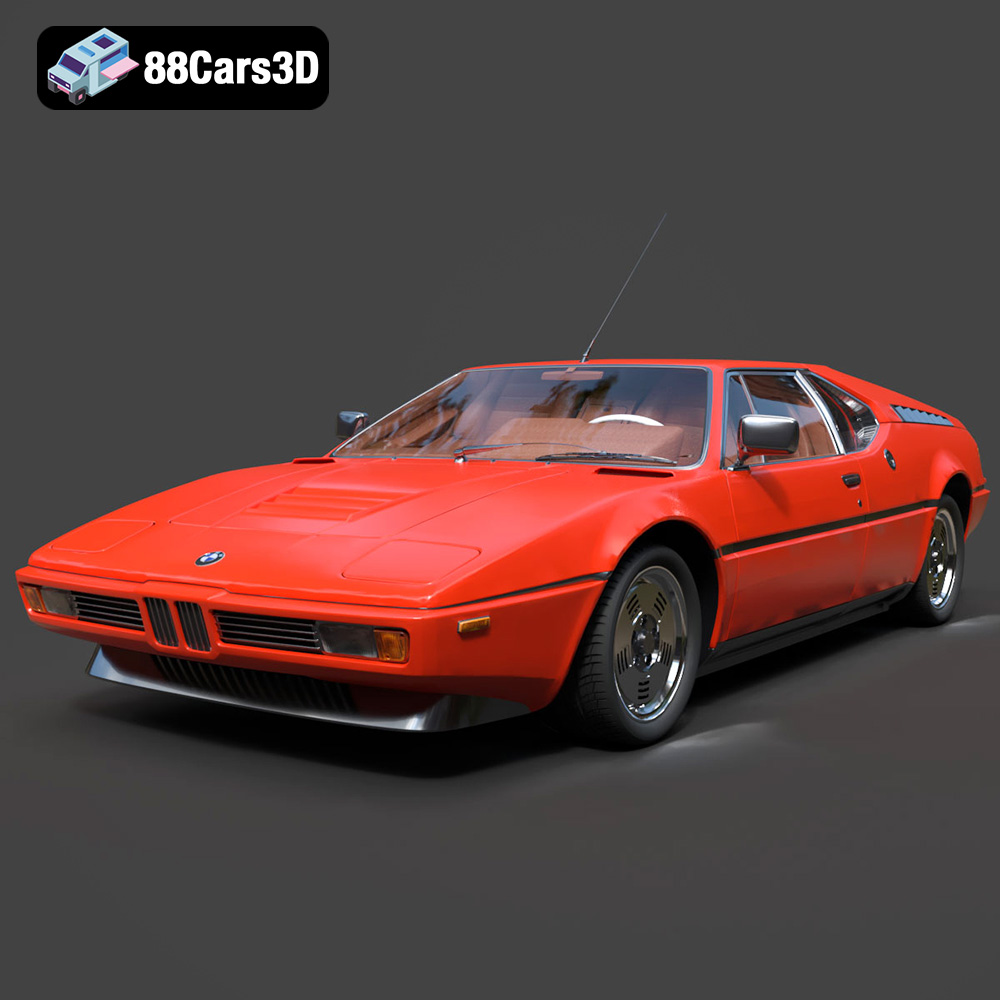
Texture: Yes
Material: Yes
Download the BMW Motorsport M1 E26 1981 3D Model featuring its iconic design, race-bred aerodynamics, and meticulously crafted details. Includes .blend, .fbx, .obj, .glb, .stl, .ply, .unreal, and .max formats for rendering, simulation, and game development.
Price: $20.79

Meta Description:
Texture: Yes
Material: Yes
Download the Cadillac CTS-V Coupe 3D Model featuring detailed exterior styling and realistic interior structure. Includes .blend, .fbx, .obj, .glb, .stl, .ply, .unreal, and .max formats for rendering, simulation, AR VR, and game development.
Price: $13.9
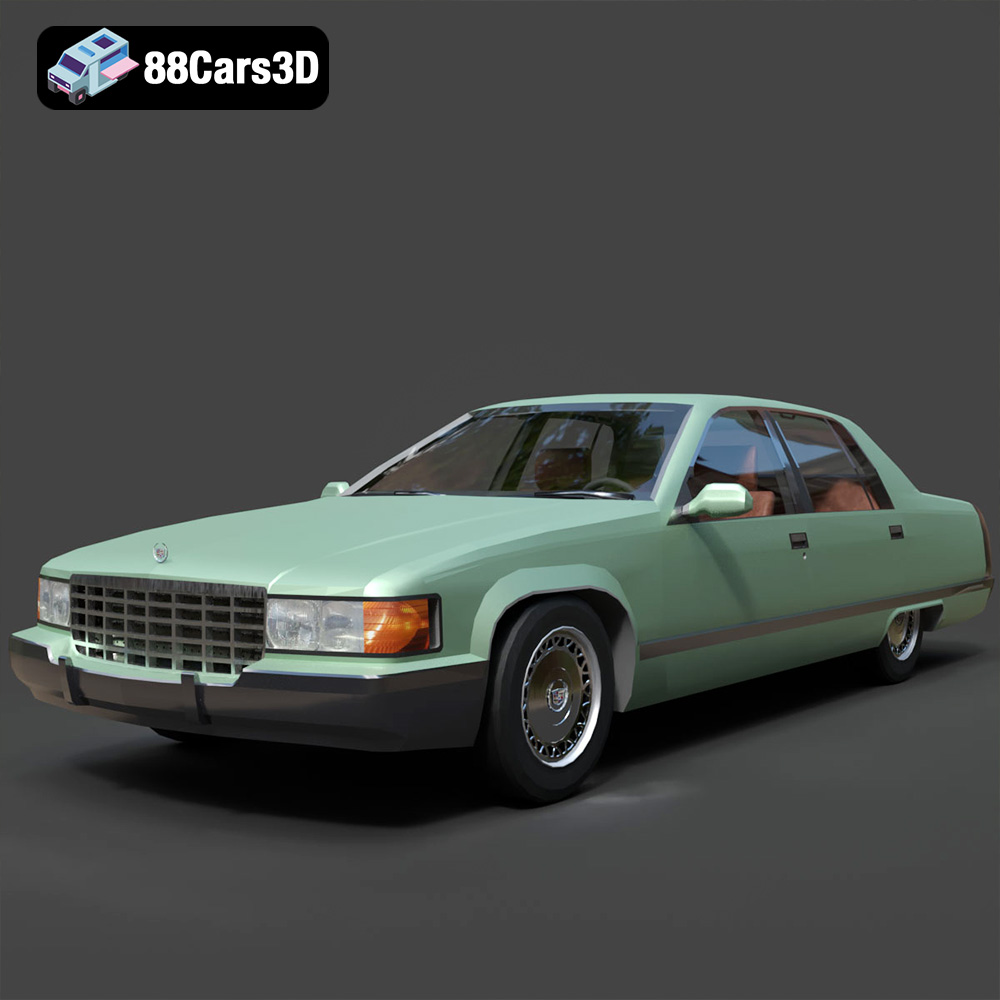
Texture: Yes
Material: Yes
Download the Cadillac Fleetwood Brougham 3D Model featuring its iconic classic luxury design and detailed exterior and interior. Includes .blend, .fbx, .obj, .glb, .stl, .ply, .unreal, and .max formats for rendering, simulation, and game development.
Price: $10.79
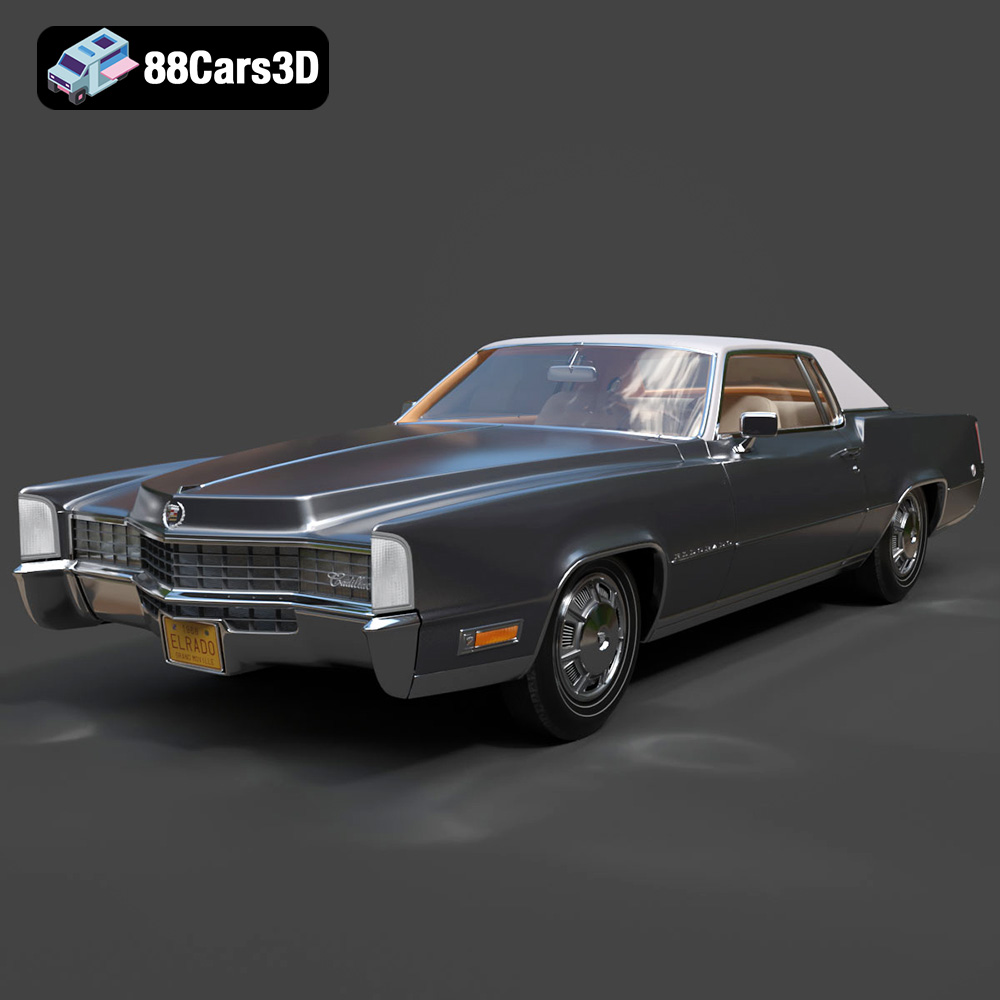
Texture: Yes
Material: Yes
Download the Cadillac Eldorado 1968 3D Model featuring its iconic elongated body, distinctive chrome accents, and luxurious interior. Includes .blend, .fbx, .obj, .glb, .stl, .ply, .unreal, and .max formats for rendering, simulation, and game development.
Price: $20.79

Texture: Yes
Material: Yes
Download the Cadillac CTS SW 2010 3D Model featuring a detailed exterior, functional interior elements, and realistic materials. Includes .blend, .fbx, .obj, .glb, .stl, .ply, .unreal, and .max formats for rendering, simulation, and game development.
Price: $10.79
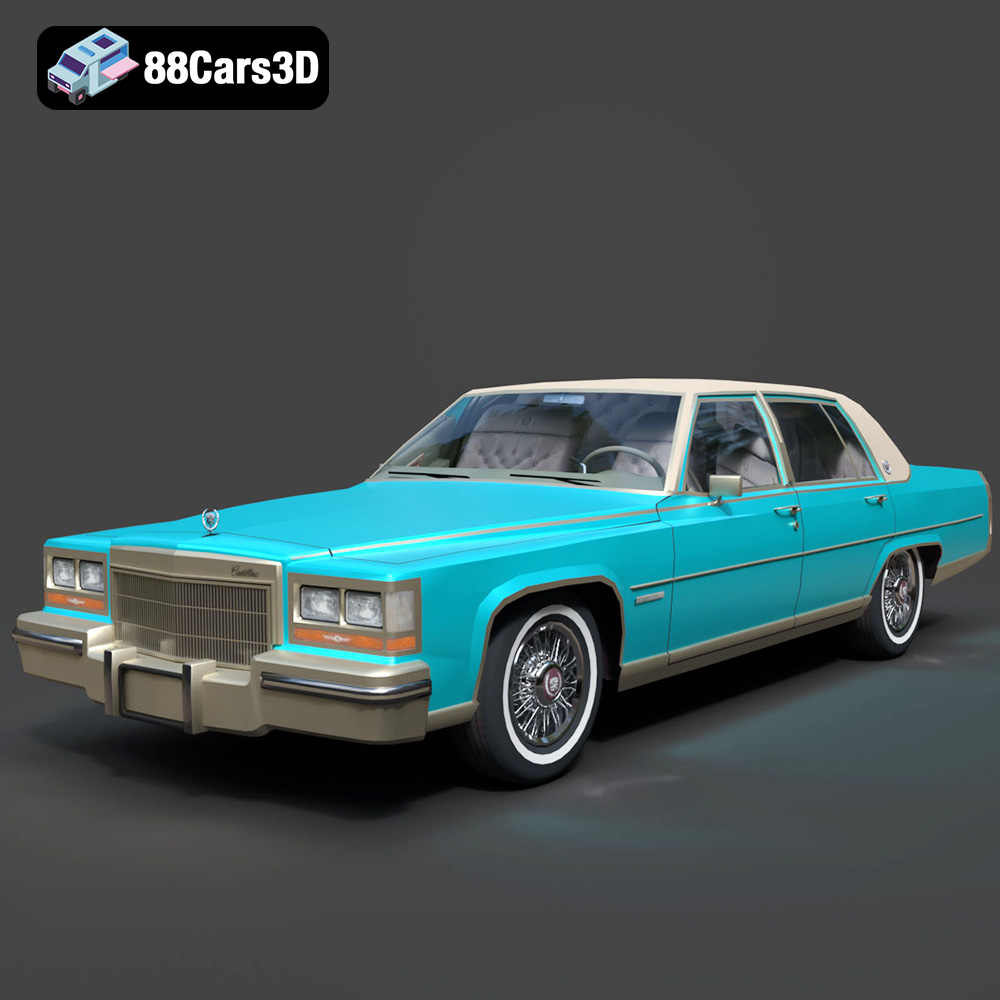
Texture: Yes
Material: Yes
Download the Cadillac Fleetwood Brougham 1985 3D Model featuring its iconic classic luxury design and detailed craftsmanship. Includes .blend, .fbx, .obj, .glb, .stl, .ply, .unreal, and .max formats for rendering, simulation, and game development.
Price: $10.79
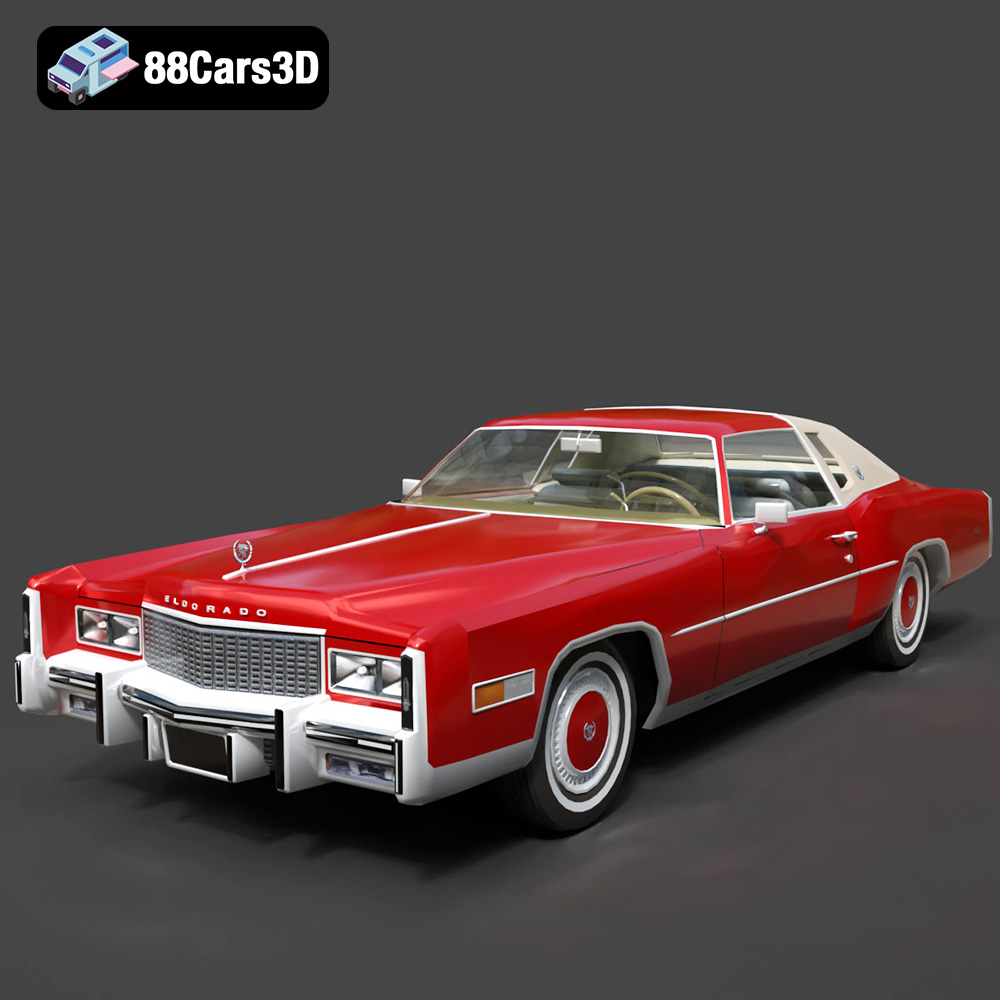
Texture: Yes
Material: Yes
Download the Cadillac Eldorado 1978 3D Model featuring accurately modeled exterior, detailed interior, and period-correct aesthetics. Includes .blend, .fbx, .obj, .glb, .stl, .ply, .unreal, and .max formats for rendering, simulation, and game development.
Price: $10.79
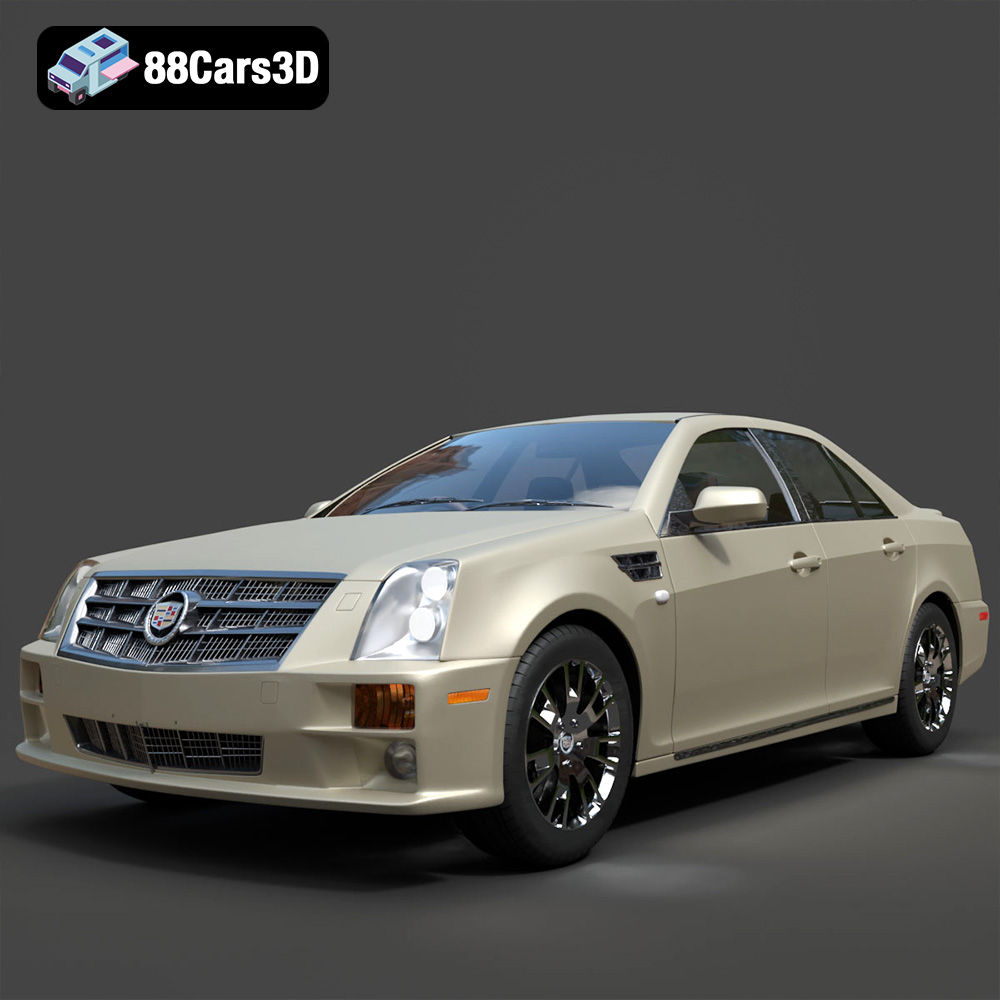
Texture: Yes
Material: Yes
Download the Cadillac STS-005 3D Model featuring a detailed exterior and interior. Includes .blend, .fbx, .obj, .glb, .stl, .ply, .unreal, and .max formats for rendering, simulation, and game development.
Price: $22.79
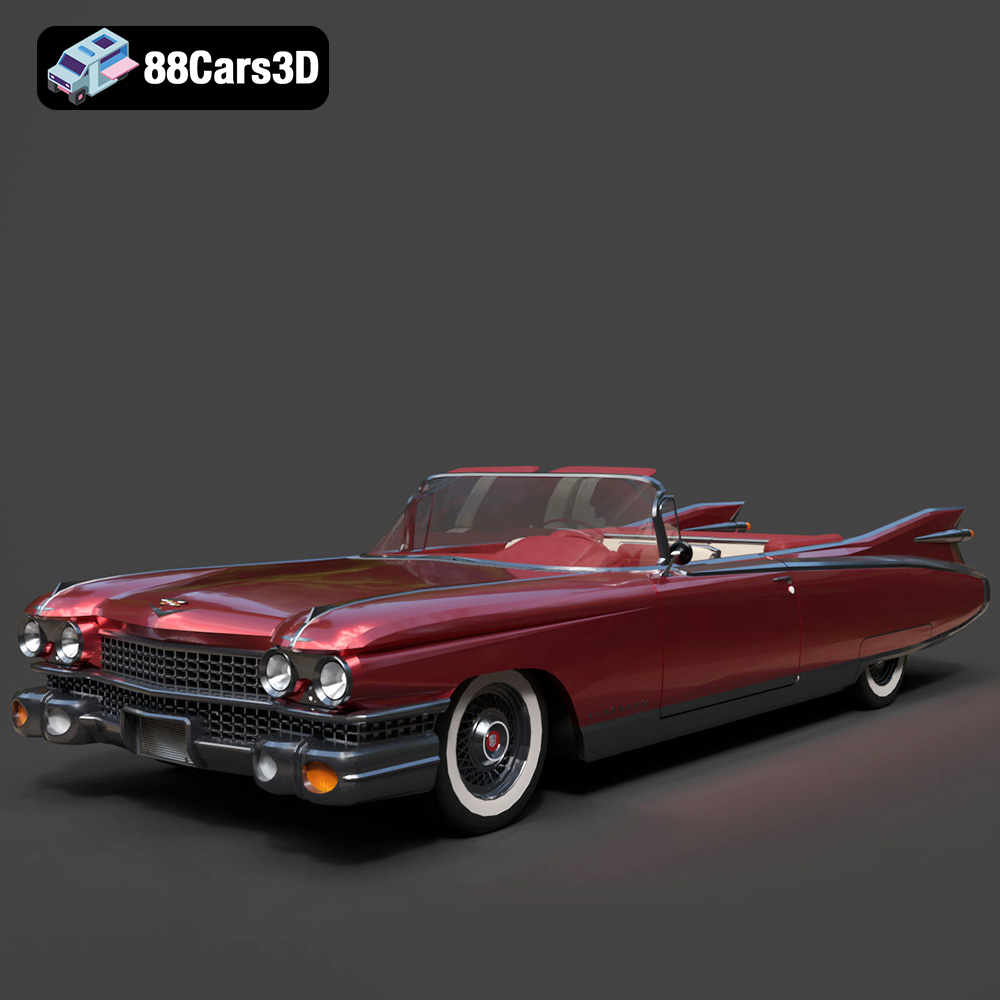
Texture: Yes
Material: Yes
Download the Cadillac Eldorado Convertible (1959) 3D Model featuring iconic fins, luxurious chrome details, and a classic vintage design. Includes .blend, .fbx, .obj, .glb, .stl, .ply, .unreal, and .max formats for rendering, simulation, and game development.
Price: $20.79

Texture: Yes
Material: Yes
Download the Cadillac DTS-005 3D Model featuring its iconic luxury design, detailed interior, and realistic exterior. Includes .blend, .fbx, .obj, .glb, .stl, .ply, .unreal, and .max formats for rendering, simulation, and game development.
Price: $10.79

