⚡ FLASH SALE: Get 60% OFF All Premium 3D & STL Models! ⚡

“`html
Welcome to the world of 3D printing, where digital designs transform into tangible objects. For automotive enthusiasts and model makers, the ability to bring iconic cars to life through 3D printing is an incredible opportunity. While many ready-to-print 3D models are available, sometimes you might encounter polygon-based 3D models in formats like OBJ or FBX that you wish to convert to the universally accepted STL format for printing. This transition is crucial, as STL (STereoLithography) is the de facto standard for 3D printing, communicating surface geometry to your slicer software. This comprehensive guide will walk you through the entire process, from understanding STL file structure to advanced mesh repair and slicing techniques, ensuring your polygon models are perfectly prepared for your 3D printer. We’ll cover everything from basic conversion to troubleshooting common issues, empowering you to tackle any polygonal model with confidence.
Before diving into the conversion process, it’s essential to grasp what STL files and polygon meshes are and how they differ. An STL file represents the 3D surface geometry of an object, but it does so using a collection of connected triangles. Each triangle is defined by three vertices (points in 3D space) and a normal vector, which indicates the outward-facing direction of the surface. This simplified representation is ideal for 3D printing because it’s easily processed by slicing software to generate toolpaths. In contrast, polygon models, often found in OBJ or FBX formats, can be more complex. They can contain not only triangles but also quadrilaterals (quads) and even N-gons (polygons with more than four sides). These formats can also include additional data like color, textures, and material properties, which are typically stripped away during the STL conversion process as 3D printers primarily rely on geometry.
The core of converting a polygon model to STL is triangulation. This process involves breaking down any non-triangular polygons (quads, N-gons) within your model into a series of triangles. Most 3D modeling software and dedicated conversion tools handle this automatically. For example, if you have a quad face, the software will simply divide it into two triangles by adding an edge between two opposite vertices. For more complex N-gons, the software employs algorithms to tessellate them into triangles while preserving the overall shape and curvature of the original surface. The quality of this triangulation is paramount; a poor triangulation can lead to visible facets, sharp edges where smooth curves should be, or even holes in your mesh, which are detrimental to successful 3D printing.
A critical concept in 3D printing is the ‘manifold’ or ‘watertight’ mesh. A manifold mesh is a continuous, closed surface without any holes, gaps, or self-intersections. Imagine it as a container that can hold water – hence the term. Non-manifold meshes, on the other hand, have topological errors like disconnected faces, edges shared by more than two faces, or interior faces. These errors will confuse the slicing software, leading to printing failures, incorrect support generation, or incomplete models. Converting to STL often highlights these issues, and it’s during this stage that you’ll typically address them. For professional-grade printable models, ensuring manifold geometry is a non-negotiable step. Marketplaces like 88cars3d.com prioritize offering models that are already manifold and print-ready, saving you significant preparation time.
Several software solutions can facilitate the conversion of polygon models to STL. The best choice often depends on your existing workflow, the complexity of your models, and your budget. For most users, accessible and powerful tools offer excellent results without requiring extensive 3D modeling expertise. Regardless of the tool, the fundamental goal remains the same: to create a clean, watertight, and correctly oriented mesh composed entirely of triangles.
If you’re already familiar with professional 3D modeling software, these provide the most robust options for conversion and repair. Blender, a free and open-source powerhouse, is an excellent choice. Within Blender, you can import OBJ, FBX, and many other formats. Once imported, you can use tools like the ‘Decimate’ modifier to reduce polygon count if needed, the ‘Remesh’ modifier for cleaner topology, and crucially, the ‘3D-Print Toolbox’ add-on (which you might need to enable) that includes a ‘Check All’ function to identify manifold errors, non-manifold edges, and other issues. Exporting to STL from these programs is straightforward, usually found under File > Export > STL. You’ll typically have options to control the scale and resolution of the exported mesh.
For users who primarily need to convert and repair models without extensive modeling, specialized software is invaluable. Autodesk Meshmixer (though its future development is uncertain, it remains a powerful tool) is excellent for automatic mesh repair, simplification, and conversion. Its ‘Inspector’ tool can automatically find and fix many common mesh errors. Similarly, Autodesk Netfabb (now part of Fusion 360 or available standalone) offers professional-grade repair, analysis, and preparation tools specifically designed for additive manufacturing. Netfabb’s automated repair capabilities are among the best available, capable of handling complex issues that other software might struggle with. Both Meshmixer and Netfabb can import various polygon formats and export clean, manifold STL files.
Numerous free online converters exist that can perform basic OBJ to STL conversions. These are convenient for simple, clean models. However, they often lack advanced repair capabilities. If your source model has any topological errors, an online converter might fail to produce a printable STL or might even introduce new problems. It’s crucial to always inspect the resulting STL file in slicing software or a dedicated viewer before attempting to print. For critical projects or complex models, relying solely on online converters is not recommended. It’s always better to use software where you have more control and visibility over the conversion and repair process.
Converting a polygon model to STL is a multi-stage process. While specific button clicks vary between software, the logical flow remains consistent. The goal is to end up with a watertight STL file that accurately represents the desired geometry.
Begin by importing your polygon model (e.g., OBJ, FBX) into your chosen software (Blender, Meshmixer, Netfabb). Once imported, perform a visual inspection. Look for obvious issues like detached parts, inverted normals (surfaces appearing inside-out), or floating artifacts. Most software allows you to view normals, which is helpful in identifying inverted surfaces. In Blender, for instance, you can enable ‘Face Orientation’ overlay in the viewport shading options; blue faces are correctly oriented, while red faces are inverted.
This is the most critical step. Use the software’s built-in tools to ensure your mesh is manifold. In Meshmixer, use the ‘Inspector’ tool. In Netfabb, utilize the ‘Mesh Analysis’ and ‘Mesh Repair’ features. Blender’s ‘3D-Print Toolbox’ has a ‘Check All’ button that highlights manifold errors, boundary errors, and more. If errors are found, the software will often offer to fix them automatically. For complex issues, manual intervention might be necessary. This could involve closing holes (using tools like ‘Fill Holes’ or ‘Grid Fill’ in Blender), separating disconnected parts, or merging duplicate vertices. Always re-run the check after attempting repairs to confirm the errors have been resolved.
High-polygon models can result in excessively large STL files, slowing down slicing and potentially leading to memory issues. If your source model has millions of polygons but appears smooth visually, consider simplifying it. Tools like Blender’s ‘Decimate’ modifier or Meshmixer’s ‘Reduce’ function can lower the polygon count while trying to preserve the overall shape. Aim for a balance: enough polygons to retain detail, but not so many that it becomes unmanageable. For printable car models, especially those from sources like 88cars3d.com, they are usually optimized for print, but if you’re converting your own or heavily modified models, this step is important.
Once your mesh is repaired and watertight, export it as an STL file. In the export settings, ensure you’re exporting a binary STL (generally smaller and more common than ASCII STL). Pay attention to the scaling options. If your model was imported at an incorrect scale, you might need to adjust it during export or re-import it at the correct scale. For 3D printing, units are critical (e.g., millimeters). Double-check that your model’s dimensions are as intended. After exporting, it’s good practice to re-import the generated STL into your chosen software or a dedicated STL viewer to perform a final visual check.
The journey doesn’t end with a clean STL file. Preparing this file for your specific 3D printer involves meticulous slicing and printing parameter selection. Converted models, especially if they had prior mesh issues or aggressive simplification, might require slightly different settings than models designed explicitly for 3D printing.
The orientation of your model on the print bed significantly impacts print quality, strength, and the amount of support material needed. For car models, consider how gravity affects overhangs. Typically, you want to minimize steep overhangs and bridge sections. For FDM printing, orienting the model so that layers are parallel to the ground plane often yields the best surface finish on vertical walls. Support structures are crucial for bridging and overhangs. Tree supports (available in Cura and PrusaSlicer) are often excellent for intricate models like cars, as they use less material and are easier to remove, minimizing damage to delicate parts. Ensure your slicer settings for support density, pattern, and contact Z distance are optimized for easy removal without scarring the model’s surface.
The tradeoff between layer height and print time is a fundamental consideration. For highly detailed car models, a lower layer height (e.g., 0.1mm to 0.15mm for FDM) is recommended to capture fine details like panel lines, grilles, and trim. However, this drastically increases print time. For less visible areas or larger, less detailed models, you might opt for a higher layer height (e.g., 0.2mm to 0.3mm). Print speed should be adjusted accordingly; faster speeds can lead to ringing artifacts and poor layer adhesion, especially with intricate geometries. Start with conservative speeds (e.g., 40-60 mm/s for outer walls) and increase as you gain confidence. Infill percentage and pattern primarily affect internal strength and material usage. For display models, 10-20% infill with a simple pattern like grid or gyroid is usually sufficient. For functional parts, higher infill and stronger patterns might be necessary.
The choice of filament (for FDM) or resin (for SLA/DLP) impacts the final appearance and durability. PLA is popular for its ease of printing and low warping, making it ideal for detailed car models. PETG offers more durability and temperature resistance. ABS requires an enclosure and good ventilation due to warping and fumes. For resin printing, standard resins offer excellent detail but can be brittle. Tough or ABS-like resins provide greater durability. Regardless of material, bed adhesion is paramount. For FDM, use a brim or raft if you’re experiencing warping, especially with larger models or materials prone to shrinking. Ensure your print bed is clean and level. For resin printers, proper build plate preparation and calibration are key to preventing print failures.
Even with careful preparation, 3D printing can present challenges. Converted models, sometimes due to residual mesh imperfections or aggressive simplification, can be prone to specific issues. Understanding these problems and their solutions is key to achieving successful prints.
If you encounter unexpected holes or gaps in your printed model that weren’t present in your repaired STL, it likely indicates a remaining non-manifold issue or a slicing artifact. Double-check the STL file in your slicer by visually inspecting layers or using the slicer’s built-in mesh analysis tools. If holes persist, you may need to go back to your 3D modeling software and use more robust mesh repair techniques. Sometimes, simply increasing the ‘Hole Horizontal Expansion’ setting in your slicer can bridge tiny gaps, but this is a workaround, not a fix for fundamental mesh errors.
Layer shifting, where layers become misaligned, is often caused by mechanical issues: loose belts (X or Y axis), a stepper motor skipping steps due to excessive speed or resistance, or collisions between the nozzle and the print. For converted models, if the polygon count is excessively high, the printer might struggle to process the G-code commands quickly enough, leading to skipped steps. Try reducing print speed or using a more powerful slicer that optimizes toolpaths. Poor layer adhesion, where layers don’t bond well, can be due to incorrect temperature settings (too low), printing too fast, or inadequate cooling. Ensure your nozzle and bed temperatures are appropriate for your material and that cooling fans aren’t running too high on initial layers.
The balance for support structures is delicate. If supports stick too tenaciously, they can damage the model’s surface during removal. This often means support interface settings are too dense, or the Z distance between the support and the model is too small. Conversely, if supports detach easily or don’t provide adequate stability, they can lead to print failures. Try increasing the support density, adjusting the pattern, or decreasing the Z distance. Experimenting with different support types (e.g., normal vs. tree) and their specific settings in your slicer is crucial. For detailed car models downloaded from 88cars3d.com, the supports are often pre-optimized, but you may still need to fine-tune these based on your printer and material.
Mastering 3D printing goes beyond basic conversions and slicing. Incorporating advanced techniques can elevate the quality and success rate of your prints, especially for intricate objects like detailed automotive models.
For extremely complex car models, especially those with significant overhangs or requiring multiple parts for easier printing and assembly, manual support generation or model splitting in Blender can be highly effective. You can use Blender’s sculpting tools or mesh modeling to add custom support structures directly to the model where needed, ensuring they are optimally placed and easily removable. Furthermore, if a model is too large or complex to print in one piece, you can use Boolean operations or manual cutting tools in Blender to divide it into smaller, more manageable sections. These sections can then be printed individually and assembled later, often using keyed joints for precise alignment. Remember to add small alignment pins and holes during the splitting process.
The raw output from a 3D printer is rarely the final product for display models. Post-processing is essential. For FDM prints, this often starts with careful support removal. Use flush cutters, pliers, and hobby knives. Sanding is crucial for smoothing layer lines and removing imperfections. Start with a coarser grit sandpaper (e.g., 120-220 grit) and progressively move to finer grits (e.g., 400, 800, 1000+ grit) for a glass-smooth finish. Filling minor gaps or imperfections with modeling putty or a filler primer is also common. For resin prints, washing in isopropyl alcohol (IPA) and post-curing under UV light are standard procedures. Sanding is also applicable, but be mindful of resin dust. Painting can bring your car models to life. Applying a primer coat helps paint adhere better and reveals any remaining surface imperfections. Automotive spray paints, airbrushing, or hand-painting techniques can be used to achieve realistic finishes, complete with clear coats for protection and shine.
While most home 3D printers are single-material, advancements are making multi-material and multi-color printing more accessible. If your printer supports multiple extruders or filament management systems (like Prusa MMU or Bambu Lab AMS), you can print car models with different colored parts (e.g., body in one color, windows in another) directly. This significantly reduces the need for painting. Even without dedicated multi-material hardware, you can pause your print at specific layer heights to manually swap filament colors, allowing for basic color changes. This technique is particularly effective for adding details like brake lights or emblems in their correct colors directly onto the model.
Converting polygon 3D models to the STL format for 3D printing is a fundamental skill for any serious hobbyist or maker. By understanding the intricacies of STL files, mastering mesh repair techniques, and carefully optimizing your slicing and printing parameters, you can successfully bring a vast array of digital designs, including stunning car models, into the physical world. Tools like Blender, Meshmixer, and Netfabb offer powerful solutions for preparing your models, while careful attention to print orientation, supports, and material settings ensures high-quality results. Remember that practice and experimentation are key; don’t be discouraged by initial failures, as each print provides a learning opportunity. Whether you’re working with models from dedicated marketplaces like 88cars3d.com or preparing your own creations, this comprehensive guide provides the technical foundation you need to achieve excellent 3D prints every time. Happy printing!
“`

Texture: Yes
Material: Yes
Download the Buick Regal 3D Model featuring a classic American sedan design, detailed exterior, and optimized interior. Includes .blend, .fbx, .obj, .glb, .stl, .ply, .unreal, and .max formats for rendering, simulation, and game development.
Price: $10.79
Texture: Yes
Material: Yes
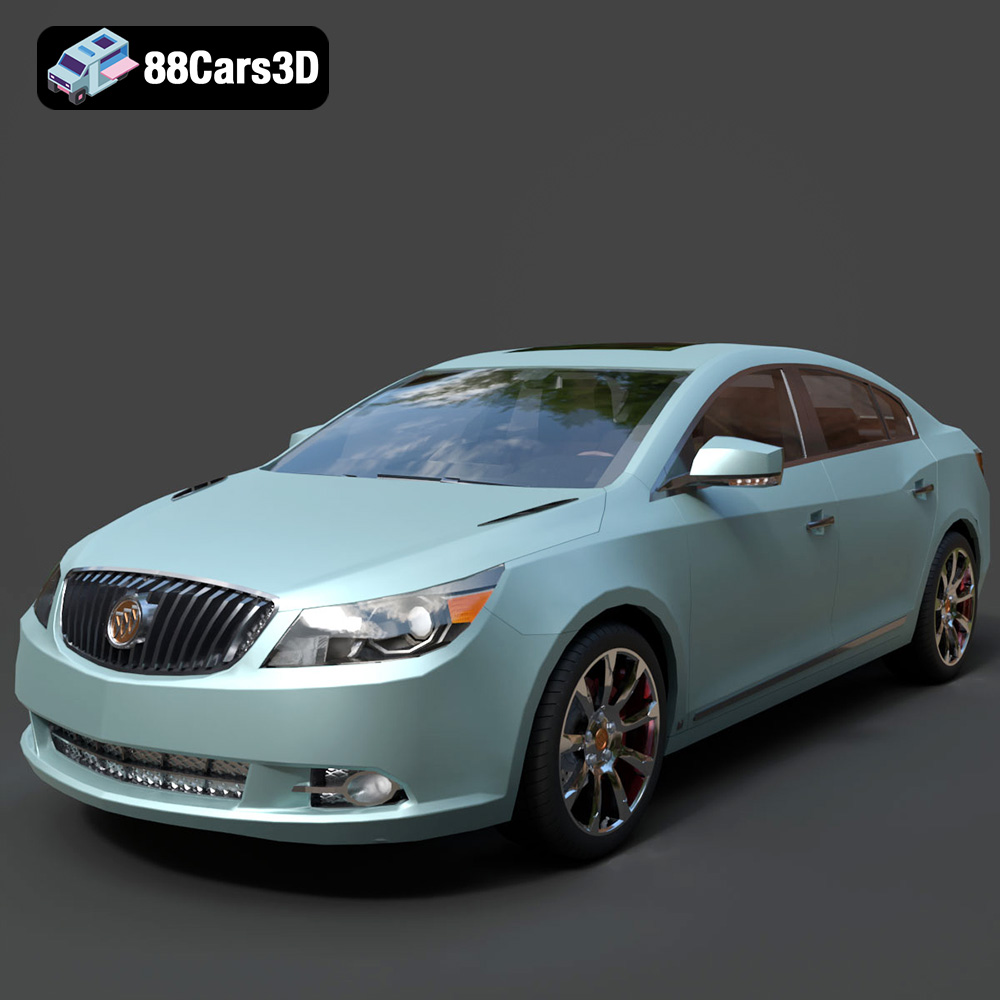
Download the Buick LaCrosse 3D Model featuring professional modeling and texture work. Includes .blend, .fbx, .obj, .glb, .stl, .ply, .unreal, and .max formats for rendering, simulation, and game development.
Price: $10.79
Texture: Yes
Material: Yes
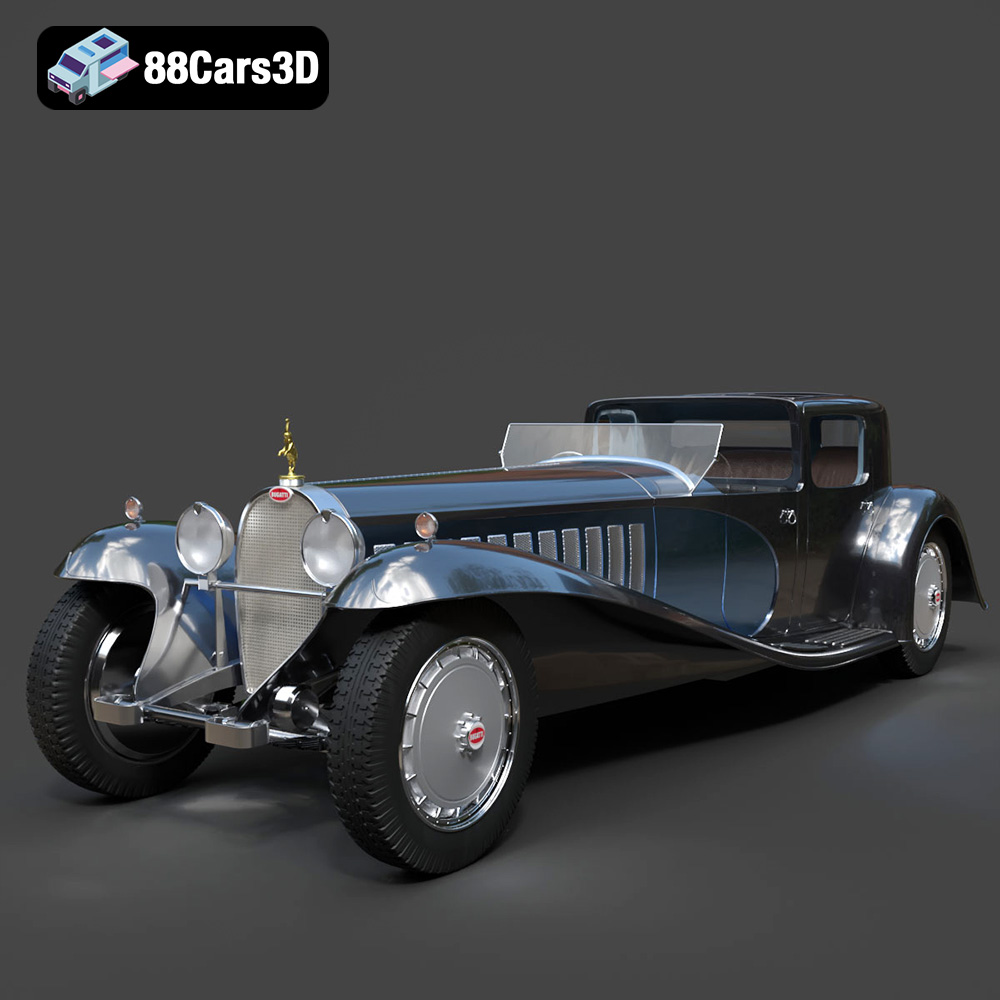
Download the Bugatti Type 41 Napoleon 3D Model featuring its iconic luxury design, detailed exterior, and opulent interior. Includes .blend, .fbx, .obj, .glb, .stl, .ply, .unreal, and .max formats for rendering, simulation, and game development.
Price: $10.79
Texture: Yes
Material: Yes
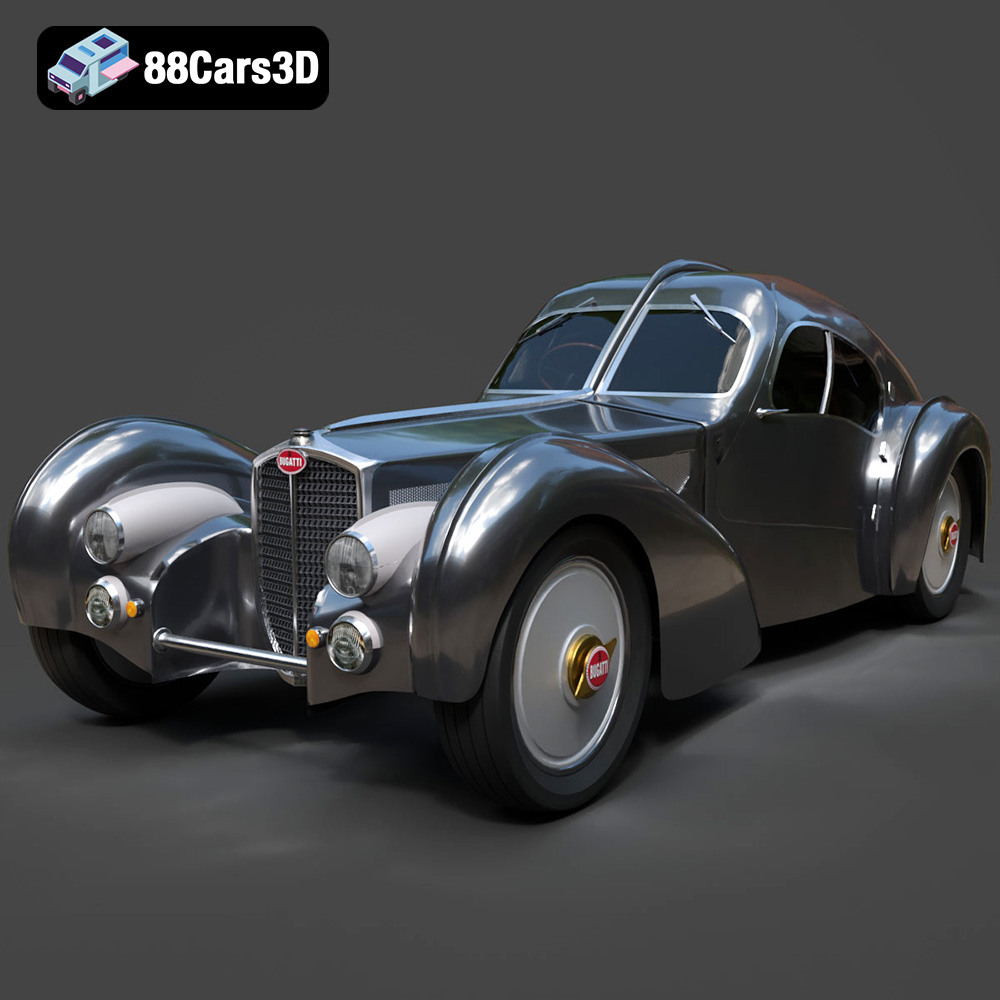
Download the Bugatti Type 57SC Atlantic Coupe 3D Model featuring its iconic streamlined body and classic design. Includes .blend, .fbx, .obj, .glb, .stl, .ply, .unreal, and .max formats for rendering, simulation, and game development.
Price: $10.79
Texture: Yes
Material: Yes
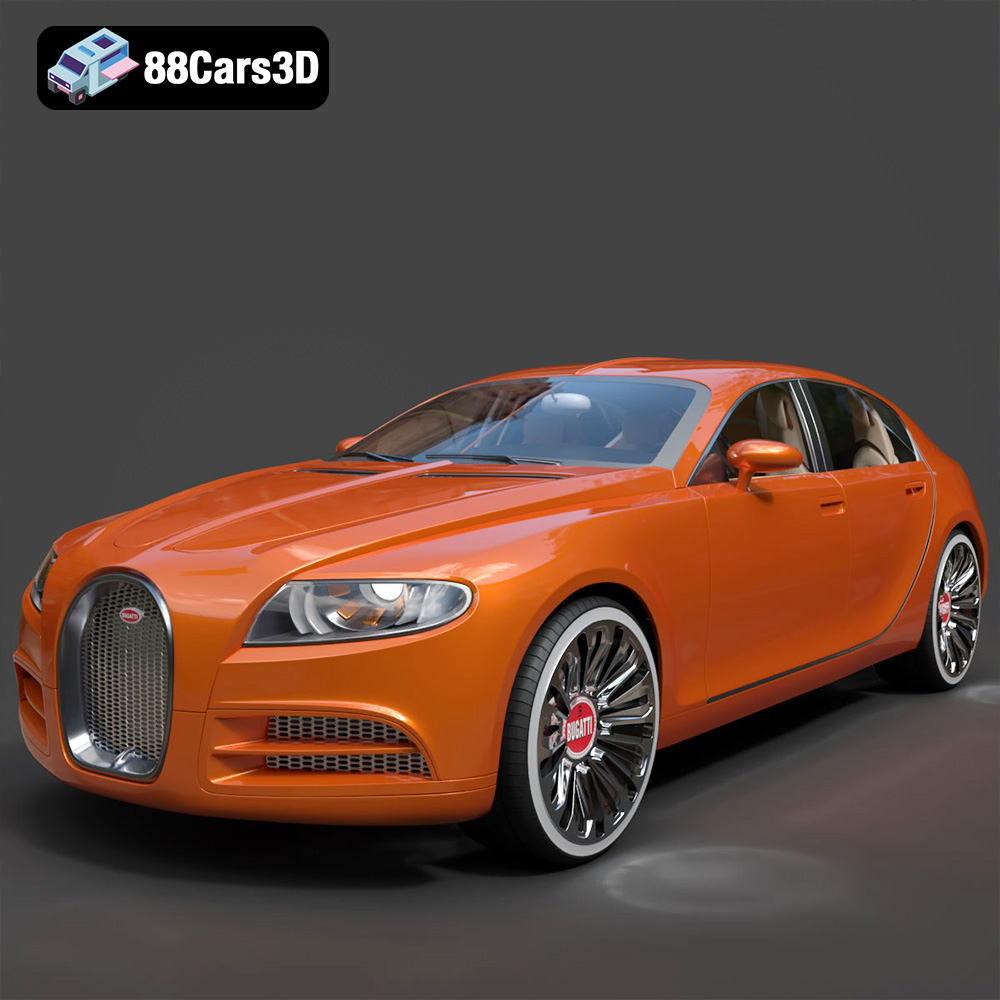
Download the Bugatti 16C Galibier-006 3D Model featuring its luxurious sedan design, detailed interior, and sophisticated exterior. Includes .blend, .fbx, .obj, .glb, .stl, .ply, .unreal, and .max formats for rendering, simulation, and game development.
Price: $10.79
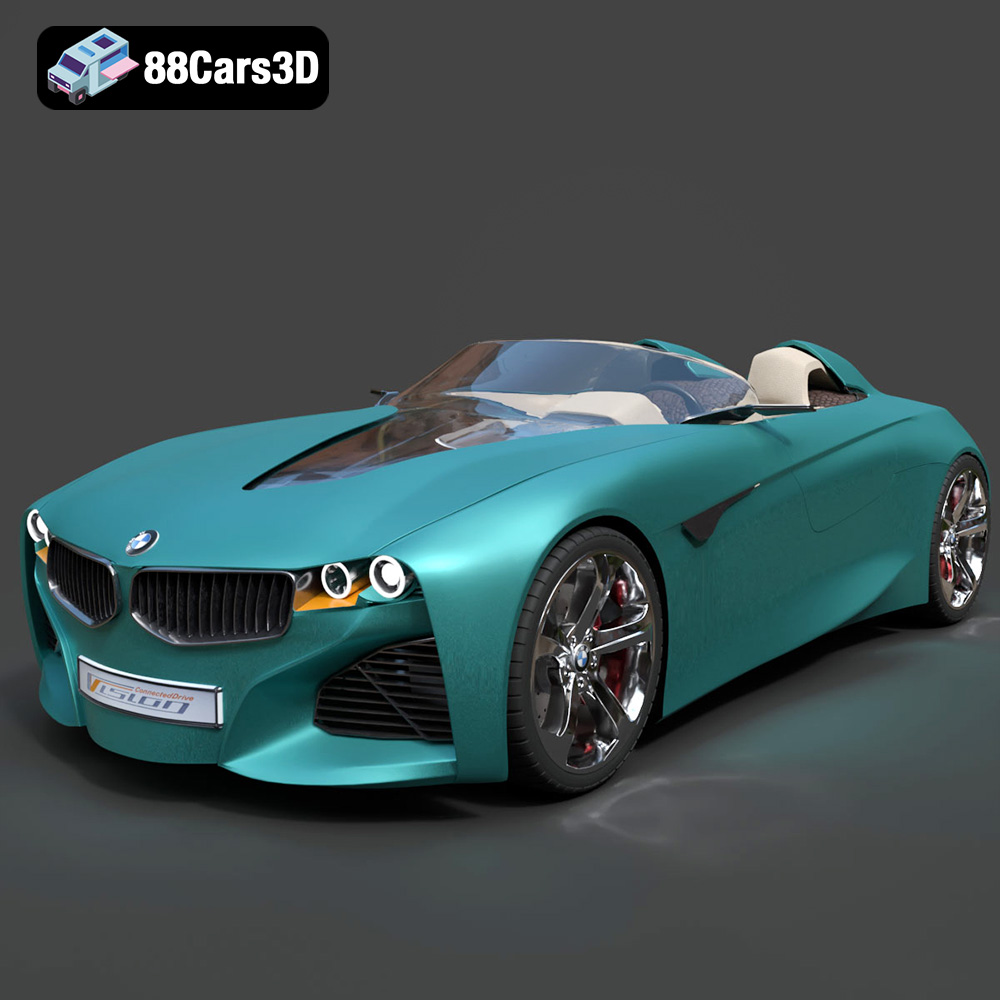
Texture: Yes
Material: Yes
Download the BMW Vision Connected Drive Concept 3D Model featuring its innovative design, advanced connectivity, and sleek aesthetics. Includes .blend, .fbx, .obj, .glb, .stl, .ply, .unreal, and .max formats for rendering, simulation, and game development.
Price: $19.79
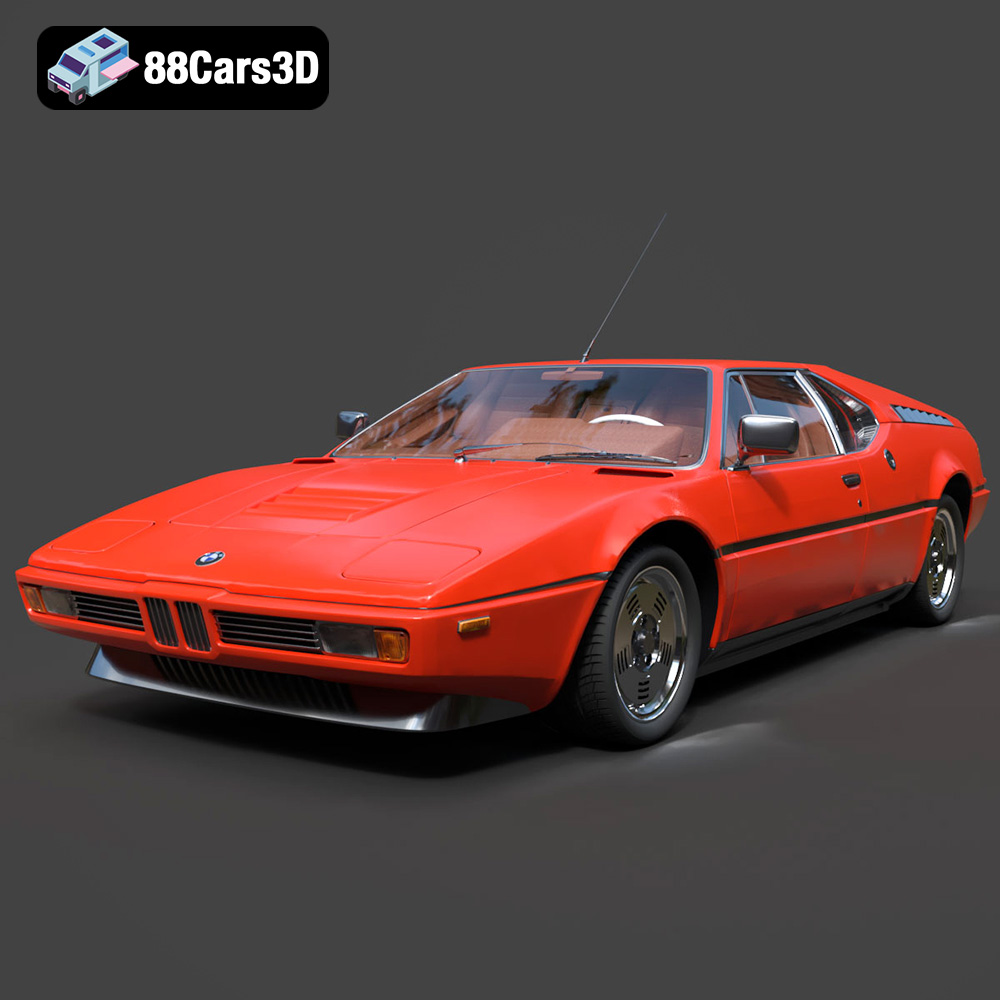
Texture: Yes
Material: Yes
Download the BMW Motorsport M1 E26 1981 3D Model featuring its iconic design, race-bred aerodynamics, and meticulously crafted details. Includes .blend, .fbx, .obj, .glb, .stl, .ply, .unreal, and .max formats for rendering, simulation, and game development.
Price: $20.79

Meta Description:
Texture: Yes
Material: Yes
Download the Cadillac CTS-V Coupe 3D Model featuring detailed exterior styling and realistic interior structure. Includes .blend, .fbx, .obj, .glb, .stl, .ply, .unreal, and .max formats for rendering, simulation, AR VR, and game development.
Price: $13.9
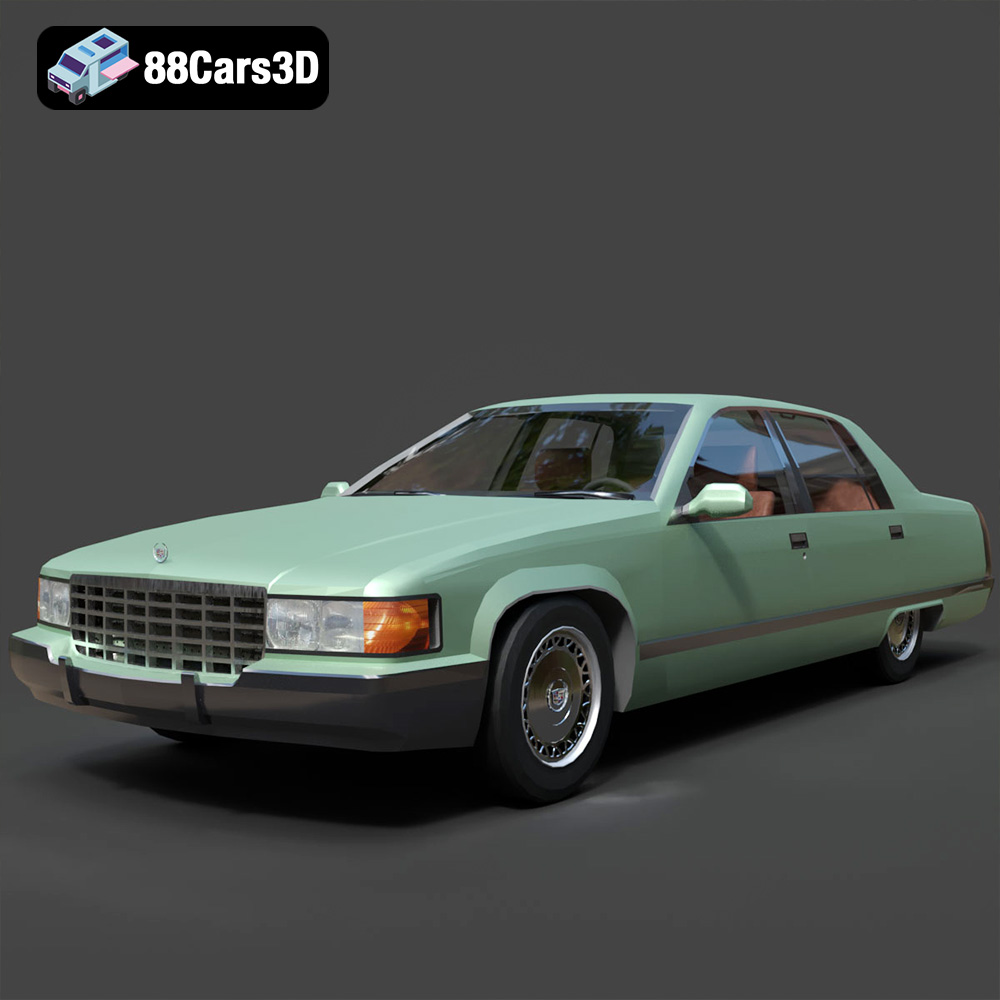
Texture: Yes
Material: Yes
Download the Cadillac Fleetwood Brougham 3D Model featuring its iconic classic luxury design and detailed exterior and interior. Includes .blend, .fbx, .obj, .glb, .stl, .ply, .unreal, and .max formats for rendering, simulation, and game development.
Price: $10.79
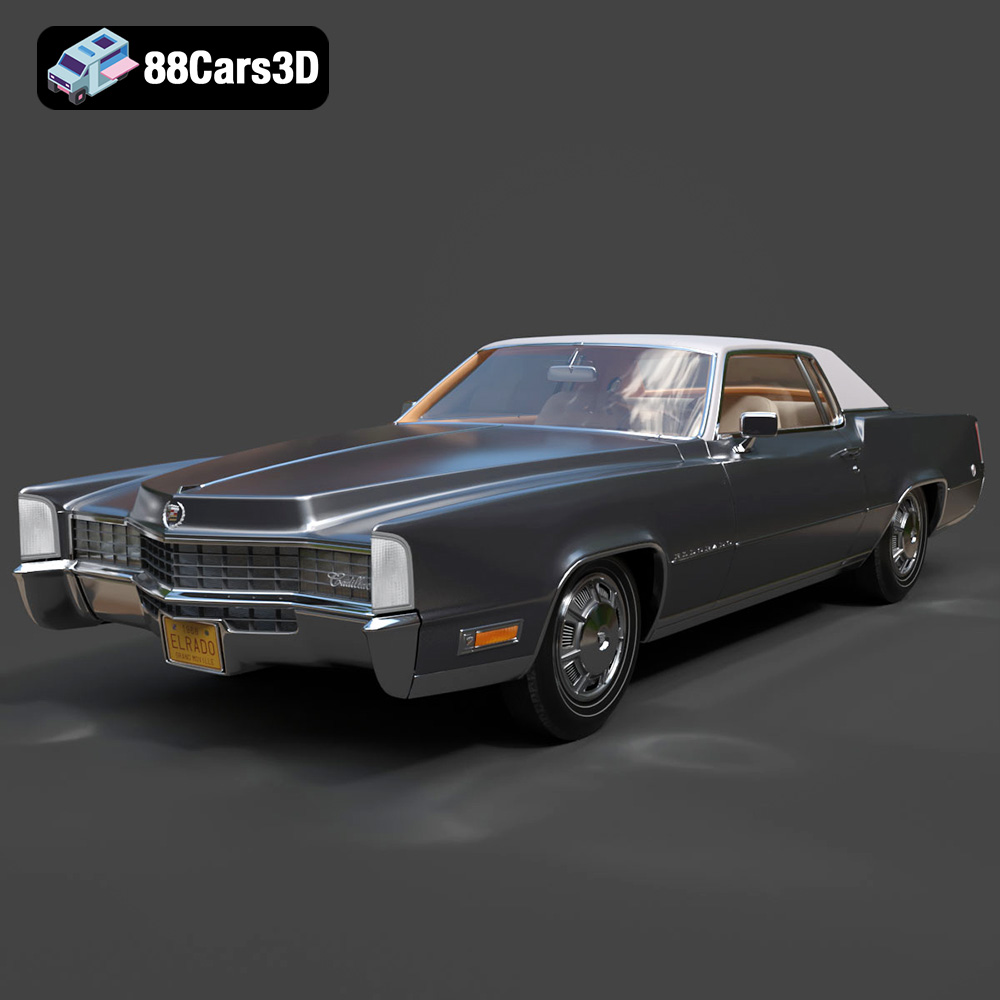
Texture: Yes
Material: Yes
Download the Cadillac Eldorado 1968 3D Model featuring its iconic elongated body, distinctive chrome accents, and luxurious interior. Includes .blend, .fbx, .obj, .glb, .stl, .ply, .unreal, and .max formats for rendering, simulation, and game development.
Price: $20.79

