⚡ FLASH SALE: Get 60% OFF All Premium 3D & STL Models! ⚡

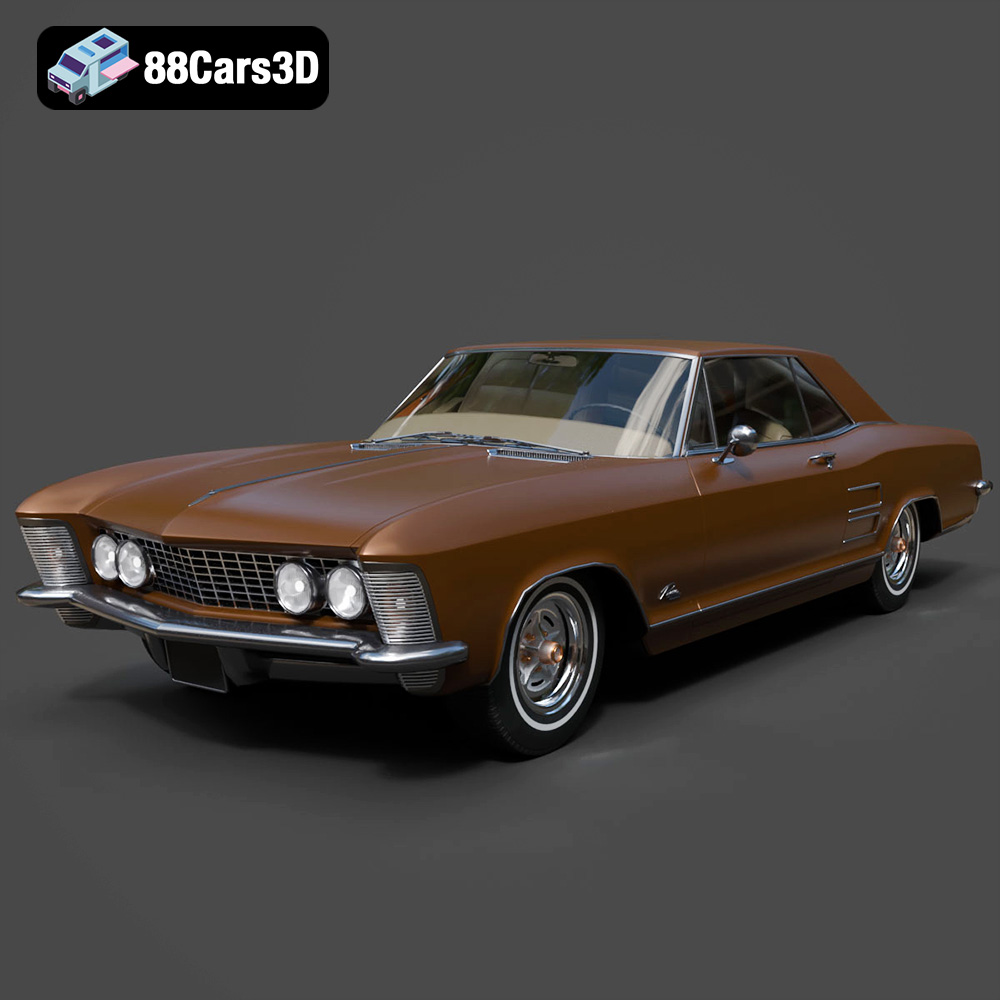
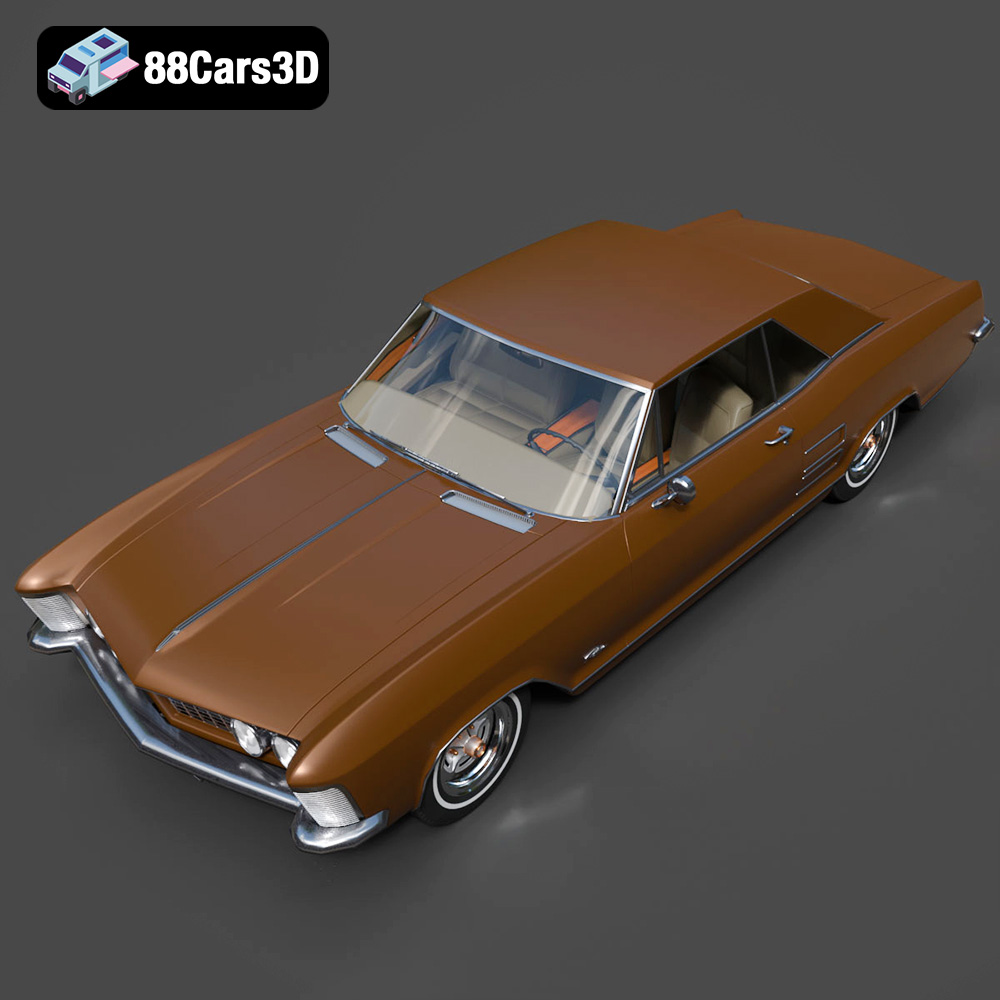
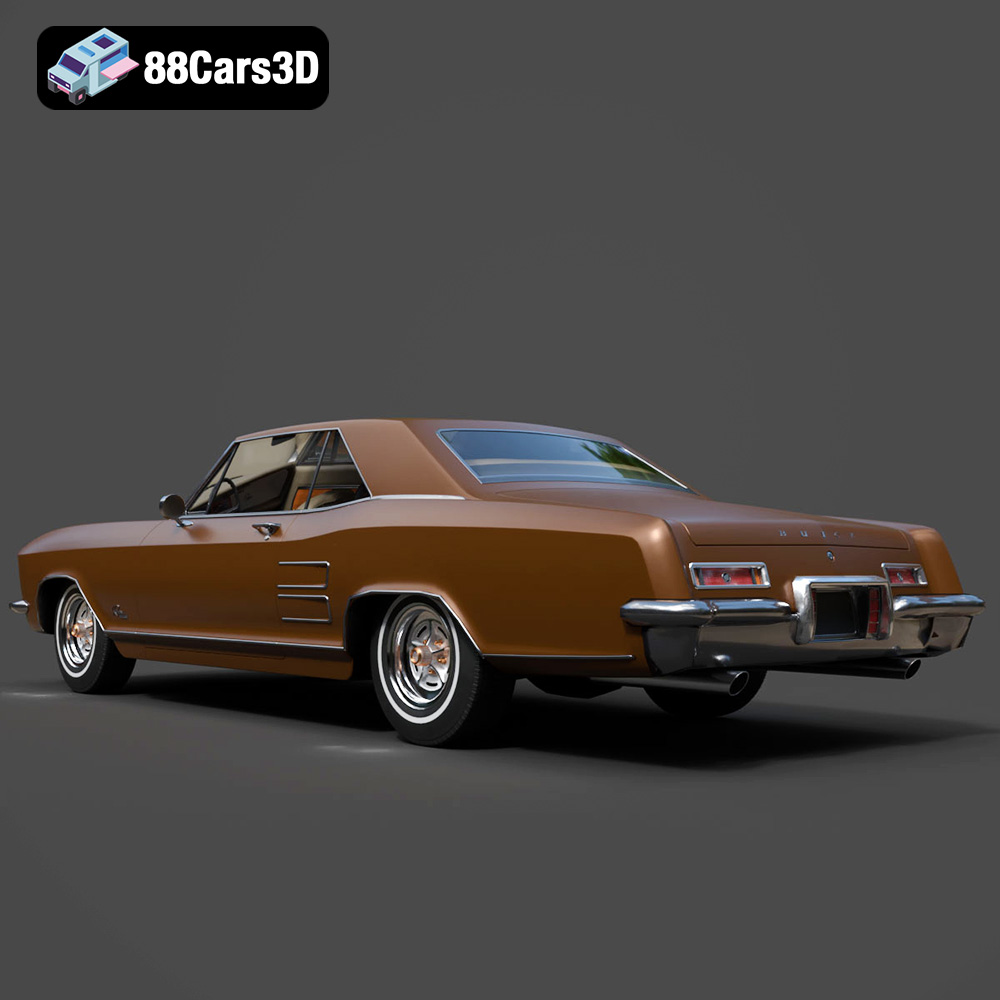
The golden age of American automotive design left an indelible mark on culture, art, and engineering. Few vehicles encapsulate that era’s blend of luxury, power, and groundbreaking style quite like the 1963 Buick Riviera. With its distinctive ‘knife-edge’ styling, muscular stance, and opulent interior, the first-generation Riviera was an instant classic, a true masterpiece of form and function.
For today’s digital artists, game developers, simulation specialists, and visualization experts, recreating such an iconic vehicle requires not just an eye for detail, but also a deep understanding of 3D modeling principles. This is where a meticulously crafted asset like the Buick Riviera 1963 3D Model from 88cars3d.com becomes invaluable. This article delves into the technical aspects of leveraging such a high-fidelity 3D car model across a spectrum of professional applications, from photorealistic rendering to real-time game development, and even cutting-edge AR/VR experiences. We’ll explore the workflows, specifications, and creative possibilities that this timeless automotive design unlocks in the digital realm.
In the vast landscape of 3D production, choosing the correct file format is often as critical as the model’s geometry itself. Each format serves a specific purpose, excelling in certain workflows while presenting limitations in others. The Buick Riviera 1963 3D Model is provided in a comprehensive suite of formats, ensuring maximum compatibility and utility across diverse projects. Understanding these formats is key to streamlining your pipeline and achieving optimal results.
The .blend file is Blender’s native format, offering a complete, editable scene. For users of Blender, this is the most flexible option. It contains not only the mesh data for the Buick Riviera 1963 but also all associated materials, textures, lighting setups, cameras, and even animation data if present. This allows for deep customization, from adjusting subdivision levels and materials to modifying the scene’s composition. Professionals often prefer the .blend format for direct manipulation, rigging, and animation within Blender, taking advantage of its powerful Cycles or Eevee render engines.
Autodesk’s .fbx (Filmbox) format has become an industry standard for exchanging 3D data between different software applications. It is particularly ideal for transferring models, animations, and even basic scene setups into game engines like Unreal Engine and Unity, as well as other 3D applications such as Maya, 3ds Max, and Cinema 4D. The .fbx format for the Buick Riviera ensures that mesh, materials, textures, and hierarchical relationships (like separated doors, hood, and trunk) are preserved during export, making it a robust choice for complex scene integration and real-time pipelines.
The .obj (Wavefront Object) format is a universal standard, widely supported by virtually every 3D application. It primarily stores geometry (vertices, normals, texture coordinates) and references to external material files (.mtl). While it is excellent for mesh data transfer and highly compatible, .obj files typically do not carry animation, rigging, or advanced material properties like PBR textures natively. For the Buick Riviera 1963, the .obj format serves as a reliable fallback for cross-software compatibility, ensuring the core geometry can be imported anywhere, with materials needing potential re-setup.
.glb (GLB format for glTF) is a relatively newer, highly optimized, and increasingly popular format designed for efficient transmission and loading of 3D scenes and models. It’s the binary version of glTF (GL Transmission Format), embedding all assets (geometry, textures, animations, materials) into a single file. This makes .glb perfect for AR (Augmented Reality), VR (Virtual Reality), and browser-based display, where file size and quick loading are paramount. The Buick Riviera 1963 3D model in .glb format is ideal for showcasing the classic car directly on websites or integrating it into mobile AR applications with minimal overhead.
The .stl (Stereolithography) format is the de facto standard for 3D printing. It represents a 3D model as a series of connected triangles, describing the surface geometry without any color, texture, or material information. For designers looking to bring the iconic Buick Riviera 1963 into the physical world, the .stl file is what they’ll use. Ensuring the mesh is ‘manifold’ (watertight, without gaps or overlapping faces) is crucial for a successful print, and a high-quality model like this one is generally prepared for such conversions.
The .ply (Polygon File Format or Stanford Triangle Format) is another widely used format for storing 3D data, particularly in fields like 3D scanning, CAD, and scientific visualization. It can store various properties for each vertex and face, including color, transparency, and normals, making it versatile for capturing detailed scan data or for precise engineering analysis. For complex industrial applications or detailed archaeological reconstructions, the Buick Riviera in .ply offers a robust, precision mesh representation.
The inclusion of a dedicated .unreal project setup for the Buick Riviera 1963 3D model is a significant advantage for game developers. This indicates that the asset is not merely an .fbx export, but potentially includes a pre-configured Unreal Engine project with materials, textures, and perhaps even basic blueprints optimized for real-time environments. This dramatically reduces setup time, allowing developers to drop the classic car directly into their scenes, leveraging Unreal’s advanced rendering and physics systems immediately.
Finally, the .max file is the native project format for Autodesk 3ds Max, a powerhouse in architectural visualization, rendering, and animation. Like the .blend file for Blender, the .max file provides a fully editable scene, including the Buick Riviera’s geometry, V-Ray or Corona materials, lighting, and camera setups. This allows 3ds Max users complete control over every aspect of the model, making it ideal for high-end cinematic renders, complex animations, and detailed scene compositions.
The provision of this extensive range of formats for the Buick Riviera 1963 3D Model underscores its versatility and the commitment to professional workflows. Whether your project demands ultimate flexibility in a native DCC application, seamless integration into a game engine, or a specialized format for AR/VR or 3D printing, this model has you covered.
Automotive rendering is a specialized discipline that blends artistic vision with technical precision. It’s about more than just a pretty picture; it’s about evoking emotion, highlighting design intricacies, and creating a believable presence. The Buick Riviera 1963 3D Model provides an exceptional foundation for these endeavors.
Achieving photorealism starts with accurate geometry and extends through sophisticated material work and lighting. The Riviera’s iconic ‘razor edge’ body lines and muscular stance are accurately recreated in the 3D model, providing the necessary foundation. For rendering, artists can leverage Physically Based Rendering (PBR) workflows to accurately simulate how light interacts with the car’s surfaces. This means carefully crafting materials for:
Lighting is equally critical. High Dynamic Range Imagery (HDRI) environments provide realistic global illumination, while targeted area lights can emphasize specific contours or chrome details. By carefully adjusting camera angles and depth of field, artists can produce cinematic stills and animations that transport viewers back to the 1960s.
The inclusion of native .max and .blend files for the Buick Riviera 1963 3D model greatly facilitates advanced rendering workflows. In 3ds Max, professionals can utilize powerful render engines like V-Ray or Corona Renderer. These engines offer extensive control over global illumination, caustics, and volumetric effects, allowing for highly nuanced lighting and material setups. The separated components (doors, hood, trunk) are particularly useful for creating detailed animation sequences, such as showcasing the engine bay or the luxurious interior. Similarly, Blender users can harness Cycles for unbiased path tracing or Eevee for real-time rendering, leveraging the provided materials and scene organization to quickly produce stunning visuals.
Beyond static renders, the organized hierarchy with properly named objects and pivot points in this model streamlines animation. Whether it’s a simple turntable animation for a product showcase or a complex cinematic sequence involving opening doors and dynamic camera movements, the asset is built for efficiency, allowing artists to focus on storytelling rather than technical setup. This attention to detail is a hallmark of high-quality 3D car models found on platforms like 88cars3d.com.
The demand for realistic and engaging experiences in video games, simulations, and interactive applications has never been higher. Integrating a classic like the Buick Riviera 1963 into these real-time environments requires a delicate balance between visual fidelity and performance optimization. The Buick Riviera 1963 3D Model is engineered with these considerations in mind.
For game developers, the quality of a 3D model is measured not only by its looks but also by its efficiency. High-fidelity game assets, like this Buick Riviera, need to be optimized for real-time rendering without compromising visual impact. Key optimization strategies include:
The inclusion of .fbx and a dedicated .unreal project setup signifies that this model is pre-prepared for seamless integration into Unreal Engine, a leading platform for cutting-edge game development. Similarly, the .fbx format works effortlessly with Unity, enabling developers to quickly implement the classic car into their racing games, open-world simulations, or virtual car showrooms.
Imagine cruising down a meticulously recreated 1960s highway in a virtual Buick Riviera, feeling the rumble of its engine, and admiring its razor-sharp lines. This level of immersion is achievable with a high-quality game asset. Developers can integrate advanced vehicle physics systems, realistic suspension, and custom shaders that mimic the car’s unique paint and chrome in real time. The separate components for doors, hood, and trunk can be rigged for in-game interaction, allowing players to open them, inspect the basic engine block, or explore the detailed interior.
Beyond traditional racing games, the Buick Riviera 1963 3D Model can be a centerpiece in various interactive experiences:
The optimized mesh quality ensures that even with high visual fidelity, the model will run efficiently across various hardware configurations, providing a smooth and captivating user experience.
The utility of a premium 3D asset like the Buick Riviera 1963 extends far beyond traditional rendering and game development. Its precise engineering and detailed representation make it suitable for a new generation of immersive and physical applications.
Augmented Reality (AR) and Virtual Reality (VR) are transforming how we interact with digital content. For industries from automotive design to marketing, AR/VR offers unparalleled opportunities to showcase products and create engaging experiences. The Buick Riviera 1963 3D Model, particularly in its .glb format, is perfectly poised for these applications.
The model’s accurate real-world scale is a significant advantage here, as it ensures that the virtual representation feels authentic and correctly proportioned when superimposed onto the real world or experienced in a fully immersive environment.
Beyond visual splendor, the technical robustness of the Buick Riviera 1963 3D Model lends itself to analytical and physical applications.
The versatility of the Buick Riviera 1963 3D Model truly makes it a multi-purpose asset, capable of meeting the demands of diverse and evolving industries.
In the competitive world of 3D production, time is money, and quality is paramount. Investing in a professionally crafted 3D asset like the Buick Riviera 1963 3D Model from 88cars3d.com offers a significant technical edge, streamlining workflows and elevating the final output.
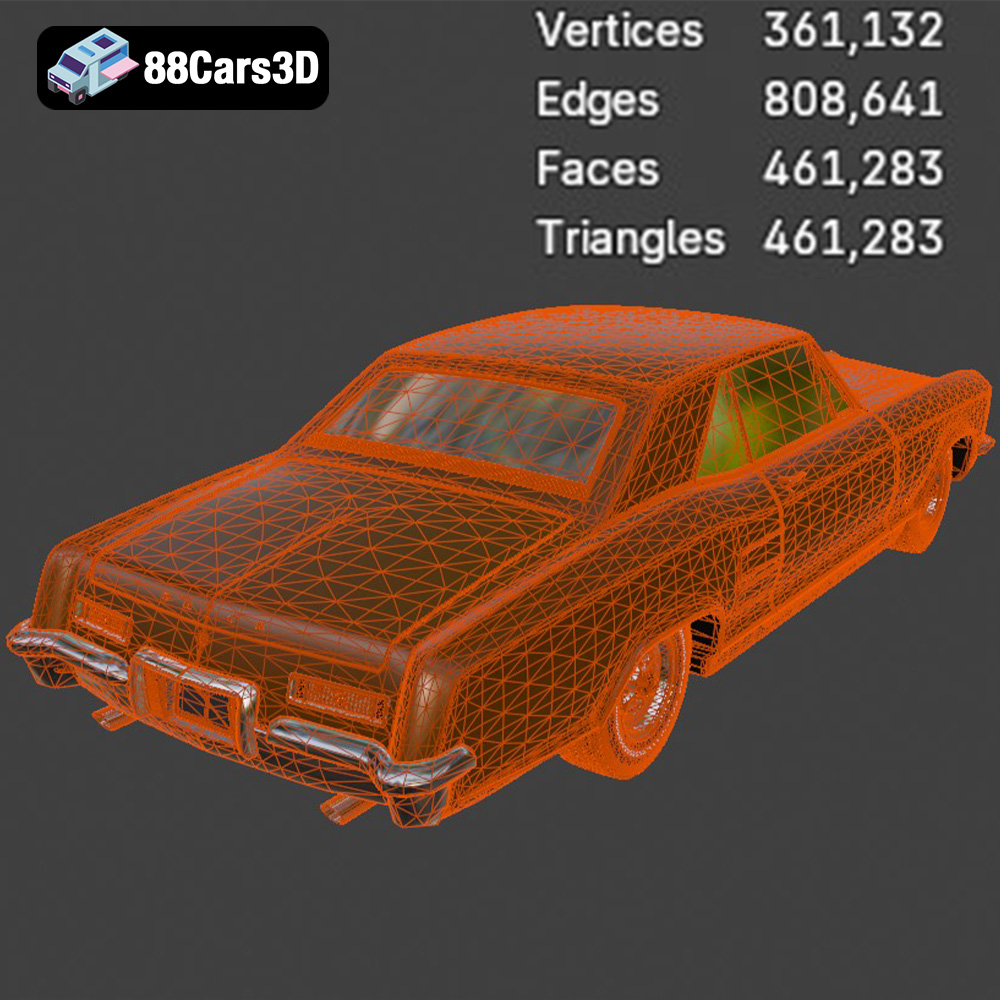
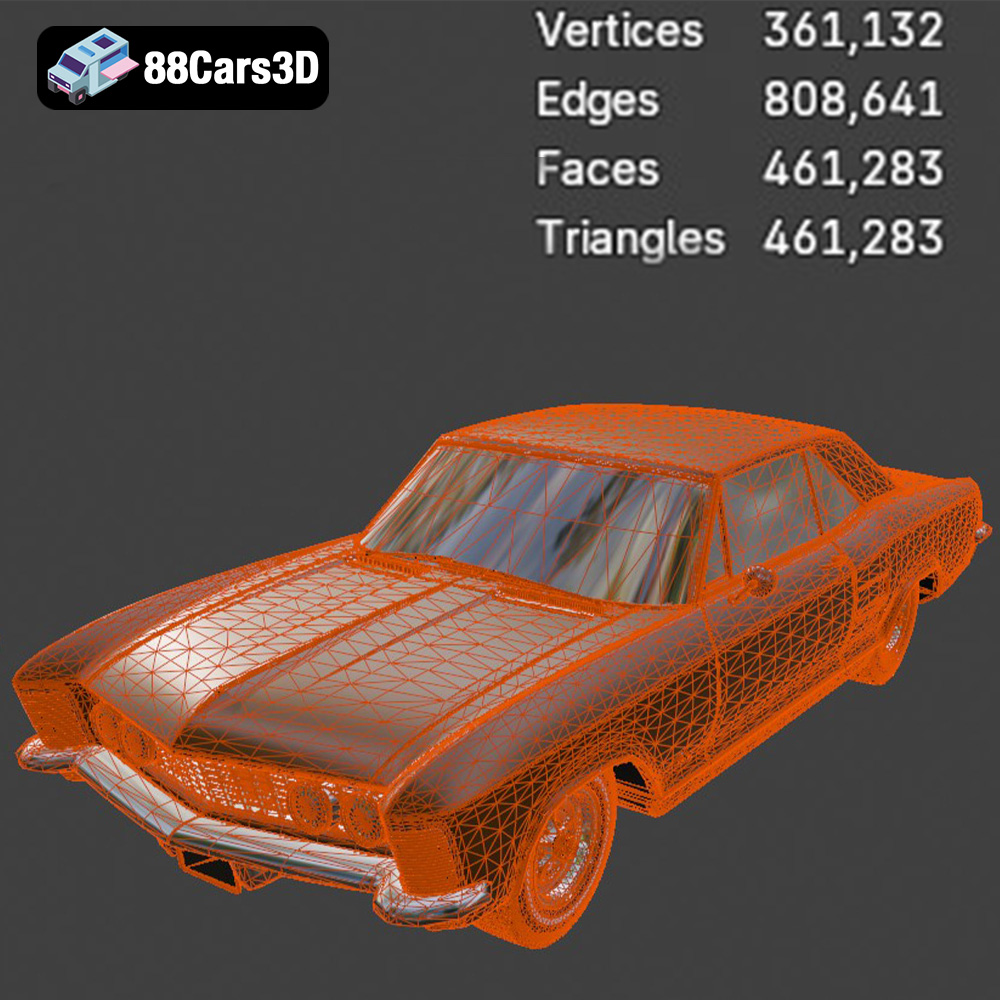
One of the most critical technical advantages of this model is its clean, quad-dominant topology. This is not merely an aesthetic choice; it has profound implications for every stage of the 3D pipeline:
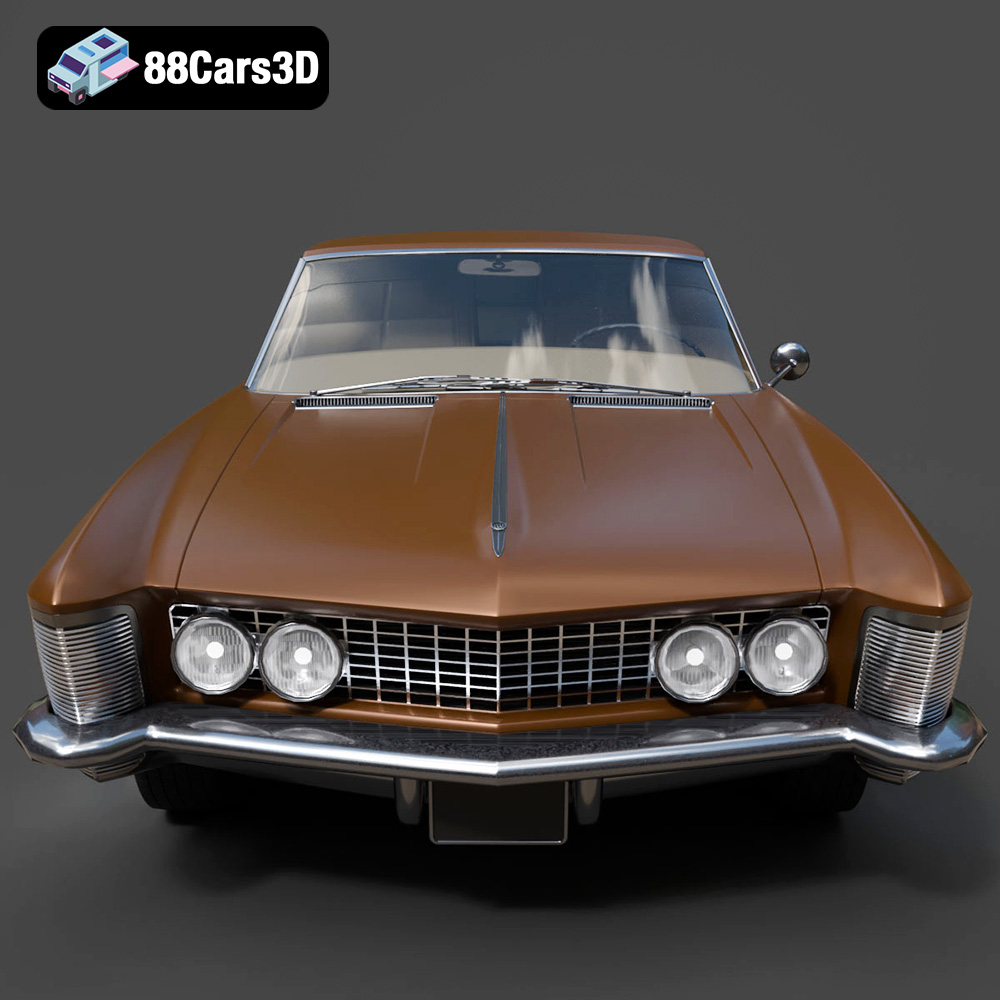
Furthermore, the model’s accurate real-world scale ensures seamless integration into existing scenes and environments. There’s no need for tedious rescaling or adjustments, which saves valuable production time and prevents inconsistencies when combining assets from different sources. The precise recreation of the Riviera’s dimensions, from its signature quad headlights to its detailed seating upholstery, reflects a commitment to authenticity.
Professional 3D artists know that a well-organized asset is a joy to work with. The Buick Riviera 1963 3D Model exemplifies this with its logically organized hierarchy, properly named objects, and correctly placed pivot points. This meticulous organization translates directly into time savings:
Ultimately, a high-quality 3D car model from a reputable source like 88cars3d.com is not just a digital asset; it’s a foundation for creative excellence. It empowers professionals to achieve stunning results efficiently, freeing them to focus on the artistic and technical challenges unique to their projects rather than remedial modeling tasks.
The 1963 Buick Riviera stands as an automotive icon, a testament to a bygone era of unparalleled style and engineering prowess. Bringing such a legend into the digital age requires a 3D model that honors its legacy with meticulous detail and technical sophistication. The Buick Riviera 1963 3D Model delivers precisely that, offering an unparalleled level of accuracy, versatility, and optimization for a wide range of professional applications.
From crafting breathtaking photorealistic renders in 3ds Max or Blender to powering immersive real-time experiences in Unreal Engine, or even facilitating innovative AR/VR showcases and physical 3D prints, this model is built for performance and creative freedom. Its comprehensive file format support, clean topology, and organized structure are hallmarks of a premium asset designed to integrate seamlessly into any demanding production pipeline.
For any professional seeking to elevate their automotive rendering projects, enhance game development, or create cutting-edge simulations, the Buick Riviera 1963 3D Model offers a robust and reliable solution. It’s more than just a car; it’s a piece of history, perfectly translated into a digital medium, ready to ignite your next creative endeavor. Explore this exceptional model and a wide range of other high-quality 3D car models at 88cars3d.com, your trusted source for premium digital automotive assets.
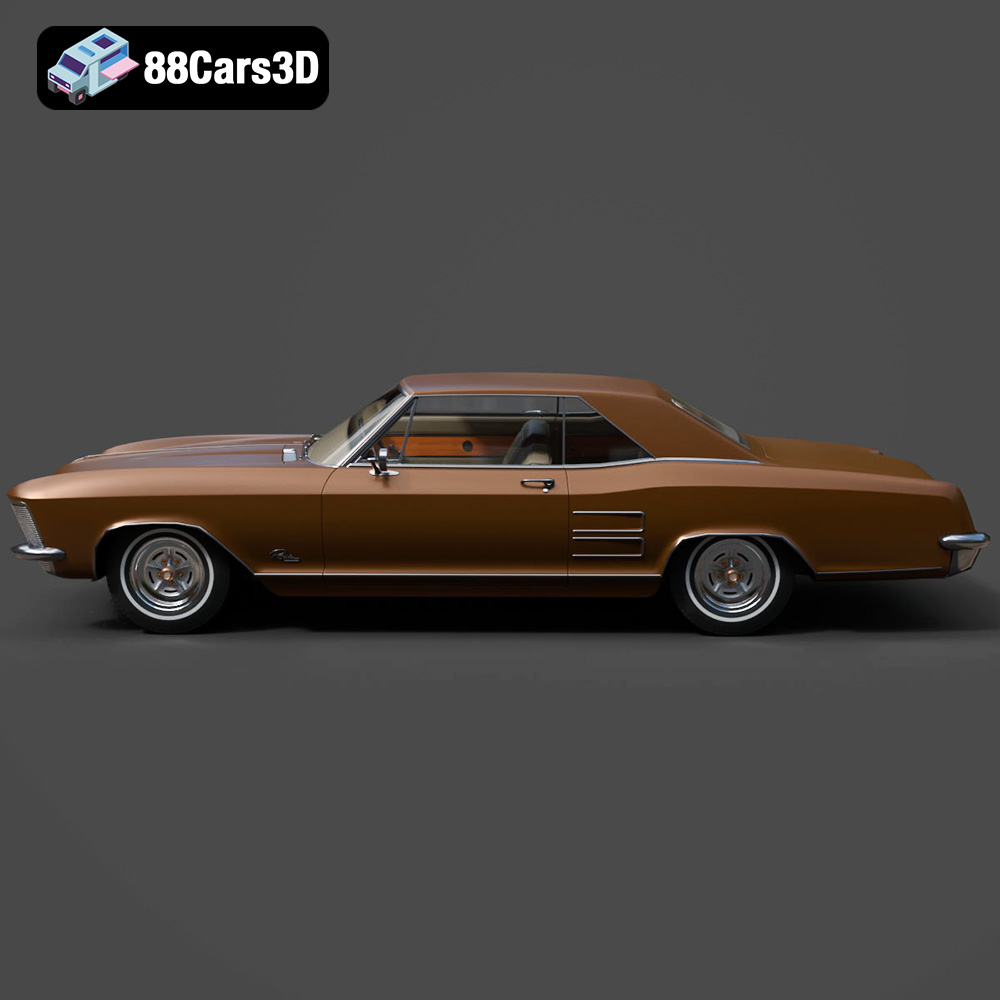
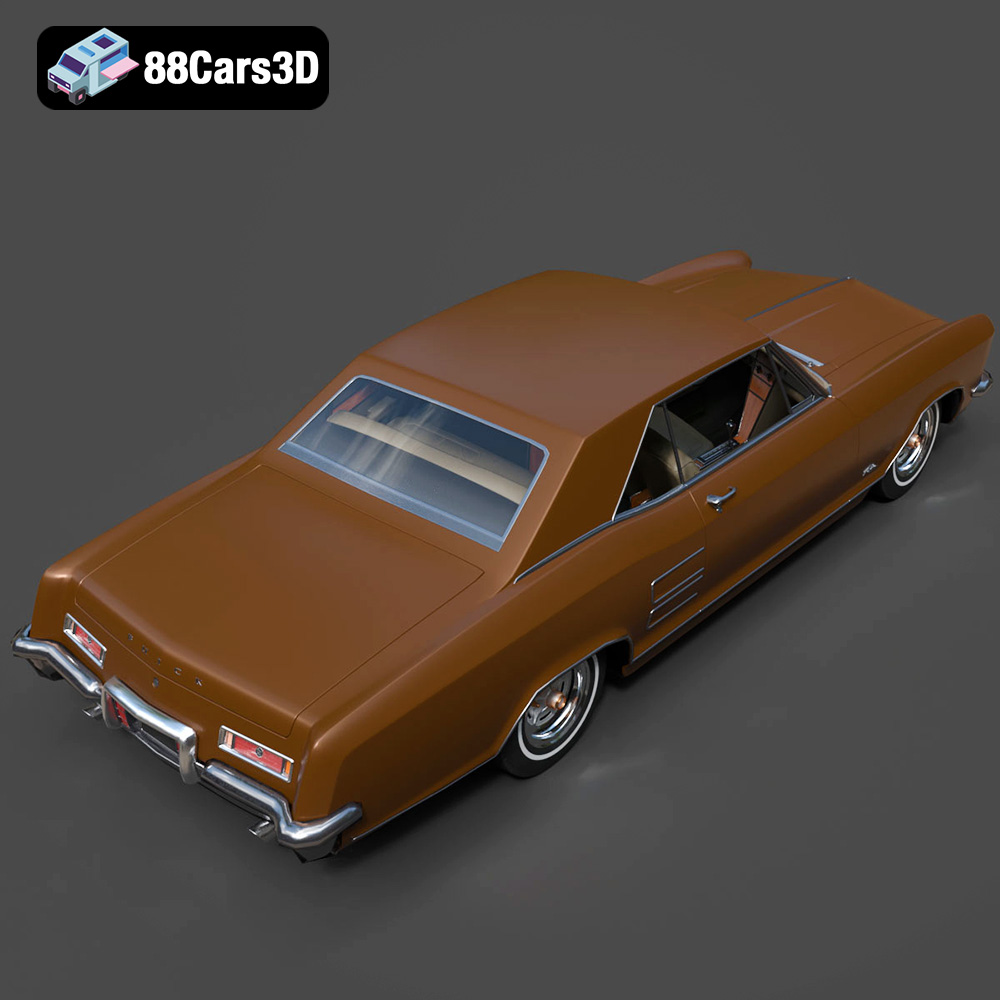
Step back into the golden age of American automotive design with this meticulously crafted 3D model of the iconic Buick Riviera 1963. This model captures the distinctive elegance and powerful presence of the first-generation Riviera, renowned for its unique ‘knife-edge’ styling and luxury performance. Built with clean geometry and a balanced level of detail, it is perfect for high-quality rendering, realistic animation sequences, immersive simulations, and robust game development projects.
$10.79
.buick.riviera.1963.classiccar.coupe.musclecar.rendering.simulation.gameasset.arvr.blend.fbx.obj.glb.stl.ply.unreal.max