⚡ FLASH SALE: Get 60% OFF All Premium 3D & STL Models! ⚡

The automotive industry is in a perpetual state of innovation, not just in vehicle design and engineering, but also in how it presents and sells its products. Gone are the days when static images and pre-rendered videos sufficed. Today, customers and professionals demand immersive, real-time experiences that allow for unparalleled customization and exploration. This is where Unreal Engine shines, transforming the way we interact with virtual vehicles.
Unreal Engine, a powerhouse for real-time rendering, offers an unparalleled toolkit for creating photorealistic and highly interactive automotive configurators. From showcasing intricate design details to enabling dynamic color changes and virtual test drives, Unreal Engine empowers artists and developers to build captivating experiences that resonate with a discerning audience. This comprehensive guide will walk you through the essential steps and advanced techniques required to develop your own cutting-edge automotive configurator, leveraging features like Nanite, Lumen, and Blueprint scripting. Whether you’re an Unreal Engine developer, a 3D artist, or an automotive designer, get ready to unlock the full potential of real-time visualization and elevate your projects to cinematic quality. Platforms like 88cars3d.com offer optimized 3D car models that serve as an excellent starting point for such ambitious projects, ensuring you begin with high-fidelity assets ready for the Unreal pipeline.
The success of any interactive automotive configurator hinges on a solid foundation, starting with your Unreal Engine project setup and the quality of your 3D assets. A well-configured project ensures optimal performance and visual fidelity, while high-quality models are indispensable for achieving photorealistic results. Beginning with a clean, optimized scene will save countless hours down the line.
When you create a new Unreal Engine project, consider starting with the “Blank” template and then enabling necessary plugins, or if available, explore the “Automotive Design” template for pre-configured settings tailored for visualization. Crucial project settings to enable for high-fidelity rendering include **Ray Tracing** for realistic lighting and reflections, **Lumen** for real-time global illumination, and **Virtual Shadow Maps** for extremely detailed and performant shadows. Ensure your project’s default rendering settings are configured for desktop or desired high-end platforms to fully leverage Unreal Engine’s capabilities. For more detailed guidance on project settings, the official Unreal Engine documentation (https://dev.epicgames.com/community/unreal-engine/learning) is an invaluable resource.
The visual core of your configurator is the 3D car model itself. The quality of this asset directly impacts the final realism and the ease of your development process. Low-quality models with messy topology, poor UVs, or inconsistent scaling will inevitably lead to headaches and compromise visual integrity. When sourcing automotive assets from marketplaces such as 88cars3d.com, look for models explicitly designed for real-time engines, often featuring clean, quad-based topology, proper UV mapping for textures, and physically based rendering (PBR) ready materials.
Before importing into Unreal Engine, it’s often beneficial to pre-process your models in a DCC tool like Blender, Maya, or 3ds Max. Key steps include:
* **Units and Scale:** Ensure the model is correctly scaled to real-world units (e.g., centimeters in Unreal Engine).
* **Origin:** Set the pivot point (origin) of each individual mesh part (e.g., center of a wheel, hinge point for a door) appropriately, as this dictates rotation and transformation behavior within Unreal.
* **Mesh Cleanup:** Remove any unnecessary geometry, isolated vertices, or non-manifold edges.
* **Part Separation:** Crucially, divide the car into its interactive components. The car body, individual wheels, doors, hood, trunk, interior components, and any swappable parts (e.g., spoilers, mirrors) should be separate meshes. This allows for individual material changes, animation, and LOD management. A hero asset car model might range from 200,000 to over 1,000,000 triangles, especially when leveraging Nanite.
Once your models are meticulously prepared, the next step is to import them into Unreal Engine. The FBX format remains a robust choice, offering comprehensive support for mesh data, materials, and animations. When importing, pay attention to the following settings in the FBX Import Options dialog:
* **Static Mesh:** Ensure this is selected for all car components.
* **Combine Meshes:** Generally, uncheck this if you want to maintain your separate car parts from your DCC tool.
* **Material Import Method:** Choose “Do Not Create Materials” if you plan to create PBR materials from scratch in Unreal, or “Create New Materials” if your FBX includes basic material data you want to convert.
* **Convert Scene Unit:** Check this to ensure correct scaling.
For projects targeting interoperability and future-proofing, consider the **USD (Universal Scene Description)** format. Unreal Engine has robust USD support, allowing you to import complex scene hierarchies, materials, and animations, making it an excellent choice for collaborative workflows and consistent asset pipelines. USDZ is particularly relevant for AR applications.
Upon import, perform initial checks:
* Verify that all meshes are imported correctly with their respective material slots.
* Inspect UV maps to ensure they are present and unwrapped efficiently for texture application.
* For high-polygon meshes, immediately consider enabling **Nanite Virtualized Geometry**. Nanite dramatically simplifies the asset pipeline by allowing you to import incredibly dense meshes (millions of triangles) without worrying about traditional polygon budget constraints or manual LOD generation. This is a game-changer for automotive visualization, enabling unprecedented geometric detail on car models without compromising real-time performance.
Achieving photorealistic visuals in an automotive configurator demands an expert understanding and application of physically based rendering (PBR) materials. PBR workflows ensure that your virtual car materials react to light in a physically accurate way, mimicking real-world surfaces and creating a convincing sense of presence.
Unreal Engine’s Material Editor provides a powerful node-based interface for crafting intricate and realistic materials. At its core, PBR materials typically rely on a set of texture maps:
* **Base Color (or Albedo):** Defines the color of the surface without any lighting information.
* **Roughness:** Controls how rough or smooth a surface is, affecting the crispness and spread of reflections.
* **Metallic:** Determines if a surface is a metal (value of 1) or a dielectric (value of 0), influencing how light is reflected and absorbed.
* **Normal Map:** Adds detailed surface geometry without increasing polygon count, faking bumps and grooves.
* **Ambient Occlusion (AO):** Simulates self-shadowing in crevices, adding depth.
Car paint is notoriously complex to replicate due to its multi-layered nature, which often includes a base coat, metallic flakes, and a clear coat. Unreal Engine allows you to simulate these effects with remarkable fidelity.
Here’s a simplified approach for a high-quality car paint shader:
1. **Base Layer:** Start with your Base Color, Roughness, and Metallic inputs.
2. **Metallic Flakes:** Simulate metallic flakes by blending a small, high-frequency normal map or noise texture into the material’s Normal input, combined with a subtle metallic and roughness variation.
3. **Clear Coat:** Unreal Engine offers a dedicated “Clear Coat” input in the material properties. Connect a Clear Coat Roughness value (typically low, around 0.05-0.15 for glossy finish) and a Clear Coat Normal (often the same as the base normal or a slightly blurred version). This simulates the transparent, reflective layer on top of the base paint. You can further enhance realism by adding **Anisotropy**, which makes reflections stretch in a particular direction, a common characteristic of brushed metals or specific car finishes. Use a texture or parameter to drive the anisotropic direction.
4. **Layered Materials:** For even more advanced effects like dirt, scratches, or wear, consider using Material Functions and Layered Materials. This allows you to stack different material effects, blending them based on mask textures or procedural parameters, offering modularity and flexibility. Ensure your texture resolutions are appropriate – 4K or 8K for primary body textures, and 2K for less critical parts, can provide excellent detail.
Beyond the exterior, the interior of a car configurator demands meticulous material work. Materials like leather, fabric, plastics, and carbon fiber each have distinct PBR properties.
* **Leather:** Requires detailed normal maps to capture grain, and a roughness map with subtle variations to simulate natural wear and pores. Subsurface Scattering (SSS) can be used minimally for very thin leathers or synthetics to allow light to penetrate slightly.
* **Fabric:** Utilizes intricate normal and roughness maps to convey weave patterns and diffuse scattering.
* **Plastics:** Vary widely in roughness and metallic properties (often non-metallic). Use subtle normal maps for texture.
* **Carbon Fiber:** Achieves its characteristic look with highly detailed normal maps that capture the weave, combined with specific metallic and roughness values, often with a clear coat layer on top.
For tires, focus on realistic rubber properties:
* **Tire Sidewall:** Requires high-resolution normal maps for text, branding, and subtle bulging, along with a rough, non-metallic appearance.
* **Tread:** Utilizes detailed height maps or normal maps for the intricate tread patterns, crucial for visual authenticity and even potential physics interactions.
* **Decals:** For badges, logos, and warning labels, use decal materials with appropriate opacity and normal maps applied to their specific locations on the car model.
Lighting is the ultimate sculptor of realism in any real-time scene, and it’s especially critical for automotive visualization. It defines the mood, highlights design curves, and brings out the material properties of your virtual vehicle. Unreal Engine provides a sophisticated suite of lighting and rendering features to achieve breathtaking visuals.
One of Unreal Engine 5’s most transformative features for automotive visualization is **Lumen**, its fully dynamic global illumination and reflections system. Lumen calculates indirect lighting and reflections in real-time, eliminating the need for complex light baking workflows and enabling unparalleled flexibility for configurators. This means that as you change car colors, swap environments, or open doors, the indirect lighting and reflections update instantly and accurately.
To leverage Lumen effectively:
* Enable Lumen in your Project Settings under “Rendering” -> “Global Illumination” and “Reflections.”
* Adjust Lumen’s quality settings based on your target platform. Higher settings yield better fidelity but require more performance. Experiment with “Lumen Scene Lighting Quality” and “Lumen Scene Detail” for optimal balance.
* Emissive materials (e.g., car headlights, interior screens) will naturally contribute to Lumen’s global illumination, subtly lighting the surrounding environment.
* Lumen is superior to traditional baked lightmaps for configurators because of its dynamic nature, allowing for infinite variations without re-baking. For more detailed insights, refer to the official Unreal Engine documentation on Lumen (https://dev.epicgames.com/community/unreal-engine/learning).
Beyond Lumen, a combination of traditional and advanced lighting techniques ensures your car looks its best:
* **HDRI (High Dynamic Range Image) Lighting:** Use a high-quality HDRI environment map with a **Skylight** to provide realistic ambient lighting and highly accurate reflections. HDRIs capture real-world lighting conditions, making them ideal for automotive presentations, mimicking studio setups or outdoor environments.
* **Directional Light:** Simulates the sun, providing strong shadows and directional light. Use it in conjunction with **Virtual Shadow Maps** for extremely sharp, high-resolution shadows that react accurately to fine details.
* **Rect Lights (Area Lights):** Essential for studio-style setups, Rect Lights mimic softbox lighting, providing broad, even illumination and beautiful highlights on reflective surfaces. Place them strategically to emphasize car body curves.
* **Ray Tracing:** While Lumen handles global illumination, enabling explicit Ray Tracing features for **reflections**, **shadows**, and **ambient occlusion** (RTAO) can push visual fidelity even further, delivering pixel-perfect accuracy for these effects, albeit at a higher performance cost.
* **Post-Process Volume:** This is where you fine-tune the final look of your scene. Key settings include:
* **Exposure:** Adjust to control overall brightness.
* **Bloom:** Adds glow to bright areas, enhancing the sense of realism for headlights or emissive screens.
* **Tone Mapping & Color Grading:** Apply cinematic looks, adjust contrast, saturation, and color balance.
* **Vignette:** Darkens image corners for a subtle photographic effect.
* **Lens Flares & Dirt Mask:** Add realistic camera imperfections.
Mastering these lighting and post-processing techniques will allow you to create stunning, professional-grade visualizations that truly showcase your 3D car models.
The heart of any automotive configurator lies in its interactivity. Users need to be able to change colors, swap components, open doors, and explore the vehicle from various angles. Unreal Engine’s **Blueprint Visual Scripting** system provides a powerful, artist-friendly way to implement all these interactive elements without writing a single line of C++ code.
Blueprint uses a node-based interface, allowing you to create complex game logic by connecting visual nodes representing events, functions, and variables. This makes it incredibly accessible for 3D artists and designers to bring their configurators to life. Every interactive component of your car will likely be driven by Blueprint logic.
The core functionality of a configurator is the ability to change parts and materials. This is achieved by manipulating the properties of your car’s Static Mesh Actors or Skeletal Mesh Actors using Blueprint.
**For Material Changes (e.g., car paint color):**
1. **Create Dynamic Material Instances:** In your car body material, expose parameters like “BaseColor” (a Vector3 for RGB), “Roughness,” or “Metallic” as material parameters.
2. **Blueprint Logic:**
* In an Actor Blueprint for your car, get a reference to the Mesh Component you want to modify (e.g., the car body mesh).
* Use the “Create Dynamic Material Instance” node on the target mesh’s material slot. Store this instance in a variable.
* When a UI button (e.g., for “Red Paint”) is clicked, use the “Set Vector Parameter Value” node (or “Set Scalar Parameter Value” for roughness/metallic) on your dynamic material instance, feeding it the desired color value.
* For multiple colors, you can use an **Enum (Enumeration)** to define a list of options (e.g., Red, Blue, Green) and use a “Switch on Enum” node to apply the corresponding color parameter.
**For Car Part Swapping (e.g., different wheel types):**
1. **Prepare Multiple Meshes:** Ensure you have different versions of the part (e.g., “Wheel_Sport,” “Wheel_Classic”) imported as separate Static Meshes.
2. **Blueprint Logic:**
* In your car’s Blueprint, get a reference to the Static Mesh Component that represents the swappable part (e.g., “Front_Left_Wheel”).
* When a UI button is clicked for a specific wheel type, use the “Set Static Mesh” node on the target component, assigning the desired Static Mesh asset.
* Ensure each wheel mesh has its own unique Material slot for individual material changes (e.g., different rim finishes).
You can connect these Blueprint events to user interface (UI) elements created using **UMG (Unreal Motion Graphics)**, such as buttons, sliders, and dropdown menus, allowing users to intuitively control the customization options.
Beyond part and material changes, a robust configurator requires flexible camera controls and other scene interactions.
* **Fixed Camera Positions:** For specific showcase angles (interior view, engine bay, front 3/4 view), create multiple **Camera Actor** instances in your scene. In Blueprint, use “Set View Target with Blend” to smoothly transition the player’s camera between these fixed positions when corresponding UI buttons are pressed.
* **Orbit Camera:** Implement an orbit camera system that allows the user to rotate around the car. This typically involves:
* Attaching the camera to a Spring Arm Component, which in turn is attached to a target pivot point (e.g., the center of the car).
* Using player input (mouse X/Y) to rotate the Spring Arm or the pivot point.
* Adding zoom functionality by adjusting the Spring Arm’s target arm length.
* **Door Opening/Closing:** For animated parts like doors, you can use **Timelines** within Blueprint. A Timeline allows you to animate a value (like a door’s rotation angle) over a specific duration.
* Create an “Open Door” event that plays a Timeline.
* The Timeline outputs a float value (0 to 1), which you then use to drive a “Set Relative Rotation” node for the door mesh, interpolating from its closed to open state.
* Add logic to reverse the Timeline to close the door.
* **Basic Environment Changes:** Allow users to swap backgrounds (e.g., studio vs. outdoor scene) or change the time of day. This can be done by changing the visibility of different Static Meshes or SkySphere Blueprints, or by adjusting parameters on your Directional Light and Skylight (e.g., “Light Color,” “Intensity,” “Rotation”) via Blueprint.
By skillfully combining these Blueprint techniques, you can empower users with a rich, responsive, and truly interactive experience, making the configurator much more engaging than traditional product showcases.
While Unreal Engine delivers stunning visuals, maintaining smooth, real-time performance is paramount, especially for interactive configurators that may run on various hardware or target demanding platforms like AR/VR. Optimization is an ongoing process that requires strategic decisions throughout development.
Unreal Engine provides powerful profiling tools to identify performance bottlenecks. Use `Stat FPS` to monitor frame rate, `Stat GPU` to analyze GPU performance, and `Stat RHI` to examine rendering hardware interface statistics. These commands, entered in the console, are indispensable for pinpointing areas that need attention.
One of the biggest game-changers for asset optimization is **Nanite Virtualized Geometry**. For high-poly hero assets like your car model, Nanite allows you to import models with millions of triangles and render them efficiently. It intelligently streams and renders only the necessary detail, drastically reducing draw calls and memory footprint without requiring manual LODs. This means you can have incredibly detailed vehicle meshes without fear of performance collapse.
However, Nanite is not suitable for all meshes. For transparent objects, animated skeletal meshes, or small background elements that don’t benefit from extreme detail, traditional **Levels of Detail (LODs)** are still essential.
* **Strategic LOD Use:** Apply LODs to props, environmental elements, complex animated interiors (if not using Nanite), and character meshes.
* **Setting Up LODs:** Unreal Engine can automatically generate LODs from your base mesh, or you can import custom LOD meshes created in your DCC tool. Configure the “Screen Size” settings for each LOD to dictate when the engine switches to a lower detail version based on how large the object appears on screen. For example, a chair 10,000 units away might use LOD 3, while one up close uses LOD 0.
A combined approach, leveraging Nanite for the primary car body and high-detail components, and traditional LODs for other scene elements, often yields the best balance of visual fidelity and performance.
Beyond mesh optimization, efficient texture management and intelligent rendering settings are crucial for a performant configurator.
* **Texture Streaming:** Ensure your project’s texture streaming pool is adequately configured. Unreal Engine dynamically loads higher resolution textures as objects get closer to the camera, saving memory. Overly large textures on distant objects waste resources. Set appropriate “Max Texture Size” and “LOD Bias” settings for individual textures.
* **Occlusion Culling and Frustum Culling:** These are enabled by default and automatically prevent rendering objects that are behind other objects or outside the camera’s view frustum. Ensure your scene geometry is reasonably “closed” to maximize their effectiveness.
* **Reducing Draw Calls:** Each mesh, material, and light typically generates draw calls. Consolidate meshes where possible (e.g., background elements that don’t need interaction), use instanced static meshes for repeating elements, and minimize the number of unique materials.
* **Material Complexity:** Complex materials with many nodes, multiple texture lookups, or heavy shader calculations can be performance intensive. Optimize material graphs, use Material Functions for reusable logic, and avoid unnecessary operations. Use the “Shader Complexity” view mode (Alt+8) to visualize cost.
* **Scalability Settings:** Unreal Engine’s built-in scalability settings allow users to adjust graphical quality (e.g., “Epic,” “High,” “Medium”) at runtime. Ensure your configurator scales gracefully, offering a good experience across a range of hardware by providing robust “Low” and “Medium” settings.
* **AR/VR Optimization:** For AR (like USDZ export for Apple ARKit or Google ARCore) and VR automotive applications, performance targets are even stricter (e.g., 90 FPS per eye for VR). This requires aggressive optimization:
* **Forward Renderer:** Consider using the Forward Renderer for VR, as it can be more performant than the Deferred Renderer for certain scenarios.
* **Single-Pass Stereo:** Essential for VR to render both eyes in a single pass.
* **Fixed Foveated Rendering:** If targeting specific VR hardware, leverage techniques like foveated rendering to reduce detail in peripheral vision.
* Minimize transparency, overdraw, and complex lighting interactions.
By rigorously applying these optimization strategies, you can deliver a smooth, responsive, and visually stunning automotive configurator experience on diverse platforms.
Beyond core configurator functionality, Unreal Engine offers an array of advanced features that can elevate your automotive projects to new levels of immersion and utility, extending their application into cinematic production, virtual reality, and even physical stages.
For showcasing a vehicle’s features, creating dynamic transitions, or producing marketing content, Unreal Engine’s cinematic tools are invaluable.
* **Sequencer:** This non-linear editor allows you to create high-quality cinematics directly within Unreal Engine. You can animate camera movements, keyframe material parameters (e.g., a car’s color subtly shifting, headlamps turning on), control lighting changes, and even trigger Blueprint events. Use Sequencer to create compelling “product tours” that highlight design elements, interior features, or performance aspects of the vehicle. You can record camera flythroughs, orchestrate intricate component animations (e.g., engine reveal), and render out stunning videos for promotional use.
* **Niagara:** Unreal Engine’s powerful particle system, Niagara, enables the creation of breathtaking visual effects. While not always front-and-center in a configurator, Niagara can add subtle realism or dramatic flair. Imagine using Niagara for:
* **Dust and Dirt:** Simulate subtle dust plumes as a car drives off-screen or kicks up dirt in an off-road configurator.
* **Exhaust Fumes:** Add realistic, dynamic exhaust effects.
* **Water Effects:** For a “car wash” demo or showcasing hydrodynamics, Niagara can simulate water spray or rain droplets reacting with the car’s surface.
Unreal Engine’s capabilities extend far beyond traditional configurators, bridging the gap between digital and physical realms.
* **Virtual Production (LED Walls / In-Camera VFX):** Automotive configurators built in Unreal Engine are perfectly suited for virtual production workflows. By rendering the virtual car on large LED walls, actors and physical props can interact with the digital vehicle in real-time. This allows for incredibly flexible and dynamic filming of commercials, product reveals, or virtual showrooms, reducing the need for costly physical prototypes and location shoots. The configurable car can be instantly changed on set, adapting to creative decisions in the moment.
* **AR (Augmented Reality) Applications:** The drive for mobile interactivity is strong. Unreal Engine can export content, including your meticulously crafted 3D car models, to platforms like Apple ARKit and Google ARCore. By using USDZ as an export format, you can create AR experiences where users can place a full-scale virtual car in their driveway via their smartphone, customize it, and walk around it in the real world. This brings the configurator experience directly to the customer’s environment, offering an unparalleled sense of scale and presence.
* **VR (Virtual Reality) Experiences:** For the ultimate immersive experience, integrate your configurator into VR. Users can step inside the virtual car, interact with its interior, change ambient lighting, or even take it for a “virtual test drive” in a simulated environment. Key considerations for VR include:
* **Intuitive Interaction:** Design controls for motion controllers (e.g., grabbing a steering wheel, pointing to change colors).
* **Performance:** Maintain high frame rates (90 FPS or more) to prevent motion sickness.
* **Comfort:** Implement smooth locomotion and teleportation options.
* **Physics Simulation and Vehicle Dynamics:** For more advanced configurators that include driving experiences, Unreal Engine’s physics system can simulate realistic vehicle dynamics. You can integrate complex suspension setups, tire friction models, and engine parameters to create a convincing driving feel, further enriching the interactive exploration of the vehicle.
These advanced features demonstrate Unreal Engine’s versatility, enabling you to create not just configurators, but comprehensive interactive ecosystems that push the boundaries of automotive visualization and engagement.
The journey of creating an interactive automotive configurator in Unreal Engine is a testament to the power and flexibility of real-time technology. We’ve explored the critical steps, from laying down a robust project foundation and meticulously preparing high-quality 3D car models, to mastering physically based materials and leveraging Unreal Engine’s cutting-edge rendering features like Lumen and Nanite. We’ve delved into the transformative capabilities of Blueprint visual scripting for building compelling interactivity, and emphasized the non-negotiable importance of performance optimization for a smooth user experience across diverse platforms.
The key takeaways for any aspiring automotive visualization professional or game developer are clear: invest in high-fidelity assets (many of which are available on marketplaces like 88cars3d.com), embrace PBR workflows, utilize Unreal Engine’s dynamic lighting and rendering pipelines, and empower users with intuitive Blueprint-driven interactions. The landscape of real-time visualization is continuously evolving, and Unreal Engine stands at its forefront, offering endless possibilities for creative expression and technical innovation.
The future of automotive engagement is interactive, immersive, and real-time. By applying the techniques and insights discussed in this guide, you are well-equipped to build configurators that not only showcase vehicles with unparalleled realism but also create captivating experiences that truly resonate with audiences. So, take the leap, experiment with these powerful tools, and start building the interactive automotive experiences of tomorrow.
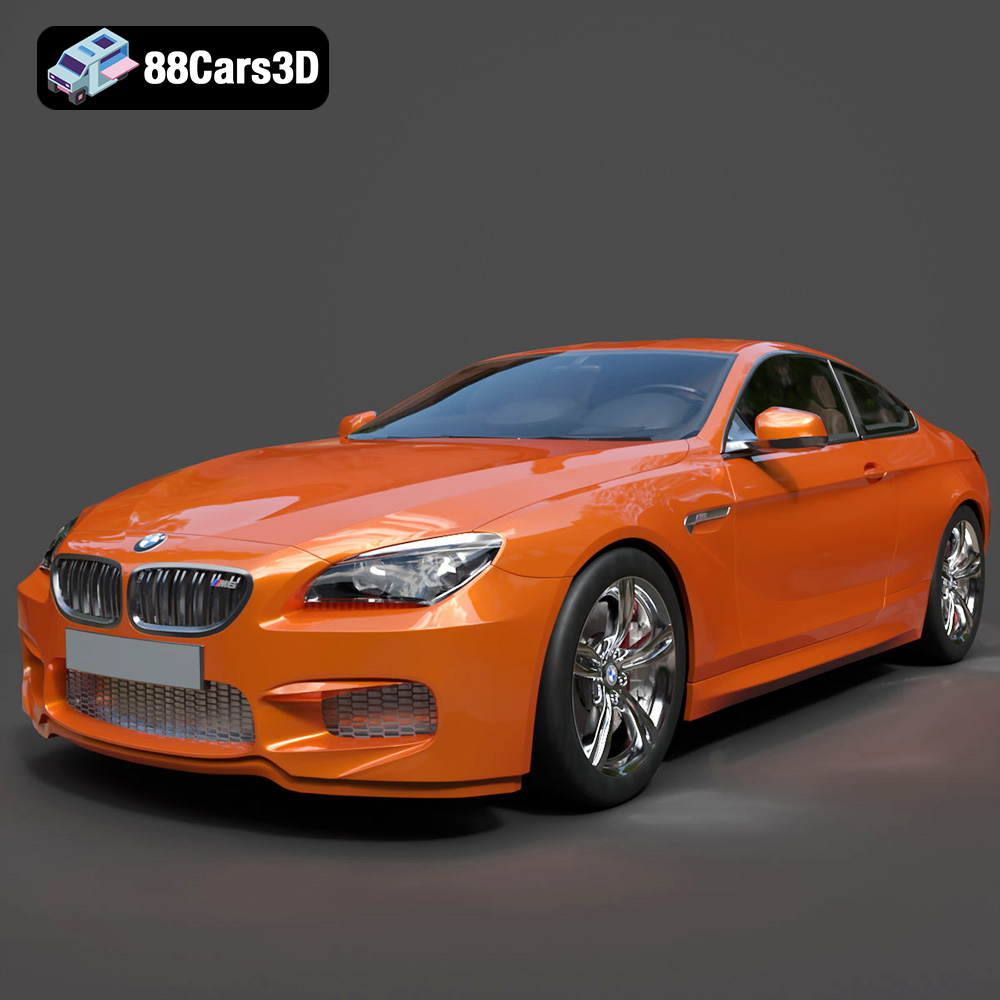
Texture: Yes
Material: Yes
Download the BMW M6 Coupe (F12) 3D Model featuring its iconic sporty design and luxurious details. Includes .blend, .fbx, .obj, .glb, .stl, .ply, .unreal, and .max formats for rendering, simulation, and game development.
Price: $10.79
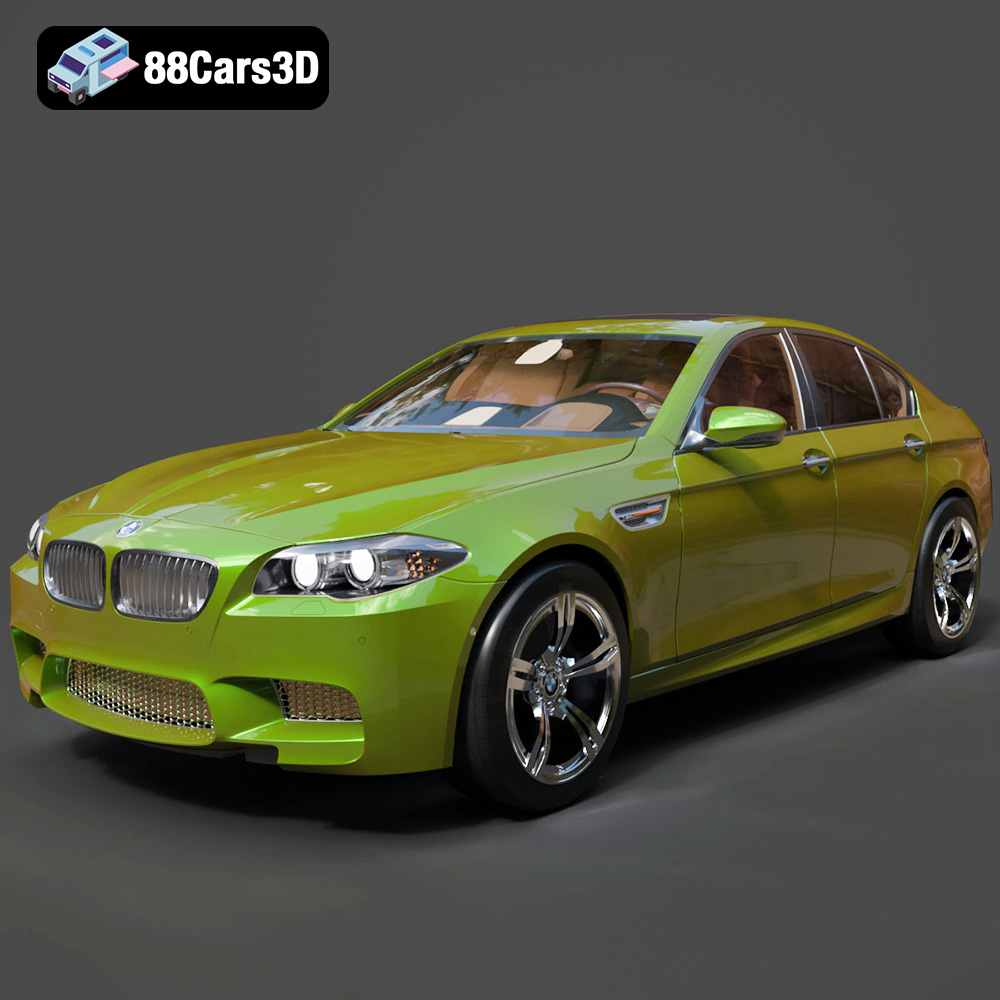
Texture: Yes
Material: Yes
Download the BMW M5 F10 3D Model featuring high-performance luxury sedan design, detailed interior, and realistic PBR textures. Includes .blend, .fbx, .obj, .glb, .stl, .ply, .unreal, and .max formats for rendering, simulation, and game development.
Price: $10.79
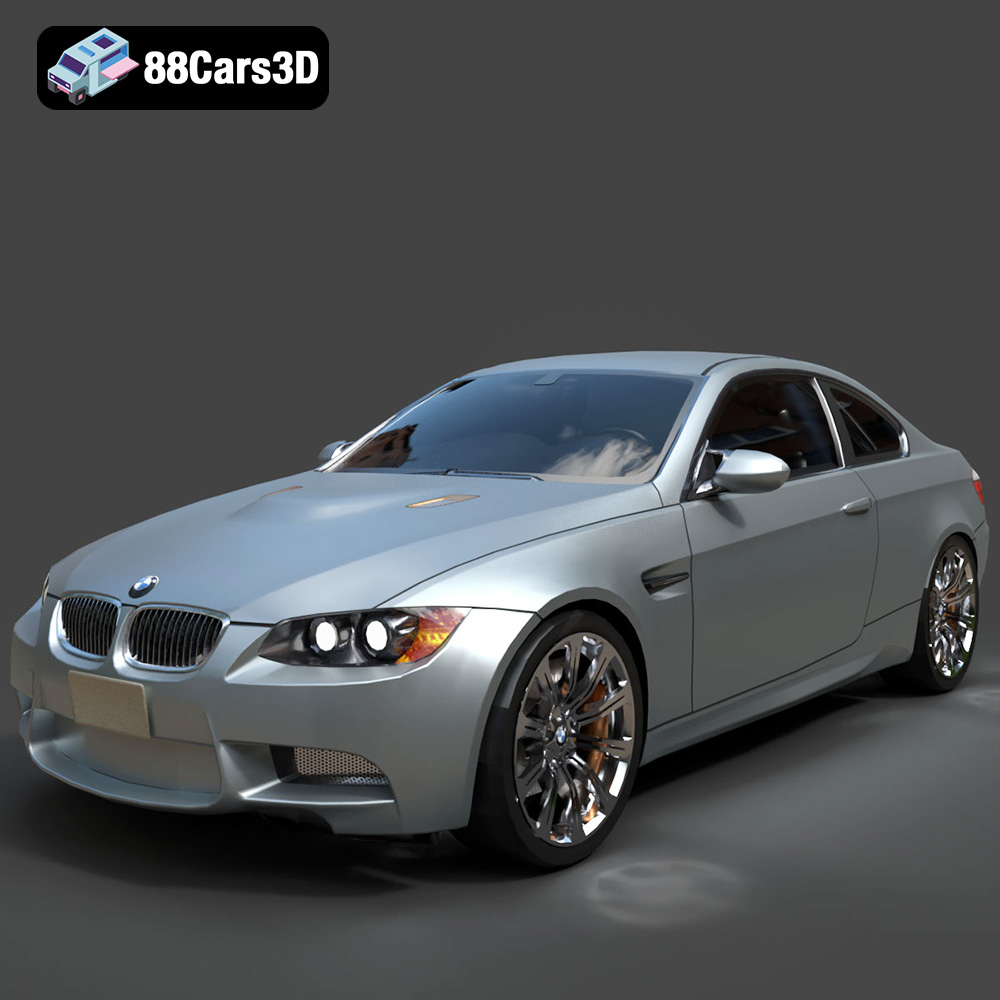
Texture: Yes
Material: Yes
Download the BMW M3 Coupe E92-002 3D Model featuring authentic styling, detailed exterior, and a faithful interior. Includes .blend, .fbx, .obj, .glb, .stl, .ply, .unreal, and .max formats for rendering, simulation, and game development.
Price: $10.79
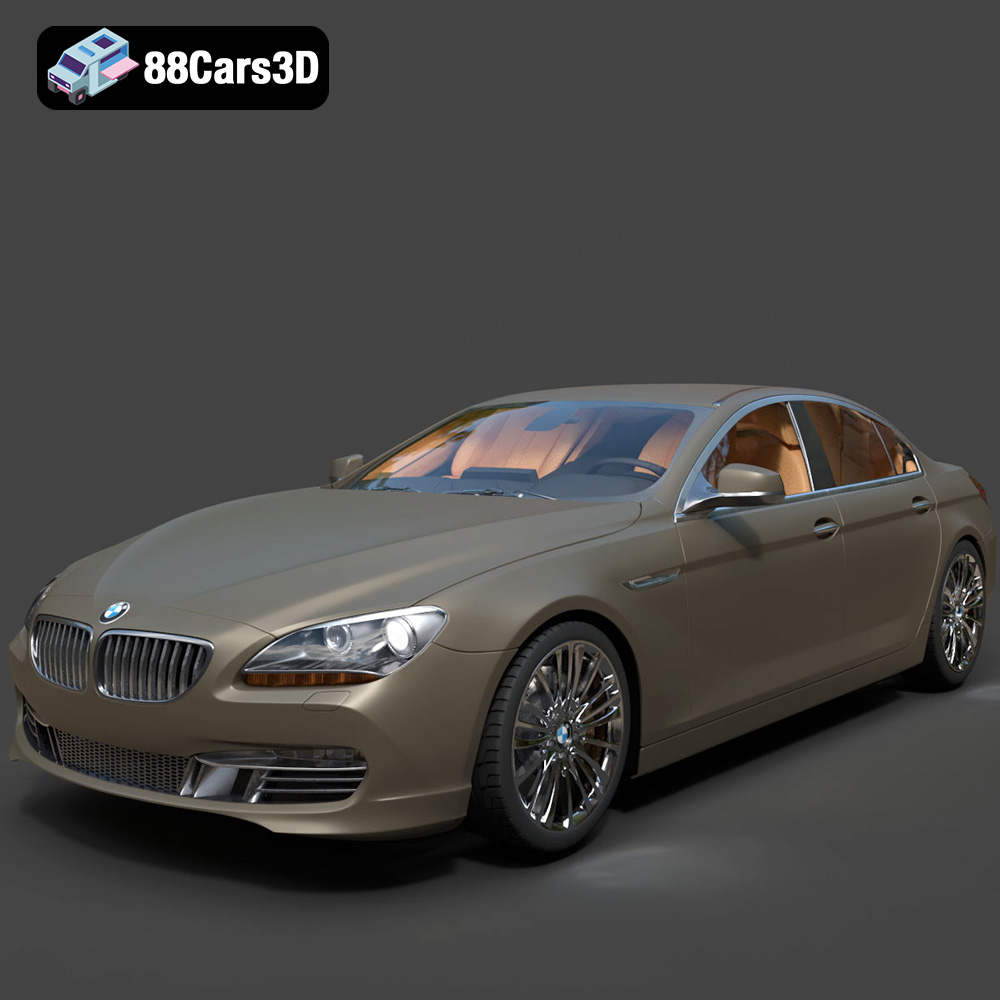
Texture: Yes
Material: Yes
Download the BMW 6 Series Gran Coupe 2013 3D Model featuring a sophisticated design, detailed exterior, and well-appointed interior. Includes .blend, .fbx, .obj, .glb, .stl, .ply, .unreal, and .max formats for rendering, simulation, and game development.
Price: $20.79
Texture: Yes
Material: Yes
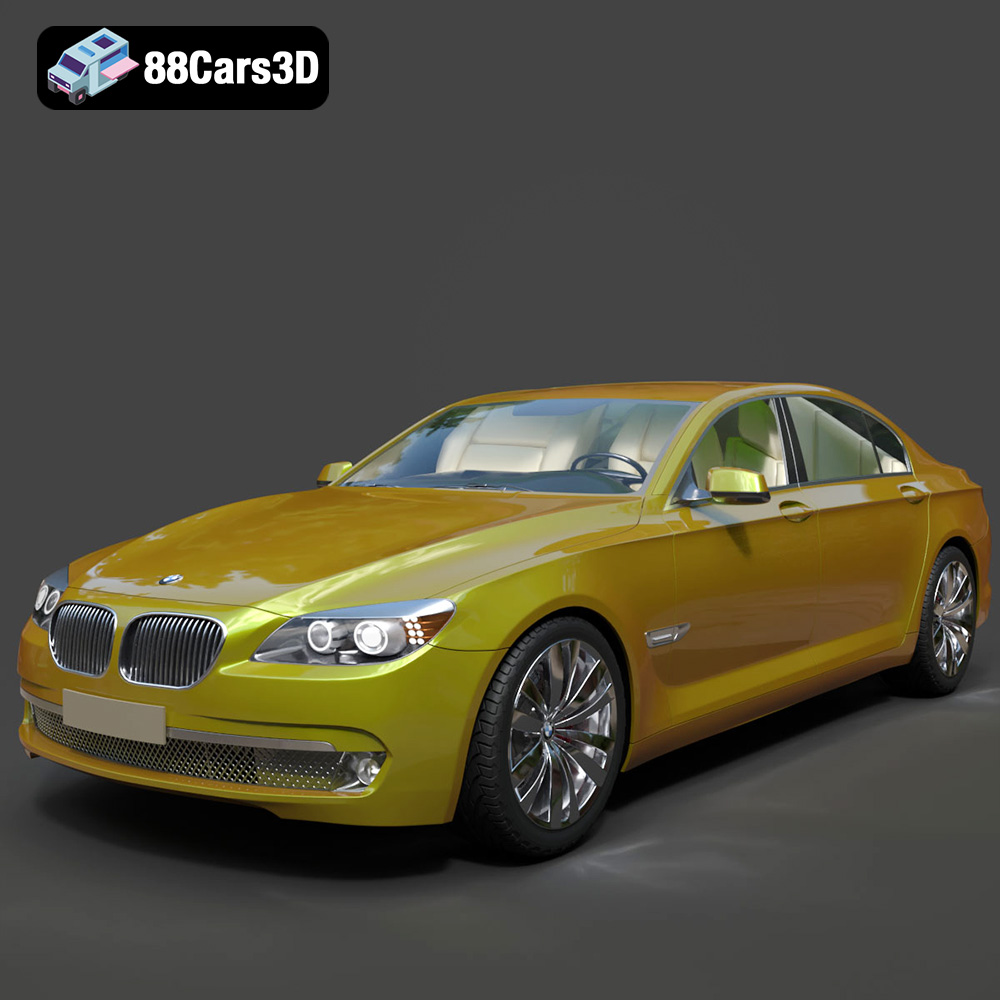
Download the BMW 7 Series 750 F01 3D Model featuring a detailed exterior and a luxurious interior. Includes .blend, .fbx, .obj, .glb, .stl, .ply, .unreal, and .max formats for rendering, simulation, and game development.
Price: $10.79
Texture: Yes
Material: Yes
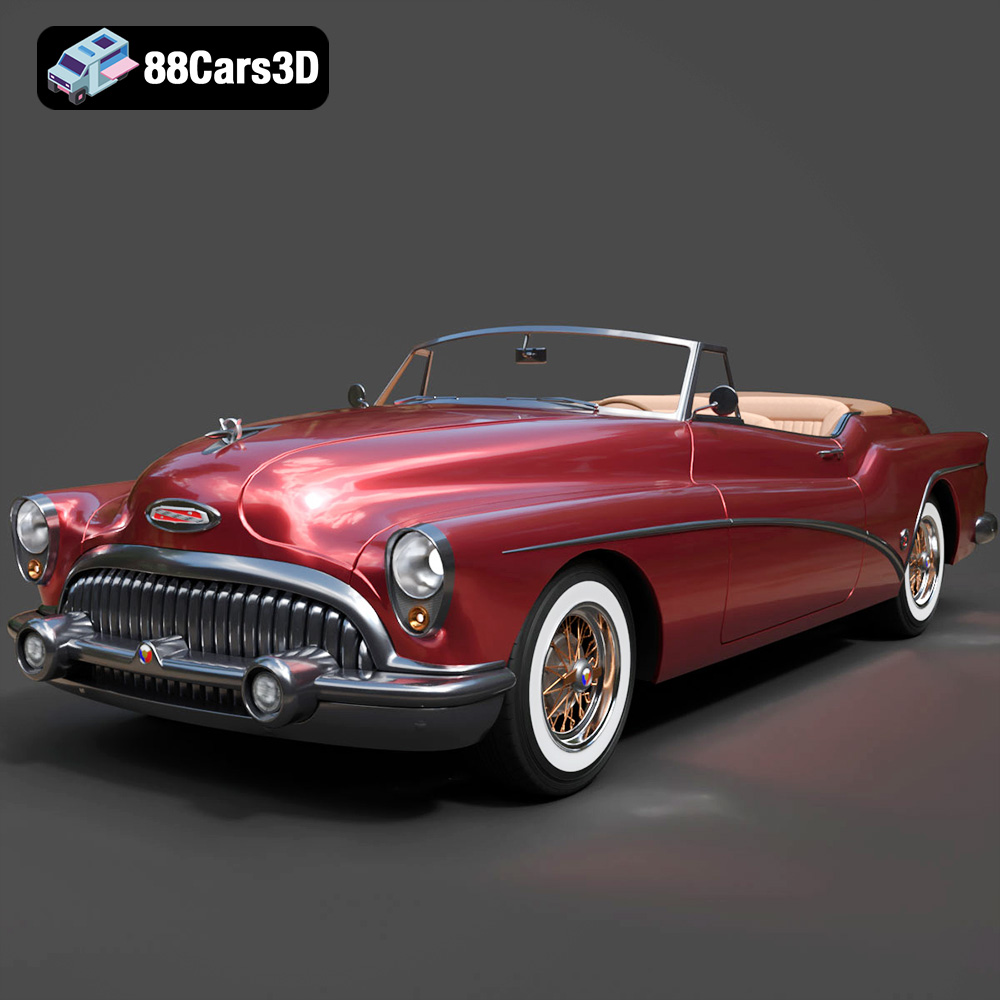
Download the Buick Skylark Convertible 1953 3D Model featuring iconic 1950s styling, a detailed exterior with chrome accents, and an accurately modeled interior. Includes .blend, .fbx, .obj, .glb, .stl, .ply, .unreal, and .max formats for rendering, simulation, and game development.
Price: $10.79

Texture: Yes
Material: Yes
Download the Buick Roadmaster Hardtop Coupe 1957 3D Model featuring a classic American design with detailed exterior and interior. Includes .blend, .fbx, .obj, .glb, .stl, .ply, .unreal, and .max formats for rendering, simulation, and game development.
Price: $10.79
Texture: Yes
Material: Yes
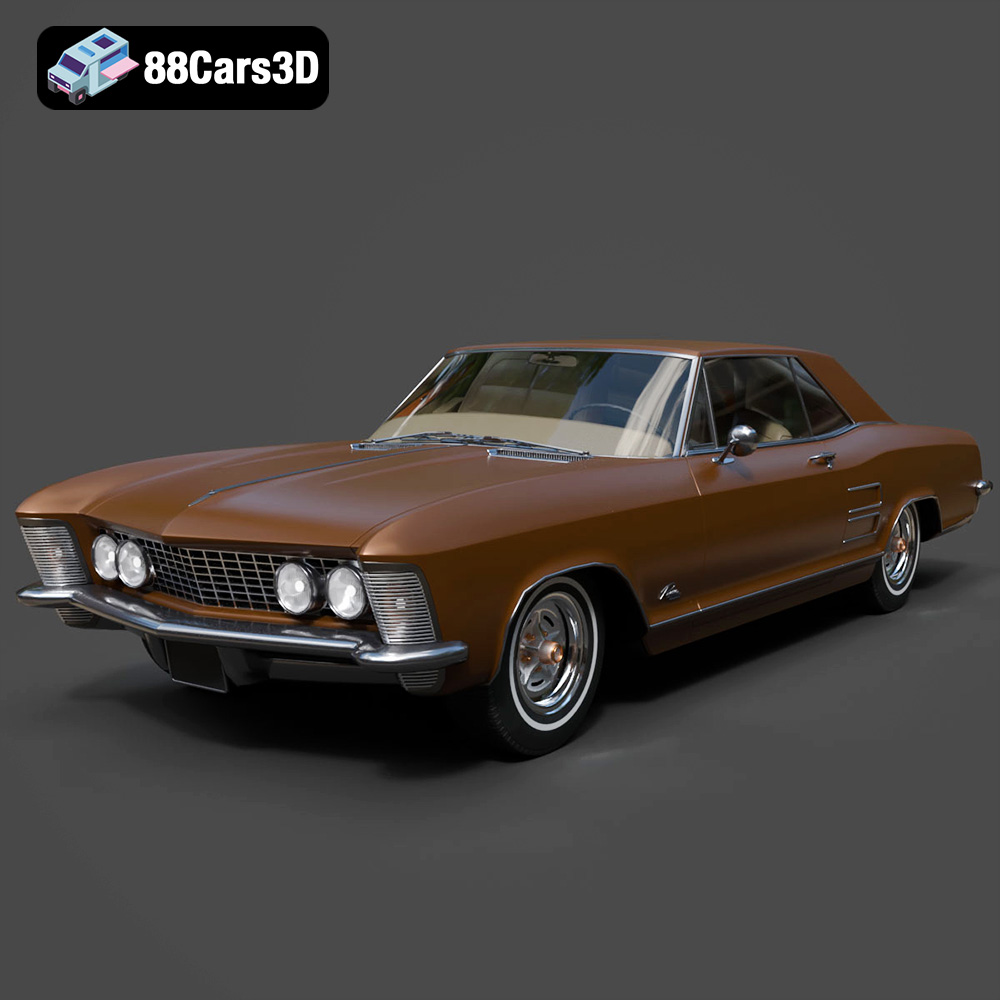
Download the Buick Riviera 1963 3D Model featuring classic American muscle car design and iconic styling. Includes .blend, .fbx, .obj, .glb, .stl, .ply, .unreal, and .max formats for rendering, simulation, and game development.
Price: $10.79
Texture: Yes
Material: Yes
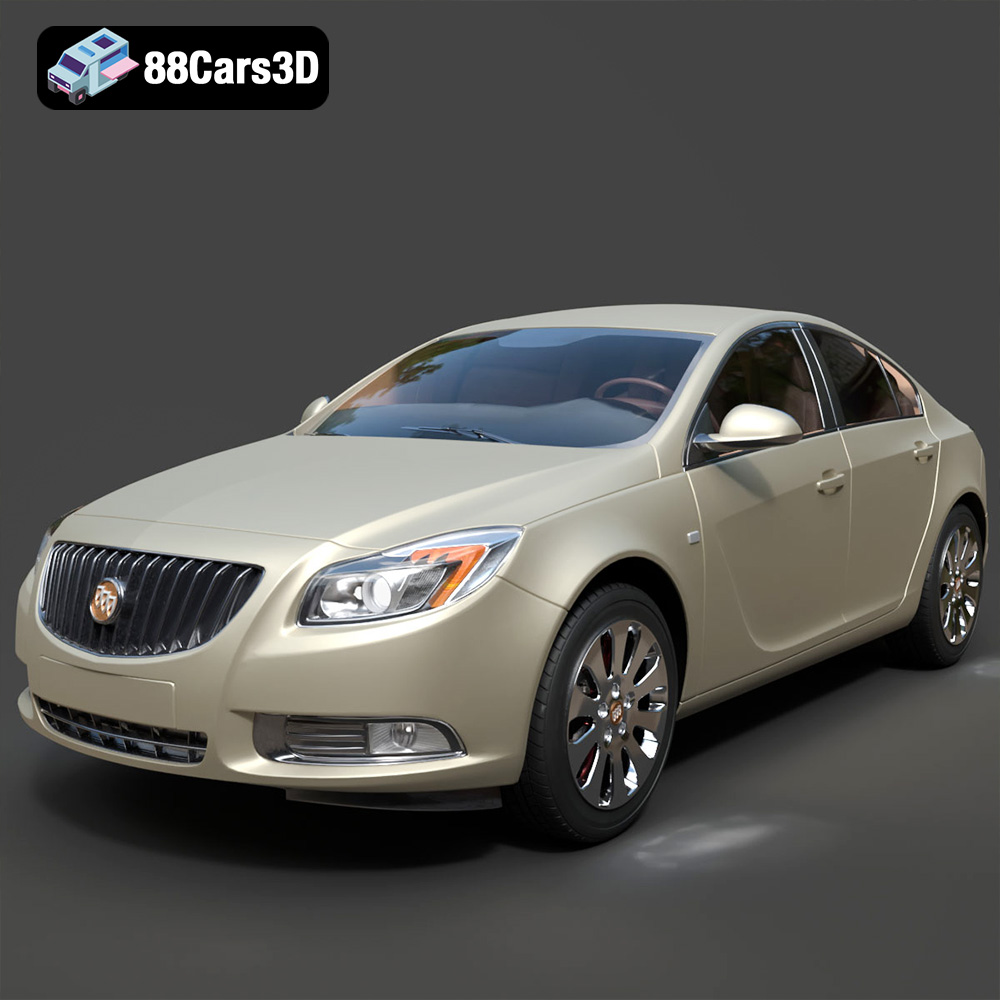
Download the Buick Regal 3D Model featuring a classic American sedan design, detailed exterior, and optimized interior. Includes .blend, .fbx, .obj, .glb, .stl, .ply, .unreal, and .max formats for rendering, simulation, and game development.
Price: $10.79
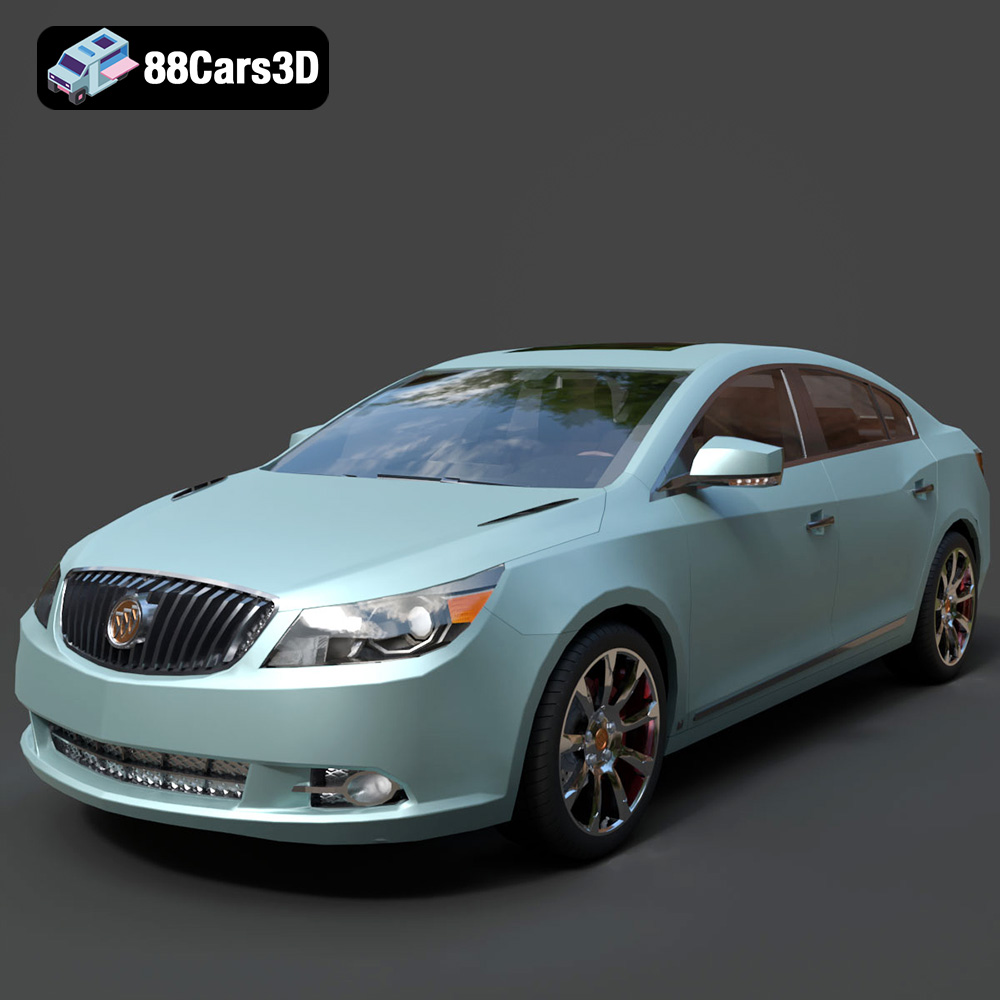
Texture: Yes
Material: Yes
Download the Buick LaCrosse 3D Model featuring professional modeling and texture work. Includes .blend, .fbx, .obj, .glb, .stl, .ply, .unreal, and .max formats for rendering, simulation, and game development.
Price: $10.79

