⚡ FLASH SALE: Get 60% OFF All Premium 3D & STL Models! ⚡

In the dynamic world of 3D visualization, the demand for authentic and highly detailed assets is constant. From groundbreaking cinematic sequences to immersive game environments and precise architectural visualizations, the foundation of any successful project lies in the quality of its core models. Automotive subjects, in particular, hold a special place, offering both aesthetic beauty and complex engineering to recreate digitally. Among the myriad of vehicles that have left an indelible mark on automotive history, certain classics resonate deeply with enthusiasts and designers alike. One such icon is the Honda CRX, a compact sports car that defined an era with its distinctive design and spirited performance.
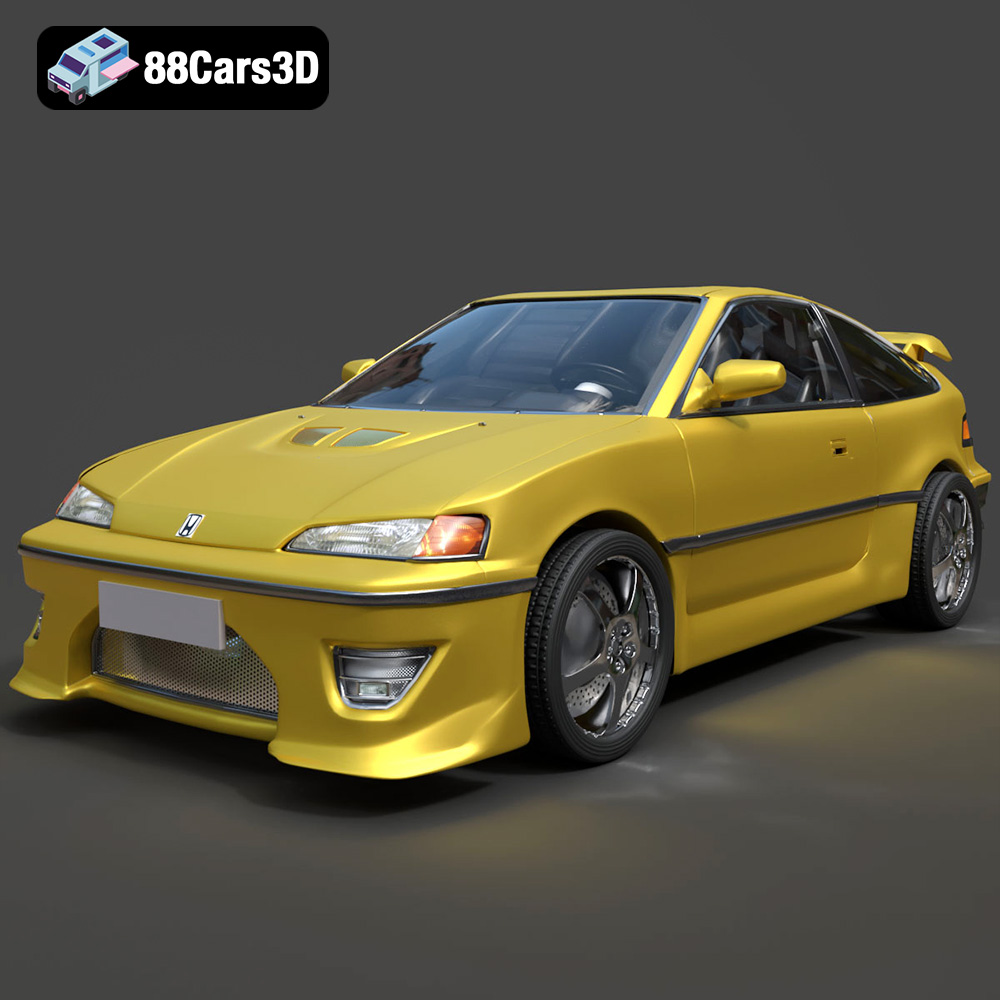
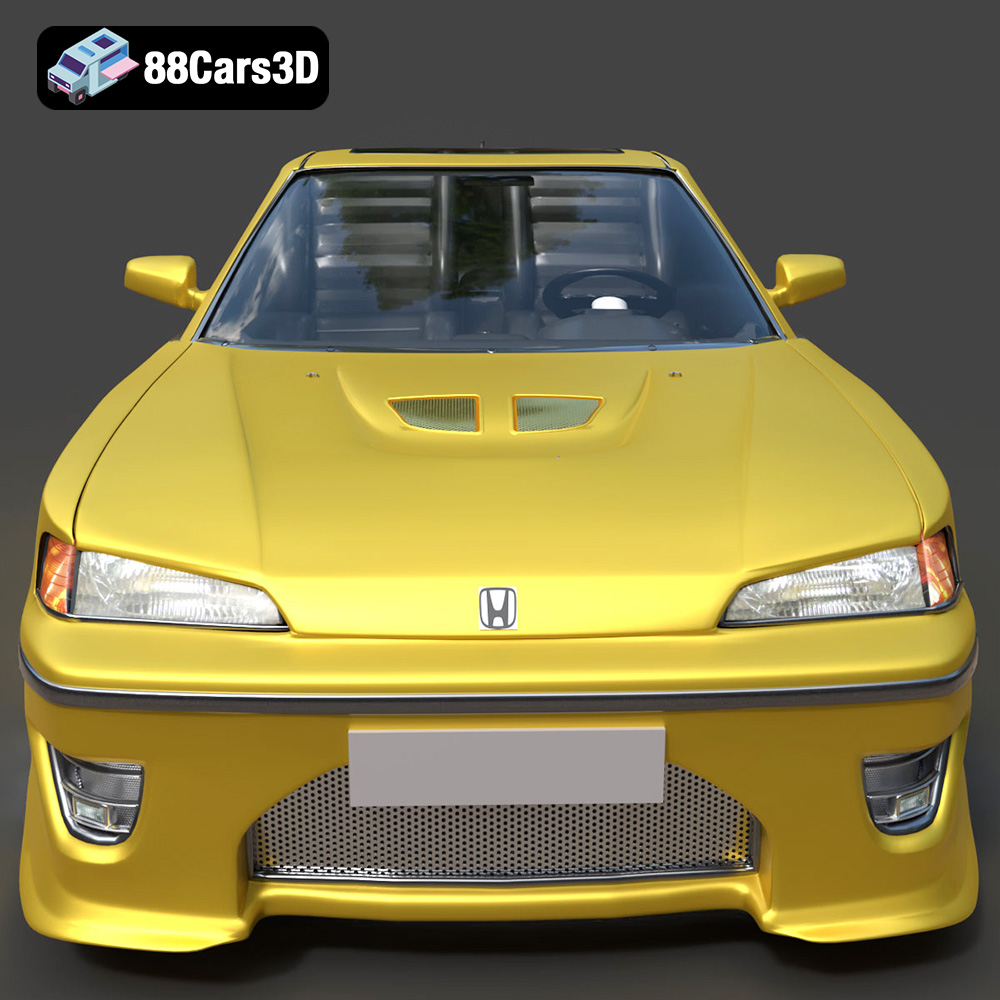
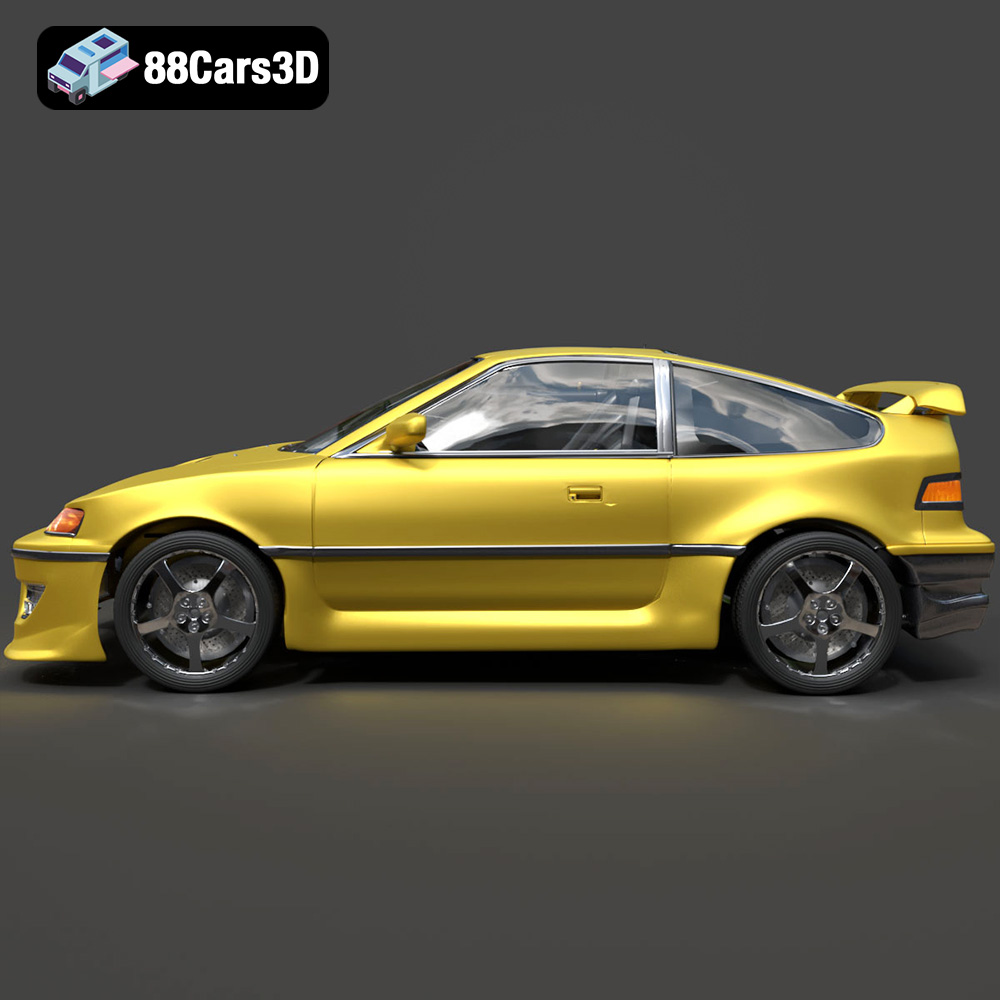
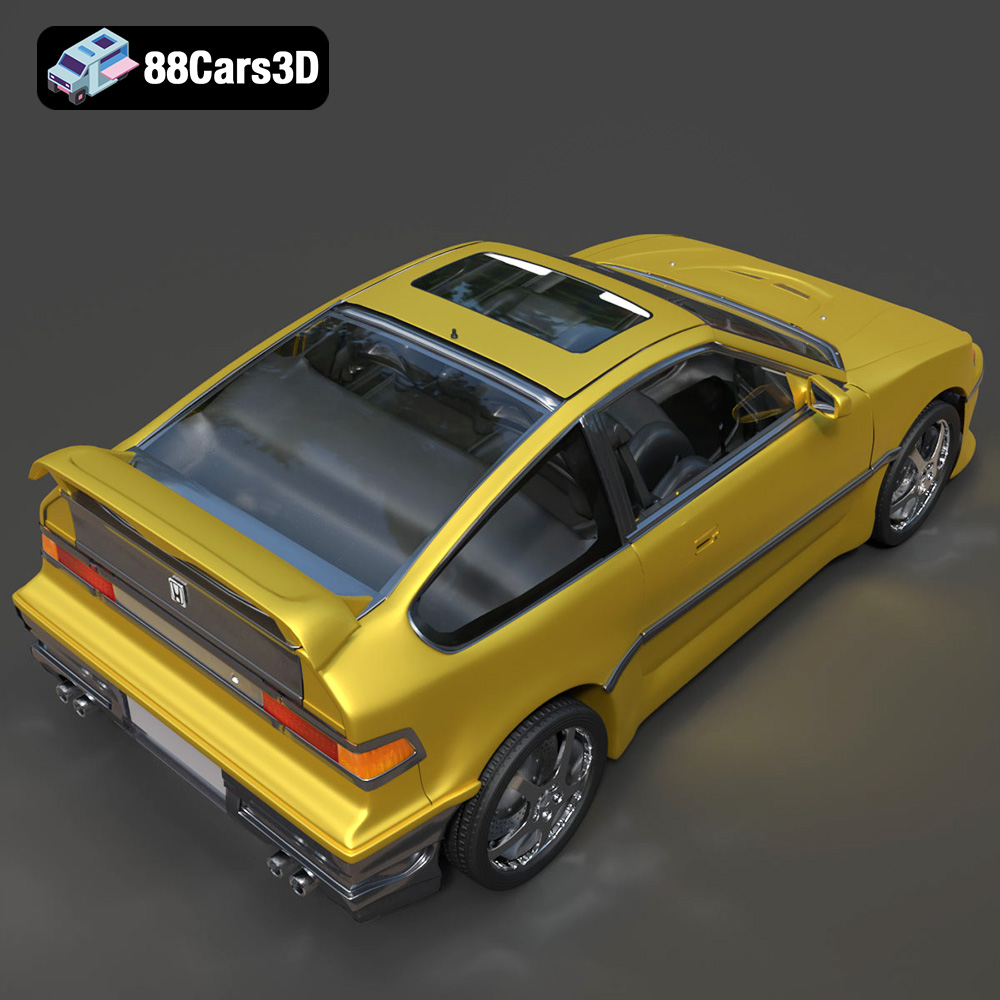
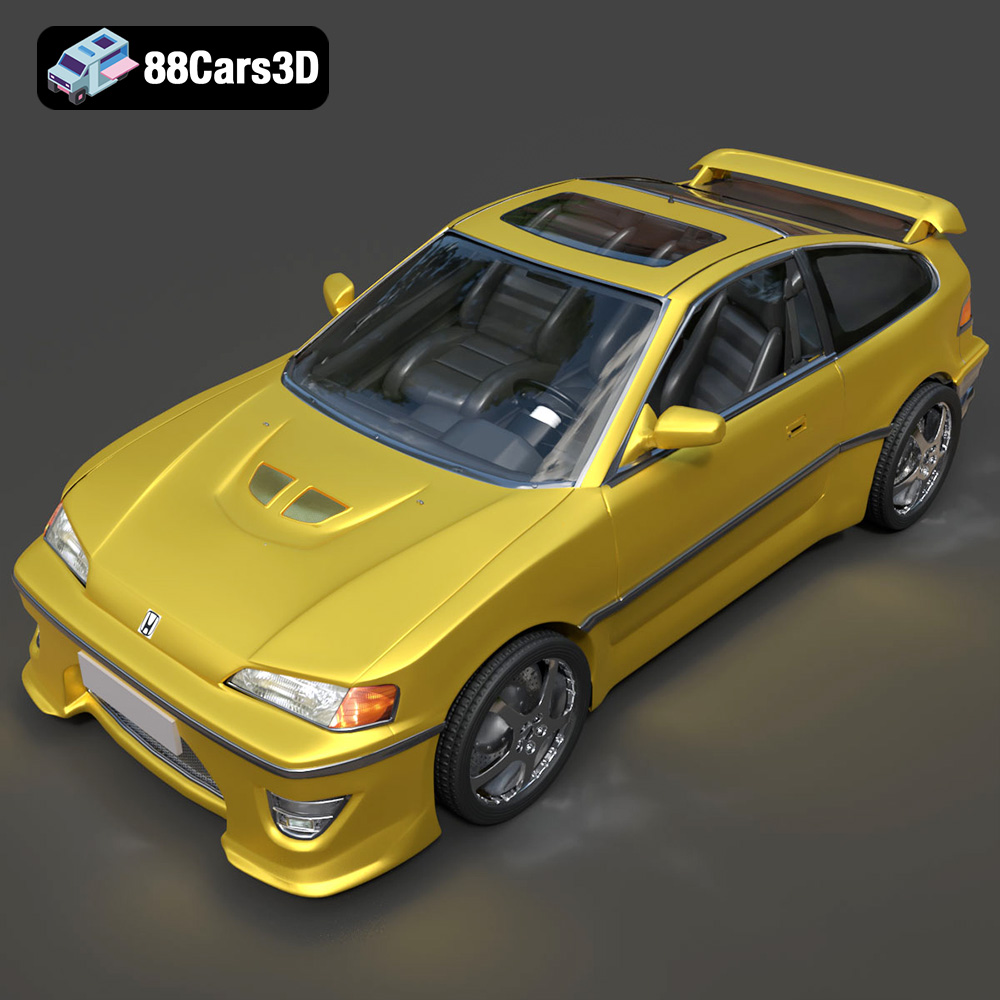
Today, artists and developers no longer need to start from scratch when bringing these classics back to life. High-quality 3D car models provide an invaluable shortcut, offering a meticulously crafted digital replica ready for immediate integration. Take, for instance, the Honda CRX 1980 3D Model available on 88cars3d.com. This asset isn’t just a basic representation; it’s a testament to the power of detailed digital craftsmanship, designed to meet the rigorous demands of professional production pipelines. Its clean topology, realistic materials, and precise detailing, including a fully modeled interior and exterior, ensure that this classic compact not only looks the part but also performs flawlessly across various applications.
Navigating the world of 3D modeling requires a fundamental understanding of the various file formats available. Each format serves specific purposes, excelling in different scenarios whether you’re working on high-fidelity renders, real-time game development, or preparing models for physical prototyping. When acquiring a premium 3D car model, such as the Honda CRX 1980 from 88cars3d.com, having access to a versatile suite of formats is crucial for seamless integration into diverse workflows. Let’s delve into the most common and vital formats:
The .blend format is the native file type for Blender, an incredibly popular open-source 3D creation suite. A .blend file typically encapsulates an entire scene, including not just the mesh data but also materials, textures, lighting setups, cameras, animations, and even physics simulations. For artists working primarily in Blender, this format provides the most complete and editable version of the asset. The Honda CRX 1980 3D model, provided in .blend, means you receive a fully structured scene, ready for direct manipulation, modification, or further development within Blender without any loss of data integrity or material assignments.
Autodesk’s .fbx (Filmbox) format has become an industry standard for exchanging 3D data between different software applications and game engines. It supports mesh data, animations, textures, materials, and rigging, making it incredibly versatile. For game developers, .fbx is often the go-to choice for exporting assets to engines like Unreal Engine and Unity due to its robust support for animation and skeletal data. The .fbx version of the Honda CRX 1980 3D model ensures that it can be seamlessly imported into virtually any professional 3D application or game engine, retaining its hierarchical structure and material assignments with high fidelity.
The .obj (Wavefront OBJ) format is one of the oldest and most widely supported 3D model formats. It primarily stores geometry (vertices, normals, texture coordinates, and faces) and can reference external material (.mtl) files for basic color and texture information. While it doesn’t support animation or rigging, its simplicity and universal compatibility make it an excellent choice for basic mesh exchange between almost any 3D software. If you need a clean, unadorned mesh of the Honda CRX 1980 for sculpting, retopology, or applications that prefer simple geometry, .obj is an invaluable option.
.glb (GL Transmission Format Binary) is a relatively newer format designed for the efficient transmission and loading of 3D scenes and models in web and AR/VR applications. It’s a binary container format that includes geometry, materials, textures, and animation in a single file, making it highly optimized for performance and ease of use in real-time contexts. The .glb version of the Honda CRX 1980 3D model is perfect for rapidly deploying the asset into augmented reality apps, virtual reality experiences, or interactive web viewers, ensuring quick loading times and broad device compatibility.
The .stl (Stereolithography) format is the de facto standard for 3D printing. It represents a 3D model as a collection of unconnected triangles (a tessellation of the surface) without color, texture, or other properties. While it simplifies the geometry, this format is precisely what 3D printers need to understand the physical shape of an object for fabrication. If your project involves creating a physical replica of the Honda CRX 1980, the .stl file is what you’ll feed into your slicing software for additive manufacturing.
The .ply (Polygon File Format, also known as Stanford Triangle Format) is a file format for storing graphical objects as a collection of polygons. It’s more versatile than .stl, as it can store a wider range of properties, including color, transparency, surface normals, and even data from 3D scanners. It’s often used in CAD, scientific visualization, and applications requiring precise mesh data for analysis rather than just basic rendering. The .ply file for the Honda CRX 1980 offers a robust, detailed polygon mesh suitable for reverse engineering, measurement, or specialized engineering visualization.
While often associated with .fbx, the inclusion of an .unreal file type typically implies a model specifically pre-configured or optimized for direct import and use within Unreal Engine. This might include specific material setups, collision meshes, LODs (Levels of Detail), and blueprint integration that streamline the workflow for Unreal Engine developers. For the Honda CRX 1980, an .unreal file means less setup time and more immediate usability within one of the world’s leading real-time rendering environments, ensuring optimal performance as a game asset or interactive visualization element.
The .max format is the native file type for Autodesk 3ds Max, another cornerstone of professional 3D modeling, animation, and rendering. Similar to .blend files, .max files contain a complete scene, including geometry, materials, textures, lighting, cameras, and animation data. For studios and artists primarily working in 3ds Max, the .max version of the Honda CRX 1980 provides the most comprehensive and editable scene, allowing full control over all aspects of the model for high-end rendering and complex animation sequences.
The true value of a 3D car model, particularly one depicting a classic like the Honda CRX 1980, lies deep within its technical specifications. It’s not just about visual appeal; it’s about the underlying structure that dictates its flexibility, performance, and ultimate utility across diverse professional applications. The Honda CRX 1980 3D model from 88cars3d.com exemplifies a commitment to these core technical principles.
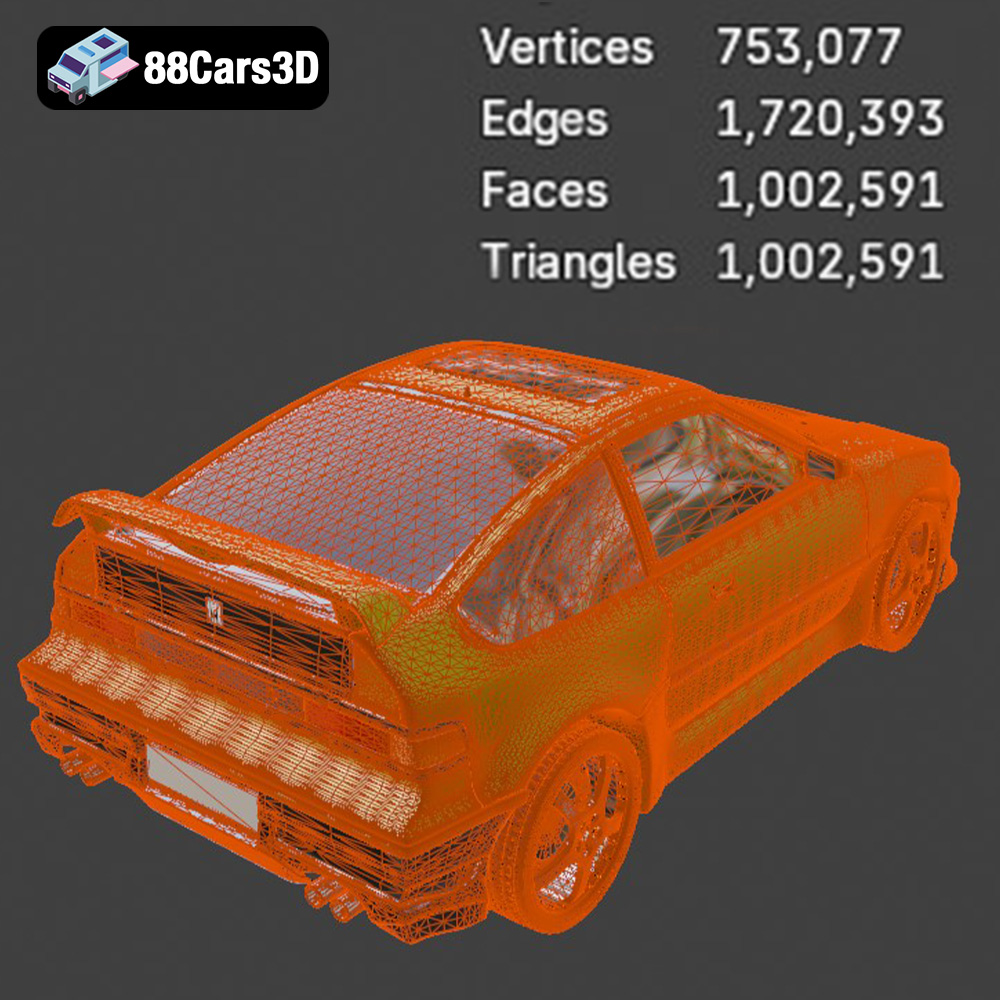
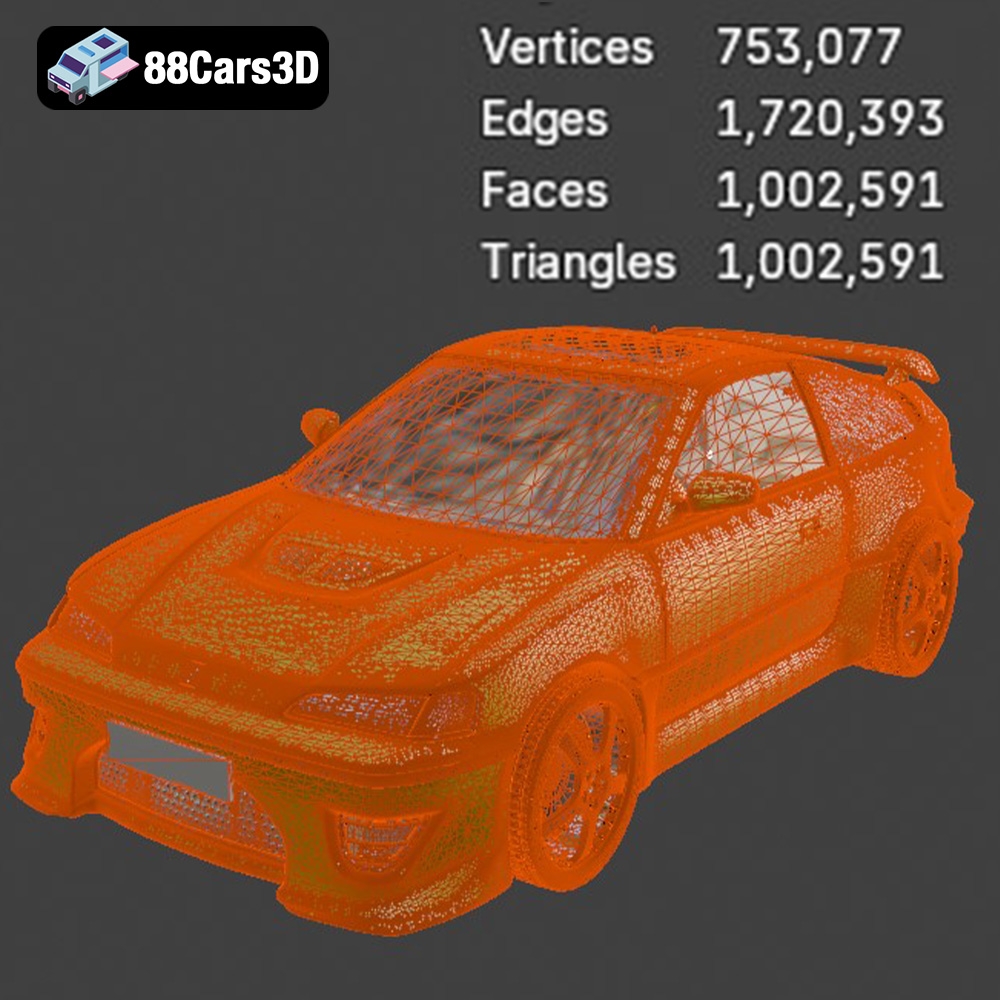
A crucial aspect of any high-quality 3D model is its geometric integrity. For the Honda CRX 1980, this means the model accurately represents the real-world dimensions and curves of the original vehicle. This precision is not just cosmetic; it ensures that the model reacts correctly to lighting, shadows, and physics simulations. Furthermore, the model boasts “clean topology,” meaning the mesh is constructed with well-defined quads (four-sided polygons) and efficient edge flow. This approach is vital for several reasons:
This meticulous attention to topology ensures that the Honda CRX 1980 3D model can be easily scaled, modified, or optimized for specific poly count requirements, from cinematic high-detail to game-engine efficiency.
Beyond the mesh, the surface properties bring a model to life. The Honda CRX 1980 3D model features “realistic materials” and “precise detailing.” This involves:
These elements combine to create a “ready-to-render” asset, minimizing the setup time for artists and allowing them to focus on scene composition and artistic direction rather than tedious material creation.
Once a high-quality 3D car model like the Honda CRX 1980 is acquired, the next step for many professionals is integrating it into a rendering pipeline to produce stunning visuals. Whether for advertising, film, or architectural visualization, the process requires an understanding of software, lighting, and material setup.
Both 3ds Max and Blender are powerhouses for producing photorealistic renders. With the included .max and .blend files, users of these software packages have a significant head start. In 3ds Max, artists can leverage V-Ray or Corona Renderer for industry-leading global illumination and physically accurate materials. The clean topology of the Honda CRX 1980 allows for easy application of Turbosmooth modifiers for increased detail, while the pre-configured materials can be quickly adapted to the chosen renderer’s shader system.
Blender users, on the other hand, benefit from the powerful Cycles or Eevee renderers. The .blend file for the CRX model provides a complete scene with materials and lighting setup, making it an excellent starting point. Artists can experiment with different HDRI lighting environments, fine-tune material properties for specific reflections and refractions, and add depth of field to create cinematic shots. For automotive rendering, focusing on realistic reflections on the paintwork, subtle imperfections, and accurate glass materials is key to achieving a truly convincing image.
Effective lighting is paramount for showcasing a 3D car model. For automotive renders, a common technique involves using High Dynamic Range Images (HDRIs) to simulate real-world lighting conditions. An HDRI provides both environmental lighting and reflections, giving the car’s paintwork a lifelike appearance. Complementary area lights can be added to highlight specific features or create dramatic shadows. When rendering the Honda CRX 1980, consider:
The utility of a robust 3D car model extends far beyond static renders. In the realm of interactive experiences, the Honda CRX 1980 3D model transforms into a dynamic asset for game development, simulations, and real-time visualizations. Its inherent optimizations make it a valuable resource for these performance-critical environments.
Game engines like Unreal Engine and Unity demand highly optimized assets to maintain smooth framerates and immersive experiences. The Honda CRX 1980 model is described as “game development (optimised for Unreal Engine and Unity)” ready, and this optimization typically involves several key steps:
The included .fbx and .unreal formats are specifically tailored for these engines, ensuring easy import and setup of materials, skeletal meshes, and basic physics properties, accelerating the development of racing games, driving simulations, or virtual tours.
Beyond traditional games, high-fidelity 3D car models are fundamental for professional simulations. Whether for driver training, autonomous vehicle testing, or virtual engineering reviews, the Honda CRX 1980 can serve as a robust foundation. Its “geometric integrity and adherence to real-world scale” are particularly important here, as accurate physical representation is critical for realistic dynamics.
In a simulation environment, the CRX model can be integrated with advanced physics engines to replicate its handling characteristics, weight distribution, and suspension behavior. Combined with detailed virtual environments, the model facilitates immersive and realistic training scenarios. From a design perspective, engineers can use such models to evaluate vehicle ergonomics in a virtual cockpit or test visibility, making the digital asset an essential tool in various stages of product development and research.
The versatility of a well-crafted 3D car model like the Honda CRX 1980 extends into emerging technologies, creating novel ways for audiences to interact with digital assets. Augmented Reality (AR), Virtual Reality (VR), and even 3D printing represent exciting frontiers for these models.
AR and VR offer unparalleled immersion, and high-quality 3D assets are at their core. The Honda CRX 1980 3D model, with its “optimised for AR/VR” .glb format, is perfectly suited for these applications. In AR, users can place a photorealistic CRX in their real-world environment, scaling it, walking around it, and even peeking inside, all through a smartphone or tablet. This is invaluable for showcasing products, creating interactive educational content, or simply providing engaging entertainment.
In VR, the CRX can be the centerpiece of a virtual showroom, a historical museum exhibit, or an interactive driving experience. The “fully modeled interior” allows users to virtually sit inside the classic car, experiencing its design and details as if they were truly there. The optimizations ensure smooth performance within VR headsets, minimizing latency and enhancing the sense of presence.
For enthusiasts and prototypers, the ability to physically manifest a digital model is a thrilling prospect. The inclusion of the .stl file for the Honda CRX 1980 makes it “suitable for 3D printing and prototyping.” This allows for:
Preparation for 3D printing involves careful consideration of wall thickness, overhangs, and print resolution, but starting with a geometrically sound model like the CRX significantly simplifies the process.
In a competitive digital landscape, the distinction between good and exceptional often comes down to the quality of the assets used. Choosing a premium 3D car model, such as the Honda CRX 1980 from 88cars3d.com, is an investment that pays dividends in various aspects of production.
Building a complex automotive model from scratch, especially one with a fully detailed interior and exterior, is an incredibly time-consuming and resource-intensive task. It requires specialized skills in modeling, UV mapping, texturing, and material creation. By acquiring a professional-grade asset, artists and studios can save hundreds, if not thousands, of hours of development time, allowing them to focus on creative direction, scene assembly, animation, or other unique aspects of their projects. This efficiency directly translates to cost savings and faster project turnaround.
A poorly constructed 3D model can introduce a myriad of problems: rendering artifacts, performance bottlenecks in real-time engines, difficulties in modification, and an overall unprofessional appearance. The Honda CRX 1980 3D model, with its “meticulously crafted” geometry, “clean topology,” and “realistic materials,” guarantees professional reliability. It’s built to standards that ensure it performs consistently across different software and applications, maintaining visual fidelity and optimal performance. This reliability is crucial for client projects where quality and deadlines are paramount.
Whether it’s for a high-stakes automotive rendering project, an immersive game environment, or an interactive AR/VR experience, the foundation of a robust 3D car model is non-negotiable. Investing in assets that are “ready-to-render” and “game-engine ready” from reputable sources like 88cars3d.com ensures that your creative vision is supported by technical excellence.
The digital realm offers unprecedented opportunities to recreate, reimagine, and interact with the world around us. For automotive enthusiasts and professionals alike, high-quality 3D car models serve as indispensable tools, bridging the gap between imagination and tangible digital experiences. The Honda CRX 1980 3D model stands as a prime example of what meticulous craftsmanship and technical expertise can achieve. Its detailed interior and exterior, clean topology, realistic materials, and wide array of included file formats make it a versatile asset for virtually any professional application.
From stunning architectural visualizations and cinematic renders to high-performance game assets and immersive AR/VR experiences, this model provides a solid, reliable foundation. It exemplifies the value of investing in premium digital assets that are optimized for various workflows, saving valuable time and ensuring a professional outcome. As industries continue to embrace real-time rendering and interactive content, the demand for such high-fidelity 3D car models will only grow. For those seeking to elevate their projects with iconic vehicles, exploring the offerings on 88cars3d.com, starting with the exceptional Honda CRX 1980 3D Model, is a clear path to driving innovation and achieving visual excellence.
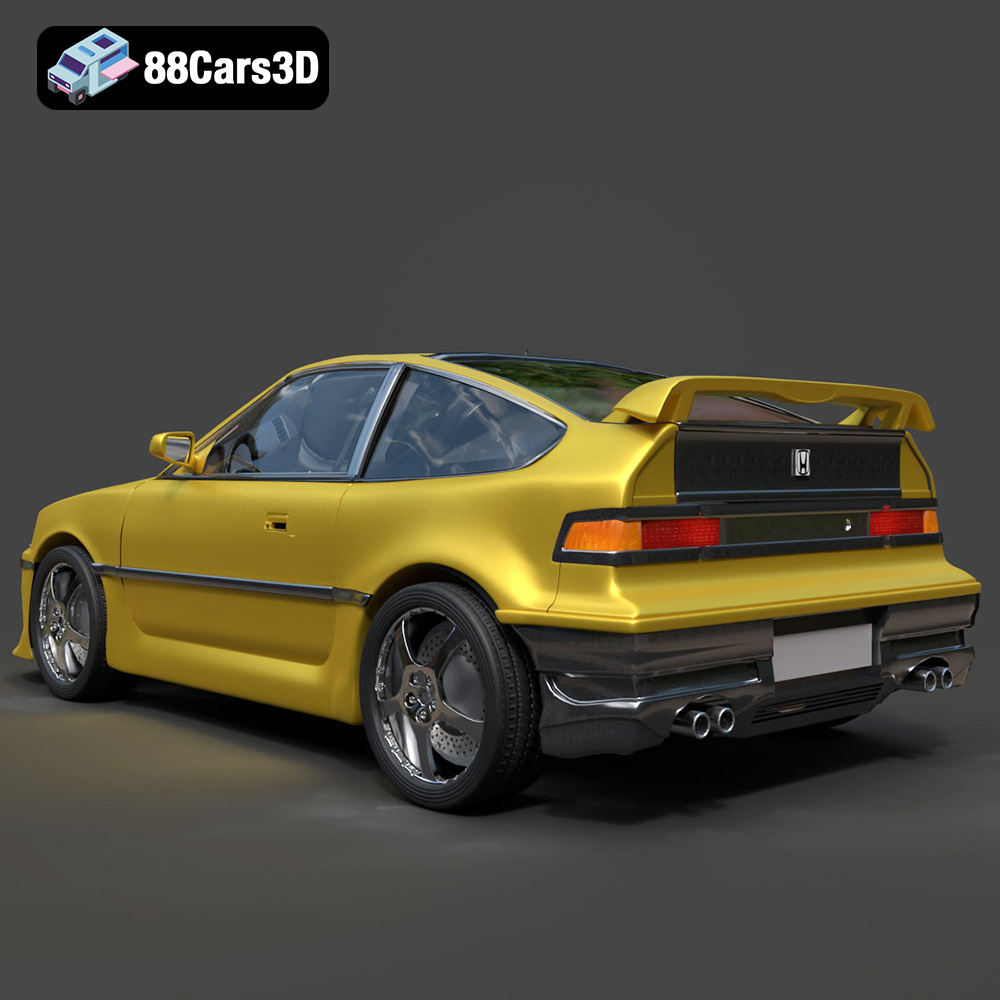
Presenting the accurate 3D model of the classic Honda CRX 1980. This model has been meticulously crafted to represent the iconic sports compact car, ensuring geometric integrity and adherence to real-world scale. The structure is built with clean topology, making it optimized for subdivision, smooth shading, and easy modification in any professional 3D environment. This digital asset features realistic materials and precise detailing, including a fully modeled interior and exterior. Textures are applied accurately across all surfaces, providing a ready-to-render asset straight out of the box. Whether you require a background vehicle for a cinematic scene or a driveable asset for a simulation, the Honda CRX 1980 3D model delivers professional reliability. Ideal for various applications, this asset serves as a robust foundation for game development (optimised for Unreal Engine and Unity), architectural visualization projects, detailed rendering portfolios, virtual reality (VR), and augmented reality (AR) experiences.
$11.99
.arvr
.blend
.car3dmodel
.classiccar
.coupe
.crx
.fbx
.gameasset
.glb
.honda
.max
.obj
.ply
.rendering
.simulation
.sportsCar
.stl
.unreal