⚡ FLASH SALE: Get 60% OFF All Premium 3D & STL Models! ⚡

In the expansive realm of 3D visualization and digital content creation, the demand for highly detailed, performant, and versatile assets is constant. Whether you’re crafting cinematic sequences, developing immersive game worlds, or building precise simulation environments, the quality of your 3D models is paramount. Complex machinery, such as locomotives, presents unique challenges in this regard, requiring an intricate balance of accurate engineering representation, optimal topology, and thoughtful material definition.
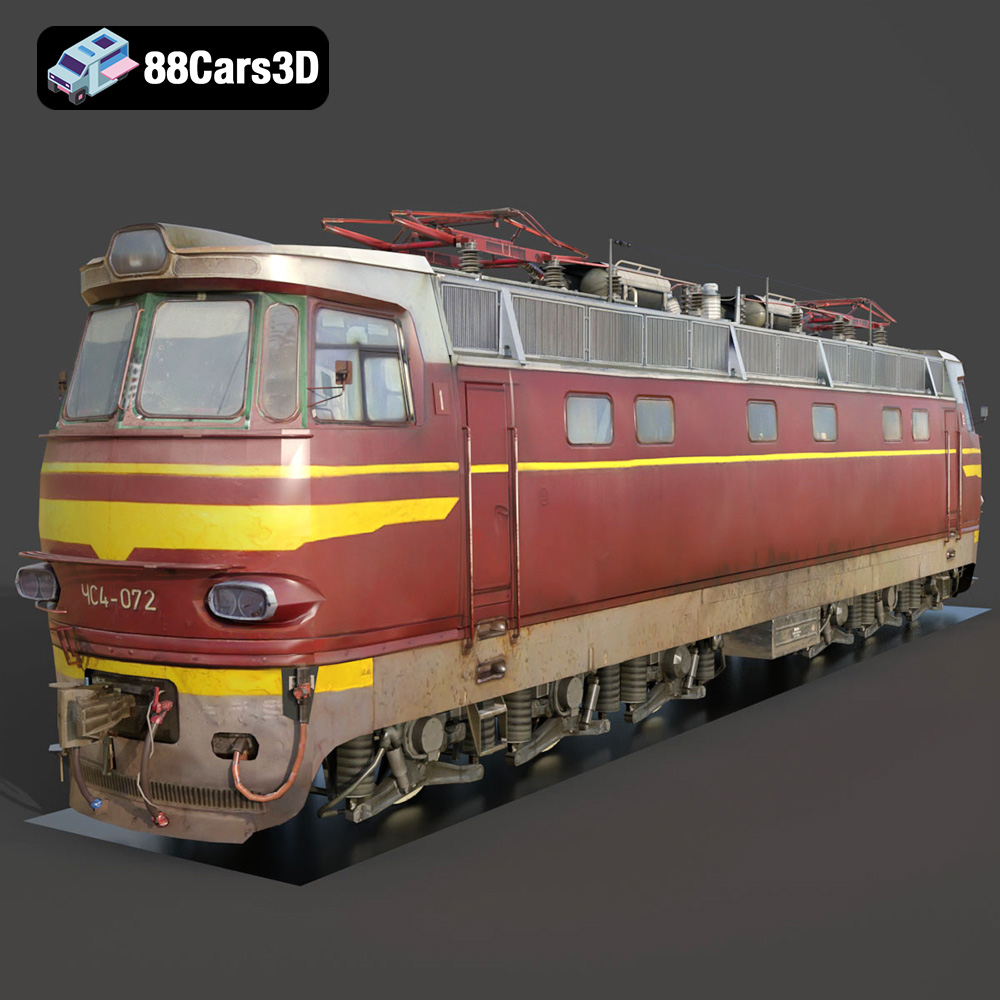
Creating such an asset from scratch demands hundreds, if not thousands, of hours from skilled artists, engineers, and technical directors. This is where professional-grade, pre-built 3D models become invaluable. Today, we’re going to explore the critical aspects of industrial 3D modeling through the lens of a truly exceptional asset: the Locomotive CHS4 072-004 3D Model. This meticulously crafted model exemplifies the robust engineering and classic design of its real-world counterpart, offering a powerful foundation for a myriad of professional applications, available from trusted marketplaces like 88cars3d.com.
From its accurate body panels and detailed bogies to its fully equipped driver’s cab and animation-ready components, this asset is designed to integrate seamlessly into diverse workflows, providing both visual fidelity and optimal performance. Join us as we dissect the technical intricacies, explore its practical applications, and understand why a high-quality model like the CHS4 072-004 is an essential tool for any serious 3D professional.
The success of any 3D project often hinges on the ability to move assets efficiently and effectively between different software packages and platforms. This interoperability is governed by the file formats chosen for your 3D models. A truly versatile asset, like the Locomotive CHS4 072-004 3D Model, provides a comprehensive suite of formats, each optimized for specific use cases and workflows. Understanding these formats is crucial for maximizing your creative potential and ensuring smooth production pipelines.
The .blend format is the native file type for Blender, a powerful open-source 3D creation suite. When you acquire a .blend file, you’re getting a fully editable Blender scene, complete with materials, textures, lighting, cameras, and even animation data. For artists working primarily in Blender, this is the most convenient format, offering direct access to the model’s construction, modifier stacks, and material nodes. It allows for effortless customization, tweaking, and rendering within Blender’s ecosystem, making it ideal for those who want to dive deep into the model’s structure or integrate it into an existing Blender project.
.fbx (Filmbox) is a proprietary file format developed by Autodesk, widely recognized as the industry standard for 3D data interchange. Its strength lies in its ability to store a comprehensive range of 3D data, including geometry (meshes), materials, textures, animations, skinning, and camera information. This makes it an invaluable format for transferring models between different 3D applications, particularly for game development. For engines like Unreal and Unity, .fbx is often the preferred import format due to its robust support for animation and complex scene hierarchies. It facilitates a streamlined real-time pipeline, ensuring that all necessary data is encapsulated for engine integration.
The .obj (Object) format is one of the oldest and most universally supported 3D file formats. It primarily stores geometric data – vertices, normals, UV coordinates, and polygons – along with references to external material files (.mtl). While it doesn’t typically store animation or complex scene data, its widespread compatibility means almost every 3D software can import and export .obj files without issues. This makes it an excellent choice for cross-software compatibility, especially when you need a clean mesh without complex scene elements or when you’re passing a model between different modeling packages for specific tasks like sculpting or retopology.
.glb (GLB format, derived from glTF, Graphics Language Transmission Format) is an increasingly important format optimized for efficient transmission and loading of 3D scenes and models by engines and applications. It is particularly suited for AR, VR, and browser-based display due to its compact nature and ability to embed all necessary assets (geometry, materials, textures, animations) into a single file. This self-contained nature minimizes HTTP requests and reduces loading times, making it perfect for interactive web experiences, mobile AR applications, and any scenario where rapid deployment and real-time performance are critical.
.stl (Stereolithography) is the de facto standard file format for 3D printing. It describes only the surface geometry of a 3D object using a tessellated representation of triangular facets. While it does not contain color, texture, or material information, its simplicity and widespread adoption make it ideal for generating physical models and prototypes. If your goal is to bring the Locomotive CHS4 072-004 3D Model into the physical world through 3D printing, the .stl format is precisely what you need, ensuring your model is ready for manufacturing.
The .ply (Polygon File Format or Stanford Triangle Format) is a versatile format for storing graphical objects that have been scanned. It can store a wider range of information than .obj, including color, transparency, confidence values, and normal vectors for each polygon. It’s often used for precision mesh data, especially in CAD (Computer-Aided Design), scientific visualization, and analysis workflows where surface accuracy and additional per-vertex or per-face data are important. For engineering analysis or detailed measurement, .ply offers a robust data container.
The inclusion of a dedicated .unreal file (often a specific project setup or asset package designed for Unreal Engine) signifies that the model is already pre-configured and optimized for the Unreal Engine environment. This can include proper scaling, collision setups, material instances, and even LOD (Level of Detail) configurations. For game developers and real-time visualization artists working with Unreal Engine, this format provides a significant head start, minimizing the time spent on import, setup, and optimization, allowing for immediate integration into an interactive scene.
Finally, the .max format is the native file type for Autodesk 3ds Max, another industry-leading 3D modeling, animation, and rendering software. Similar to .blend for Blender, the .max file contains the complete 3ds Max scene, including geometry, materials, textures, lighting, cameras, and animation curves. For professionals entrenched in the 3ds Max ecosystem, this format offers full editability and control over every aspect of the model, enabling sophisticated rendering setups, complex animations, and seamless integration into existing 3ds Max projects.
The provision of such a comprehensive array of file formats for the Locomotive CHS4 072-004 3D Model underscores its professional utility and adaptability across virtually any 3D pipeline, making it a truly universal asset.
The creation of a high-fidelity 3D model like the Locomotive CHS4 072-004 is not merely about replicating its appearance; it’s about translating complex engineering into a digital form that is both visually stunning and technically sound. This involves meticulous attention to detail, adherence to real-world scale, and a sophisticated approach to geometry and materials.
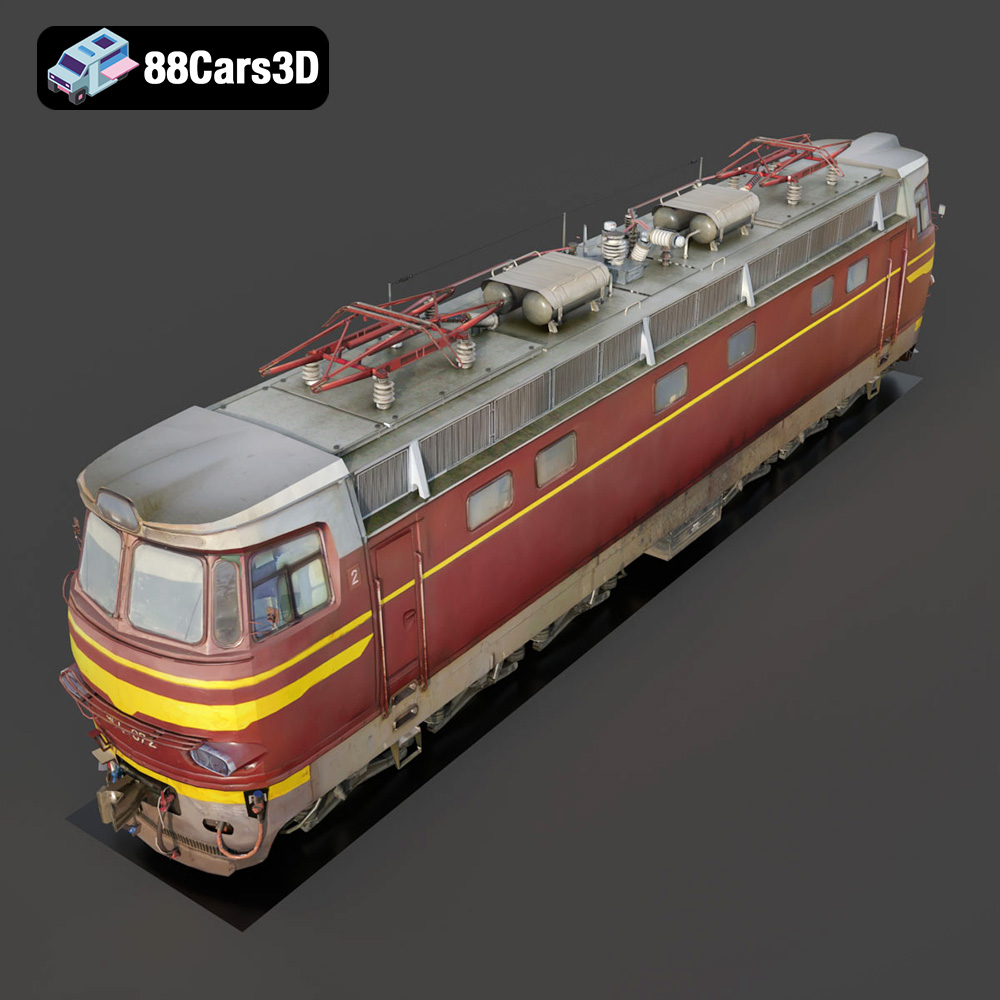
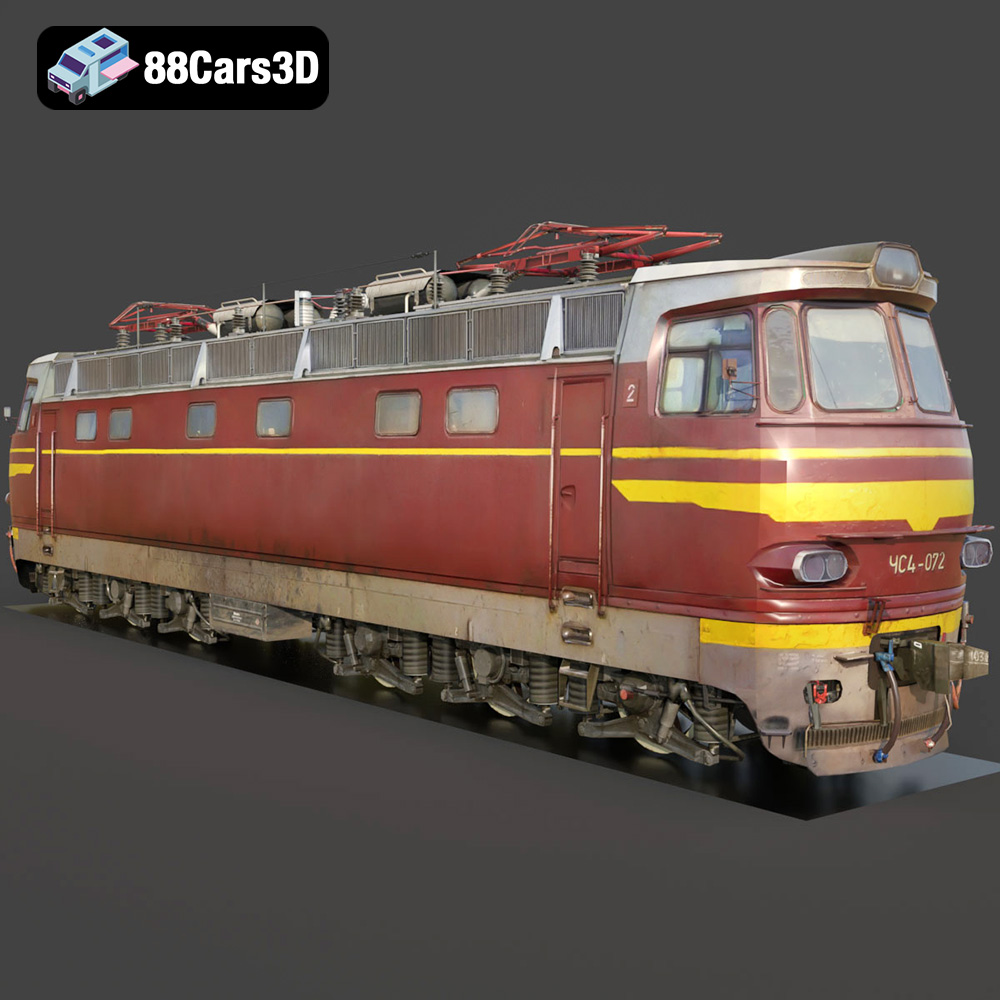
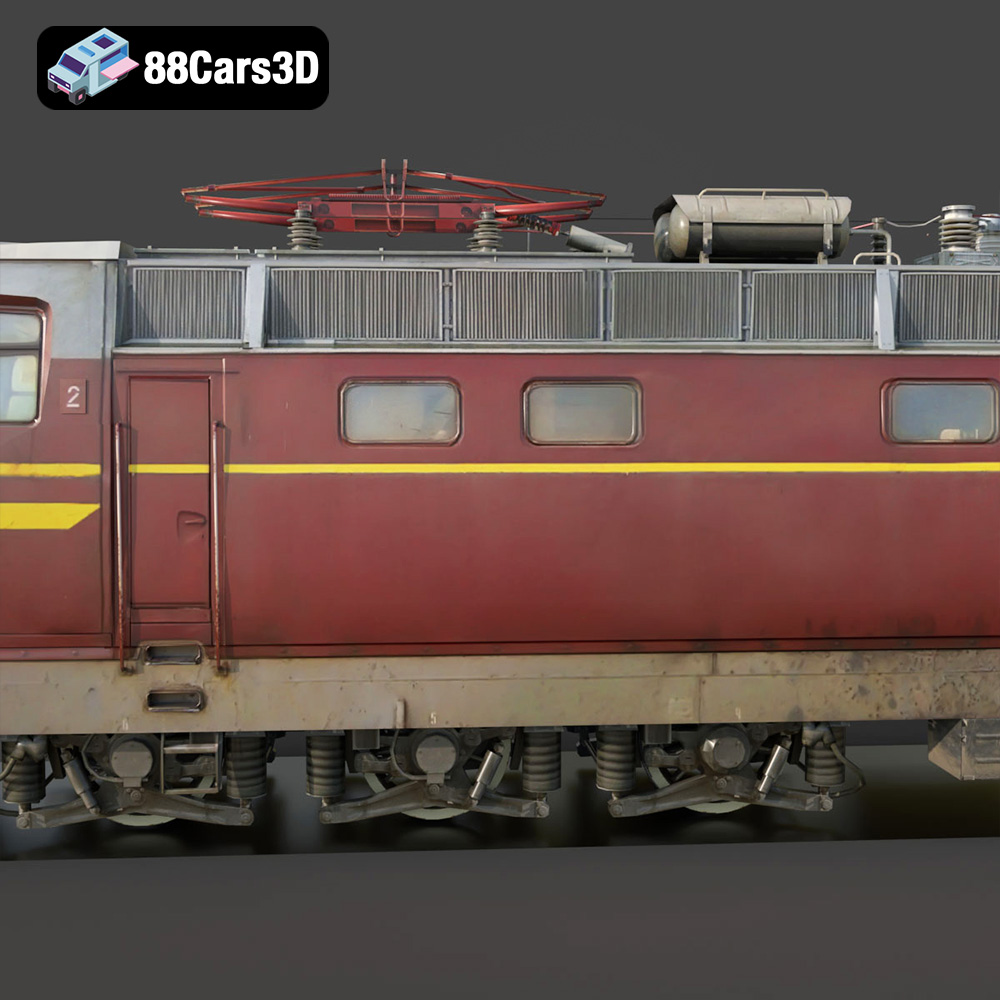
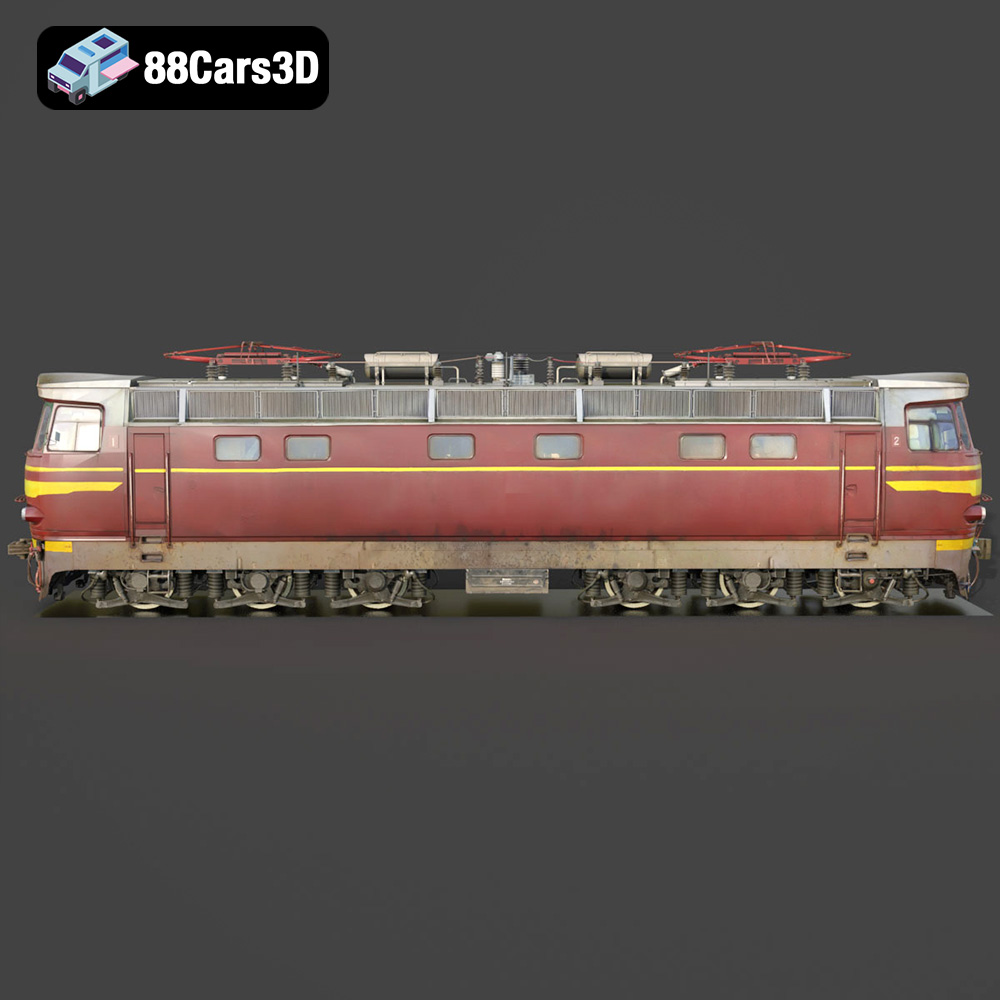
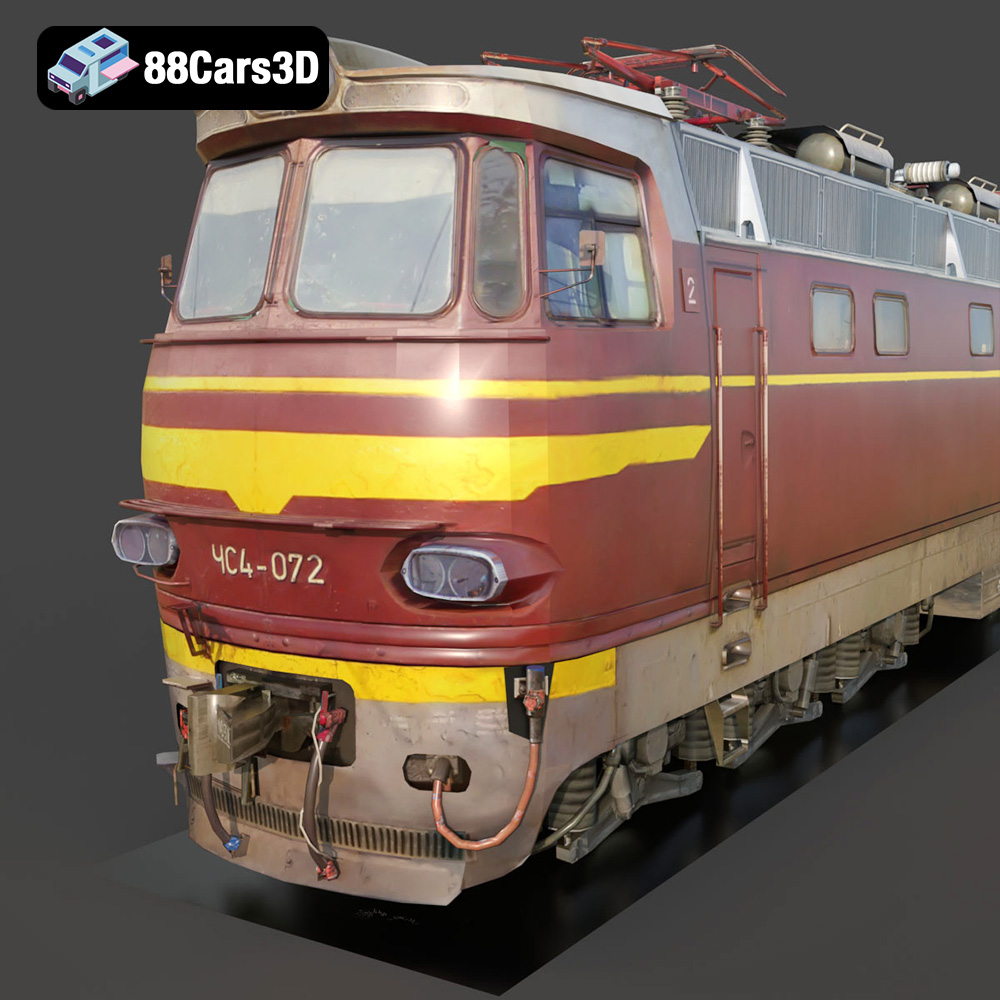
The external features of the CHS4 072-004 model are a testament to careful observation and execution. Accurate body panels and structural details capture the locomotive’s distinct profile, ensuring that its powerful presence is faithfully represented. Beyond mere aesthetics, functional components like the detailed bogies, wheels, and rail interaction elements are crafted with animated realism in mind. This means not just visual accuracy, but also correct pivot points and hierarchies for smooth, believable movement. The authentic pantographs, insulators, and overhead line equipment are not simply static elements; they are designed to articulate, allowing for dynamic animations that simulate real-world operation. Similarly, realistic lighting fixtures, from headlights to signal lights and cabin illumination, are set up for proper rendering and interactive control, contributing significantly to visual storytelling and environmental realism.
The attention to detail extends beyond the exterior shell. The detailed driver’s cab, complete with dashboard, controls, and seating, provides an immersive experience, crucial for simulation and first-person game perspectives. Every button, lever, and gauge is present, enhancing the sense of realism and allowing for interactive elements in game or training scenarios. Furthermore, the visible undercarriage and mechanical elements, including optimized drivetrain components, demonstrate a commitment to comprehensive representation. While not always directly visible, these details add to the model’s structural integrity and can be exposed for cutaway views, engineering diagrams, or enhanced visual effects, proving the depth of the model’s construction.
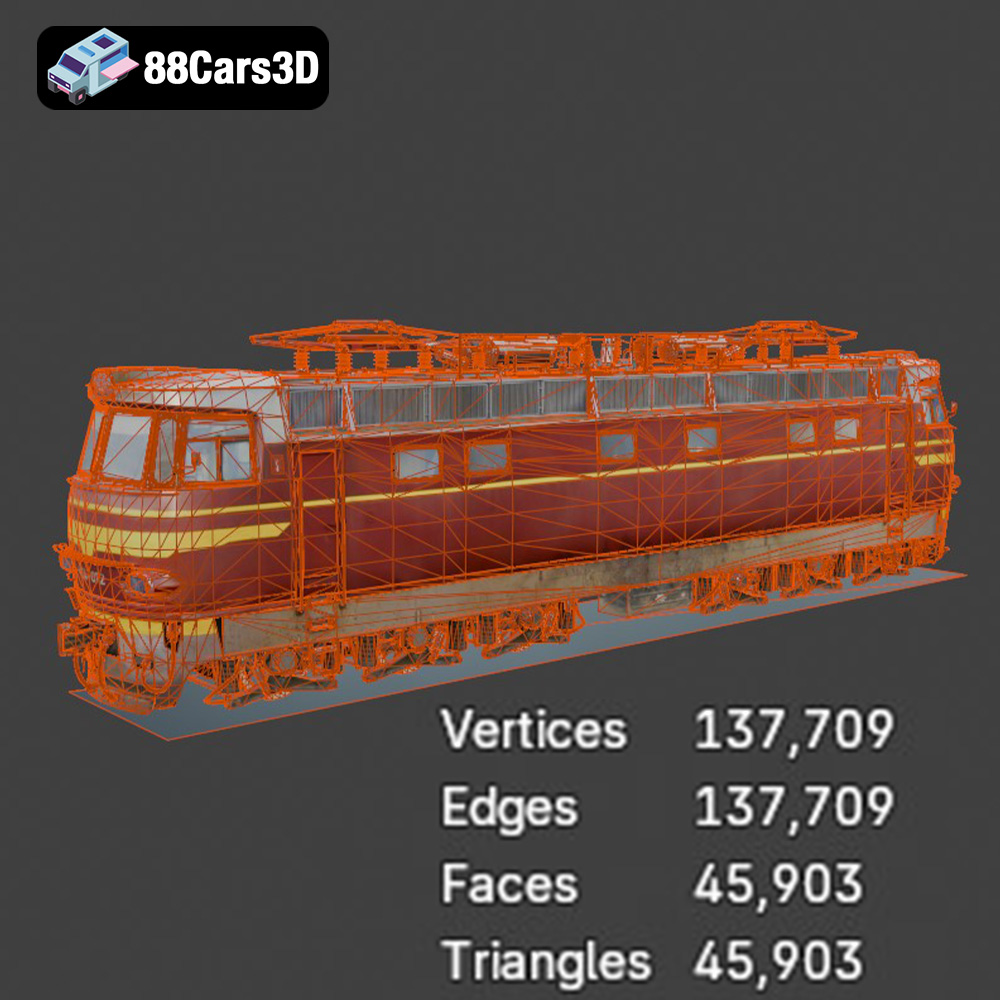
At the heart of any professional 3D model is its topology. The CHS4 072-004 model boasts clean, quad-dominant topology, which is a gold standard in 3D modeling. This means the mesh is primarily made up of four-sided polygons, ensuring smooth deformation during animation, predictable subdivision for higher detail levels (e.g., using subdivision surface modifiers), and overall easier manipulation for artists. Modeled to real-world scale, the asset integrates perfectly into scenes without requiring tedious resizing, maintaining physical accuracy. Moreover, a logically organized hierarchy with properly set pivot points for animation readiness ensures that artists can immediately begin animating doors, wheels, and pantographs without extensive setup. This level of technical excellence means less time fixing and more time creating.
The versatility of a well-crafted 3D model like the Locomotive CHS4 072-004 makes it suitable for an impressive array of professional applications. Its balanced level of detail and clean geometry allow it to transcend various industries and creative demands, offering a robust solution for diverse projects.
For rendering and visualization professionals, the CHS4 model is a dream asset. Its high-quality material definitions for metal, glass, rubber, and paint finishes are designed to react realistically to light, enabling the creation of stunning studio renders and cinematic sequences. Imagine this powerful locomotive traversing breathtaking landscapes in a film or an architectural visualization showcasing a new railway station. The separation of components, such as doors and pantographs, allows for dynamic animations, bringing still scenes to life with moving parts. Artists can easily adjust paint finishes, apply custom graphics or liveries, and adapt lighting setups to match specific scene requirements or time of day, ensuring complete creative control for photorealistic output.
Game developers and AR/VR creators will find the CHS4 072-004 model to be an indispensable game asset. Optimized for integration into leading game engines like Unreal Engine and Unity, its high-quality mesh ensures smooth performance even in real-time applications. This makes it perfectly suitable for realistic train simulators, where players can experience driving the locomotive firsthand, or for populating open-world environments with authentic railway vehicles. In augmented and virtual reality, the model’s fidelity enhances immersion, allowing users to interact with a high-detail locomotive in virtual showrooms, educational experiences, or interactive simulations. The .fbx, .glb, and .unreal file formats included with the model directly support these real-time pipelines, reducing setup time significantly.
Beyond entertainment, the CHS4 model finds critical utility in simulation and training. Its real-world scale and accurate mechanical details make it ideal for developing realistic railway simulations for training engineers, conductors, or maintenance crews. Educational institutions can leverage the model for teaching about locomotive mechanics, operational procedures, or railway infrastructure. The detailed driver’s cab, with its functional controls, offers a powerful platform for interactive training modules, allowing users to practice complex tasks in a safe, controlled digital environment. Its clean topology and organized hierarchy also simplify any further modifications or data extraction required for specific engineering analysis or training scenarios.
The true value of a professional 3D asset lies not just in its intrinsic quality, but in how effectively it streamlines and enhances existing professional workflows. The Locomotive CHS4 072-004 3D Model is engineered to be a workflow accelerator, saving artists and developers countless hours and ensuring consistent, high-quality results across various software environments.
For artists deeply invested in digital content creation (DCC) software, the inclusion of native .blend and .max files is a significant advantage. Blender users gain a fully editable scene, allowing immediate access to the model’s geometry, materials, and any existing rigging or animation. This means no complicated import procedures, no loss of data, and full control over every aspect of the asset within their preferred environment. Similarly, 3ds Max professionals can open the .max file directly, preserving scene organization, material assignments, and animation readiness. This direct integration eliminates common headaches associated with format conversions, such as missing textures, incorrect scaling, or broken hierarchies, enabling artists to jump straight into animation, custom rendering setups, or further model modifications.
Game development and real-time visualization demand assets that are not only visually appealing but also highly optimized for performance. The CHS4 model addresses this with its inclusion of .fbx and a dedicated .unreal asset. The .fbx format is the go-to for importing complex animated models into both Unreal Engine and Unity. Its ability to carry geometry, materials, textures, and animation data makes it perfect for a seamless transition from DCC to game engine. The explicit .unreal format goes a step further, providing a pre-configured setup specifically for Unreal Engine. This often means optimized material instances, pre-calculated LODs (Levels of Detail), and appropriate collision meshes, significantly reducing the engineering overhead and allowing developers to integrate the locomotive into their game or simulation environment with minimal tweaking. This pre-optimization is a massive time-saver in fast-paced production schedules.
No project is identical, and the ability to customize assets is paramount. The CHS4 model is designed with adaptability in mind. Its high-quality material definitions are typically PBR (Physically Based Rendering) ready, allowing for easy adjustment of paint finishes, metal sheen, glass reflectivity, and rubber textures. Artists can effortlessly apply custom graphics, logos, or liveries to match specific brand requirements or fictional scenarios. The separated components and logical hierarchy simplify modification of individual elements or the creation of new animations. For example, if a unique damage state or a specific weather-beaten look is required, the clean topology facilitates easy texture painting or geometry manipulation. This level of customization ensures that the model remains relevant and flexible across a wide range of creative briefs, truly embodying the spirit of a versatile asset from 88cars3d.com.
Achieving a harmonious balance between visual fidelity and real-time performance is a constant challenge in 3D modeling. The Locomotive CHS4 072-004 3D Model exemplifies how thoughtful technical execution can deliver both. Understanding these underlying principles is key to appreciating the quality of a professional-grade asset.
The “clean, quad-dominant topology” of the CHS4 model is not just an aesthetic choice; it’s a fundamental principle of mesh optimization. Quads (four-sided polygons) deform more predictably than triangles (tris) or n-gons (polygons with more than four sides), which is crucial for animation. While the final mesh in game engines is always triangulated, starting with quads makes the model easier to work with in DCC software for tasks like sculpting, edge looping, and UV mapping. This clean topology also aids in creating efficient LODs (Levels of Detail), where progressively simpler versions of the model are swapped in at greater distances from the camera to save rendering resources without a noticeable drop in visual quality. A well-optimized mesh ensures smooth frame rates in real-time applications and renders efficiently in offline renderers.
The mention of “high-quality material definitions for metal, glass, rubber, and paint finishes” points directly to a Physically Based Rendering (PBR) workflow. PBR materials accurately simulate how light interacts with surfaces in the real world, leading to highly realistic rendering results. This typically involves a set of texture maps (Albedo/Base Color, Metallic, Roughness, Normal, Ambient Occlusion) that define the material properties. A professional asset like the CHS4 model would come with these textures meticulously created, ensuring consistent and believable visual properties across different lighting conditions and rendering engines. Proper UV mapping – the process of unwrapping the 3D model’s surface onto a 2D plane – is essential for applying these textures without distortion. The “balanced level of detail” implies that UVs are efficiently packed and scaled appropriately, allowing for resolution-rich texturing without wasting texture space.
Beyond the mesh and materials, the overall scene organization plays a crucial role in a model’s usability. The CHS4 model’s “logically organized hierarchy with properly set pivot points” is a critical technical advantage. A well-structured hierarchy means components are grouped intuitively (e.g., “Body,” “Bogies,” “Pantographs”), making it easy for artists to select, manipulate, and animate specific parts. Correctly placed pivot points ensure that rotations and transformations occur as expected – for example, a wheel rotating around its axle, or a door opening from its hinge. This level of pre-setup significantly reduces the time and effort required to prepare the model for animation or integration into a larger scene, allowing artists to focus on creative tasks rather than technical troubleshooting.
In the fast-paced world of 3D production, time is a precious commodity. The decision to invest in professional, pre-built 3D models from reputable sources like 88cars3d.com is often a strategic one, offering significant advantages over building every asset from the ground up, especially for complex subjects like industrial locomotives.
Creating a model of the complexity and fidelity of the Locomotive CHS4 072-004 would typically require hundreds of hours of expert modeling, texturing, and rigging. For many projects, especially those with tight deadlines and limited budgets, this is simply not feasible. Purchasing a high-quality asset immediately provides a finished product, allowing teams to allocate their valuable time and resources to other critical aspects of the project, such as scene assembly, animation, lighting, and final rendering. This dramatically accelerates production timelines and helps to meet demanding schedules without compromising on quality. The cost-effectiveness of purchasing an asset like this, compared to the internal labor cost, is undeniable.
Not every 3D artist possesses the specialized skills required to model industrial machinery with engineering accuracy, or to optimize it for both cinematic rendering and real-time game engines. Professional asset developers, on the other hand, specialize in creating assets that meet rigorous industry standards. The Locomotive CHS4 072-004 3D Model is a prime example, offering “unparalleled detail and versatility.” This means artists can achieve professional-grade visuals right out of the box, ensuring their projects stand out with photorealistic quality and technical integrity. It provides a baseline of excellence that might otherwise be challenging or too time-consuming for an individual or small team to achieve independently.
By providing a foundation of high-quality assets, artists and developers are freed to explore more creative avenues. Instead of being bogged down in the technicalities of modeling a locomotive, they can focus on innovative storytelling, unique gameplay mechanics, or compelling visualizations. The availability of diverse 3D car models and industrial assets from marketplaces like 88cars3d.com also means that creators have access to a wider library of resources, enabling them to tackle projects that might otherwise be beyond their scope, from intricate urban scenes populated with various vehicles to complex industrial environments that demand accurate machinery.
The journey through the technical nuances and practical applications of the Locomotive CHS4 072-004 3D Model underscores the immense value of professional-grade 3D assets in today’s digital landscape. From its meticulously crafted exterior and immersive interior to its clean, quad-dominant topology and comprehensive file format support, this model is a paragon of technical excellence and creative versatility.
Whether you are an architect aiming for breathtaking visualizations, a filmmaker creating cinematic sequences, a game developer building immersive worlds, or an engineer crafting precise simulations, the CHS4 model provides a robust, animation-ready solution. It streamlines workflows, accelerates production, and empowers creators to achieve stunning results without the monumental effort of starting from scratch. Investing in such a high-quality asset from platforms like 88cars3d.com is not just a purchase; it’s a strategic decision that enhances productivity, elevates visual fidelity, and expands the horizons of what’s possible in your 3D projects. Embrace the power of expertly crafted 3D models and let your creativity take the lead.
Experience the robust engineering and classic design of the Locomotive CHS4 072-004 with this professional 3D model. Meticulously crafted to capture the essence of this powerful electric locomotive, the model features clean geometry and a balanced level of detail, making it ideal for a wide range of applications. From stunning cinematic renders and engaging animations to realistic simulations and integration into game development, this asset is built for performance and visual fidelity. Included file formats: .blend, .fbx, .obj, .glb, .stl, .ply, .unreal, .max.
$10.79
.072004
.arvr
.blend
.chs4
.fbx
.gameasset
.glb
.max
.obj
.ply
.rail
.railroad
.rendering
.simulation
.stl
.train
.unreal
locomotive