⚡ FLASH SALE: Get 60% OFF All Premium 3D & STL Models! ⚡

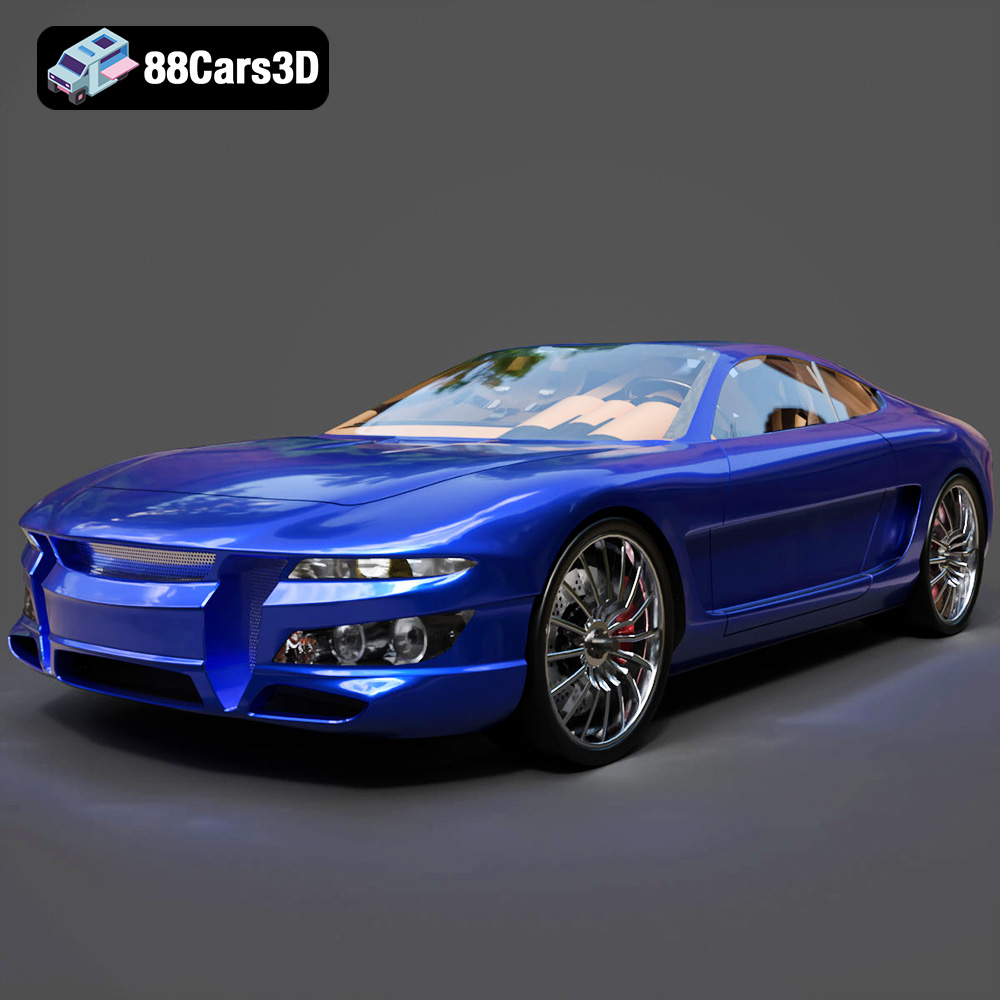
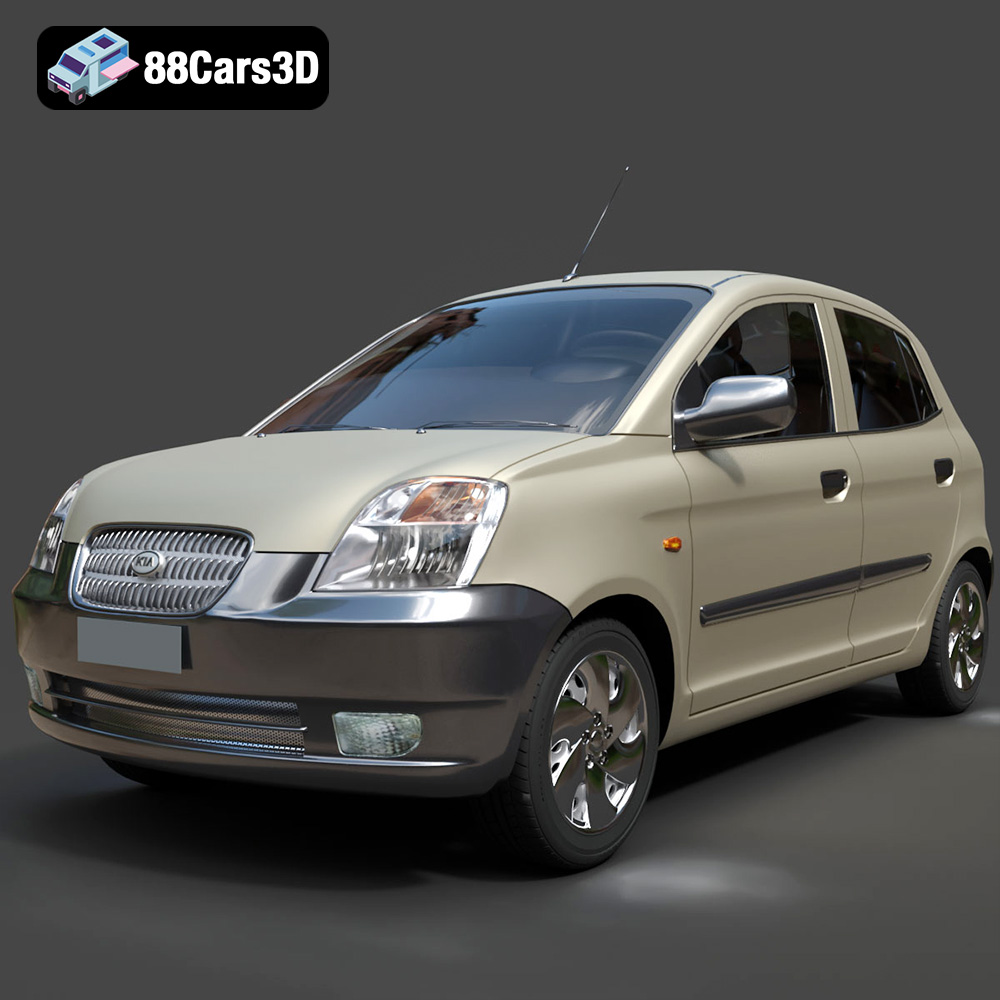
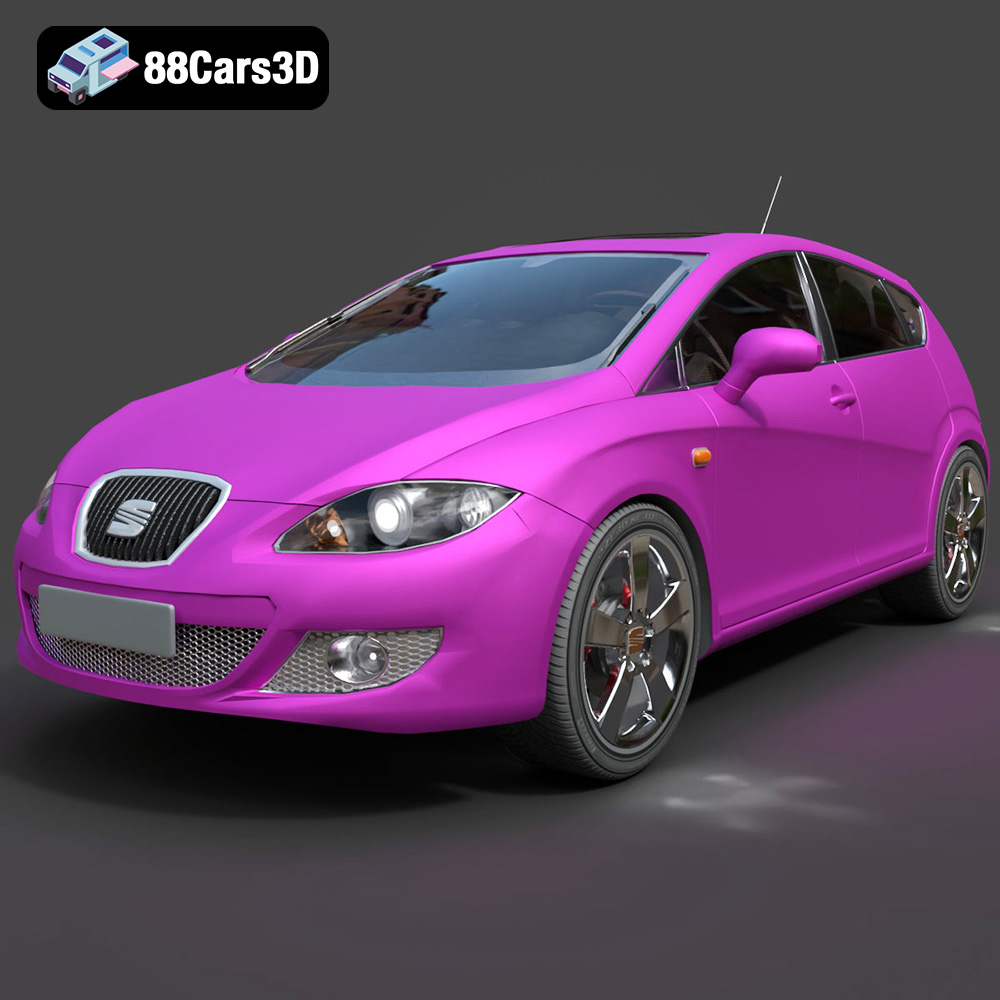
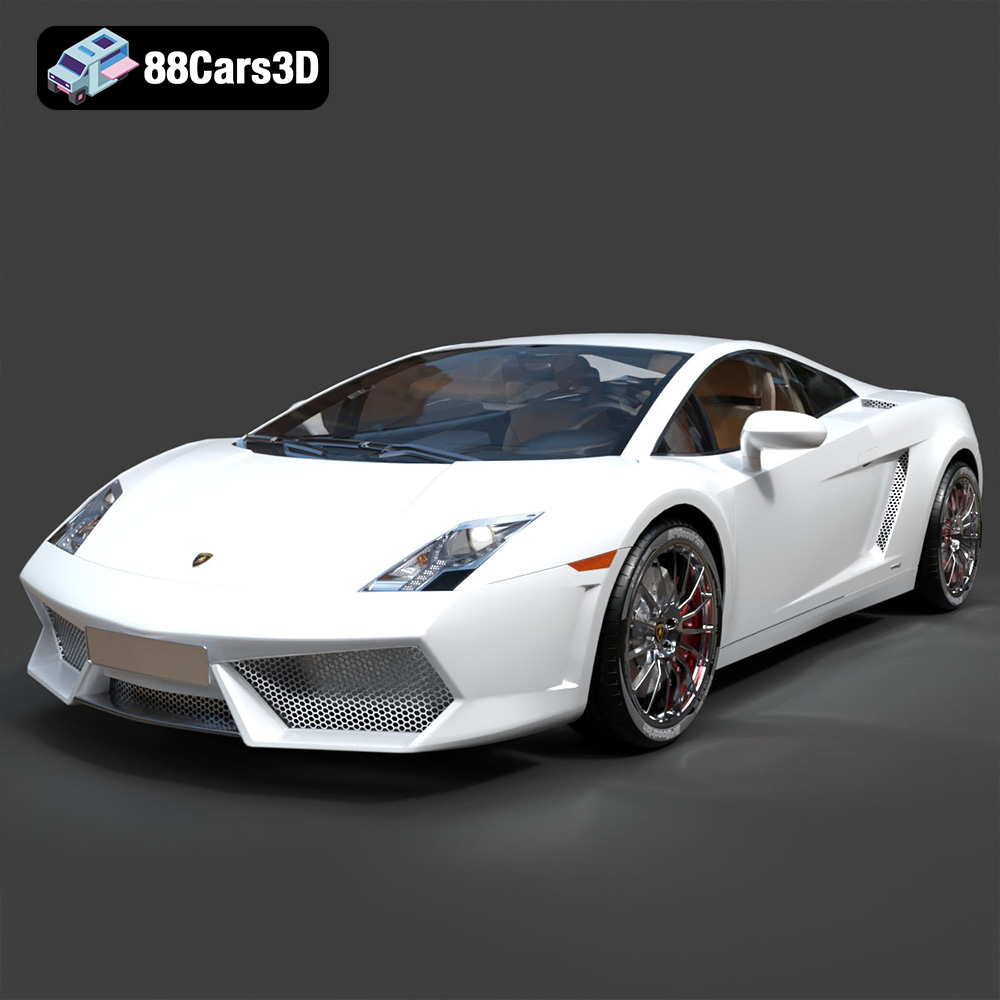
In today’s visually driven world, 3D car models are no longer just eye candy for enthusiasts; they are foundational assets driving innovation across a multitude of industries. From captivating automotive marketing campaigns and groundbreaking game development to precision engineering and immersive AR/VR experiences, high-fidelity digital vehicles are essential. These meticulously crafted assets serve as the blueprints for future designs, the stars of virtual productions, and the core components of interactive simulations. Understanding their technical nuances, applications, and the vast array of file formats available is crucial for anyone looking to leverage the power of digital automotive design. This post will delve into the technical depths of 3D car modeling, exploring workflows, optimization strategies, and the diverse applications that make platforms like 88cars3d.com invaluable resources for professionals seeking top-tier digital assets.
Choosing the correct file format for your 3D car models is a critical decision that impacts workflow efficiency, compatibility, and the final quality of your project. Each format is designed with specific use cases and technical characteristics in mind, making a knowledgeable selection paramount.
The `.blend` format represents a fully editable Blender scene. It’s ideal for users operating within the Blender ecosystem, offering complete flexibility. This includes not just the mesh data but also materials, textures, lighting, cameras, animations, rigging, and even simulation data. For those who want to modify every aspect of a model, dive into the shader graph, or use Blender’s robust animation tools, a `.blend` file is the most comprehensive starting point. It’s a powerful format for designers who wish to adapt a model thoroughly for their specific creative vision or integrate it seamlessly into a Blender-based production pipeline.
The Filmbox (`.fbx`) format is an industry-standard proprietary file format developed by Autodesk, widely adopted for its excellent interoperability across 3D software and game engines. It’s particularly ideal for pipelines involving Unreal Engine, Unity, and other real-time applications. `.fbx` files efficiently store not only geometric data but also crucial elements like skeletal animations, blend shapes, cameras, lights, and material properties. Its robust support for scene hierarchy and keyframe animation makes it the go-to choice for animated game assets and cinematic sequences, ensuring data integrity during transfer between different applications like 3ds Max, Maya, Blender, and game engines.
The Wavefront Object (`.obj`) format is one of the oldest and most universally supported 3D file formats. It’s excellent for cross-software compatibility, serving as a reliable baseline for transferring pure geometric data (vertices, normals, UV coordinates). While `.obj` files can reference external material (`.mtl`) files, they do not inherently store complex material shaders, rigging, or animation data. This makes them less suitable for animated assets but highly reliable for static meshes where geometric accuracy and wide compatibility are priorities. It’s a workhorse for applications ranging from 3D sculpting to straightforward rendering setups.
The GL Transmission Format Binary (`.glb`) is the binary version of glTF, specifically optimized for efficient transmission and loading of 3D scenes and models in AR, VR, and browser-based applications. It encapsulates all necessary data—mesh, textures, materials, animations—into a single, self-contained file, making it incredibly easy to share and display models online or in augmented/virtual reality environments. Its compact size and direct support for PBR materials make it an emerging standard for delivering interactive 3D car models and other assets across the web and mobile platforms.
The Stereolithography (`.stl`) format is synonymous with 3D printing. It describes only the surface geometry of a 3D object using a tessellated mesh of triangles, without any color, texture, or material information. This simplicity makes it a robust and widely accepted format for sending models to 3D printers. For 3D car models destined for physical prototypes or scale models, ensuring the `.stl` file is “watertight” (manifold) is crucial to avoid printing errors. It’s not suitable for rendering or animation but is indispensable for manufacturing and prototyping workflows.
The Polygon File Format (`.ply`), also known as the Stanford Triangle Format, is primarily used for storing 3D data from 3D scanners and for applications requiring precision mesh data, such as CAD and scientific analysis. Like `.obj` and `.stl`, it describes the geometry of a model, but it can also store additional properties like color, transparency, surface normals, and range data, often per vertex or per face. While less common for general-purpose rendering than `.fbx` or `.obj`, `.ply` is valuable when preserving highly detailed scan data or when exporting models for specific engineering or simulation software.
The `.unreal` “format” isn’t a direct export format from 3D software, but rather a conceptual representation of an asset package optimized and integrated *within* Unreal Engine. When you import a model (typically an `.fbx` file) into Unreal Engine, the engine processes and compiles it into its internal proprietary `.uasset` format. This `.uasset` contains the mesh, materials, textures, collision data, and other properties tailored for the engine’s real-time rendering pipeline. For users receiving “Unreal Engine-ready” assets, it means the 3D car models have been pre-configured, tested, and optimized for immediate use within the engine, often implying specific material setups, collision meshes, and LODs (Levels of Detail).
The `.max` format is the native scene file for Autodesk 3ds Max. Similar to `.blend` for Blender, a `.max` file encapsulates the entire 3ds Max scene, including geometry, modifiers, materials (V-Ray, Corona, Arnold, etc.), lighting, cameras, animation, and scene setup. It offers maximum flexibility for professionals working within 3ds Max, providing access to all aspects of the model for extensive customization, animation sequences, or high-fidelity automotive rendering. For studios that standardize on 3ds Max, receiving a `.max` file ensures full editability and control over the asset.
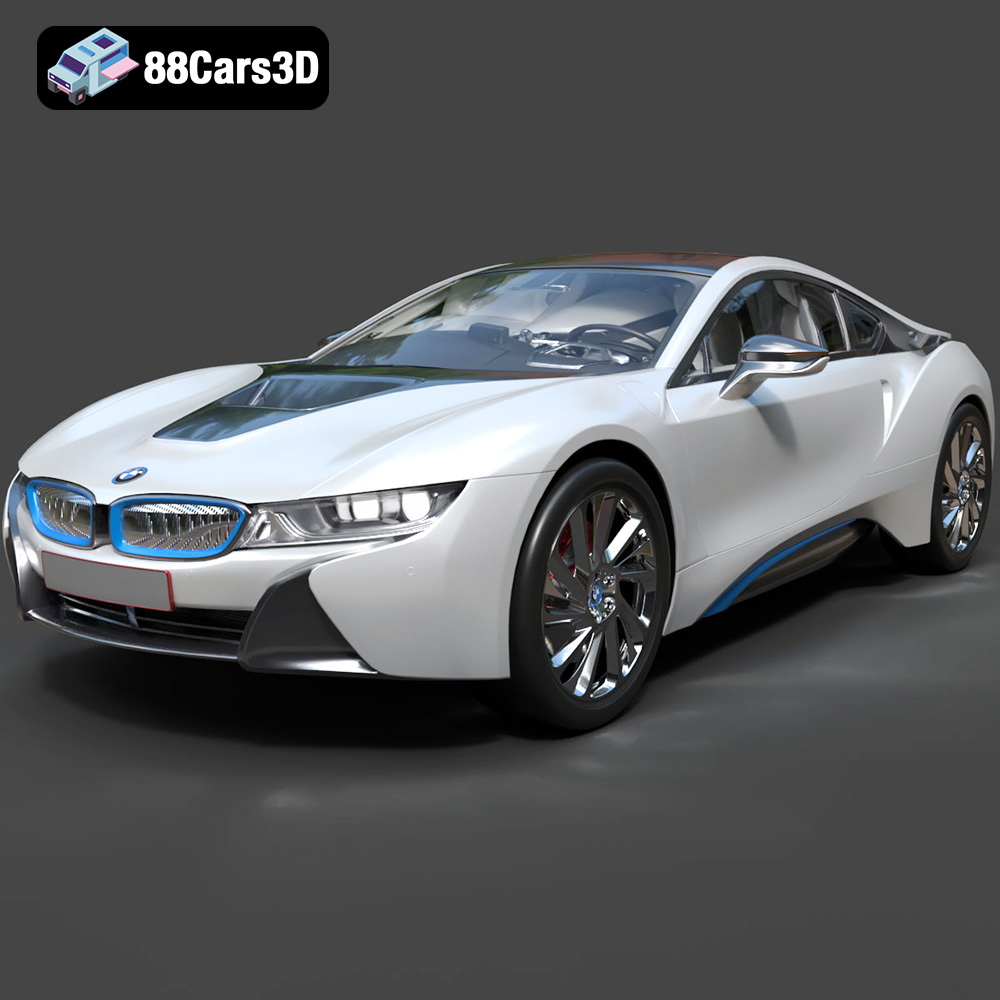
Automotive rendering is where the digital meets the photorealistic. It’s the process of transforming a raw 3D car model into a stunning, lifelike image or animation, complete with intricate reflections, realistic lighting, and impeccable material finishes. This discipline blends artistic vision with technical expertise to create visuals that are often indistinguishable from actual photography.
Achieving photorealism in automotive rendering requires powerful software and a meticulous workflow. Industry-standard renderers like V-Ray, Corona Renderer, and Arnold, often integrated into host applications like 3ds Max or Blender, utilize advanced algorithms such as ray tracing and global illumination to simulate how light interacts with surfaces in a physically accurate manner. The workflow typically begins with meticulous model preparation, followed by setting up studio-quality lighting, defining materials with physical properties, and finally, optimizing render settings for speed and quality. Each step is crucial, from crafting crisp reflections on a car’s paintwork to simulating the subtle dispersion of light through its headlights.
The secret to a truly convincing render lies in the materials. Physically Based Rendering (PBR) workflows are standard, where materials are defined by properties like base color (albedo), metallicness, roughness, normal maps, and displacement maps. These textures dictate how light interacts with every surface of the 3D car model, simulating paint, chrome, glass, rubber, leather, and fabric with incredible accuracy. Tools like Substance Painter and Quixel Mixer are essential for creating highly detailed and realistic textures, allowing artists to add subtle imperfections, wear, and grime that elevate realism beyond pristine factory finishes.
Lighting is the primary driver of mood and realism in any render. For automotive visuals, this often involves High Dynamic Range Images (HDRIs) to simulate real-world environments, providing complex, natural lighting and reflections. Studio lighting setups, using a combination of area lights, spot lights, and diffuse panels, are common for showcasing vehicle aesthetics in a controlled environment. The careful placement and intensity of these lights, combined with the reflective properties of the car’s body, are what bring the model to life, highlighting its curves, lines, and design intent.
The interactive nature of modern video games demands highly optimized yet visually stunning 3D car models. These assets are the heart of racing simulations, open-world adventures, and immersive virtual experiences. Integrating them seamlessly into game engines requires a deep understanding of performance budgets, real-time rendering constraints, and engine-specific workflows.
For game development, brute polygon count is often the enemy of performance. High-quality 3D car models must be optimized to render efficiently in real-time. This involves strategies like creating multiple Levels of Detail (LODs), where simpler versions of the model are swapped in at greater distances from the camera. Techniques such as baking normal maps from high-poly models onto low-poly versions retain visual detail without the geometric overhead. Proper mesh topology, judicious use of materials, and efficient UV mapping are critical to ensure that a game can run smoothly while still looking exceptional.
Integrating game assets into engines like Unreal Engine or Unity involves more than just importing a mesh. It requires setting up materials, creating collision meshes for realistic physics, and often rigging the vehicle for animation (wheels, doors, suspension). In Unreal Engine, this might involve using the Chaos Vehicle system, setting up physically based materials, and creating blueprints for vehicle logic. Unity has similar systems, often leveraging its physics engine and URP/HDRP pipelines for rendering. Artists work closely with developers to ensure the car model behaves and looks as intended within the game’s environment. The pre-optimized models available on 88cars3d.com often come with these considerations already addressed, streamlining the integration process.
A static car model has limited use in a dynamic game. Rigging involves creating a skeletal structure for the vehicle, allowing components like wheels, suspension, and doors to move independently and realistically. This rigging is then used to create animations for various states: driving, braking, turning, opening doors, or even taking damage. Advanced rigging can simulate complex suspension systems and tire deformations, enhancing the realism of racing simulations. For character-driven games, character interaction with the vehicle might also require specific rigging and animation setups.
The utility of 3D car models extends far beyond traditional rendering and game development. They are becoming indispensable tools for cutting-edge applications in augmented reality (AR), virtual reality (VR), and tangible product prototyping through 3D printing.
AR and VR leverage 3D car models to create truly immersive and interactive experiences. In AR, users can place virtual cars in their real-world environment via a smartphone or tablet, allowing them to visualize a vehicle in their driveway before purchase, or interact with an animated model as if it were truly present. VR takes this a step further, immersing users fully in a virtual showroom, allowing them to “sit inside” a car, customize its features, and even “drive” it in a simulated environment. These applications demand extremely optimized models that perform efficiently on mobile devices or VR headsets, with particular attention to texture resolution, polygon count, and draw calls to maintain high frame rates.
Before a single piece of metal is cut, 3D car models facilitate rapid prototyping through 3D printing. Designers can quickly iterate on physical designs, printing scale models of vehicle components or entire car bodies. This allows for tangible evaluation of ergonomics, aesthetics, and fit-and-finish early in the design process, significantly reducing development time and costs. For 3D printing, the model must be “manifold” or “watertight,” meaning it has no holes or gaps in its surface geometry, which is a critical aspect for generating accurate print files.
Beyond visual appeal, 3D car models are crucial for engineering analysis. High-precision CAD models can be used for computational fluid dynamics (CFD) simulations to analyze aerodynamics, finite element analysis (FEA) to test structural integrity, and crash simulations to evaluate safety. These models are highly detailed, often retaining the exact dimensions and complex internal structures necessary for accurate scientific and engineering computations. While not always visually optimized for rendering, their geometric fidelity is paramount for functional analysis.
The true value of a 3D car model, especially from a marketplace like 88cars3d.com, lies in its underlying quality and craftsmanship. A professional-grade asset isn’t just about looking good in a single render; it’s about robust construction that allows for versatile use across various platforms and pipelines.
A hallmark of a high-quality 3D car model is clean, efficient mesh topology. This means the model is primarily composed of quads (four-sided polygons), which deform predictably and smoothly during animation and subdivision. Poor topology, characterized by messy triangles or N-gons (polygons with more than four sides), can lead to shading artifacts and difficulty in rigging or editing. Polygon efficiency refers to achieving the desired level of detail with the minimum necessary polygon count, which is crucial for performance, especially in real-time applications like games or AR/VR.
Proper UV mapping is essential for applying textures accurately and without distortion. A professional model will have clean, non-overlapping UVs that utilize texture space efficiently. This allows for high-resolution textures to be applied seamlessly, ensuring that details like panel gaps, paint imperfections, and interior textures appear crisp and realistic. Consistent texture resolution across different parts of the vehicle also contributes to a cohesive and believable appearance in any rendering or game engine.
A truly professional 3D car model is built with scalability in mind. This means it can be adapted for various applications—from highly detailed close-up renders to low-poly versions for distant game assets. It typically features a logical hierarchy, clean naming conventions for objects and materials, and is free of unnecessary modifiers or hidden geometry. Such models are “future-proofed,” meaning they can be easily modified, re-textured, or re-purposed as technology and project requirements evolve, providing long-term value to designers and studios.
The landscape of digital visualization and interactive experiences is constantly evolving, and at its core, the demand for high-quality 3D car models remains unwavering. From the precision required for photorealistic automotive rendering to the optimized efficiency needed for compelling game assets, these digital vehicles are the silent workhorses of innovation across diverse sectors. Understanding the nuances of file formats, the intricacies of rendering workflows, and the strategic considerations for game development, AR/VR, and prototyping empowers professionals to make informed decisions and unlock their full creative potential. By providing meticulously crafted, technically sound 3D car models in a variety of essential formats, 88cars3d.com serves as a vital resource for designers, developers, and enthusiasts worldwide, fueling their projects with the assets they need to drive the future.