⚡ FLASH SALE: Get 60% OFF All Premium 3D & STL Models! ⚡

In the exhilarating world where automotive design meets digital artistry, the precise modeling of aerodynamic car body panels stands as a testament to skill, technical understanding, and an unwavering eye for detail. Beyond mere aesthetics, the curves, contours, and subtle inflections of a car’s exterior are a dance with the invisible forces of air, dictating performance, efficiency, and the very character of the vehicle. For 3D artists, game developers, and automotive designers, translating these complex, fluid forms into a high-fidelity 3D model is a critical challenge and a rewarding achievement.
This comprehensive guide delves deep into the technical intricacies of modeling aerodynamic car body panels, providing you with the insights and workflows needed to create stunning, functional, and optimized 3D assets. From mastering flawless topology and crafting physically accurate materials to optimizing for real-time engines and preparing for AR/VR or 3D printing, we’ll cover every essential aspect. By the end of this article, you’ll possess a robust understanding of the methodologies employed by industry professionals, enabling you to elevate your creations and deliver exceptional 3D car models, whether for breathtaking visualizations or high-performance game assets. For those seeking a head start, platforms like 88cars3d.com offer a vast collection of professional-grade 3D car models, perfect for study or immediate project integration.
Before a single polygon is laid, understanding the real-world principles of automotive aerodynamics is paramount. A truly convincing 3D car model doesn’t just look fast; it embodies the engineering principles that make a car perform. Drag, lift, and downforce are the primary forces at play, influenced directly by the vehicle’s shape. For instance, a sleek, tapering fastback design reduces drag, while a rear spoiler generates downforce. When modeling, these concepts translate into the careful sculpting of surfaces to ensure smooth airflow, minimize turbulence, and create visually appealing reflections that mimic real-world physics.
Aerodynamics is the study of how air interacts with moving objects. For cars, this primarily involves reducing drag (resistance to motion) and managing lift (upward force) or enhancing downforce (downward force for grip). Key aerodynamic features include low-slung profiles, streamlined bodywork, diffusers, spoilers, and even subtle curvature on wing mirrors. Consider how a car’s frontal area, its overall silhouette, and the smoothness of its transitions all contribute. For example, the gentle curvature of a hood flowing into the windshield, or the integrated lines of a side skirt, are not arbitrary; they’re designed to guide air efficiently. As a 3D artist, your goal is to meticulously replicate these design choices. This means paying close attention to every fillet, every crease, and every surface transition, understanding that even a slight deviation can compromise both visual fidelity and the implied aerodynamic performance of your 3D car models. Studying real vehicles, concept art, and even scientific diagrams of airflow can provide invaluable insights into achieving authentic forms.
The foundation of any accurate 3D model lies in impeccable reference material. For aerodynamic car bodies, this is even more critical. Begin by collecting comprehensive blueprints, orthographic images (front, side, top, rear), and high-resolution photographs of your target vehicle from various angles. Look for images that highlight reflections, as these are crucial for evaluating surface quality later on. Beyond flat images, seek out detailed walk-around videos or 360-degree views. In your 3D software of choice, be it Blender, 3ds Max, or Maya, set up these references meticulously. In Blender, for example, you can use “Empty” objects with image references, precisely scaling and positioning them to match. For 3ds Max users, configuring viewport background images with correct aspect ratios is essential. The goal is to create a digital “lightbox” where your model can be built directly on top of and against multiple viewpoints, ensuring proportional accuracy and consistent curvature across all axes. Don’t underestimate the power of a good reference setup; it’s the bedrock upon which all your aerodynamic forms will be constructed, providing an essential guide for maintaining design intent and technical precision.
Clean topology is the unsung hero of high-quality 3D car models, especially when dealing with the nuanced curves and reflective surfaces of aerodynamic body panels. It dictates how light reflects, how subdivisions behave, and ultimately, the visual fidelity of your asset. Achieving perfectly smooth, flowing surfaces that capture the essence of a car’s design requires a deep understanding of edge flow, polygon distribution, and managing complex intersections without introducing artifacts. This section delves into the critical decisions and techniques for crafting impeccable surface topology.
When approaching automotive surfaces, artists traditionally choose between two primary modeling methodologies: NURBS (Non-Uniform Rational B-Splines) and Subdivision Surface modeling. NURBS, often favored in industrial design and CAD software, excels at creating mathematically precise, infinitely smooth curves and surfaces. It’s ideal for concept design and manufacturing where exact dimensions are paramount. However, NURBS models can be challenging to manipulate organically for complex organic shapes and often require conversion to polygon meshes for rendering or game engine integration, which can introduce topology issues if not handled carefully.
Subdivision Surface (SubD) modeling, on the other hand, is the go-to for most production pipelines in film, animation, and games. It involves building a low-polygon “control cage” using quads, which is then smoothed by a subdivision algorithm (like Catmull-Clark) to generate a high-resolution, smooth mesh. The key advantage of SubD is its flexibility and control. Artists can easily sculpt and refine shapes by manipulating the low-poly cage, while the underlying subdivision algorithm ensures a smooth result. For detailed, production-ready aerodynamic car panels, SubD is generally preferred due to its balance of control, visual quality, and ease of optimization for various target platforms, including game assets and visualization projects.
The secret to stunning automotive renders lies in how light interacts with the surfaces, revealing every subtle curve and imperfection. Proper edge flow is crucial for maintaining perfect curvature and achieving those coveted, seamless reflections. Imagine a “zebra stripe” test, where parallel lines are projected onto a car’s body; a perfectly smooth panel will show unbroken, flowing lines, while poor topology will result in kinks or distortions. To achieve this, prioritize clean quad topology throughout. Every edge loop should follow the natural contours of the surface, guiding the flow of reflections.
When creating sharp creases, such as those defining the edge of a hood or a body line, avoid simply ending your subdivision at the crease. Instead, use “support loops” or “holding loops” – additional edge loops placed very close to the intended sharp edge. These loops tighten the subdivision surface in that area, creating a crisp crease while maintaining overall quad topology. In Blender, for instance, you can also use crease weights (Shift+E) to control the sharpness of edges without adding extra geometry, though support loops offer more predictable results for critical surfaces. For detailed guidance on Blender’s modeling tools, the official Blender 4.4 documentation on mesh modeling and subdivision surfaces provides excellent resources.
Crucially, avoid poles (vertices with more or less than four connected edges) in areas where curvature or reflections are critical. N-gons (polygons with more than four sides) and triangles should be minimized and, if unavoidable, placed in flat, less visible areas. Consistent polygon density is also vital; sudden changes can lead to pinching or uneven smoothing. For example, when modeling a complex fender with a wheel arch, ensure that the edge loops flow continuously around the arch, into the side panel, and across the hood, smoothly distributing polygons to capture the subtle curvature. This meticulous approach ensures that your 3D car models will hold up under close inspection, showcasing flawless surfaces and stunning reflections in any rendering scenario.
The finest topology and most accurate modeling can fall flat without compelling materials. Automotive paint is notoriously difficult to replicate digitally due to its complex layering and interaction with light. Achieving photorealistic results requires a deep dive into Physically Based Rendering (PBR) principles and advanced shader networks that emulate the multi-faceted nature of real-world car finishes.
Physically Based Rendering (PBR) is the cornerstone of modern material creation, ensuring that materials behave realistically under various lighting conditions. For car paint, PBR means accurately representing how light is reflected and absorbed. The core PBR channels – Base Color, Metallic, Roughness, and Normal – form the foundation. Car paint is inherently metallic, so a high Metallic value is crucial. The Base Color defines the underlying hue. Roughness, however, is where much of the subtlety lies; a highly glossy car paint will have a very low Roughness value, indicating a smooth surface that reflects light sharply. However, even the smoothest paints have microscopic imperfections, so a perfectly zero roughness is rarely realistic. A clear coat layer, often simulated on top of the base metallic layer, adds another dimension of reflection and gloss.
In Blender, artists often utilize the Principled BSDF shader, a powerful all-in-one PBR shader, for car paint. To create a convincing car paint, you’d typically set the “Metallic” slider to near 1.0, adjust the “Base Color” to your desired hue, and then finely tune the “Roughness” for the desired gloss. For an even more realistic clear coat, you can blend a second Principled BSDF with a high “Clearcoat” value (near 1.0) and a very low “Clearcoat Roughness” value, adding a separate, glossy reflection layer. More advanced setups might involve layering multiple Principled BSDFs using “Mix Shader” nodes for a complex metallic flake effect. For precise control over these nodes and their parameters, consulting the official Blender 4.4 documentation on the Principled BSDF shader is highly recommended to explore its full capabilities. Similarly, V-Ray users would leverage the V-Ray MTL with its “Coat” layer, and Corona users would utilize the Corona Physical Material’s “Coating” parameters to achieve similar effects, focusing on diffuse, reflection, and clear coat properties.
Achieving truly convincing automotive paint goes beyond basic PBR and often requires complex layered shaders. Real car paint is typically composed of a primer, a colored base coat (sometimes with metallic flakes), and a clear coat for protection and gloss. To replicate this digitally, you can build a shader network that mimics these layers. For metallic flakes, a common technique involves using a noise texture or a dedicated flake normal map applied to the underlying metallic layer, which becomes visible through the clear coat. The scale and density of these flakes are critical for realism.
Pearlescent or iridescent paints, which shift color depending on the viewing angle, often require a more sophisticated approach, sometimes involving Fresnel falloffs or even custom OSL (Open Shading Language) shaders that manipulate color based on the angle between the camera, surface normal, and light source. Furthermore, no car is ever perfectly pristine. Subtle imperfections like micro-scratches, dust, or fingerprints can significantly enhance realism. These can be introduced using very faint normal maps or roughness maps, often layered on top of the base clear coat. These maps should be extremely subtle, perhaps only noticeable in specific lighting conditions or at extreme close-ups. Techniques involving falloff maps can also be used to make scratches more visible at glancing angles, mimicking real-world physics. Mastering these layered effects transforms a good material into an exceptional one, bringing your 3D car models to life with unparalleled realism.
UV mapping, often seen as a tedious but necessary step, is crucial for applying textures accurately and efficiently to complex 3D car models. Given the expansive and often curvilinear surfaces of car body panels, strategic UV layout is not just about avoiding distortion; it’s about optimizing texture memory, ensuring consistent texel density, and facilitating seamless integration of details like decals, carbon fiber patterns, or subtle wear and tear. A poorly unwrapped model will suffer from stretched textures, visible seams, and inefficient texture usage, compromising the final render quality and game performance.
The goal of strategic UV mapping for car models is to create a logical, organized layout that minimizes seams, maximizes UV space, and maintains a uniform texel density across all surfaces. Think of unwrapping a car as disassembling it into flat pieces. Each major panel – hood, roof, door, fender, bumper – should typically be its own UV island. This approach helps reduce distortion on highly curved areas and makes it easier to paint or apply textures without noticeable stretching. For critical, highly visible surfaces, avoid seams in prominent areas where they might catch the light or disrupt a continuous texture pattern. For example, place seams along natural panel gaps or under the car where they will be less noticeable.
Maintaining uniform texel density is paramount. This means that a texture applied to a small detail should appear at the same resolution as the same texture applied to a large panel. Most 3D software offers tools to visualize and adjust texel density, ensuring consistency. Maximizing UV space involves efficiently packing your UV islands. Avoid large empty spaces in your UV atlas; rotate and scale islands to fit snugly. While manual packing offers the most control, automatic packing algorithms in software like Blender (e.g., “Pack Islands” in the UV Editor) and 3ds Max can provide a good starting point, which can then be manually refined for optimal results. For detailed guidance on Blender’s UV editing tools, including Smart UV Project and Follow Active Quads, refer to the official Blender 4.4 documentation on UV Mapping.
For ultra-high-resolution 3D car models destined for film, cinematic visualization, or photorealistic rendering, traditional single-UV-tile workflows can become limiting. This is where UDIM (U-Dimension) workflows shine. UDIMs allow you to spread a single mesh’s UVs across multiple UV tiles (e.g., 1001, 1002, 1003, etc.), each housing its own texture map. This means a hood could be on UV tile 1001, a door on 1002, and so on, allowing for immensely detailed textures (e.g., 8K or 16K per tile) without running into resolution limits. It’s particularly useful for large vehicles where every scratch and imperfection needs to be razor-sharp. UDIMs are supported in most modern rendering engines and texturing software like Substance Painter.
Conversely, for game assets and real-time applications where performance is paramount, texture atlasing is often preferred. Texture atlasing involves combining multiple smaller textures (e.g., for different car parts like interior, wheels, body details) into a single, larger texture map. The UVs of the different mesh parts are then arranged within this single atlas. The primary benefit of texture atlasing is a drastic reduction in “draw calls” – instructions sent to the GPU to render textures. Fewer draw calls mean better performance, which is critical for smooth frame rates in demanding game engines like Unity and Unreal Engine. When preparing assets for marketplaces like 88cars3d.com, game asset creators often optimize their models with efficient texture atlases to ensure maximum compatibility and performance for diverse projects. The choice between UDIMs and texture atlasing depends heavily on your project’s specific requirements for resolution, performance, and target platform.
The final step in bringing an aerodynamic car model to life is rendering. This is where all the meticulous modeling, material creation, and UV mapping culminate in a stunning visual representation. Effective rendering is not just about pressing a button; it involves strategic lighting, environmental setups, and post-processing techniques that emphasize the model’s form, materials, and implied performance. High-quality renders are essential for showcasing 3D car models on platforms like 88cars3d.com and for attracting clients in automotive visualization.
Lighting is arguably the most critical element in automotive rendering. It sculpts the forms, highlights the curvature of aerodynamic panels, and makes the paint materials truly sing. A common and highly effective approach is using HDRI (High Dynamic Range Image) lighting. HDRIs capture real-world lighting information, providing realistic global illumination, reflections, and ambient light that perfectly wrap around your car. Supplementing an HDRI with carefully placed physical light sources (area lights, mesh lights) allows for greater control. For instance, large, soft area lights positioned above and to the sides can create elegant, long reflections that emphasize the smooth transitions of the bodywork. Rim lights, placed behind the car and slightly to the sides, help separate the vehicle from the background and define its silhouette. Three-point lighting (key, fill, and back/rim light) is a versatile starting point, often adapted with additional lights to catch specific highlight details.
Consider the environment: a plain white studio setup emphasizes the form, while a detailed environment (like a scenic road or urban setting) places the car in context. Software like Corona Renderer, V-Ray, Cycles (Blender), and Arnold all offer robust lighting tools. In Cycles, for example, using a “Sky Texture” node or an “Environment Texture” node with an HDRI provides excellent natural lighting, which can then be enhanced with strategically placed “Area Lights” or “Emission” shaders on geometry. The key is to use large, soft light sources to avoid harsh shadows and create smooth, gradual reflections that showcase the car’s aerodynamic prowess and the quality of its paint finish. Experiment with different light intensities, colors, and positions to find the setup that best accentuates your model’s unique design.
While the raw render provides the foundation, post-processing and compositing are essential for elevating your automotive visualizations to a professional level. This stage allows for fine-tuning the image and adding artistic flair that can’t always be achieved directly in the 3D renderer. Basic adjustments include color grading to set the mood (e.g., cooler tones for a modern feel, warmer for a classic), contrast enhancement to add punch, and sharpening to bring out details. Depth of field (DOF) can be strategically applied to draw the viewer’s eye to specific parts of the car, while subtle chromatic aberration can add a touch of photographic realism.
For animations, motion blur is critical for conveying speed and dynamism. Lens flares and bloom can add a cinematic quality, simulating real-world camera optics. For advanced compositing, utilizing render passes (also known as AOVs – Arbitrary Output Variables) from your renderer is invaluable. These passes include separate layers for diffuse color, reflections, refractions, direct and indirect lighting, ambient occlusion, and Z-depth. Compositing software like Photoshop, After Effects, Nuke, or Blender’s own compositor allows you to combine and manipulate these passes independently, giving you immense control over the final image. For example, you can adjust the intensity of reflections without affecting the car’s base color, or selectively boost the ambient occlusion to enhance contact shadows. Mastering post-processing ensures that your aerodynamic car models don’t just look good, but truly captivate your audience.
While film and visualization prioritize raw detail, game development and real-time applications demand a different kind of mastery: optimization. High-fidelity aerodynamic car models, rich in polygons and detailed textures, must be intelligently streamlined to maintain smooth performance within demanding game engines like Unity and Unreal Engine. This involves a strategic approach to polygon budgeting, texture management, and efficient asset export, ensuring that your beautiful creations run flawlessly at interactive frame rates without sacrificing visual integrity.
One of the most critical optimization techniques for game-ready 3D car models is the implementation of LODs (Levels of Detail). LODs are essentially different versions of the same model, each with a progressively lower polygon count. When the car is close to the camera, the high-detail LOD0 (e.g., 100,000-150,000 polygons for a hero vehicle) is rendered. As the car moves further away, the engine automatically switches to a lower-detail LOD1 (e.g., 30,000-50,000 polygons), then LOD2 (e.g., 10,000-15,000 polygons), and so on, down to a very low-poly version or even a billboard for extreme distances. This significantly reduces the computational load on the GPU without a noticeable drop in visual quality to the player. The challenge is to create these lower LODs while maintaining the essential silhouette and recognizable features of the aerodynamic design. Retopology tools, decimation modifiers (Blender’s Decimate modifier), and manual simplification are common methods for generating LODs. Defining appropriate polygon budgets for each LOD and understanding at what distance the switch occurs is key to efficient game asset creation.
Beyond polygon count, material optimization plays a huge role in real-time performance. Every unique material applied to your model typically results in a “draw call” – a command sent to the GPU to render specific geometry with specific material properties. Minimizing draw calls is crucial. This often means consolidating multiple smaller textures into a single, larger texture atlas, as discussed earlier. Instead of having separate materials for the car body, wheels, interior, and windows, you might combine several of these onto one or two atlases, reducing the number of materials and, consequently, draw calls. For example, all opaque parts might share one material and texture atlas, and all transparent parts (glass) might share another. Game engines are also optimized for PBR workflows, so ensure your materials are set up with Base Color, Metallic, Roughness, Normal, and optionally Ambient Occlusion maps.
When exporting your 3D car models, formats like FBX and GLB are industry standards for game engines. Ensure proper scaling (e.g., 1 unit = 1 meter), correct pivot points (usually at the center of the car’s base for easy placement), and appropriate smoothing groups or normal information are preserved. For Unity and Unreal Engine, additional considerations include creating simplified collision meshes (often convex hulls or simple box shapes) and generating specific UV sets for lightmap baking, especially for static scene objects. Platforms offering game-ready 3D car models, such as 88cars3d.com, typically provide assets that are already optimized with LODs and efficient material setups, making them ready for immediate integration into your game projects.
The versatility of high-quality 3D car models extends far beyond traditional renders and game engines. Augmented Reality (AR), Virtual Reality (VR), and 3D printing represent exciting frontiers, each with its own unique technical requirements and optimization challenges. Adapting your aerodynamic car models for these diverse applications demands a specialized approach to geometry, materials, and file formats, ensuring both visual fidelity and functional integrity in a new dimension.
AR/VR environments impose some of the strictest performance demands due to the need for stereoscopic rendering and maintaining high, consistent frame rates to prevent motion sickness. For mobile AR experiences, polygon counts must be ultra-low, often in the range of 10,000-50,000 triangles for an entire vehicle, including the interior. Aggressive LODs are essential, and often only a single, highly optimized LOD is used for the entire experience. Materials must be incredibly efficient, utilizing highly optimized PBR textures with minimal draw calls, similar to game optimization, but often even more stringent.
Real-time reflections and shadows are critical for grounding AR objects in the real world and enhancing immersion in VR. This often involves using techniques like screen-space reflections (SSR), reflection probes, and baked shadows or simplified real-time shadows. Interactivity is also a key component. Implementing features like opening doors, changing paint colors, or viewing different wheel options requires clean hierarchy in your 3D model (e.g., doors as separate objects or meshes), proper pivot points for animation, and efficient material swapping. File formats like GLB (GL Transmission Format) and USDZ (Universal Scene Description Zip) are rapidly becoming standards for AR/VR, offering efficient packaging of geometry, materials, and animations, making them ideal for web-based AR experiences and Apple’s ARKit respectively.
Translating a digital aerodynamic car model into a physical object via 3D printing requires a fundamental shift in mindset from visual fidelity to physical manufacturability. The primary requirement is a “watertight” or “manifold” mesh. This means the model must be a completely closed volume with no gaps, holes, or inverted normals – essentially, if you were to fill it with water, none would leak out. Non-manifold geometry (e.g., edges shared by more than two faces) will cause errors during slicing and printing. Mesh repair tools, common in Blender (e.g., using “3D Print Toolbox” add-on) and other 3D software, are often necessary to fix these issues. Boolean operations, while useful for complex cutouts, must be carefully cleaned up to avoid creating non-manifold geometry.
Wall thickness is another critical consideration. Every part of the model must have a minimum wall thickness to be physically printable, which varies depending on the printer and material. Thin aerodynamic elements like wing mirrors or spoilers might need to be thickened slightly to avoid breaking. Conversely, large, hollowed-out sections can save material and reduce print time, but need internal support structures. The level of detail also needs to be balanced against the printer’s resolution. Fine details that look great on screen might be lost or fused on a physical print. Exporting in STL (Stereolithography) or OBJ formats is standard for 3D printing. Before printing, always run your model through a slicer software to identify potential issues and ensure a successful physical output that faithfully represents your aerodynamic design.
The journey of modeling aerodynamic car body panels is a rich blend of artistic vision, technical precision, and an understanding of real-world physics. From the initial study of real-world aerodynamics and meticulous reference setup to the creation of flawless topology and physically accurate materials, every step is crucial. We’ve explored the nuances of subdivision modeling for smooth, reflective surfaces, the power of PBR shaders to evoke realistic paint, and the strategic art of UV mapping for efficient texturing. Furthermore, we’ve delved into the specialized requirements of rendering for stunning visualizations, optimizing for high-performance game engines, and preparing models for the cutting-edge worlds of AR/VR and 3D printing.
Mastering these techniques not only elevates the quality of your 3D car models but also broadens your capabilities as a digital artist or designer. The ability to create assets that are both visually captivating and technically sound for diverse applications is invaluable in today’s demanding creative industries. Remember, practice and continuous learning are key. Experiment with different workflows, study the work of professionals, and always strive for perfection in every curve and contour. For those looking to accelerate their projects or learn from expertly crafted examples, exploring the extensive library of high-quality 3D car models available on platforms like 88cars3d.com can provide immense inspiration and practical resources. Embrace the challenge, and drive your 3D modeling skills to new horizons.
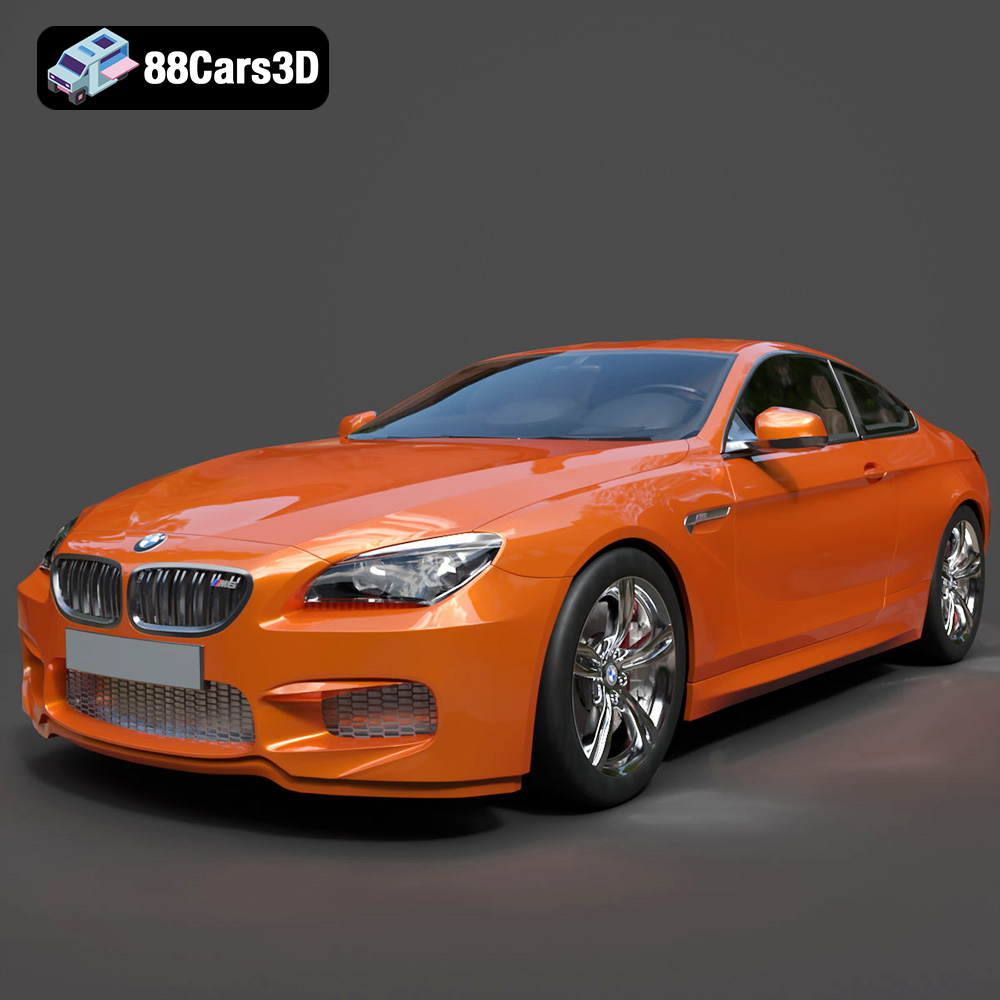
Texture: Yes
Material: Yes
Download the BMW M6 Coupe (F12) 3D Model featuring its iconic sporty design and luxurious details. Includes .blend, .fbx, .obj, .glb, .stl, .ply, .unreal, and .max formats for rendering, simulation, and game development.
Price: $10.79
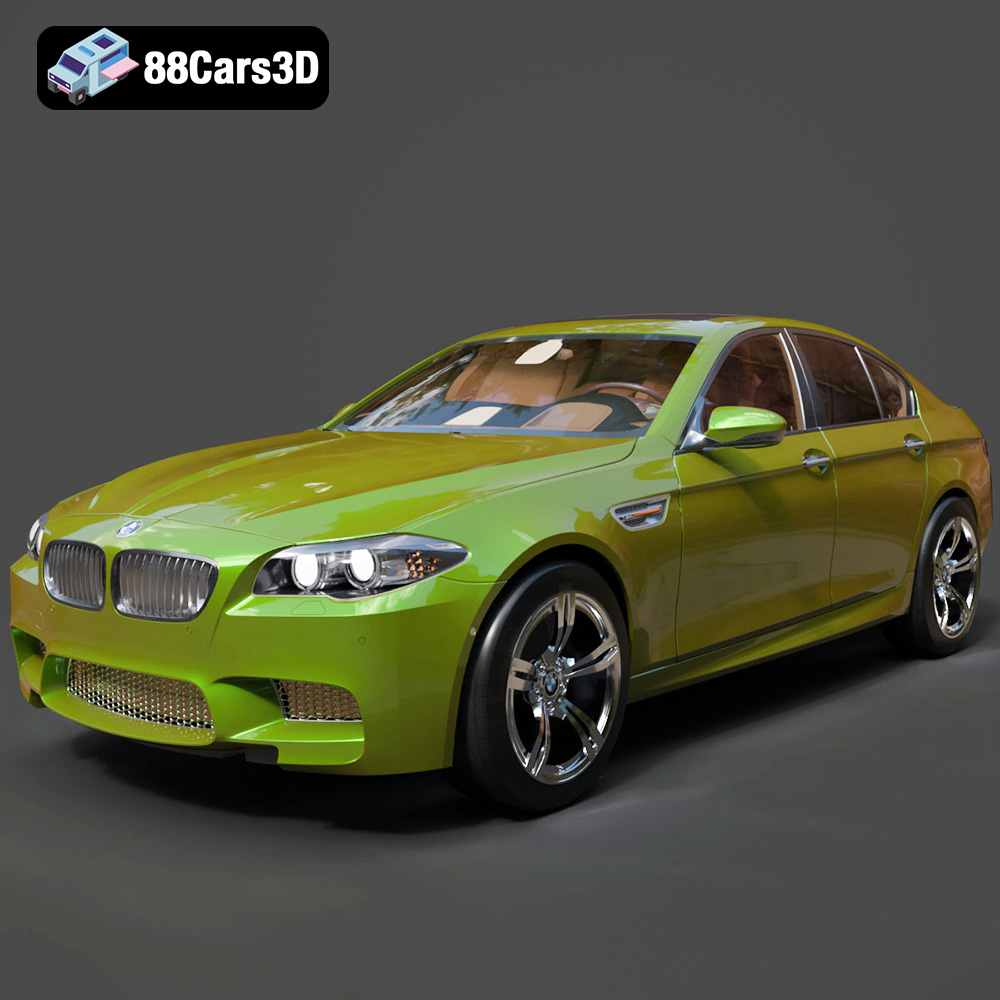
Texture: Yes
Material: Yes
Download the BMW M5 F10 3D Model featuring high-performance luxury sedan design, detailed interior, and realistic PBR textures. Includes .blend, .fbx, .obj, .glb, .stl, .ply, .unreal, and .max formats for rendering, simulation, and game development.
Price: $10.79
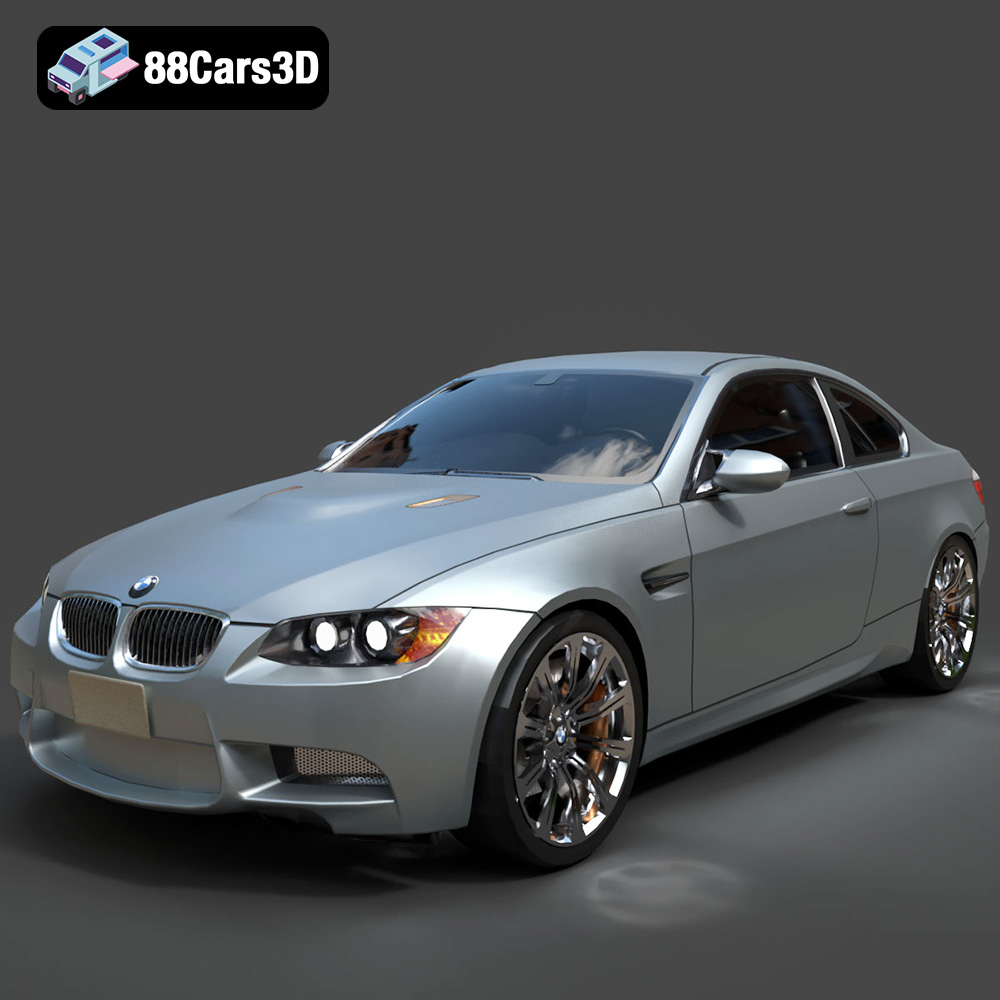
Texture: Yes
Material: Yes
Download the BMW M3 Coupe E92-002 3D Model featuring authentic styling, detailed exterior, and a faithful interior. Includes .blend, .fbx, .obj, .glb, .stl, .ply, .unreal, and .max formats for rendering, simulation, and game development.
Price: $10.79
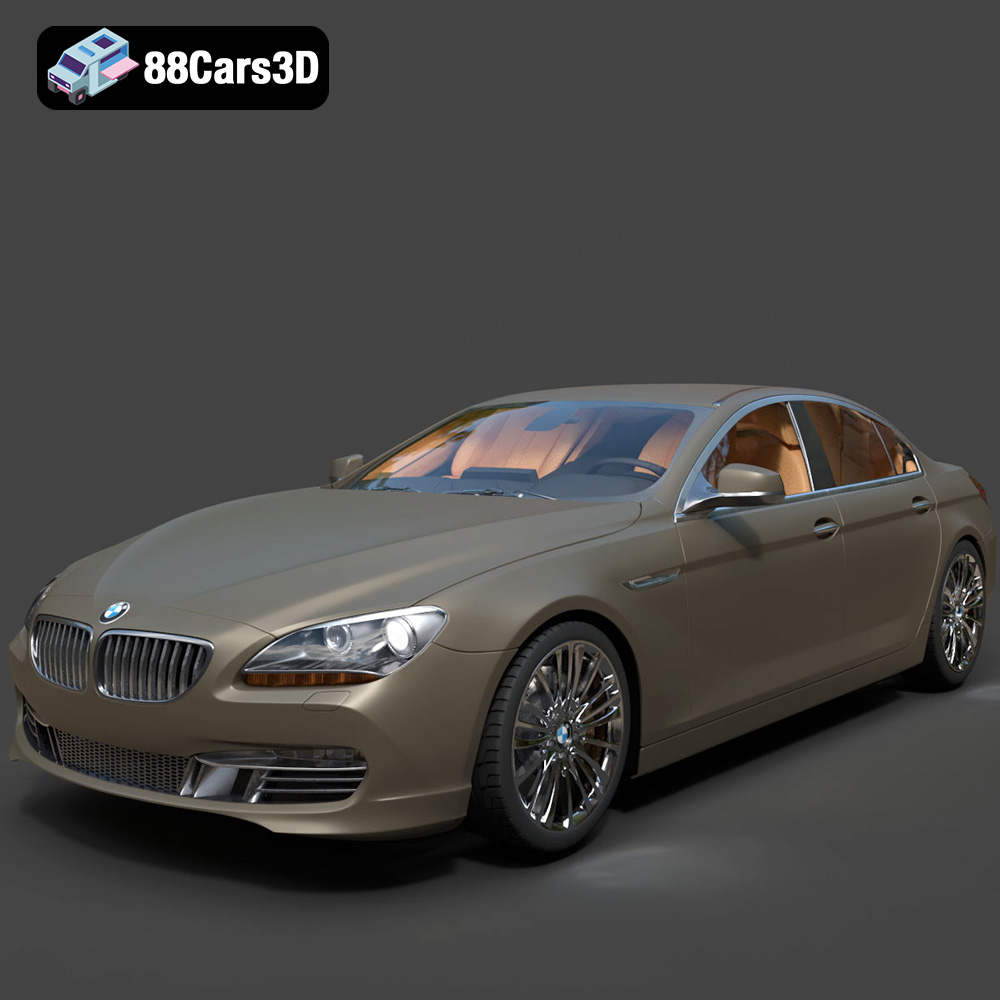
Texture: Yes
Material: Yes
Download the BMW 6 Series Gran Coupe 2013 3D Model featuring a sophisticated design, detailed exterior, and well-appointed interior. Includes .blend, .fbx, .obj, .glb, .stl, .ply, .unreal, and .max formats for rendering, simulation, and game development.
Price: $20.79
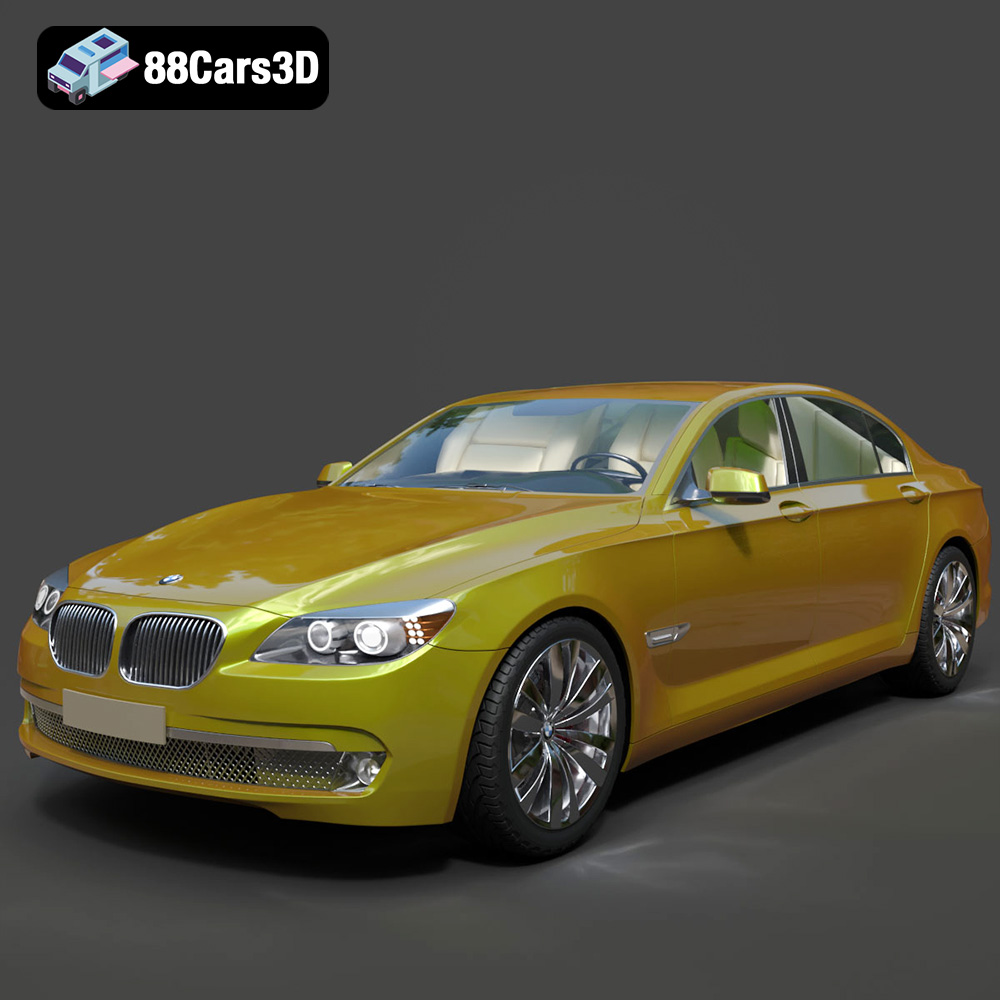
Texture: Yes
Material: Yes
Download the BMW 7 Series 750 F01 3D Model featuring a detailed exterior and a luxurious interior. Includes .blend, .fbx, .obj, .glb, .stl, .ply, .unreal, and .max formats for rendering, simulation, and game development.
Price: $10.79
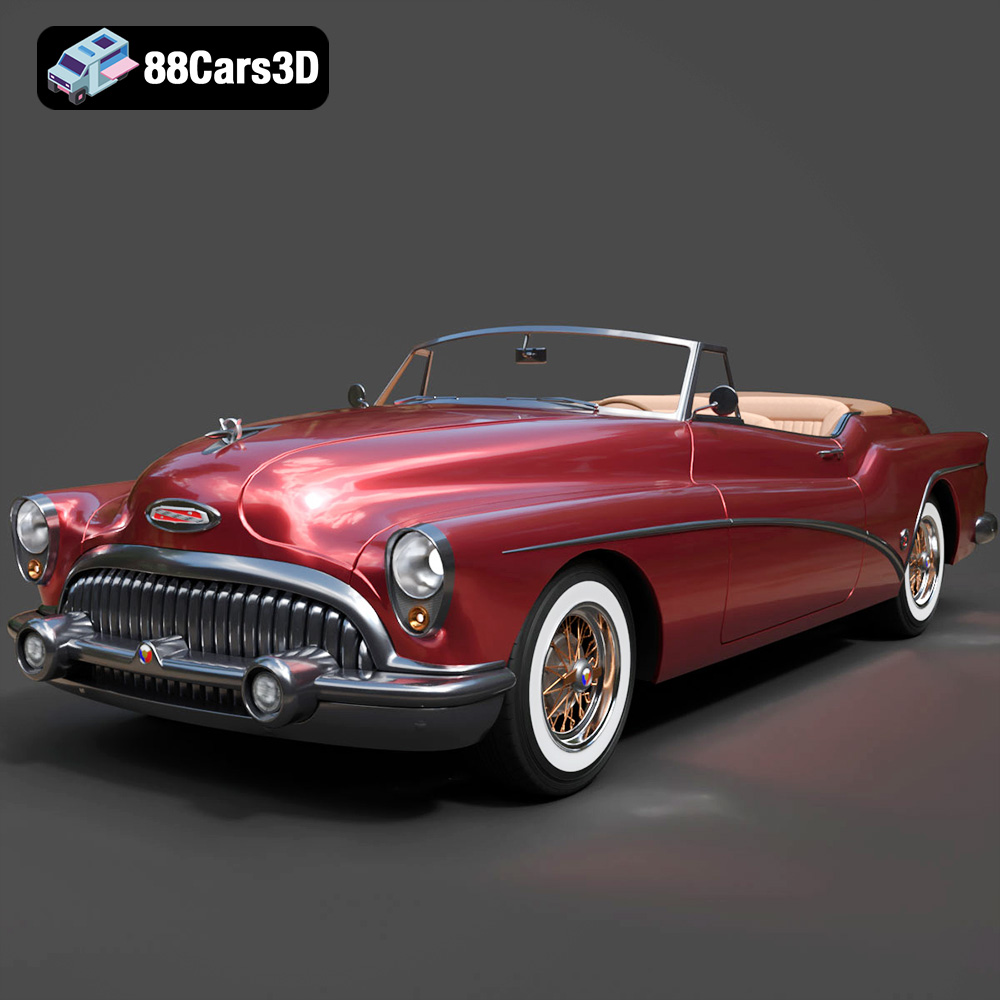
Texture: Yes
Material: Yes
Download the Buick Skylark Convertible 1953 3D Model featuring iconic 1950s styling, a detailed exterior with chrome accents, and an accurately modeled interior. Includes .blend, .fbx, .obj, .glb, .stl, .ply, .unreal, and .max formats for rendering, simulation, and game development.
Price: $10.79

Texture: Yes
Material: Yes
Download the Buick Roadmaster Hardtop Coupe 1957 3D Model featuring a classic American design with detailed exterior and interior. Includes .blend, .fbx, .obj, .glb, .stl, .ply, .unreal, and .max formats for rendering, simulation, and game development.
Price: $10.79
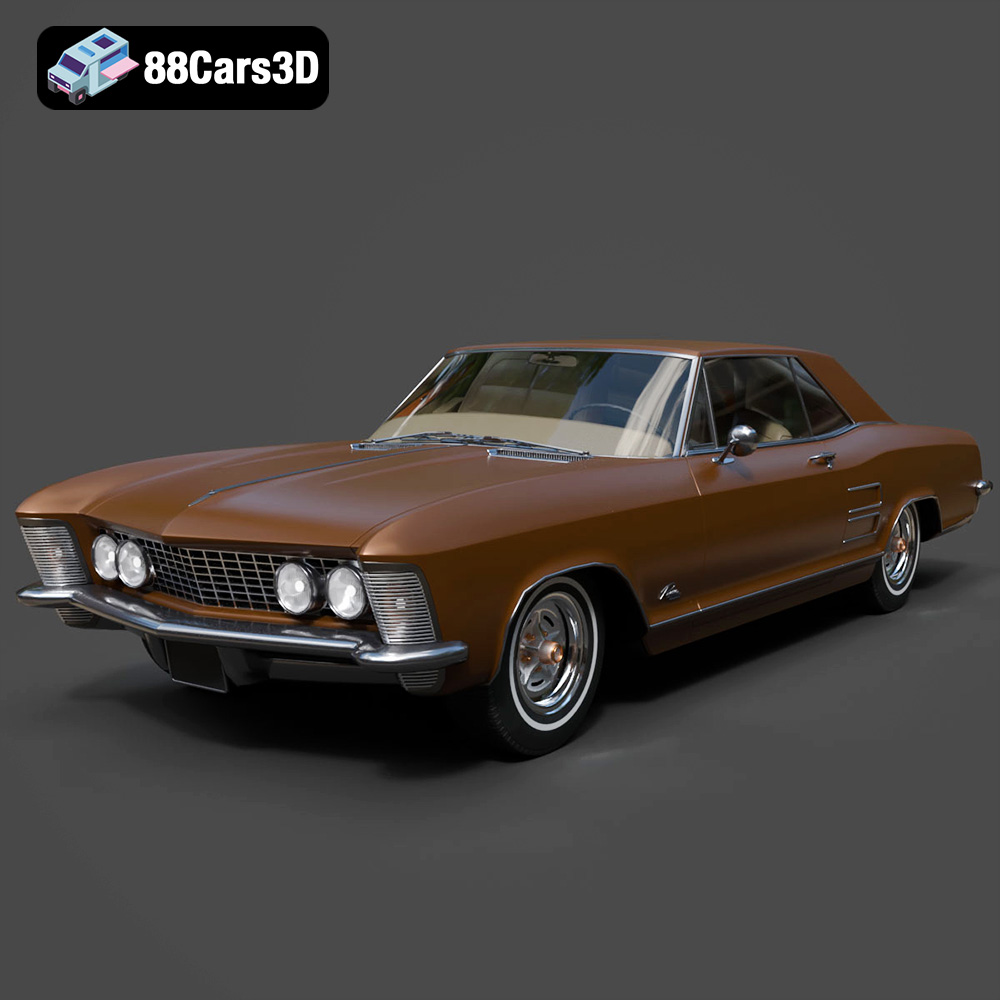
Texture: Yes
Material: Yes
Download the Buick Riviera 1963 3D Model featuring classic American muscle car design and iconic styling. Includes .blend, .fbx, .obj, .glb, .stl, .ply, .unreal, and .max formats for rendering, simulation, and game development.
Price: $10.79
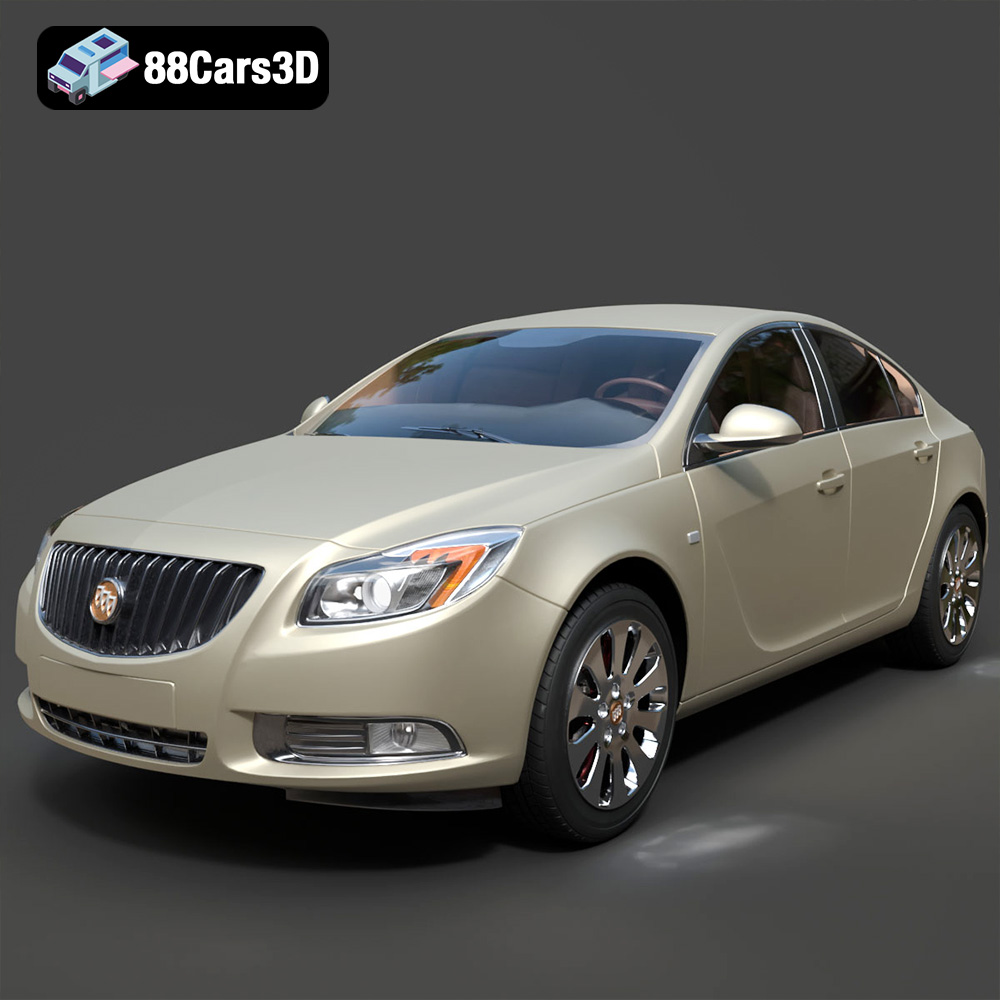
Texture: Yes
Material: Yes
Download the Buick Regal 3D Model featuring a classic American sedan design, detailed exterior, and optimized interior. Includes .blend, .fbx, .obj, .glb, .stl, .ply, .unreal, and .max formats for rendering, simulation, and game development.
Price: $10.79
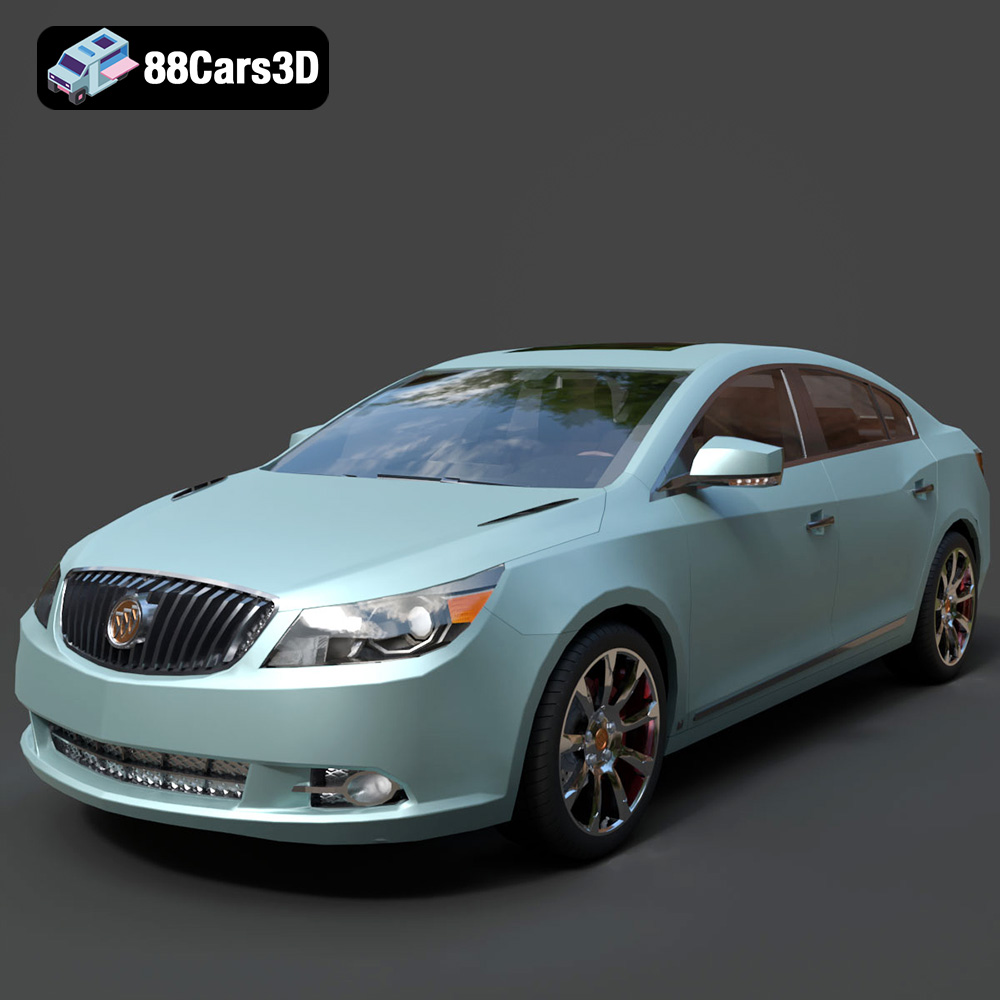
Texture: Yes
Material: Yes
Download the Buick LaCrosse 3D Model featuring professional modeling and texture work. Includes .blend, .fbx, .obj, .glb, .stl, .ply, .unreal, and .max formats for rendering, simulation, and game development.
Price: $10.79

