⚡ FLASH SALE: Get 60% OFF All Premium 3D & STL Models! ⚡

In the world of real-time rendering and automotive visualization, the star of the show is undeniably the car. Whether it’s a sleek concept vehicle, a meticulously recreated classic, or a high-performance sports car, its presentation is paramount. However, even the most exquisitely detailed 3D car models, such as those found on platforms like 88cars3d.com, can lose their impact if placed in a dull or unrealistic environment. This is where the power of Unreal Engine’s foliage system comes into play.
Creating lush, believable landscapes and natural settings isn’t just about filling space; it’s about building immersion, enhancing realism, and telling a visual story that complements your automotive masterpiece. Generic or poorly optimized vegetation can break the illusion, detracting from the overall quality of your visualization or game. This comprehensive guide will delve deep into the Unreal Engine foliage system, equipping you with the knowledge and techniques to sculpt stunning natural environments. We’ll explore everything from efficient asset management and PBR material creation to advanced lighting, performance optimization with Nanite, and dynamic interactions, ensuring your automotive renders truly shine within a vibrant, living world. Get ready to elevate your scene-building capabilities and give your vehicles the stunning backdrops they deserve.
The Unreal Engine Foliage tool is an indispensable part of creating vast, detailed outdoor environments. Unlike simply placing individual static meshes, the Foliage tool leverages instanced static meshes, which is a critical performance optimization technique. When you paint foliage onto your landscape or static meshes, Unreal Engine groups identical instances together, dramatically reducing draw calls and memory overhead. This allows artists to place millions of individual blades of grass, trees, and shrubs without crippling frame rates, a necessity for any real-time application, especially high-fidelity automotive visualizations.
The tool provides an intuitive workflow for scattering various types of vegetation across your scene, from dense forests to subtle ground cover. For automotive scenes, this means creating convincing roadsides, detailed parking lots with planters, or expansive natural backdrops that frame the vehicle perfectly. Understanding how to manage your foliage assets and utilize the painting tools effectively is the first step towards building immersive environments around the high-quality vehicle assets you might acquire from marketplaces like 88cars3d.com.
The Foliage tool, accessible via the “Modes” dropdown in the Unreal Editor, offers several modes for placement and management. The primary “Paint” mode allows you to brush foliage onto surfaces, with adjustable brush size and density. “Erase” removes instances, “Fill” covers an entire surface, and “Select” enables individual instance manipulation. Key parameters for each foliage type include Paint Density, which controls how many instances are placed per brush stroke, and various randomizers for Scale and Rotation, which are crucial for breaking up repetition and creating natural variation. The “Align to Normal” setting ensures instances conform to the underlying surface, making grass grow naturally on hillsides. Each unique piece of vegetation (e.g., a specific tree model, a bush type) is defined as a “Foliage Type” asset, where all its specific settings are stored.
Before painting, you need appropriate 3D models. When importing foliage assets into Unreal Engine, whether it’s a single tree or a clump of grass, the focus is on performance and visual fidelity. Typically, assets are imported as FBX files. Ensure your meshes have clean topology and a correctly placed pivot point (usually at the base for trees/bushes, or center for rocks). For larger assets like trees, consider separate meshes for the trunk and branches if you plan complex wind interactions. Polygon counts should be appropriate for their expected viewing distance; a distant tree might be 10,000 tris, while a hero foreground tree could be 50,000+ tris, leveraging Nanite for optimization. Texture maps (Albedo, Normal, Roughness, Opacity, etc.) should be PBR compliant and ideally packed for efficiency.
The realism of your foliage hinges significantly on the quality of its PBR (Physically Based Rendering) materials. Unlike basic diffuse-only materials, PBR materials accurately simulate how light interacts with surfaces, resulting in more believable reflections, shadows, and overall appearance. For foliage, this means simulating the subtle translucency of leaves, the rough texture of bark, and the way light reflects off dewdrops. A well-constructed PBR material will incorporate several texture maps to define these properties, bringing your 3D vegetation assets to life within the Unreal Engine environment.
Creating a robust “Master Foliage Material” is a professional best practice. This allows you to define common properties like wind animation, subsurface scattering, and common texture parameters once, then create numerous material instances for different foliage types. Each instance can then reference unique texture sets while inheriting the core logic, saving time and ensuring consistency. This modular approach is essential for managing the potentially hundreds of different foliage assets in a large-scale automotive environment, ensuring that the surrounding scene is as polished as the vehicle itself.
Beyond the standard Albedo, Normal, and Roughness maps, foliage materials benefit immensely from specific settings. The Two-Sided Foliage shading model in Unreal Engine is crucial; it ensures light calculates correctly on both sides of a thin leaf mesh and facilitates accurate subsurface scattering. Subsurface Scattering (SSS) is vital for realistic leaves, allowing light to penetrate the surface slightly and scatter internally before exiting, creating a soft, luminous effect, especially when backlit. The Subsurface Color input defines the color of this scattered light. For dynamic elements, simple wind animation can be integrated using World Position Offset (WPO) driven by a time-based Sine wave or a more complex Panner node with a Noise texture to simulate gusting. Alpha channels, often combined with an Opacity Mask blend mode, are used for cutout leaf cards, defining the silhouette of individual leaves on a branch.
Texture optimization is paramount for foliage performance. High-resolution textures are desirable for visual fidelity, but they consume memory and bandwidth. A good balance involves using 2K or 4K textures for atlases (multiple leaves/branches on one sheet) and potentially 1K or 2K for individual, unique elements. Unreal Engine’s texture compression settings are vital: DXT1 is efficient for textures without an alpha channel, while DXT5 is necessary for textures requiring an alpha (like leaf masks). Proper Mip Maps are generated automatically, reducing texture resolution at a distance, but you can also apply a LOD Bias to force lower-resolution mip maps at closer distances for extreme optimization. Regularly check texture memory usage in the Unreal Editor’s “Texture Stats” panel to identify and address bottlenecks. For detailed information on texture workflows, refer to the official Unreal Engine documentation at https://dev.epicgames.com/community/unreal-engine/learning.
Realistic lighting is the final ingredient that can make or break the visual impact of your foliage. Without proper illumination, even the most detailed models and PBR materials will appear flat and unconvincing. Unreal Engine offers powerful lighting solutions, notably Lumen, which revolutionized real-time global illumination and reflections. Lumen dynamically calculates how light bounces around your scene, creating incredibly natural and immersive environments. For foliage, this means realistic light penetration through dense canopies, soft ambient occlusion in shaded areas, and accurate reflections on wet leaves or puddles.
Beyond Lumen, traditional lighting elements such as the Directional Light (representing the sun), the Sky Light (capturing ambient light from the sky), and Volumetric Fog play crucial roles. These work in concert to define the mood, time of day, and atmospheric qualities of your scene, directly influencing how your realistic foliage interacts with the high-quality 3D car models you’re presenting. Mastering these tools ensures your environments are not just lit, but truly alive.
Lumen is a game-changer for dynamic lighting, providing real-time global illumination and reflections without pre-baking. For foliage, this translates to beautifully subtle light bounces within dense leaf structures and accurate shading under canopies, adjusting dynamically with the sun’s position or cloud cover. When using Lumen, ensure your foliage meshes (especially those with high polygon counts, ideally Nanite-enabled) contribute to the scene’s global illumination. Lumen’s software ray tracing or hardware ray tracing (if supported) can accurately detect foliage instances. However, very thin geometry or single-sided planes with alpha masks can sometimes pose challenges for Lumen’s GI and reflections, occasionally leading to light leaks or artifacts. Adjusting material properties like “Cast Ray Traced Shadows” and “Affect Global Illumination” can help fine-tune these interactions, but often the solution lies in ensuring your foliage assets have sufficient volume or simplified collision for GI calculations.
While Lumen provides dynamic GI, traditional lighting remains essential. A powerful Directional Light acts as your primary sun source, defining harsh shadows and highlights. A Sky Light captures the ambient sky color and contributes indirect illumination, which is crucial for filling in shadowed areas of foliage and giving it a natural ambient bounce. When setting up your Sky Light, capture a high-dynamic-range (HDR) sky cube map for the most accurate results. For non-Lumen scenarios or static environments, Lightmass (Unreal Engine’s baked GI system) can pre-calculate lightmaps for static foliage, offering superb quality and performance at runtime. Volumetric Fog adds depth and atmosphere, making distant trees appear hazier and creating light shafts through forest canopies. Consider using subtle point or spot lights as “fill lights” under dense tree canopies to prevent overly dark patches and ensure your foliage maintains detail even in heavy shade.
Dense, realistic foliage is notoriously demanding on system resources. Without aggressive optimization, even a moderately sized forest can bring a high-end PC to its knees. Unreal Engine provides a suite of powerful tools designed to manage this complexity, ensuring your beautifully crafted environments remain performant, whether for real-time automotive configurators, interactive demos, or cinematic renders. Central to this strategy are Nanite virtualized geometry, Levels of Detail (LODs), and various culling techniques.
These features allow artists to deploy incredibly detailed foliage where needed, while intelligently simplifying or removing it when it’s far away or out of view. This intelligent management of polygon counts and draw calls is crucial for maintaining smooth frame rates and a high level of visual fidelity. Implementing a robust optimization strategy for foliage is not just a recommendation; it’s a necessity for delivering professional-grade automotive visualizations that stand out.
Nanite virtualized geometry is one of Unreal Engine’s most transformative features, allowing artists to import and render meshes with virtually unlimited polygon counts. For foliage, this means you can use extremely detailed tree models (e.g., millions of triangles for a single tree) without worrying about performance hits. Nanite intelligently streams and renders only the necessary detail at screen resolution, significantly reducing draw calls and vertex processing. Enabling Nanite for your high-poly foliage meshes (trees, large bushes) is straightforward: simply right-click the static mesh asset, select “Nanite,” and check “Enable Nanite.” This allows for incredibly dense forests with individual leaves modeled, contributing to unparalleled realism. While Nanite is revolutionary, be aware of its current limitations: it doesn’t currently support World Position Offset for material-based animations (like simple wind), meaning wind effects for Nanite meshes usually require skeletal animation or specific Niagara systems.
While Nanite handles detail for close-up views, traditional Levels of Detail (LODs) remain critical for smaller foliage types and for scenes targeting platforms that don’t fully leverage Nanite (like many mobile AR/VR applications). LODs are simplified versions of your mesh that swap in at increasing distances from the camera. A typical setup might include 3-5 LODs, drastically reducing polygon counts from LOD0 (full detail) to LOD4 (a distant impostor or billboard). You can set these up manually or generate them automatically in the Static Mesh Editor. Beyond LODs, various culling techniques further optimize performance:
* Distance Culling: The Foliage tool allows you to set “Cull Distance” for each foliage type, dictating at what range instances disappear entirely.
* Frustum Culling: Unreal Engine automatically prevents rendering objects outside the camera’s view frustum.
* Occlusion Culling: Objects hidden behind other objects are not rendered.
* HISM (Hierarchical Instanced Static Mesh) Culling: The foliage system, based on HISMs, performs efficient batching and culling of groups of instances.
For AR/VR automotive applications, aggressive LODs and cull distances are vital to meet stringent performance targets. Regularly use the “Stat FPS,” “Stat RHI,” and “Stat InitViews” console commands to profile foliage rendering costs.
Static environments, no matter how beautiful, can often feel lifeless. To truly immerse viewers in your automotive visualizations, particularly in interactive experiences or cinematic sequences, your foliage needs to breathe and react. This means incorporating dynamic elements like wind, physical interactions, and controlled animations that complement the movement and presence of your 3D car models. Unreal Engine provides robust systems to achieve this, transforming your background vegetation into an active, contributing element of the scene.
From subtle swaying grass to branches that react to a passing vehicle, these details elevate the realism and storytelling potential of your projects. Whether you’re designing a virtual production set for an LED wall, developing an interactive configurator, or rendering a high-fidelity marketing video, dynamic foliage adds an essential layer of polish and believability, ensuring your environments are as engaging as the vehicles they showcase.
Adding dynamic movement to foliage significantly enhances realism. The simplest form of wind can be implemented directly within your foliage materials using World Position Offset (WPO). By multiplying a time-based Sine wave (for swaying) with a Perlin noise texture (for varied movement across the mesh), you can create convincing global wind effects. More advanced and localized wind effects, such as gusts or rustling, can be achieved using Unreal Engine’s Niagara particle system. Niagara allows for highly customizable force fields and particle interactions that can drive the WPO of nearby foliage, offering precise control over wind direction and intensity. For physical interaction, such as a vehicle driving through tall grass, you can utilize physics assets on your foliage meshes and integrate them with the Chaos physics engine. While a full physics simulation for every blade of grass is too expensive, a common approach involves using a small sphere collision with a radius driven by the vehicle’s location and velocity, affecting surrounding foliage material parameters or small clusters of physics-enabled grass.
Realistic foliage plays a pivotal role in creating compelling narratives for automotive visualization. In cinematic sequences created with Unreal Engine’s Sequencer, dynamic foliage can add depth, movement, and a sense of atmosphere. Imagine a car driving through a tree-lined road, with leaves subtly swaying in the wind, or light dappling through the canopy, creating beautiful shadows on the vehicle. Sequencer allows you to animate cameras, lights, and even certain foliage parameters over time, crafting highly polished marketing videos or interactive showcases. For virtual production workflows, where realistic environments are projected onto LED walls, accurate and dynamic foliage is essential for achieving seamless real-time visual effects. The high-quality 3D car models from marketplaces like 88cars3d.com truly come alive when placed within these immersive, living backdrops. Furthermore, Blueprint visual scripting can be used to create interactive foliage scenarios, such as grass reacting to player proximity, seasonal changes (e.g., foliage color transitions), or even localized growth/decay for environmental storytelling within an interactive automotive experience.
Throughout this guide, we’ve journeyed through the intricacies of Unreal Engine’s foliage system, uncovering the tools and techniques required to transform sterile environments into vibrant, living landscapes. From the foundational principles of the Foliage tool and the art of PBR material creation to the nuanced complexities of Lumen lighting, the indispensable optimizations of Nanite and LODs, and the dynamic flair of interactive physics and cinematics, we’ve explored how each element contributes to unparalleled realism.
The integration of high-quality foliage isn’t merely an aesthetic choice; it’s a strategic decision that profoundly impacts the overall perception of your automotive visualizations. A meticulously detailed 3D car model, whether for an interactive configurator or a cinematic marketing piece, reaches its full potential when it’s framed by an equally stunning and believable environment. By mastering these techniques, you ensure that the star of your scene—the vehicle—is not just present, but truly contextualized and enhanced by its surroundings. We encourage you to experiment with these powerful Unreal Engine features, pushing the boundaries of what’s possible in real-time rendering. Remember, a compelling environment elevates the entire experience, giving the sophisticated vehicle assets you source from platforms like 88cars3d.com the magnificent stage they deserve.

Texture: Yes
Material: Yes
Download the BMW M6 Coupe (F12) 3D Model featuring its iconic sporty design and luxurious details. Includes .blend, .fbx, .obj, .glb, .stl, .ply, .unreal, and .max formats for rendering, simulation, and game development.
Price: $10.79

Texture: Yes
Material: Yes
Download the BMW M5 F10 3D Model featuring high-performance luxury sedan design, detailed interior, and realistic PBR textures. Includes .blend, .fbx, .obj, .glb, .stl, .ply, .unreal, and .max formats for rendering, simulation, and game development.
Price: $10.79

Texture: Yes
Material: Yes
Download the BMW M3 Coupe E92-002 3D Model featuring authentic styling, detailed exterior, and a faithful interior. Includes .blend, .fbx, .obj, .glb, .stl, .ply, .unreal, and .max formats for rendering, simulation, and game development.
Price: $10.79
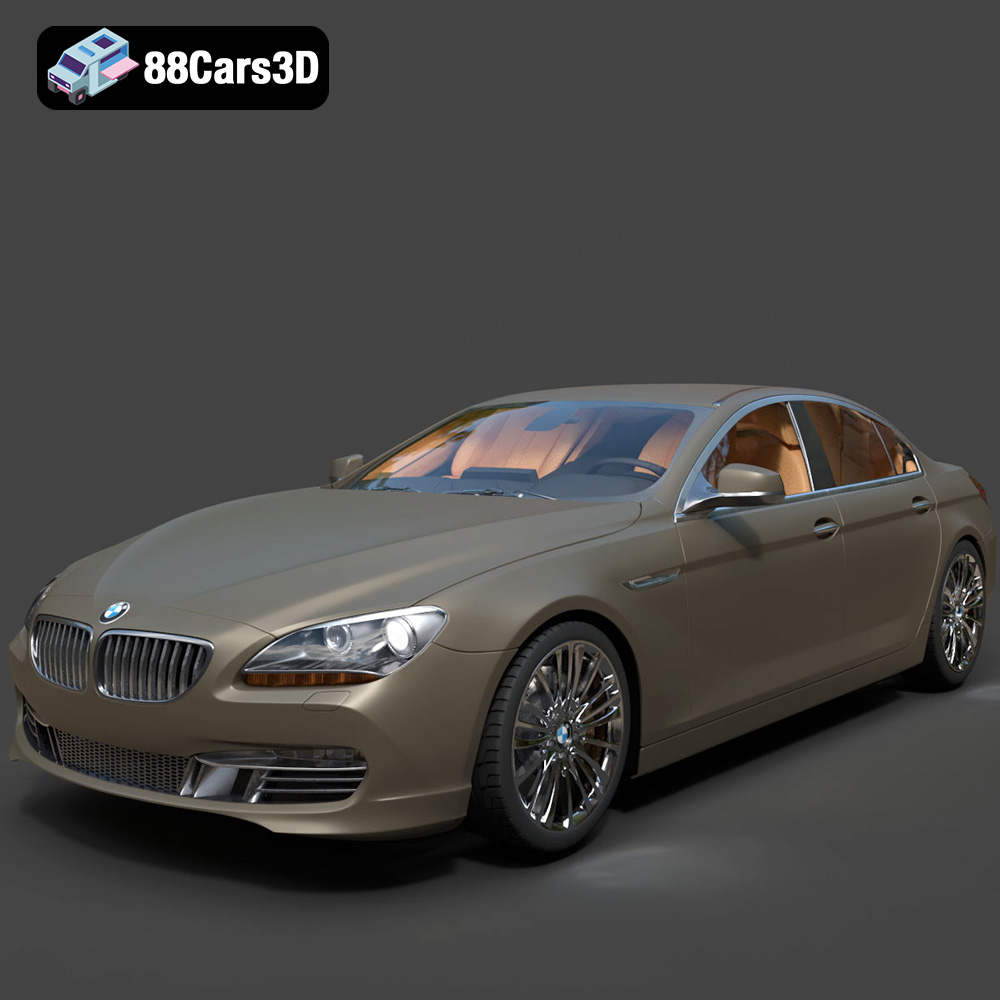
Texture: Yes
Material: Yes
Download the BMW 6 Series Gran Coupe 2013 3D Model featuring a sophisticated design, detailed exterior, and well-appointed interior. Includes .blend, .fbx, .obj, .glb, .stl, .ply, .unreal, and .max formats for rendering, simulation, and game development.
Price: $20.79
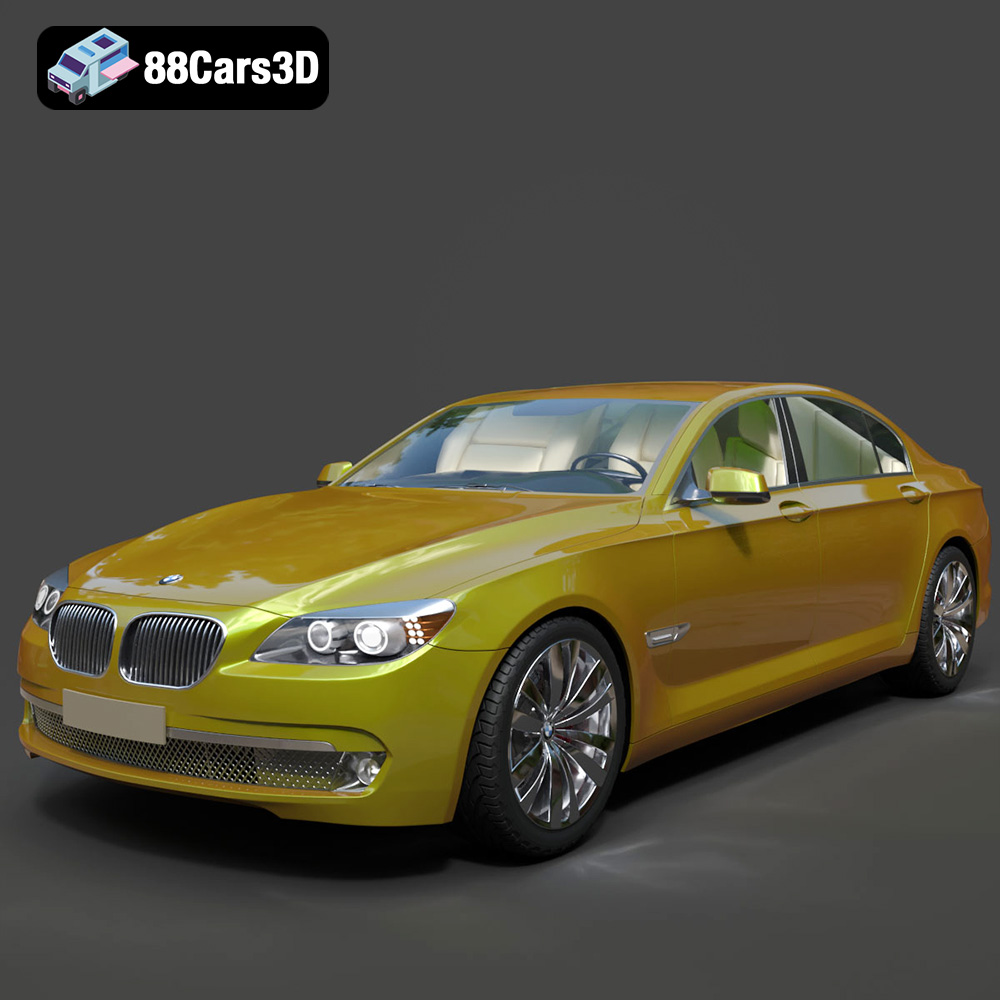
Texture: Yes
Material: Yes
Download the BMW 7 Series 750 F01 3D Model featuring a detailed exterior and a luxurious interior. Includes .blend, .fbx, .obj, .glb, .stl, .ply, .unreal, and .max formats for rendering, simulation, and game development.
Price: $10.79

Texture: Yes
Material: Yes
Download the Buick Skylark Convertible 1953 3D Model featuring iconic 1950s styling, a detailed exterior with chrome accents, and an accurately modeled interior. Includes .blend, .fbx, .obj, .glb, .stl, .ply, .unreal, and .max formats for rendering, simulation, and game development.
Price: $10.79

Texture: Yes
Material: Yes
Download the Buick Roadmaster Hardtop Coupe 1957 3D Model featuring a classic American design with detailed exterior and interior. Includes .blend, .fbx, .obj, .glb, .stl, .ply, .unreal, and .max formats for rendering, simulation, and game development.
Price: $10.79
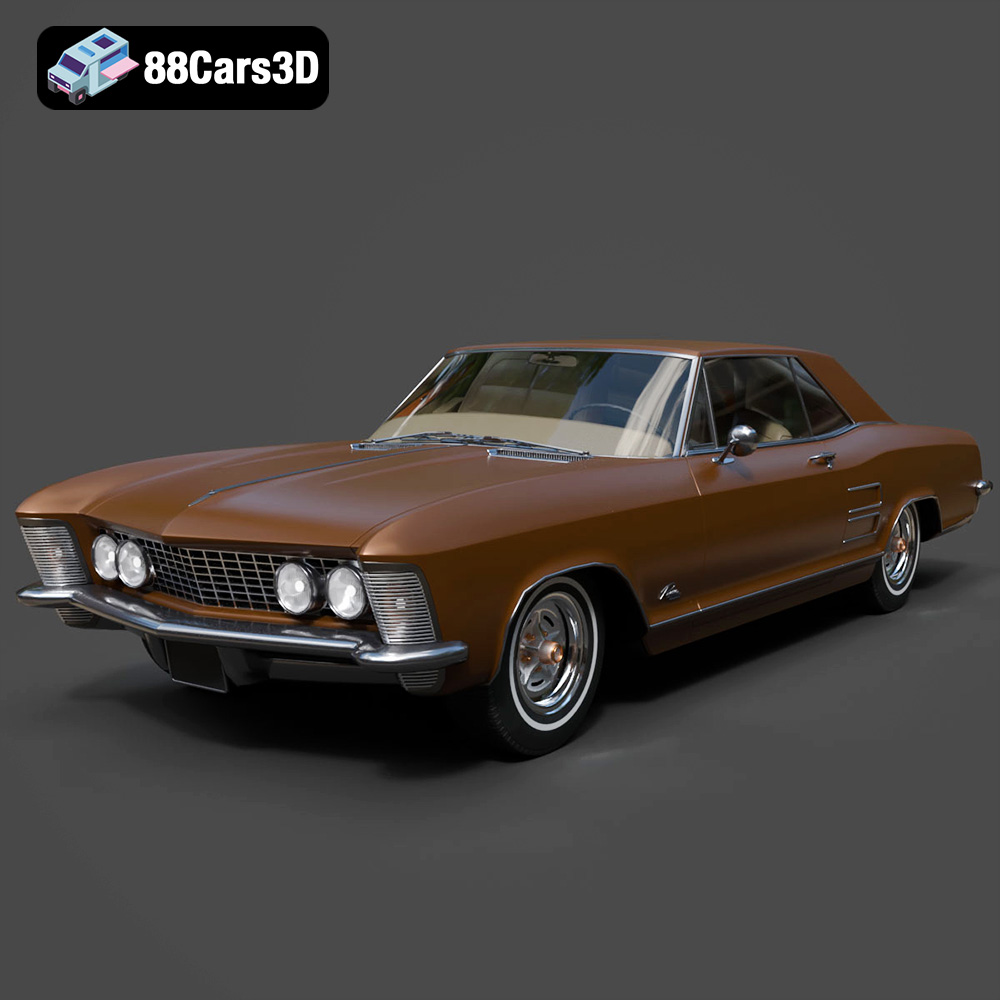
Texture: Yes
Material: Yes
Download the Buick Riviera 1963 3D Model featuring classic American muscle car design and iconic styling. Includes .blend, .fbx, .obj, .glb, .stl, .ply, .unreal, and .max formats for rendering, simulation, and game development.
Price: $10.79

Texture: Yes
Material: Yes
Download the Buick Regal 3D Model featuring a classic American sedan design, detailed exterior, and optimized interior. Includes .blend, .fbx, .obj, .glb, .stl, .ply, .unreal, and .max formats for rendering, simulation, and game development.
Price: $10.79

Texture: Yes
Material: Yes
Download the Buick LaCrosse 3D Model featuring professional modeling and texture work. Includes .blend, .fbx, .obj, .glb, .stl, .ply, .unreal, and .max formats for rendering, simulation, and game development.
Price: $10.79

