⚡ FLASH SALE: Get 60% OFF All Premium 3D & STL Models! ⚡

In the vast landscape of digital content creation, the demand for high-quality, meticulously crafted 3D assets is perpetually on the rise. Whether you’re an architect visualizing a vibrant urban street, a game developer populating an immersive open world, or a filmmaker crafting a period-accurate scene, the authenticity of your 3D models can make or break the visual impact. Among the most sought-after assets are vehicles, which often serve as focal points or crucial environmental elements. Capturing the essence of an iconic design in three dimensions requires a blend of technical prowess and artistic sensibility.
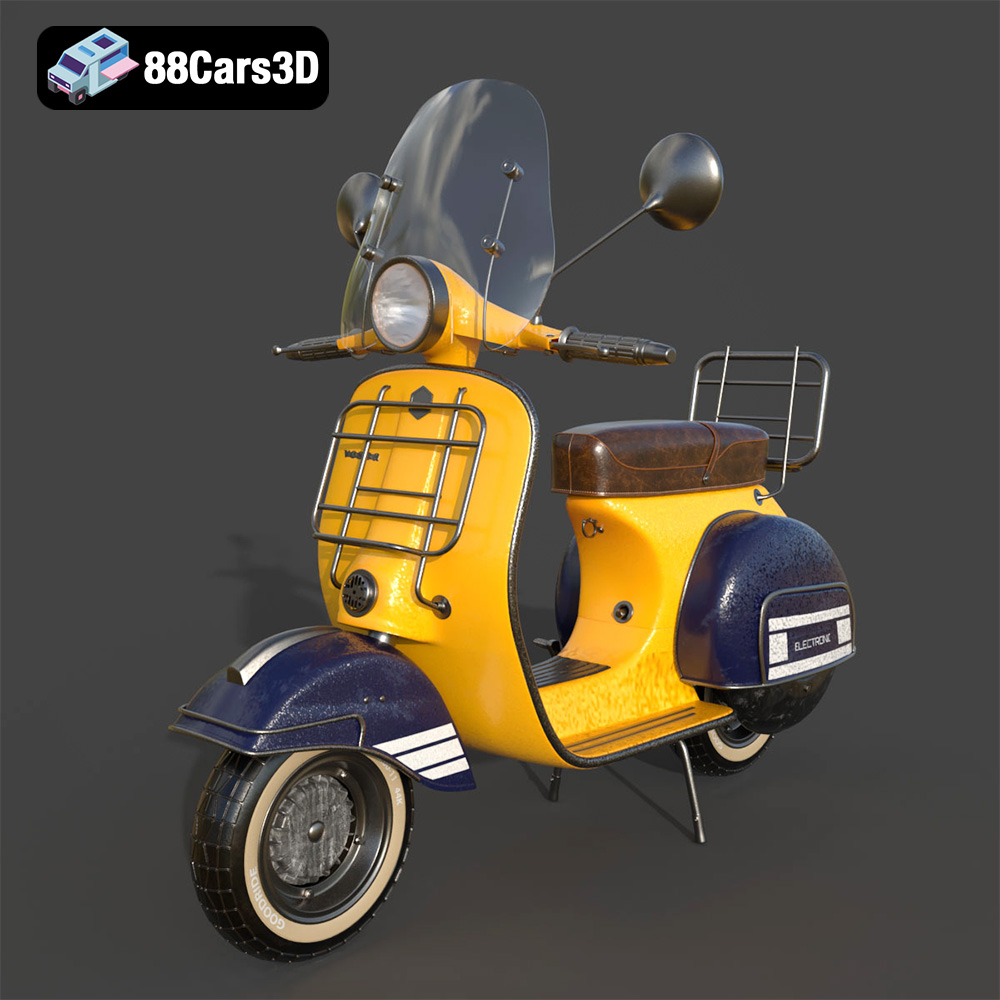
Today, we delve into the intricate world of premium 3D vehicle models, using the Vespa 5-007 3D Model as our prime example. This exquisite digital representation of the legendary Italian scooter perfectly encapsulates the timeless charm and distinctive design that artists and developers crave. It’s not just a model; it’s a testament to professional craftsmanship, engineered for high fidelity without compromising performance across a spectrum of applications – from cinematic rendering and realistic simulations to dynamic game development and immersive AR/VR experiences. Understanding the nuances of such an asset is crucial for anyone aiming to elevate their digital projects.
Automobiles, and indeed scooters like the Vespa, are more than just modes of transport; they are cultural touchstones, symbols of design innovation, and often, extensions of personal style. Recreating these icons in a 3D environment is a delicate balance of technical accuracy and aesthetic preservation. A premium 3D model doesn’t just look like the real thing; it evokes the same feelings of nostalgia, sophistication, or power.
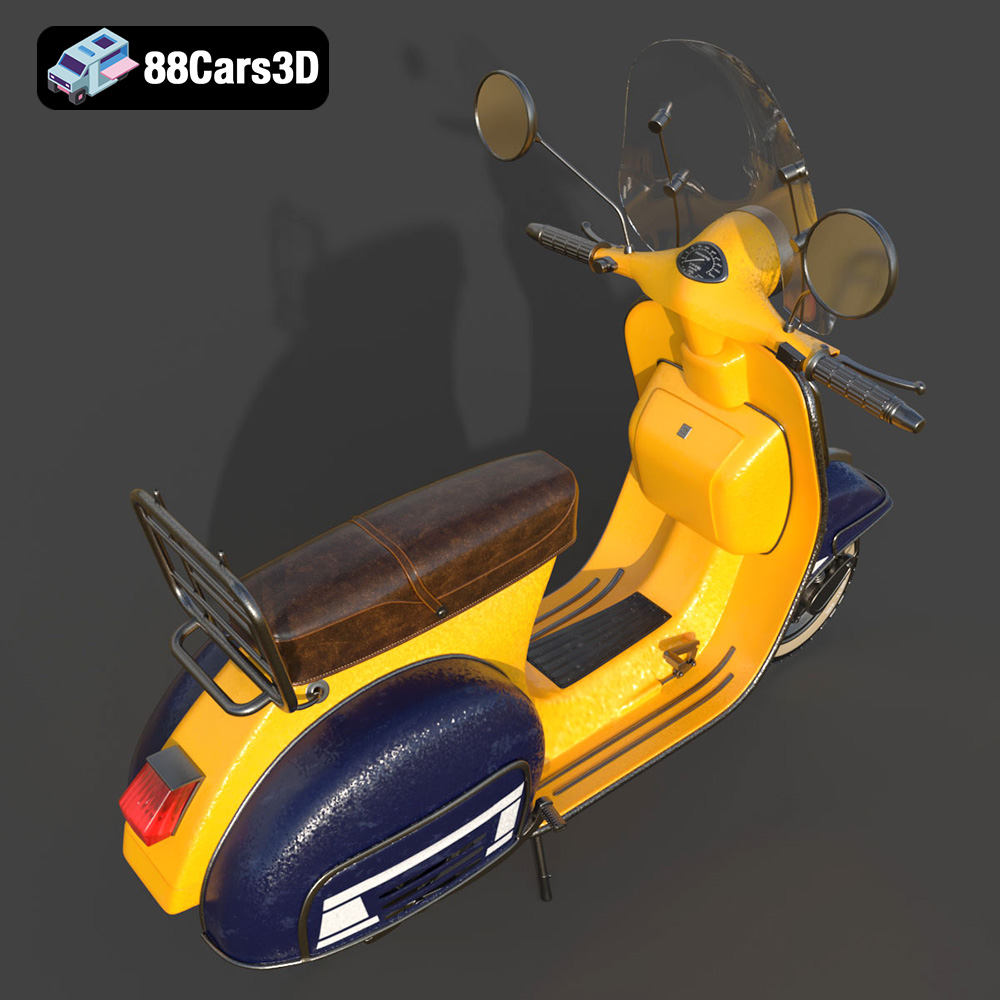
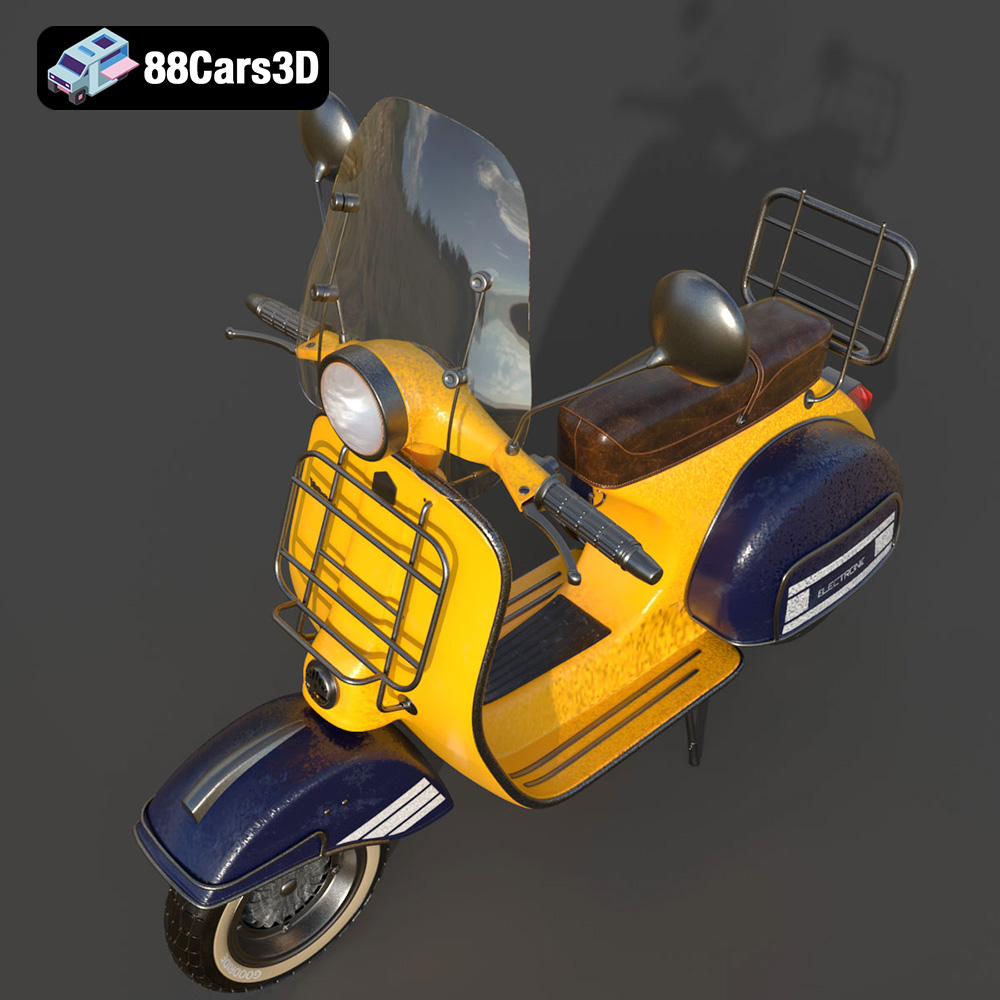
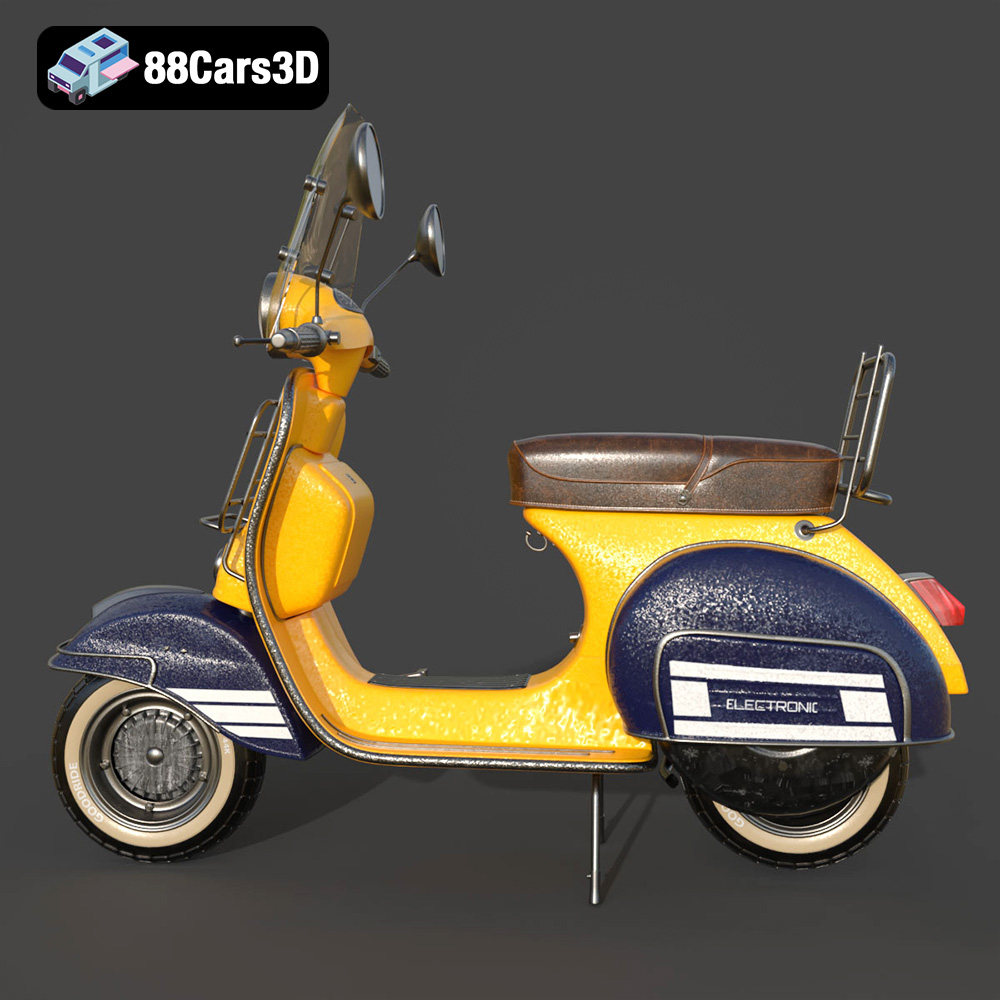
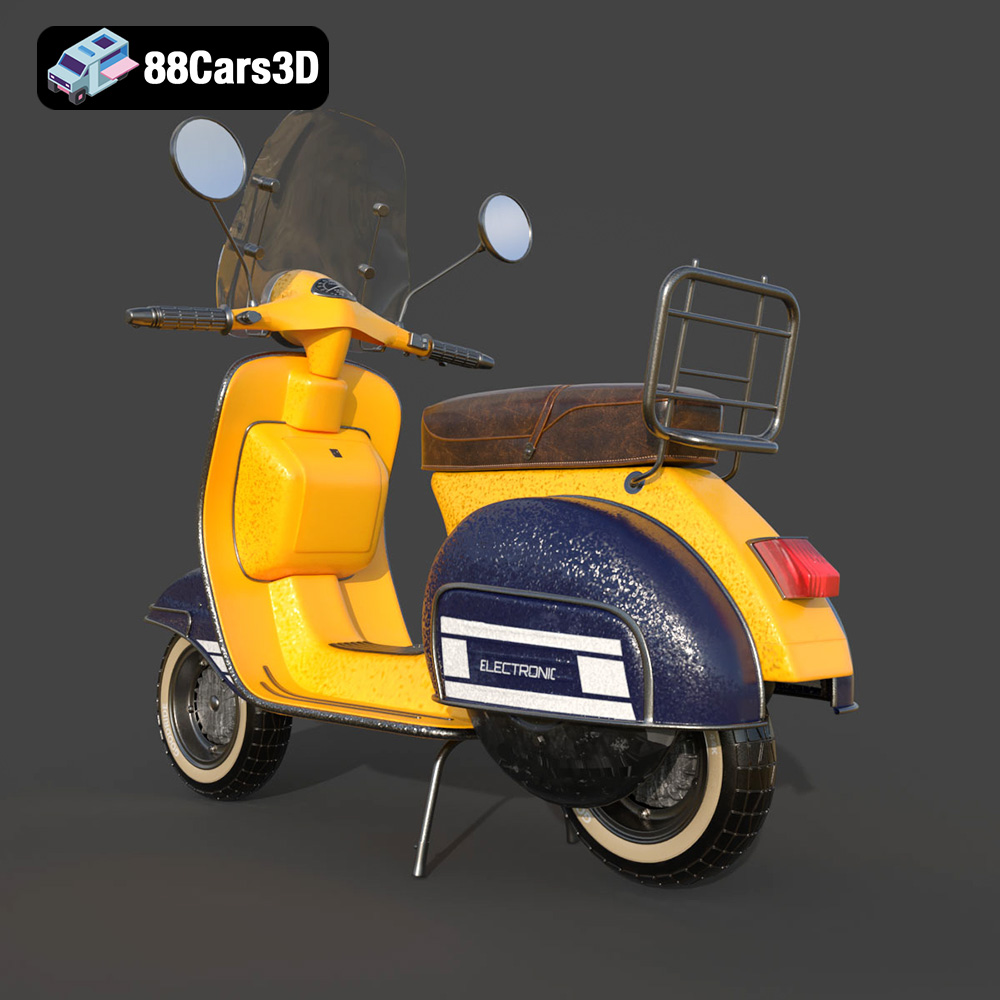
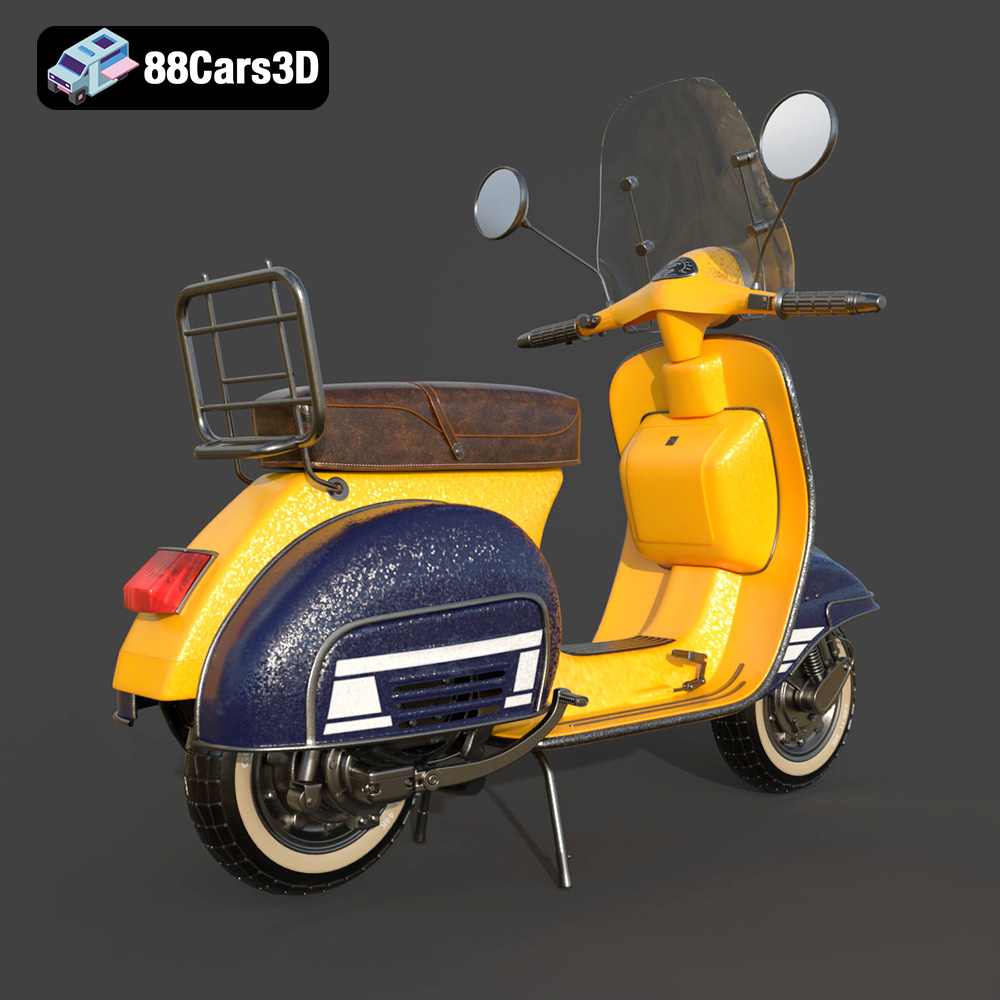
The Vespa, with its distinctive monocoque body, elegant curves, and exposed engine, is a prime example of an automotive icon with a rich heritage. Digitally capturing this heritage means meticulous attention to its unique form language. This includes replicating the smooth, flowing body panels, the iconic handlebar shape, and even the subtle nuances of its lighting elements. For the Vespa 5-007 3D Model, this translates into authentic body panels, precisely modeled wheels with realistic tire treads, and functional lighting elements utilizing transparent materials for lenses. Such details are not merely cosmetic; they are integral to the model’s identity and its ability to transport viewers to a specific era or mood.
In 3D modeling, “detail” goes beyond just surface textures. It encompasses everything from the physical accuracy of dimensions to the microscopic imperfections that make an object feel real. For an asset like the Vespa 5-007, precision is evident in its chrome accents on mirrors and trim, the subtle stitching on the seat, and the intricate dashboard with its gauges and switches. These elements, when combined, create a cohesive and believable digital representation. Furthermore, major exterior components are often separated, a thoughtful design choice that facilitates easy animation and customization – a critical advantage for animators and designers who need to integrate the model into dynamic scenes or personalize its appearance for specific project requirements.
The versatility of a 3D model hinges significantly on the file formats it supports. Each format is engineered for specific purposes, offering unique advantages in terms of compatibility, data retention, and performance. For professionals working with 3D car models or game assets, knowing which format to use and why is paramount. The Vespa 5-007 3D Model thoughtfully provides a comprehensive suite of formats, ensuring maximum utility across diverse pipelines.
The .blend format is native to Blender, an incredibly powerful and popular open-source 3D creation suite. When you receive a .blend file, you’re getting a fully editable Blender scene, complete with materials, textures, lighting setups, and even animation data if present. This format is ideal for artists who primarily work in Blender, offering them direct access to the model’s construction, allowing for easy modifications, re-texturing, or integration into existing Blender projects without any loss of data. Its self-contained nature makes it convenient for project archiving and sharing within a Blender-centric workflow.
The .fbx (Filmbox) format, originally developed by Kaydara and now owned by Autodesk, has become an industry standard for interoperability between different 3D software applications. It excels at transferring not just geometry, but also materials, textures, animations, and skeletal data. This makes it an ideal choice for complex assets like the Vespa 5-007 when moving between software like 3ds Max, Maya, Blender, and crucially, game engines like Unreal Engine and Unity. Its robust data handling ensures that an asset’s key characteristics are preserved, making it indispensable for real-time pipelines and collaborative workflows.
The .obj (Wavefront OBJ) format is perhaps the most universal and widely supported 3D format. While simpler than FBX in terms of data it can store (primarily geometry, UV maps, and material references), its ubiquity ensures that virtually any 3D software can open and interpret it. For simpler static models or when you need maximum compatibility without complex animation data, OBJ is a reliable workhorse. It’s often used as a baseline for cross-software compatibility when richer formats might encounter issues, ensuring your 3D car models can be accessed anywhere.
The .glb (GL Transmission Format Binary) is increasingly vital, optimized for AR, VR, and web-based display. It packages 3D model data (geometry, materials, textures, animations) into a single, compact binary file, making it highly efficient for streaming and rendering in real-time browser environments or augmented and virtual reality applications. For showcasing models like the Vespa 5-007 in an interactive web viewer or a mobile AR app, GLB is the go-to format.
For those venturing into physical creation, the .stl (Stereolithography) format is the standard for 3D printing output. It represents a 3D model as a series of connected triangles, defining its surface geometry without color or texture information. While it simplifies the model, it’s precisely what 3D printers need to interpret and build a physical object. The Vespa 5-007, easily convertible to .stl, offers a pathway to creating physical scale models or prototypes, bridging the digital and tangible worlds.
The .ply (Polygon File Format or Stanford Triangle Format) is a precision mesh format primarily used for storing data from 3D scanners, but also useful for CAD or analysis workflows. It can store a wider range of properties than STL, including color and transparency, making it suitable for applications where precise geometric data with attribute information is critical for scientific or engineering analysis.
Finally, the .unreal format isn’t a single file type but represents an “engine-ready asset for real-time environments,” typically provided as an Unreal Engine project package or an asset ready for direct import, often using FBX as the underlying transfer mechanism. This means the model comes pre-configured with materials, textures, and perhaps even collision meshes optimized for Unreal Engine’s specific requirements, saving game developers significant setup time.
Similarly, the .max format signifies an editable 3ds Max project. For professionals heavily invested in Autodesk’s 3ds Max for animation, rendering, and visualization, having the native file offers the highest level of control and flexibility, allowing full manipulation of the scene, lighting, and object hierarchy. This level of access is invaluable for creating bespoke animations or integrating the Vespa 5-007 3D Model seamlessly into existing 3ds Max scenes.
The true value of a premium 3D model lies in its seamless integration into diverse professional workflows. The Vespa 5-007 3D Model, with its robust construction and multiple file formats, is designed to be a versatile asset, enhancing projects from high-end cinematic renders to optimized real-time game environments.
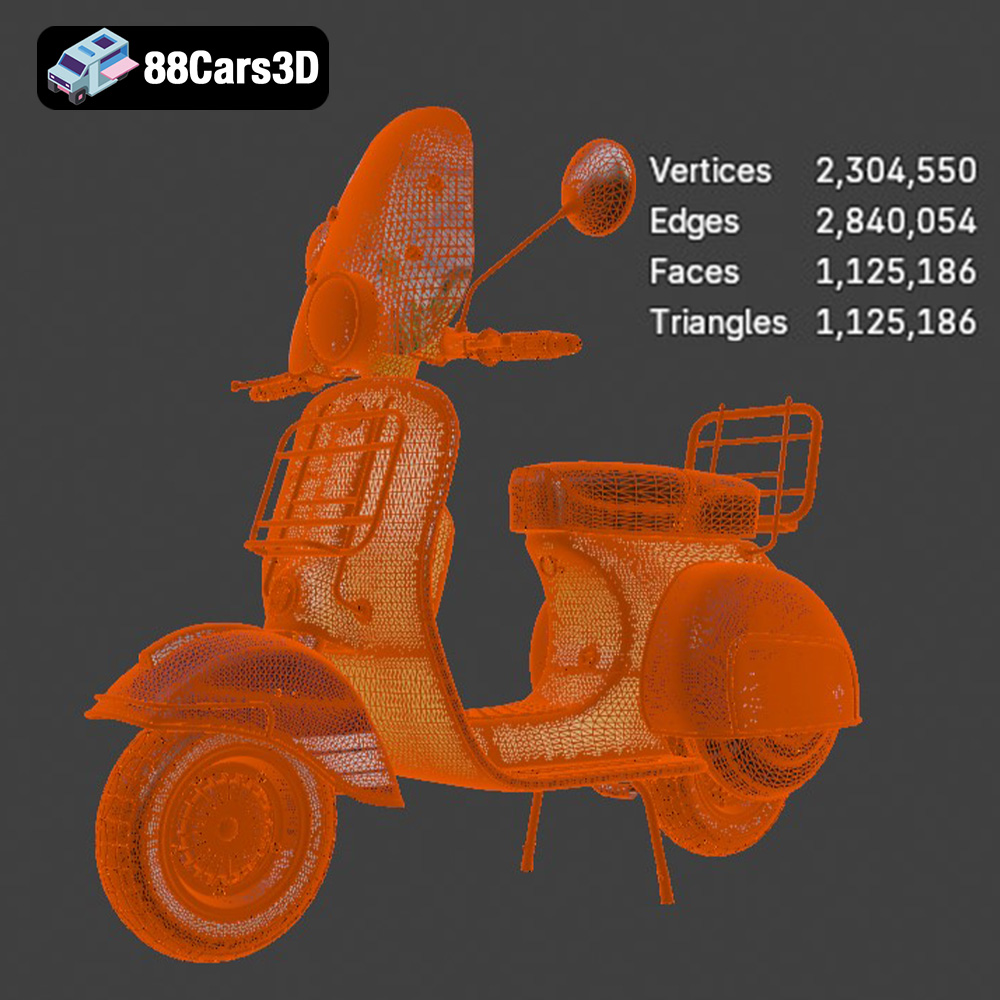
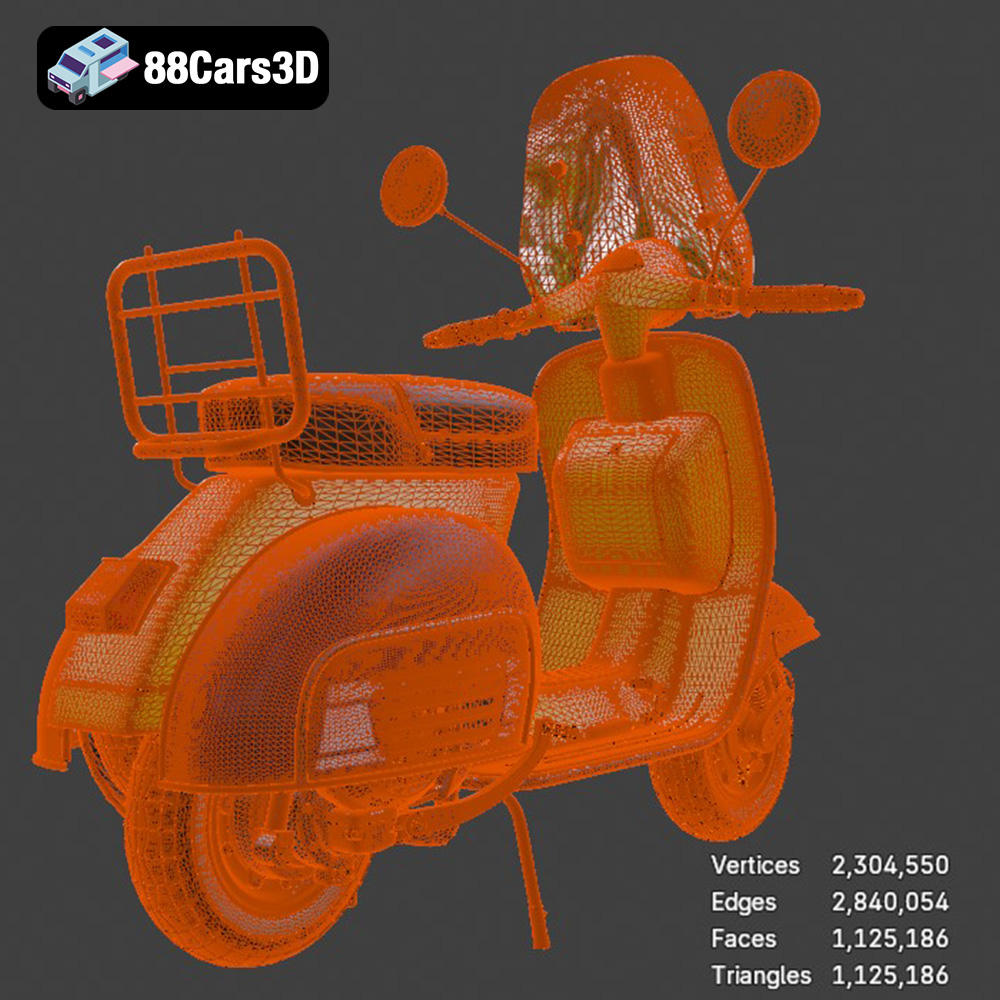
For tasks demanding photorealistic output, such as architectural visualization, product showcases, or cinematic sequences, rendering engines like V-Ray, Corona, Cycles, or Eevee are indispensable. The Vespa 5-007’s “clean quad-dominant topology” is a significant advantage here. Quad-based meshes subdivide smoothly, resulting in flawless curves and surfaces even at extreme close-ups, eliminating unsightly pinching or artifacts. This is crucial for capturing the Vespa’s iconic, fluid design. Artists can leverage the .max or .blend files to control every aspect: fine-tuning PBR (Physically Based Rendering) materials for chrome, painted surfaces, and rubber, setting up sophisticated studio lighting, and animating camera movements to create breathtaking automotive rendering stills or sequences. The included “editable 3ds Max scene” and “Blender project with materials” make this process exceptionally efficient, providing a solid foundation for further artistic refinement.
In game development, performance is king. Assets must be visually rich yet optimized to run smoothly within real-time engines like Unreal and Unity. The Vespa 5-007 3D Model is specifically designed with “optimized mesh quality” and “efficient performance,” making it an excellent game asset. Its “logically organized hierarchy with properly set pivots” means animators can easily rig and animate components like the wheels, handlebars, and suspension for realistic vehicle dynamics. The inclusion of an “.unreal” file or a compatible .fbx ensures that the model can be rapidly imported, with materials and textures correctly applied, often requiring minimal additional setup. This efficiency allows developers to quickly populate urban environments, create engaging racing sequences, or integrate the Vespa as a usable vehicle in open-world games, all while maintaining high visual fidelity.
Beyond traditional rendering and gaming, the Vespa 5-007 3D Model extends its utility into emerging technologies. The “.glb” format is specifically tailored for AR/VR applications and web-based viewing, enabling immersive experiences where users can interact with a true-to-life Vespa model in augmented or virtual reality. Imagine a digital showroom where customers can explore the scooter from every angle, or an educational application simulating its mechanics. Furthermore, its ability to be “easily convertible to .stl format” opens doors for 3D printing. This means designers can create physical scale models, prototypes for merchandising, or even custom parts, demonstrating the tangible impact of digital assets from 88cars3d.com.
A truly professional 3D model like the Vespa 5-007 isn’t just about what you see on the surface; it’s about the underlying structure and technical decisions that empower its versatility and performance. The description highlights several key technical advantages that speak volumes about its quality.
The mention of “clean quad-dominant topology” is a hallmark of high-quality 3D car models. Quads (four-sided polygons) are the preferred primitive for organic surfaces because they deform predictably and subdivide smoothly, essential for maintaining the elegant curves of the Vespa’s bodywork. This ensures that when an artist applies subdivision surface modifiers (like TurboSmooth in 3ds Max or Subdivision Surface in Blender), the model retains its integrity, resulting in perfectly smooth, production-ready meshes. This contrasts sharply with triangulated or poorly optimized meshes that can lead to artifacts, making the model unsuitable for close-up renders or demanding animation.
Furthermore, “accurate real-world scale” is critical for seamless integration. Artists don’t want to spend time scaling models to fit their scenes; a 1:1 representation ensures proper lighting, physics, and contextual fit right out of the box. This attention to foundational geometry and scale saves countless hours in production and guarantees consistency across projects.
The realism of any 3D model is heavily dependent on its materials and textures. The Vespa 5-007 3D Model leverages “PBR materials” (implied by high-quality rendering and game asset readiness) to simulate the way light interacts with various surfaces. This means chrome accents truly reflect their environment, painted bodywork exhibits realistic specular highlights, and rubber textures have appropriate roughness and normal map detail. The transparent materials used for headlights and taillights further enhance this realism, allowing light to scatter and refract naturally. The ability to “modify material properties” and “apply custom graphics or decals” provides immense creative freedom, allowing artists to personalize the Vespa for specific brand campaigns, game liveries, or artistic visions.
For dynamic projects, a model’s animation readiness is paramount. The Vespa 5-007 boasts a “logically organized hierarchy with properly set pivots,” meaning each component (wheels, handlebars, seat, engine covers) is grouped and positioned correctly. Pivots are the points around which objects rotate or scale, and correct placement is crucial for realistic animation. For instance, a wheel’s pivot must be at its center for accurate rotation. The fact that “all major exterior components are separated” further streamlines animation workflows, allowing individual parts to be articulated independently without complex masking or object splitting. This makes the model exceptionally user-friendly for animators working on vehicle dynamics, character interactions, or cinematic sequences featuring the iconic scooter.
The versatility and quality of the Vespa 5-007 3D Model make it suitable for a vast array of real-world applications, serving as a catalyst for creativity and efficiency across multiple industries. This is precisely why platforms like 88cars3d.com curate such high-caliber 3D car models for professionals.
Imagine a retro-themed film scene set in 1960s Rome, where a character zips through cobbled streets on a classic Vespa. The Vespa 5-007 3D Model provides the perfect digital prop for such a scenario, offering the authentic visual fidelity required for cinematic close-ups and dramatic renders. In architectural visualization, integrating a high-quality vehicle can significantly enhance the realism and narrative of a scene. A Vespa parked outside a chic cafe or navigating a bustling piazza instantly adds life, scale, and a specific cultural context to an architectural render, making the visualization more engaging and believable. Its detailed chrome and paint finishes ensure it stands up to the scrutiny of high-resolution output.
For game developers, vehicles are often essential *game assets* that define the feel of a world. Whether it’s an open-world exploration game needing diverse urban transport, a racing title focused on classic vehicles, or even an educational simulation, the Vespa 5-007 offers a ready-to-use solution. Its optimized mesh and performance considerations ensure it integrates smoothly into game engines, minimizing frame rate drops while delivering rich visual detail. Developers can quickly integrate it as a background prop, a drivable vehicle, or even a quest objective, enriching player immersion and expanding gameplay possibilities.
The applications extend beyond visual media. The model’s clean geometry and real-world scale make it an excellent candidate for virtual simulation and training. Imagine a virtual driving simulator where new riders can practice maneuvering a Vespa in a safe, controlled digital environment. Such modules can be invaluable for educational institutions or specialized training programs. Furthermore, the ability to convert the model to .stl format for 3D printing allows for rapid prototyping and the creation of physical models. This could range from generating scale models for collectors to developing conceptual prototypes for accessory design, effectively bridging the digital asset with tangible real-world products. This multifaceted utility underscores the strategic value of investing in high-quality 3D assets.
In the dynamic realm of 3D content creation, the difference between a good project and a truly exceptional one often lies in the quality of its assets. The Vespa 5-007 3D Model stands as a prime example of a premium asset that combines meticulous detail, robust technical craftsmanship, and unparalleled versatility. From its authentic design replication and clean quad-dominant topology to its extensive support for various file formats like .blend, .fbx, .obj, .glb, .stl, .ply, .unreal, and .max, this model is engineered to empower creators across every discipline.
Whether you are a seasoned professional in automotive rendering, a game developer building the next immersive world, or a designer exploring AR/VR possibilities, this model provides an invaluable foundation. It streamlines workflows, minimizes technical hurdles, and most importantly, inspires creativity by offering a high-fidelity digital representation of an iconic vehicle. Investing in such high-quality 3D car models from reputable sources like 88cars3d.com ensures that your projects not only meet but exceed contemporary visual standards, delivering impact and authenticity in every pixel and polygon.
Presenting the meticulously crafted Vespa 5-007 3D Model, an exquisite digital representation of the iconic Italian scooter. This model embodies timeless charm and distinctive design, perfect for bringing vintage elegance to any digital project. Built with clean geometry and balanced detailing, it ensures high fidelity without compromising performance, ideal for rendering, animation, simulations, and game development.
$20.79
.vespa.5-007.scooter.motorcycle.vintage.classic.rendering.simulation.gameasset.arvr.blend.fbx.obj.glb.stl.ply.unreal.max