⚡ FLASH SALE: Get 60% OFF All Premium 3D & STL Models! ⚡

“`html
The world of 3D printing has unlocked unprecedented possibilities for automotive enthusiasts and model makers. Bringing your favorite vehicles to life, down to the intricate details of their wheels and tires, is now more accessible than ever. Whether you’re a seasoned maker looking to perfect your FDM printer settings for tiny tire treads or a newcomer eager to understand the nuances of resin printing complex wheel spokes, this guide is for you. We’ll delve deep into the technical aspects of preparing and printing 3D car models, focusing on the challenges and triumphs of achieving high-fidelity automotive parts. From understanding STL file structures to optimizing slicing parameters and mastering post-processing, prepare to elevate your 3D printing game and create stunningly detailed car models. Let’s embark on this journey to turn digital designs into tangible automotive masterpieces.
At the heart of every 3D printable model lies the STL (STereoLithography) file format. Understanding its structure is crucial for successful printing, especially when dealing with complex geometries like car wheels and tires. An STL file represents a 3D surface geometry as a collection of triangular facets. Each triangle is defined by three vertices and a normal vector, which indicates the outward-pointing direction. For intricate models, the number of these triangles can be substantial, directly impacting file size and processing time in slicing software. When you download a car model, particularly high-quality ones from marketplaces like 88cars3d.com, you’re often receiving an STL file that has been carefully designed with printability in mind. This means clean topology, minimal intersecting triangles, and an emphasis on watertight (manifold) geometry – essential for slicers to interpret the model correctly.
A “watertight” or “manifold” mesh is a solid, continuous surface with no holes or self-intersections. Imagine it like a balloon; you can’t see inside it, and it holds air. In 3D printing, this is critical. A non-manifold mesh can confuse the slicing software, leading to errors, missing sections, or prints that simply fail. Common issues include inverted normals (where the triangle points inward), non-contiguous edges (where two triangles don’t share an edge perfectly), and internal faces. Before sending an STL to your slicer, especially if you’ve modified it, it’s wise to perform a mesh check. Software like Meshmixer, Blender, or even built-in tools in slicers like PrusaSlicer can identify and often automatically repair these issues. For critical components like detailed wheel rims, ensuring a perfect mesh is the first step to a flawless print.
STL files can vary significantly in resolution, often referred to by the number of triangles used to represent the model. A higher resolution mesh captures finer details but results in a larger file size. For intricate car parts, like the delicate spokes of a vintage alloy wheel or the subtle sidewall lettering on a tire, a higher resolution is often beneficial. However, excessively high resolution can overwhelm your slicing software and even lead to diminishing returns in print quality if your printer’s resolution is not high enough to resolve those fine details. Conversely, a low-resolution STL might appear faceted or blocky when scaled up. When downloading models from platforms like 88cars3d.com, check if different resolution options are available or if the provided file strikes a good balance for typical desktop 3D printers. If you’re scaling a model, be mindful that increasing its size might reveal the limitations of a low-resolution mesh.
The slicing software is your bridge between the digital STL file and the physical 3D printer. It takes the triangular mesh and slices it into hundreds or thousands of horizontal layers, generating the G-code – the specific instructions your printer follows. This is where you define critical print parameters that directly influence the quality, strength, and speed of your print. For detailed automotive parts like wheels and tires, precise slicing is paramount. Choosing the right layer height, print speed, and infill strategy can mean the difference between a model that looks fantastic and one that’s riddled with defects.
Layer height is arguably one of the most impactful settings. It determines the thickness of each individual layer deposited by the printer. A smaller layer height (e.g., 0.08mm to 0.12mm for resin printers, 0.1mm to 0.15mm for FDM) results in finer detail and smoother curves, ideal for the smooth surfaces of car bodies or the intricate details of wheel designs. However, printing with smaller layer heights significantly increases print time. Conversely, a larger layer height (e.g., 0.2mm to 0.3mm for FDM) prints much faster but produces more visible layer lines. For car wheels, where smooth curves and sharp details are essential, a compromise is often necessary. You might opt for a slightly smaller layer height for the main body of the wheel and potentially a larger one for the inner structure if it won’t be visible. Balancing print time with the desired level of detail is key.
Infill refers to the internal structure printed within the outer walls (perimeters) of your model. For car parts that might be handled or displayed, adequate strength is important. The infill density (percentage) and pattern significantly affect both strength and material usage. For most decorative car models, an infill density of 10-20% is often sufficient. Patterns like ‘grid’, ‘gyroid’, or ‘cubic’ offer a good balance of strength and printability. For parts that need to be particularly robust, such as a chassis component or a functional wheel that might bear some load (though most printed wheels are decorative), increasing infill density to 30-50% or more might be necessary. Different infill patterns provide strength in different directions; gyroid, for instance, is known for its isotropic strength. Consider the specific stresses a part might endure and select your infill accordingly.
Car models, especially detailed ones, often feature overhangs and bridges that cannot be printed without support. Think of the calipers behind wheel spokes, the underside of a spoiler, or the intricate grille of a car. Slicers can automatically generate these temporary structures, which are later removed. However, poorly generated or difficult-to-remove supports can damage the print. For complex wheels with many spokes, automatic supports might connect to every spoke, making removal a tedious and potentially damaging process. Many slicers allow for customization of support types (normal, tree/organic), density, and placement. Tree supports, for example, often touch the model at fewer points, making removal cleaner. Experimenting with support placement, angle thresholds (e.g., supports only for overhangs greater than 50 degrees), and interface layers (creating a denser, more easily removable layer just below the model) can significantly improve the final finish, especially on delicate parts.
The choice between Fused Deposition Modeling (FDM) and Stereolithography (SLA)/Digital Light Processing (DLP) resin printing significantly impacts the type of detail and finish you can achieve for your car models. Both have their strengths and weaknesses when it comes to printing wheels, tires, and other automotive components.
FDM printers are the most common type found in homes and makerspaces. They work by extruding thermoplastic filament layer by layer. FDM is excellent for producing larger, robust parts quickly and affordably. For car models, FDM is great for bodies, chassis, and larger components where extreme fine detail isn’t the primary concern. However, achieving the crisp detail required for intricate wheel designs or delicate tire sidewalls can be challenging. Layer lines are more pronounced, and very small features might not resolve well, especially with standard 0.4mm nozzles. Using smaller nozzle sizes (0.2mm or 0.25mm) can improve FDM detail but significantly increases print time and the risk of clogs.
Resin printers, such as SLA and DLP, use UV light to cure liquid photopolymer resin layer by layer. This process allows for incredibly fine detail and smooth surface finishes, making them ideal for highly detailed car models, especially complex wheels, miniature engines, and precise interior components. The resolution of resin printers is typically much higher than FDM, capable of reproducing incredibly fine spokes, logos, and tire treads that would be impossible on most FDM printers.
For highly detailed wheels, calipers, or even miniature figures to populate your models, resin printing is often the superior choice. However, it typically involves more complex post-processing and safety precautions (handling resins requires gloves and ventilation).
The successful printing of intricate car parts hinges on two critical factors: intelligent support generation and optimal print orientation. These elements work hand-in-hand to overcome gravity and ensure that delicate features are accurately reproduced without compromising the integrity or appearance of the final model.
As mentioned, automatic supports can sometimes be problematic, especially for models with many fine, closely spaced features like intricate wheel spokes or undercuts. Exploring advanced support settings in your slicer is crucial:
How you orient your car part on the build plate can drastically affect print quality, strength, and the amount of support needed. For wheels, consider these strategies:
Experimentation is key. Sometimes, printing a small test piece with different orientations and support settings can save you a significant amount of time and material compared to a failed large print.
Achieving a strong first layer and selecting the right material are fundamental to preventing print failures and ensuring the durability and aesthetic quality of your 3D printed car parts. A print that detaches from the build plate mid-print is a common and frustrating issue, especially with larger or more complex models.
The first layer is the foundation of your entire print. If it doesn’t adhere properly, the print is likely to fail. Several factors contribute to good bed adhesion:
The material you choose impacts the strength, flexibility, temperature resistance, and surface finish of your printed car parts.
For high-detail wheels and tires, resin printing generally yields superior results. For larger car bodies or chassis components where ease of printing and cost are factors, FDM with PLA is often the best choice. Always ensure your chosen material is suitable for the intended application and that your printer is calibrated for it.
The journey doesn’t end when the print is finished. Post-processing is where you transform a raw 3D print into a polished, professional-looking component. This stage is particularly crucial for automotive models where aesthetics and fine details matter immensely.
Carefully removing support structures is the first step. Use flush cutters, hobby knives, or specialized tools to detach supports. For resin prints, this often involves carefully cutting away the delicate support stalks.
Painting is where your car models truly come alive. Whether you’re aiming for a factory finish or a custom look, proper preparation is key.
The effort invested in post-processing directly correlates with the final quality of your 3D printed car models. Taking the time to sand, fill, prime, and paint meticulously will result in breathtakingly realistic and detailed replicas.
Bringing the intricate beauty of cars, down to their smallest components like wheels and tires, into the physical realm through 3D printing is a rewarding endeavor. We’ve journeyed through the essential steps, from understanding the fundamental structure of STL files and preparing them for printing, to navigating the complexities of slicing software and choosing between FDM and resin technologies. Mastering support generation, print orientation, and bed adhesion are critical technical skills that ensure a successful print, preventing common failures and maximizing detail fidelity. Furthermore, the post-processing stage, encompassing everything from careful support removal to meticulous sanding and painting, is where your printed parts truly transform from raw plastic into stunning automotive replicas.
Whether you’re downloading print-ready STL files from dedicated platforms like 88cars3d.com or working with your own designs, the principles discussed here will empower you to achieve exceptional results. Don’t be discouraged by initial challenges; 3D printing is a continuous learning process. Experiment with different settings, materials, and techniques. Analyze your prints, identify areas for improvement, and refine your workflow. By applying the technical knowledge and practical tips outlined in this guide, you are well-equipped to tackle even the most complex automotive models and produce prints that showcase the incredible potential of additive manufacturing. Happy printing!
“`

Texture: Yes
Material: Yes
Download the BMW 3 F30 3D Model featuring a detailed exterior, realistic interior, and optimized mesh. Includes .blend, .fbx, .obj, .glb, .stl, .ply, .unreal, and .max formats for rendering, simulation, and game development.
Price: $10.79
Texture: Yes
Material: Yes
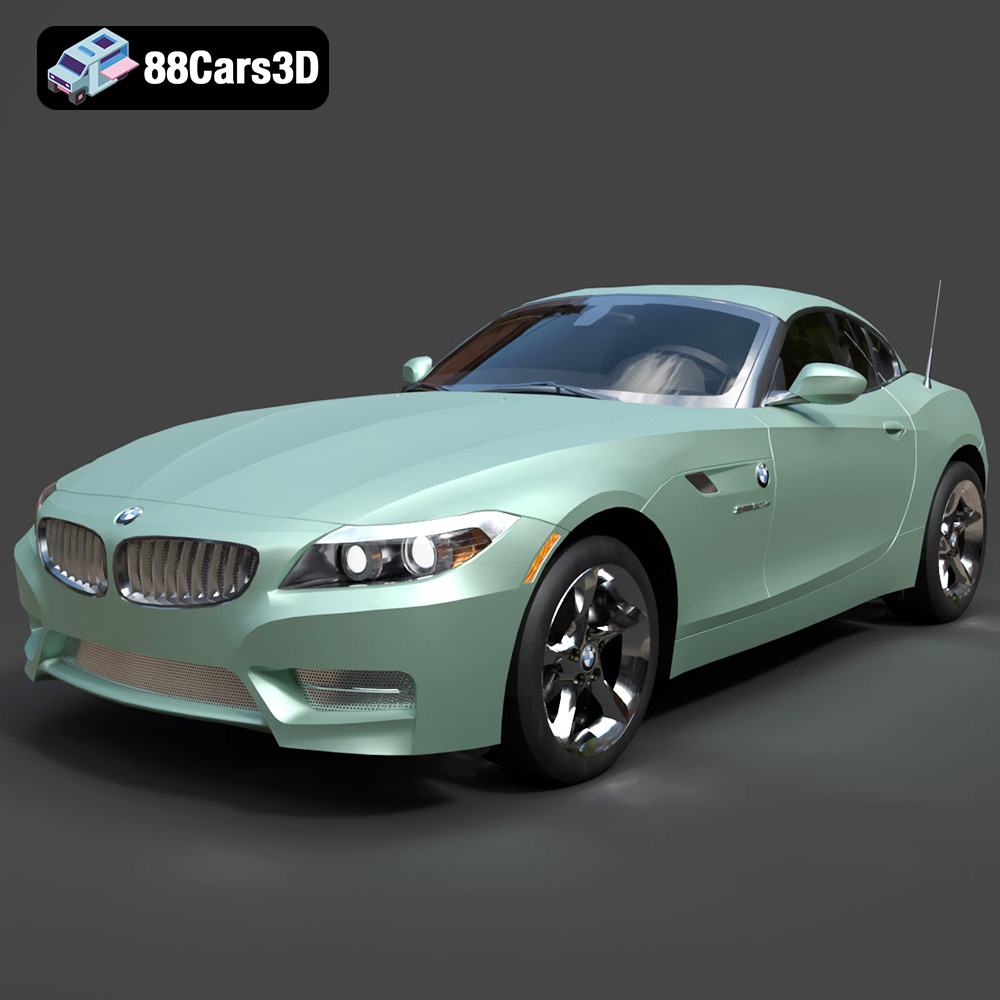
Download the BMW Z4 Roadster E89 3D Model featuring clean geometry, realistic detailing, and a fully modeled interior. Includes .blend, .fbx, .obj, .glb, .stl, .ply, .unreal, and .max formats for rendering, simulation, and game development.
Price: $13.99

Texture: Yes
Material: Yes
Download the BMW Z4 E85 3D Model featuring clean geometry, realistic detailing, and a fully modeled interior. Includes .blend, .fbx, .obj, .glb, .stl, .ply, .unreal, and .max formats for rendering, simulation, and game development.
Price: $13.99

Texture: Yes
Material: Yes
Download the BMW M3 2024 3D Model featuring clean geometry, realistic detailing, and a fully modeled interior. Includes .blend, .fbx, .obj, .glb, .stl, .ply, .unreal, and .max formats for rendering, simulation, and game development.
Price: $13.99
Texture: Yes
Material: Yes
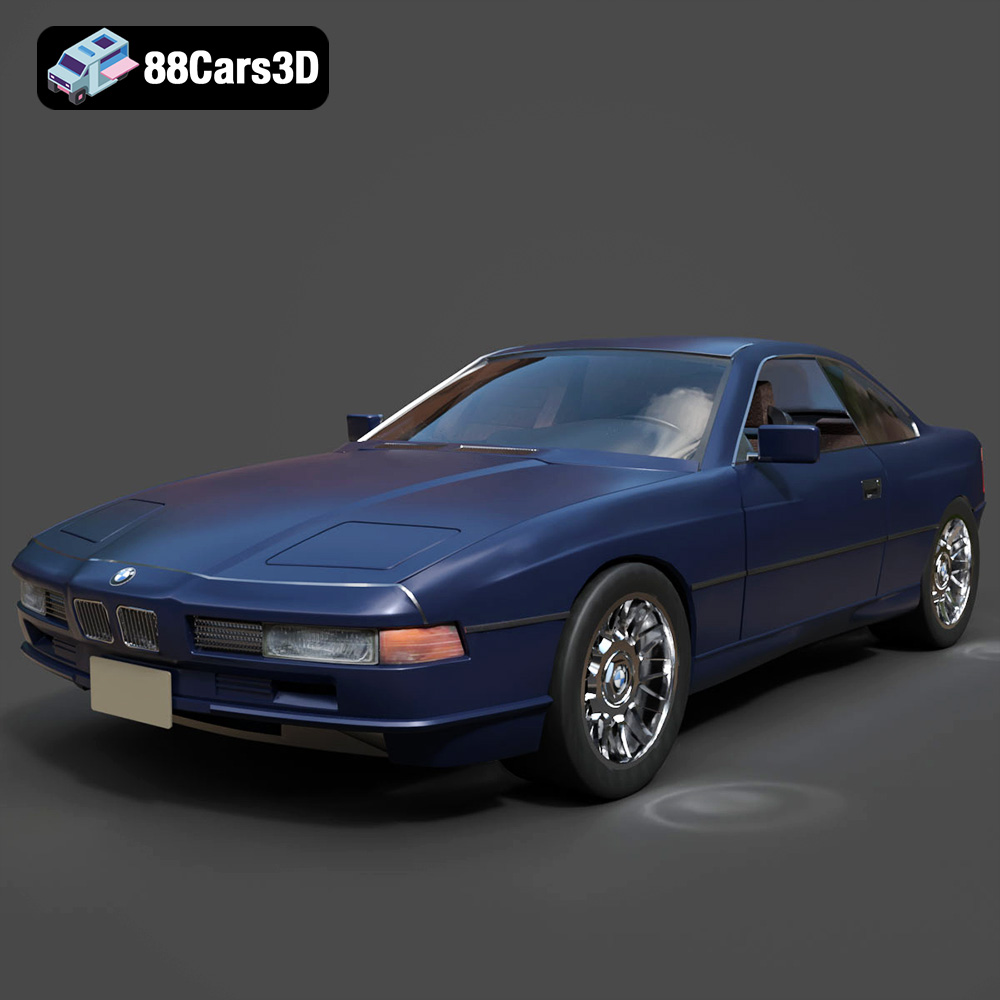
Download the BMW 850i Coupe 1990 3D Model featuring clean geometry, realistic detailing, and a fully modeled interior. Includes .blend, .fbx, .obj, .glb, .stl, .ply, .unreal, and .max formats for rendering, simulation, and game development.
Price: $13.99
Texture: Yes
Material: Yes
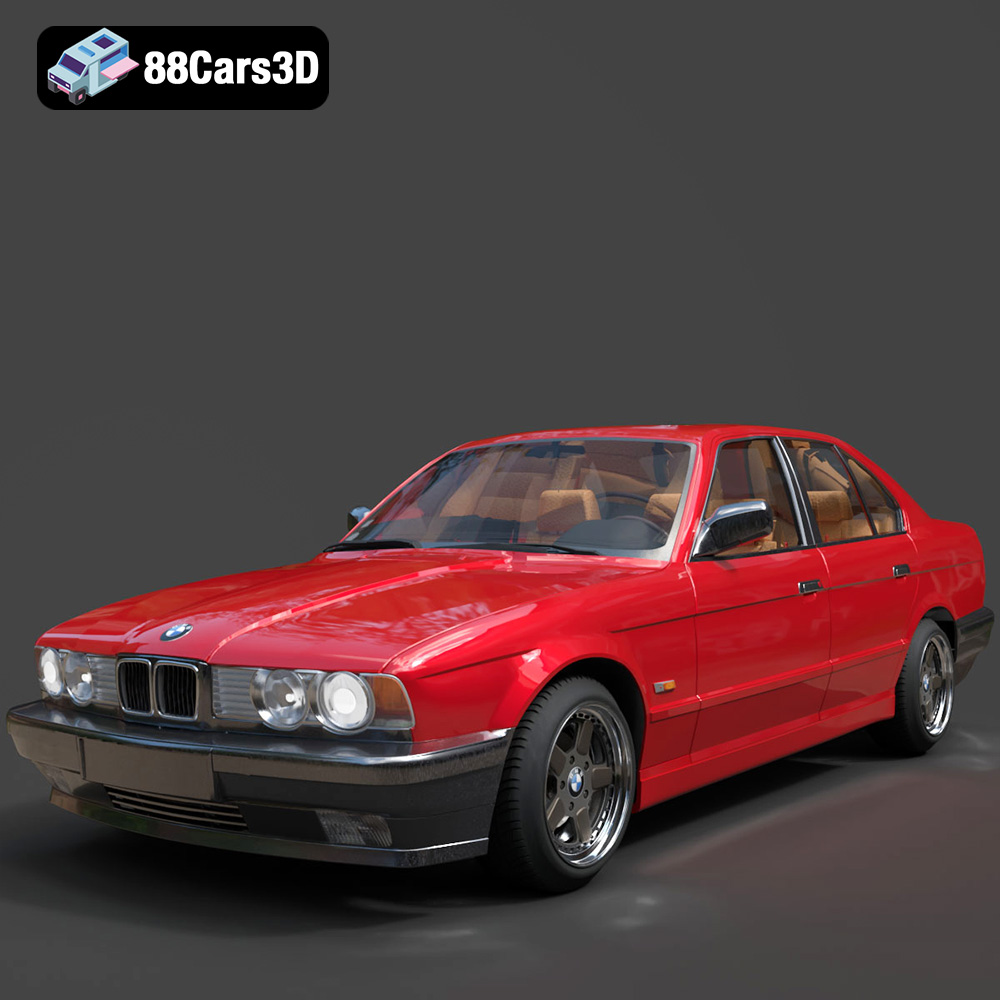
Download the BMW 525i E34 1993 3D Model featuring clean geometry, realistic detailing, and a fully modeled interior. Includes .blend, .fbx, .obj, .glb, .stl, .ply, .unreal, and .max formats for rendering, simulation, and game development.
Price: $12.99

Texture: Yes
Material: Yes
Download the BMW 7 Series 2016 3D Model featuring luxurious design, detailed interior, and accurate exterior. Includes .blend, .fbx, .obj, .glb, .stl, .ply, .unreal, and .max formats for rendering, simulation, and game development.
Price: $10.79
Texture: Yes
Material: Yes
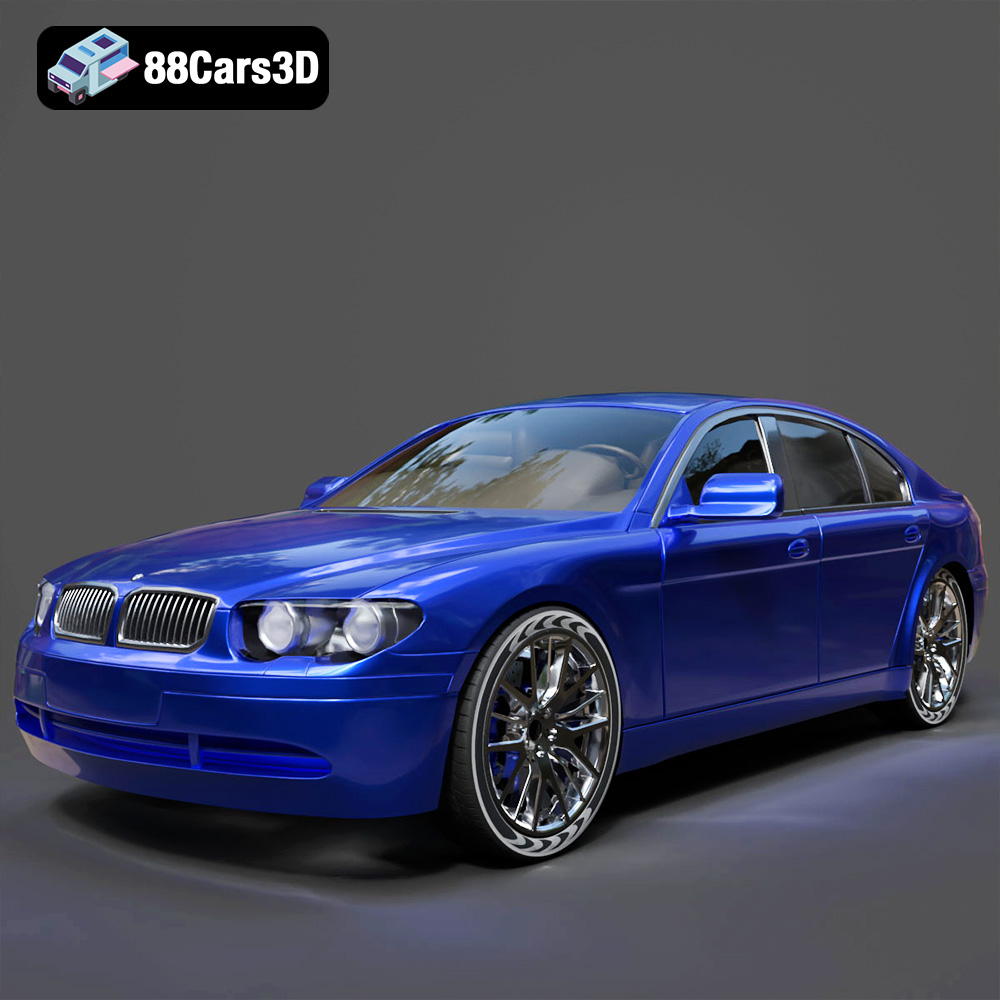
Download the BMW 7 Series 30th Anniversary 3D Model featuring a meticulously crafted exterior, detailed interior, and realistic wheels. Includes .blend, .fbx, .obj, .glb, .stl, .ply, .unreal, and .max formats for rendering, simulation, and game development.
Price: $35.79

Texture: Yes
Material: Yes
Download the BMW 7-Series F02 3D Model featuring a detailed exterior and interior, optimized for rendering and animation. Includes .blend, .fbx, .obj, .glb, .stl, .ply, .unreal, and .max formats for rendering, simulation, and game development.
Price: $10.79
Texture: Yes
Material: Yes
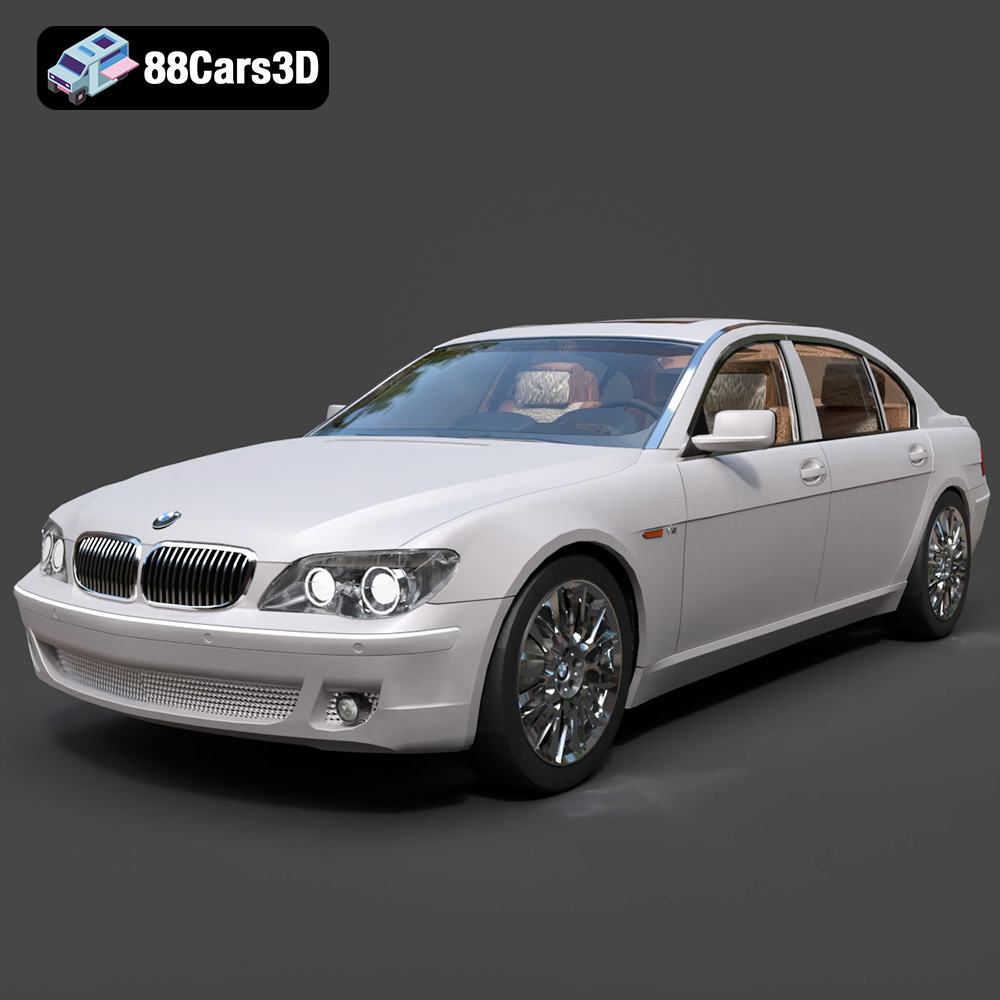
Download the BMW 760Li E66 2005 3D Model featuring a detailed exterior, refined interior, and robust chassis. Includes .blend, .fbx, .obj, .glb, .stl, .ply, .unreal, and .max formats for rendering, simulation, and game development.
Price: $10.79

