⚡ FLASH SALE: Get 60% OFF All Premium 3D & STL Models! ⚡

In the vibrant world of 3D visualization, from high-octane game development to hyper-realistic automotive design presentations and cinematic CGI, the smallest details often make the biggest impact. While pristine, factory-fresh car models certainly have their place, there’s an undeniable allure and narrative power in a vehicle that tells a story. This story is etched in its surface: the subtle scratches from countless journeys, the patina of age, the grime of the road, or the dramatic deformations of a high-speed impact. Creating believable damage and wear effects on 3D car models is not merely an aesthetic choice; it’s a profound technical challenge that elevates realism and immersion.
For 3D artists, game developers, and visualization professionals, the ability to convincingly portray weathering and distress can transform a static asset into a dynamic, character-filled object. Whether you’re aiming for a post-apocalyptic survivor vehicle, a vintage classic with decades of charm, or a photorealistic scene depicting a daily driver, understanding the intricate workflows involved in adding these imperfections is crucial. This comprehensive guide will delve deep into the methodologies, software-specific techniques, and industry best practices for achieving unparalleled authenticity in your 3D car models. We’ll explore everything from topology considerations to advanced PBR material workflows, game engine optimization, and rendering strategies, ensuring your digital vehicles resonate with genuine real-world character. And for those looking to start with a robust foundation, platforms like 88cars3d.com offer an excellent array of high-quality, clean base 3D car models, perfect for taking your artistry to the next level with custom wear and tear.
Before diving into the technical execution, a solid understanding of the various forms of damage and wear is paramount. Each type interacts with light, color, and surface properties in distinct ways, and recognizing these nuances is the first step towards achieving realism.
These are perhaps the most common forms of wear. Micro-scratches, often visible as swirl marks under direct light, affect the roughness of the paint, diffusing reflections and dulling the surface. They don’t typically break through the clear coat. Deeper scratches or key marks, however, may expose underlying layers – primer, bare metal, or even plastic. These require alterations to the albedo (color), metallic, and roughness maps, and potentially subtle normal map changes. Simulating these often involves procedural noise or grunge textures layered with curvature maps to concentrate wear on edges. The directionality of scratches also plays a role; long, sweeping marks differ from short, abrupt scuffs.
From a minor ding on a fender to significant crumpling from an accident, structural deformation is a crucial aspect of realism. Minor dings might only require a subtle displacement or normal map alteration, while major damage necessitates direct mesh manipulation. The key here is understanding how metals bend and fold. A sharp impact will create creases and hard edges, while a softer collision might result in a smoother, more rounded indentation. The topology of your 3D car models needs to be robust enough to handle these deformations without pinching or breaking. This is where a good foundational mesh, such as those available on 88cars3d.com, proves invaluable, as clean quads allow for more predictable and natural deformation.
Paint chips reveal underlying material, demanding a complex interplay between different material properties. A chip exposes a new layer – often gray primer, bare metal, or even plastic – each with its own metallic, roughness, and albedo values. Rust, an oxidation process, further adds a layer of organic degradation. It typically starts in chipped areas or crevices where moisture collects. The appearance of rust can vary from a light orange stain to deep, flaky reddish-brown corrosion, each requiring specific textures and material blending techniques. The procedural generation of rust, using ambient occlusion and curvature information, is a powerful technique for achieving organic patterns that conform to the mesh.
These encompass a broad range of natural accumulation. Mud splatters and dust tend to accumulate in recessed areas, along panel lines, and on horizontal surfaces. Water streaks run downwards from higher points, indicating a history of rain. Environmental effects also include acid rain etching, sun fading on paint (especially on horizontal surfaces like the roof and hood), and tar spots. These are primarily texture-based effects, often utilizing blend masks driven by vertex paint or procedural generation based on world-space normals and ambient occlusion. For example, dust might collect on upward-facing surfaces, while grime could be heavy near the wheels.
Implementing convincing damage often begins at the geometry level. The choice between destructive and non-destructive workflows depends heavily on the desired level of detail and the project’s requirements.
Maintaining a clean, original mesh is often preferable, especially for game assets or models that might require variations (e.g., clean vs. damaged versions). Non-destructive techniques allow for flexibility and easier iteration.
* Modifiers: Software like Blender, 3ds Max, and Maya offer powerful modifiers. Blender’s “Subdivision Surface” modifier, for instance, allows you to sculpt high-resolution details onto a low-polygon base mesh using the “Multiresolution Modifier”. This way, you can create intricate dents and scratches without permanently altering your base topology. The Blender 4.4 Manual on the Multiresolution Modifier provides excellent details on how to leverage this for high-fidelity sculpting while preserving your original mesh data. This approach is fantastic for creating subtle panel warps or shallow dents.
* Vertex Displacement: Pairing a displacement map (created in sculpting software or procedurally) with a modifier can deform the mesh at render time. This is excellent for fine surface irregularities like ripples around a dent or very shallow scratches that slightly alter the geometry. Ensure your base mesh has sufficient subdivision in areas of displacement or apply a subdivision modifier before displacement for smooth results.
For catastrophic damage, such as a severely crumpled fender or a shattered windshield frame, direct manipulation of the mesh is often necessary.
* Manual Vertex Manipulation: In Edit Mode (or its equivalent in other software), artists can directly move, scale, and rotate vertices, edges, and faces to simulate bending and breaking metal. This requires a keen eye for how materials deform in reality. Tools like soft selection (proportional editing in Blender, as detailed in Blender 4.4 Manual: Proportional Editing) are invaluable for creating smooth, organic deformations over larger areas.
* Boolean Operations: While generally used with caution due to their tendency to create messy topology (ngons and triangles), Boolean operations can be effective for creating sharp holes or tearing effects, especially when followed by meticulous cleanup. Boolean modifiers in Blender are documented at Blender 4.4 Manual: Boolean Modifier. Afterward, manually retopologizing the affected areas to maintain quad-dominant topology is often necessary to avoid shading artifacts.
* Mesh Repair and Cleanup: Post-destructive modeling, tools for cleaning up mesh issues are critical. Blender offers various “Clean Up” mesh operators (Blender 4.4 Manual: Clean Up) that can help dissolve loose geometry, merge by distance, and fix non-manifold edges, which are common after intense deformation.
For adding fine-grained details like deep scratches, gouges, or complex rust patterns, sculpting is indispensable.
* ZBrush/Blender Sculpt Mode: Dedicated sculpting software like ZBrush or Blender’s robust Sculpt Mode allows artists to paint displacement directly onto the mesh. Using alpha textures with brushes can simulate specific patterns like chipped paint or abraded metal. In Blender, brushes like “Draw Sharp” or “Crease” are excellent for creating crisp edges for tears and deep scratches, while others like “Inflate” or “Blob” can create swelling for dents. The Blender 4.4 Manual on Sculpting Brushes provides a comprehensive overview of the available tools.
* Baking Normal and Displacement Maps: Once high-detail damage is sculpted, it’s typically baked down to normal and displacement maps that can be applied to a lower-polygon game or render mesh. This allows for the visual fidelity of millions of polygons without the performance cost. This is a critical step for optimizing your game assets.
Texture maps are the workhorses of realism, especially for surface-level damage and wear. Leveraging Physically Based Rendering (PBR) workflows is essential for accurate representation.
In a PBR pipeline, each material property is represented by a separate texture map, ensuring consistent and realistic rendering across different lighting conditions. Damage and wear directly affect these maps:
* Albedo/Base Color: This map defines the pure color of the surface. Paint chips reveal underlying colors (primer, bare metal), while dirt and dust layers subtly alter the overall hue and saturation.
* Roughness: Crucial for conveying surface smoothness. Pristine paint is very smooth (low roughness), leading to sharp reflections. Scratches, dirt, and dull paint increase roughness, scattering light and creating diffuse reflections.
* Metallic: A binary map (0 or 1) indicating if a surface is metallic. Paint chips exposing bare metal require the metallic value to be 1 in those areas, contrasting with the non-metallic paint (0).
* Normal Map: Provides fine surface detail, simulating bumps and grooves without adding extra geometry. Scratches, subtle dents, and flaking paint are often baked into normal maps.
* Displacement Map: Offers true geometric displacement, pushing vertices in or out. Used for deeper dents, larger chips, or significant surface irregularities. Requires a sufficiently dense mesh or subdivision at render time.
Procedural techniques allow for highly customizable and resolution-independent wear effects, especially potent in node-based shader editors.
* Blender’s Shader Editor / Substance Designer: These powerful tools enable artists to create complex material networks. For scratches, you can blend a clean paint shader with a scratched metal shader using a mask. This mask can be procedurally generated using various noise textures (like Blender’s Noise Texture, Musgrave Texture, or Voronoi Texture) combined with curvature and ambient occlusion maps to define where wear naturally occurs. The Blender 4.4 Manual: Texture Nodes details the numerous procedural options available.
* Layered Materials: In game engines like Unreal Engine, you can create a master car paint material and then layer on dirt, rust, and damage materials using blend masks. This allows for dynamic adjustments and efficient iteration. For example, a common technique is to blend a clean paint material with a dirty/scratched material based on a single grayscale mask.
While procedural methods are powerful, hand-painting offers precise artistic control, especially for unique damage instances or stylized wear.
* Substance Painter / Quixel Mixer: These applications excel at PBR texturing. You can paint directly onto the 3D model, allowing for natural placement of scratches, rust, and dirt. They also generate essential utility maps like Ambient Occlusion (AO), Curvature, and Thickness, which are invaluable for creating smart masks that automatically apply wear to edges or recessed areas, mirroring real-world processes. These masks then drive the blending of different material layers.
* Projection Painting: Tools in Blender and Substance Painter allow for projecting photo textures of real-world damage onto your model, offering a rapid and realistic approach for specific effects like burnt areas or large paint peels.
Technical Considerations for Textures: Aim for 4K (4096×4096) or 8K texture resolutions for high-quality automotive renders to capture minute details like micro-scratches and paint imperfections. For game assets, optimize texture sizes based on target platforms and LODs, often starting with 2K and scaling down to 1K or even 512px for distant LODs. Efficient UV mapping is critical for all texturing; overlapping UVs can save space but may prevent unique damage, while fully unwrapped UVs (like UDIMs) are ideal for large, distinct damage patterns across multiple parts.
Bringing damaged 3D car models into real-time environments like Unity or Unreal Engine requires careful optimization and smart material setups to ensure performance without sacrificing visual fidelity.
LODs are essential for maintaining performance in game environments. Instead of rendering a highly detailed damaged model at a distance, simpler versions are swapped in.
* Creating LODs: For a heavily damaged car, you would typically generate 3-5 LOD levels. LOD0 is the full-detail model, possibly with high-polygon sculpted damage. LOD1 might have reduced polygon count with simpler geometric damage, while LOD2 and beyond would rely almost entirely on normal maps for surface detail and significantly reduced mesh complexity.
* Implementation: Most game engines have built-in LOD systems. In Unity, for example, you attach an LOD Group component to your object and define the different mesh LODs and their transition distances. Unreal Engine offers similar functionality with its “LOD Settings” directly on static meshes. This ensures that only the necessary polygons are rendered at any given distance, drastically reducing draw calls and vertex processing. A common practice is to reduce polygon count by 30-50% for each subsequent LOD, with corresponding texture resolution reductions (e.g., 4K for LOD0, 2K for LOD1, 1K for LOD2).
Dynamic, shader-driven damage allows for interactive wear and tear, crucial for modern game experiences.
* Blend Masks and Parameters: This involves creating a master material that can blend between a clean state and a damaged state using grayscale masks. These masks (e.g., a scratch mask, a rust mask) are often packed into a single texture’s RGB channels to save memory. A “damage intensity” parameter in the shader can control the visibility and severity of these effects. Artists can expose parameters in the material instance, allowing game designers to control the level of dirt, rust, or scratch accumulation dynamically.
* Vertex Colors for Localized Effects: Vertex colors can be used as masks to apply localized damage effects. For instance, painting red vertex color on a fender could signal the shader to apply specific dent textures and rust only in that area. This offers granular control over wear distribution without adding more texture maps.
* Decals: Decals are flat, textured planes projected onto surfaces. They are incredibly efficient for adding localized details like bullet holes, small mud splatters, or custom graffiti without modifying the base mesh or complex material blending. Engines like Unity and Unreal have robust decal systems. Use them sparingly for unique events, as many decals can increase draw calls.
* Overlay Textures: Similar to decals, but often integrated into the main material graph. An overlay texture might add a layer of dust or subtle streaking across the entire vehicle, driven by world-space normals or custom masks. This can be more performant than many individual decals for general grime.
Optimization Strategies: For game development, performance is king.
* Texture Atlasing: Combining multiple smaller textures (e.g., for different car parts or types of scratches) into one large texture atlas reduces draw calls and improves rendering efficiency.
* Instancing: If you have multiple instances of the same damaged car model, ensure your engine is instancing them correctly to save memory and CPU cycles.
* Shader Complexity: Keep your shader graphs as lean as possible. Complex node setups, while powerful, can be computationally expensive. Profile your materials to identify bottlenecks.
* Occlusion Culling: Implement proper occlusion culling to ensure that parts of the car not visible to the camera are not rendered.
For AR/VR applications, these optimizations are even more critical. Models must be incredibly lightweight. Consider baking all damage into a single PBR texture set (Albedo, Metallic, Roughness, Normal) and using aggressive LODs (even fewer polygons for LOD0 than a typical game) to maintain smooth frame rates. The USDZ format, often used in AR, handles PBR materials and LODs well.
Once your damaged 3D car models are meticulously crafted and textured, the final step is to bring them to life through compelling rendering and thoughtful post-processing. The interaction of light with these weathered surfaces is what truly sells the illusion.
Realistic lighting is paramount. Damaged surfaces react differently to light than pristine ones, and emphasizing these differences is key.
* Environment Maps (HDRI): High Dynamic Range Images (HDRIs) are crucial for realistic, image-based lighting. They provide complex, real-world lighting and reflections that will naturally highlight the roughness variations of scratches, the metallic glint of exposed metal, and the diffuse nature of dirt. For example, a cloudy outdoor HDRI will reveal subtle imperfections more evenly, while a sunset HDRI will create dramatic glints and reflections that emphasize surface changes.
* Targeted Spotlights: Use focused spotlights to intentionally illuminate specific damaged areas, drawing the viewer’s eye to details like a deep gouge or a rusted panel. The interplay of direct light and shadows cast by bent metal edges adds significant depth.
* Backlighting and Rim Lighting: Backlighting can highlight fine dust particles or subtle scratches against a darker background, making them pop. Rim lighting, in particular, is excellent for emphasizing the contours of dents and deformations.
Different render engines offer unique capabilities that enhance the realism of damaged materials.
* Corona/V-Ray (3ds Max): These physically accurate renderers excel at simulating complex material interactions. Pay close attention to advanced reflection properties, particularly for car paint shaders, which often involve multiple clear coat layers. For chipped areas, ensure your blended materials accurately represent the underlying primer or metal, with distinct roughness values. The subsurface scattering parameter, while typically subtle on car paint, can be used to simulate the slight translucency of very thin, chipped paint edges or certain types of plastics.
* Cycles/Arnold (Blender, Maya): Cycles, Blender’s powerful path tracer, offers excellent realism for weathered surfaces. When working in Blender, in the Cycles Render Settings (Blender 4.4 Manual: Cycles Render Settings), consider increasing sampling values for clean noise-free renders, especially in areas with complex light interactions like rusty metallic surfaces or heavily scratched clear coats. Utilize the adaptive sampling feature to focus rendering power where needed.
* Light Paths: Adjusting light path settings, particularly for “Transmission” and “Glossy” bounces, is vital. More bounces mean more accurate light interaction, which is essential for reflecting off varied surfaces and through transparent elements (like chipped clear coats). For example, increased glossy bounces ensure reflections accurately propagate across a car’s entire body, even on intricately scratched areas.
* Denoising: Cycles’ built-in denoising features (like OpenImageDenoise or OptiX Denoiser) are invaluable for speeding up renders by cleaning up noise that often appears with complex materials and lighting, particularly on textured and rough surfaces.
The final polish in post-processing can significantly enhance the visual narrative of your damaged vehicle.
* Compositing: In software like Blender’s Compositor (see Blender 4.4 Manual: Compositor), Photoshop, or DaVinci Resolve, you can add effects that unify the damaged look.
* Dust and Atmospheric Haze: Layer in subtle dust particles or volumetric fog to create a sense of environment and age. This can be done with simple particle systems or volumetric shaders.
* Color Grading: Adjust the overall color balance to enhance the mood. A slightly desaturated or cooler tone might emphasize a gritty, worn aesthetic, while warmer tones could highlight a vintage, cherished piece of machinery.
* Depth of Field (DoF): A shallow DoF can draw focus to a specific damaged area, making the viewer appreciate the intricate details.
* Vignetting and Chromatic Aberration: Subtle applications can add a cinematic touch, but be careful not to overdo these effects, as they can quickly detract from realism.
* Lens Flares and Glare: For scenes with strong light sources, adding realistic lens flares or glare can make reflections off the scratched or polished surfaces feel more authentic.
Technical Aspects of Rendering: Render times can increase significantly with complex material setups, high-resolution textures, and extensive displacement. Strategic use of proxies, optimizing shader complexity, and leveraging GPU rendering (if available and supported by your engine) are key. Ensure your final output resolution is appropriate for the medium; 4K or 8K for high-end stills, and optimized 1080p or 4K for animations.
Creating truly convincing damage and wear effects on 3D car models is a sophisticated blend of technical proficiency and artistic observation. It’s about more than just slapping on a few textures; it’s about understanding material properties, light interaction, and the physical processes that degrade surfaces over time. From the careful manipulation of mesh topology to the intricate dance of PBR shader networks and the final touches of post-processing, each step contributes to telling a richer, more believable story with your automotive creations.
By embracing both destructive and non-destructive modeling, mastering procedural and hand-painted texturing techniques, and optimizing intelligently for different platforms like game engines and AR/VR, you can transform a clean digital car into a veteran of countless journeys. These skills are highly sought after in industries ranging from automotive rendering and game asset development to specialized visualization and even 3D printing, where the physical reproduction of wear adds unique character.
Ready to embark on your next project and imbue your 3D vehicles with unparalleled realism? Start with a solid foundation. Explore the vast selection of meticulously crafted, high-quality base 3D car models available on 88cars3d.com. These models, with their clean topology and production-ready UVs, provide the perfect canvas for you to apply your newfound expertise in damage and wear, transforming them into masterpieces that resonate with authenticity and narrative depth. The road to realism is paved with imperfections – go forth and create!

Texture: Yes
Material: Yes
Download the BMW 3 F30 3D Model featuring a detailed exterior, realistic interior, and optimized mesh. Includes .blend, .fbx, .obj, .glb, .stl, .ply, .unreal, and .max formats for rendering, simulation, and game development.
Price: $10.79
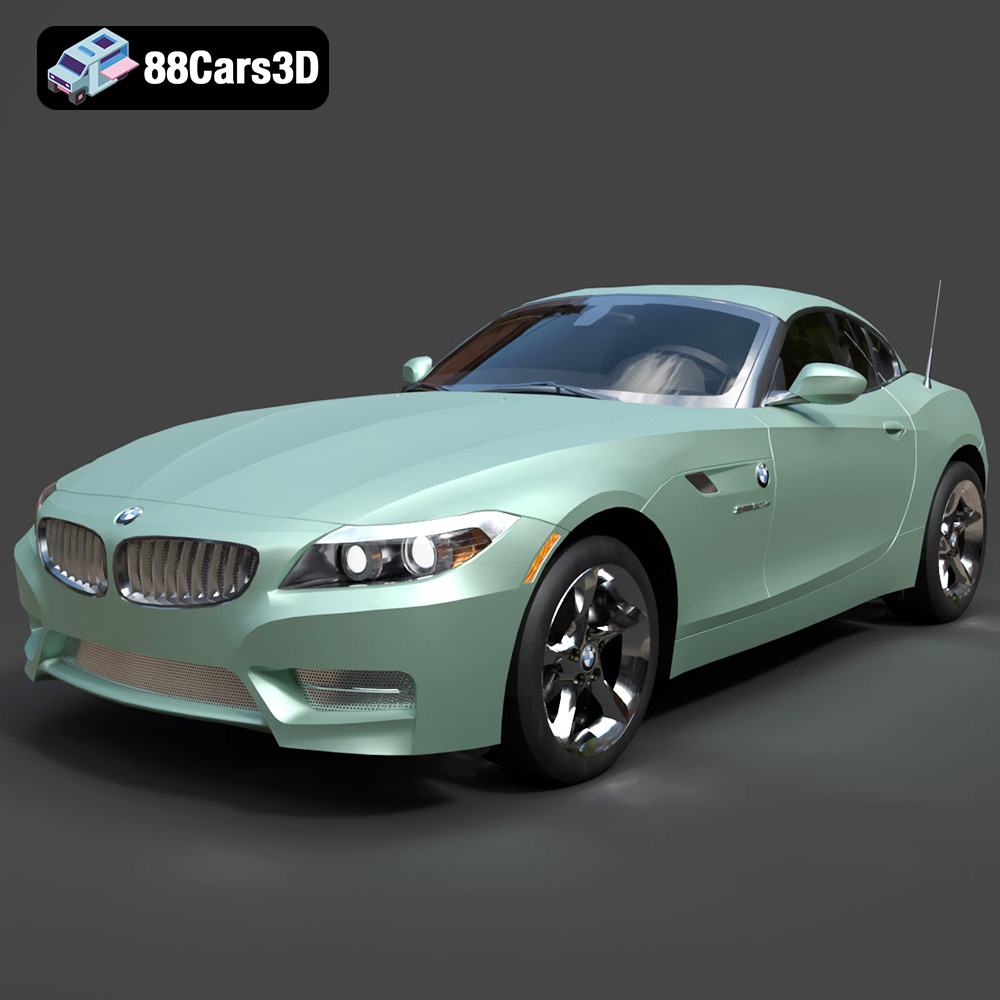
Texture: Yes
Material: Yes
Download the BMW Z4 Roadster E89 3D Model featuring clean geometry, realistic detailing, and a fully modeled interior. Includes .blend, .fbx, .obj, .glb, .stl, .ply, .unreal, and .max formats for rendering, simulation, and game development.
Price: $13.99

Texture: Yes
Material: Yes
Download the BMW Z4 E85 3D Model featuring clean geometry, realistic detailing, and a fully modeled interior. Includes .blend, .fbx, .obj, .glb, .stl, .ply, .unreal, and .max formats for rendering, simulation, and game development.
Price: $13.99

Texture: Yes
Material: Yes
Download the BMW M3 2024 3D Model featuring clean geometry, realistic detailing, and a fully modeled interior. Includes .blend, .fbx, .obj, .glb, .stl, .ply, .unreal, and .max formats for rendering, simulation, and game development.
Price: $13.99
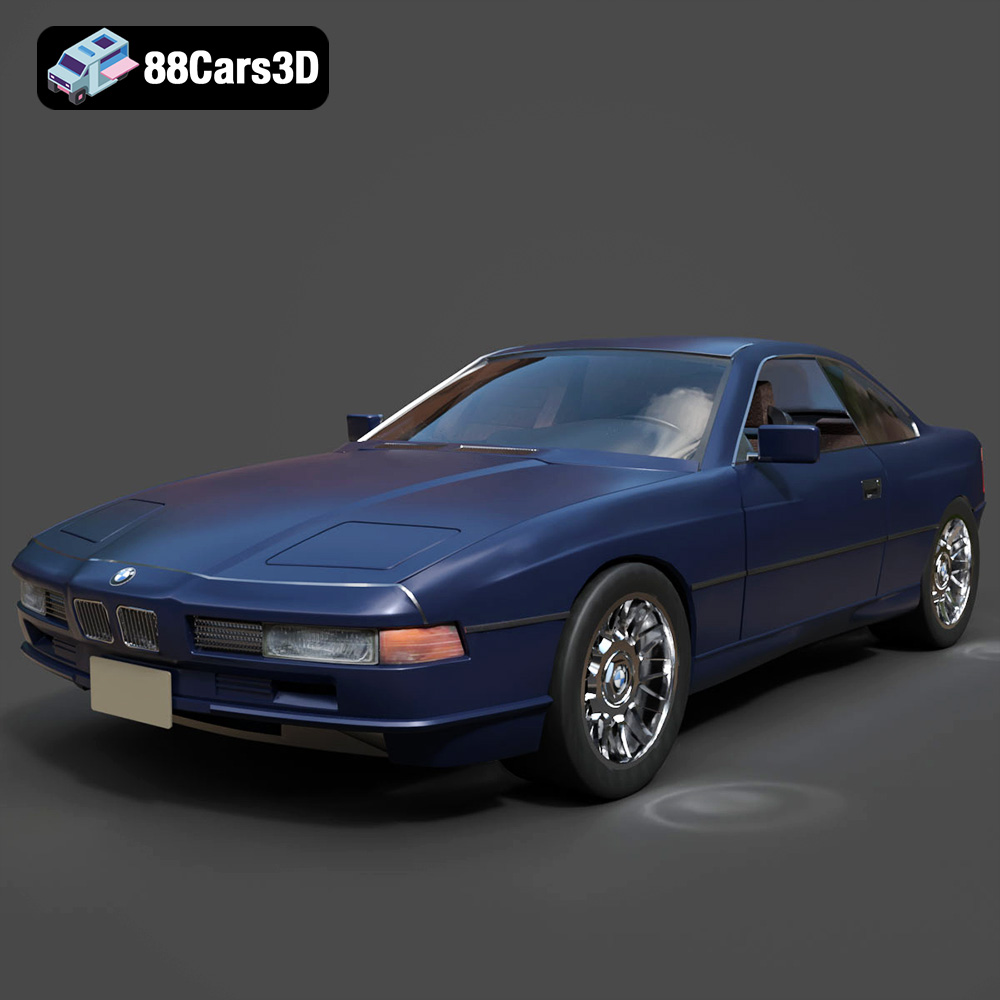
Texture: Yes
Material: Yes
Download the BMW 850i Coupe 1990 3D Model featuring clean geometry, realistic detailing, and a fully modeled interior. Includes .blend, .fbx, .obj, .glb, .stl, .ply, .unreal, and .max formats for rendering, simulation, and game development.
Price: $13.99
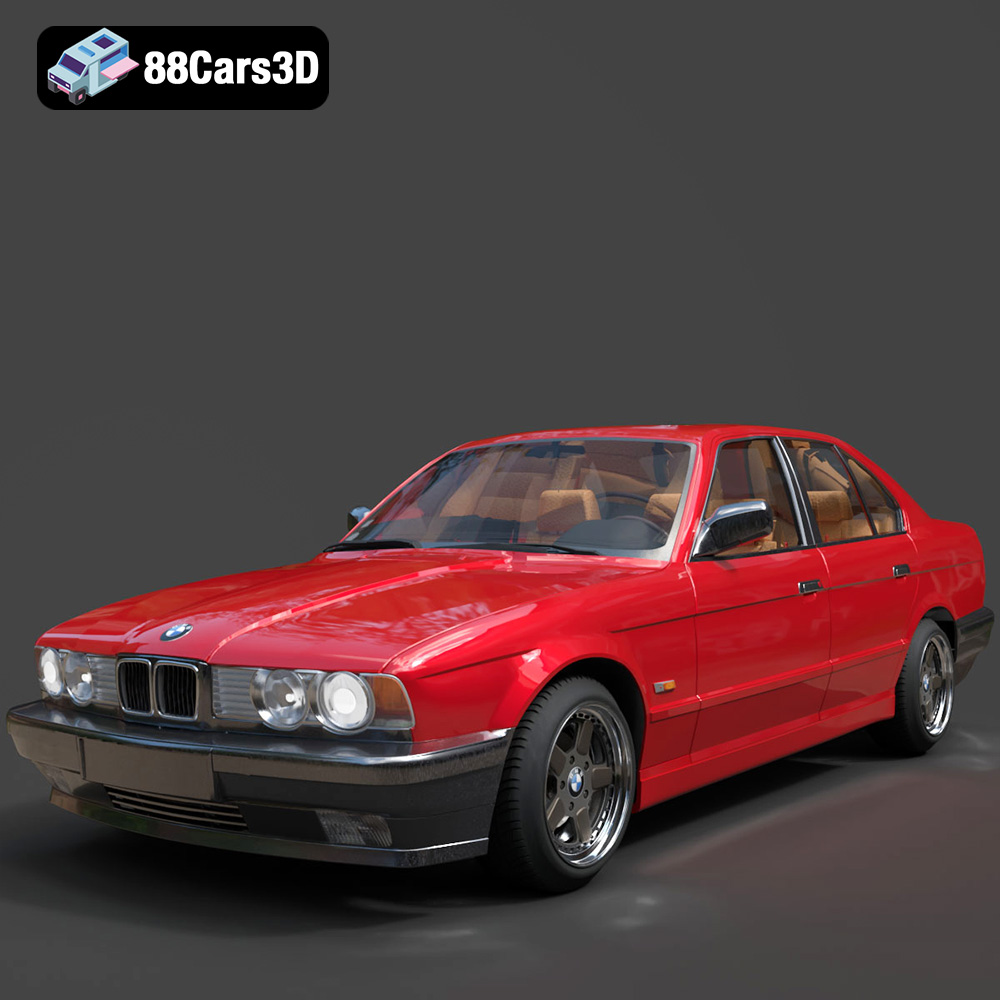
Texture: Yes
Material: Yes
Download the BMW 525i E34 1993 3D Model featuring clean geometry, realistic detailing, and a fully modeled interior. Includes .blend, .fbx, .obj, .glb, .stl, .ply, .unreal, and .max formats for rendering, simulation, and game development.
Price: $12.99

Texture: Yes
Material: Yes
Download the BMW 7 Series 2016 3D Model featuring luxurious design, detailed interior, and accurate exterior. Includes .blend, .fbx, .obj, .glb, .stl, .ply, .unreal, and .max formats for rendering, simulation, and game development.
Price: $10.79
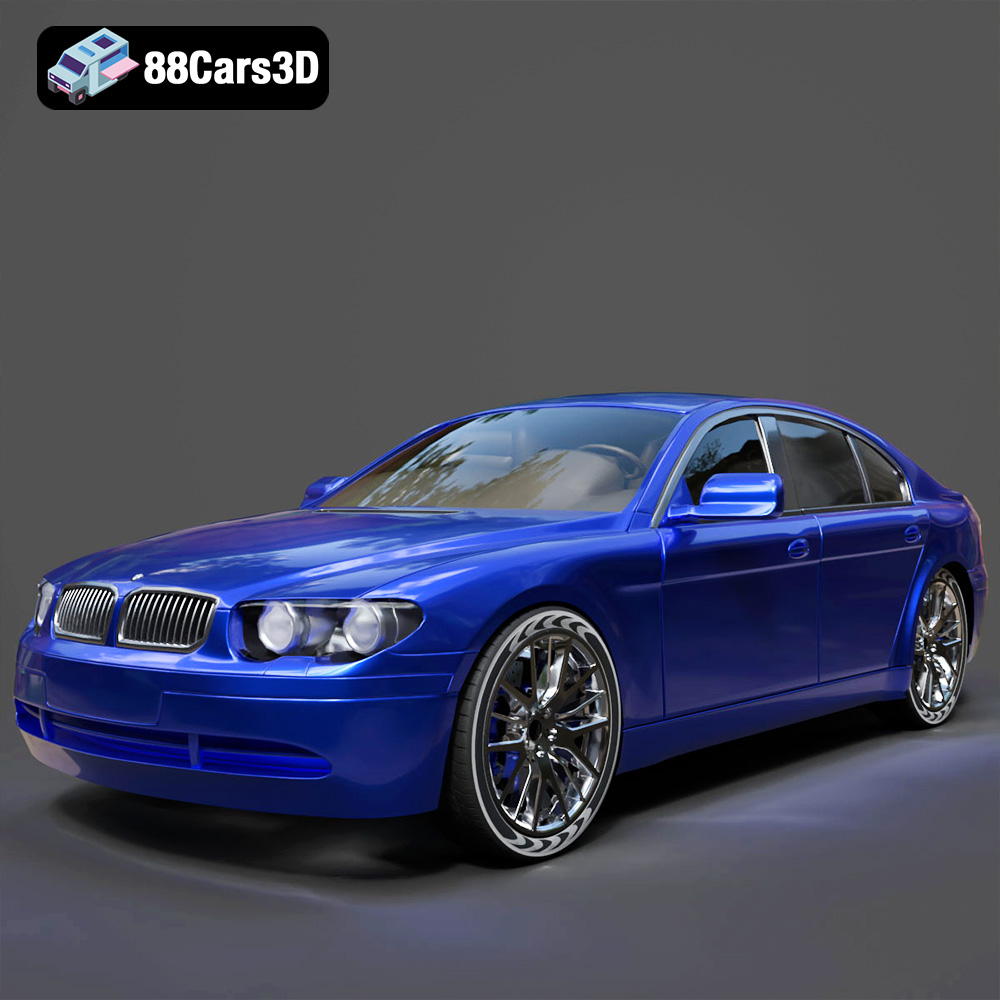
Texture: Yes
Material: Yes
Download the BMW 7 Series 30th Anniversary 3D Model featuring a meticulously crafted exterior, detailed interior, and realistic wheels. Includes .blend, .fbx, .obj, .glb, .stl, .ply, .unreal, and .max formats for rendering, simulation, and game development.
Price: $35.79

Texture: Yes
Material: Yes
Download the BMW 7-Series F02 3D Model featuring a detailed exterior and interior, optimized for rendering and animation. Includes .blend, .fbx, .obj, .glb, .stl, .ply, .unreal, and .max formats for rendering, simulation, and game development.
Price: $10.79
Texture: Yes
Material: Yes
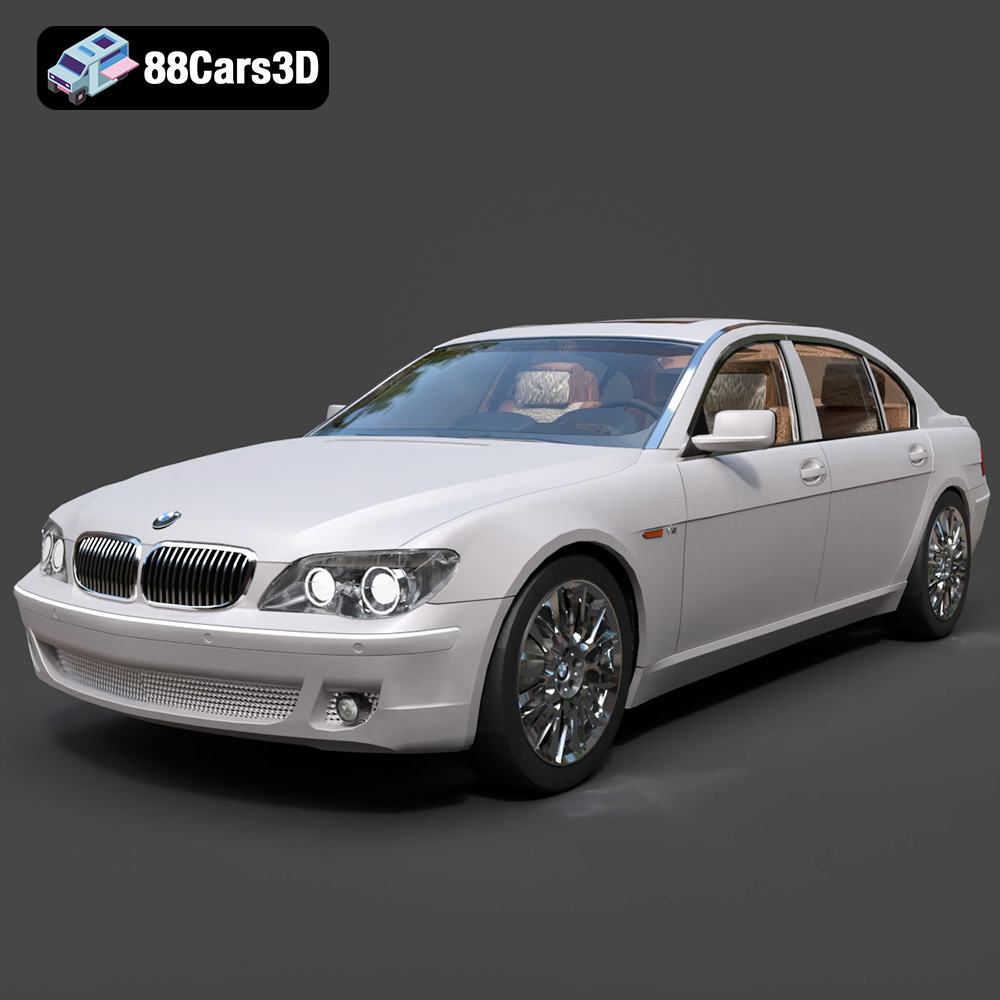
Download the BMW 760Li E66 2005 3D Model featuring a detailed exterior, refined interior, and robust chassis. Includes .blend, .fbx, .obj, .glb, .stl, .ply, .unreal, and .max formats for rendering, simulation, and game development.
Price: $10.79

