⚡ FLASH SALE: Get 60% OFF All Premium 3D & STL Models! ⚡

“`html
The allure of bringing intricate automotive designs to life through 3D printing is undeniable. Whether you’re a seasoned maker aiming for hyper-realistic dioramas, an engineer prototyping a component, or a hobbyist simply passionate about cars, the journey from a digital STL file to a tangible model is incredibly rewarding. However, achieving high-quality prints consistently, especially with detailed models like those found on platforms like 88cars3d.com, requires more than just hitting the ‘print’ button. Understanding how to prepare your STL files—specifically by scaling, hollowing, and optimizing them for print speed—is paramount. This guide will delve deep into the technical intricacies of these processes, empowering you to maximize your 3D printing success and minimize print times without sacrificing detail or structural integrity.
We’ll explore the fundamental structure of STL files, the critical role of mesh integrity, and how software tools can transform raw data into print-ready assets. You’ll learn to strategically adjust model dimensions, create efficient internal structures through hollowing, and fine-tune slicing parameters to shave precious hours off your print jobs. By the end of this article, you’ll possess the knowledge to tackle complex car models, troubleshoot common printing issues related to file preparation, and achieve faster, cleaner prints every time.
At its core, an STL (STereoLithography) file is a way of representing a 3D surface geometry using a collection of triangular facets. Each triangle is defined by three vertices and a normal vector, which indicates the outward-facing direction of the surface. This seemingly simple structure is the lingua franca of 3D printing, but its effectiveness hinges on the quality of the mesh itself. For printable car models, especially highly detailed ones from sources like 88cars3d.com, the underlying mesh topology—how these triangles connect and form surfaces—is crucial.
A “manifold” mesh is one that is watertight, meaning it has no holes, gaps, or internal faces. Think of it like a sealed container; you can pour liquid in without it leaking. Non-manifold geometry can confuse slicing software, leading to errors, missing features, or failed prints. Common issues include disconnected vertices (where triangles don’t quite meet), internal faces (triangles inside the model that shouldn’t be there), and overlapping triangles. These problems often arise during the 3D modeling process or through file conversion.
When preparing an STL for printing, ensuring mesh integrity is the first and most vital step. Most slicing software will attempt to repair minor issues, but significant problems often require dedicated tools. Software like Meshmixer, Netfabb, or even Blender’s built-in 3D-Print Toolbox can analyze your mesh for errors such as holes, non-manifold edges, and inverted normals. The process typically involves running an analysis tool, which highlights problematic areas. You can then use the software’s tools to automatically fill holes, remove internal faces, or flip inverted normals. For instance, in Meshmixer, you can use the ‘Inspector’ tool to detect errors and then employ ‘Auto Repair’ or manually edit specific areas. This meticulous attention to detail prevents the slicer from misinterpreting the geometry, ensuring that what you see in your slicer is what you’ll get on your print bed.
Another critical aspect of mesh topology for 3D printing is adequate wall thickness. A 3D model might look complete on screen, but if its walls are too thin (e.g., less than 0.8-1.0mm for FDM printing, depending on nozzle size), they may not print successfully. Thin walls can become fragile, break during printing or post-processing, or simply not be resolved by the printer’s nozzle. When downloading highly detailed car models, particularly those with delicate spoilers, mirrors, or intricate grilles, it’s essential to check and potentially thicken these areas. Tools within CAD software or mesh editors allow you to measure wall thickness and apply offsets or extrusions to reinforce weak points. This proactive approach significantly reduces the likelihood of print failures and ensures the longevity of your printed model.
The ability to scale an STL file is fundamental to adapting digital models to specific requirements, whether it’s fitting a car model onto a particular shelf, creating a larger display piece, or resizing a component for a functional prototype. Scaling is a straightforward process, but it needs to be done thoughtfully to avoid introducing new problems or compromising the model’s design.
When you scale a model, all its dimensions are multiplied or divided by a scaling factor. For example, scaling by 200% will double the size in all directions (X, Y, and Z), while scaling by 50% will halve it. Most slicing software and 3D modeling tools provide simple scaling functions. In Cura or PrusaSlicer, you can typically find a ‘Scale’ tool in the model manipulation panel, allowing you to input percentage values or specific dimensions.
It’s crucial to understand the difference between uniform and non-uniform scaling. Uniform scaling applies the same factor to all three axes (X, Y, and Z), preserving the model’s original proportions. This is the most common type of scaling and is ideal for general resizing. Non-uniform scaling, however, allows you to scale each axis independently. While this offers flexibility, it can easily distort the model, making it look stretched or squashed, and should generally be avoided unless you have a specific reason, such as correcting an issue with anisotropic scaling during initial model creation or design intent.
While scaling is mathematically simple, certain aspects need attention, especially with complex models like cars. Firstly, ensure that the scaling factor doesn’t result in features becoming too small to print. If you scale a large car model down significantly, tiny details like door handles or badges might fall below the resolution threshold of your printer or nozzle size. Conversely, scaling up can sometimes reveal imperfections in the original mesh that were not apparent at smaller sizes. Secondly, always re-check wall thicknesses after scaling. If you scale a model down by 50%, all wall thicknesses will also be halved. A wall that was 1mm thick will become 0.5mm, potentially making it unprintable. Use mesh analysis tools after scaling to verify that critical features and walls remain robust enough for your chosen printing technology and material.
Printing solid objects, especially large ones, consumes a significant amount of material and print time. For many decorative or display models, such as car replicas, printing them solid is unnecessary. Hollowing the model—creating a hollow interior with a specific wall thickness—is a highly effective technique to reduce material usage, decrease print time, and sometimes even improve print quality by reducing internal stresses.
Most modern slicing software offers built-in hollowing features. In Cura, you can find this under the ‘Shell’ settings as ‘Hollow Inside’. Similarly, PrusaSlicer has a ‘Cut, then thicken, then hollow’ feature. When enabling hollowing, you’ll typically need to specify a wall thickness (or shell thickness) for the hollowed model. This thickness should be sufficient to ensure structural integrity and printability, often similar to the minimum wall thickness considerations mentioned earlier (e.g., 1-2mm for FDM). It’s also crucial to add drainage holes if printing with resin printers to allow uncured resin to escape from the hollow interior. For FDM, drain holes aren’t strictly necessary for material removal but can help reduce internal trapped air pressure during printing.
The process usually involves either: 1) selecting the ‘Hollow’ option and setting the desired wall thickness, or 2) using a ‘Cut’ feature to slice the model in half, hollowing the remaining solid parts, and then rejoining them (though this is less common for full hollowing). When using the direct ‘Hollow’ function, the slicer algorithm works from the outside in, creating an internal cavity while maintaining the specified shell thickness. It’s essential to preview the sliced model afterward to ensure the hollowing process has worked as expected and that no unexpected artifacts or thin sections have been created. Some slicers allow you to control the ‘Hollow Resolution’ or ‘Mesh Complexity’ which can impact the smoothness of the internal surface.
For more complex scenarios or when slicer-based hollowing isn’t satisfactory, you can employ 3D modeling software. Tools like Blender or Meshmixer offer ‘Solidify’ or ‘Shell’ modifiers that can create hollowed versions of your mesh. This gives you more granular control. For instance, you could manually add internal support structures within the hollow space before exporting the hollowed STL, which might be useful for very large models or those with significant overhangs. When hollowing, consider the model’s orientation. A car model hollowed and printed upright might require less support material internally than one oriented differently. Always check the sliced preview to confirm that the internal geometry is sound and that the walls are consistently thick throughout. For resin printing, carefully placed drain holes are critical to avoid print failures and ensure proper curing of the interior surfaces.
Once your STL file is scaled appropriately and potentially hollowed, the next major step towards faster printing lies in optimizing your slicer settings. This involves a delicate balance between speed, quality, and reliability. Pushing print speeds too aggressively without adjusting other parameters can lead to under-extrusion, layer adhesion issues, ringing artifacts, and generally poor print quality. However, strategic adjustments can significantly reduce print times for detailed car models.
Key parameters to focus on include layer height, print speed (across different features like walls, infill, and travel moves), acceleration, and jerk settings. Understanding the trade-offs is crucial. For example, a larger layer height (e.g., 0.2mm or 0.3mm instead of 0.1mm) drastically reduces the number of layers required, thus shortening print time, but it also results in a more visible layer texture on the final print.
The decision on layer height is often the single biggest factor influencing print time. While high-detail models might benefit from a 0.1mm or even 0.08mm layer height for incredibly smooth curves and fine details, many car models can achieve acceptable visual quality with a 0.15mm or 0.2mm layer height. For larger, less detailed prints, 0.25mm or 0.3mm might suffice. However, when increasing layer height, you must also consider the effect on wall thickness. Your slicer’s ‘Wall Line Count’ or ‘Perimeters’ setting dictates how many extrusion paths form the outer walls. If you increase the layer height, you might need to increase the number of walls to maintain the same effective wall thickness and structural integrity. For example, with a 0.2mm layer height and 2 walls, your wall thickness is 0.4mm (assuming standard 0.4mm nozzle/extrusion width). If you increase to 0.3mm layer height, 2 walls only give you 0.6mm. You might need 3 walls (0.9mm) to achieve a comparable robustness or simply accept a slightly thicker wall if the model allows.
The infill percentage and pattern significantly impact both material usage and print time. For non-structural display models, an infill density of 10-15% is often sufficient. If you’ve hollowed the model, the infill might be minimal or even zero, further saving time and material. When infill is necessary, consider faster-printing patterns. Grid, Lines, or Triangles are generally faster than more complex patterns like Gyroid or Cubic, especially at lower densities. However, Gyroid can offer good strength-to-weight ratio and aesthetic appeal. Experiment with different patterns to find the best balance for your specific model.
Printing speeds themselves can be increased, but with caveats. You can often increase the speed for infill printing more aggressively than for outer walls or top/bottom layers, where quality is more critical. For example, you might set infill speed to 80-100 mm/s, while outer walls remain at 40-50 mm/s, and top/bottom layers at 30-40 mm/s. Also, ensure your printer’s hotend can keep up with the increased extrusion rate required by faster speeds and larger layer heights; otherwise, you’ll experience under-extrusion. This might involve calibrating your extruder E-steps and flow rate.
Minimizing non-printing travel moves and optimizing the printer’s movement dynamics can also shave off valuable time. Ensure ‘Combing Mode’ is set appropriately (e.g., ‘Not in Skin’ or ‘All Within Infill’) to keep travel paths within the model’s boundaries where possible, reducing stringing and travel distance. Enabling ‘Avoid Printed Parts When Traveling’ can prevent the nozzle from colliding with previously printed sections, but may increase travel time.
Acceleration and jerk settings control how quickly the printer changes speed and direction. Higher acceleration and jerk values allow the printer to reach target speeds faster and make sharper turns, reducing print time, especially on models with many small features or rapid direction changes. However, excessively high values can lead to ringing or ghosting artifacts due to vibrations. Start by incrementally increasing these values from your printer’s defaults (e.g., increasing acceleration from 500 mm/s² to 1000-1500 mm/s² and jerk from 5-10 m/s to 15-20 m/s) and observe the results. Fine-tuning these settings often requires trial and error, printing calibration cubes or specific test models.
Detailed car models are replete with overhangs and bridges—features that require support structures to print successfully. Proper support generation and management are critical for both print success and the quality of the final model, especially when aiming for faster prints.
Most slicers offer various support types: ‘Normal’ (standard trees or pillars), ‘Tree’ (branching structures that often use less material and are easier to remove), and ‘Support to Buildplate Only’. For car models, ‘Tree’ supports are often preferred as they minimize contact points on the model surface, reducing the amount of cleanup required. When using supports, you’ll need to configure settings like support density, support wall count, support Z distance (the gap between the support and the model), and support XY distance (the gap around the sides). Smaller gaps lead to better support contact and overhang quality but make removal harder and increase scarring on the model surface. Larger gaps save print time (less support material) and make removal easier but can result in sagging or failed overhangs.
Don’t blindly rely on automatic support generation. Manually adding supports in critical areas or removing unnecessary ones can save significant time and material. For car models, areas like under spoilers, wheel arches, mirrors, and the undercarriage often require careful consideration. Tree supports, when properly configured, can be very efficient. Experiment with the ‘Support Overhang Angle’ setting; typically, angles above 45-50 degrees require support. Setting this slightly higher might reduce the number of supports needed if the model’s geometry allows. For very large models or those printed in multiple parts, consider orienting the model to minimize the need for supports altogether. Sometimes, rotating a model 15-30 degrees on the build plate can drastically reduce the required support volume.
Support density dictates how solid the support structure is. A density of 10-15% is often sufficient for most models. Lowering this density saves material and print time. However, for very fine details or crucial overhangs, you might need a slightly higher density. Support interface layers are thin, dense layers printed just below the model’s overhangs. These create a smoother surface on the underside of overhangs but add print time. Configuring the ‘Support Interface Density’ and ‘Support Top Distance’ (often set to 0 for direct contact, or a small value like 0.1-0.2mm for easier separation) is key. Experimenting with these settings allows you to achieve a good balance between surface quality on overhangs and print time.
The goal of support removal is to achieve a clean surface without damaging the model. Patience is key. Allow the print to cool completely, as this can make supports more brittle and easier to snap off. Use appropriate tools: flush cutters, hobby knives (like X-Acto blades), needle-nose pliers, and sometimes even small files or Dremel tools for cleanup. Start by removing the larger sections, then work on the smaller, more delicate parts. If using dissolvable supports (like PVA with a dual-extruder printer), follow the manufacturer’s instructions for dissolution. For standard FDM supports, gently rocking the support structure back and forth can weaken its adhesion. Always cut away from yourself when using sharp tools. Post-processing steps like sanding and filling can further hide any minor marks left by support removal.
The journey doesn’t end when the print finishes and supports are removed. Post-processing is where a raw 3D print is transformed into a polished, display-ready model. This stage is crucial for automotive models where aesthetics are paramount. It involves cleaning, smoothing, assembling, and painting.
Initial steps include removing any remaining support remnants and tidying up any blemishes. This might involve light sanding with progressively finer grit sandpaper (starting from 200-400 grit and moving up to 1000-2000 grit or higher). For FDM prints, sanding helps to smooth out the visible layer lines. If you’re aiming for a glass-smooth finish, consider using filler primers or applying Bondo (automotive body filler) to fill gaps and smooth surfaces before final sanding and painting.
For FDM prints, sanding is essential. Start with coarser grits to remove imperfections and layer lines, then move to finer grits for a smooth finish. Wet sanding (using sandpaper with water or a lubricant) can help reduce dust and achieve a smoother surface. For resin prints, sanding is also beneficial, especially after removing supports and flashing. If you desire an extremely smooth finish on either FDM or resin prints, chemical smoothing can be an option. For ABS prints, acetone vapor smoothing can create a very glossy surface, but it requires careful handling and ventilation. For resin prints, isopropyl alcohol (IPA) is typically used for cleaning, and some resins might respond to specific post-curing treatments for surface hardening.
After sanding, applying a filler primer is highly recommended, especially for FDM prints. The primer fills in small imperfections and pores, providing a uniform surface for paint adhesion. Multiple light coats of primer, with light sanding in between, can yield excellent results. For painting, acrylic model paints are a popular choice, offering a wide range of colors and finishes. Use an airbrush for even coverage and professional results, or apply carefully with small brushes for detail work. Consider using automotive-specific paints for authentic finishes. Don’t forget clear coats (gloss, satin, or matte) to protect the paint job and achieve the desired final look. For complex car models, consider painting sub-assemblies before final assembly to ensure all areas are accessible and well-finished.
Many highly detailed car models are designed to be printed in multiple parts (body, chassis, wheels, interior components) for easier printing and better detail. After printing and post-processing each part, assembly is the next step. Use appropriate adhesives: super glue (cyanoacrylate) or epoxy for strong bonds, particularly with FDM plastics like PLA or PETG. For resin prints, UV-curing resin or specialized plastic adhesives work well. Take care during assembly to ensure proper alignment. Adding finishing touches like applying decals, weathering effects (washes for panel lines, dry brushing for highlights), or even adding tiny LEDs for headlights can elevate your printed car model to a professional level. Remember to consult the documentation or creator’s notes that often accompany models from marketplaces like 88cars3d.com, as they may provide specific assembly or painting recommendations.
By mastering the techniques of scaling, hollowing, optimizing slicing parameters, managing supports, and employing effective post-processing, you can significantly enhance the quality and speed of your 3D printed car models. These skills are not just about saving time and material; they are about unlocking the full potential of your 3D printer and transforming digital designs into stunning physical replicas. Remember that practice and experimentation are key. Don’t be afraid to try different settings, analyze the results, and learn from each print. With dedication, you’ll soon be producing exceptional 3D printed automotive masterpieces.
“`

Texture: Yes
Material: Yes
Download the BMW 3 F30 3D Model featuring a detailed exterior, realistic interior, and optimized mesh. Includes .blend, .fbx, .obj, .glb, .stl, .ply, .unreal, and .max formats for rendering, simulation, and game development.
Price: $10.79
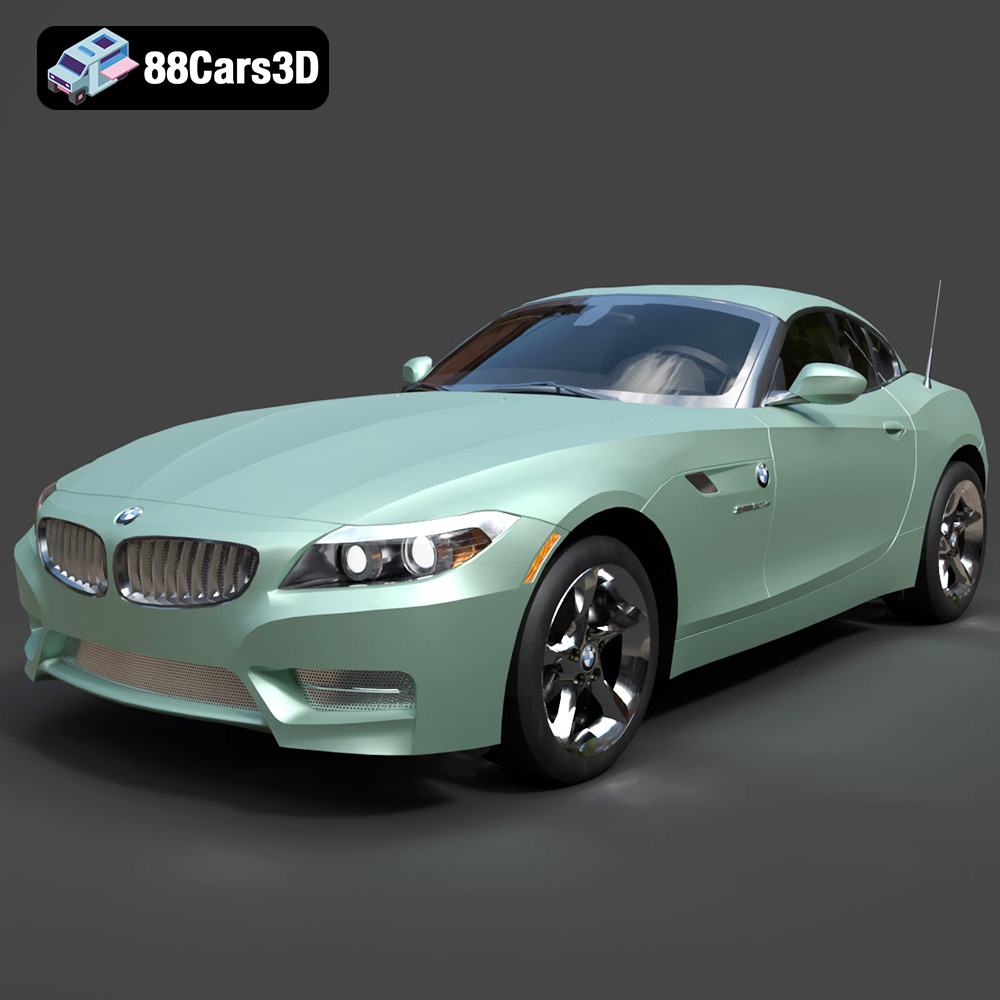
Texture: Yes
Material: Yes
Download the BMW Z4 Roadster E89 3D Model featuring clean geometry, realistic detailing, and a fully modeled interior. Includes .blend, .fbx, .obj, .glb, .stl, .ply, .unreal, and .max formats for rendering, simulation, and game development.
Price: $13.99

Texture: Yes
Material: Yes
Download the BMW Z4 E85 3D Model featuring clean geometry, realistic detailing, and a fully modeled interior. Includes .blend, .fbx, .obj, .glb, .stl, .ply, .unreal, and .max formats for rendering, simulation, and game development.
Price: $13.99

Texture: Yes
Material: Yes
Download the BMW M3 2024 3D Model featuring clean geometry, realistic detailing, and a fully modeled interior. Includes .blend, .fbx, .obj, .glb, .stl, .ply, .unreal, and .max formats for rendering, simulation, and game development.
Price: $13.99
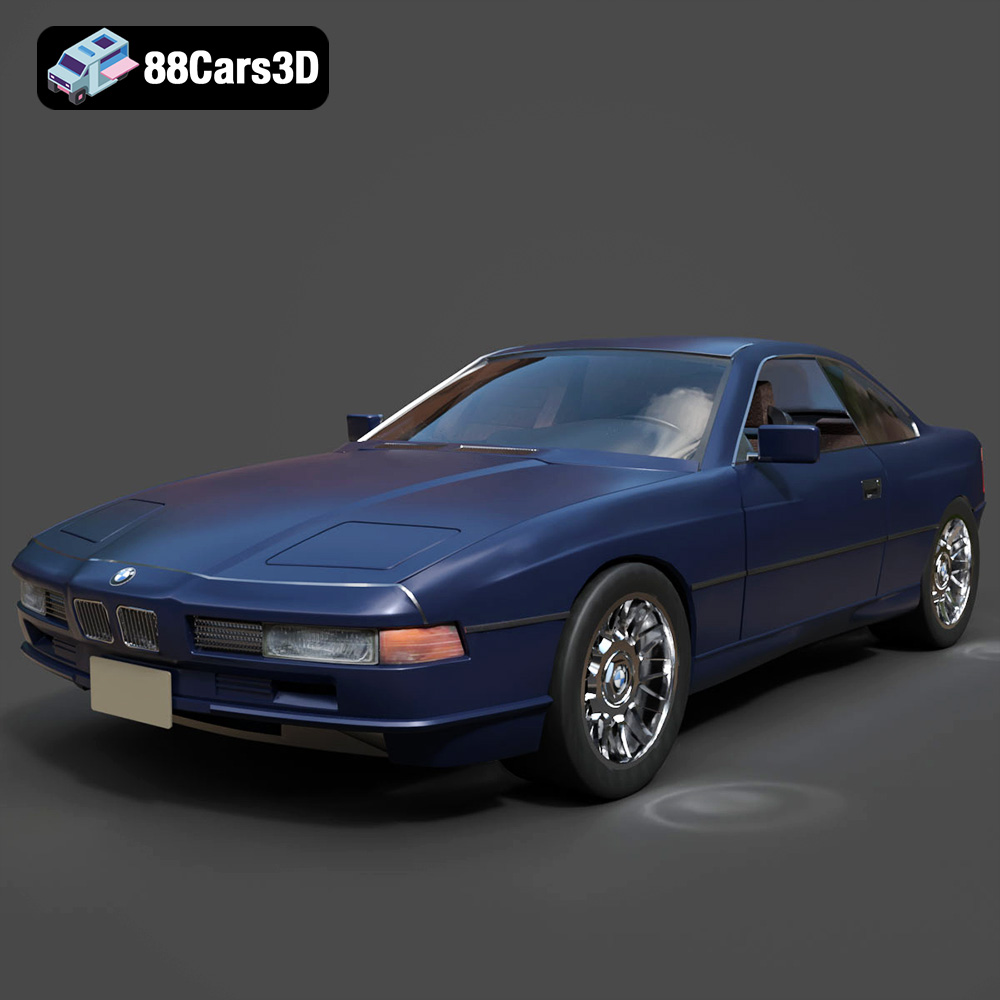
Texture: Yes
Material: Yes
Download the BMW 850i Coupe 1990 3D Model featuring clean geometry, realistic detailing, and a fully modeled interior. Includes .blend, .fbx, .obj, .glb, .stl, .ply, .unreal, and .max formats for rendering, simulation, and game development.
Price: $13.99
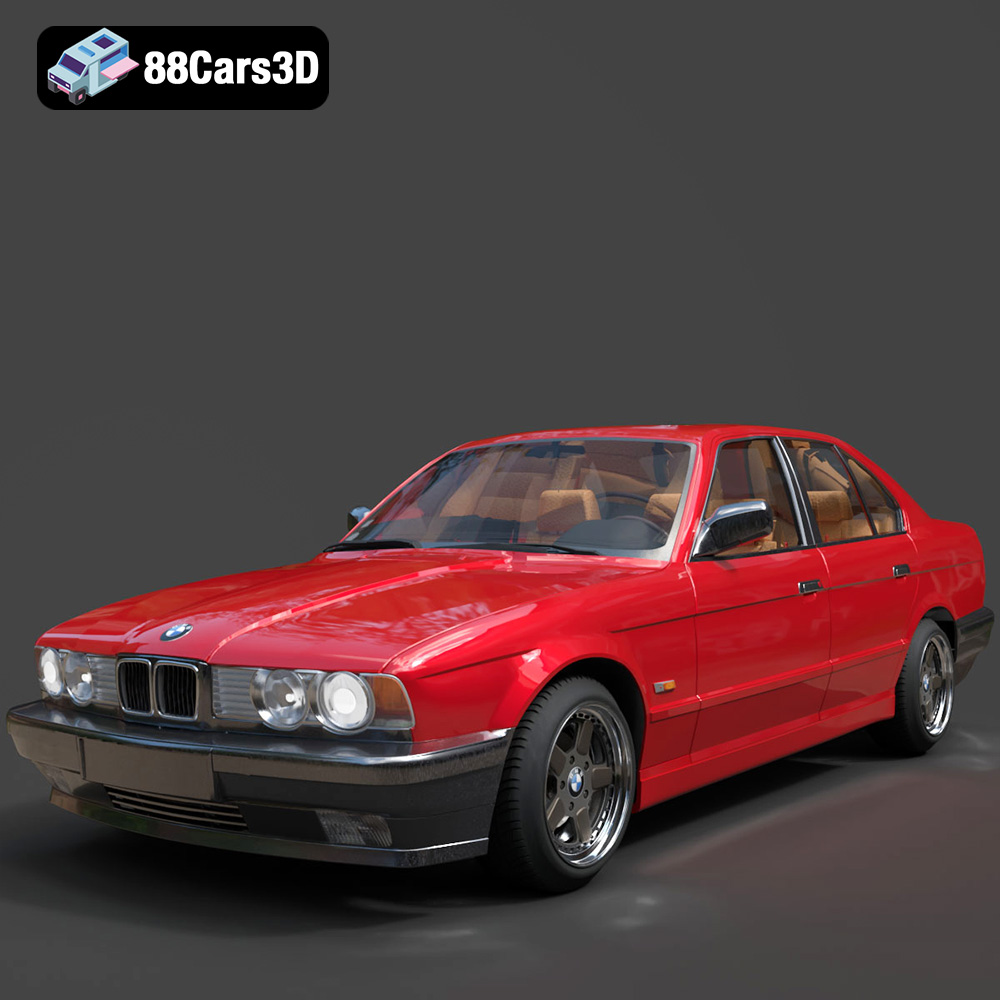
Texture: Yes
Material: Yes
Download the BMW 525i E34 1993 3D Model featuring clean geometry, realistic detailing, and a fully modeled interior. Includes .blend, .fbx, .obj, .glb, .stl, .ply, .unreal, and .max formats for rendering, simulation, and game development.
Price: $12.99

Texture: Yes
Material: Yes
Download the BMW 7 Series 2016 3D Model featuring luxurious design, detailed interior, and accurate exterior. Includes .blend, .fbx, .obj, .glb, .stl, .ply, .unreal, and .max formats for rendering, simulation, and game development.
Price: $10.79
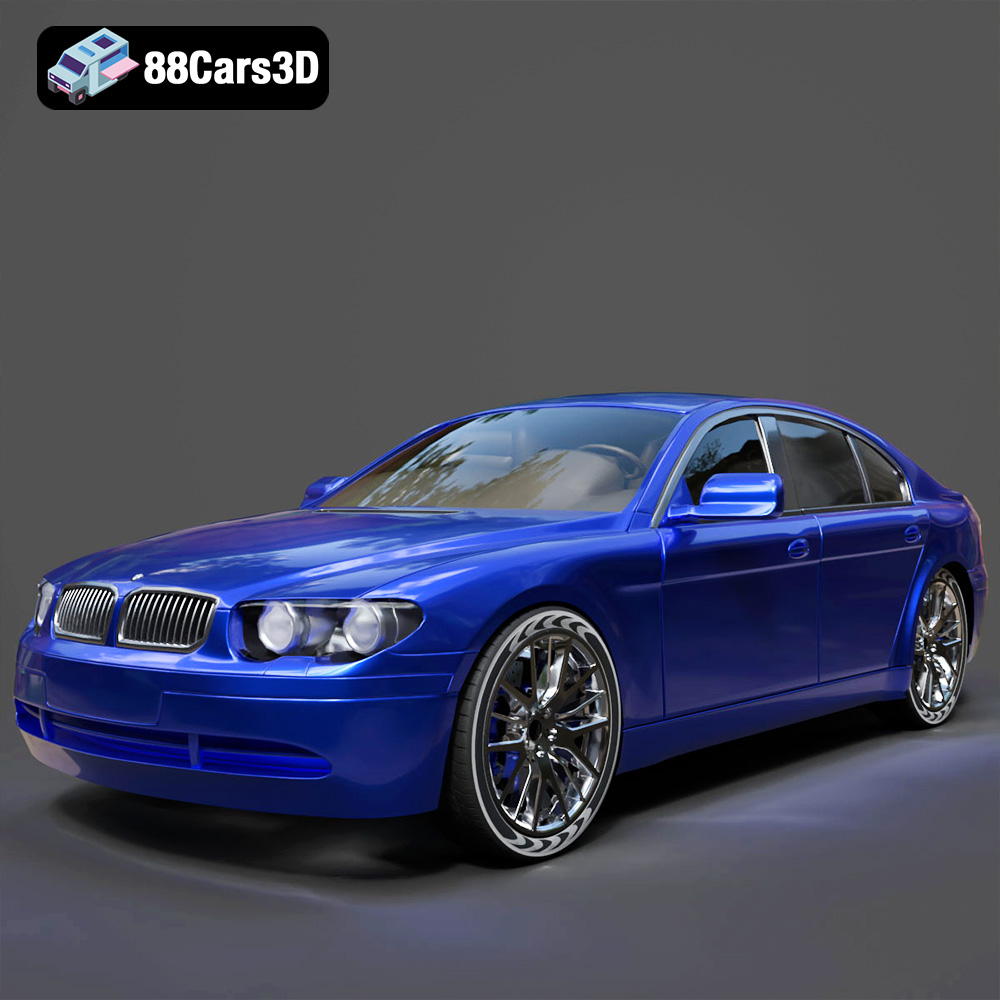
Texture: Yes
Material: Yes
Download the BMW 7 Series 30th Anniversary 3D Model featuring a meticulously crafted exterior, detailed interior, and realistic wheels. Includes .blend, .fbx, .obj, .glb, .stl, .ply, .unreal, and .max formats for rendering, simulation, and game development.
Price: $35.79

Texture: Yes
Material: Yes
Download the BMW 7-Series F02 3D Model featuring a detailed exterior and interior, optimized for rendering and animation. Includes .blend, .fbx, .obj, .glb, .stl, .ply, .unreal, and .max formats for rendering, simulation, and game development.
Price: $10.79
Texture: Yes
Material: Yes
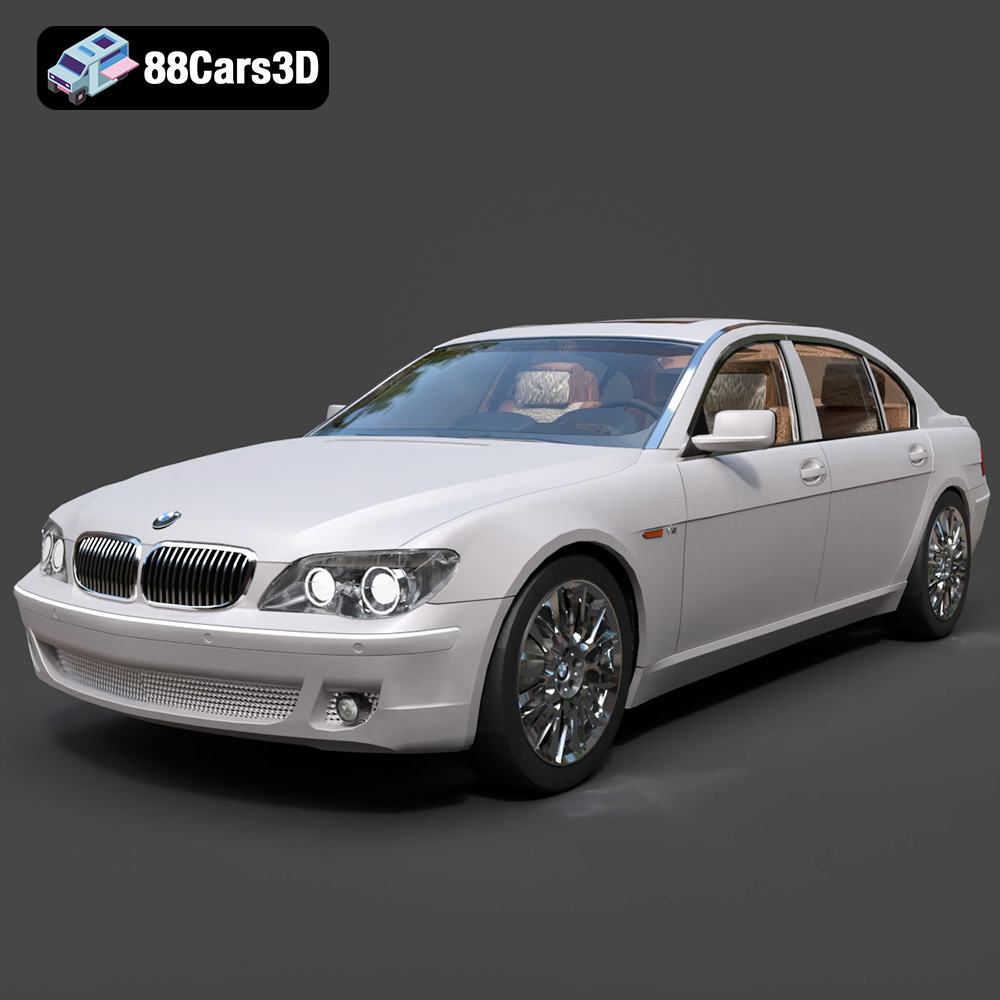
Download the BMW 760Li E66 2005 3D Model featuring a detailed exterior, refined interior, and robust chassis. Includes .blend, .fbx, .obj, .glb, .stl, .ply, .unreal, and .max formats for rendering, simulation, and game development.
Price: $10.79

