⚡ FLASH SALE: Get 60% OFF All Premium 3D & STL Models! ⚡

In the visually driven world of 3D visualization, especially in automotive design and rendering, lighting is not just an additive element—it is the very soul of realism and appeal. A meticulously crafted 3D car model, even one sourced from high-quality platforms like 88cars3d.com, can fall flat without compelling illumination. It’s the interplay of light and shadow, the crispness of reflections, and the nuanced definition of surfaces that truly bring a virtual vehicle to life. This comprehensive guide will take you on an in-depth journey through the intricate process of setting up professional studio lighting for your automotive renders in 3ds Max, focusing on industry-standard renderers like Corona Renderer and V-Ray. We’ll explore foundational principles, step-by-step workflows, advanced techniques, and crucial post-processing tips to help you transform your static 3D models into breathtaking, photorealistic masterpieces. Prepare to unlock the secrets to truly captivating automotive imagery.
Before diving into software-specific techniques, it’s imperative to grasp the core principles that dictate how light interacts with the unique surfaces of an automobile. Unlike organic forms, cars are defined by sleek curves, sharp edges, highly reflective paint, intricate glass, and various metallic components. Each of these materials reacts to light in a distinct way, and understanding these interactions is paramount to achieving a convincing render. Automotive studio lighting aims to highlight these features, accentuate the design lines, and create a sense of depth and volume.
Common studio setups often involve variations of three-point lighting, light tents, or infinite white studios. These environments are designed to provide controlled, flattering illumination that minimizes harsh shadows and maximizes desirable reflections. The goal is to sculpt the car with light, revealing its form and texture. Consider how professional automotive photographers use large softboxes and diffused light sources to achieve those iconic, glossy magazine shots. Our 3D approach will emulate these real-world techniques to deliver similar visual impact. The quality of your base 3D car models, like those available on 88cars3d.com, provides an excellent foundation, but it’s the lighting that ultimately defines their visual fidelity.
When lighting a car, several principles come into play. Hard vs. soft shadows is a critical distinction. Hard shadows, produced by small, intense light sources, can look stark and unrealistic for studio renders, often obscuring details. Soft shadows, generated by larger, diffused light sources, are far more flattering, gradually transitioning from light to dark, which is ideal for smooth automotive surfaces. Think of a large softbox or a diffused window; they cast soft, elegant shadows that define form without being distracting.
Direct vs. indirect illumination also plays a significant role. Direct light comes straight from your light sources, while indirect light is bounced and scattered throughout the scene, filling in shadows and adding to the overall ambient brightness. Modern renderers excel at calculating indirect illumination, contributing significantly to photorealism. Furthermore, understanding light falloff—how light intensity diminishes with distance—is crucial. Real-world lights follow an inverse-square law, meaning their intensity drops off rapidly. Simulating this accurately prevents overexposed areas and helps create a natural sense of depth. Finally, diffusion is key. Employing diffusers, whether virtual softboxes or environmental textures, spreads light evenly and creates those desirable, elongated reflections on car paint.
To truly master automotive lighting, constant reference to real-world examples is invaluable. Spend time analyzing high-quality automotive photography and advertisements. Pay close attention to:
This analytical approach will train your eye to recognize what looks realistic and what doesn’t, guiding your decisions in 3ds Max. Understanding how light interacts with metallic flake in paint or the deep refraction of glass will inform your choice of light types, positions, and material settings.
A successful render begins long before you place your first light. The foundation of any great automotive visualization is a well-prepared 3ds Max scene. This involves ensuring your 3D car model is optimized, correctly scaled, and placed within an appropriate studio environment. Starting with a high-quality model, such as those available on 88cars3d.com, gives you a significant advantage, as these models typically feature clean topology, accurate dimensions, and well-organized UV mapping.
Upon importing your 3D car model into 3ds Max, the first crucial step is to verify its scale. An incorrectly scaled model will lead to inaccurate light interaction, material reflections, and depth of field effects. For instance, a light source that appears appropriately sized for a tiny object will look like a pinpoint on a car that’s supposed to be life-sized. This discrepancy directly impacts shadow quality, reflection size, and the overall believability of your scene. After confirming scale, attention shifts to the immediate environment, typically a seamless cyclorama or an infinite plane, which provides a clean backdrop and crucial bounce light for the vehicle.
To ensure absolute accuracy, always check your System Unit Setup in 3ds Max. Navigate to Customize > Units Setup > System Unit Setup. It’s best practice to set this to a real-world unit like ‘Centimeters’ or ‘Meters’. Once the system units are correct, you can verify your model’s scale. For example, a typical car is roughly 4-5 meters long. You can quickly check your imported model’s dimensions using the ‘Measure’ utility or by creating a simple helper object of known dimensions for comparison. If your model is too large or too small, scale it uniformly until it matches real-world proportions. This foundational step is critical for physically accurate lighting and material response, especially with PBR workflows.
A simple yet effective studio environment can be created with a single curved plane, often referred to as a “cyclorama” or “infinity wall.”
For more advanced setups, you might use pre-made studio assets, but the principle remains the same: create a clean, seamless environment that supports your lighting without introducing distracting elements.
Corona Renderer has gained immense popularity in the architectural and automotive visualization industries due to its ease of use, speed, and ability to produce stunningly photorealistic results with minimal effort. Its unbiased rendering engine excels at global illumination, making it an ideal choice for complex lighting scenarios like automotive studios. When working with Corona, the focus shifts from complex settings to intuitive light placement and material creation.
A typical Corona studio setup for a car render often involves a combination of Corona Lights and High Dynamic Range Images (HDRIs). Corona Lights, particularly the ‘Corona Light’ object set to ‘Rectangle’ or ‘Disc’ type, serve as virtual softboxes. These lights, when scaled appropriately and placed strategically, mimic the large, diffused light sources used in professional photography. HDRIs, on the other hand, provide an overarching environmental illumination, generating realistic reflections and filling the scene with subtle, indirect light that greatly enhances realism.
The classic three-point lighting setup is an excellent starting point:
Beyond these, consider using ‘Corona Light Material’ applied to simple geometry (e.g., thin planes) to create specific light strips or glowing elements that can be reflected off the car’s body, adding visual complexity and breaking up monotonous reflections.
For more nuanced control, Corona offers several advanced features. LightMix is a game-changer, allowing you to adjust the intensity, color, and even enable/disable individual lights or light groups in real-time during or after rendering, without re-rendering the scene. This non-destructive workflow is invaluable for fine-tuning your lighting. You can find LightMix under the ‘Render Setup > Scene’ tab. Ensure you have ‘LightMix’ render element enabled.
While the focus is on studio lighting, incorporating a subtle Corona Sun and Sky system, with its intensity significantly reduced, can add a touch of natural light or realistic ambient bounce, especially if your studio setup has openings. For highly reflective surfaces, paying attention to the environment visible in reflections is key. Using a high-resolution, neutral HDRI as a ‘Corona Sky’ map (in the Environment > Scene Environment slot) can provide rich, realistic reflections even if it’s not directly illuminating the scene. Experiment with its rotation to control where the HDRI’s features appear on the car’s surface. Finally, adjusting render settings such as ‘Adaptive Image Sampling’ and ‘Denoising’ (Intel Open Image Denoise or NVIDIA OptiX) is crucial for efficient, noise-free renders.
V-Ray, another powerhouse rendering engine for 3ds Max, is renowned for its precision, versatility, and comprehensive feature set, making it a favorite among professionals in automotive visualization. While it might have a steeper learning curve than Corona for some, V-Ray offers unparalleled control over every aspect of lighting, materials, and rendering. Its robust global illumination algorithms and diverse light types allow for highly customized and accurate studio setups.
In V-Ray, you’ll primarily work with ‘V-Ray Plane Lights’ (for softboxes and area lights), ‘V-Ray Sphere Lights’ (for point-like illumination), and ‘V-Ray Dome Lights’ (for HDRIs and overall ambient illumination). Each light type comes with extensive parameters for intensity, color, size, shape, and even directionality, giving you granular control over how light is emitted and distributed in your scene. Like Corona, the effective use of HDRIs with a V-Ray Dome Light is central to creating believable environmental reflections and subtle global illumination.
Setting up the classic three-point lighting in V-Ray offers similar principles but with specific V-Ray light types and parameters:
Remember to adjust the ‘Subdivisions’ parameter for each light (e.g., 8-16 for general use) to control noise; higher subdivisions lead to cleaner shadows but longer render times.
The ‘V-Ray Dome Light’ is essential for introducing high-quality HDRIs into your scene, which are indispensable for realistic reflections and ambient lighting.
The ‘V-Ray Light Lister’ (accessible via the V-Ray toolbar) provides a centralized panel to manage all your V-Ray lights, making it incredibly efficient to adjust intensities, colors, and visibility for multiple lights simultaneously. For complex scenes, layering several V-Ray Plane Lights with HDRIs can create dynamic and rich reflections, especially for automotive paint and chrome.
While light placement is fundamental, the ultimate realism of your automotive render hinges on how those lights interact with the car’s surfaces. Reflections and shadows are not mere byproducts of illumination; they are integral to defining form, material properties, and the overall believability of the vehicle. Paired with accurate Physical Based Rendering (PBR) materials, these elements elevate a good render to an exceptional one.
Reflections, in particular, are the eyes of a car model. They reveal the environment, the quality of the light sources, and the smoothness of the surface. A perfectly smooth car paint surface will show sharp, undistorted reflections, while a slightly rougher clear coat might diffuse them. The strategic placement of your light sources directly controls the shape and intensity of these reflections. A large, rectangular light will produce a broad, soft reflection, ideal for highlighting large panels, whereas smaller, more intense lights can create pin-sharp highlights that draw attention to subtle design cues or chrome accents. The goal is to create reflections that sculpt the car, emphasizing its curves and lines, rather than merely reflecting the scene.
Achieving convincing car paint is perhaps one of the most challenging aspects of automotive rendering, but PBR materials provide a robust framework. A realistic car paint shader typically consists of multiple layers:
Careful balance of these layers, along with accurate ‘Roughness’ (or ‘Glossiness’) and ‘Metallic’ values, will dictate how light interacts with your car’s surface, from diffuse absorption to sharp specular highlights. Experiment with different parameters to capture the nuances of various paint finishes, from matte to high-gloss metallic.
Even the most stunning car render can be enhanced by integrating it seamlessly onto a backplate—a high-resolution photograph that provides environmental context. This technique is common in automotive advertising to showcase cars in realistic settings.
This process adds another layer of realism, grounding your 3D model in a believable environment and showcasing its design within a real-world context. Remember, the goal is to make it impossible to tell where the 3D ends and the photograph begins.
Once your lighting and materials are finely tuned, the final stages involve rendering your masterpiece and finessing it in post-production. This phase is crucial for transforming a raw render into a polished, print-ready image. Efficiency in rendering and a strategic approach to post-processing can significantly enhance the final output while saving valuable time.
Rendering an automotive scene, especially at high resolutions, can be computationally intensive. Therefore, understanding your renderer’s settings for quality versus speed is paramount. Modern renderers like Corona and V-Ray offer sophisticated adaptive sampling techniques that prioritize areas needing more detail (e.g., reflections, intricate shadows) and reduce samples in areas that are smooth or less critical. This intelligent approach balances render time with image quality, ensuring that noise is minimized where it matters most while keeping overall render times manageable. Leveraging render elements (also known as render passes) is also a critical part of an efficient workflow, as they provide unparalleled control in post-production.
To optimize your rendering workflow in Corona or V-Ray:
Post-production is where the final magic happens, transforming a raw render into a polished, captivating image.
These passes provide unparalleled flexibility in compositing software like Adobe Photoshop or After Effects.
By leveraging render elements and these post-processing techniques, you gain complete creative control over your final image, allowing you to achieve a level of polish that is difficult to attain within the renderer alone. This iterative process of rendering and post-processing is a hallmark of professional automotive visualization workflows.
Mastering studio lighting for automotive renders in 3ds Max is a journey that combines technical expertise with an artistic eye. From understanding the fundamental principles of light interaction with complex car surfaces to meticulously setting up your scene, and then diving deep into the powerful capabilities of renderers like Corona and V-Ray, every step plays a crucial role in achieving photorealistic results. We’ve explored how strategic light placement defines form, how PBR materials bring surfaces to life, and how an efficient rendering and post-production workflow adds that final, professional polish.
The key takeaway is that lighting is not merely about making your car visible; it’s about sculpting its form, highlighting its design nuances, and evoking an emotional response. Whether you’re aiming for a sleek studio look or integrating your model into a real-world backplate, the control you exert over reflections, shadows, and color temperature is paramount. Continuously referencing real-world automotive photography will refine your artistic vision, while diligent practice with the tools and techniques discussed will hone your technical skills. Embrace experimentation, iterate frequently, and pay meticulous attention to detail. By applying these comprehensive strategies, you can elevate your 3D car models—whether they are custom creations or high-quality assets sourced from platforms like 88cars3d.com—into truly compelling and lifelike automotive visualizations. The ultimate render is within your reach; now, go illuminate your vision!
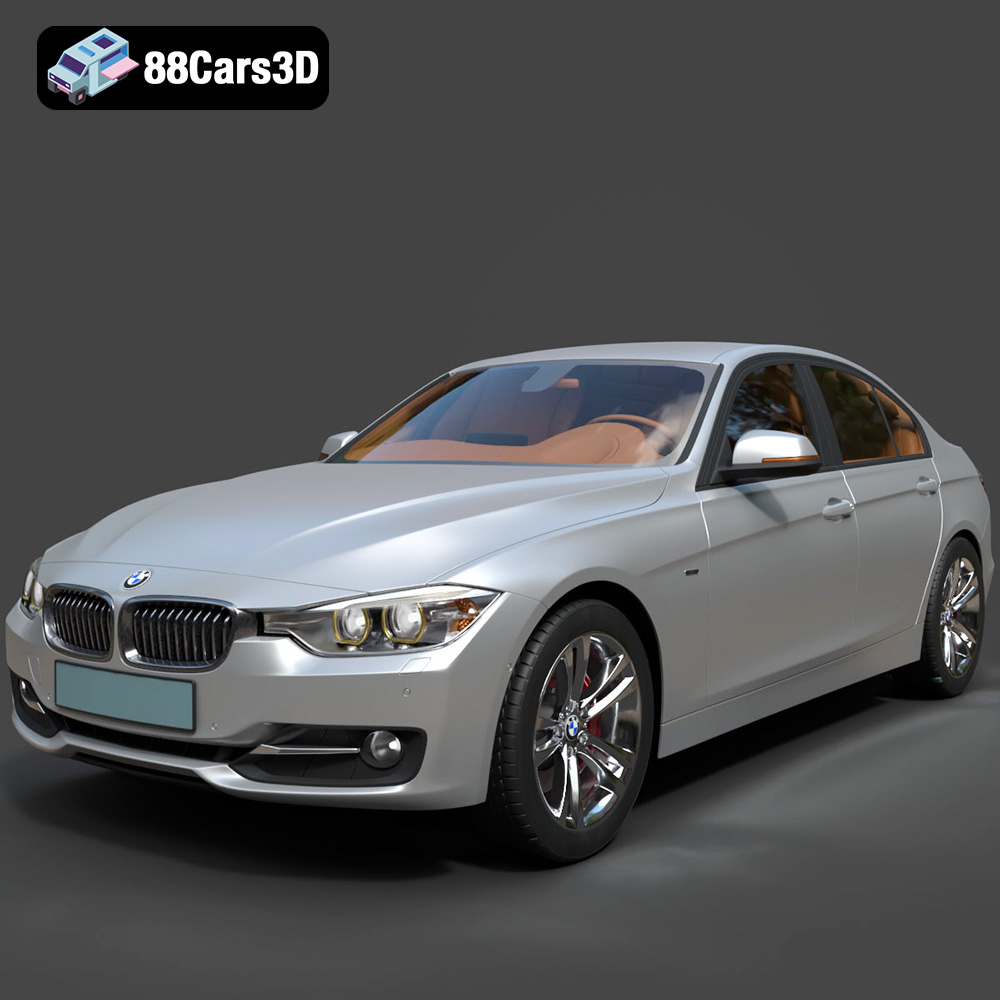
Texture: Yes
Material: Yes
Download the BMW 3 F30 3D Model featuring a detailed exterior, realistic interior, and optimized mesh. Includes .blend, .fbx, .obj, .glb, .stl, .ply, .unreal, and .max formats for rendering, simulation, and game development.
Price: $10.79
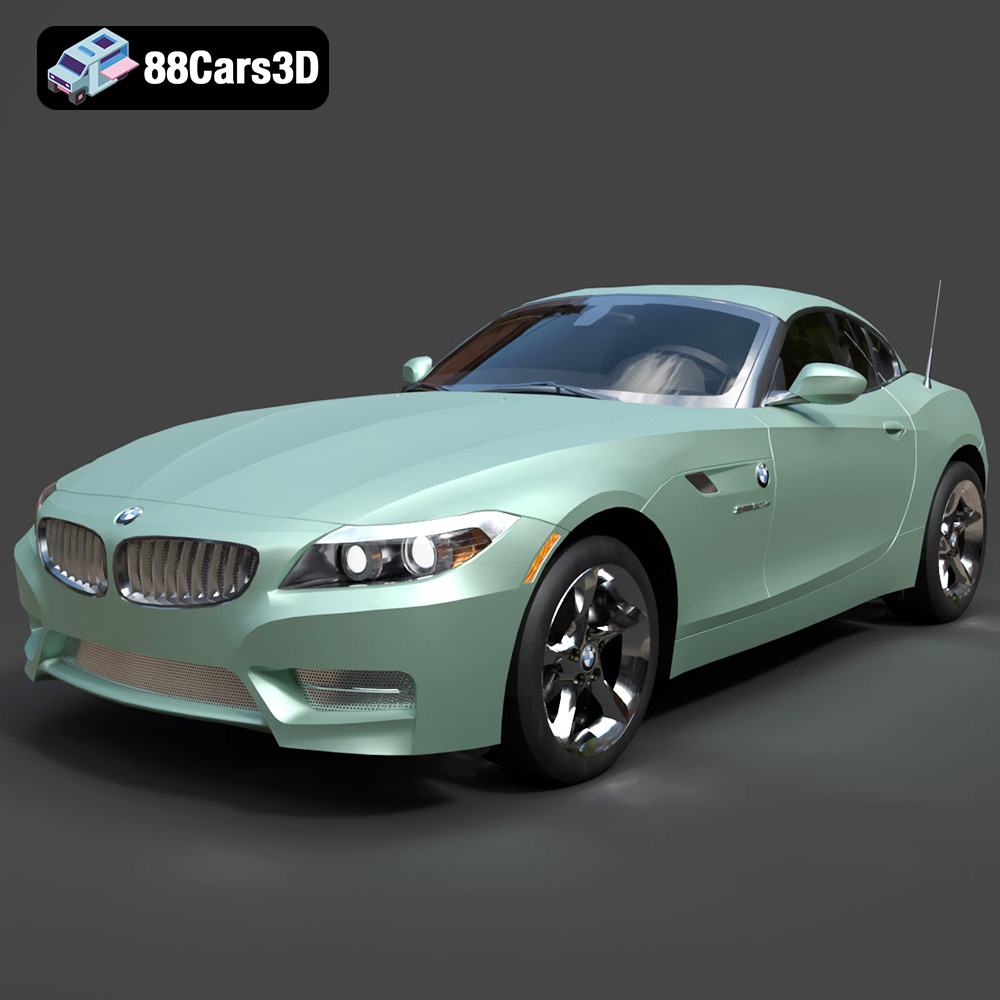
Texture: Yes
Material: Yes
Download the BMW Z4 Roadster E89 3D Model featuring clean geometry, realistic detailing, and a fully modeled interior. Includes .blend, .fbx, .obj, .glb, .stl, .ply, .unreal, and .max formats for rendering, simulation, and game development.
Price: $13.99

Texture: Yes
Material: Yes
Download the BMW Z4 E85 3D Model featuring clean geometry, realistic detailing, and a fully modeled interior. Includes .blend, .fbx, .obj, .glb, .stl, .ply, .unreal, and .max formats for rendering, simulation, and game development.
Price: $13.99

Texture: Yes
Material: Yes
Download the BMW M3 2024 3D Model featuring clean geometry, realistic detailing, and a fully modeled interior. Includes .blend, .fbx, .obj, .glb, .stl, .ply, .unreal, and .max formats for rendering, simulation, and game development.
Price: $13.99
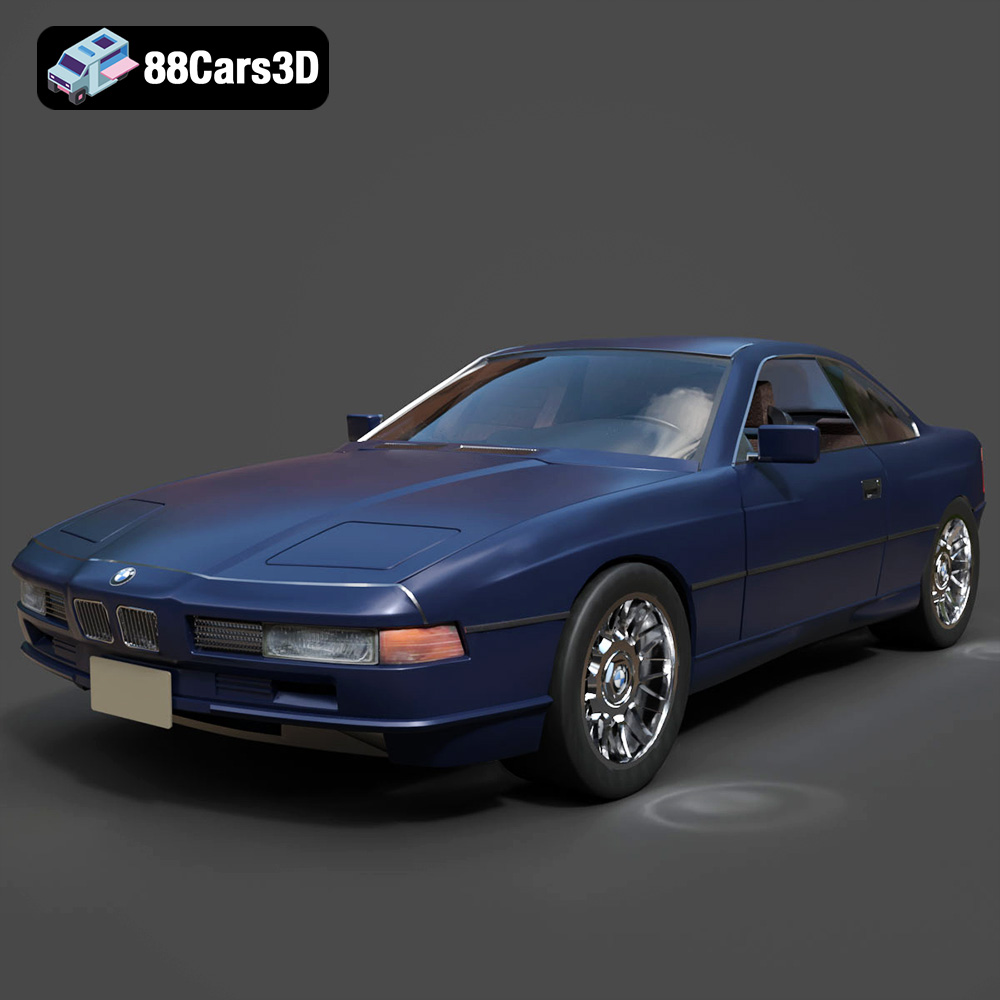
Texture: Yes
Material: Yes
Download the BMW 850i Coupe 1990 3D Model featuring clean geometry, realistic detailing, and a fully modeled interior. Includes .blend, .fbx, .obj, .glb, .stl, .ply, .unreal, and .max formats for rendering, simulation, and game development.
Price: $13.99
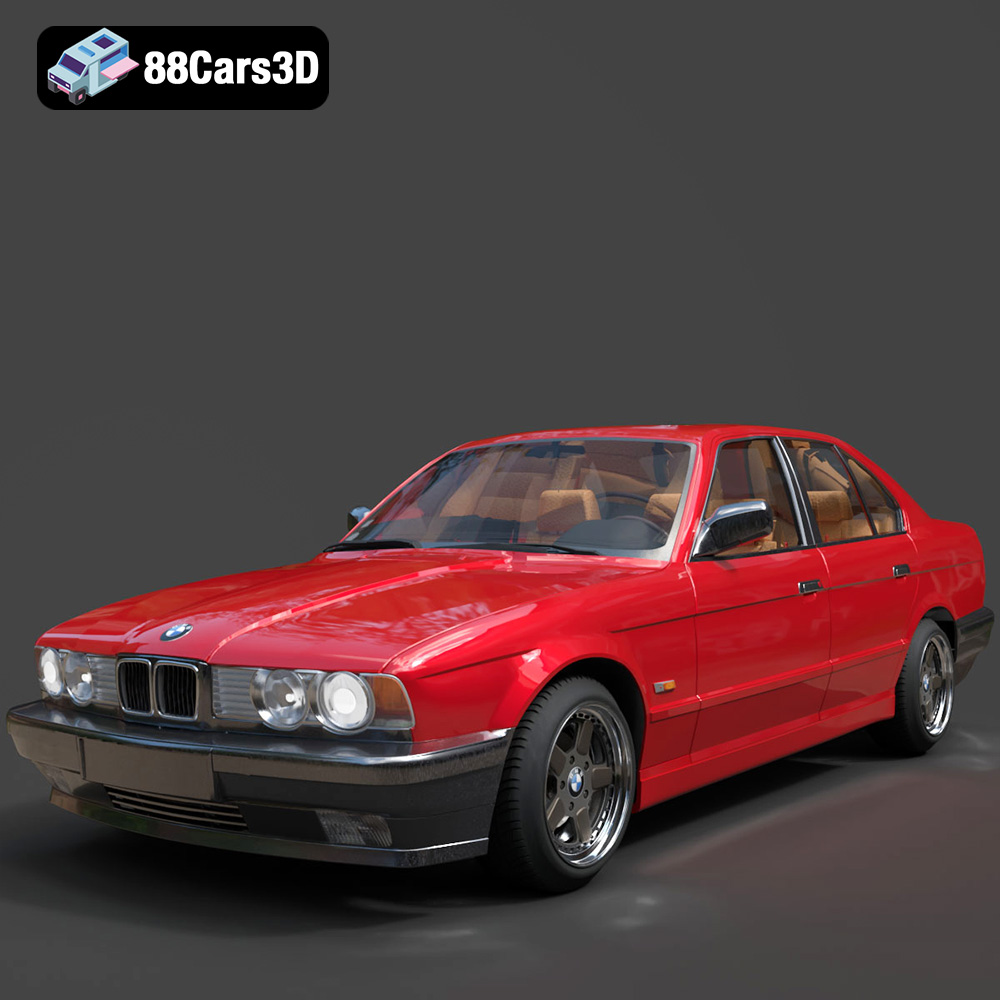
Texture: Yes
Material: Yes
Download the BMW 525i E34 1993 3D Model featuring clean geometry, realistic detailing, and a fully modeled interior. Includes .blend, .fbx, .obj, .glb, .stl, .ply, .unreal, and .max formats for rendering, simulation, and game development.
Price: $12.99

Texture: Yes
Material: Yes
Download the BMW 7 Series 2016 3D Model featuring luxurious design, detailed interior, and accurate exterior. Includes .blend, .fbx, .obj, .glb, .stl, .ply, .unreal, and .max formats for rendering, simulation, and game development.
Price: $10.79
Texture: Yes
Material: Yes
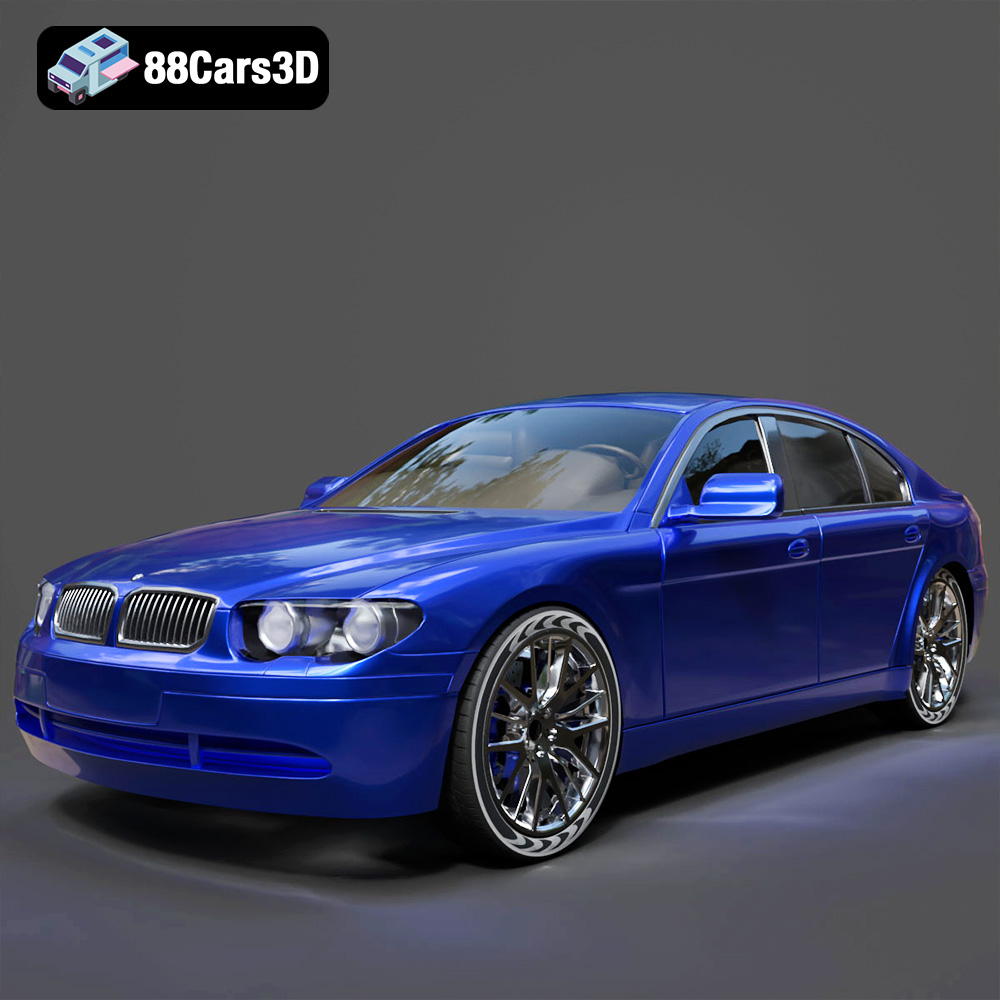
Download the BMW 7 Series 30th Anniversary 3D Model featuring a meticulously crafted exterior, detailed interior, and realistic wheels. Includes .blend, .fbx, .obj, .glb, .stl, .ply, .unreal, and .max formats for rendering, simulation, and game development.
Price: $35.79

Texture: Yes
Material: Yes
Download the BMW 7-Series F02 3D Model featuring a detailed exterior and interior, optimized for rendering and animation. Includes .blend, .fbx, .obj, .glb, .stl, .ply, .unreal, and .max formats for rendering, simulation, and game development.
Price: $10.79
Texture: Yes
Material: Yes
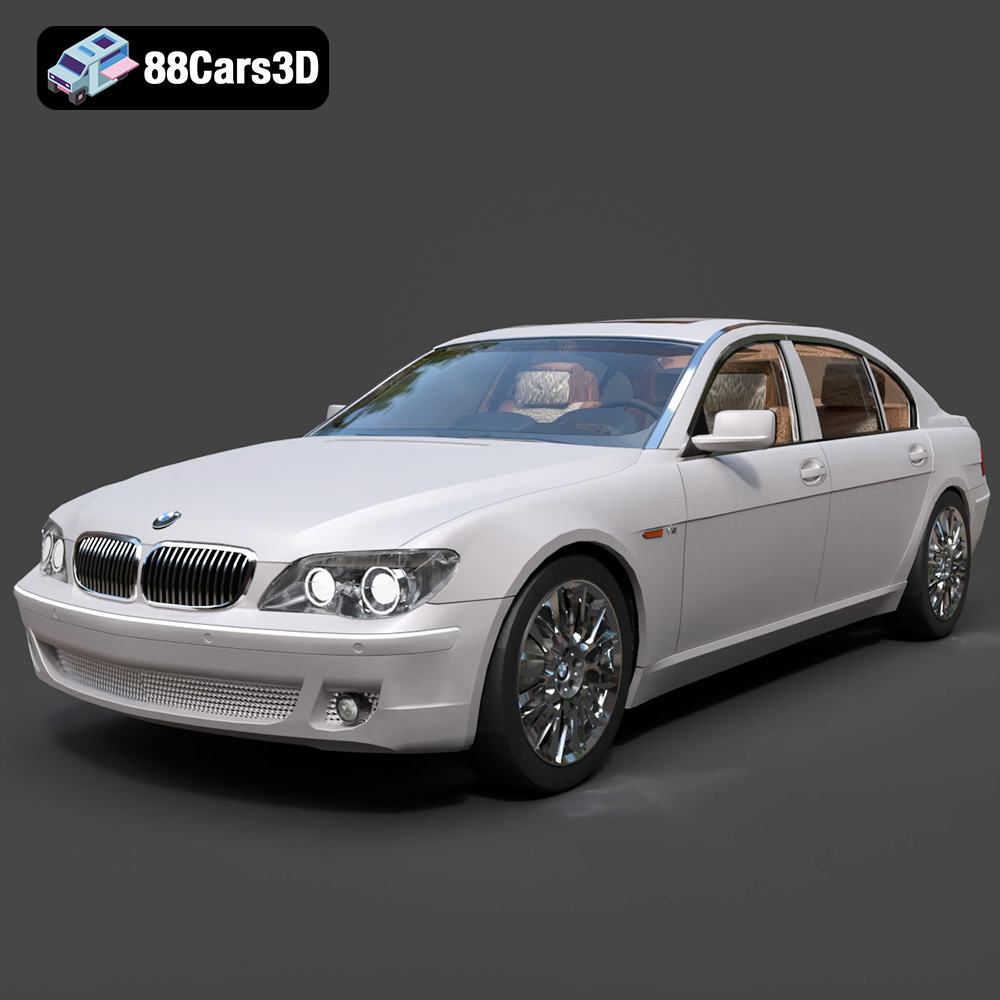
Download the BMW 760Li E66 2005 3D Model featuring a detailed exterior, refined interior, and robust chassis. Includes .blend, .fbx, .obj, .glb, .stl, .ply, .unreal, and .max formats for rendering, simulation, and game development.
Price: $10.79

