⚡ FLASH SALE: Get 60% OFF All Premium 3D & STL Models! ⚡

The quest for photorealism in automotive visualization is a journey of intricate details, precise lighting, and sophisticated material definitions. In the highly competitive world of 3D artistry, whether you’re crafting stunning marketing visuals, developing immersive game environments, or creating assets for augmented reality, the choice of your rendering engine plays a pivotal role. A high-quality 3D car model, such as those found on platforms like 88cars3d.com, is merely the canvas; it’s the renderer that breathes life into it, transforming polygons and textures into breathtaking imagery.
This comprehensive guide dives deep into three of the most prominent rendering powerhouses: V-Ray, Corona Renderer, and Cycles. Each boasts unique strengths, workflows, and philosophies, catering to different artistic preferences and project requirements. We’ll dissect their core functionalities, explore their specific applications in automotive rendering, and provide technical insights to help you harness their full potential. From understanding the nuances of physically based rendering (PBR) to optimizing complex scenes for blistering render times, you’ll gain an invaluable understanding of how to achieve stunning results that truly stand out in the automotive design and visualization industry.
Before we delve into the specifics of each renderer, it’s crucial to understand the foundational principles that underpin all photorealistic rendering, especially when dealing with the challenging surfaces of an automobile. Automotive models feature a diverse range of materials—from highly reflective car paints and chrome to transparent glass, textured rubber, and intricate interior fabrics—each demanding meticulous attention to detail to appear convincing.
Physically Based Rendering (PBR) has revolutionized the way 3D artists create materials, ensuring they react realistically to light regardless of the lighting environment. The core concept behind PBR is that materials behave according to the laws of physics, making them incredibly robust and consistent. For automotive models, PBR is non-negotiable. Key PBR texture maps include:
Achieving realistic car paint, for instance, often involves complex PBR setups. A typical car paint shader might start with a metallic base, add a clear coat layer (acting as a dielectric material with specific IOR and roughness), and incorporate a flake layer for metallic or pearlescent finishes. The values for these maps must be within physically plausible ranges; for example, car paint clear coats typically have an Index of Refraction (IOR) around 1.4-1.5, while glass is around 1.5-1.6. Mastering these maps and their interactions is paramount to achieving believable automotive surfaces.
Beyond the basic PBR setup, advanced shader networks allow for incredible control and realism, especially for complex automotive materials. For car paint, a multi-layered shader is often employed:
For polished metals like chrome or brushed aluminum, anisotropic reflections are key. This means reflections stretch or compress along a specific direction, mimicking the effect of microscopic grooves or brushing patterns on the surface. Dedicated anisotropic shaders or advanced nodes within PBR materials allow for precise control over the direction and intensity of this effect. Furthermore, the accuracy of your UV mapping is critical here; poorly unwrapped models will distort PBR textures and reflective patterns, breaking the illusion of realism. Models sourced from marketplaces like 88cars3d.com typically come with clean, optimized UVs, providing a solid foundation for your material work.
V-Ray, developed by Chaos, has long been a staple in high-end production pipelines across architectural visualization, product design, and cinematic VFX. Known for its robust feature set, speed, and hybrid CPU/GPU rendering capabilities, V-Ray delivers uncompromising quality and control, making it a powerful choice for automotive rendering in demanding professional environments.
V-Ray integrates seamlessly into popular 3D software like 3ds Max and Maya, offering a comprehensive suite of tools for lighting, shading, and rendering. The workflow for automotive rendering typically involves:
To push the realism further in V-Ray, several advanced techniques come into play. For instance, achieving realistic light refraction and dispersion through car glass (headlights, windshield) often involves enabling caustics, though this can be render-intensive. Utilizing Subsurface Scattering (SSS) is crucial for materials like plastic lenses in headlights or even certain rubber components to allow light to penetrate and scatter beneath the surface, adding a soft, translucent quality.
Another powerful feature is Render Elements (or Render Passes). These output separate image layers (e.g., reflections, refractions, raw diffuse, specular, Z-depth, object IDs) that can be composited in post-production software like Photoshop or Nuke. This offers unparalleled control over tweaking specific aspects of the image without re-rendering the entire scene. For example, you can adjust the intensity of reflections or the depth of field in post-processing, saving valuable render time and allowing for creative flexibility. When working with high-polygon models like those from 88cars3d.com, managing polygon counts and optimizing texture resolutions (e.g., 4K for hero shots, 2K for less prominent areas) is key to maintaining efficient render times and memory usage.
Corona Renderer, also developed by Chaos, has gained immense popularity for its user-friendly interface, physically accurate unbiased rendering, and impressive results. It’s often lauded for its ease of use, allowing artists to achieve stunning realism with a minimal learning curve, making it an excellent choice for automotive visualization without sacrificing quality.
Corona’s design philosophy emphasizes intuitive controls and physically correct defaults, leading to a streamlined workflow for automotive rendering, primarily within 3ds Max and Cinema 4D:
Corona provides powerful tools that allow artists to go beyond basic renders and achieve cinematic quality for their automotive visualizations. LightMix is a revolutionary feature that allows you to interactively adjust the intensity, color, and even enable/disable individual lights or groups of lights *after* the render is complete. This means you can experiment with countless lighting scenarios from a single render, which is incredibly useful for showcasing different moods or environments for a car model without re-rendering everything. Imagine quickly testing how a car looks under midday sun, then a dramatic sunset, all from one render output.
Volumetric effects within Corona (e.g., fog, atmospheric haze) can add incredible depth and mood to automotive renders, simulating realistic environmental conditions that enhance the visual storytelling. For instance, subtle volumetric fog can give a scene a soft, ethereal quality, or a more dense volume can create a dramatic, atmospheric effect around a vehicle. Material layering in Corona is also exceptionally flexible, making it simple to build complex car paints, worn metals, or intricate fabric patterns by blending multiple shaders using masks and procedural textures. This flexibility ensures that every detail on your 88cars3d.com car model can be accurately represented.
Cycles, Blender’s physically based path tracer, is a robust and highly capable rendering engine that comes integrated directly within Blender. As an open-source solution, Cycles has rapidly evolved, offering impressive rendering quality with both CPU and GPU acceleration (NVIDIA CUDA/OptiX and AMD HIP). It’s a fantastic choice for independent artists, small studios, and anyone working within the Blender ecosystem, providing high-quality results for automotive rendering.
Working with Cycles for automotive models benefits greatly from Blender’s comprehensive 3D environment. The workflow integrates seamlessly:
For detailed information on Cycles’ features and workflows, refer to the official Blender 4.4 documentation: https://docs.blender.org/manual/en/4.4/. This resource provides in-depth explanations of shaders, lighting, and rendering parameters.
Cycles offers several optimization techniques crucial for handling complex automotive scenes. Utilizing Render Layers and Render Passes within Blender’s compositor allows you to separate elements (e.g., background, car body, glass) and output various data passes (e.g., diffuse, glossy, shadows, Z-depth, normals) for comprehensive post-production control, similar to V-Ray’s render elements. This is invaluable for fine-tuning specific aspects of your render without re-rendering the entire scene.
Persistent Data is an optimization feature that keeps static scene data in GPU memory between renders, speeding up subsequent renders when only camera or lighting changes are made. For volumetric effects like smoke or fog, Cycles’ robust Volume rendering capabilities can add atmospheric depth around vehicles. Finally, while Cycles is a path tracer for photorealistic offline rendering, Blender’s real-time Eevee renderer can be used for rapid previews or stylized real-time automotive visualization, providing a versatile toolset for different project requirements. High-quality car models from 88cars3d.com are perfectly suited for both Cycles’ high-fidelity output and Eevee’s real-time capabilities.
Choosing between V-Ray, Corona, and Cycles involves understanding their inherent strengths, weaknesses, and how they align with your project goals and hardware. While all three are capable of producing stunning automotive renders, their approach to rendering, feature sets, and performance characteristics differ significantly.
When it comes to integration, V-Ray has deep roots in 3ds Max and Maya. Corona excels in 3ds Max and Cinema 4D. Cycles is intrinsically linked to Blender. The choice often comes down to your primary 3D application.
Comparing render speeds directly can be complex as it depends heavily on scene complexity, hardware, and render settings. However, some general observations can be made:
Optimization Strategies: Regardless of the renderer, these strategies are crucial for speeding up automotive renders:
High-quality 3D car models from 88cars3d.com are designed with clean topology and PBR-ready materials, making them compatible and highly effective across all three of these renderers. Whether you need an extremely detailed V-Ray production render or a quick, photorealistic Corona output, or leverage Cycles within a Blender pipeline, these assets provide the perfect foundation.
Achieving a truly professional automotive render involves more than just the rendering engine. Post-processing, preparing models for real-time environments, and optimizing for immersive experiences like AR/VR are critical steps that elevate the final output and expand the utility of your 3D car models.
The rendering engine provides the raw ingredients, but post-production is where the magic truly happens, transforming a good render into a stunning image. Tools like Adobe Photoshop, Nuke, or After Effects are essential:
A well-executed post-processing workflow can significantly enhance the perceived realism and artistic impact of your automotive renders, giving them that final, polished touch.
While offline renderers focus on ultimate photorealism, game engines like Unity and Unreal Engine prioritize real-time performance. This necessitates a different approach to asset preparation:
When sourcing 3D car models for game development, ensure they are optimized for real-time applications or can be easily converted and optimized, as is the case with the versatile models from 88cars3d.com.
Augmented Reality (AR) and Virtual Reality (VR) environments impose even stricter performance requirements than traditional games due to the need for very high frame rates (e.g., 90 FPS for VR) to prevent motion sickness and ensure immersion. For 3D car models in AR/VR:
Optimizing 3D car models for AR/VR requires a deep understanding of these technical constraints to deliver a smooth and immersive user experience.
The journey to mastering automotive rendering is a fascinating blend of technical prowess and artistic vision. We’ve explored the foundational principles of PBR, delved into the distinct workflows of V-Ray, Corona, and Cycles, and highlighted the critical steps beyond rendering for real-time applications. Each renderer presents a unique set of advantages: V-Ray offers unparalleled control and flexibility for high-end production, Corona provides intuitive realism with exceptional ease of use, and Cycles delivers powerful, open-source rendering capabilities within the versatile Blender ecosystem.
The key takeaway is that there isn’t a single “best” renderer; rather, the optimal choice depends on your project’s specific demands, your preferred software environment, and your individual workflow. By understanding the strengths of each engine and implementing robust optimization strategies, you can transform high-quality 3D car models into captivating visual experiences. Embrace experimentation, refine your techniques, and always strive for that perfect balance of technical accuracy and artistic expression. To kickstart your next automotive visualization project with premium assets, be sure to explore the extensive collection of meticulously crafted 3D car models available at 88cars3d.com.
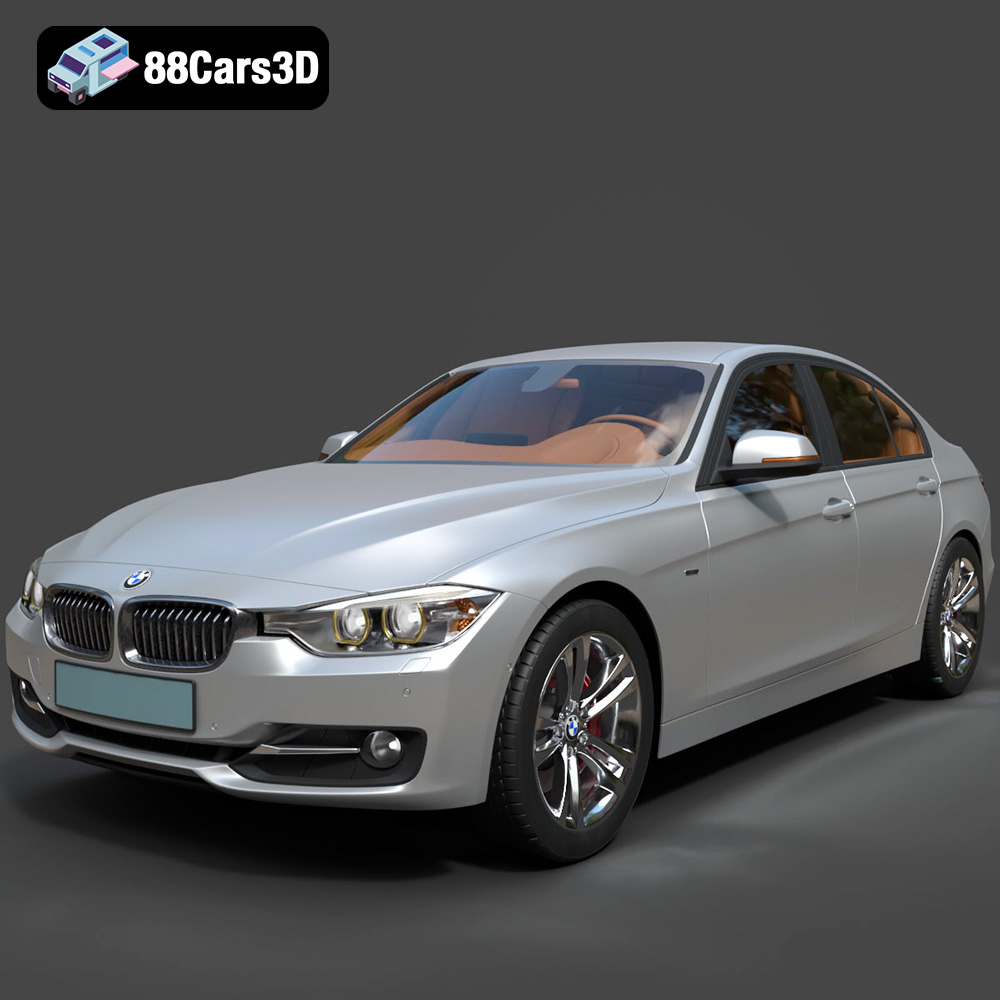
Texture: Yes
Material: Yes
Download the BMW 3 F30 3D Model featuring a detailed exterior, realistic interior, and optimized mesh. Includes .blend, .fbx, .obj, .glb, .stl, .ply, .unreal, and .max formats for rendering, simulation, and game development.
Price: $10.79
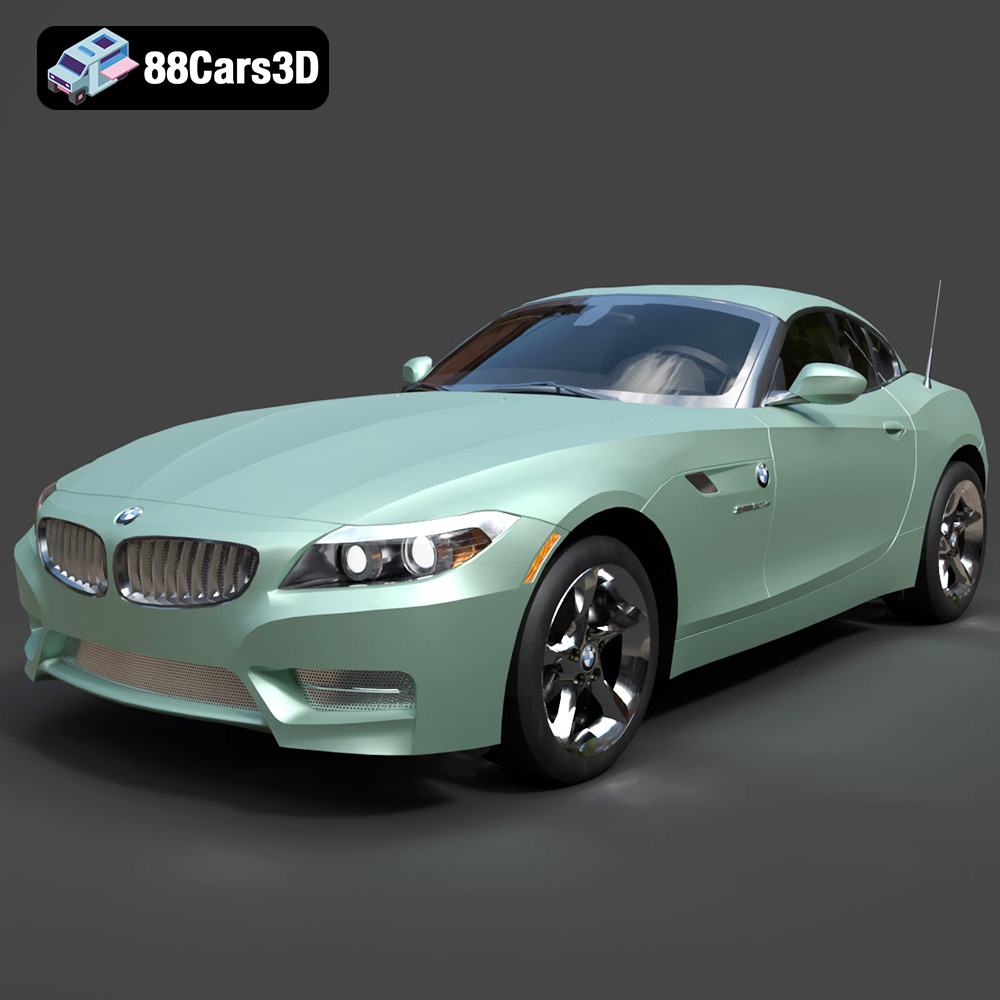
Texture: Yes
Material: Yes
Download the BMW Z4 Roadster E89 3D Model featuring clean geometry, realistic detailing, and a fully modeled interior. Includes .blend, .fbx, .obj, .glb, .stl, .ply, .unreal, and .max formats for rendering, simulation, and game development.
Price: $13.99

Texture: Yes
Material: Yes
Download the BMW Z4 E85 3D Model featuring clean geometry, realistic detailing, and a fully modeled interior. Includes .blend, .fbx, .obj, .glb, .stl, .ply, .unreal, and .max formats for rendering, simulation, and game development.
Price: $13.99

Texture: Yes
Material: Yes
Download the BMW M3 2024 3D Model featuring clean geometry, realistic detailing, and a fully modeled interior. Includes .blend, .fbx, .obj, .glb, .stl, .ply, .unreal, and .max formats for rendering, simulation, and game development.
Price: $13.99
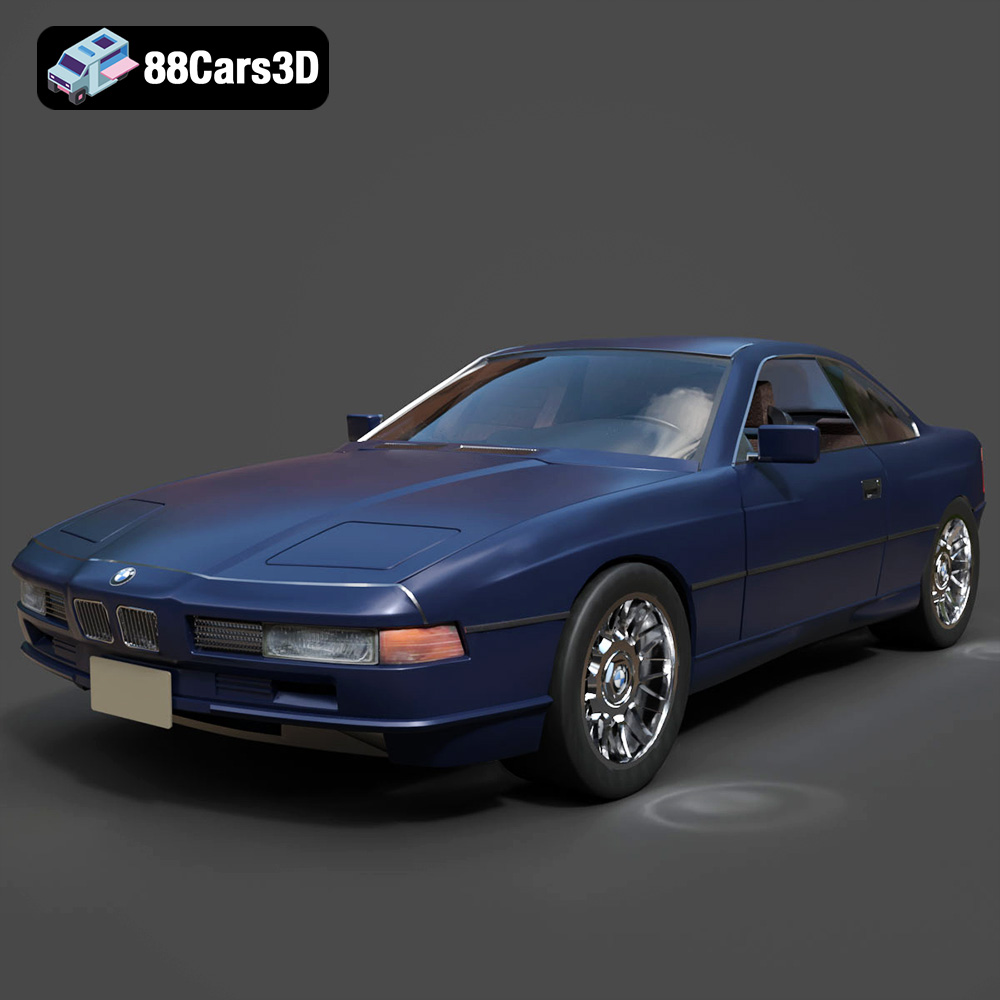
Texture: Yes
Material: Yes
Download the BMW 850i Coupe 1990 3D Model featuring clean geometry, realistic detailing, and a fully modeled interior. Includes .blend, .fbx, .obj, .glb, .stl, .ply, .unreal, and .max formats for rendering, simulation, and game development.
Price: $13.99
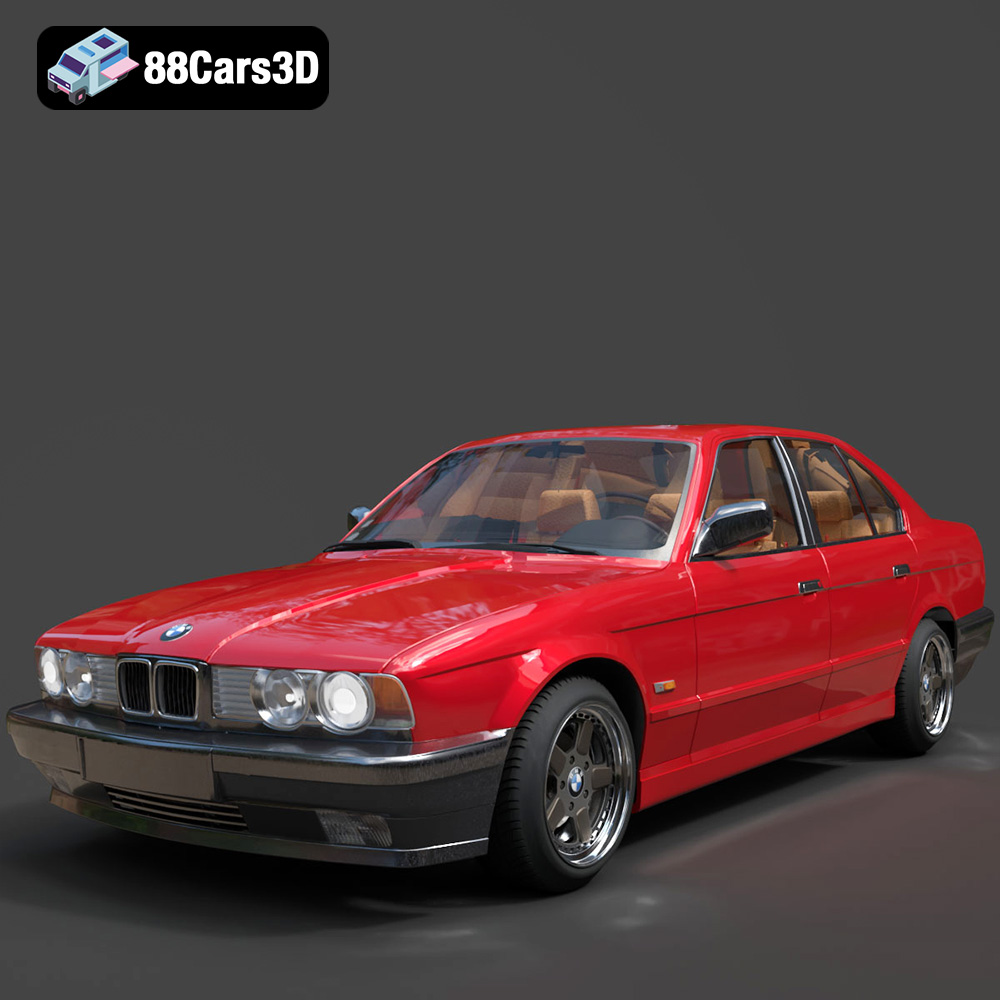
Texture: Yes
Material: Yes
Download the BMW 525i E34 1993 3D Model featuring clean geometry, realistic detailing, and a fully modeled interior. Includes .blend, .fbx, .obj, .glb, .stl, .ply, .unreal, and .max formats for rendering, simulation, and game development.
Price: $12.99

Texture: Yes
Material: Yes
Download the BMW 7 Series 2016 3D Model featuring luxurious design, detailed interior, and accurate exterior. Includes .blend, .fbx, .obj, .glb, .stl, .ply, .unreal, and .max formats for rendering, simulation, and game development.
Price: $10.79
Texture: Yes
Material: Yes
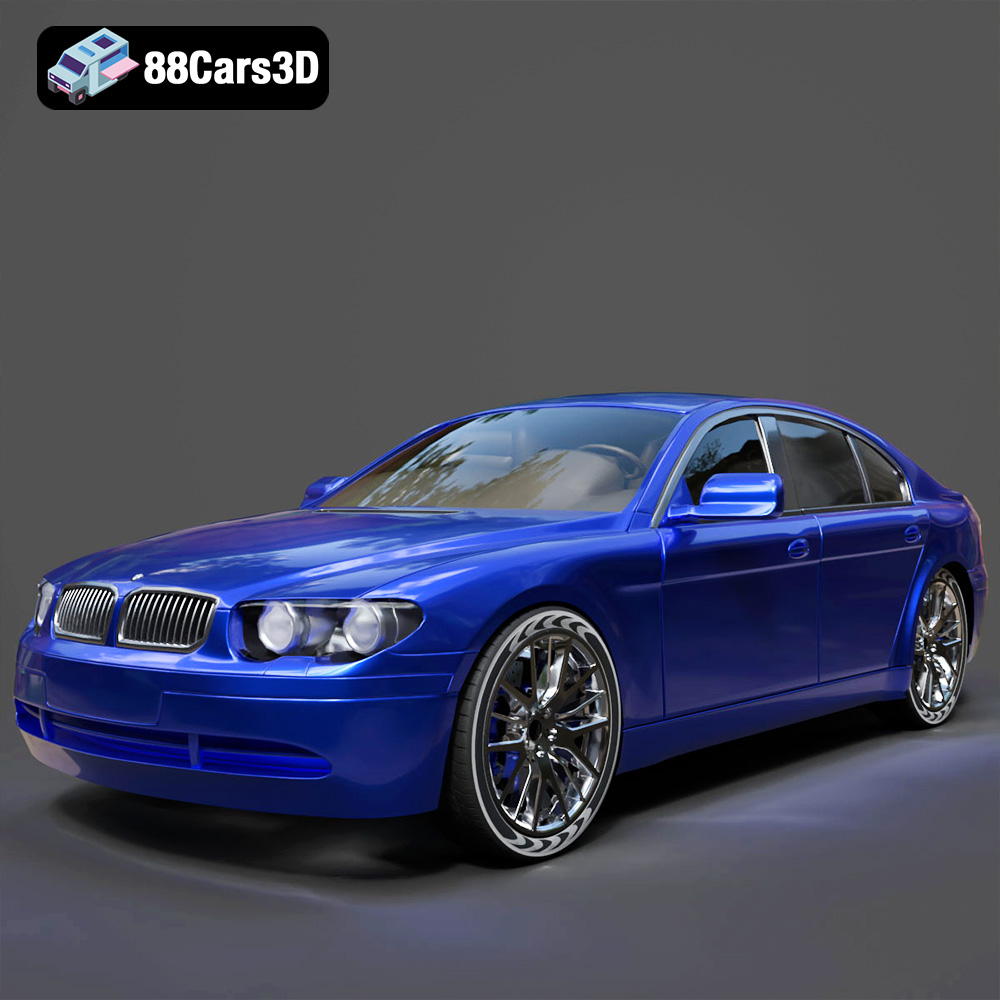
Download the BMW 7 Series 30th Anniversary 3D Model featuring a meticulously crafted exterior, detailed interior, and realistic wheels. Includes .blend, .fbx, .obj, .glb, .stl, .ply, .unreal, and .max formats for rendering, simulation, and game development.
Price: $35.79

Texture: Yes
Material: Yes
Download the BMW 7-Series F02 3D Model featuring a detailed exterior and interior, optimized for rendering and animation. Includes .blend, .fbx, .obj, .glb, .stl, .ply, .unreal, and .max formats for rendering, simulation, and game development.
Price: $10.79
Texture: Yes
Material: Yes
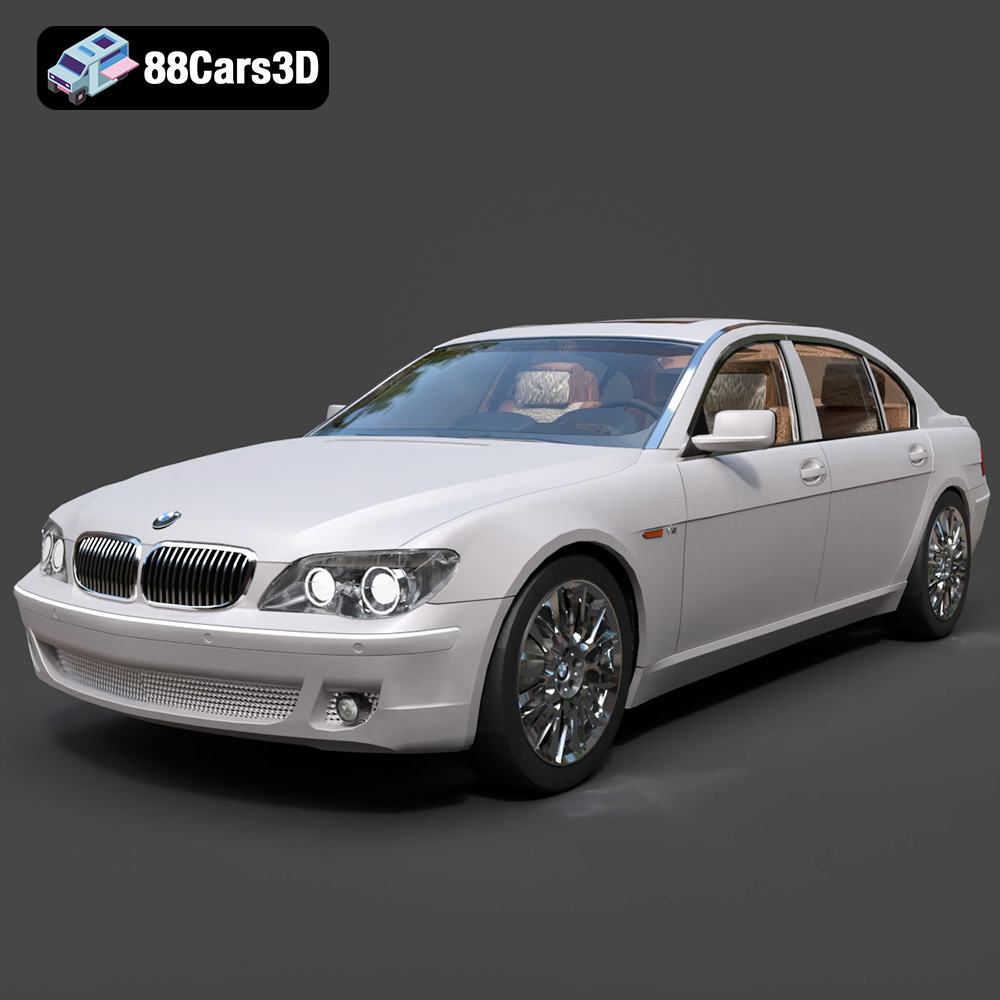
Download the BMW 760Li E66 2005 3D Model featuring a detailed exterior, refined interior, and robust chassis. Includes .blend, .fbx, .obj, .glb, .stl, .ply, .unreal, and .max formats for rendering, simulation, and game development.
Price: $10.79

