⚡ FLASH SALE: Get 60% OFF All Premium 3D & STL Models! ⚡

The allure of a perfectly rendered automobile is undeniable. From sleek concept cars to classic muscle machines, capturing the essence of automotive design in a digital realm requires more than just a powerful computer and rendering software. It demands a meticulous understanding of 3D modeling, material science, lighting principles, and post-production artistry. For those aiming to achieve breathtaking photorealism in their automotive visualizations, Corona Renderer, paired with high-quality 3D car models, offers an intuitive yet incredibly powerful toolkit.
This comprehensive guide is designed for 3D artists, automotive designers, game developers, and visualization professionals who aspire to elevate their car renders to an industry-leading standard. We’ll embark on a journey from preparing your 3D car model, through mastering PBR materials and sophisticated lighting, to optimizing your Corona settings and perfecting your final image with post-processing. You’ll learn the technical workflows, common pitfalls to avoid, and professional tips that separate a good render from a truly exceptional one. By the end, you’ll possess the knowledge to transform raw 3D data into captivating, hyper-realistic automotive art, leveraging the full potential of Corona Renderer.
Before a single ray can be traced, the bedrock of any photorealistic render is the 3D model itself. A meticulously crafted 3D car model, with impeccable topology and precise details, is non-negotiable. Poor topology can lead to artifacts, undesirable reflections, and difficulties in UV mapping and texturing, ultimately undermining the pursuit of realism. When sourcing 3D car models, whether creating them from scratch or acquiring them from platforms like 88cars3d.com, always prioritize clean, subdivision-ready meshes.
For automotive subjects, the emphasis on perfect surface continuity and crisp edges is paramount. Car bodies are essentially large, reflective surfaces designed to interact with light in specific ways. Any imperfection in the underlying mesh will be dramatically amplified in the reflections, immediately breaking the illusion of realism. A typical high-quality automotive render model for close-up shots should ideally have a polygon count ranging from 200,000 to 1,000,000+ triangles, depending on the level of detail, especially for interiors and intricate components like engines and suspension. However, for a production-ready model that might also be used for game assets or AR/VR, multiple Levels of Detail (LODs) are crucial, starting from a high-poly sculpt down to a low-poly version of around 50,000-100,000 triangles.
Clean topology primarily refers to using quad-based polygons (four-sided faces) throughout your mesh. While triangles are acceptable in certain areas or for real-time rendering, they can cause issues with subdivision surface modifiers, leading to pinching or undesirable smoothing. N-gons (polygons with more than four sides) are generally to be avoided entirely in production models, as they almost always create problematic shading and deformation.
Edge flow, on the other hand, describes how the edges of your polygons follow the natural contours and creases of the object. For a car, this means the edges should flow smoothly along the body lines, around wheel wells, across door seams, and define the sharp creases of panels. Proper edge flow ensures that when a subdivision surface modifier (like Turbosmooth in 3ds Max or Subdivision Surface in Blender) is applied, the model maintains its intended shape and produces smooth, artifact-free reflections. Incorrect edge flow can result in wavy surfaces, distorted reflections, and a generally “lumpy” appearance that betrays the digital nature of the model.
Even a well-modeled asset may require some preparatory steps. First, ensure your model is at a real-world scale. Most rendering engines and physical camera settings assume models are built to scale (e.g., a car being a few meters long, not kilometers or millimeters). Scaling issues can lead to incorrect light falloff, depth of field effects, and material appearances. Secondly, unify your normals. Normals are vectors that determine which way a polygon face is pointing; flipped normals can cause black spots or rendering errors. Most 3D software has tools to automatically unify or recalculate normals. Thirdly, check for overlapping geometry or coincident vertices, which can also cause shading artifacts. Tools like “Merge Vertices by Distance” or “Remove Doubles” in Blender (refer to Blender 4.4 documentation on merging vertices) are invaluable for cleaning up such issues. Finally, apply any necessary transformations (reset XForm in 3ds Max, apply scale/rotation in Blender) to ensure the model’s pivot point and scale are correctly registered.
Once your 3D model is pristine, the next critical step for photorealism is the application of realistic materials, which are intrinsically linked to effective UV mapping. PBR (Physically Based Rendering) materials are the industry standard for achieving lifelike surfaces, accurately simulating how light interacts with different properties of an object. For a car, this means crafting everything from a lustrous metallic paint finish to dull rubber tires and transparent glass.
UV mapping is the process of flattening the 3D surface of your model into a 2D space, allowing textures to be painted or applied without distortion. For a complex object like a car, effective UV unwrapping requires strategic planning to minimize stretching, prevent seams in visible areas, and ensure consistent texture density across different parts. A good UV layout maximizes the use of the 0-1 UV space, which is the standard square area where textures reside.
For large, relatively flat panels like the car body, planar mapping can be a starting point, followed by careful cutting and relaxing to avoid distortion. Cylindrical mapping is ideal for tires and cylindrical components. Box mapping can work for simpler, boxy objects, but generally, a more bespoke approach is needed for intricate car panels. Manual seam placement is crucial. Think about where seams will be least visible (e.g., along edges, under trim, or hidden areas). Tools like the UV Editor in Blender or the Unwrap UVW modifier in 3ds Max provide a suite of functions for cutting, welding, relaxing, and packing UV islands efficiently. For complex meshes, techniques like “automatic unwrapping” can provide a quick start, but almost always require manual refinement to optimize seam placement and texture space utilization. Aim for even checkerboard patterns on your UV layout to visually confirm uniform texture density.
Corona Renderer excels at handling PBR materials, making the process intuitive yet powerful. A standard PBR workflow typically involves several texture maps:
Car Paint Shaders: This is arguably the most complex and critical material. A realistic car paint in Corona is often a layered material. The base layer is usually a glossy material with a metallic or pearlescent Base Color. Over this, a clear coat layer is added, which is a very glossy, non-metallic material (low roughness, 0 metalness) with a slightly adjusted IOR (Index of Refraction) to simulate the clear protective layer. Corona’s layered material or a blend material can achieve this. For metallic or flake paints, procedural noise textures or custom flake maps can be used in the clear coat’s reflection or color channels to simulate the metallic particles. Experiment with Fresnel IOR values for the clear coat; a value of 1.4-1.6 is common for automotive clear coats.
Glass: Car glass needs to be accurately transparent and reflective. Use a Corona Physical Material with high reflectivity, zero roughness, and a realistic IOR (around 1.5-1.6 for typical glass). Enable “Thin Walled” for single-pane windows or use actual thickness for windshields and headlights, ensuring appropriate absorption distance for tinting. Headlight lenses can also benefit from slight roughness to diffuse inner reflections.
Tire Rubber: A dark, rough material. Use a Corona Physical Material with a dark Base Color, high roughness (0.7-0.9), and 0 metalness. A subtle normal map for tread patterns and sidewall text can greatly enhance realism. Sometimes, a very subtle reflective layer can simulate worn or slightly wet rubber.
Chrome and Metals: For polished chrome, use a Corona Physical Material with a pure white Base Color (or a very light grey), 1.0 metalness, and extremely low roughness (0.0-0.05). For brushed metals, increase the roughness slightly and use a directional noise map for roughness to simulate the brushing effect. The key to convincing metals is high reflectivity and accurate roughness values.
Lighting is the soul of any render. For automotive visualization, it’s not just about illuminating the subject but about sculpting its form, highlighting its curves, and revealing the intricacies of its design through reflections and shadows. Corona Renderer provides a robust and physically accurate lighting system that makes achieving dramatic and photorealistic illumination both powerful and intuitive.
One of the most effective and efficient ways to light a 3D car scene in Corona is through High Dynamic Range Images (HDRIs). HDRIs capture real-world lighting information, including intensity, color, and direction, providing incredibly realistic global illumination (GI) with minimal setup. When used as a Corona Sky map or loaded into a Corona Light material applied to a sphere around your scene, they simulate a complete environment.
Choosing the right HDRI is crucial. For studio-style renders, look for HDRIs with soft, even lighting, perhaps from a large softbox environment. For outdoor renders, consider overcast skies for diffuse, flattering light, or clear skies with a strong sun for dramatic highlights and shadows. The orientation (rotation) of the HDRI is key; rotate it to find the angle that best showcases your car’s reflections and highlights its contours. Adjusting the HDRI’s intensity can brighten or darken the scene, while color balance can be subtly tweaked to warm or cool the overall lighting. Many professional HDRIs come with multiple exposure levels, offering even greater flexibility. For product shots on platforms like 88cars3d.com, a clean, neutral studio HDRI is often preferred to keep the focus squarely on the model.
While HDRIs provide excellent base illumination, additional Corona Lights can be strategically placed to emphasize specific features, create dramatic rim lighting, or simulate car-specific light sources. Corona offers various light types:
Key, Fill, and Rim Lighting: Apply traditional photography lighting principles. A key light is the primary light source, illuminating the main subject. A fill light softens shadows and reduces contrast. Rim lights (often narrow, bright lights placed behind and to the side of the car) are fantastic for separating the vehicle from the background and highlighting its silhouette, giving it a three-dimensional pop. For highly reflective surfaces like car paint, rim lights can create stunning specular highlights along edges.
A standout feature of Corona Renderer is Light Mix. This allows you to adjust the intensity, color, and even enable/disable individual lights or groups of lights *during or after* rendering, without re-rendering the scene. This non-destructive workflow is incredibly powerful for fine-tuning your lighting setup and experimenting with different moods. You can create distinct light groups (e.g., “HDRI,” “Front Lights,” “Rim Lights”) and adjust them in real-time, saving countless hours of re-rendering.
Achieving photorealistic results often involves balancing render quality with render time. Corona Renderer is known for its ease of use and high-quality output, but understanding its core settings and optimization strategies is key to efficient rendering workflows. Modern 3D car models, especially those with intricate details and complex materials, can be computationally intensive, making optimization essential.
A typical automotive render for marketing or portfolio purposes aims for very high resolutions, often 4K (3840×2160) or even 8K (7680×4320), to capture every nuance. At these resolutions, efficient settings become even more critical to manage render times, which can range from a few hours to an entire day or more on a single workstation, depending on scene complexity and hardware.
Corona Renderer operates on a progressive rendering principle, meaning it continuously refines the image until a specified limit is reached. The main controls for stopping the render are:
Denoising: Corona’s integrated denoisers are game-changers for render times. They intelligently remove noise from the final image, allowing you to stop renders at a higher noise limit (e.g., 5-8%) and still achieve clean results. Corona supports NVIDIA OptiX (GPU-accelerated, requires NVIDIA RTX cards) and Intel Open Image Denoise (CPU-based, universal). Using a denoiser can cut render times by 30-50% or more while maintaining visual quality. It’s almost always recommended to use one for final renders.
Global Illumination (GI) Solvers: For most scenes, the default Path Tracing + UHD Cache combination is ideal for realistic GI. Path Tracing handles direct illumination and some indirect, while UHD Cache efficiently pre-calculates the more complex indirect light bouncing. For interiors or very complex lighting, sometimes Path Tracing alone or Path Tracing + Path Tracing (for both primary and secondary GI) might be used, but this is often slower. The default settings are typically very good for automotive scenes.
Render Elements: These are separate passes (layers) that Corona can output, providing immense control in post-production. Essential render elements for automotive work include: Beauty, Alpha (for easy background removal), Reflection, Refraction, Z-depth (for depth of field in post), Wireframe (for showcasing topology), Normals, and Diffuse. These allow you to adjust specific aspects of the image without re-rendering the entire scene.
Even with powerful hardware, large scenes with complex 3D car models can bog down. Effective optimization is crucial:
Rendering an image in Corona is a significant step, but it’s rarely the final one. The art of post-processing and compositing is where a render truly comes alive, transforming a technically perfect image into a visually captivating masterpiece. This stage allows for artistic enhancements, corrections, and refinements that can dramatically elevate the photorealism and emotional impact of your automotive renders.
Professional artists always integrate post-production into their workflow. The goal is not to “fix” a bad render in post, but to enhance an already good one. This process can typically take anywhere from 15 minutes for minor tweaks to several hours for complex compositing, often adding 10-20% more value to the final image’s quality.
Once your render is complete and saved (preferably as a multi-layered .EXR or .PSD file to retain all render elements), open it in a 2D image editing software like Adobe Photoshop, GIMP, or Affinity Photo. Here are the fundamental adjustments:
This is where the power of render elements (also known as render passes or AOVs – Arbitrary Output Variables) comes into play. By rendering out separate passes from Corona, you gain unparalleled control over every aspect of your image during post-production. Each render element isolates a specific component of the light calculation:
By using these elements in combination with blending modes and masks in your 2D editor, you can make targeted adjustments. For example, you can load the Reflection pass, set its blending mode to Screen or Linear Dodge, and then adjust its opacity or apply curves to selectively enhance the reflections on the car’s body. The Z-depth pass, when used with a Lens Blur filter, allows you to simulate depth of field with pixel-perfect control over the focal point and blur amount, something that is incredibly difficult to nail perfectly in a single 3D render without re-rendering.
While photorealistic still renders are a primary goal for automotive visualization, the versatility of high-quality 3D car models extends far beyond static images. These assets are increasingly being adapted for interactive experiences in game engines, immersive AR/VR applications, and even physical fabrication through 3D printing. Each of these applications requires specific considerations and optimization strategies to translate the detailed 3D car models into their respective environments.
Game engines like Unity and Unreal Engine, along with AR/VR platforms, demand highly optimized assets due to their real-time rendering constraints. A car model suitable for a cinematic render (often millions of polygons) will cripple performance in a game engine if not properly adapted. This involves a crucial process known as game-ready asset creation, which typically takes a high-poly model as a source and creates optimized versions.
Converting a 3D car model from a visualization asset to a physical object via 3D printing introduces an entirely new set of technical requirements. While 3D printing offers tangible results, it demands specific mesh properties to ensure successful fabrication.
The journey from a digital 3D car model to a photorealistic render, an interactive game asset, or a physical 3D print is multifaceted and incredibly rewarding. Each stage, from the initial modeling and UV mapping to the final touches in post-production and preparation for diverse applications, demands technical precision and artistic vision. By mastering clean topology, crafting compelling PBR materials, orchestrating sophisticated lighting with tools like Corona Renderer, and diligently optimizing for specific platforms, you unlock the full potential of your 3D automotive assets.
The world of 3D visualization is constantly evolving, with new tools and techniques emerging regularly. Continuous learning and experimentation are crucial. Remember that the quality of your source material is paramount; platforms like 88cars3d.com provide a valuable resource for acquiring high-quality 3D car models that serve as excellent starting points for all these advanced workflows. Practice, refine your eye, and never stop pushing the boundaries of what’s possible in automotive visualization. Your next breathtaking render is just a few meticulous steps away.
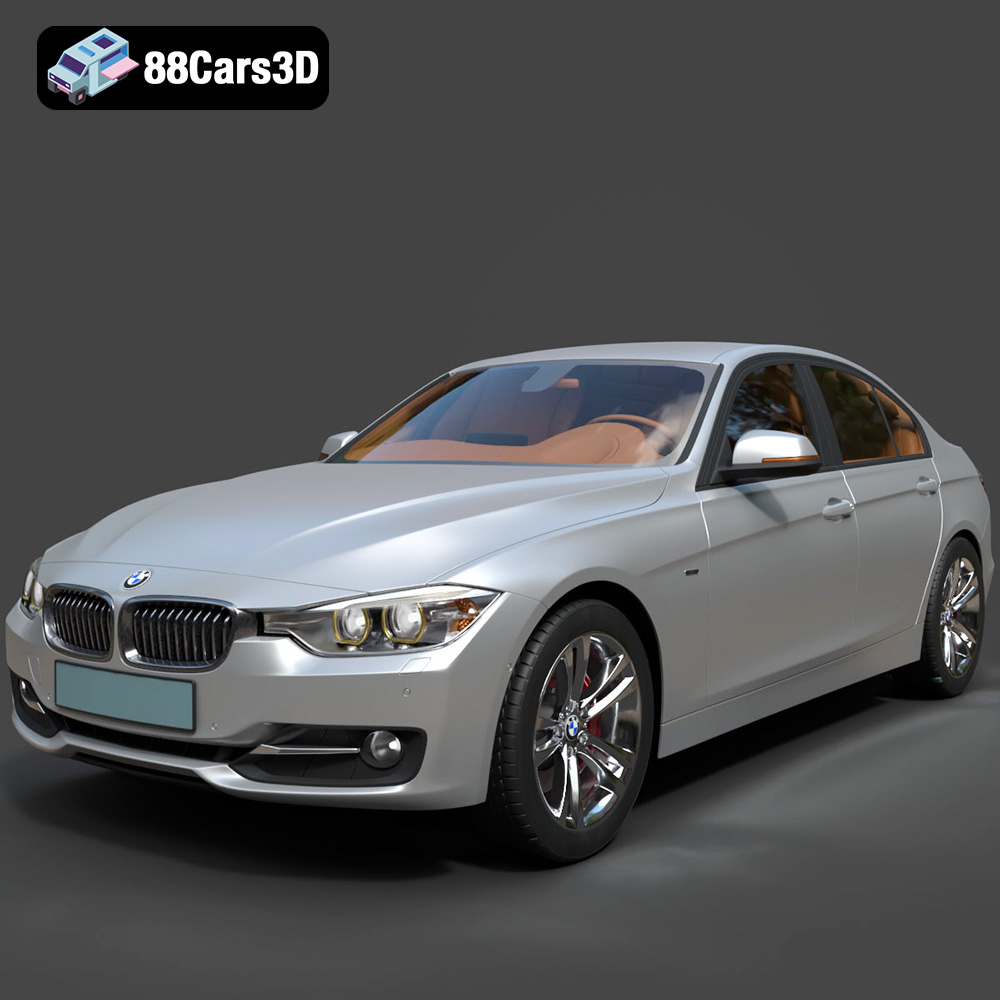
Texture: Yes
Material: Yes
Download the BMW 3 F30 3D Model featuring a detailed exterior, realistic interior, and optimized mesh. Includes .blend, .fbx, .obj, .glb, .stl, .ply, .unreal, and .max formats for rendering, simulation, and game development.
Price: $10.79
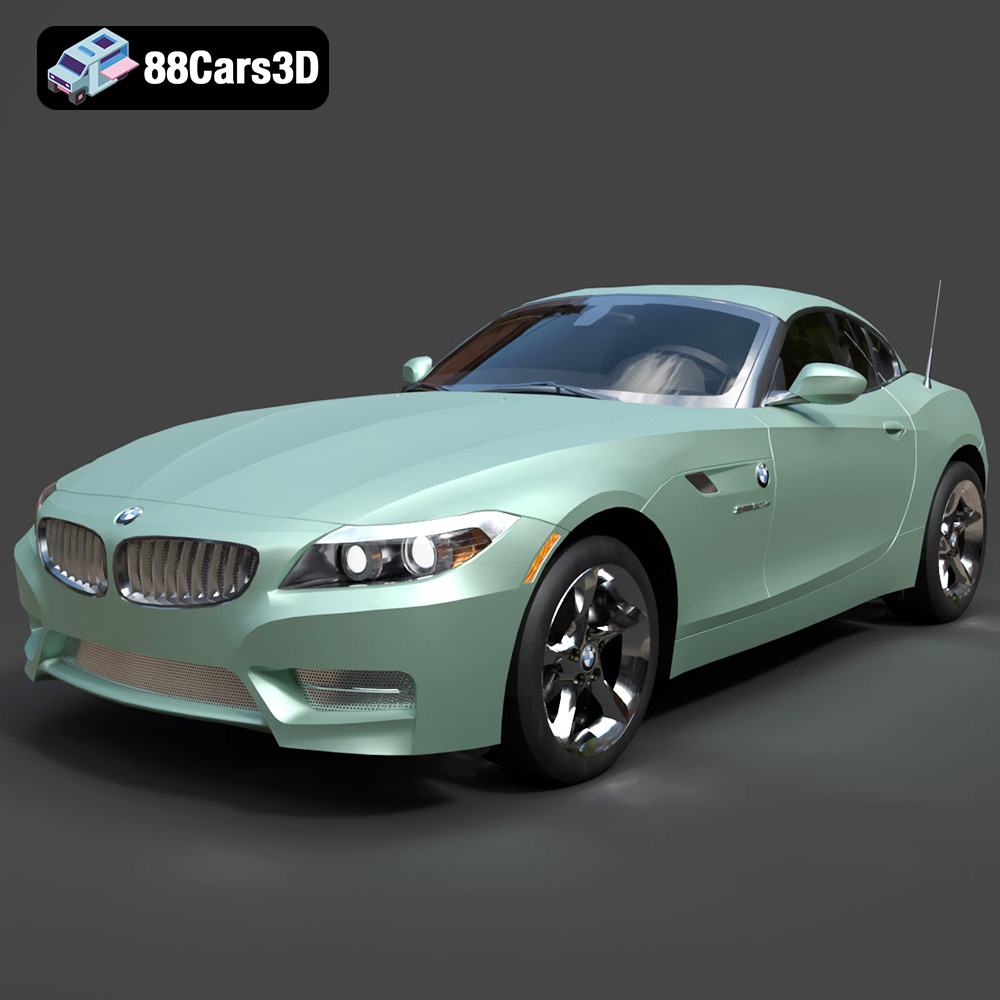
Texture: Yes
Material: Yes
Download the BMW Z4 Roadster E89 3D Model featuring clean geometry, realistic detailing, and a fully modeled interior. Includes .blend, .fbx, .obj, .glb, .stl, .ply, .unreal, and .max formats for rendering, simulation, and game development.
Price: $13.99

Texture: Yes
Material: Yes
Download the BMW Z4 E85 3D Model featuring clean geometry, realistic detailing, and a fully modeled interior. Includes .blend, .fbx, .obj, .glb, .stl, .ply, .unreal, and .max formats for rendering, simulation, and game development.
Price: $13.99

Texture: Yes
Material: Yes
Download the BMW M3 2024 3D Model featuring clean geometry, realistic detailing, and a fully modeled interior. Includes .blend, .fbx, .obj, .glb, .stl, .ply, .unreal, and .max formats for rendering, simulation, and game development.
Price: $13.99
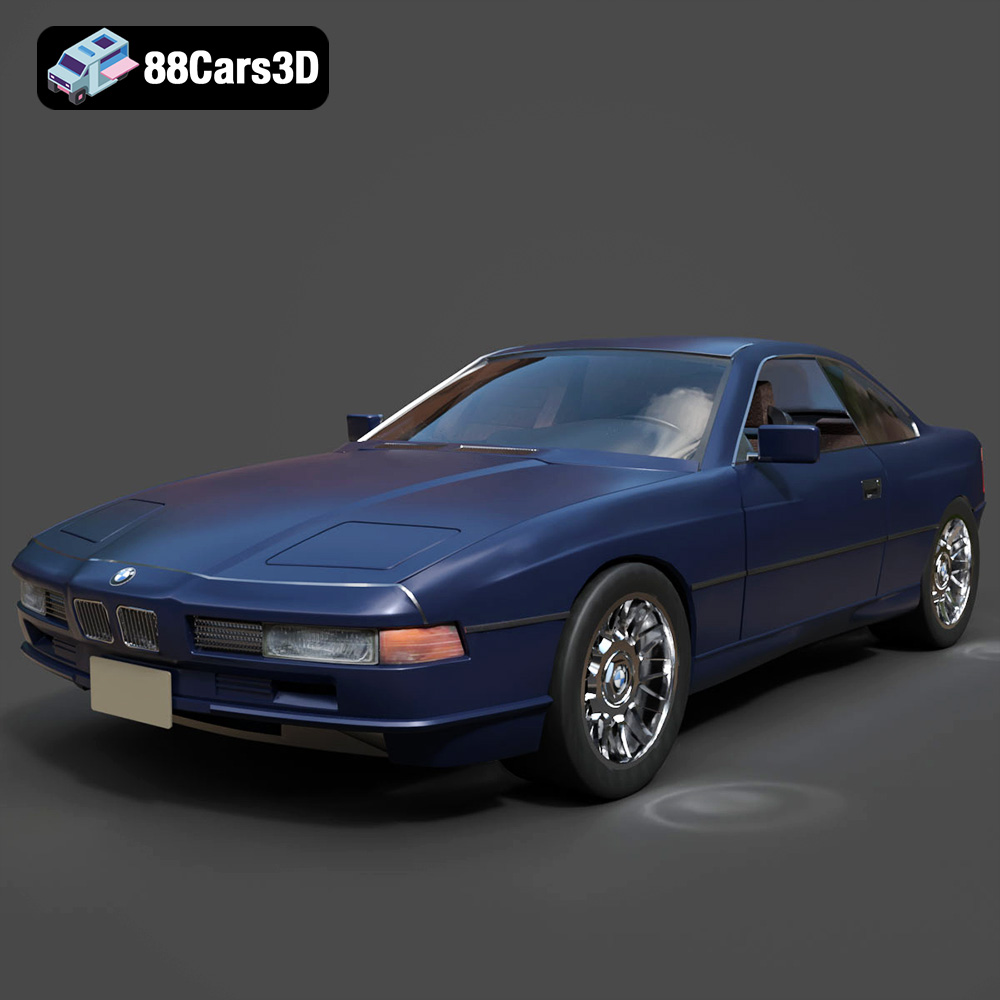
Texture: Yes
Material: Yes
Download the BMW 850i Coupe 1990 3D Model featuring clean geometry, realistic detailing, and a fully modeled interior. Includes .blend, .fbx, .obj, .glb, .stl, .ply, .unreal, and .max formats for rendering, simulation, and game development.
Price: $13.99
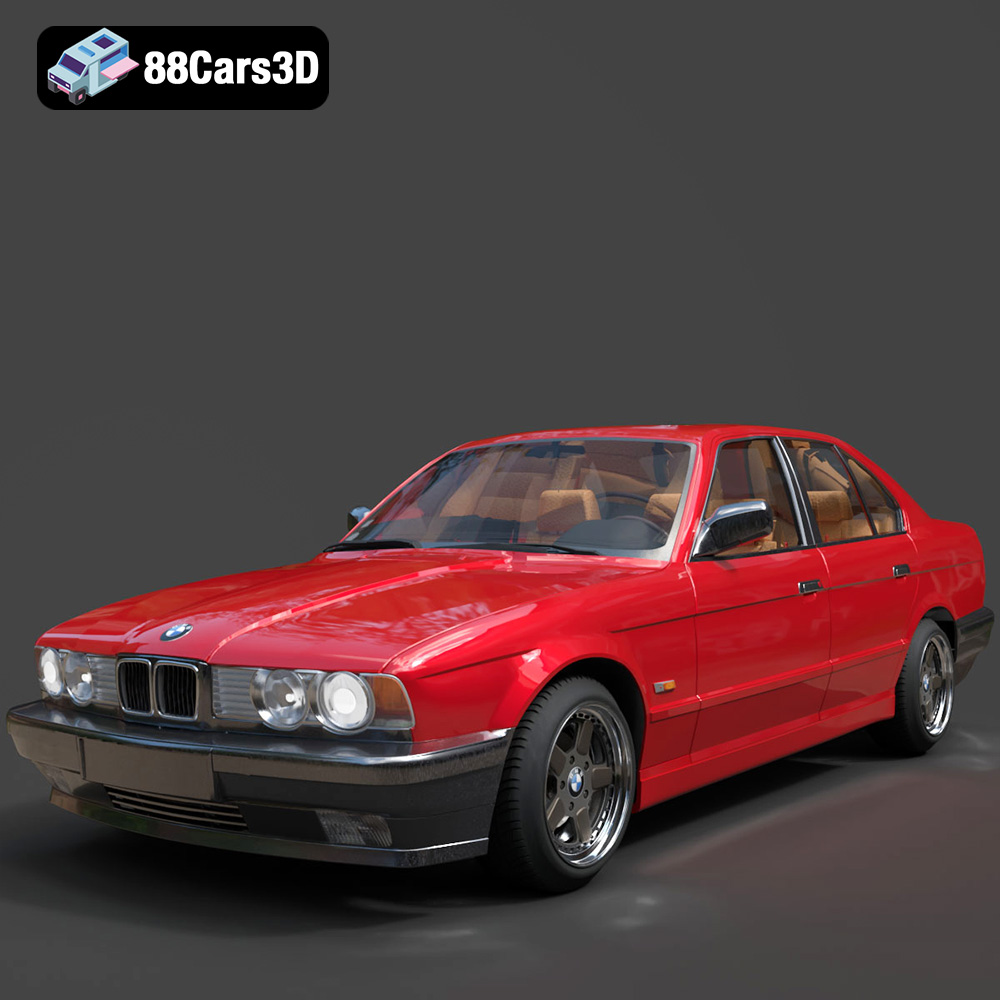
Texture: Yes
Material: Yes
Download the BMW 525i E34 1993 3D Model featuring clean geometry, realistic detailing, and a fully modeled interior. Includes .blend, .fbx, .obj, .glb, .stl, .ply, .unreal, and .max formats for rendering, simulation, and game development.
Price: $12.99

Texture: Yes
Material: Yes
Download the BMW 7 Series 2016 3D Model featuring luxurious design, detailed interior, and accurate exterior. Includes .blend, .fbx, .obj, .glb, .stl, .ply, .unreal, and .max formats for rendering, simulation, and game development.
Price: $10.79
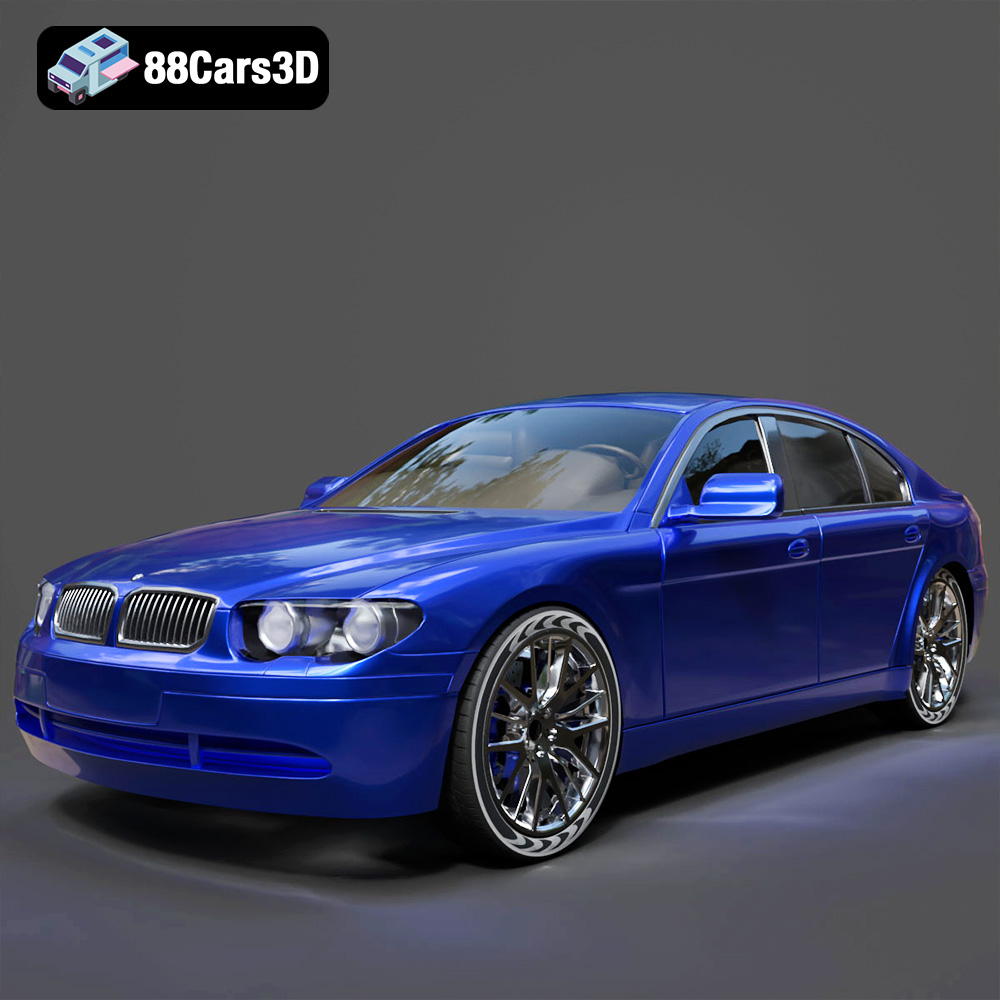
Texture: Yes
Material: Yes
Download the BMW 7 Series 30th Anniversary 3D Model featuring a meticulously crafted exterior, detailed interior, and realistic wheels. Includes .blend, .fbx, .obj, .glb, .stl, .ply, .unreal, and .max formats for rendering, simulation, and game development.
Price: $35.79

Texture: Yes
Material: Yes
Download the BMW 7-Series F02 3D Model featuring a detailed exterior and interior, optimized for rendering and animation. Includes .blend, .fbx, .obj, .glb, .stl, .ply, .unreal, and .max formats for rendering, simulation, and game development.
Price: $10.79
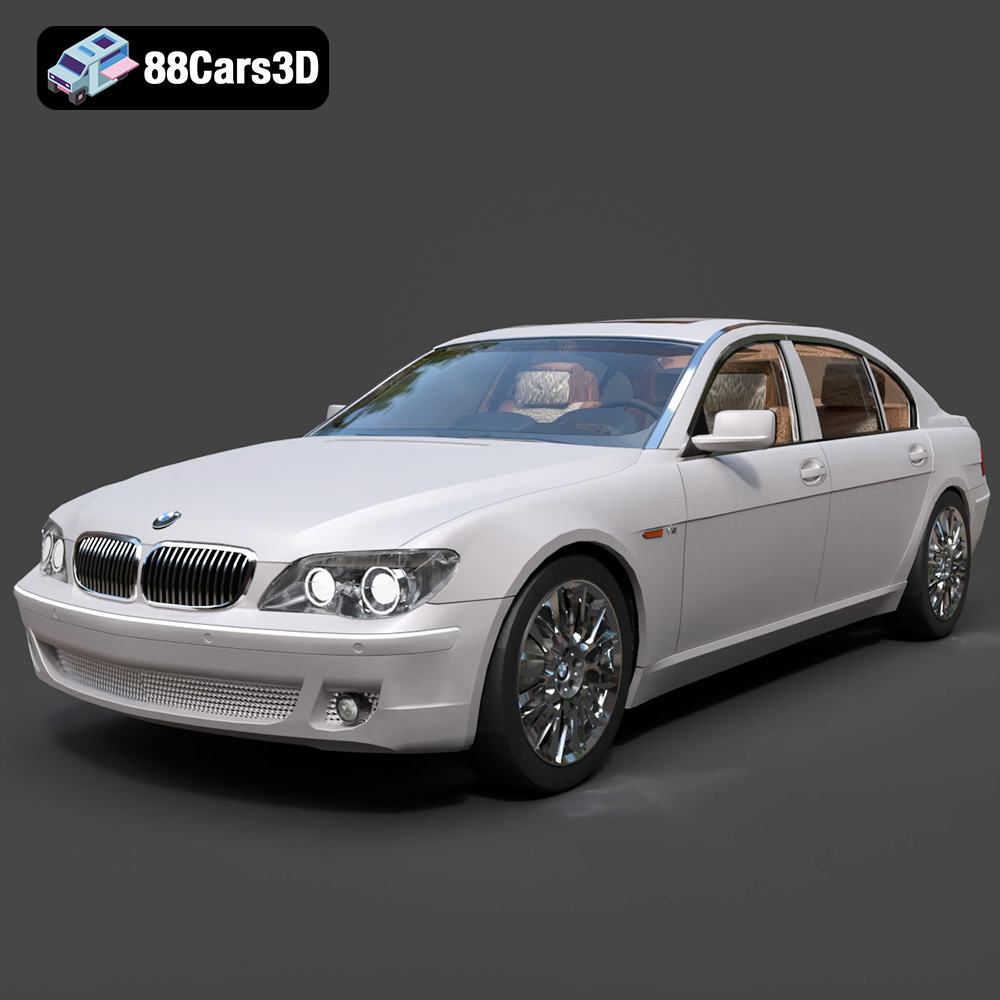
Texture: Yes
Material: Yes
Download the BMW 760Li E66 2005 3D Model featuring a detailed exterior, refined interior, and robust chassis. Includes .blend, .fbx, .obj, .glb, .stl, .ply, .unreal, and .max formats for rendering, simulation, and game development.
Price: $10.79

