⚡ FLASH SALE: Get 60% OFF All Premium 3D & STL Models! ⚡

In the dynamic world of real-time rendering and automotive visualization, the quality of a 3D car model is paramount. Platforms like 88cars3d.com excel in providing impeccably detailed vehicles, ready for integration into stunning virtual environments. However, a truly breathtaking scene isn’t just about the car; it’s about the entire immersive experience, and a significant part of that immersion comes from realistic, vibrant surroundings. Imagine a meticulously rendered sports car sitting on a sterile, empty plane versus one nestled amidst lush, windswept foliage, bathed in natural light – the difference is profound.
This comprehensive guide delves into the Unreal Engine’s powerful Foliage System, equipping you with the knowledge to craft incredibly realistic vegetation that elevates your automotive visualizations, game environments, and interactive experiences. We’ll explore everything from initial project setup and asset preparation to advanced material techniques, cutting-edge optimization with Nanite and Lumen, and dynamic interactions using Blueprint and Niagara. Whether you’re a seasoned Unreal Engine developer, a 3D artist aiming for photorealism, or an automotive designer looking to present your vehicles in captivating digital landscapes, mastering foliage is essential. Prepare to transform your scenes from ordinary to extraordinary, giving those high-quality 3D car models the stunning backdrops they deserve.
Building a convincing natural environment around your automotive assets begins with solid foundations: proper Unreal Engine project setup and meticulous preparation of your foliage assets. The quality of your raw materials directly impacts the realism and performance of your final scene. When you acquire a high-fidelity car model from a source like 88cars3d.com, you expect clean topology, optimized materials, and ready-to-use assets. The same diligence should apply to your environmental elements.
Before importing any vegetation, ensure your Unreal Engine project is configured for high-fidelity rendering. Utilize the “Games” or “Film, Television, and Live Events” templates for a good starting point, as they often come with appropriate default settings for Post Processing, Global Illumination (Lumen), and Reflections. For a detailed guide on project settings, refer to the official Unreal Engine documentation at https://dev.epicgames.com/community/unreal-engine/learning.
Foliage assets typically consist of mesh models (trees, bushes, grass blades, flowers) and their associated PBR textures. Unlike a singular car model, foliage usually involves numerous small instances, making efficient asset management crucial. When importing, use the standard FBX format for meshes. Ensure your models have proper UV mapping for textures and lightmaps. For larger assets like trees, consider pre-fragmenting them into trunk, branch, and leaf components if they are to be animated or interact dynamically, though for static scene dressing, a single mesh is often sufficient.
Recommended Folder Structure: Organize your content. A typical structure might be Content/Environments/Foliage/Trees/Pine_01, Content/Environments/Foliage/Grass/WildGrass_A. Within each foliage type, keep meshes, materials, and textures together. This makes project management much cleaner, especially when dealing with potentially hundreds of unique foliage assets.
PBR (Physically Based Rendering) materials are the backbone of realism in modern engines. For foliage, this is even more critical due to the complex interaction of light with leaves, bark, and grass. A standard foliage material requires several texture maps:
In the Unreal Engine Material Editor, combine these textures to create a master foliage material. Utilize parameters to allow for easy instance variations (e.g., tint, wind intensity) without creating multiple unique materials. For performance, especially with many foliage instances, use a single two-sided foliage shading model, which renders both sides of the mesh with appropriate lighting calculations, crucial for convincing leaves and grass.
Once your foliage assets are prepared and their PBR materials set up, Unreal Engine’s dedicated Foliage Mode becomes your primary tool for populating your environments. This powerful system allows for efficient, performance-friendly placement and management of thousands, even millions, of static mesh instances, making it indispensable for creating dense forests, sprawling meadows, or detailed garden spaces around your automotive scenes.
To enter Foliage Mode, simply click the “Modes” dropdown in the Unreal Engine editor toolbar and select “Foliage” (or press Shift+7). The Foliage panel will appear, presenting a suite of tools. The first step is to drag your prepared static mesh foliage assets (e.g., your tree meshes, grass clumps, bush models) from the Content Browser into the “Foliage Types” list within the Foliage panel. Each asset added here becomes a “Foliage Type” with its own set of configurable properties.
Key Foliage Type Settings: Within the “Details” panel for each Foliage Type, you’ll find crucial settings that dictate how instances of that mesh behave:
The Foliage Mode offers intuitive brush-based tools:
When creating environments for automotive visualization, precise placement is often key. You might use the paint tool for large areas, then switch to single selection or erase mode to refine the edges around roads or driveways. For showcasing a high-quality 3D car model, ensure that surrounding foliage doesn’t distract or obscure the vehicle. Instead, it should frame it, providing context and realism.
Realistic foliage is about more than just good models; it’s about how light interacts with their surfaces. Advanced material techniques combined with Unreal Engine’s sophisticated lighting systems are crucial for making your virtual vegetation indistinguishable from reality, especially when paired with high-fidelity automotive models from 88cars3d.com.
One of the most critical elements for convincing leaves and petals is Subsurface Scattering (SSS). Unlike opaque objects where light only reflects or absorbs at the surface, SSS simulates light penetrating a translucent surface, scattering beneath it, and re-emerging at a different point. This is why a leaf appears to glow when backlit. Without SSS, leaves look flat and opaque.
In Unreal Engine’s Material Editor, you achieve SSS by utilizing the “Two-Sided Foliage” shading model. This model automatically provides inputs for “Subsurface Color” and “Opacity Mask.” The “Subsurface Color” input takes an RGB value, which represents the color of light after it has scattered through the material (often a green or yellowish-green for healthy leaves). You can drive this with a texture map for greater control. A crucial detail is that the two-sided foliage shading model factors in the thickness of the mesh, which means thinner meshes will appear more translucent, mimicking real-world physics. Fine-tuning the Subsurface Color and Opacity Mask will dictate how light filters through, giving your foliage a soft, natural glow.
Static foliage feels dead. Introducing subtle, dynamic motion through wind simulation breathes life into your scenes. Unreal Engine provides a built-in solution: the “SimpleGrassWind” material function.
Implementing SimpleGrassWind:
For more advanced wind effects, consider combining “SimpleGrassWind” with other nodes. For instance, you might use a “PerInstanceRandom” node to add slight variations to the wind intensity for each foliage instance, preventing a uniform, artificial sway. You can also drive wind parameters via Blueprints or even a global “Wind Actor” that broadcasts wind strength and direction, allowing for cohesive environmental effects across your entire scene. This adds immense value when showcasing a car, making the environment feel alive and responsive.
Unreal Engine 5’s Lumen Global Illumination and Reflections system is transformative for rendering realistic environments. For foliage, Lumen accurately simulates indirect light bouncing off and through leaves, contributing significantly to natural lighting. This means that a sunlit forest will have subtle color bounces from green leaves onto other surfaces, creating a more cohesive and believable scene. Ensure Lumen is enabled in your project settings (Edit > Project Settings > Engine > Rendering > Global Illumination and Reflections).
Beyond Lumen, proper lighting setup is critical:
By combining advanced materials with powerful lighting, your foliage will truly come alive, providing a photorealistic setting for the impeccably detailed 3D car models you might source from 88cars3d.com.
Creating lush, detailed environments with extensive foliage can be incredibly demanding on hardware. For automotive visualization, whether it’s an interactive configurator, a real-time cinematic, or an AR/VR experience, maintaining high frame rates is non-negotiable. Unreal Engine offers several cutting-edge features and best practices to optimize foliage rendering, ensuring your high-quality car models from 88cars3d.com are always presented smoothly and without performance hitches.
Nanite, Unreal Engine 5’s virtualized geometry system, is revolutionary for handling incredibly dense geometry. For foliage, this means you can import high-polygon tree and bush models – models that previously would have crippled performance – and Nanite will intelligently stream and render only the necessary detail, regardless of camera distance. This dramatically reduces draw calls and allows for unprecedented visual fidelity without manual LODs for the highest detail meshes.
Leveraging Nanite for Foliage:
Even with Nanite, a balanced approach is key. Very small, numerous instances like individual grass blades might still benefit from traditional instancing for ultimate efficiency, while larger, detailed bushes and trees are perfect Nanite candidates. For a deeper dive into Nanite, consult the Unreal Engine documentation.
While Nanite handles detail for high-poly meshes, traditional Level of Detail (LODs) and culling remain vital for all foliage, especially for distant elements and smaller instances.
Beyond mesh and LODs, granular control within each Foliage Type is essential for fine-tuning performance:
For AR/VR automotive applications, performance targets are even stricter. Every polygon, every draw call, and every shader instruction matters. Aggressive LODs, careful culling, and judicious use of Nanite on only the most impactful assets are key strategies. Always profile your scene using Unreal Engine’s built-in profilers (e.g., Stat RHI, Stat GPU) to identify bottlenecks. By diligently applying these optimization techniques, you can ensure that your stunning 3D car models from 88cars3d.com are showcased within beautiful, performant environments.
While static, realistic foliage significantly enhances a scene, the true magic often lies in dynamic interaction. In automotive visualization, this means foliage that responds to a passing vehicle, sways realistically with the wind, or even contributes to cinematic effects. Unreal Engine provides robust tools like Blueprint visual scripting and Niagara particle systems to bring your virtual vegetation to life, adding a layer of immersion that static elements simply cannot achieve.
Blueprint visual scripting empowers developers and artists to create complex interactions without writing a single line of code. For foliage, this opens up a world of possibilities:
When crafting interactive automotive experiences, every detail matters. The subtle rustle of leaves as a car passes or the gentle swaying of trees in the background significantly enhances the believability of the scene where your 88cars3d.com vehicle models are presented.
Niagara is Unreal Engine’s next-generation particle system, offering incredible flexibility and power for creating everything from smoke and fire to highly detailed environmental elements. For foliage, Niagara can be used to:
Integrating Niagara effects requires careful planning to ensure they complement, rather than detract from, the main focus – your 3D car model. Optimize particle counts and use efficient materials to maintain performance, especially in real-time scenarios or AR/VR applications.
The interplay between advanced vehicle physics (often involving custom C++ or Blueprint vehicle components) and dynamic foliage creates a richer simulation. Imagine the physics-based tire deformation interacting with individual grass blades, or foliage particles reacting to a vehicle’s exhaust. This level of detail elevates automotive visualizations beyond simple renders to truly immersive experiences.
For cinematic content, Unreal Engine’s Sequencer tool is invaluable. You can animate various foliage parameters over time:
By leveraging Blueprint, Niagara, and Sequencer, your Unreal Engine environments become living, breathing ecosystems that dynamically interact with and enhance the presence of your premium car models, offering unparalleled realism in real-time rendering.
The mastery of Unreal Engine’s foliage system isn’t just an artistic pursuit; it’s a critical skill with direct, tangible applications in high-stakes industries like automotive visualization. Realistic vegetation provides the vital context and atmosphere that transforms a standalone 3D car model into a compelling visual narrative. Whether you’re working on interactive configurators, virtual production, or high-fidelity marketing renders, understanding how to integrate foliage effectively is paramount.
Automotive configurators are key tools for car manufacturers, allowing customers to customize vehicles in real-time. While the focus is on the car, the environment plays a huge psychological role. Placing a configurable 3D car model from 88cars3d.com within a meticulously crafted virtual showroom, a sun-drenched suburban driveway, or a rugged off-road track, significantly impacts the perceived value and desirability of the vehicle.
Virtual production, especially with large LED volumes, is revolutionizing film and broadcast. For automotive commercials or cinematic sequences, placing a physical car in front of an LED wall displaying an Unreal Engine environment is increasingly common. Here, convincing foliage is essential to seamless integration.
When dealing with vast environments, an efficient workflow is critical:
By adhering to these best practices and leveraging Unreal Engine’s powerful toolset, you can create breathtaking, performant environments that not only support but enhance the visual impact of your automotive visualizations, making your 3D car models from 88cars3d.com truly stand out in any real-time rendering context.
The journey through Unreal Engine’s powerful Foliage System reveals just how instrumental realistic vegetation is to crafting truly immersive and visually stunning digital environments. From setting up your project with meticulous asset preparation and PBR materials to leveraging the advanced capabilities of Nanite, Lumen, and dynamic interactions via Blueprint and Niagara, every step contributes to building a world that feels alive and believable. While high-quality 3D car models from platforms like 88cars3d.com provide the star of your scene, it is the expertly crafted environment that truly elevates their presentation, adding context, mood, and unparalleled realism.
We’ve explored how to efficiently populate vast landscapes with the Foliage Tool, achieve photorealism through advanced material techniques like Subsurface Scattering and wind simulation, and ensure smooth real-time performance with comprehensive optimization strategies. Moreover, the ability to introduce dynamic interactions and utilize foliage in real-world applications like automotive configurators and virtual production demonstrates the profound impact a well-cultivated environment has on the overall user experience. The key takeaway is clear: don’t overlook the greens. Investing time in mastering Unreal Engine’s foliage capabilities will transform your automotive visualizations from mere renders into captivating, living scenes.
Now, it’s your turn to apply these insights. Experiment with different foliage types, push the boundaries of material realism, and explore how dynamic elements can bring your scenes to life. For your next project, remember that the perfect backdrop for that exquisite 3D car model is just a few brushstrokes away. Dive in, get creative, and start cultivating your own immersive automotive worlds today. The resources at https://dev.epicgames.com/community/unreal-engine/learning are always there to support your continued learning journey.

Texture: Yes
Material: Yes
Download the BMW 3 F30 3D Model featuring a detailed exterior, realistic interior, and optimized mesh. Includes .blend, .fbx, .obj, .glb, .stl, .ply, .unreal, and .max formats for rendering, simulation, and game development.
Price: $10.79
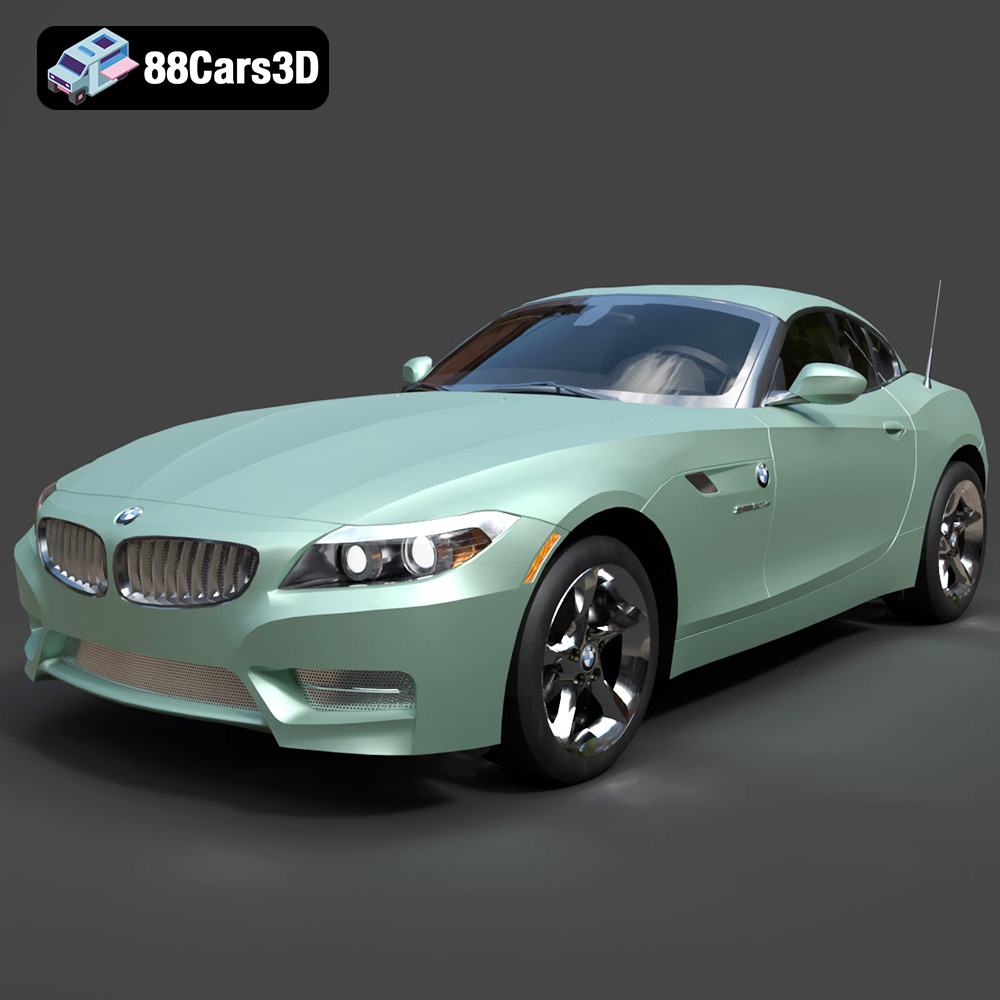
Texture: Yes
Material: Yes
Download the BMW Z4 Roadster E89 3D Model featuring clean geometry, realistic detailing, and a fully modeled interior. Includes .blend, .fbx, .obj, .glb, .stl, .ply, .unreal, and .max formats for rendering, simulation, and game development.
Price: $13.99

Texture: Yes
Material: Yes
Download the BMW Z4 E85 3D Model featuring clean geometry, realistic detailing, and a fully modeled interior. Includes .blend, .fbx, .obj, .glb, .stl, .ply, .unreal, and .max formats for rendering, simulation, and game development.
Price: $13.99

Texture: Yes
Material: Yes
Download the BMW M3 2024 3D Model featuring clean geometry, realistic detailing, and a fully modeled interior. Includes .blend, .fbx, .obj, .glb, .stl, .ply, .unreal, and .max formats for rendering, simulation, and game development.
Price: $13.99
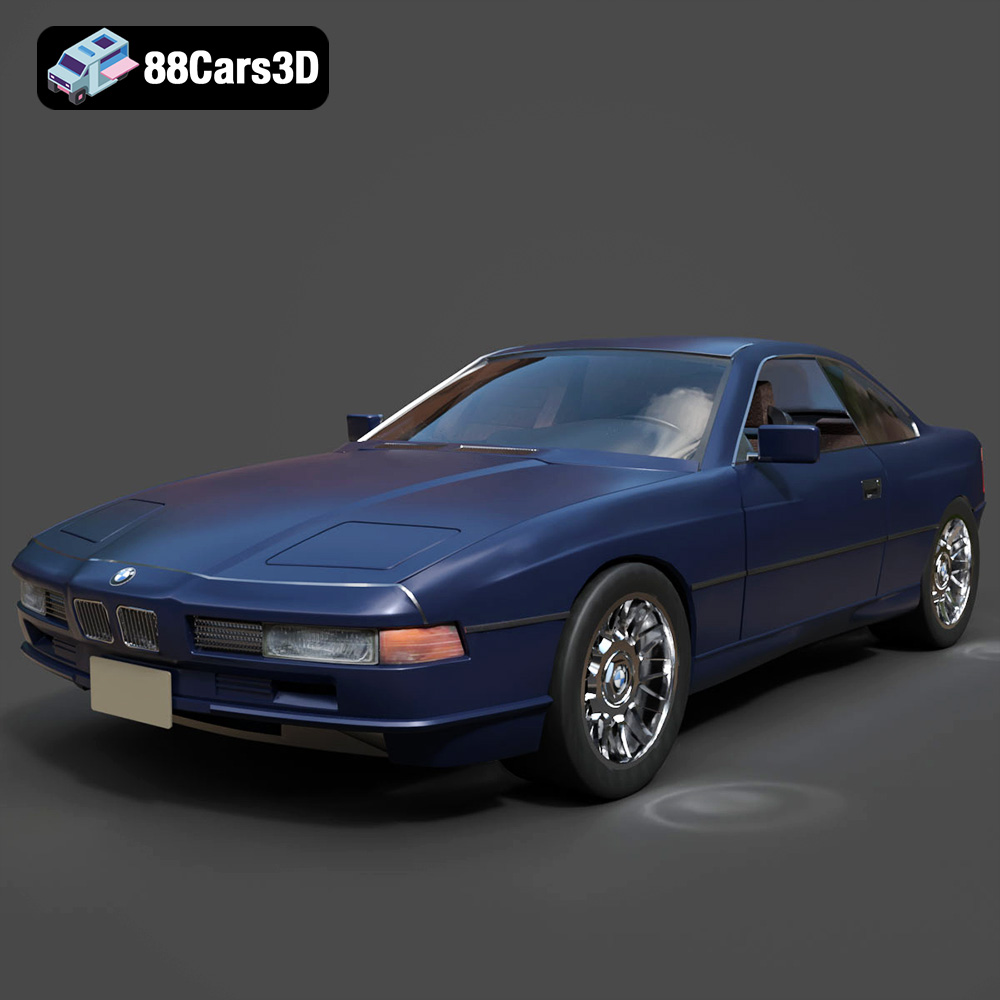
Texture: Yes
Material: Yes
Download the BMW 850i Coupe 1990 3D Model featuring clean geometry, realistic detailing, and a fully modeled interior. Includes .blend, .fbx, .obj, .glb, .stl, .ply, .unreal, and .max formats for rendering, simulation, and game development.
Price: $13.99
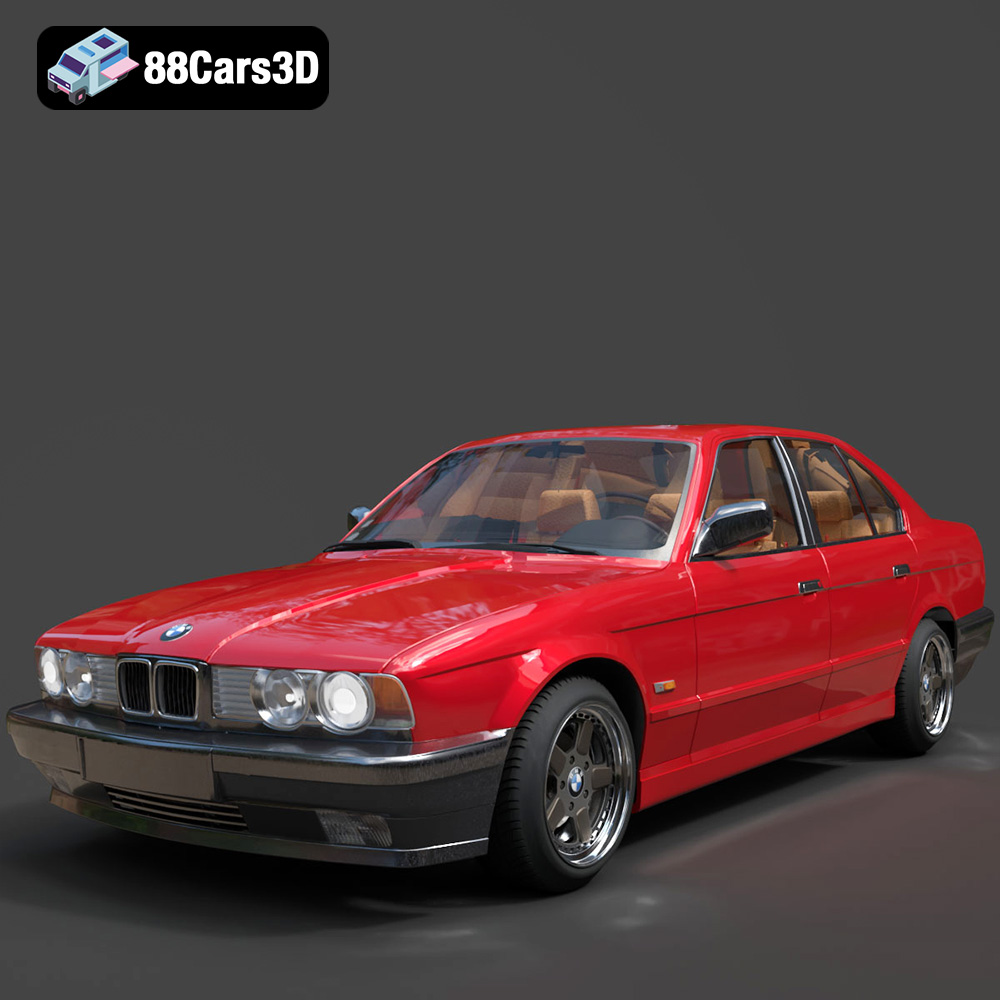
Texture: Yes
Material: Yes
Download the BMW 525i E34 1993 3D Model featuring clean geometry, realistic detailing, and a fully modeled interior. Includes .blend, .fbx, .obj, .glb, .stl, .ply, .unreal, and .max formats for rendering, simulation, and game development.
Price: $12.99

Texture: Yes
Material: Yes
Download the BMW 7 Series 2016 3D Model featuring luxurious design, detailed interior, and accurate exterior. Includes .blend, .fbx, .obj, .glb, .stl, .ply, .unreal, and .max formats for rendering, simulation, and game development.
Price: $10.79
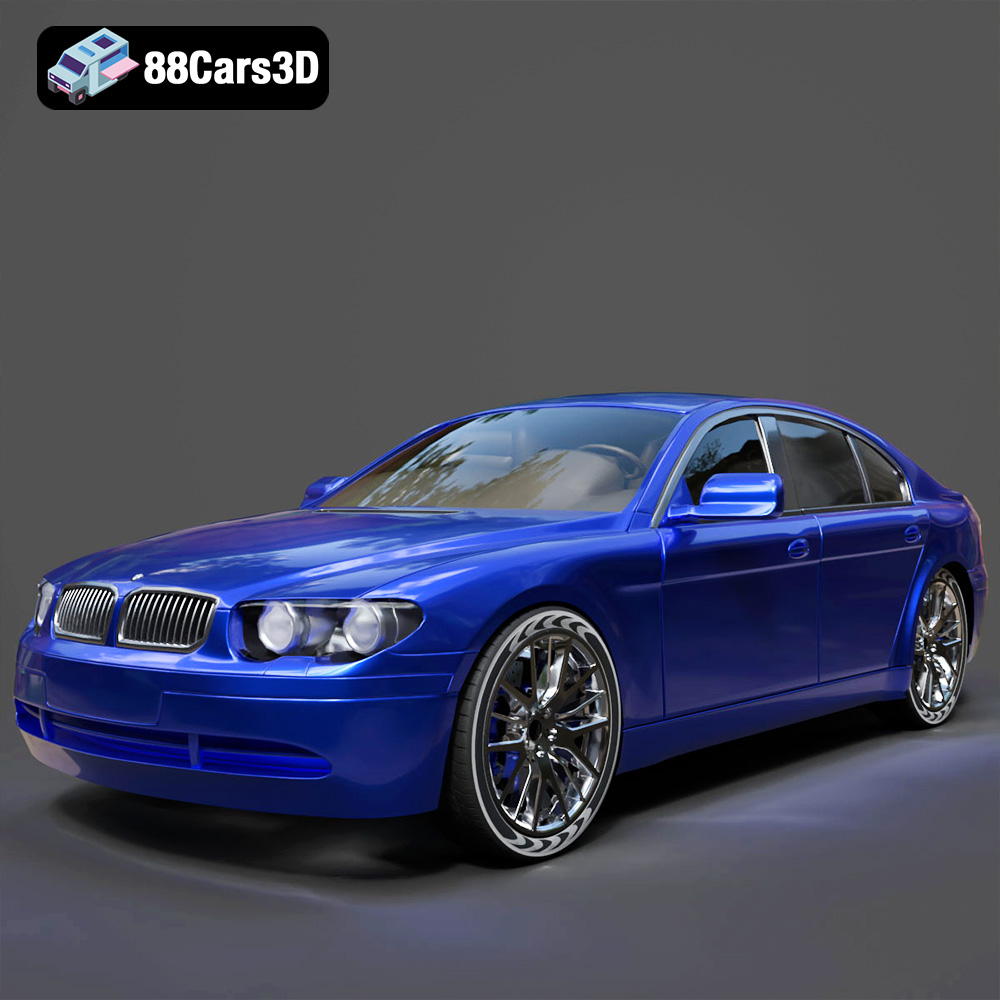
Texture: Yes
Material: Yes
Download the BMW 7 Series 30th Anniversary 3D Model featuring a meticulously crafted exterior, detailed interior, and realistic wheels. Includes .blend, .fbx, .obj, .glb, .stl, .ply, .unreal, and .max formats for rendering, simulation, and game development.
Price: $35.79

Texture: Yes
Material: Yes
Download the BMW 7-Series F02 3D Model featuring a detailed exterior and interior, optimized for rendering and animation. Includes .blend, .fbx, .obj, .glb, .stl, .ply, .unreal, and .max formats for rendering, simulation, and game development.
Price: $10.79

Texture: Yes
Material: Yes
Download the BMW 760Li E66 2005 3D Model featuring a detailed exterior, refined interior, and robust chassis. Includes .blend, .fbx, .obj, .glb, .stl, .ply, .unreal, and .max formats for rendering, simulation, and game development.
Price: $10.79

