⚡ FLASH SALE: Get 60% OFF All Premium 3D & STL Models! ⚡

“`html
Welcome to the exciting world of 3D printable car models! Whether you’re a seasoned maker, a budding hobbyist, or an automotive enthusiast looking to bring your favorite vehicles to life, the journey begins with a high-quality STL file. At 88cars3d.com, we specialize in providing meticulously crafted printable car models, ensuring a smooth and rewarding printing experience. But once you’ve selected your dream car model, the next crucial decision is: which 3D printing technology will best bring it to life? This article dives deep into the nuances of Resin printing versus FDM (Fused Deposition Modeling) printing, equipping you with the knowledge to choose the right technology for your STL files and achieve stunning results.
We’ll explore the fundamental differences between these two popular 3D printing methods, analyze their strengths and weaknesses specifically in the context of detailed automotive models, and provide actionable insights into slicing parameters, support structures, material selection, and post-processing. By the end of this guide, you’ll have a clear understanding of when to opt for the incredible detail of resin printing and when the versatility and cost-effectiveness of FDM printing make more sense for your next project.
At its heart, 3D printing is about building objects layer by layer from a digital model. However, the way these layers are created is fundamentally different between FDM and resin printing, leading to distinct characteristics in the final print. FDM is the most common and accessible form of 3D printing, often found in desktop printers. Resin printing, also known as Stereolithography (SLA) or Digital Light Processing (DLP), utilizes photopolymer resins that cure when exposed to specific wavelengths of light.
FDM printers work by melting thermoplastic filament, typically PLA, PETG, or ABS, and extruding it through a heated nozzle onto a build platform. The nozzle moves in X and Y directions to draw each layer, and the build platform moves down (or the extruder moves up) in the Z direction for the next layer. This additive process builds the object from the bottom up. The quality of an FDM print is highly dependent on factors like layer height, nozzle size, print speed, and the material used. While capable of producing robust and functional parts, FDM often exhibits visible layer lines and can struggle with extremely fine details.
Resin printers, conversely, use a vat of liquid photopolymer resin. A build platform is submerged in the resin, and a light source (laser for SLA, projector for DLP) selectively cures the resin layer by layer. In most common resin printers, the build platform moves upwards, pulling the freshly cured layer out of the resin. This process allows for incredibly precise curing, resulting in exceptionally smooth surfaces and the ability to capture minute details that are often lost on FDM prints. However, resin prints typically require more extensive post-processing, including washing and curing, and the materials can be more brittle and less resistant to UV light over time.
Fused Deposition Modeling (FDM) technology forms the backbone of many home and professional 3D printing setups. The process involves feeding a thermoplastic filament, usually on a spool, through a heated extruder. This extruder, equipped with a fine nozzle (typically 0.4mm, but ranging from 0.1mm to 1.0mm), melts the filament and deposits it onto the build plate. The print head moves along the X and Y axes, tracing the cross-section of each layer, while the build plate or extruder assembly moves along the Z axis to initiate the next layer. This methodical process allows for the creation of complex geometries, often with internal structures achieved through infill.
The key variables in FDM printing that dictate print quality include:
FDM printing is also highly dependent on material properties. PLA is popular for its ease of printing and low warp, while PETG offers better strength and temperature resistance. ABS requires higher temperatures and often an enclosed printer to prevent warping, but it provides excellent durability.
Resin printing encompasses technologies like SLA (Stereolithography) and DLP (Digital Light Processing), both of which rely on the principle of photopolymerization. A vat contains a liquid photopolymer resin. The build platform is lowered into the resin, and a light source cures specific areas of the resin according to the cross-section of the model. In SLA, a UV laser precisely traces each layer. In DLP, a digital projector flashes an image of the entire layer at once, often leading to faster print times per layer compared to SLA.
The advantages of resin printing for detailed models are significant:
However, resin printing also comes with its own set of considerations. The process is messier, requiring careful handling of liquid resins and post-processing steps like washing the print in isopropyl alcohol (IPA) or a specialized resin cleaner, followed by UV curing to fully harden the material. Support structures are also critical and often more numerous and delicate than in FDM, needing careful removal to avoid damaging fine features.
When the primary goal is achieving the highest possible level of detail and a smooth, professional finish, resin printing often takes the lead, especially for complex models like those found on 88cars3d.com. The inherent resolution capabilities of SLA and DLP printers allow for the reproduction of minute features that are simply not feasible with standard FDM printing. Think about the intricate grille patterns on a classic sports car, the delicate spokes of a vintage wheel, or the sharp creases along a modern supercar’s bodywork. Resin printing excels at capturing these nuances, resulting in a model that looks and feels more refined right off the printer.
The smooth surface finish is another significant advantage. FDM prints, even at low layer heights (e.g., 0.1mm), will always exhibit some degree of visible layer lines. While these can be significantly reduced through post-processing techniques like sanding and priming, they are an inherent characteristic of the extrusion process. Resin prints, on the other hand, emerge with a surface that is often smooth enough to be painted directly. This dramatically reduces the post-processing effort required to achieve a museum-quality finish, making it an attractive option for collectors and model makers who prioritize aesthetics.
Consider the subtle curves and aerodynamic lines of a race car. Resin printing can render these with a fidelity that truly reflects the original design. For models intended for display or close-up inspection, the visual difference between a well-executed resin print and even a carefully post-processed FDM print can be substantial. This makes resin a go-to choice for high-fidelity replicas where every detail matters.
The ability to print with layer heights as low as 0.01mm to 0.05mm (10-50 microns) on resin printers is what sets them apart for intricate models. This level of detail allows for the faithful reproduction of features like:
When preparing STL files for resin printing, designers at 88cars3d.com ensure that these fine details are robust enough to print successfully. Incompatible geometry, such as excessively thin walls or sharp edges without sufficient material support, can lead to print failures. The slicing software plays a crucial role here, allowing for fine-tuning of exposure times and anti-aliasing to smooth out pixelation from the projector (DLP) or laser inaccuracies.
The absence of visible layer lines is one of the most celebrated aspects of resin printing. Unlike FDM, where each layer deposited by the nozzle is inherently visible, resin printing cures a liquid resin with light. This photochemical process, especially when combined with high-resolution displays or laser precision, results in a virtually seamless surface. This means that models printed on resin printers often require minimal sanding and filling compared to their FDM counterparts.
For automotive models, this translates to:
While FDM can achieve smooth surfaces with techniques like vapor smoothing (for ABS) or extensive sanding, resin printing offers this level of finish inherently, making it the preferred choice for hobbyists who want to minimize post-processing time and maximize aesthetic appeal.
While resin printing shines in detail and surface finish, FDM printing holds its own, particularly when it comes to strength, durability, and sheer practicality. FDM printers and materials are generally more affordable and accessible, making them a popular choice for makers on a budget or those needing to print larger or more functional parts. The range of FDM materials available, from tough and temperature-resistant PETG to impact-resistant ABS and even flexible TPUs, offers a versatility that many standard resins cannot match.
For hobbyists who plan to handle their models frequently, perhaps for interactive displays, or if the car model is intended to incorporate moving parts or be used in a diorama where it might experience some stress, the inherent toughness of FDM prints can be a significant advantage. Furthermore, FDM printers are often capable of printing much larger objects than typical resin printers without an exorbitant increase in cost or print time, making them suitable for printing scaled-up car models or even components for larger automotive projects.
The cost-effectiveness of FDM printing also extends to the materials. Filament spools are generally cheaper per kilogram than bottles of resin, and the cost per print for larger or more robust models can be considerably lower with FDM. This makes FDM an excellent choice for experimentation, prototyping, or producing multiple copies of a model without breaking the bank. The relative simplicity of FDM printing and the widespread availability of spare parts also mean that maintenance and troubleshooting are often more straightforward.
FDM printing’s strength lies in its wide array of robust thermoplastic filaments. When printing car models, especially those intended for handling or functional integration, materials like PETG and ABS offer superior mechanical properties compared to standard 3D printing resins.
These materials, when printed with appropriate settings (e.g., higher temperatures, slower speeds, and specific infill patterns), can produce car models that are much more resilient to accidental damage than typical resin prints, which can be brittle and prone to breaking if dropped.
One of the most compelling reasons to choose FDM for car models is the practical consideration of print volume and cost. FDM printers, particularly larger format ones, can accommodate significantly bigger prints than most desktop resin printers. This means you can print a larger scale replica of a car, or even multiple components of a complex model, in a single build or fewer pieces.
The cost per print is also a major factor:
Platforms like 88cars3d.com offer a wide range of car models in STL format, suitable for various print sizes. For those looking to print larger, more robust displays, FDM printing often presents a more accessible and economical path.
Regardless of whether you choose FDM or resin printing, effective slicing and support generation are paramount to achieving successful prints. The slicer software is your bridge between the STL file and the physical printer, translating the digital geometry into machine instructions. The settings you choose within the slicer can dramatically impact print quality, print time, and the ease of post-processing.
For FDM, common slicers like Cura and PrusaSlicer offer a plethora of settings. Key considerations include layer height, infill density and pattern, wall thickness, print speed, and retraction. Support structures are generated to prevent overhangs from collapsing during printing. Choosing the right support type (e.g., normal, tree) and density is crucial for easy removal without damaging the model. For resin printing, slicers like ChiTuBox or Lychee Slicer focus on exposure times, lift speeds, and supporting delicate structures. The goal is to ensure each layer is adequately cured without over-exposing, which can lead to loss of detail or adhesion issues.
The orientation of your model on the build plate is another critical slicing decision. For FDM, orienting the model to minimize overhangs and support requirements can save time and improve surface quality. For resin, orienting to minimize the surface area of individual layers facing the build plate can prevent suction forces that can detach the print, and strategic angling can hide layer lines on less visible surfaces.
When slicing an FDM printable car model from a source like 88cars3d.com, several parameters require careful consideration:
Experimentation is key. Start with recommended profiles for your material and printer, then adjust based on test prints. For example, a problematic overhang might require a slower speed, adjusted support Z-distance, or a change in support pattern.
Resin slicing is a delicate balancing act, primarily revolving around exposure times and the physics of resin adhesion and release.
For STL files from 88cars3d.com designed with resin printing in mind, the geometry is usually optimized for detail and printability. However, even with optimized files, proper slicing and support strategies are non-negotiable for success.
Before you even hit the ‘print’ button, ensuring your STL file is in optimal condition is crucial, regardless of your chosen printing technology. Likewise, the journey doesn’t end when the print is complete; post-processing is essential to reveal the full potential of your 3D model. For both FDM and resin printing, addressing potential issues within the STL file and performing thorough post-processing can make the difference between a passable print and a stunning replica.
File preparation often involves checking for and repairing manifold errors (non-manifold geometry), holes, inverted faces, and other mesh imperfections. Software like Meshmixer, Blender, or Netfabb are invaluable tools for this. For FDM, you might also consider hollowing models to save material and print time, adding drain holes if printing large, enclosed volumes, and orienting the model for optimal printing. For resin, ensuring adequate wall thickness and drainage if hollowed is paramount to prevent trapped uncured resin.
Post-processing for FDM typically involves removing support structures, sanding to smooth layer lines, filling gaps, priming, and painting. The level of effort depends on the desired finish. Resin post-processing is different: washing in IPA or resin cleaner, removing supports, and then curing under UV light. The result is often a smoother surface that requires less aggressive sanding before painting, but the handling of uncured resin and solvents requires appropriate safety precautions.
The integrity of your STL file is the foundation of your print. Mesh repair ensures that the file represents a solid, watertight object that 3D printers can understand. Common issues include:
Tools like Meshmixer (free) or Netfabb (paid) excel at automatically detecting and repairing many of these issues. For FDM, you might also use these tools to hollow models, intelligently add internal structures, or split large models into smaller, printable sections. For resin printing, ensuring there are appropriate drain holes if the model is hollowed is vital to allow uncured resin to escape during printing and washing.
The finishing touches are what transform a raw 3D print into a professional-looking model. The approach differs significantly between FDM and resin:
FDM Post-Processing:
Resin Post-Processing:
For both methods, patience and attention to detail are key. The quality of the final model is as much a result of your post-processing skill as it is of the initial print quality.
So, which technology is ultimately “better” for your printable car models from 88cars3d.com? The answer, as is often the case in 3D printing, is: it depends on your priorities and the specific model. If your absolute top priority is achieving the highest possible level of intricate detail, a flawless surface finish straight off the printer, and you don’t mind the messier process and additional post-processing steps, then resin printing is likely your best bet.
For highly detailed scale models intended for display, showcasing complex aerodynamics, or featuring tiny elements like emblems and grilles, resin printing’s resolution capabilities are unmatched. It minimizes the post-processing effort required to achieve a professional, display-ready finish, making it ideal for collectors and enthusiasts who value aesthetics and fine detail above all else.
However, if your priorities lean towards strength, durability, larger print volumes, cost-effectiveness, or you prefer a cleaner, more straightforward printing process with fewer post-processing chemical steps, then FDM printing is an excellent choice. For larger car models, parts that need to withstand handling, or if you’re on a tighter budget, FDM offers a practical and versatile solution. The advancements in FDM technology and materials mean that even detailed car models can be printed with impressive results, especially with careful slicing and post-processing.
Consider the scale and complexity of the specific model you’ve downloaded. A highly intricate, small-scale model might benefit immensely from resin, while a larger, simpler design could be perfectly suited for FDM. Ultimately, understanding the strengths and weaknesses of each technology empowers you to make the informed decision that best aligns with your project goals and available resources. Both methods can bring your favorite car STL files to life in amazing ways.
In conclusion, the choice between resin and FDM printing for your printable car models from 88cars3d.com hinges on a careful evaluation of your project’s needs. If unparalleled detail and a glass-smooth finish are paramount, and you’re prepared for the associated post-processing, resin printing is the superior choice. Its ability to capture minute features and render curves without visible layer lines makes it ideal for high-fidelity display models. Conversely, if durability, larger build volumes, cost-efficiency, and a simpler workflow are your primary concerns, FDM printing offers a robust and accessible solution. Many FDM materials can yield strong, resilient models suitable for handling or integration into larger projects.
Both technologies have their place in the world of additive manufacturing, and understanding their unique characteristics allows you to leverage them effectively. Whether you choose the precision of resin or the practicality of FDM, remember that meticulous file preparation, optimized slicing settings, and careful post-processing are crucial for achieving outstanding results. Explore the diverse range of STL files available on platforms like 88cars3d.com, experiment with both printing technologies, and discover which method best brings your automotive passion to life.
“`

Texture: Yes
Material: Yes
Download the BMW 3 F30 3D Model featuring a detailed exterior, realistic interior, and optimized mesh. Includes .blend, .fbx, .obj, .glb, .stl, .ply, .unreal, and .max formats for rendering, simulation, and game development.
Price: $10.79

Texture: Yes
Material: Yes
Download the BMW Z4 Roadster E89 3D Model featuring clean geometry, realistic detailing, and a fully modeled interior. Includes .blend, .fbx, .obj, .glb, .stl, .ply, .unreal, and .max formats for rendering, simulation, and game development.
Price: $13.99

Texture: Yes
Material: Yes
Download the BMW Z4 E85 3D Model featuring clean geometry, realistic detailing, and a fully modeled interior. Includes .blend, .fbx, .obj, .glb, .stl, .ply, .unreal, and .max formats for rendering, simulation, and game development.
Price: $13.99

Texture: Yes
Material: Yes
Download the BMW M3 2024 3D Model featuring clean geometry, realistic detailing, and a fully modeled interior. Includes .blend, .fbx, .obj, .glb, .stl, .ply, .unreal, and .max formats for rendering, simulation, and game development.
Price: $13.99
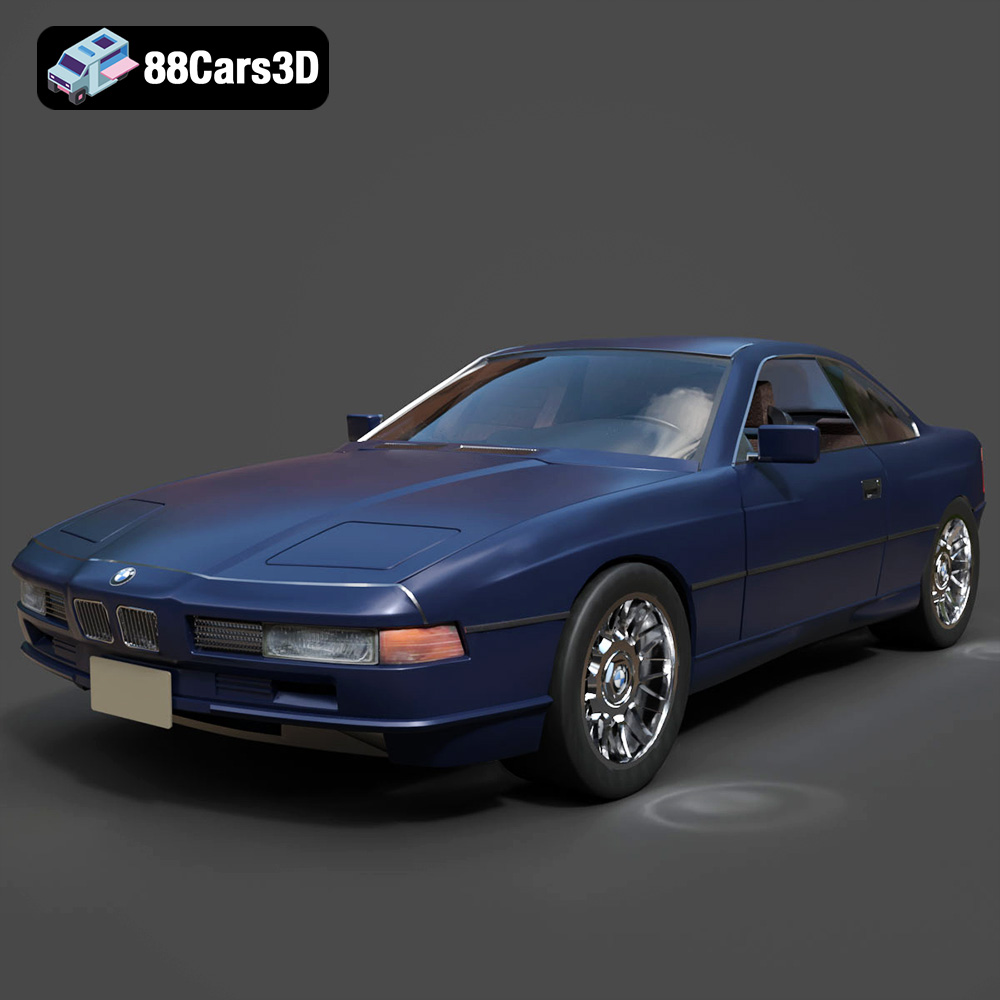
Texture: Yes
Material: Yes
Download the BMW 850i Coupe 1990 3D Model featuring clean geometry, realistic detailing, and a fully modeled interior. Includes .blend, .fbx, .obj, .glb, .stl, .ply, .unreal, and .max formats for rendering, simulation, and game development.
Price: $13.99
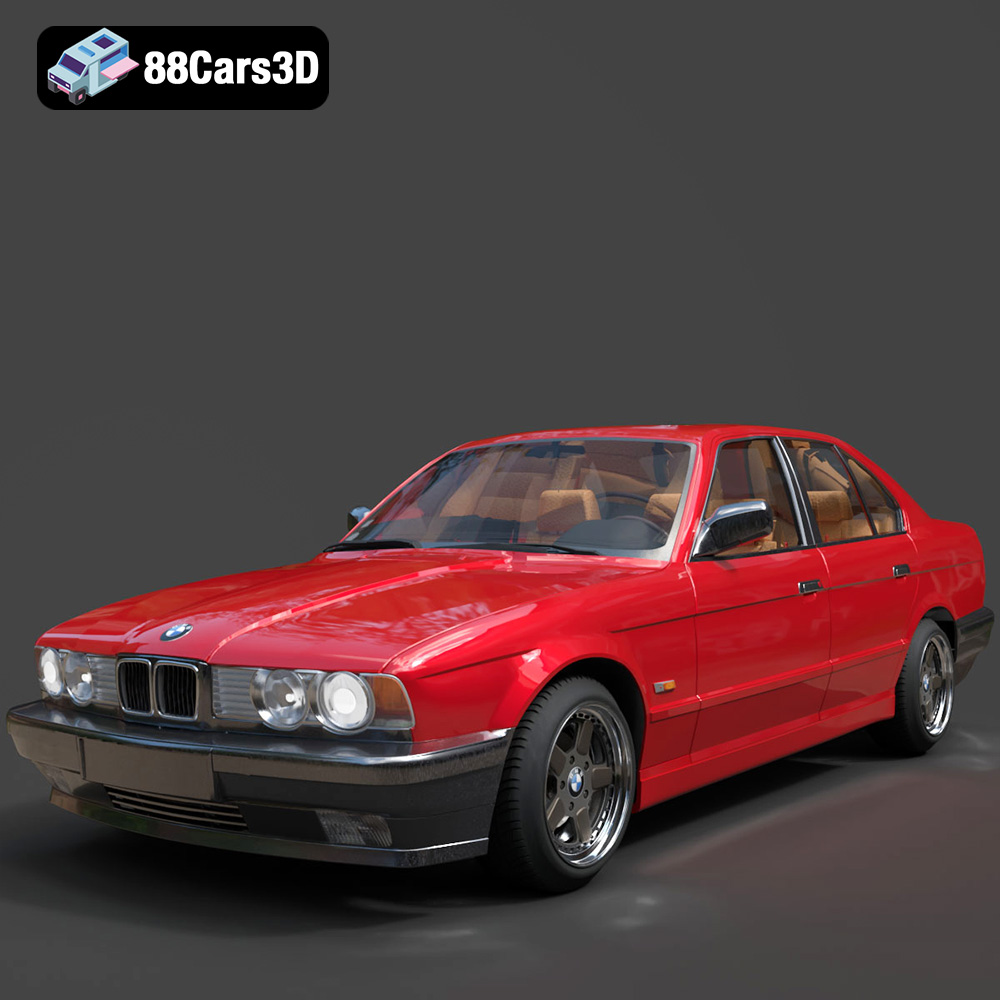
Texture: Yes
Material: Yes
Download the BMW 525i E34 1993 3D Model featuring clean geometry, realistic detailing, and a fully modeled interior. Includes .blend, .fbx, .obj, .glb, .stl, .ply, .unreal, and .max formats for rendering, simulation, and game development.
Price: $12.99

Texture: Yes
Material: Yes
Download the BMW 7 Series 2016 3D Model featuring luxurious design, detailed interior, and accurate exterior. Includes .blend, .fbx, .obj, .glb, .stl, .ply, .unreal, and .max formats for rendering, simulation, and game development.
Price: $10.79
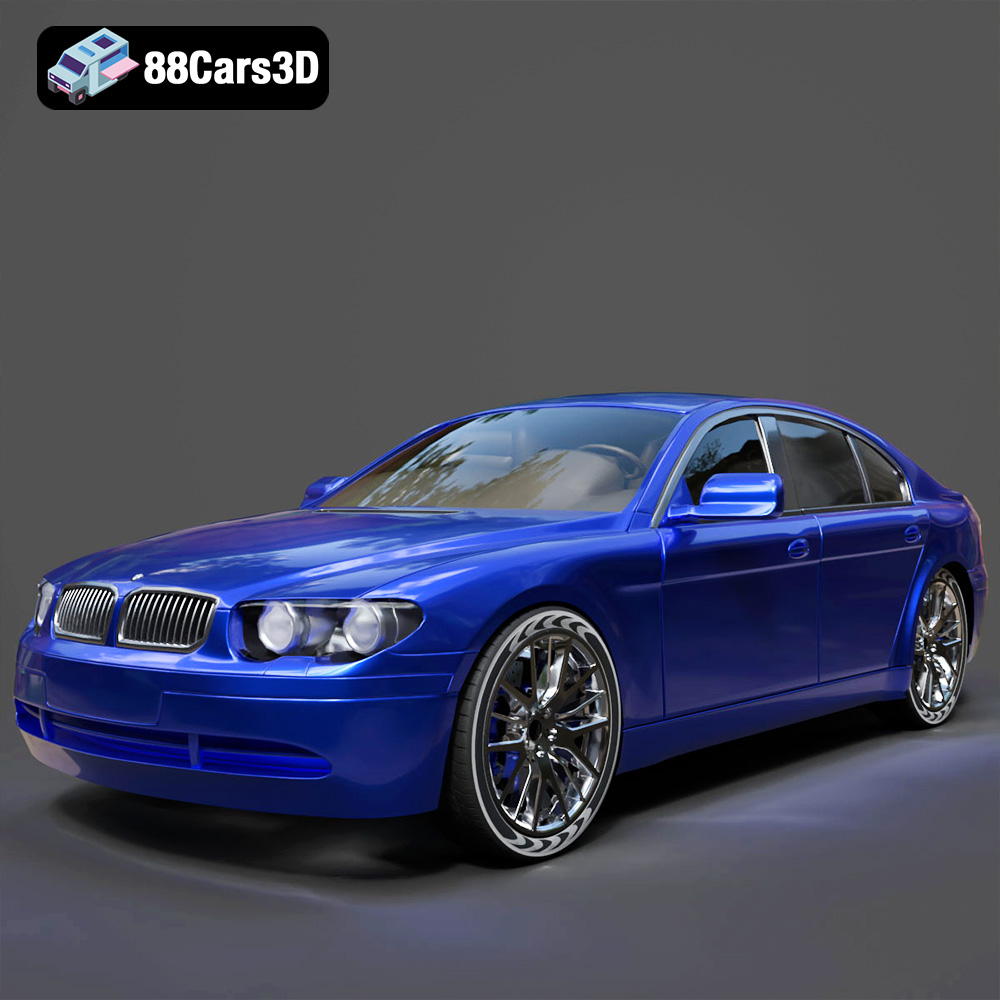
Texture: Yes
Material: Yes
Download the BMW 7 Series 30th Anniversary 3D Model featuring a meticulously crafted exterior, detailed interior, and realistic wheels. Includes .blend, .fbx, .obj, .glb, .stl, .ply, .unreal, and .max formats for rendering, simulation, and game development.
Price: $35.79

Texture: Yes
Material: Yes
Download the BMW 7-Series F02 3D Model featuring a detailed exterior and interior, optimized for rendering and animation. Includes .blend, .fbx, .obj, .glb, .stl, .ply, .unreal, and .max formats for rendering, simulation, and game development.
Price: $10.79
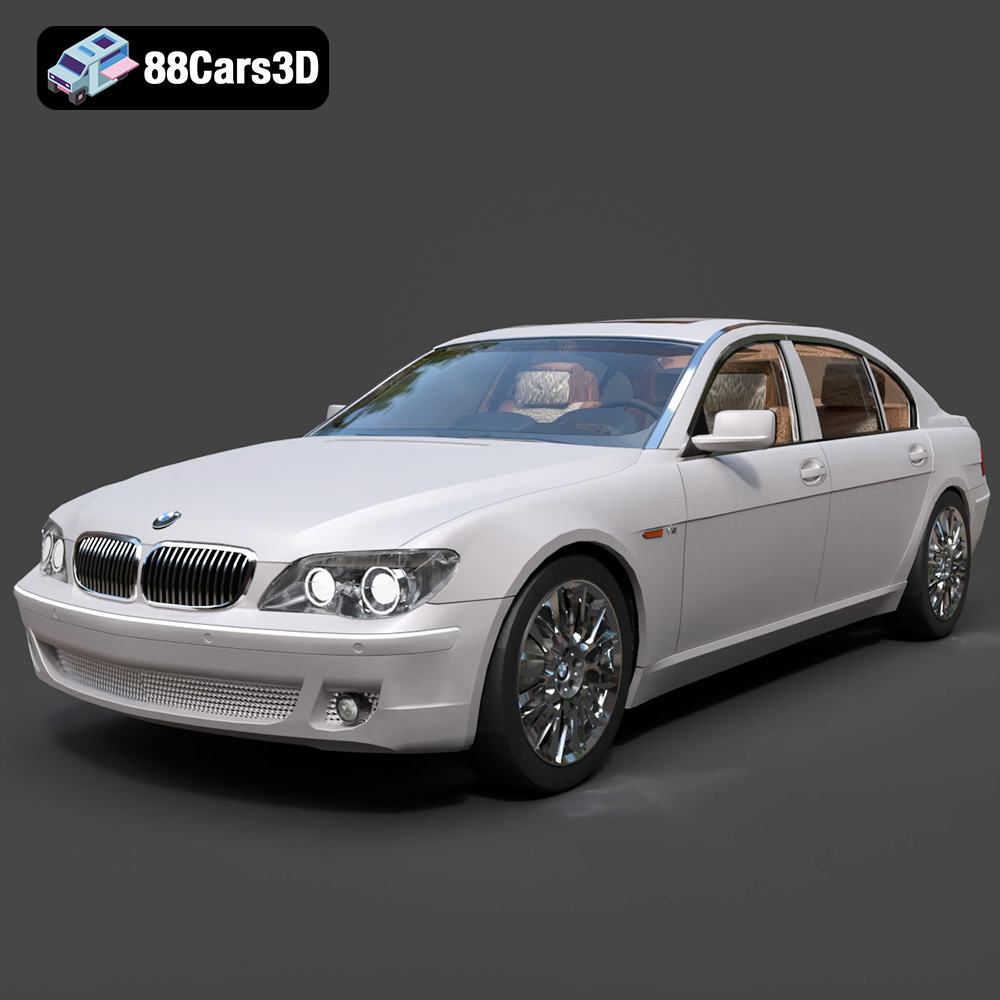
Texture: Yes
Material: Yes
Download the BMW 760Li E66 2005 3D Model featuring a detailed exterior, refined interior, and robust chassis. Includes .blend, .fbx, .obj, .glb, .stl, .ply, .unreal, and .max formats for rendering, simulation, and game development.
Price: $10.79

