⚡ FLASH SALE: Get 60% OFF All Premium 3D & STL Models! ⚡

In the rapidly evolving landscape of automotive design, marketing, and engineering, the ability to visualize vehicles with unparalleled realism and interactivity is no longer a luxury—it’s a necessity. Unreal Engine (UE) stands at the forefront of this revolution, offering a robust, feature-rich platform that empowers artists and developers to create breathtaking automotive experiences in real time. From photorealistic configurators to cinematic showcases and interactive virtual showrooms, Unreal Engine provides the tools to transform static 3D models into dynamic, living automotive narratives.
This comprehensive guide delves deep into the essential workflows for leveraging Unreal Engine in automotive visualization. We’ll explore everything from setting up your project and meticulously importing high-quality 3D car models—like those meticulously crafted and optimized for Unreal Engine on platforms such as 88cars3d.com—to mastering advanced material creation, dynamic lighting, and interactive Blueprint scripting. Whether you’re a seasoned 3D artist, a game developer venturing into visualization, or an automotive designer pushing the boundaries of realism, you’ll gain actionable insights and professional tips to elevate your projects. Prepare to unlock the full potential of real-time rendering and redefine what’s possible in automotive visualization.
Beginning any ambitious project requires a solid foundation, and automotive visualization in Unreal Engine is no exception. Proper project setup ensures optimal performance, access to necessary tools, and a streamlined workflow from the outset. This initial phase involves selecting the right project template, configuring essential settings, and enabling plugins that will be crucial for handling complex automotive data and achieving high-fidelity visuals. A well-configured project acts as the bedrock for efficient development, allowing you to focus on artistic and technical execution rather than troubleshooting foundational issues.
When launching a new project for automotive visualization, the choice of template can significantly impact your starting point. While a “Blank” project offers maximum control, the “Automotive Product Design” template (available in newer UE versions) provides a pre-configured environment with relevant settings, sample assets, and optimal defaults for performance and quality. If starting from scratch, a “Blank” project with the following settings is recommended:
Post-creation, navigate to **Project Settings > Rendering** to fine-tune essential global settings. Ensure **Lumen** (for dynamic global illumination) and **Nanite** (for high-polygon geometry handling) are enabled under the “Global Illumination” and “Virtual Geometry” sections, respectively. For stunning reflections, verify that “Hardware Ray Tracing” is active and consider adjusting the “Reflection Method” to “Lumen” or “Screen Space Ray Tracing” for dynamic scenarios. These configurations lay the groundwork for a visually rich and performant automotive scene.
Unreal Engine’s modular plugin system allows you to extend its functionality to suit specific needs. For automotive visualization, several plugins are indispensable. Head to **Edit > Plugins** and search for and enable the following:
Beyond plugins, consider optimizing your Editor Preferences (Edit > Editor Preferences) for better productivity. Increase the “Undo History” limit, customize viewport navigation speeds, and explore “Experimental” features if you’re keen on testing cutting-edge tools. For a deeper dive into Unreal Engine’s powerful features and documentation on project setup, always consult the official learning platform at https://dev.epicgames.com/community/unreal-engine/learning.
The quality of your final automotive visualization hinges significantly on the fidelity and optimization of your 3D car models. Raw CAD data or high-poly models, while visually rich, often require careful preparation and optimization to perform efficiently within Unreal Engine’s real-time environment. This section focuses on best practices for importing automotive assets and harnessing Unreal Engine’s features like Nanite and LODs to maintain visual integrity while achieving optimal frame rates. When sourcing assets, platforms like 88cars3d.com are invaluable, as they typically offer models pre-optimized for Unreal Engine, featuring clean topology, proper UVs, and PBR material setups.
Before importing any 3D car model, ensure it’s properly prepared in your DCC (Digital Content Creation) software. Key preparation steps include:
For importing, **Datasmith** is the preferred method for complex automotive scenes or CAD data. It supports various formats, including SolidWorks, Catia, and V-Ray Scenes, converting them into a clean Unreal Engine hierarchy while preserving metadata and PBR material parameters. For standard mesh data, **FBX** remains a robust choice. When exporting FBX, ensure you select “Embed Media” (for textures) and “Animation” if applicable, and avoid excessive smoothing groups which can cause visual artifacts. **USD (Universal Scene Description)** and **USDZ** are emerging as powerful alternatives, offering non-destructive workflows and excellent interoperability across various DCC applications, making them ideal for collaborative automotive design pipelines. Unreal Engine’s growing support for USD means you can import complex scenes with animation, variations, and material overrides, maintaining high fidelity throughout the visualization process.
Handling millions of polygons, common in detailed 3D car models, traditionally posed a significant performance challenge in real-time rendering. **Nanite virtualized geometry** is a game-changer, allowing you to import film-quality assets with incredibly high polygon counts (even tens of millions) without explicit LODs or baking normal maps. Nanite intelligently streams and renders only the necessary detail, dramatically improving performance and visual fidelity.
To enable Nanite on an imported static mesh:
While Nanite handles the most complex geometry, traditional **LOD (Level of Detail) management** is still crucial for non-Nanite meshes, animated objects, or when targeting platforms without Nanite support (e.g., mobile). Unreal Engine provides powerful tools for automatic LOD generation:
A common strategy is to use Nanite for the main car body and interior, while using traditional LODs for animated parts (wheels, doors) and smaller props that might not benefit from Nanite’s overhead or require specific vertex data.
Even models from reputable sources like 88cars3d.com, which are designed for optimal performance, can benefit from project-specific optimization. When working with game assets, clean geometry is paramount. Verify that meshes don’t have excessive, hidden, or non-manifold geometry. Tools within Unreal Engine’s Modeling Mode (or external DCC software) can help simplify meshes where Nanite isn’t used.
**UV mapping** is another critical aspect. High-quality car models typically come with clean UVs for texturing (UV Channel 0). However, a second UV channel (UV Channel 1) is often required for lightmaps, especially if you’re using baked lighting or custom lightmap resolutions. Ensure this second UV channel has non-overlapping islands to prevent lighting artifacts.
These optimization steps ensure that your high-fidelity car models render efficiently and look stunning under various lighting conditions, making them ideal for any real-time rendering scenario.
The true magic of automotive visualization in Unreal Engine lies in its ability to render materials and lighting with breathtaking realism. Achieving this involves a deep understanding of Physically Based Rendering (PBR) workflows, mastering Unreal Engine’s Material Editor, and harnessing advanced lighting solutions like Lumen. This section explores how to imbue your 3D car models with lifelike surfaces and illuminate them in a way that rivals real-world photography, critical for impactful automotive visualization.
PBR materials are fundamental to achieving realism, accurately simulating how light interacts with surfaces based on physical properties. In Unreal Engine, this translates to carefully crafted Material assets that use channels like Base Color, Metallic, Roughness, Normal, Emissive, and Ambient Occlusion.
For a car paint material, which is inherently complex, consider these advanced techniques in the **Material Editor**:
Always leverage **Material Instances** for variations. Instead of creating a new Material for every color or finish, create a Parent Material with exposed parameters (e.g., Base Color, Roughness values, flake intensity), then create instances to quickly generate an entire palette of car finishes without recompiling shaders.
Lumen is Unreal Engine’s revolutionary dynamic global illumination and reflection system, capable of delivering highly realistic indirect lighting without requiring lightmap baking. For automotive visualization, Lumen is a game-changer, providing immediate, physically accurate light bounces as you move lights or adjust the environment.
To maximize Lumen’s impact:
Lumen, especially when paired with Hardware Ray Tracing, produces stunning, dynamic lighting that makes vehicles truly feel grounded and integrated into their environments.
Effective lighting is paramount for showcasing the sculpted forms and intricate details of a car. Combining High Dynamic Range Image (HDRI) backdrops with traditional directional lights creates a powerful and flexible lighting setup.
By skillfully combining these lighting elements, you can create a diverse range of moods, from a sunny showroom floor to a dramatic twilight setting, all while ensuring your 3D car models are presented in their best light.
Beyond static renders, Unreal Engine excels at creating dynamic, interactive experiences and stunning cinematic presentations. This section explores how to harness **Blueprint visual scripting** to build engaging car configurators, integrate realistic physics for vehicle dynamics, and craft compelling narratives through the powerful **Sequencer** tool, transforming your automotive visualization into immersive showcases.
Blueprint visual scripting is one of Unreal Engine’s most accessible yet powerful features, allowing developers to create complex interactivity without writing a single line of code. For **automotive configurators**, Blueprints are indispensable.
Common interactive elements in a car configurator include:
The workflow typically involves:
For example, a “Change Paint Color” button might execute a Blueprint event that takes a new Material Instance as input, sets it on the car body mesh, and then updates a UI element to reflect the chosen color. This modular approach makes it easy to expand and manage complex configurator logic, making your Unreal Engine project highly engaging.
Bringing a car to life isn’t just about how it looks; it’s also about how it moves and feels. Unreal Engine’s **Chaos Physics** engine provides a robust framework for simulating realistic vehicle dynamics, crucial for interactive test drives or realistic crash simulations.
Implementing Chaos Vehicles involves:
While the initial setup can be intricate, Chaos Physics offers a high degree of control, allowing for everything from arcade-style handling to highly realistic simulations. This is invaluable for showcasing vehicle performance, conducting virtual test drives, or even developing engaging car-centric game development experiences. For detailed guidelines, refer to the official Unreal Engine documentation on Chaos Vehicles.
For presenting your automotive designs with professional polish, **Sequencer** is Unreal Engine’s powerful non-linear cinematic editor. It allows you to orchestrate cameras, actors, animations, and effects over a timeline, crafting stunning cinematic sequences that highlight your 3D car models.
Key Sequencer features for automotive visualization:
Beyond traditional cinematics, Unreal Engine is a pioneer in **Virtual Production**. For automotive applications, this means integrating real-time rendering with physical LED walls. Imagine placing a real car on a stage, surrounded by LED screens displaying a dynamically rendered Unreal Engine environment. This allows for live, in-camera VFX, offering incredible flexibility for photo shoots, commercials, and virtual events, eliminating the need for green screens and complex post-production compositing, thus accelerating content creation for high-end automotive visualization.
Creating visually stunning automotive visualization projects in Unreal Engine is only half the battle; ensuring they run smoothly across various target platforms and are effectively deployed is equally critical. This section delves into advanced optimization techniques to maintain high frame rates, discusses specific considerations for **AR/VR optimization**, and outlines the process for packaging and distributing your finished experiences, ready for a global audience.
Achieving optimal performance in real-time rendering, especially with highly detailed 3D car models, requires a multi-faceted approach. Even with features like Nanite and Lumen, meticulous optimization is key to delivering a smooth user experience.
Regularly profiling your project and iterating on optimizations will ensure your **automotive visualization** runs flawlessly, even with the most demanding content.
Extending your automotive visualization projects to Augmented Reality (AR) and Virtual Reality (VR) platforms opens up new dimensions of immersion but introduces unique performance challenges. Both AR and VR demand extremely high frame rates (typically 72 to 90 FPS per eye) to prevent motion sickness and ensure a comfortable experience.
Specific optimization strategies for AR/VR include:
Testing rigorously on target AR/VR hardware is non-negotiable. Performance often differs significantly from desktop testing.
Once your **Unreal Engine** automotive project is polished and optimized, the final step is to package it for distribution. Unreal Engine supports a wide array of platforms, allowing you to deploy your visualization to desktops, consoles, mobile devices, and AR/VR headsets.
The packaging process is initiated via **File > Package Project > [Your Platform]**. Key considerations:
By following these steps, you can confidently deploy your high-quality **automotive visualization** projects, making them accessible to clients, collaborators, and audiences across diverse hardware ecosystems.
Unreal Engine has firmly established itself as the indispensable tool for cutting-edge automotive visualization, blurring the lines between digital content and physical reality. Throughout this comprehensive guide, we’ve navigated the essential workflows, from the foundational steps of project setup and the meticulous process of importing and optimizing high-fidelity 3D car models to mastering the art of PBR material creation, dynamic lighting with Lumen, and crafting compelling interactivity with Blueprint. We’ve also explored advanced topics like Nanite for unparalleled geometric detail, cinematic storytelling with Sequencer, and critical performance optimization strategies for both desktop and demanding AR/VR platforms.
The power of Unreal Engine, combined with expertly crafted assets like those found on 88cars3d.com, empowers artists and designers to create experiences that are not only visually breathtaking but also deeply engaging and functionally rich. By embracing these workflows, you gain the ability to accelerate design cycles, produce stunning marketing materials, and deliver immersive interactive experiences that truly captivate. The journey into advanced real-time rendering is continuous, but with Unreal Engine as your co-pilot, the possibilities for transforming your automotive visions into vibrant, living realities are limitless. Dive in, experiment, and continue pushing the boundaries of what’s possible in the exciting world of real-time automotive visualization.

Texture: Yes
Material: Yes
Download the BMW 7 Series E38 3D Model featuring its iconic luxury sedan design and classic aesthetics. Includes .blend, .fbx, .obj, .glb, .stl, .ply, .unreal, and .max formats for rendering, simulation, and game development.
Price: $10.79

Texture: Yes
Material: Yes
Download the BMW 6 Series 640i F12 3D Model featuring a sleek design and detailed interior. Includes .blend, .fbx, .obj, .glb, .stl, .ply, .unreal, and .max formats for rendering, simulation, and game development.
Price: $10.79
Texture: Yes
Material: Yes
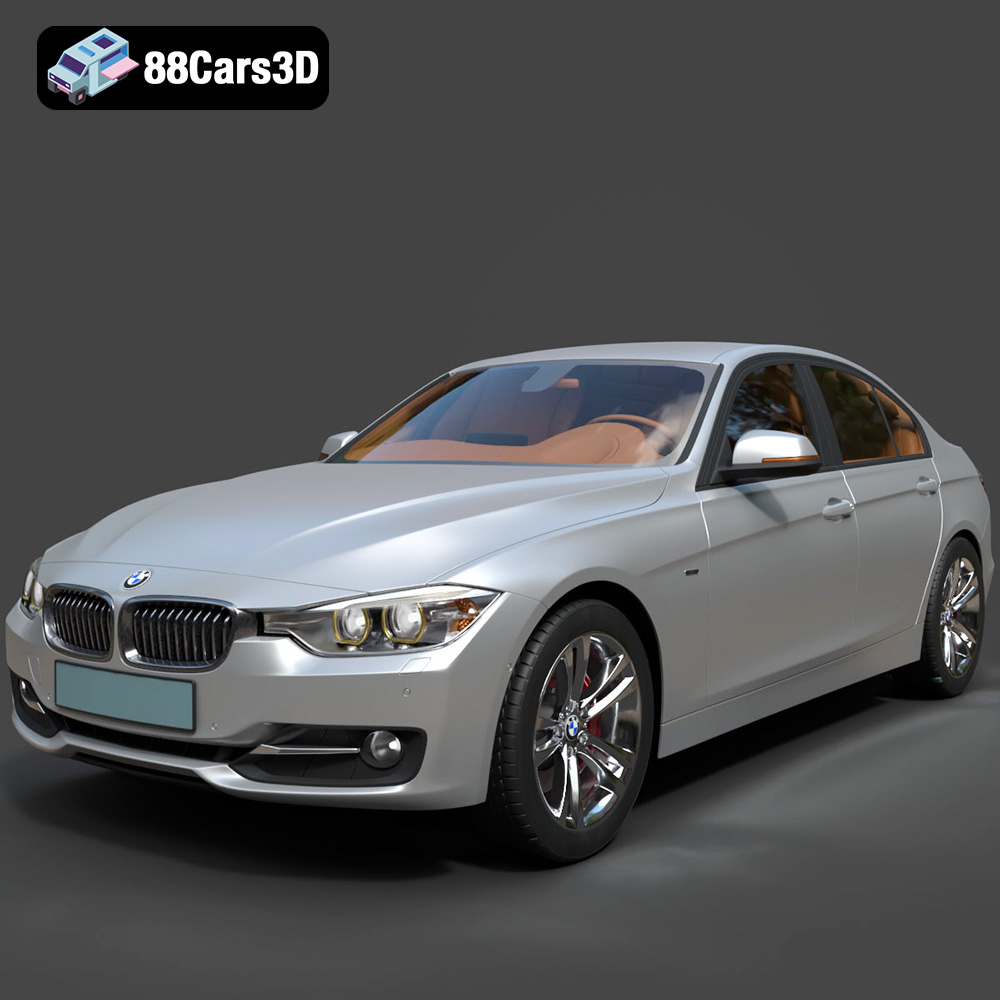
Download the BMW 3 F30 3D Model featuring a detailed exterior, realistic interior, and optimized mesh. Includes .blend, .fbx, .obj, .glb, .stl, .ply, .unreal, and .max formats for rendering, simulation, and game development.
Price: $10.79
Texture: Yes
Material: Yes
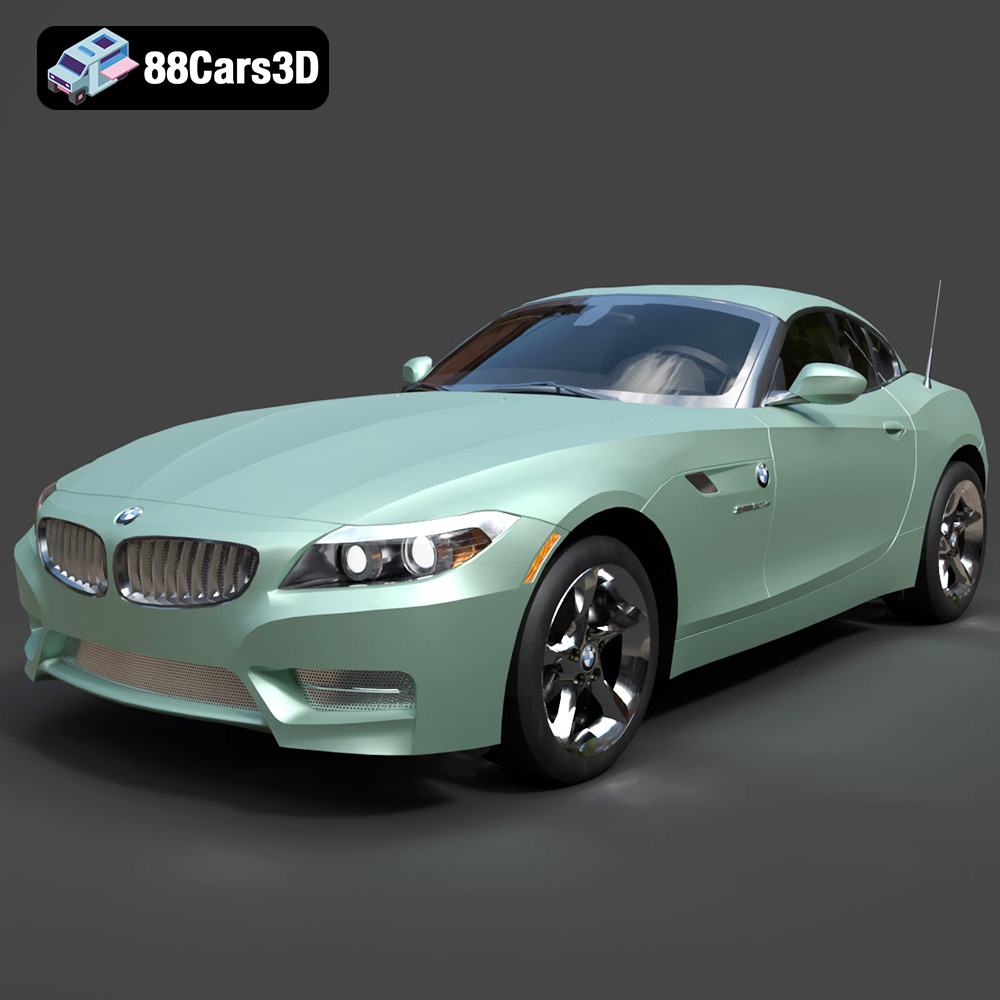
Download the BMW Z4 Roadster E89 3D Model featuring clean geometry, realistic detailing, and a fully modeled interior. Includes .blend, .fbx, .obj, .glb, .stl, .ply, .unreal, and .max formats for rendering, simulation, and game development.
Price: $13.99

Texture: Yes
Material: Yes
Download the BMW Z4 E85 3D Model featuring clean geometry, realistic detailing, and a fully modeled interior. Includes .blend, .fbx, .obj, .glb, .stl, .ply, .unreal, and .max formats for rendering, simulation, and game development.
Price: $13.99

Texture: Yes
Material: Yes
Download the BMW M3 2024 3D Model featuring clean geometry, realistic detailing, and a fully modeled interior. Includes .blend, .fbx, .obj, .glb, .stl, .ply, .unreal, and .max formats for rendering, simulation, and game development.
Price: $13.99
Texture: Yes
Material: Yes
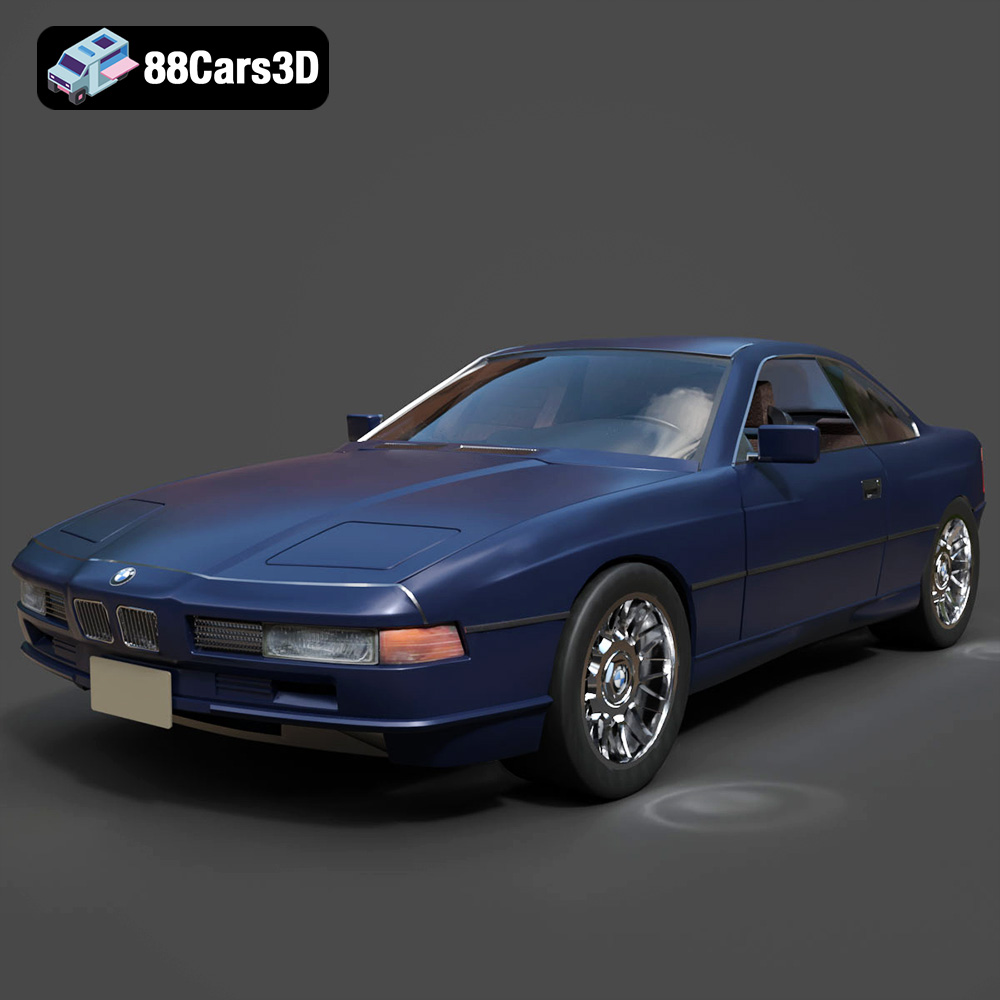
Download the BMW 850i Coupe 1990 3D Model featuring clean geometry, realistic detailing, and a fully modeled interior. Includes .blend, .fbx, .obj, .glb, .stl, .ply, .unreal, and .max formats for rendering, simulation, and game development.
Price: $13.99
Texture: Yes
Material: Yes
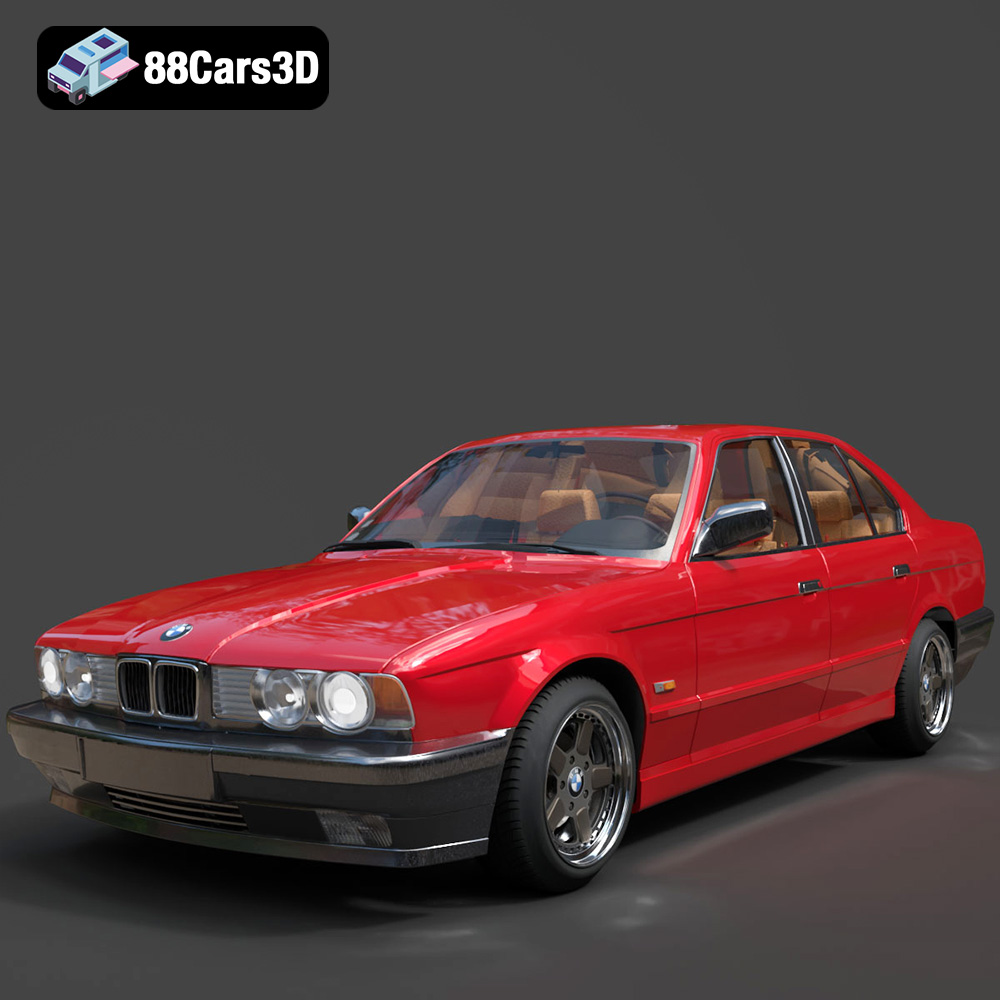
Download the BMW 525i E34 1993 3D Model featuring clean geometry, realistic detailing, and a fully modeled interior. Includes .blend, .fbx, .obj, .glb, .stl, .ply, .unreal, and .max formats for rendering, simulation, and game development.
Price: $12.99

Texture: Yes
Material: Yes
Download the BMW 7 Series 2016 3D Model featuring luxurious design, detailed interior, and accurate exterior. Includes .blend, .fbx, .obj, .glb, .stl, .ply, .unreal, and .max formats for rendering, simulation, and game development.
Price: $10.79
Texture: Yes
Material: Yes
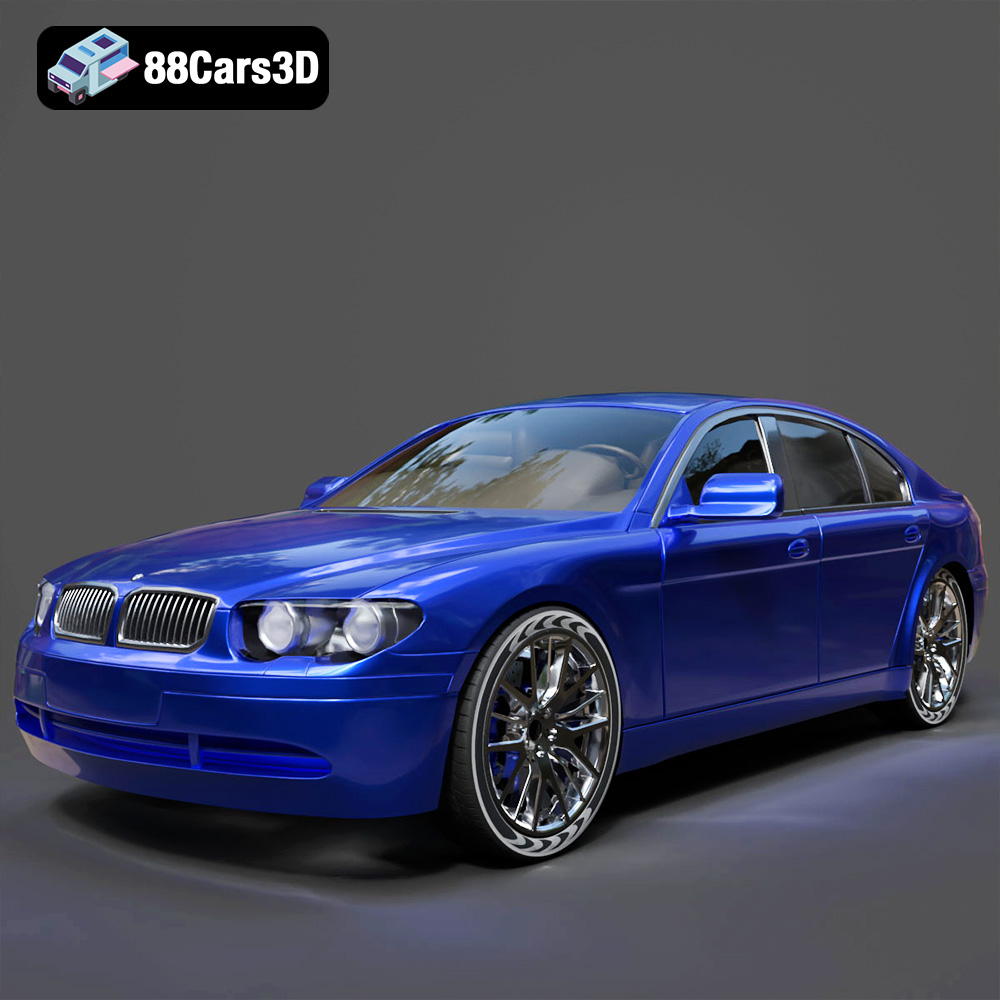
Download the BMW 7 Series 30th Anniversary 3D Model featuring a meticulously crafted exterior, detailed interior, and realistic wheels. Includes .blend, .fbx, .obj, .glb, .stl, .ply, .unreal, and .max formats for rendering, simulation, and game development.
Price: $35.79

