Unlocking Interactive Automotive Experiences: Blueprint Visual Scripting for Non-Programmers in Unreal Engine
The world of real-time rendering and interactive visualization is rapidly expanding, and at its heart lies Unreal Engine, a powerhouse tool empowering artists, designers, and developers alike. For those eager to build compelling automotive experiences—from stunning configurators to immersive AR/VR demonstrations—but without a background in traditional coding, Unreal Engine’s Blueprint Visual Scripting offers an unparalleled solution. It’s a game-changer, allowing you to bring sophisticated logic and interactivity to your 3D car models without writing a single line of C++ code.
Imagine taking a high-quality 3D car model, perhaps sourced from a specialized marketplace like 88cars3d.com, and breathing life into it. With Blueprint, you can make doors open, headlights illuminate, change paint colors on the fly, or even simulate basic vehicle physics—all through an intuitive node-based interface. This guide will demystify Blueprint, walking you through its core concepts, practical applications for automotive visualization, and best practices. We’ll explore how artists and designers can leverage this powerful tool to create professional-grade interactive projects, transforming static assets into dynamic, engaging experiences that captivate your audience. Prepare to unleash the full potential of your Unreal Engine projects and elevate your automotive visualizations to new heights.
Demystifying Unreal Engine Blueprint: The Power of Visual Scripting
For many 3D artists and visualization professionals, the leap into interactive development often feels daunting, primarily due to the perceived barrier of programming. Unreal Engine’s Blueprint Visual Scripting was designed specifically to bridge this gap, offering a powerful, yet accessible, way to implement complex logic without delving into text-based code. At its core, Blueprint is a complete visual scripting system that allows you to create game logic, define object behaviors, and orchestrate complex sequences by connecting nodes in a graph. Each node represents a specific action, event, or data operation, and wires connecting them dictate the flow of execution and data. This visual approach resonates deeply with creatives who think spatially and visually, making it an ideal entry point into interactive development.
The primary advantage of Blueprint over traditional C++ coding lies in its immediacy and ease of iteration. You can visually see your logic unfold, making it simpler to debug, understand, and modify. This fosters a more iterative design process, where artists can experiment with interactions and receive instant feedback, accelerating development cycles. While C++ offers ultimate performance and control, Blueprint is more than capable of handling the vast majority of logic required for architectural visualization, automotive configurators, and even significant portions of full-scale games. It’s particularly well-suited for defining unique behaviors for specific actors, controlling UI elements, and scripting cinematic sequences. For those utilizing high-quality assets from platforms like 88cars3d.com, Blueprint enables you to quickly integrate sophisticated interactivity, adding immense value and engagement to your meticulously crafted 3D car models.
What is Blueprint Visual Scripting? Empowering Artists and Designers
Blueprint Visual Scripting essentially transforms programming into a drag-and-drop, connect-the-dots experience. Instead of typing lines of code, you work with a graphical interface where you place “nodes”—small boxes representing functions, variables, events, or control flow statements—and connect them with “wires” to define relationships and sequence. For instance, to make a car door open when a player clicks on it, you would connect an “On Clicked” event node to a “Play Timeline” node (to animate the door’s rotation) and then to a “Set Relative Rotation” node. This visual representation makes the logic incredibly transparent, allowing artists to intuitively grasp how different parts of their scene interact. It abstracts away the complex syntax of programming languages, allowing you to focus on the desired functionality. This system empowers designers to take direct control over interactivity, reducing reliance on programmers for every small behavioral change and fostering a more collaborative development environment. It’s a tool that truly puts the power of interactive creation into the hands of visual thinkers.
Blueprint Editor Interface: A Quick Tour
Navigating the Blueprint Editor is straightforward, once you understand its main panels. When you open a Blueprint, you’ll typically see several key areas:
- Graph Panel: This is the central canvas where you build your logic by adding and connecting nodes. You’ll spend most of your time here, constructing event graphs, functions, and macros.
- Details Panel: Located on the right, this panel displays properties and settings for the currently selected node, variable, or component. It’s crucial for configuring parameters, setting default values, and adjusting behaviors.
- My Blueprint Panel: On the left, this panel provides an overview of your Blueprint’s structure. It lists all variables, functions, macros, and event graphs defined within that Blueprint. You can easily create new elements here and manage their scope.
- Components Panel: Also on the left, this panel shows all the components that make up your Blueprint Actor. For a 3D car model, this might include static mesh components for the body, wheels, interior, lights, and collision meshes. You can add new components, arrange them hierarchically, and access their properties.
- Viewport Tab: Allows you to visually assemble and preview the components of your Blueprint Actor in a 3D space, similar to the main Unreal Engine editor. This is where you position your mesh components, cameras, and other visual elements.
Understanding these panels is fundamental to efficiently using the Blueprint Editor. Epic Games provides excellent documentation on these interfaces at https://dev.epicgames.com/community/unreal-engine/learning, which can be a valuable resource for deeper exploration.
Setting the Stage: Essential Blueprint Concepts for Automotive Projects
Before diving into complex interactions, it’s crucial to grasp the fundamental concepts that underpin Blueprint scripting in Unreal Engine. These building blocks—Actors, Components, Variables, Events, and Functions—form the lexicon of interactive development and are particularly relevant when working with high-fidelity 3D car models. Understanding how these elements interrelate will allow you to structure your projects logically and efficiently, whether you’re animating a car door or building a full-fledged automotive configurator. For instance, a 3D car model from 88cars3d.com isn’t just a single static mesh; it’s often a collection of components—body, wheels, interior, lights—each potentially with its own interactive properties. Blueprint provides the framework to manage and manipulate these distinct parts, bringing them together into a cohesive, interactive experience. Mastering these core concepts will empower you to translate your creative vision into functional, real-time interactivity.
Actors, Components, and Blueprints: Understanding the Hierarchy
In Unreal Engine, almost everything you see and interact with in your scene is an **Actor**. An Actor is any object that can be placed in a level, such as a camera, a light, or, importantly, your 3D car model. Actors are the fundamental units of gameplay and visualization. What makes Actors truly powerful is their ability to host **Components**. Components are modular pieces of functionality that you can attach to an Actor to give it specific behaviors or characteristics. For example, a `StaticMeshComponent` gives an Actor a visible mesh, a `PointLightComponent` gives it light-emitting properties, and a `SkeletalMeshComponent` allows it to be animated. For your 3D car model, the main body might be a `StaticMeshComponent`, each wheel might be another, and perhaps a `SpringArmComponent` with a `CameraComponent` attached for a dynamic camera follow.
A **Blueprint** is essentially a class that extends an existing Unreal Engine class (like `Actor`, `Pawn`, `GameModeBase`, etc.) and allows you to define its behavior using visual scripting. When you create an `Actor Blueprint`, you’re defining a reusable template for a specific type of Actor. This template contains its components, variables, functions, and events. So, when you import a sophisticated 3D car model from 88cars3d.com, you would typically create an `Actor Blueprint` for it. Inside this Blueprint, you would add `StaticMeshComponents` for the car body, doors, wheels, and interior, assign their respective meshes, and then use Blueprint scripting to define how these components behave—for instance, how a door opens or how headlights turn on. This hierarchical structure—Actors containing Components, with their behavior defined by Blueprints—is central to organizing and building interactive content in Unreal Engine.
Variables, Events, and Functions: The Building Blocks of Logic
The core of any interactive logic in Blueprint revolves around three key concepts:
- Variables: These are containers that hold data. Just like in algebra, a variable can store different types of information, such as numbers (integers, floats), text (strings), true/false values (booleans), or even references to other Actors. For an automotive project, you might have a Boolean variable called `IsDoorOpen`, a Float variable `CurrentSpeed`, or a String variable `SelectedColor`. Variables are essential for storing the state of your interactive elements. You can declare variables in the “My Blueprint” panel and then “Get” or “Set” their values in your graphs.
- Events: Events are occurrences that trigger a sequence of actions. They are the starting points for your Blueprint logic. Common events include `Event BeginPlay` (fires once when the game starts), `Event Tick` (fires every frame, useful for continuous updates like engine RPM display), `Event OnClicked` (fires when a user clicks on an object), or `Custom Events` that you define yourself. For a car, an event might be `OnEngineStart` or `OnDoorButtonPressed`, initiating the appropriate visual or auditory feedback.
- Functions: Functions are reusable blocks of Blueprint nodes that perform a specific task. They encapsulate logic that might be called multiple times throughout your Blueprint, promoting cleaner and more organized graphs. Instead of duplicating the same nodes to open a door, you can create a function called `OpenDoor` that handles the animation, and then simply call that function whenever you need a door to open. Functions can also accept “inputs” and produce “outputs,” making them incredibly versatile for tasks like calculating acceleration based on throttle input or returning the current selected car color.
By understanding and effectively combining variables, events, and functions, you can construct robust and flexible interactive systems for any automotive visualization project.
Bringing Your 88cars3d.com Models to Life with Basic Interactions
Now that we’ve covered the fundamental concepts, let’s apply them to practical automotive visualization scenarios. High-quality 3D car models from marketplaces like 88cars3d.com are delivered with clean topology, realistic PBR materials, and often multiple UV channels, making them ideal candidates for dynamic interactions in Unreal Engine. The next step is to imbue these static meshes with life, allowing users to interact with them in meaningful ways. Whether it’s toggling a car door, changing its exterior paint, or activating interior lights, Blueprint visual scripting makes these features accessible for non-programmers. We’ll walk through specific, common interactive elements that are crucial for showcasing automotive designs and building engaging user experiences. These basic interactions serve as a foundation upon which more complex systems, like full automotive configurators, can be built, significantly enhancing the perceived value and utility of your visualization project.
Creating an Interactive Car Door Toggle
One of the most requested features in automotive visualization is the ability to open and close car doors. With Blueprint, this is surprisingly straightforward.
- Prepare your Asset: Ensure your 3D car model has separate mesh components for the main body and each door. If you sourced your model from 88cars3d.com, it will likely be structured this way, possibly with individual doors already pivoted correctly for rotation.
- Create an Actor Blueprint: Right-click in the Content Browser, select `Blueprint Class`, and choose `Actor`. Name it `BP_CarInteractive`.
- Add Components: Open `BP_CarInteractive`. In the Components panel, add your main car body mesh as a `StaticMeshComponent`. Then, add individual `StaticMeshComponents` for each door (e.g., `Door_FrontLeft`, `Door_FrontRight`). Parent the door meshes to the car body if they are not already. Adjust their pivot points in the Static Mesh Editor so they rotate correctly.
- Enable Click Events: Select your door mesh component (e.g., `Door_FrontLeft`). In the Details panel, under `Collision`, ensure `Generate Overlap Events` is enabled and `Collision Presets` is set to `BlockAllDynamic` or a custom preset that allows tracing. Also, scroll down to `Rendering` and enable `Render CustomDepth Pass` if you plan to use outline effects on hover.
- Blueprint Logic for Door Toggle:
- In the Event Graph, right-click and search for `On Clicked` for your `Door_FrontLeft` mesh. Add this event node.
- Drag a wire from `On Clicked` and add a `FlipFlop` node. This node toggles between two execution pins (A and B) each time it’s called.
- From pin `A` of `FlipFlop`, add a `Timeline` node (right-click, search for `Add Timeline`). Name it `DoorAnimation`. Open the timeline, add a `Float Track`, name it `Alpha`, and add two keyframes: one at `Time=0, Value=0` and another at `Time=1, Value=1`. Set the timeline length to 1 second. Set the curve to “Use Curve” and select a smooth interpolation for realistic motion.
- Back in the Event Graph, from the `Update` pin of the `DoorAnimation` timeline, drag out and add a `Lerp (Rotator)` node.
- From `Door_FrontLeft` in the Components panel, drag it into the graph to get a reference. From its output, drag and search for `Get Relative Rotation`. Connect this to `Lerp B` for closing (this will be the door’s original rotation).
- For `Lerp A` (open rotation), right-click and create a `Make Rotator` node. Adjust its `Roll`, `Pitch`, or `Yaw` values to represent the door’s open position (e.g., `Yaw = 60`).
- Connect the `Alpha` output of the `DoorAnimation` timeline to the `Alpha` input of the `Lerp (Rotator)` node.
- From the `Return Value` of the `Lerp (Rotator)`, drag and search for `Set Relative Rotation` for `Door_FrontLeft`. Connect the `Lerp` output to the `New Rotation` input.
- Connect `Door_FrontLeft` reference to the `Target` input of `Set Relative Rotation`.
- From the `FlipFlop B` pin, connect to the `Reverse` input of the `DoorAnimation` timeline, ensuring the door closes smoothly.
This setup allows a user to click on the door mesh to toggle its open and closed states with a smooth animation. You can replicate this for all other interactive doors.
Swapping Materials for Customization
Another critical feature for automotive visualization is dynamic material swapping, essential for showcasing different paint finishes, interior trims, or wheel options. The PBR materials provided with 88cars3d.com models are perfect for this, allowing you to easily assign various high-quality looks.
- Prepare Materials: Create several `Material Instances` based on your car’s master material (or use separate PBR materials). For example, `MI_CarPaint_Red`, `MI_CarPaint_Blue`, `MI_CarPaint_Green`.
- Create a UI Widget (UMG): Right-click in the Content Browser, go to `User Interface` -> `Widget Blueprint`. Name it `WB_CarConfig`.
- Add Buttons to Widget: Open `WB_CarConfig`. Drag `Button` widgets onto the canvas for each color option. Add `Text` widgets inside them to label “Red,” “Blue,” “Green.”
- Blueprint Logic in Widget:
- Select the “Red” button. In the Details panel, scroll down to `Events` and click the `+` next to `On Clicked`.
- In the resulting Event Graph, get a reference to your `BP_CarInteractive` Actor. A common way is to cast `Get All Actors Of Class` to `BP_CarInteractive` and then `Get (a copy)` from the array. Promote this to a variable for easier access.
- From your `BP_CarInteractive` reference, drag out and search for `Get Static Mesh` (for the car body). From that, drag out and search for `Set Material`.
- Select your `MI_CarPaint_Red` material asset in the Content Browser, then go back to the `Set Material` node and assign it to the `New Material` slot. Ensure the `Element Index` is correct if your car body has multiple material slots.
- Repeat this process for the “Blue” and “Green” buttons, assigning their respective materials.
- Display the Widget: In your `BP_CarInteractive` (or `Level Blueprint`):
- On `Event BeginPlay`, add a `Create Widget` node, select `WB_CarConfig`.
- From the `Return Value` of `Create Widget`, drag out and search for `Add to Viewport`.
- To enable mouse interaction, add a `Set Input Mode Game and UI` node, connecting it after `Add to Viewport`. Get a `Player Controller` reference and connect it to `Target`. Check `Show Mouse Cursor`.
Now, when you play your level, the UI buttons will appear, and clicking them will dynamically change the car’s paint material, offering a foundational element for a car configurator.
Advanced Blueprint Techniques for Automotive Visualization
Once you’ve mastered basic interactions, Unreal Engine Blueprint opens the door to far more sophisticated and engaging automotive visualization experiences. From constructing intuitive user interfaces for detailed product configurators to simulating realistic vehicle behavior, Blueprint remains at the forefront of enabling complex functionality without direct coding. These advanced techniques transform a simple 3D car model into a dynamic, interactive product showcase, appealing directly to the needs of automotive designers and marketing professionals. By integrating Blueprint with other Unreal Engine systems, such as UMG for UI and Chaos Vehicles for physics, you can create truly immersive and informative demonstrations. The robust PBR materials and precise geometry common in 88cars3d.com assets are perfectly suited for these advanced applications, providing a solid foundation for high-fidelity interactive experiences.
Building an Automotive Configurator with User Interface (UI)
An automotive configurator is a powerful tool for marketing and sales, allowing potential customers to customize a vehicle in real-time. Blueprint, combined with Unreal Motion Graphics (UMG), makes building such a system surprisingly manageable.
- Expand Material Swapping: As covered previously, you’d use `Set Material` nodes triggered by UI buttons to change paint colors. Extend this to interiors, wheel designs, and even accessory options. Use `Arrays` of `Materials` or `Static Meshes` to easily manage multiple choices. For example, an `Array` of `Material Instances` for different leather types, and an integer variable `InteriorMaterialIndex` to select from it.
- Component Visibility Toggle: For features like sunroofs, spoiler options, or different headlight types, you can toggle the visibility of specific mesh components. In your Widget Blueprint, `On Button Clicked`, get a reference to your `BP_CarInteractive`, then target the specific `StaticMeshComponent` (e.g., `SpoilerMesh`). From this component, call `Set Visibility` and check/uncheck the `New Visibility` box.
- Camera Control for Showcasing: Implement different camera angles that users can switch between.
- Create `Camera Actors` in your level at strategic positions around the car (front, side, interior, close-up on wheels).
- In your Widget Blueprint, when a button is clicked (e.g., “Front View”), use `Set View Target with Blend` node. Get `Player Controller` reference, and set the `New View Target` to the corresponding `Camera Actor` reference. You can specify a `Blend Time` for a smooth transition.
- For an orbit camera, consider attaching a `SpringArmComponent` and `CameraComponent` to your `BP_CarInteractive` and using `Event Tick` with mouse input to rotate the `SpringArmComponent` around the car.
- Blueprint Communication between Widget and Actor: Often, the UI (Widget) needs to tell the car (Actor) what to do. The best practice is to use `Event Dispatchers` or `Blueprint Interfaces`. For example, in your car Blueprint, create a `Custom Event` called `ChangeCarPaintColor` that takes a `Material Instance` as an input. In your Widget, after clicking a color button, `Call` this `Custom Event` on your `BP_CarInteractive` reference, passing the chosen material. This decouples the UI from the car’s internal logic, making it more robust.
A well-designed configurator can offer hundreds of permutations, allowing users to deeply engage with the product in a visually rich, real-time environment.
Simulating Vehicle Dynamics (Basic)
While a full-fledged racing simulation might require deeper C++ integration, Blueprint allows for surprisingly robust basic vehicle dynamics, especially using Unreal Engine’s Chaos Vehicles system. High-quality 3D car models from 88cars3d.com, with their accurate proportions and often separate wheel meshes, provide an excellent foundation.
- Setting up Chaos Vehicle:
- Start by creating a `Vehicle Blueprint` instead of a standard `Actor Blueprint`. Right-click in Content Browser -> `Blueprint Class` -> `All Classes` -> search for `WheeledVehiclePawn`.
- Replace the default chassis and wheel meshes with your 88cars3d.com car body and wheel meshes.
- In the `VehicleMovementComponent` (Chaos) details, configure parameters like `Engine Setup` (torque, RPM), `Transmission Setup`, and crucially, `Wheel Setup`. For each wheel, you’ll define its mesh, radius, width, suspension, and steering angle.
- Set up `Input Actions` (e.g., `Input_Throttle`, `Input_Steering`, `Input_Brake`) in your Project Settings under `Input`.
- Blueprint Input Logic:
- In your `WheeledVehiclePawn` Blueprint’s Event Graph, use the `Input Action` events you defined (e.g., `IA_Throttle`).
- For `IA_Throttle`, drag from `Pressed` and add an `Apply Handbrake` node (set `Handbrake` to `false`). Then, use `Set Throttle Input` from the `VehicleMovementComponent` (Chaos) and connect the `Axis Value` from the `IA_Throttle` event to the `Throttle` input.
- Similarly, for `IA_Steering`, use `Set Steering Input` from the `VehicleMovementComponent`.
- For `IA_Brake`, use `Set Brake Input`.
- Adding Visual Feedback: You can extend this with Blueprint to:
- Engine Sound: Play different `Sound Cues` based on `Get Current Engine RPM` from the `VehicleMovementComponent`.
- Brake Lights: Check `Get Brake Input` and `Set Visibility` for brake light meshes or toggle `PointLightComponents` attached to the brake lights.
- Steering Wheel Rotation: Get the current `Steering Input` and use a `Lerp Rotator` to animate the steering wheel mesh within the car’s interior.
While fine-tuning vehicle physics can be complex, Blueprint provides an excellent visual interface to adjust and test these parameters, making basic driving experiences readily achievable for showcasing your vehicle models in a dynamic context.
Optimization and Best Practices for Blueprint in Production
While Blueprint offers incredible flexibility and ease of use, it’s crucial to adopt best practices for performance optimization and maintainability, especially when working on larger, more complex automotive visualization projects. An unoptimized Blueprint can lead to performance bottlenecks, impacting frame rates and user experience, particularly in real-time applications like AR/VR or high-fidelity configurators. Clean, organized Blueprint graphs are not only easier to debug but also essential for team collaboration and long-term project viability. Adhering to conventions and understanding common pitfalls will ensure your interactive automotive experiences remain smooth, responsive, and scalable, allowing the stunning visual quality of models from marketplaces like 88cars3d.com to truly shine without any hitches.
Performance Considerations and Debugging Blueprints
Optimizing Blueprint performance is about smart resource management. Here are key strategies:
- Minimize `Event Tick` Usage: The `Event Tick` node executes every single frame. While necessary for continuous updates (like smooth camera orbits or complex physics calculations), overuse can quickly degrade performance. If an action doesn’t need to happen every frame, use `Timers` (e.g., `Set Timer by Event` or `Set Timer by Function Name`) to execute logic at set intervals, or trigger logic only when an `Event` occurs. For instance, rather than updating engine RPM on `Tick`, update it only when throttle input changes.
- Avoid Unnecessary Casting: `Cast To` nodes can be computationally expensive, especially if used frequently on `Event Tick`. If you need to access properties or functions of another Blueprint, try to get a reference to it once (e.g., on `Event BeginPlay`) and store it in a variable. Then, use that variable reference directly.
- Nativization: For shipping builds, Unreal Engine offers “Blueprint Nativization.” This process converts your Blueprints into C++ code during compilation, resulting in significant performance improvements. While not always necessary during development, it’s a powerful optimization for final products.
- Data-Oriented Design: Instead of having dozens of individual Blueprints performing similar logic, consider creating a single Blueprint that manages an array of data, making it more efficient. For example, a single material manager Blueprint that handles all car paint changes for multiple cars, rather than each car having its own paint-change logic.
- Debugging Tools:
- Print String: The simplest debugging tool. Use it to output variable values or execution flow to the screen or output log.
- Breakpoints: Right-click on a node and select `Toggle Breakpoint`. When execution reaches this node, the game will pause, allowing you to step through your Blueprint logic node by node and inspect variable values.
- Unreal Insights: A more advanced profiling tool (accessible via `Tools` -> `Insights` in Unreal Editor) that provides detailed performance data, including Blueprint execution times, helping you identify bottlenecks. More information can be found on the official Unreal Engine learning portal.
Organization and Maintainability: Naming Conventions and Comments
Clean, well-organized Blueprints are critical for productivity, especially in team environments.
By following these best practices, you ensure your Blueprint projects are efficient, understandable, and scalable, fostering a smoother development process for everyone involved.
Integrating with Unreal Engine’s Powerhouse Features
Unreal Engine is a vast ecosystem of interconnected technologies, and Blueprint acts as the glue that allows artists and designers to leverage its most advanced features without deep programming knowledge. When working with high-quality automotive assets, like those found on 88cars3d.com, integrating them into these cutting-edge systems can lead to breathtaking results. From the unparalleled geometric detail offered by Nanite to the dynamic global illumination of Lumen, and the cinematic storytelling capabilities of Sequencer, Blueprint enables you to orchestrate these powerful tools to create truly next-generation automotive visualizations. Furthermore, for applications in AR/VR, Blueprint provides the means to craft intuitive and immersive user interactions, expanding the utility and impact of your 3D car models in emerging technologies.
Leveraging Nanite and Lumen with Blueprint
Unreal Engine 5 introduced two revolutionary technologies: **Nanite** virtualized geometry and **Lumen** global illumination. Blueprint plays a crucial role in leveraging these features for dynamic automotive content.
- Nanite and High-Poly Car Models: Nanite allows for incredibly high polygon counts in meshes without significant performance overhead. This is perfect for the detailed 3D car models sourced from 88cars3d.com. While Nanite itself is automatically managed, Blueprint can be used to dynamically control visibility or swap between Nanite-enabled and non-Nanite meshes (if required for specific interactions or older hardware targets). For instance, if you have very complex engine parts that only become visible when the hood opens, Blueprint can `Set Static Mesh` on a `StaticMeshComponent` to swap a low-detail mesh with a high-detail Nanite mesh only when needed, further optimizing memory.
- Lumen and Real-time Lighting: Lumen provides fully dynamic global illumination and reflections, making real-time lighting incredibly realistic. Blueprint can be used to dynamically adjust lighting conditions or interact with Lumen’s output:
- Time of Day Systems: Blueprint can drive a `Directional Light` (Sun) and a `Sky Light` to simulate a real-time day-night cycle. Based on a `TimeOfDay` variable, Blueprint can `Set Rotation` for the `Directional Light` and update the `Sky Light` with `Recapture Sky`. Lumen will instantly react, providing realistic changes in shadows and indirect lighting on your car.
- Interactive Headlights/Taillights: When headlights are toggled via Blueprint, Lumen immediately calculates the bounced light, illuminating the surrounding environment realistically. You can use Blueprint to `Set Intensity` and `Set Light Color` on `PointLightComponents` or `SpotLightComponents` attached to your car’s light housings.
- Reflections: Lumen’s accurate reflections will instantly update on your car’s PBR paint finish, reflecting changes in the environment, other cars, or even UI elements. Blueprint can be used to place `Planar Reflection` actors for specific high-quality reflections on car surfaces, though Lumen often handles this sufficiently.
The combination of Nanite’s detail and Lumen’s dynamic lighting, controlled by Blueprint, allows for unprecedented visual fidelity in interactive automotive visualization.
Cinematic Sequences with Blueprint and Sequencer
For showcasing automotive designs in trailers, presentations, or virtual production, **Sequencer** is Unreal Engine’s powerful non-linear cinematic editor. Blueprint provides the perfect interface to trigger, control, and integrate Sequencer animations into interactive experiences.
- Triggering Sequences: You can create a `Level Sequence` in Sequencer (e.g., an animation of the car revolving, doors opening, and a camera fly-through). In your Blueprint, on an `Event BeginPlay` or `On Button Clicked`, use a `Create Level Sequence Player` node, targeting your `Level Sequence` asset. Then, from the `Return Value`, call `Play` on the `Sequence Player`.
- Interactive Pausing/Scrubbing: For an interactive presentation, you might want to allow users to pause, rewind, or jump to specific points in a cinematic. Blueprint can achieve this by using nodes like `Set Playback Position`, `Set Playback Speed`, `Pause`, and `Stop` on the `Level Sequence Player` reference. This is ideal for allowing a presenter to control a pre-rendered car showcase live.
- Blueprint-Driven Camera Swaps: While Sequencer handles camera cuts, Blueprint can be used to dynamically switch between Sequencer-controlled cameras and player-controlled cameras based on user input or specific points in the sequence. For example, if a `Level Sequence` finishes playing, Blueprint can `Set View Target with Blend` back to the player’s orbit camera.
- Virtual Production and LED Walls: In virtual production, where Unreal Engine renders backgrounds on LED walls, Blueprint can be used to synchronize content. It can drive `Live Link` inputs, control virtual cameras, or trigger environmental changes in real-time, all in response to external inputs or designer commands, ensuring seamless integration between physical and digital sets.
Blueprint empowers designers to combine dynamic interactivity with stunning pre-designed cinematic moments, creating highly polished and engaging automotive presentations.
AR/VR Optimization for Automotive Applications
Augmented Reality (AR) and Virtual Reality (VR) offer immersive ways to experience 3D car models, from interactive showrooms to design reviews. Blueprint is essential for building these interactive AR/VR experiences, but with a focus on performance optimization.
- Optimized Input Handling: For VR, Blueprint handles inputs from motion controllers (e.g., Valve Index, Oculus Touch). `MotionController` events (e.g., `MotionController (L) Trigger` or `MotionController (R) Grip`) are your entry points for interactions. For AR (e.g., mobile devices), you’ll use `Input Touch` events. Blueprint can interpret these to trigger actions like opening doors, changing materials, or teleporting the player.
- Performance-Conscious Interactions: AR/VR demands high frame rates. When designing Blueprint interactions:
- Batch Operations: Instead of updating individual properties on multiple meshes every frame, group similar operations into functions that run less frequently or only when a change is detected.
- LOD Management: While Nanite helps with high-poly models, for AR/VR on less powerful hardware, carefully managed `Level of Detail (LOD)` is crucial. Blueprint can be used to dynamically swap LODs or simplify meshes based on distance or performance metrics, although this is often handled automatically by Unreal’s LOD system.
- Streamlined UI: Use UMG for AR/VR UI, but keep it simple. Avoid complex animations or excessive draw calls. Blueprint can handle showing and hiding UI elements effectively.
- Occlusion Culling: Ensure your scene utilizes effective `Occlusion Culling` to prevent rendering objects that are hidden from view. While this is primarily an engine setting, Blueprint can control the visibility of certain assets based on specific camera angles to assist.
- Teleportation and Object Manipulation: For VR, Blueprint is commonly used to implement teleportation (e.g., `Teleport` node for `Player Controller`) or physics-based object grabbing (using `Physics Handle Component` and Blueprint logic to attach/detach objects). For AR, Blueprint can interpret screen taps to place or interact with the car model in the real world.
Blueprint empowers developers to craft engaging and performant AR/VR automotive experiences, ensuring that the detailed 3D car models from 88cars3d.com can be explored and appreciated in truly immersive new ways.
Conclusion
Unreal Engine’s Blueprint Visual Scripting is a truly transformative tool, democratizing interactive development and placing the power of real-time design firmly in the hands of artists and visualization professionals. For anyone working with high-quality 3D car models, whether for game development, automotive visualization, or cutting-edge AR/VR experiences, Blueprint offers an intuitive and robust pathway to breathe life into static assets. We’ve explored everything from fundamental concepts like Actors and Components to advanced techniques such as building complex automotive configurators, simulating basic vehicle dynamics, and integrating with Unreal Engine’s most powerful features like Nanite, Lumen, and Sequencer.
By embracing Blueprint, you gain the ability to create dynamic interactions, craft immersive user interfaces, and orchestrate cinematic showcases without ever needing to write a line of traditional code. The emphasis on visual logic and rapid iteration empowers you to experiment, innovate, and bring your creative visions to fruition with unprecedented speed and efficiency. Remember to adopt best practices for organization and optimization to ensure your projects are not only stunning but also performant and maintainable.
The journey into interactive automotive visualization begins with quality assets and powerful tools. By leveraging high-fidelity 3D car models from marketplaces like 88cars3d.com and harnessing the immense capabilities of Unreal Engine Blueprint, you are equipped to deliver compelling, immersive, and truly unforgettable experiences. Don’t just show your designs; let your audience interact with them. Start experimenting with Blueprint today and unlock the full interactive potential of your automotive projects. The road to engaging real-time visualization is now clearer than ever.
Featured 3D Car Models
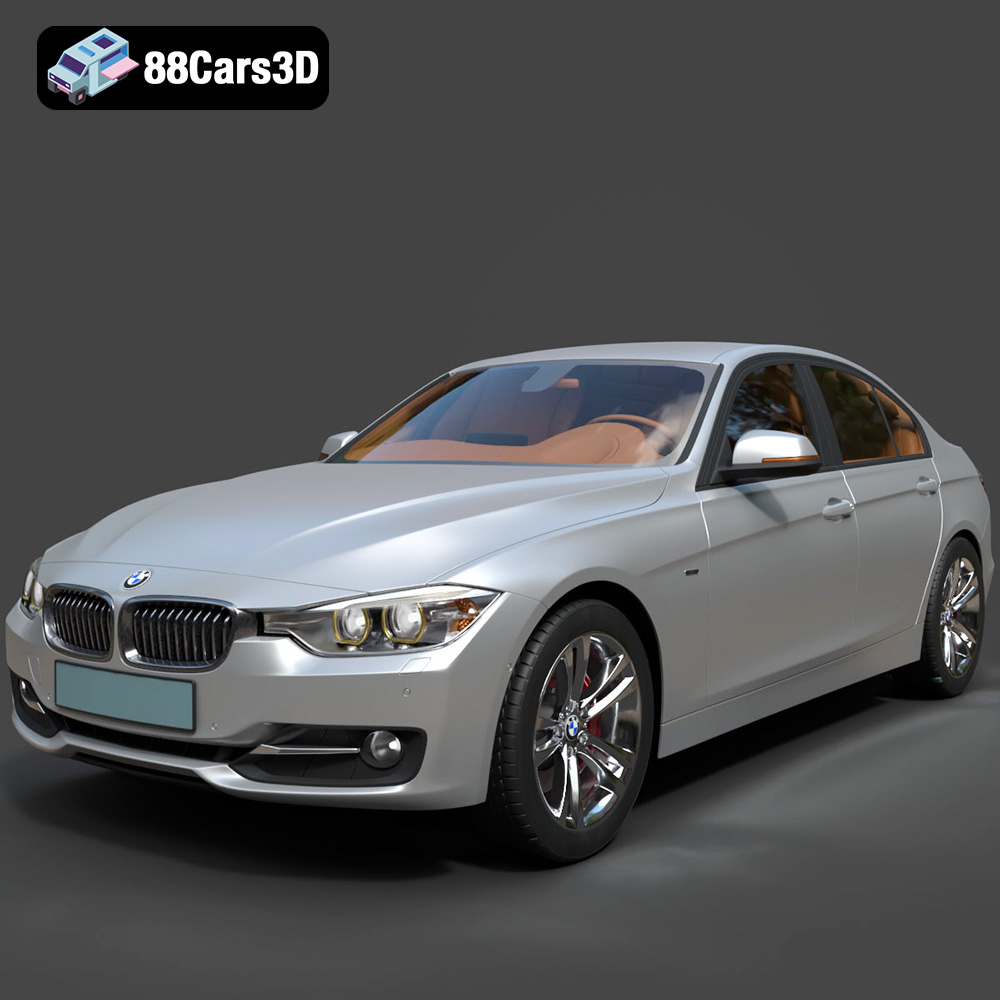
Texture: Yes
Material: Yes
Download the BMW 3 F30 3D Model featuring a detailed exterior, realistic interior, and optimized mesh. Includes .blend, .fbx, .obj, .glb, .stl, .ply, .unreal, and .max formats for rendering, simulation, and game development.
Price: $10.79
View Product
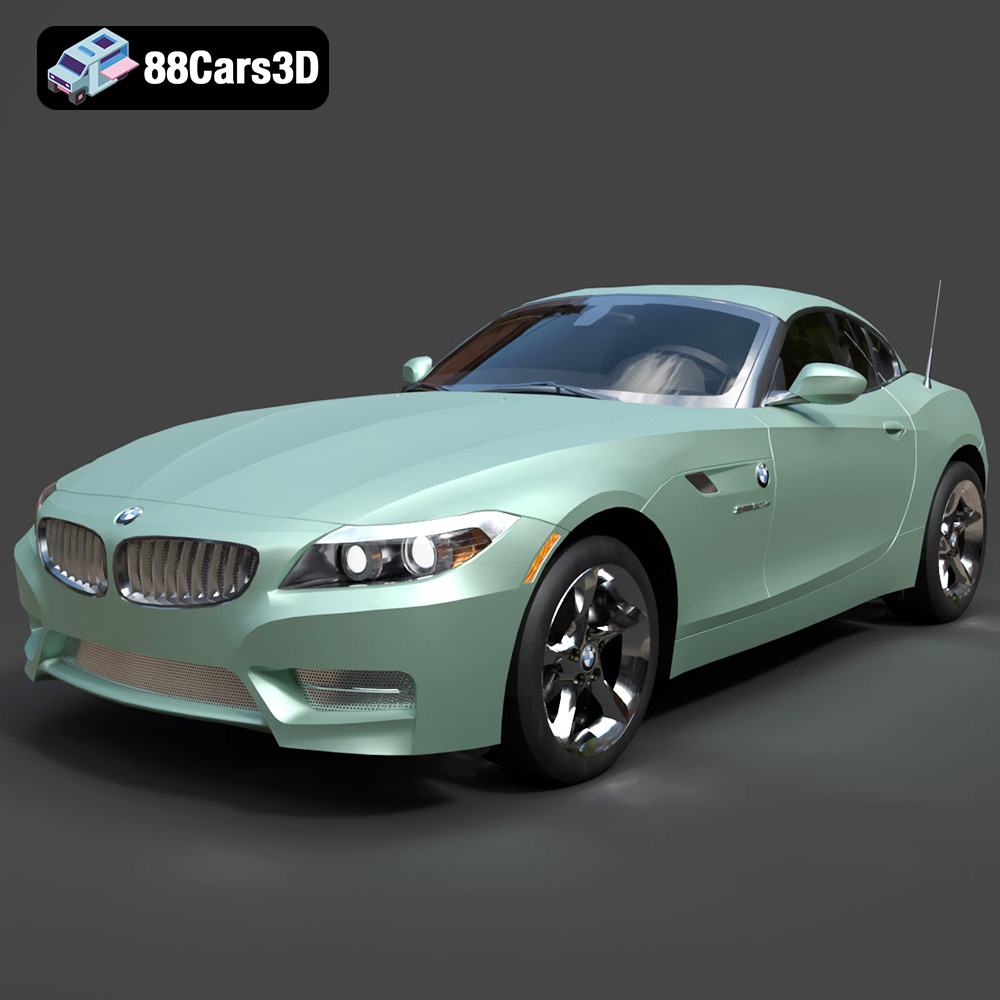
Texture: Yes
Material: Yes
Download the BMW Z4 Roadster E89 3D Model featuring clean geometry, realistic detailing, and a fully modeled interior. Includes .blend, .fbx, .obj, .glb, .stl, .ply, .unreal, and .max formats for rendering, simulation, and game development.
Price: $13.99
View Product

Texture: Yes
Material: Yes
Download the BMW Z4 E85 3D Model featuring clean geometry, realistic detailing, and a fully modeled interior. Includes .blend, .fbx, .obj, .glb, .stl, .ply, .unreal, and .max formats for rendering, simulation, and game development.
Price: $13.99
View Product

Texture: Yes
Material: Yes
Download the BMW M3 2024 3D Model featuring clean geometry, realistic detailing, and a fully modeled interior. Includes .blend, .fbx, .obj, .glb, .stl, .ply, .unreal, and .max formats for rendering, simulation, and game development.
Price: $13.99
View Product
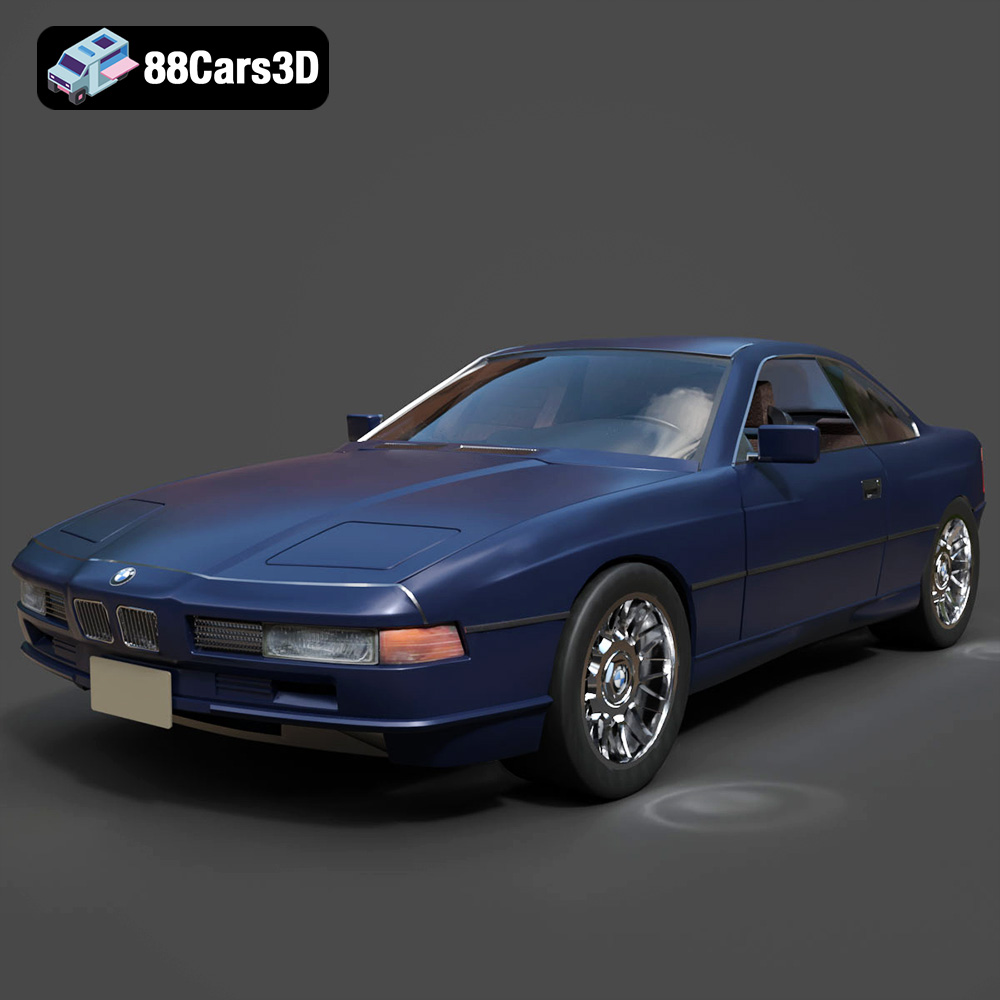
Texture: Yes
Material: Yes
Download the BMW 850i Coupe 1990 3D Model featuring clean geometry, realistic detailing, and a fully modeled interior. Includes .blend, .fbx, .obj, .glb, .stl, .ply, .unreal, and .max formats for rendering, simulation, and game development.
Price: $13.99
View Product
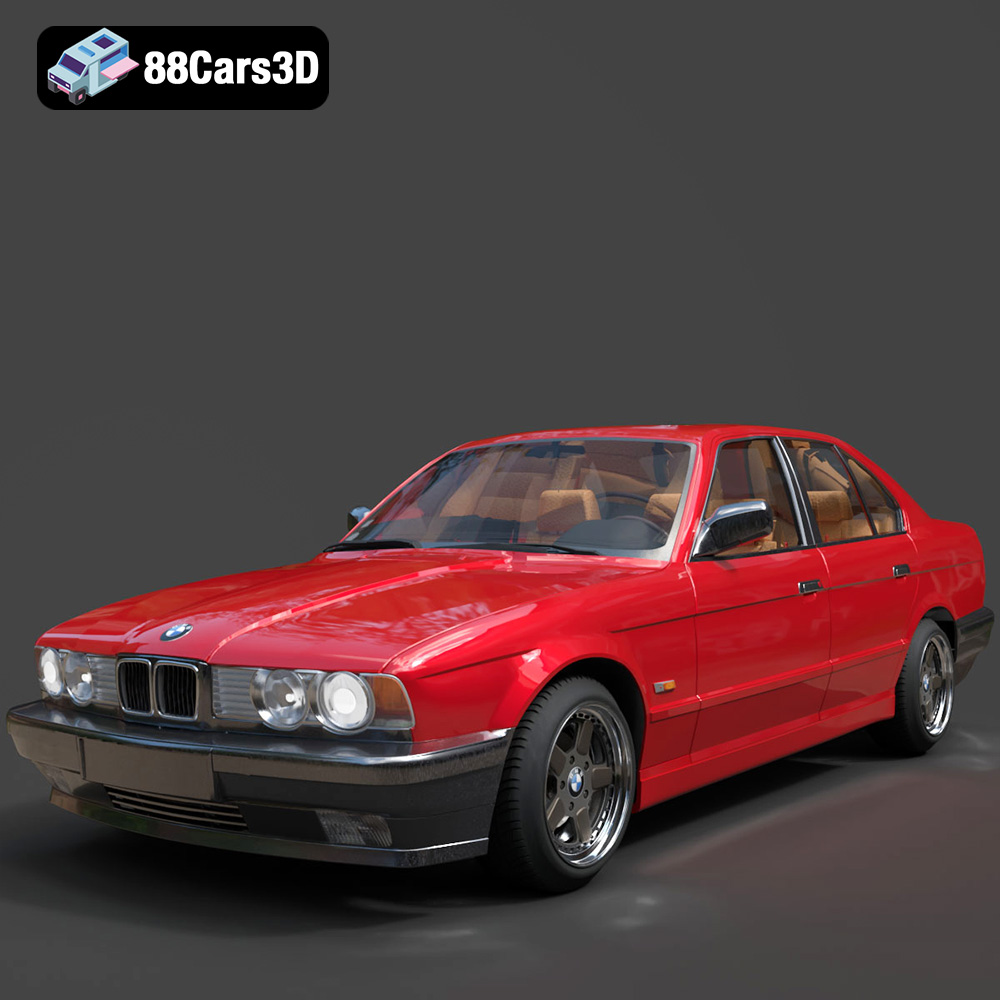
Texture: Yes
Material: Yes
Download the BMW 525i E34 1993 3D Model featuring clean geometry, realistic detailing, and a fully modeled interior. Includes .blend, .fbx, .obj, .glb, .stl, .ply, .unreal, and .max formats for rendering, simulation, and game development.
Price: $12.99
View Product

Texture: Yes
Material: Yes
Download the BMW 7 Series 2016 3D Model featuring luxurious design, detailed interior, and accurate exterior. Includes .blend, .fbx, .obj, .glb, .stl, .ply, .unreal, and .max formats for rendering, simulation, and game development.
Price: $10.79
View Product
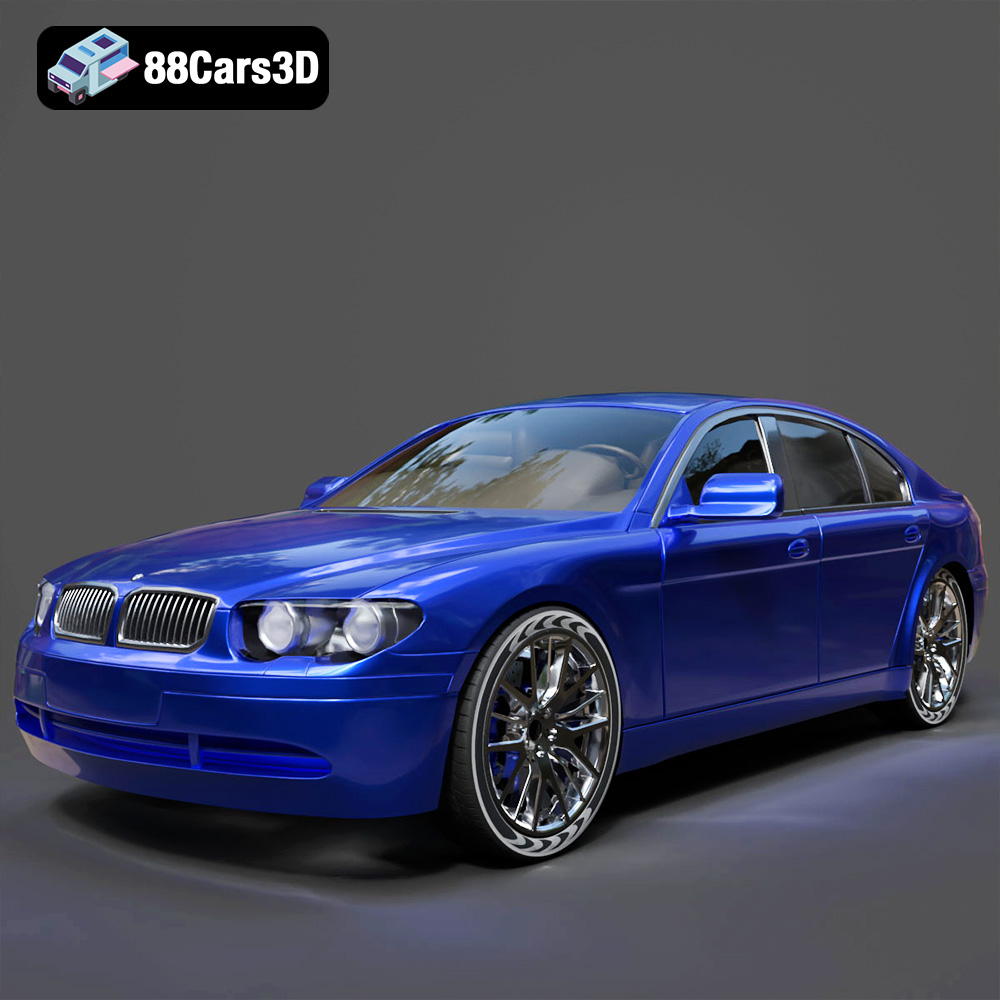
Texture: Yes
Material: Yes
Download the BMW 7 Series 30th Anniversary 3D Model featuring a meticulously crafted exterior, detailed interior, and realistic wheels. Includes .blend, .fbx, .obj, .glb, .stl, .ply, .unreal, and .max formats for rendering, simulation, and game development.
Price: $35.79
View Product

Texture: Yes
Material: Yes
Download the BMW 7-Series F02 3D Model featuring a detailed exterior and interior, optimized for rendering and animation. Includes .blend, .fbx, .obj, .glb, .stl, .ply, .unreal, and .max formats for rendering, simulation, and game development.
Price: $10.79
View Product
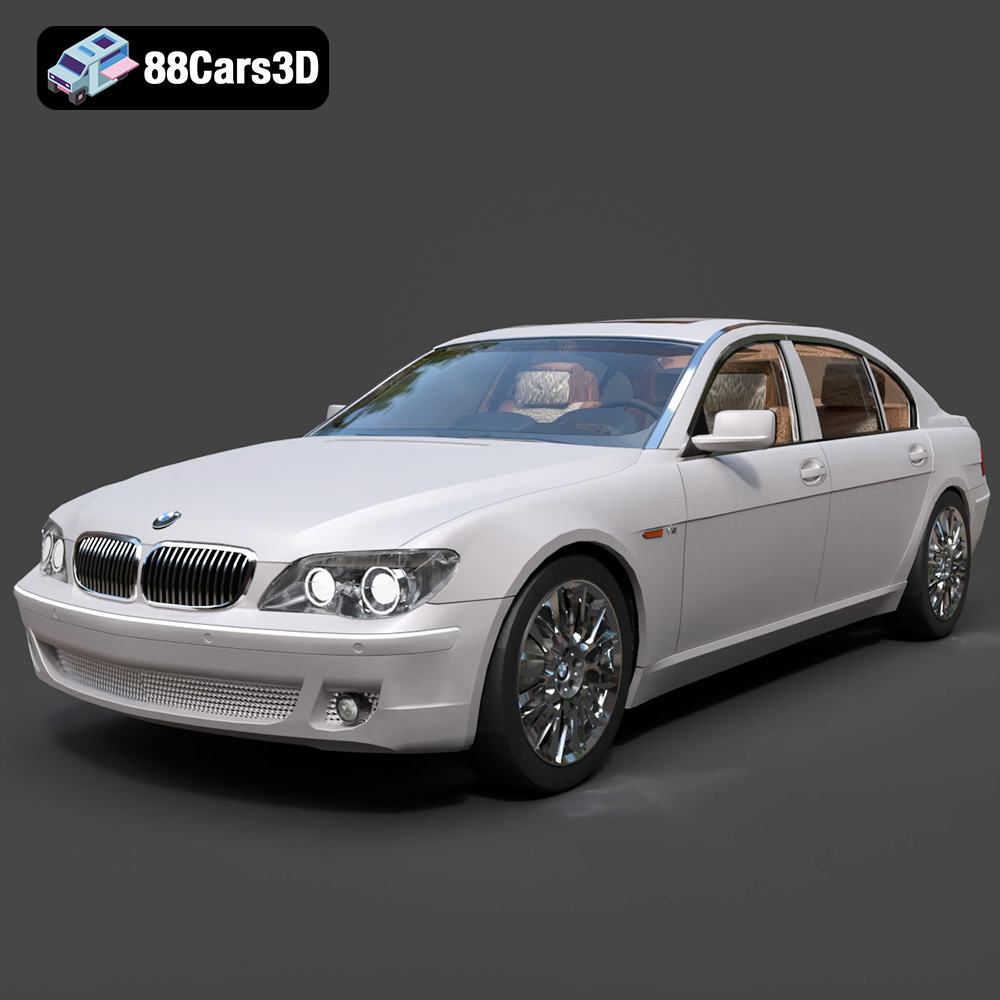
Texture: Yes
Material: Yes
Download the BMW 760Li E66 2005 3D Model featuring a detailed exterior, refined interior, and robust chassis. Includes .blend, .fbx, .obj, .glb, .stl, .ply, .unreal, and .max formats for rendering, simulation, and game development.
Price: $10.79
View Product


