⚡ FLASH SALE: Get 60% OFF All Premium 3D & STL Models! ⚡

In the dynamic world of 3D visualization and digital content creation, the demand for highly detailed, authentic, and versatile 3D models is constantly escalating. From blockbuster game development studios to cutting-edge architectural visualization firms, and automotive design houses, the need for precision assets is paramount. High-fidelity 3D car models are particularly sought after, forming the cornerstone of many compelling projects that require realism, performance, and aesthetic appeal. These models aren’t just static representations; they are pivotal components that breathe life into virtual environments, driving simulations, and cinematic narratives.
The ability to integrate a meticulously crafted vehicle into a professional workflow can significantly impact project timelines and final output quality. This is where models like the BMW 7-Series F02 3D Model truly shine. Representing a pinnacle of executive sedan design, this particular model exemplifies the blend of sophisticated styling and elegant proportions that professionals expect. It’s an asset built not just for visual fidelity but also for efficient performance across diverse platforms, making it an ideal choice for high-end automotive rendering, cinematic animation, detailed simulations, and as a premium game asset.
The quest for realism in automotive rendering and interactive experiences has driven artists and developers to seek out sources that provide not just models, but comprehensive solutions. A model needs to be more than just visually appealing; it must be technically sound, offering clean geometry, accurate scale, and a logical structure that facilitates easy manipulation and integration. This article delves into the intricacies of professional 3D car models, explores essential file formats, dissects the technical advantages of expertly crafted assets like the BMW 7-Series F02, and demonstrates how such models are indispensable across various industries.
Choosing the correct file format for a 3D model is a critical decision that impacts compatibility, performance, and the workflow of any digital project. Each format serves a specific purpose, offering unique advantages depending on the target application, be it a real-time game engine, a high-fidelity rendering suite, or a 3D printer. The BMW 7-Series F02 3D Model, available on 88cars3d.com, thoughtfully includes a comprehensive range of formats, ensuring maximum versatility for professional users.
The .blend format is the native file type for Blender, an incredibly powerful open-source 3D creation suite. When you acquire a .blend file, you’re not just getting the model; you’re gaining access to the entire project setup. This includes the complete scene hierarchy, object data, materials, textures, lighting, camera settings, and even animation data. For professionals working in Blender, this means immediate access to a fully editable scene, allowing for deep customization of shaders, geometry, and rig setups without needing to import or re-link assets. It’s ideal for those who want to integrate the model seamlessly into an existing Blender project or extensively modify its properties for unique automotive rendering scenarios.
The .fbx (Filmbox) format is an industry-standard proprietary file format developed by Autodesk, renowned for its excellent interoperability between various 3D applications and game engines. It supports a wide range of 3D data, including mesh geometry, materials, textures, animations, and skeletal data. This makes it the go-to format for exporting game assets to engines like Unreal Engine and Unity, where efficient asset transfer and animation support are crucial. The .fbx format ensures that the BMW 7-Series F02 3D Model retains its hierarchical structure and UV mapping, facilitating smooth integration into real-time environments for game development or interactive simulations.
The .obj (Wavefront OBJ) format is one of the most widely supported and universal 3D file formats. It’s a simple, human-readable format that primarily stores geometric data (vertices, normals, texture coordinates, and faces). While it’s less comprehensive than .fbx in terms of animation or scene data, its widespread compatibility makes it an excellent choice for cross-software workflows. Almost every 3D application can import and export .obj files, making it a reliable format for artists who frequently switch between different software packages or need to share models with collaborators using diverse tools. The BMW 7-Series F02 3D Model in .obj format guarantees accessibility across virtually any 3D platform.
The .glb (GL Transmission Format Binary) is the binary version of the glTF format, specifically designed for efficient transmission and loading of 3D scenes and models by applications. It packages all model data, including geometry, materials, textures, and animations, into a single, compact file. This optimization makes .glb an ideal format for augmented reality (AR), virtual reality (VR), and web-based 3D applications where file size and quick loading times are paramount. The BMW 7-Series F02 3D Model in .glb ensures that your automotive assets are ready for immersive AR/VR experiences or interactive product configurators on the web.
The .stl (Stereolithography) format is the standard file type used for 3D printing and computer-aided manufacturing (CAM). It represents a 3D model as a series of connected triangles, defining only the surface geometry of the object. While it doesn’t store color or texture information, its simplicity and ubiquity in the additive manufacturing world make it essential for creating physical prototypes or collectible models. If your project involves taking the BMW 7-Series F02 3D Model from the digital realm to a tangible object, the .stl format is your critical link.
The .ply (Polygon File Format) is another popular format for storing 3D data, particularly useful for scanned data and scientific applications. It can store a wider range of properties than .obj or .stl, including color, transparency, and even normal vectors per vertex or face. While less common for general animation or game development, .ply is valued for its precision and comprehensive data storage in CAD (Computer-Aided Design) workflows, 3D scanning, and mesh analysis. For projects requiring detailed geometric analysis or integration with specific engineering software, the .ply version of the BMW 7-Series F02 3D Model offers robust data integrity.
The .unreal format refers to assets specifically prepared and packaged for direct use within Unreal Engine projects. This often means the model has already been imported, scaled, had materials applied, and potentially even collision meshes generated within an Unreal project file. This ready-to-use nature significantly accelerates development for projects within Unreal Engine, eliminating much of the initial setup time. For game developers and real-time visualization artists, having the BMW 7-Series F02 3D Model in this format means a plug-and-play experience, allowing them to focus immediately on scene composition and interaction.
Similar to .blend for Blender, the .max format is the native file type for Autodesk 3ds Max, a leading software for 3D modeling, animation, and rendering. An editable .max file provides access to the full scene, including all modifiers, material setups (e.g., V-Ray, Corona), lighting, and camera configurations. This is invaluable for professionals heavily reliant on 3ds Max for architectural visualization, automotive rendering, or complex animation sequences. The BMW 7-Series F02 3D Model provided in .max format ensures that users of this powerful software can leverage all its features for maximum customization and render quality.
The pursuit of realism in automotive visualization hinges entirely on the quality of the 3D model itself. A truly professional 3D car model, such as the BMW 7-Series F02, is not merely a collection of polygons; it is a meticulously engineered digital sculpture. Its value is derived from the precision of its geometry, the authenticity of its detailing, and its inherent adaptability to various project requirements. These elements are critical for achieving compelling results in everything from high-resolution cinematic sequences to interactive real-time simulations.
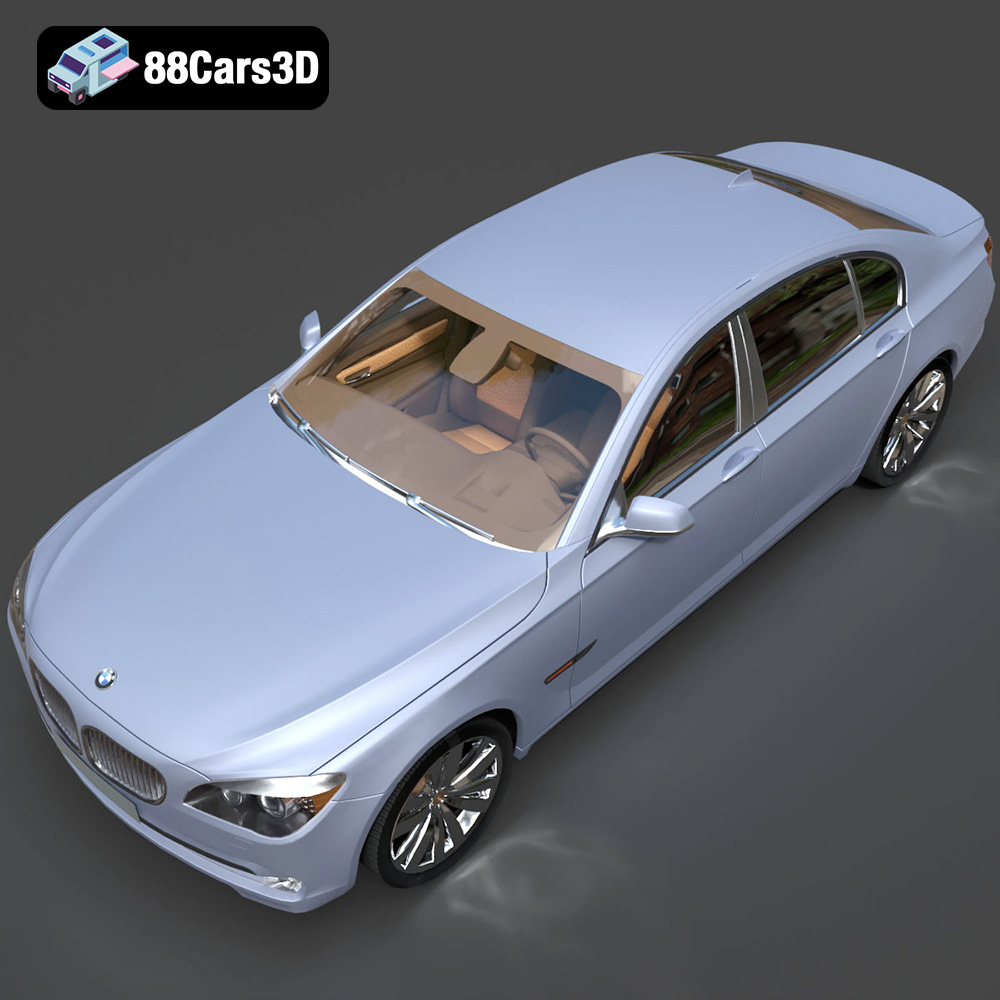
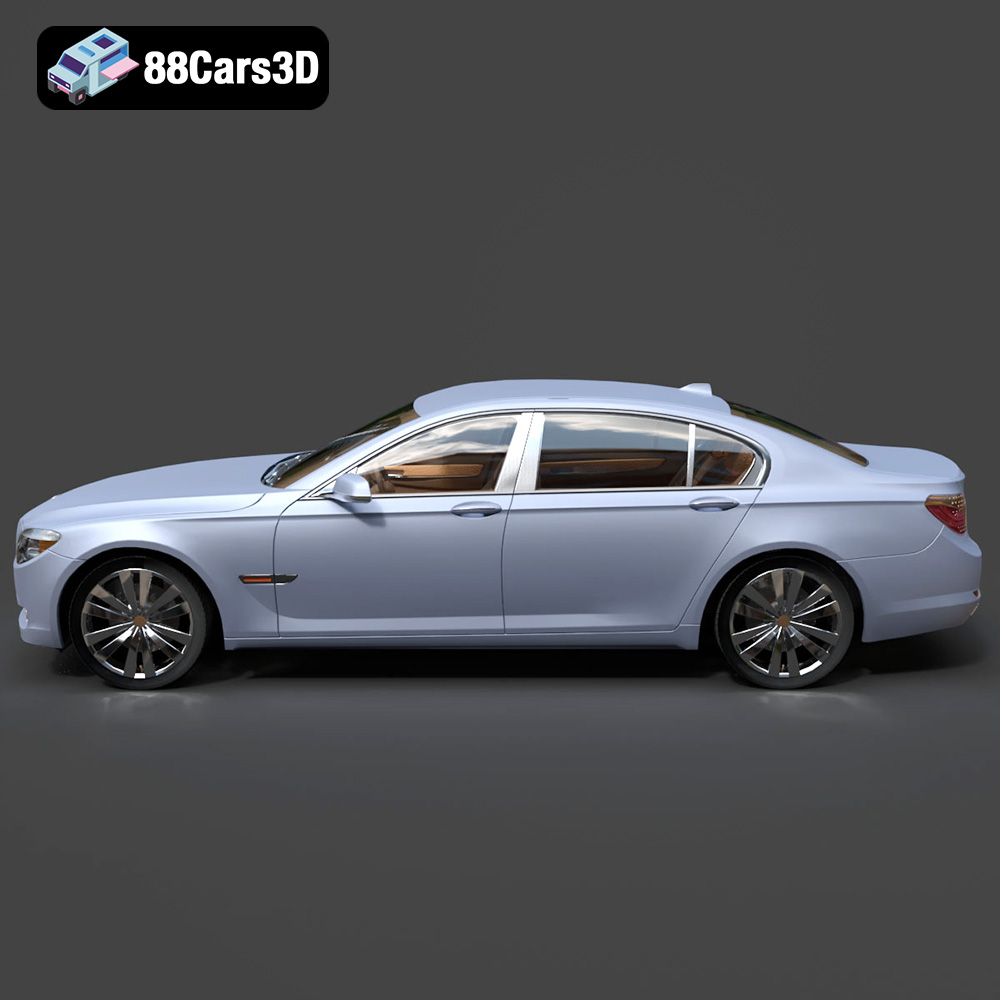
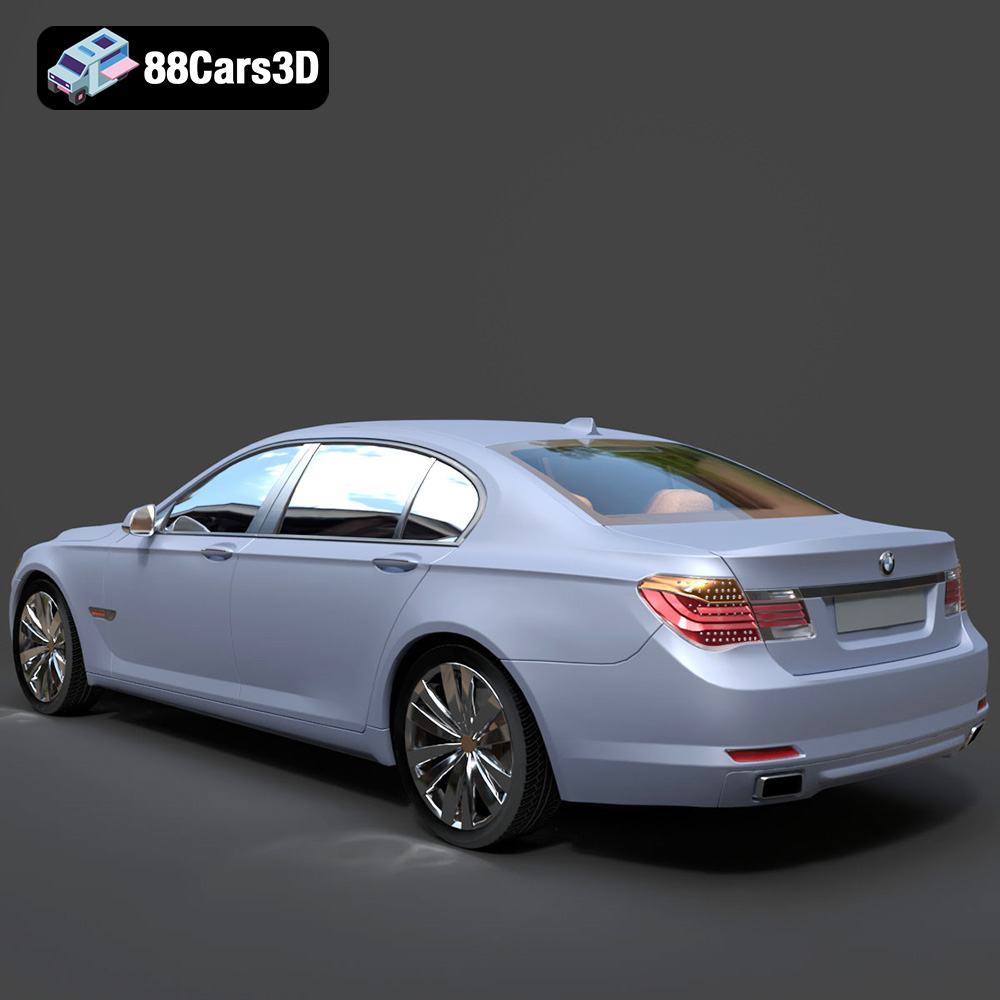
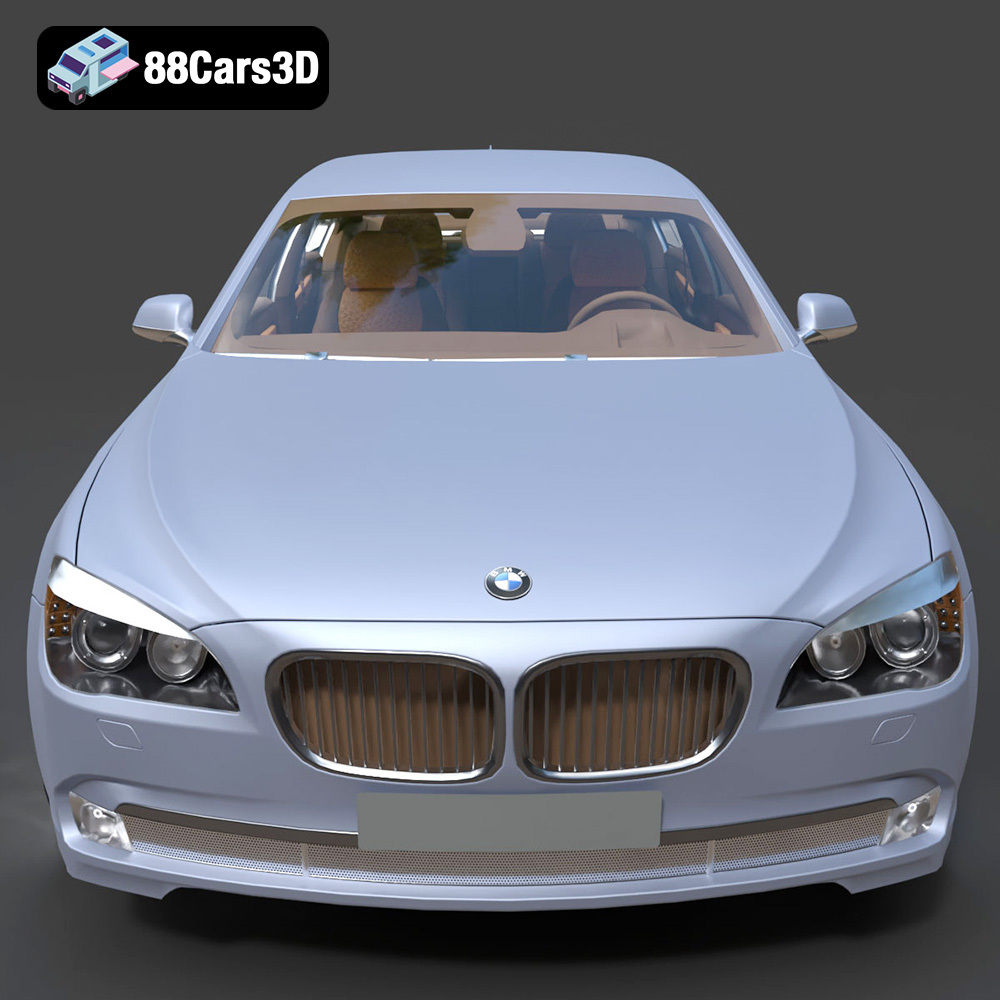
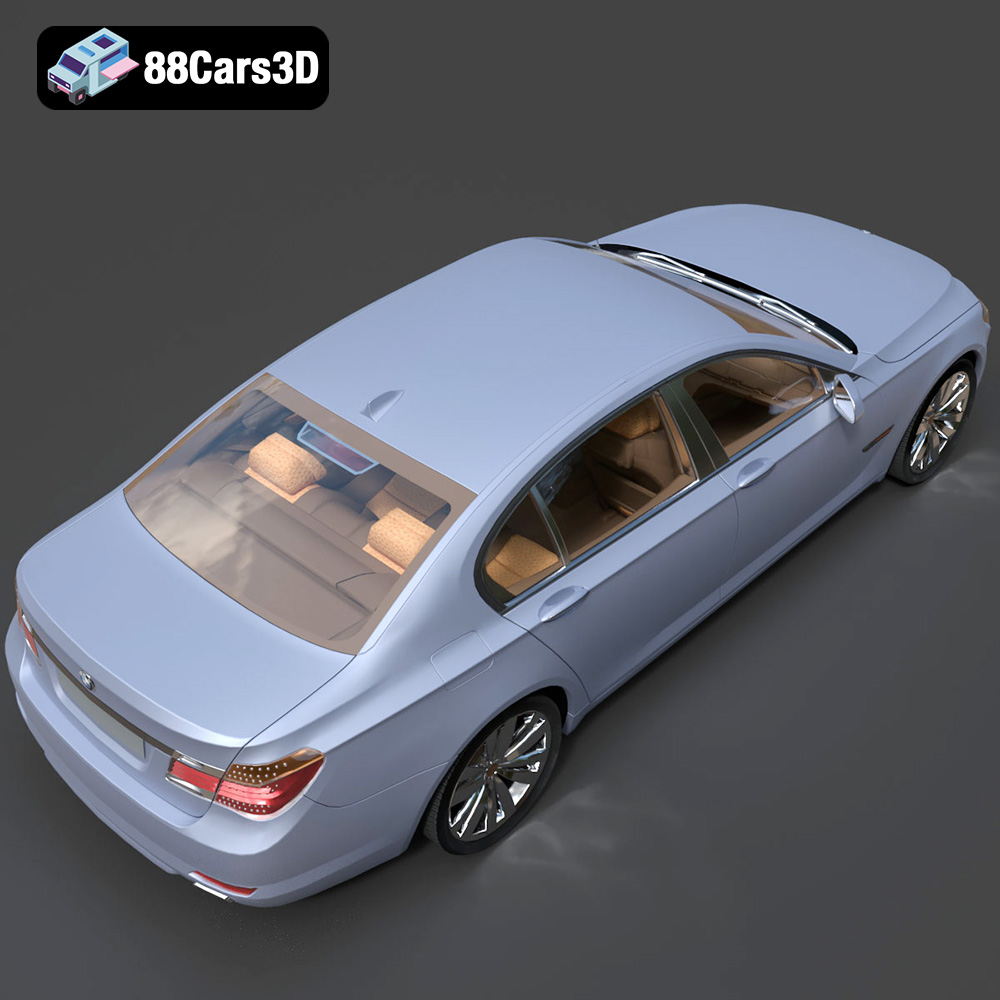
Authenticity in a 3D car model means more than just a recognizable silhouette. It involves a deep understanding of the original vehicle’s design language, proportions, and intricate details. For the BMW 7-Series F02 3D Model, this translates into accurately replicated body panels, true-to-life headlights and taillights with realistic material shaders for transparency and emission, and high-resolution wheels and tires that are modeled precisely to scale. Even subtle elements like chrome accents and trim are meticulously replicated, adding layers of realism that distinguish a premium asset. Furthermore, features like separated doors, hood, trunk, and wheels are crucial for advanced animation workflows, allowing for dynamic scene creation, from opening car doors in a virtual showroom to complex crash simulations.
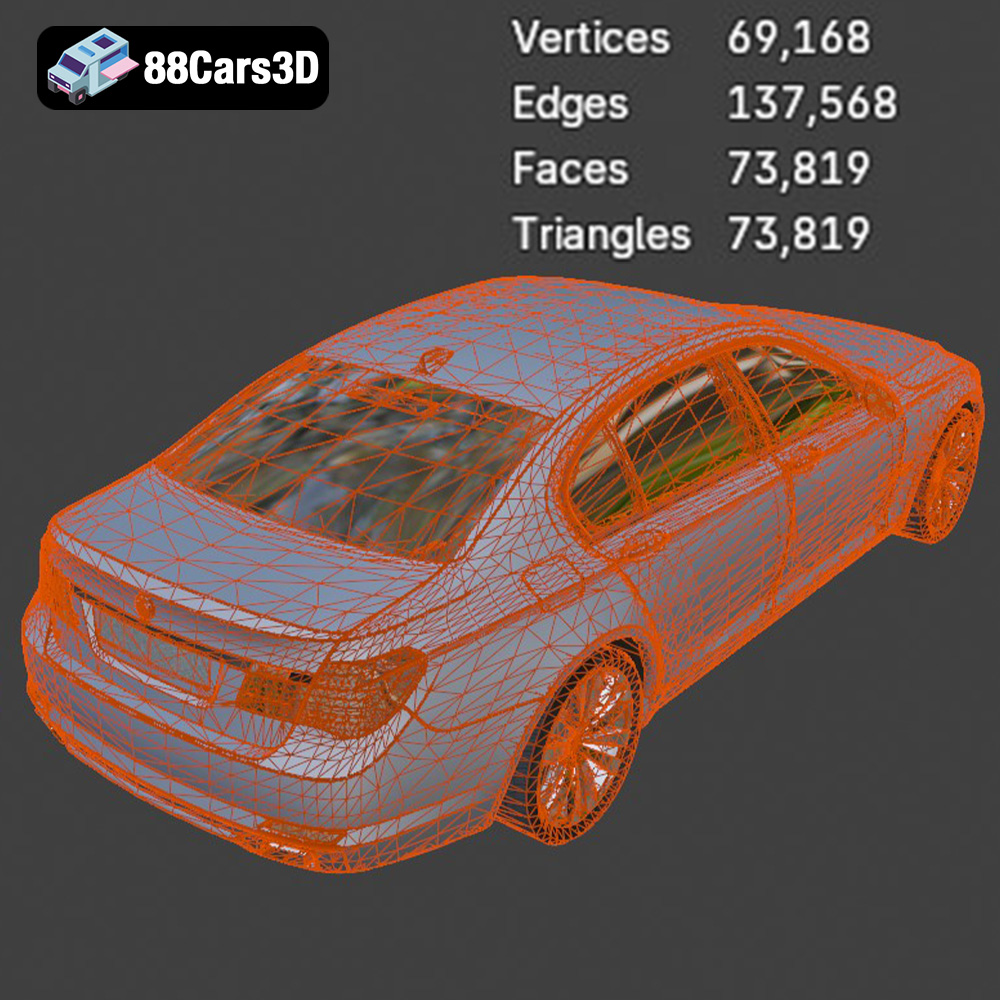
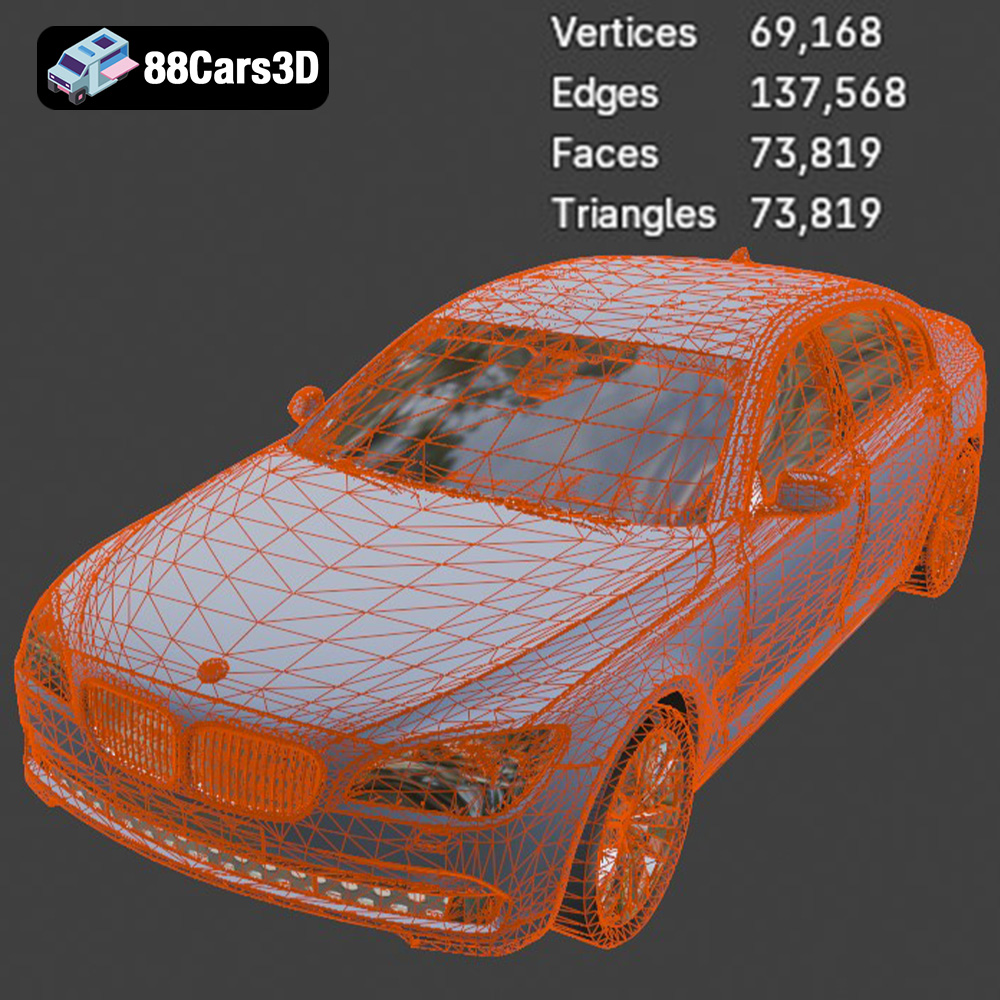
Beyond visual accuracy, the underlying technical structure of a 3D model is paramount. A high-quality 3D car model boasts clean, quad-dominant topology. This ensures that the mesh deforms smoothly during animation and can be easily subdivided for closer detail without introducing undesirable artifacts. Good topology is the backbone of a production-ready asset, facilitating texture mapping, rigging, and future modifications. The BMW 7-Series F02 3D Model exemplifies this with its optimized mesh quality, ensuring efficient performance for both distant shots and close-up views of its interior components. Real-world scale dimensions are also critical, allowing for seamless integration into existing scenes and environments without manual scaling adjustments, a common frustration with lesser-quality 3D car models.
A professional 3D car model’s true utility is measured by its seamless integration into diverse professional workflows. Whether it’s destined for a photorealistic architectural visualization, a high-octane racing game, or an immersive AR experience, the model must be prepared to perform. The BMW 7-Series F02 3D Model is engineered precisely for this versatility, supporting a wide array of industry-standard applications and rendering engines.
For high-fidelity automotive rendering, software like Autodesk 3ds Max and Blender are industry mainstays. The BMW 7-Series F02 3D Model includes native .max and .blend files, which means users get a head start with pre-configured materials and scene setups. In 3ds Max, artists can leverage powerful renderers like V-Ray or Corona to create breathtakingly realistic studio renders or dynamic environmental scenes. The clean topology of the F02 model ensures that subdivision modifiers (like TurboSmooth) work flawlessly, producing smooth, high-resolution surfaces for close-up shots. Similarly, Blender users can utilize Cycles for unbiased, physically accurate rendering or Eevee for real-time visualization, benefiting from the model’s well-organized geometry and material nodes. The logical hierarchy and proper pivot points make setting up complex camera animations or turntable renders incredibly efficient.
The gaming industry and real-time visualization sectors heavily rely on engines like Unreal Engine and Unity. The BMW 7-Series F02 3D Model is provided in .fbx and dedicated .unreal formats, signifying its readiness for these demanding environments. The .fbx format ensures all necessary mesh data, UVs, and potentially basic material assignments are transferred correctly. For Unreal Engine, the .unreal file specifically means the asset is already optimized and structured within an Unreal project, often including pre-setup materials, collision meshes, and LODs (Levels of Detail). This allows game developers to immediately drop the BMW F02 into their virtual worlds, whether it’s for a high-fidelity racing simulator, an open-world exploration game, or an interactive virtual garage experience, significantly reducing asset preparation time and accelerating development cycles.
The burgeoning fields of Augmented Reality (AR) and Virtual Reality (VR) demand highly optimized models that load quickly and perform smoothly on a variety of devices. The .glb format, included with the BMW 7-Series F02 3D Model, is perfectly suited for these applications. Its compact, all-in-one file structure, optimized for efficient transmission and rendering, makes it ideal for developing immersive AR experiences where the virtual car interacts with the real world, or for VR simulations that transport users inside a meticulously recreated executive sedan. Furthermore, .glb models are excellent for web-based 3D viewers and product configurators, allowing users to interact with the BMW F02 directly in their browser, a crucial tool for modern digital marketing and sales.
The utility of a high-quality 3D car model extends far beyond static renders. It serves as a foundational asset for dynamic, interactive, and even tangible projects. The BMW 7-Series F02 3D Model offers remarkable versatility, making it a valuable investment for professionals looking to push the boundaries of their digital creations.
In game development, the demand for realistic and performant assets is constant. The BMW 7-Series F02, as a premium game asset, is perfectly suited for various game genres. For racing games, its accurate scale and detailed exterior provide a convincing vehicle for high-speed action. In open-world simulations, it can populate cityscapes or serve as a driveable player vehicle. Its optimized mesh quality ensures it integrates efficiently into game engines without excessive performance overhead, while the separated parts (doors, hood, trunk, wheels) enable complex in-game mechanics like damage models, vehicle customization, or interactive cutscenes. The availability of multiple file formats, especially .fbx and .unreal, simplifies the integration process, allowing developers to focus on gameplay rather than asset preparation.
Beyond entertainment, professional 3D car models are vital for technical applications. The BMW 7-Series F02 3D Model can be integrated into advanced driving simulators, providing a realistic representation for driver training or automotive design validation. Its clean geometry also makes it suitable for conversion to the .stl format for 3D printing, enabling physical prototyping or the creation of high-detail collectible models. Engineers and designers can leverage its accurate dimensions and precise mesh (e.g., via the .ply format) for aerodynamic analysis, fitment studies, or virtual mock-ups, demonstrating the model’s utility in rigorous, data-driven environments.
One of the significant advantages of a professional-grade 3D model is its inherent flexibility for customization. The BMW 7-Series F02 3D Model empowers artists to easily adjust paint finishes to any color, including metallic and matte options, to match specific branding or artistic visions. Material properties for chrome, rubber, glass, and interior fabrics can be modified to suit aesthetic requirements, allowing for a personalized touch. Furthermore, the model’s structure facilitates adaptation to diverse lighting setups, achieving a wide range of moods and environmental conditions. This level of customization ensures that the model remains relevant and adaptable across a myriad of projects, from realistic advertising campaigns to stylized cinematics.
In today’s fast-paced digital production environment, time is a precious commodity. Creating high-quality 3D car models from scratch is an incredibly time-consuming and labor-intensive process, requiring specialized skills in modeling, texturing, and shading. This is where online marketplaces like 88cars3d.com become indispensable resources for professionals across various industries.
Acquiring production-ready 3D models, such as the BMW 7-Series F02 3D Model, from reputable sources like 88cars3d.com offers immediate and significant advantages. It eliminates the need for extensive modeling work, allowing artists and developers to allocate more resources to scene composition, lighting, animation, and project-specific customizations. These assets are meticulously crafted by experienced 3D artists, ensuring clean geometry, optimized meshes, and accurate real-world scale—qualities that are often difficult to achieve under tight deadlines. The comprehensive file format support means the model integrates seamlessly into virtually any professional pipeline, saving valuable hours in format conversion and asset preparation.
For automotive designers, architects, and visualization specialists, access to a library of high-quality 3D car models is transformative. Instead of spending weeks modeling a vehicle, they can instantly integrate a premium asset like the BMW F02 into their architectural renderings, urban planning simulations, or product launch visualizations. This speeds up iteration cycles, enables more complex scene development, and ultimately leads to higher quality output. 88cars3d.com serves as a reliable hub for such assets, providing a curated selection of 3D car models that meet the rigorous demands of professional projects, ensuring consistency in quality and technical specifications.
The journey from conceptual design to a compelling visual experience is paved with countless technical considerations and artistic decisions. At the heart of many breathtaking digital creations lies the foundational quality of the 3D assets employed. The BMW 7-Series F02 3D Model stands as a testament to this principle, offering unparalleled quality, versatility, and ease of use for professionals across multiple industries.
From its meticulously replicated exterior and interior features to its clean, quad-dominant topology and robust multi-format support, every aspect of this model is engineered for professional-grade results. Whether your project demands photorealistic automotive rendering in 3ds Max, seamless integration into a real-time game environment with Unreal Engine, or an optimized asset for AR/VR applications, the BMW 7-Series F02 delivers. It empowers artists and developers to streamline their workflows, save valuable production time, and achieve stunning visual fidelity without compromise.
For those seeking to elevate their projects with premium 3D car models that blend aesthetic excellence with technical precision, exploring the extensive catalog at 88cars3d.com is a definitive step forward. The BMW 7-Series F02 3D Model exemplifies the standard of excellence available, providing a production-ready solution that fuels creativity and propels projects to new heights of realism and engagement.
Experience automotive luxury and precision with this professional 3D model of the BMW 7-Series F02. Representing a pinnacle of executive sedan design, this model captures the sophisticated styling and elegant proportions of the renowned vehicle. Built with clean geometry and balanced detailing, it ensures visual fidelity and efficient performance across various platforms. Ideal for high-end rendering, cinematic animation, detailed simulations, and as a premium asset for game development.
$10.79
.7seriesf02
.arvr
.blend
.bmw
.executivecar
.f02
.fbx
.gameasset
.glb
.luxurycar
.max
.obj
.ply
.rendering
.sedan
.simulation
.stl
.unreal