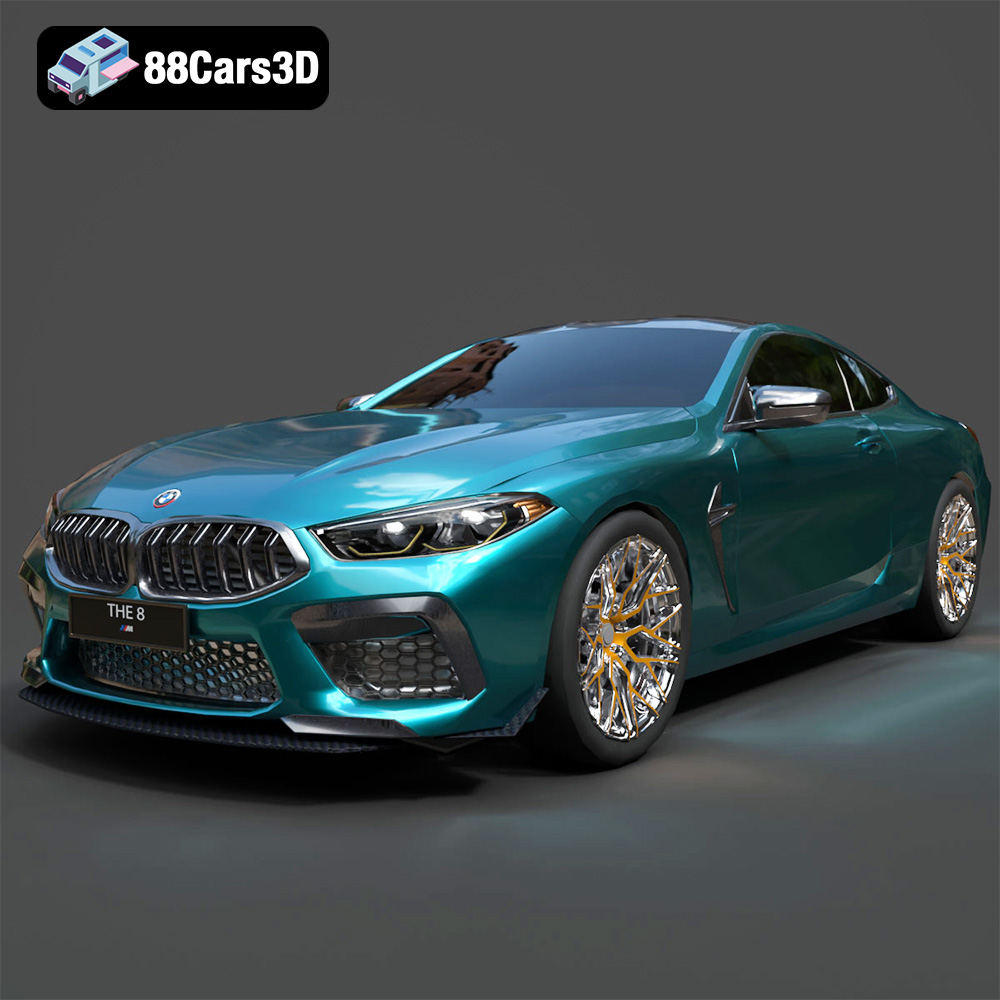
Choosing the Best 3D Model File Formats for Car Models in Unreal Engine and Unity
Choosing the Best 3D Model File Formats for Car Models in Unreal Engine and Unity
In the thrilling world of game development, bringing a high-fidelity car model to life in engines like Unreal Engine or Unity is a journey fraught with technical decisions. Among the most critical choices you’ll face is selecting the right 3D model file format. This isn’t merely a technicality; it profoundly impacts your asset’s visual quality, real-time performance, ease of integration, and overall development workflow. For complex assets like car 3D models, which often feature intricate meshes, advanced PBR materials, detailed interiors, rigging for wheels and suspension, and multiple Levels of Detail (LODs), the file format dictates how smoothly these elements transfer from your digital content creation (DCC) software to your game engine.
This comprehensive guide will demystify the best 3D model file formats for car models in Unreal Engine and Unity, helping you make informed decisions that optimize your pipeline for peak efficiency and stunning results.
Understanding 3D Model File Formats for Game Engines
Before diving into specific formats, it’s essential to grasp what makes a file format suitable for real-time game assets, especially for something as complex and central as a car.
Why File Format Matters for Car Models
A car model is rarely just a static mesh. It often involves:
- Poly Count & Geometry: High detail requires efficient geometry transfer.
- Textures & Materials: PBR (Physically Based Rendering) workflows demand accurate material and texture map linking.
- Animations & Rigging: For wheels, suspension, doors, or even driver animations, skeletal rigging and animation data must be preserved.
- Collision Meshes: Crucial for physics interactions in driving games.
- Levels of Detail (LODs): Essential for performance optimization, allowing the engine to swap simpler versions of the car at a distance.
- Metadata: Custom properties, tags, and scene hierarchy.
The chosen file format must be capable of carrying all this information reliably and efficiently.
Key Considerations for Game Assets
- Performance: How quickly the engine can parse and render the data.
- Visual Fidelity: How accurately materials and textures translate, maintaining the artist’s intent.
- Ease of Import: A straightforward and robust import pipeline saves countless hours.
- Compatibility: How well the format is supported across different DCC tools and game engine versions.
- Iteration Speed: How fast you can make changes in your DCC tool and see them reflected in the engine.
Top File Formats for Car Models in Unreal Engine
Unreal Engine, known for its cinematic quality and robust toolset, has specific preferences for importing complex assets like high-detail Unreal Engine car assets.
FBX (.fbx) – The Industry Standard
FBX (Filmbox) is Autodesk’s proprietary 3D file format and remains the undisputed king for importing complex assets into Unreal Engine. It’s designed to carry a vast array of 3D data.
- Advantages:
- Comprehensive Data Transfer: Handles meshes, PBR materials, textures, skeletal rigs, animations, blend shapes, cameras, lights, and even LODs with exceptional fidelity.
- Robust Import Pipeline: Unreal Engine has deeply integrated FBX support, offering extensive import settings for fine-tuning every aspect of your 3D car model import.
- Industry Adoption: Widely supported by major DCC tools like Maya, 3ds Max, Blender, and Substance Painter, making it ideal for collaborative pipelines.
- Collision & LODs: Easily export custom collision meshes and multiple LOD levels directly within the FBX, simplifying performance optimization.
- Disadvantages:
- Proprietary Format: Owned by Autodesk, which can lead to versioning issues between different software or FBX SDK versions.
- Complexity: For beginners, the sheer number of export and import options can be overwhelming.
- Bloat: FBX files can sometimes be larger than necessary, especially if not optimized correctly.
- Practical Example: You’ve modeled a drivable sports car in Blender, complete with a detailed interior, rigged wheels, and suspension animation. You’ve also prepared lower-poly LODs and custom collision meshes. Exporting this as a single FBX file from Blender allows you to import it into Unreal Engine with all these components intact, ready for physics setup and gameplay.
OBJ (.obj) – The Universal Mesh
OBJ is one of the oldest and most universally supported 3D formats, primarily for static mesh data.
- Advantages:
- Simplicity: Easy to understand and widely compatible. Good for basic geometry transfer.
- Static Meshes: Excellent for importing simple, static components of a car, like a discarded tire or a background prop vehicle without any interactivity.
- Disadvantages:
- Limited Data: Lacks support for animations, rigging, skinning, blend shapes, or advanced PBR material definitions. Textures often need to be manually re-linked and materials re-created in Unreal Engine.
- No Scene Hierarchy: Often imports as a single mesh, losing scene hierarchy.
- Not for Complex Cars: Completely unsuitable for a drivable or animated Unreal Engine car asset.
- Use Case: Importing a simple, static car shell for environmental dressing, where no animation, interaction, or specific PBR setup is required directly from the file.
glTF/GLB (.gltf/.glb) – The Modern Web Standard
glTF (GL Transmission Format) and its binary counterpart GLB are often dubbed the “JPEG of 3D.” It’s an open standard designed for efficient transmission of 3D scenes and models.
- Advantages:
- Open Standard & Efficiency: Excellent for PBR material definitions, compact file sizes, and designed for runtime delivery.
- Growing Support: While not as natively integrated as FBX for complex game engine workflows, Unreal Engine’s support is improving, often through plugins or custom importers.
- PBR Materials: Supports a robust PBR workflow, making it easier to transfer visually consistent materials.
- Disadvantages:
- Less Mature for Game Dev: Compared to FBX, its tooling for complex rigging, animation retargeting, or LOD grouping within game engines is less mature.
- Native Support Varies: While core import exists, FBX still offers more control and reliability for a full-fledged car model pipeline in Unreal.
- Use Case: Importing car models from web-based configurators or open-source libraries that provide glTF. It can be a viable option for static or simply animated cars, especially if PBR material accuracy is a priority and you’re willing to handle rigging/animation setup separately.
USD (.usd, .usdc, .usda) – The Future-Proof Solution
Universal Scene Description (USD), developed by Pixar, is a powerful open-source framework for authoring and interchanging 3D scene data. Unreal Engine has particularly strong native support for USD.
- Advantages:
- Scalability & Collaboration: Designed for massive, complex scenes and non-destructive workflows across multiple applications and artists. Ideal for virtual production and high-end cinematic car models.
- Layered & Non-Destructive: Allows for multiple artists to work on different aspects of a car (model, texture, rigging) simultaneously without overwriting each other’s work.
- Comprehensive: Can encapsulate all types of 3D data, including geometry, materials, rigs, animation, and more, with unparalleled flexibility.
- Unreal Engine Integration: Unreal Engine’s native USD support is highly advanced, making it suitable for intricate pipelines involving high-fidelity automotive assets.
- Disadvantages:
- Complexity & Learning Curve: USD is incredibly powerful but comes with a steep learning curve, especially for individual artists or smaller teams.
- Overkill for Simple Assets: For a single, basic car model, USD might be overly complex and heavyweight compared to FBX.
- Use Case: Large-scale virtual production, automotive design visualization, or projects requiring complex modular car systems and collaborative workflows. If you’re building a highly detailed, customizable car with multiple variants and components managed by different teams, USD shines.
Top File Formats for Car Models in Unity
Unity, renowned for its versatility and accessibility, also has its preferred formats for importing Unity car assets.
FBX (.fbx) – The Preferred Choice
Just like Unreal Engine, FBX stands out as the most reliable and feature-rich format for importing 3D car models into Unity.
- Advantages:
- Full Asset Support: Unity’s FBX importer handles meshes, PBR materials, textures, skeletal animations, blend shapes, and LODs seamlessly.
- Integrated Workflow: Excellent support for the entire game asset pipeline, allowing for easy updates and re-imports from your DCC tool.
- Comprehensive Settings: Unity’s inspector provides detailed import settings for FBX files, allowing you to control scale, pivots, normals, tangents, animation clips, and more.
- Disadvantages: Same as for Unreal Engine – proprietary nature and potential complexity.
- Practical Example: You’ve rigged a monster truck in Maya with complex suspension dynamics and interior details. Exporting as an FBX allows Unity to import the mesh, its hierarchy, the skeleton, and any associated animations, ready for you to attach a vehicle physics component.
Blend (.blend) – Blender Native
For users of Blender, the native .blend file format offers a unique advantage within Unity.
- Advantages:
- Direct Integration: If Blender is installed on your system, Unity can directly import .blend files. It automatically uses Blender’s FBX exporter in the background, treating the .blend file much like an FBX.
- Simplified Workflow: No need for an explicit export step in Blender; just save your file and Unity updates it.
- Disadvantages:
- Blender Dependency: Requires Blender to be installed on every machine where the Unity project is being used (or for the asset to be explicitly exported to FBX). This can be problematic for teams where not everyone uses Blender.
- Less Control: While convenient, the automatic conversion offers less direct control over the FBX export settings compared to manually exporting an FBX.
- Performance Overhead: Can be slower for large or complex scenes as Unity needs to invoke Blender for conversion.
- Use Case: Ideal for solo developers or small teams exclusively using Blender for their 3D modeling for games workflow, especially during rapid prototyping or when iterating quickly on a car model.
glTF/GLB (.gltf/.glb) – Growing Support
glTF’s appeal for efficiency and open standards extends to Unity, though often requiring additional tools.
- Advantages:
- Open Standard & PBR: Similar benefits as in Unreal Engine, including excellent PBR material support and compact file sizes.
- Third-Party Plugins: Unity has robust third-party plugins like “glTFast” that provide comprehensive glTF/GLB import capabilities, often rivaling FBX for specific use cases.
- Disadvantages:
- Not Native for Full Pipeline: Without plugins, native Unity support for glTF isn’t as feature-rich as FBX for complex rigged and animated car models.
- Use Case: Importing car models from web repositories, 3D configurators, or when working in a pipeline that heavily utilizes glTF, provided you integrate a reliable third-party importer.
OBJ (.obj) – Basic Static Meshes
Unity’s support for OBJ is similar to Unreal Engine’s.
- Advantages/Disadvantages: As with Unreal, OBJ is simple and widely supported but lacks support for animations, rigging, and full PBR materials. It’s suitable only for static geometry.
- Use Case: Importing simple, non-interactive static car models or components that don’t require any animation or complex material setup from the file itself. For a full Unity car asset, it’s insufficient.
File Format Comparison Table (Unreal Engine & Unity)
Here’s a quick reference to help you compare the primary file formats for car 3D models across both game engines:
Feature / Format |
FBX (.fbx) |
OBJ (.obj) |
glTF/GLB (.gltf/.glb) |
USD (.usd) |
Blend (.blend) |
|---|
Mesh Data |
Excellent |
Excellent |
Excellent |
Excellent |
Excellent |
PBR Materials/Textures |
Good (needs setup) |
Poor (basic only) |
Excellent (native PBR) |
Excellent (complex schemas) |
Good (needs setup) |
Animations |
Excellent (skeletal, blend shapes) |
None |
Good (skeletal, blend shapes) |
Excellent |
Excellent (skeletal, blend shapes) |
Rigging/Skeletons |
Excellent |
None |
Good |
Excellent |
Excellent |
LODs (Levels of Detail) |
Excellent (embedded) |
None (manual per mesh) |
Good (extensions) |
Excellent |
Good (manual per mesh) |
Collision Meshes |
Excellent (custom naming) |
None (manual per mesh) |
None (typically engine gen) |
Excellent |
None (manual per mesh) |
Unreal Engine Support |
Native, Industry Standard |
Native, Basic |
Native (growing), Plugins |
Native, Advanced |
Indirect (via Blender FBX) |
Unity Support |
Native, Preferred |
Native, Basic |
Native (basic), Strong Plugins |
Plugins/Custom Importers |
Native (Blender installed) |
Workflow Complexity |
Moderate |
Low |
Moderate |
High |
Low (for Blender users) |
Ideal Use Case (Car Models) |
All complex drivable cars |
Static background props |
Web-optimized, PBR focus |
High-end cinematic, collab |
Blender-centric rapid dev |
Decision Framework: Choosing the Right Format for Your Car Model
The “best” format isn’t universal; it depends entirely on your specific project needs and workflow. Use this framework to guide your decision:
Consider Your Asset’s Complexity
- Drivable, Rigged, Animated Car? FBX is almost always the answer for both Unreal Engine and Unity. It’s built to carry all the necessary data for interactive vehicles, including rigging car models and LODs car models.
- Static Prop Car (no animation, no interaction)? OBJ can work for extremely simple cases, but FBX or even glTF (if PBR materials are important) are still safer bets for future flexibility and material handling.
Evaluate Your Pipeline and DCC Tools
- Using Blender and Unity? The .blend direct import can be incredibly convenient for fast iteration, assuming Blender is installed on all relevant machines.
- Using Maya, 3ds Max, or another industry-standard DCC? FBX is the most natural and robust export option for 3ds Max export to Unity or Blender export to Unreal (via explicit FBX export).
- Working with web-based 3D tools or open asset libraries? glTF/GLB will often be the native or preferred format, especially if you prioritize PBR textures car models.
Team Collaboration & Scale
- Large Team, Complex Assets, Virtual Production? USD is becoming increasingly viable, especially with Unreal Engine’s strong integration, for managing massive, collaborative Unreal Engine car assets with non-destructive workflows.
- Small Team or Solo Developer? FBX offers the best balance of features and ease of use. If Blender-centric, the .blend workflow in Unity is also very efficient.
Performance Targets
- Mobile Game or Highly Optimized Desktop? Ensure you bake textures, reduce poly count, and generate LODs car models in your DCC, then export via FBX (which supports embedding LODs) or glTF for efficient transfer.
Practical Advice: For the vast majority of car models destined for Unreal Engine or Unity, FBX will be your go-to. It provides the most comprehensive data transfer and the most control within the engine. Explore glTF for open standards and web integration, and consider USD for high-end, collaborative pipelines.
Best Practices for Importing Car Models
Beyond choosing the right format, proper preparation of your 3D car model is crucial for a smooth import process and optimal engine performance.
- Optimize Before Export:
- Reduce unnecessary poly count, especially for non-visible parts or for LOD levels.
- Bake complex materials or procedural textures down to efficient PBR texture maps (Albedo, Normal, Roughness, Metallic, AO).
- Create multiple LODs car models in your DCC tool to ensure performance at various distances.
- Consistent Unit Scale: Ensure your DCC tool’s unit scale matches your engine’s. Unreal Engine often defaults to 1 unit = 1cm, while Unity’s default import scale is 0.01 for 1 unit = 1cm. Mismatched scales can lead to frustrating sizing issues and physics inaccuracies.
- Proper Naming Conventions: Use clear, consistent naming for meshes, materials, bones, and textures. This greatly aids organization and debugging within the engine.
- Collision Setup: For drivable cars, exporting custom, simplified collision car models (often suffixed with ‘_COL’ or ‘UCX_’) within your FBX is far superior to relying on engine-generated collision, which can be inaccurate or performance-heavy.
- Material Setup: Understand the PBR workflow. While formats like FBX can transfer material information, you’ll often need to fine-tune your material instances in Unreal or Unity to achieve the desired look and link your baked texture maps correctly.
- Check Normals and Tangents: Ensure your mesh’s normals are consistent and correctly oriented in your DCC tool. Engines will generate tangents, but having clean normals is fundamental.
Conclusion
Navigating the world of 3D file formats for car models in Unreal Engine and Unity can seem daunting, but with the right knowledge, you can significantly streamline your game asset pipeline. While FBX remains the dominant and most versatile choice for feature-rich, drivable car models due to its comprehensive data support, formats like glTF/GLB and USD are rapidly gaining ground for specific use cases, offering open standards and advanced collaborative features. OBJ is best reserved for simple, static assets, and .blend offers a unique convenience for Blender users in Unity.
Ultimately, the best format is one that seamlessly integrates into your workflow, preserves the integrity of your optimizing car models, and meets the performance and visual fidelity requirements of your project. Prioritize understanding your asset’s needs and your team’s pipeline, and you’ll be well on your way to bringing stunning automotive experiences to life.
Ready to Drive Your Designs?
Now that you’re equipped with the knowledge of the best 3D file formats for cars in Unreal Engine and Unity, it’s time to put these insights into practice! Experiment with different export settings, explore how your chosen format impacts performance, and refine your asset pipeline for efficiency.
Have you found a particular format or workflow that works wonders for your car models? Share your experiences in the comments below! And if you’re looking to further optimize your game assets, check out our guide on “Advanced Techniques for Optimizing 3D Models in Game Development.”
Recommended undefined Models