⚡ FLASH SALE: Get 60% OFF All Premium 3D & STL Models! ⚡

The allure of a high-fidelity 3D car model often lies in its stunning curves and reflective paintwork, but true realism is built on meticulous attention to every detail. Among the most critical components for grounding a vehicle in reality are its tires and wheels. These are not merely functional elements; they are complex structures that convey performance, character, and authenticity. From the intricate tread patterns to the subtle nuances of metal finishes, perfectly executed tires and wheels can elevate a good automotive render or game asset to an exceptional one.
This comprehensive guide delves into the advanced techniques and best practices for creating hyper-realistic 3D tire and wheel models. Whether you’re a seasoned 3D artist, an aspiring game developer, or an automotive designer pushing the boundaries of visualization, mastering these components is essential. We’ll explore everything from intricate topology and sophisticated UV mapping to physically based rendering (PBR) materials, game engine optimization, and considerations for AR/VR and 3D printing. Our goal is to equip you with the knowledge to craft models that not only look incredible but also perform flawlessly across various platforms and applications. Prepare to unlock the secrets behind bringing these vital automotive elements to life in stunning 3D.
Creating a realistic 3D tire is a delicate balance of form, function, and optimization. The unique challenge lies in accurately representing both the complex tread patterns and the subtle curvature of the sidewall while maintaining clean, animation-friendly topology. Poor topology can lead to pinching, shading artifacts, and difficulties in UV mapping and deformation. A professional workflow emphasizes efficient polycount management, especially for game assets, without compromising visual fidelity.
The tire tread is the most distinctive visual feature, requiring careful modeling. Start with a cylindrical base mesh that accurately represents the tire’s overall dimensions. For the tread pattern, several approaches exist, each with its pros and cons. A common method involves **creating a single tread block** with clean quad topology, then using **array modifiers** or **instancing** to duplicate it along a curve or path representing the tire’s circumference. This approach allows for easy adjustments and maintains consistency. For extremely detailed patterns, a more direct modeling approach might be necessary, where the tread blocks are extruded and refined directly on the cylindrical surface, paying close attention to edge flow to avoid Ngons or triangles in critical areas.
When modeling the tread, consider the target application. For high-fidelity renders, you might aim for 150,000-250,000 polygons per tire to capture every groove and siping detail. However, for real-time game engines, this needs drastic optimization. Techniques like **normal mapping** become paramount here. Model a lower-polygon version of the tread, then bake the high-poly details onto a normal map. This can reduce the polygon count to 15,000-30,000 per tire while retaining impressive visual depth. Always strive for an edge flow that supports deformation, as tires undergo subtle compression and bulging, particularly in animations or physics simulations. Use **loop cuts** and **edge slides** to control edge distribution, ensuring an even mesh density.
The tire sidewall, though seemingly simple, holds crucial branding and functional information. This includes manufacturer logos, tire size specifications, and often subtle safety warnings. These details are typically represented as raised or recessed text and patterns. Direct modeling of this text, while possible for extreme close-ups, is often overly polygon-intensive. A more efficient and widely adopted method involves using **displacement maps** or **normal maps** generated from vector graphics or sculpted details. You can create the text as 2D splines in software like Illustrator or directly in your 3D package, then extrude it slightly and bake its details. For instance, in Blender, you could use a Text object and convert it to a mesh for initial shaping, then use it to project details onto your tire’s sidewall via sculpting or baking.
The subtle bulges and curves of the sidewall also require attention. Instead of making the sidewall perfectly flat, introduce a slight concave or convex curvature to mimic the tire’s internal structure and pressure. This can be achieved by carefully adjusting vertices or using **lattice modifiers**. The transitions between the tread, sidewall, and rim should be smooth and natural. Maintaining consistent **edge loops** around the tire’s circumference is crucial for clean shading and effective subdivision. Remember that a tire is rarely pristine; subtle imperfections, scuffs, and dirt will add immensely to its realism in the texturing phase, but the underlying geometry must be robust enough to support these details.
Wheels are often the jewel of an automotive design, showcasing intricate patterns and reflective surfaces. Their modeling demands precision, clean topology, and an understanding of mechanical components. A well-modeled wheel is a testament to the artist’s attention to detail, capable of withstanding extreme close-ups and dynamic camera movements.
The rim, encompassing the spokes and the barrel, is typically modeled using a combination of **spline modeling**, **subdivision surface modeling**, and **hard-surface techniques**. Start with a basic cylindrical shape for the main barrel. For the spokes, a common approach involves modeling a single spoke or a section of the hub, then using a **radial array** or **instance duplication** to create the full pattern. This ensures symmetry and simplifies modification. When modeling spokes, pay close attention to the intricate fillets and chamfers where they meet the hub and the outer rim. These details are crucial for catching light realistically and preventing a “toy-like” appearance. Consider the manufacturing process: cast wheels have softer edges, while forged or machined wheels often feature sharper, more defined lines.
The choice of modeling technique will significantly impact the polygon count. For high-end visualization, a single wheel might range from 100,000 to 400,000 polygons, especially with complex multi-spoke designs and intricate details like lug nuts and valve stems modeled out. When working with **subdivision surfaces**, ensure your base mesh has sufficient control loops to define sharp edges without over-densifying the mesh prematurely. In Blender, for example, the Subdivision Surface modifier combined with well-placed support loops is key. For game assets, the challenge is to achieve visual complexity with a much lower polycount, often relying heavily on normal mapping and careful texture work to simulate depth and detail.
While often partially obscured, brake calipers and discs are vital components that add significant realism to the wheel assembly. Ignoring them or modeling them crudely can instantly break the illusion. The brake disc typically begins as a simple cylinder, then refined with cooling holes (ventilation) and slotted patterns. These holes can be modeled directly, or more efficiently, achieved with **boolean operations** followed by cleanup, or even through **displacement maps** for distant views. For the caliper, start with basic box modeling and progressively refine the shape, paying attention to the mounting points, piston housing, and branding details. These components, particularly the calipers, can be quite complex, featuring multiple bolts, fluid lines, and bleed nipples.
For rendering, a high-detail brake assembly might add another 50,000 to 150,000 polygons per wheel. Materials play a critical role here: the disc often features a metallic, slightly worn finish, while calipers are typically painted with a semi-gloss or matte finish. Rust, dust, and brake dust accumulation on both components are crucial textural details that enhance realism. For game engines, these components will also require significant optimization. Low-poly versions with baked normal maps from high-poly sculpts are standard. Sometimes, for very low-LOD models, the brake assembly might even be represented by simple geometry with a texture containing baked shadows and highlights.
Once the geometry is solid, the next critical step is to apply realistic materials through advanced UV mapping and Physically Based Rendering (PBR) texturing. This process defines how light interacts with the surfaces, making them look like real rubber, polished metal, or painted finishes.
Effective UV mapping for a tire is crucial for applying detailed tread patterns, sidewall text, and wear without distortion. The goal is to maximize texture resolution and minimize seams. For the tire tread, a common and efficient strategy is to **unwrap it cylindrically**, then straighten the UV islands. This allows for a repeating texture pattern that seamlessly tiles along the circumference. You’ll typically want to create a separate UV island for the tread area to give it ample space in the UV atlas, ensuring high pixel density for the intricate patterns.
The sidewall presents its own challenges. Due to its curved nature and the presence of text, a simple cylindrical unwrap can lead to distortion. A better approach is to use a **planar projection** for the sidewalls, or carefully place seams that follow logical geometric breaks, such as the inner and outer edges of the sidewall. In Blender, for example, using the Smart UV Project or manually marking seams and unwrapping can yield excellent results. Pay close attention to the scale of the UV islands; the tread and sidewall text need significant texture space to avoid pixelation. Consider a texture resolution of 4K (4096×4096) or even 8K (8192×8192) for high-end rendering projects to capture subtle details like rubber imperfections and manufacturing marks. For game assets, 2K or 4K might be used for the highest LOD, with smaller resolutions for lower LODs.
Wheels, with their complex blend of painted, metallic, and sometimes plastic surfaces, require a more segmented UV approach. The wheel can often be broken down into several distinct material zones, each requiring its own UV island: the rim face (spokes), the inner barrel, and details like lug nuts, valve stems, and brake components. Each of these zones should be carefully unwrapped to minimize distortion and maximize texture resolution. For radially symmetrical parts like spokes, a **radial unwrap** combined with flattening can be very effective. Ensure that all UV islands are oriented logically to facilitate texture painting and reduce stretching.
For metal components, it’s crucial to understand that even polished surfaces have subtle imperfections. These can be captured through **micro-normal maps** or **roughness maps** that add fine scratches or a subtle dust layer. For painted surfaces, consider layering different materials using masks to simulate clear coats, underlying paint, and primer. Texture maps typically include Albedo (Base Color), Normal, Roughness, Metallic, Ambient Occlusion (AO), and potentially Displacement or Height maps. When sourcing models from marketplaces such as 88cars3d.com, ensure that their wheel models come with robust UVs and high-resolution PBR texture sets, which are essential for achieving professional-grade results.
Physically Based Rendering (PBR) is the cornerstone of modern material creation, ensuring that materials react to light in a physically plausible way. For tires, the primary material is rubber. This typically involves a low metallic value (or entirely non-metallic), a low roughness value for new tires, increasing with wear, and a dark base color. The normal map is critical for capturing the fine details of the tread and sidewall text. A **micro-displacement map** can add even more realism to the rubber texture, simulating its slightly bumpy surface at a microscopic level. Imperfections like dirt, dust, and subtle scuffs should be layered on top using masks and blend modes in your material editor. These details are often created using procedural textures or hand-painted masks in software like Substance Painter.
For wheels, PBR materials vary depending on the finish. Polished chrome or aluminum will have a high metallic value, very low roughness, and a bright, desaturated base color. Painted wheels will have a low metallic value (unless it’s metallic paint), a roughness value determined by the clear coat, and a base color matching the paint. The **clear coat layer** is crucial for automotive paint; it adds specular highlights and reflections without affecting the underlying color, often controlled by its own roughness and normal maps. For brake discs, roughness maps can simulate heat discoloration and wear, while calipers benefit from a slightly more matte or satin finish. Understanding the properties of real-world materials and translating them into PBR maps is the key to achieving photorealistic results.
Once your models are meticulously crafted and textured, the final frontier for realism is the rendering process. This involves selecting the right renderer, setting up sophisticated shader networks, establishing compelling lighting, and employing post-processing techniques to achieve a photorealistic finish.
Modern renderers like Corona, V-Ray, Cycles (Blender), and Arnold offer robust node-based shader editors that allow for complex material layering and refinement. For tire rubber, a basic PBR setup is the starting point, but enhancements are often necessary. Consider adding a **sub-surface scattering (SSS)** component, however slight, to simulate the way light penetrates and scatters within the rubber, giving it a more organic feel, especially on thinner edges. Layering multiple roughness maps is also beneficial: a base roughness for the new rubber, a secondary map for dust accumulation, and a tertiary map for worn patches, all blended with masks. For subtle wear, a **falloff map** (Fresnel effect) can be used to slightly reduce roughness on edges that would naturally see more friction.
Metal shaders for wheels require even more nuance. A basic metallic PBR shader is a good start, but real metal isn’t perfectly uniform. Add **anisotropy** to brushed metals to simulate the directional reflections caused by fine scratches. Introduce **micro-scratches** using very fine normal maps or displacement maps, which will break up reflections and add realism. For painted wheels with a clear coat, utilize a **layered material system** or a dedicated clear coat shader. This allows you to have distinct roughness, normal, and even color properties for the base paint and the top clear coat, mimicking real-world automotive paint layers. For software like 3ds Max with Corona or V-Ray, or Blender with Cycles, these layered materials are readily achievable through node-based workflows. Remember to apply slight variations in roughness and even subtle dirt accumulation through masked blends, as pristine surfaces rarely exist outside a sterile environment.
Lighting is arguably the most critical element in any render. For automotive subjects, particularly tires and wheels, good lighting enhances their form, highlights material properties, and creates mood. High Dynamic Range Imagery (HDRI) is the backbone of most realistic automotive lighting setups, providing realistic environmental reflections and diffuse illumination. Pair an HDRI with carefully placed **area lights** or **spotlights** to accentuate specific features. For wheels, rim lights can define their silhouette, while subtle fill lights can bring out details in shadowed spokes. A common technique is to use large, soft area lights positioned to create broad, appealing reflections on the wheel’s metallic surfaces, highlighting their curvature.
Consider a three-point lighting setup as a foundation: a **key light** for the primary illumination, a **fill light** to soften shadows, and a **backlight** (or rim light) to separate the object from the background. For tires, ensure sufficient light reaches the tread to showcase its pattern, but also consider the subtle interaction of light on the sidewall text. Shadows are just as important as light; soft, realistic shadows ground the vehicle in its environment. Experiment with **volumetric lighting** to add atmosphere, especially for dramatic shots, by creating light shafts that interact with the tires and wheels, enhancing their presence. Ultimately, the goal is to tell a story with light, guiding the viewer’s eye and emphasizing the quality of your model.
Rendering is rarely the final step. Post-processing in software like Photoshop, GIMP, or even directly in your rendering application’s compositor (e.g., Blender’s compositor) can significantly elevate the final image. Techniques include adjusting **exposure, contrast, and white balance** to achieve a natural photographic look. Adding a subtle **vignette** can draw attention to the center of the image, while **chromatic aberration** can introduce a touch of optical realism, especially on high-contrast edges. **Color grading** is essential for setting the mood and ensuring color harmony. Use look-up tables (LUTs) or manual adjustments to achieve specific cinematic or photographic styles.
For tires and wheels, pay close attention to **specular highlights** and **reflections**. Enhance them subtly to make the metals pop, but avoid over-saturating them. A touch of **bloom** or **glare** on intense highlights can simulate camera lens effects. Also, consider adding subtle atmospheric effects like **mist or haze** to integrate the car into its environment more convincingly. Dust and dirt layers, if not fully implemented in the texture, can be subtly painted in during post-processing. Finally, sharpen the image slightly to bring out fine details in the tread and wheel spokes. The judicious use of post-processing can transform a raw render into a polished, professional piece of art, showcasing your realistic 3D car models in their best light, ready for platforms like 88cars3d.com.
For game developers, the challenge isn’t just realism, but also performance. Integrating high-quality tire and wheel models into real-time game engines like Unity or Unreal Engine requires a strategic approach to optimization, ensuring visual fidelity at playable frame rates.
Level of Detail (LOD) is paramount for optimizing complex assets like tires and wheels in games. The principle is simple: use higher polygon models when the camera is close, and progressively lower polygon models as the camera moves further away. A typical LOD setup for a wheel might involve 3-5 levels. **LOD0** (highest detail) could be 100,000-200,000 polygons for close-ups. **LOD1** might reduce this to 30,000-50,000 polys, simplifying complex curves and details. **LOD2** could drop to 5,000-10,000 polys, relying heavily on normal maps for detail. **LOD3** and further might be as low as 500-2,000 polys, with the wheel and tire becoming single, heavily optimized meshes, possibly even using billboard sprites for extreme distances.
The creation of LODs can be done manually through decimation or using automated tools within your 3D software (e.g., Blender’s Decimate modifier) or game engine. When decimating, ensure that the silhouette of the tire and wheel remains consistent across LOD levels to avoid popping artifacts. Baking normal maps from the high-poly mesh onto the lower-poly LODs is crucial to retain visual detail without the geometric overhead. When planning your LOD strategy, consider the typical camera distances in your game and set appropriate transition thresholds. The goal is to make the LOD transitions imperceptible to the player.
Efficient texture management and draw call optimization are critical for game performance. Each material applied to an object typically results in at least one draw call, and multiple materials mean multiple draw calls, which can quickly become a bottleneck. **Texture atlasing** is a technique where multiple smaller textures (e.g., textures for the tire, rim, caliper) are combined into a single, larger texture atlas. This allows all parts of the tire and wheel to share a single material, drastically reducing draw calls. When creating a texture atlas, ensure that the UV islands for all components are packed efficiently within the single UV space.
Beyond texture atlasing, consider **vertex color baking** for subtle ambient occlusion or dirt effects directly into the mesh’s vertices, reducing the need for additional texture maps. Combining meshes where appropriate can also reduce draw calls; for instance, if the tire, rim, and brake disc are always seen together, they can often be combined into a single mesh for performance, while still allowing for separate material zones through UVs or vertex groups. For platforms demanding extreme optimization, such as mobile AR/VR, even more aggressive strategies like **instancing** similar wheels or tires can save significant resources.
For interactive game environments, tires need more than just visual fidelity; they need accurate collision detection and physics properties. A high-polygon visual mesh is too complex for real-time physics calculations. Instead, create a simplified **collision mesh** (or collider) that accurately represents the tire’s physical bounds. This is often a primitive shape like a capsule or cylinder, or a very low-poly custom mesh. In Unity and Unreal Engine, you can assign these collision meshes and configure their physical material properties (friction, bounciness) to simulate realistic tire behavior on different surfaces.
For more advanced vehicle physics, you’ll need to set up **physics assets** that accurately represent the wheel’s rotation, suspension, and interaction with the ground. This involves defining the center of mass, inertia tensors, and articulating the suspension components. Correctly configured collision and physics assets are vital for a convincing driving experience, allowing the tires to grip, slip, and deform realistically under various forces. Neglecting these details can lead to cars that feel weightless or slide unrealistically, undermining all the visual effort invested.
The applications for high-quality 3D car models extend beyond traditional rendering and gaming. Augmented Reality (AR), Virtual Reality (VR), and 3D printing present unique challenges and opportunities for tire and wheel models.
AR/VR environments demand extremely high performance due to the need for stereoscopic rendering and high frame rates to prevent motion sickness. This means even more aggressive optimization strategies than traditional games. Polygon counts need to be kept as low as possible while maintaining visual integrity. For AR/VR, a single wheel and tire assembly might ideally aim for 30,000-50,000 polygons for high-end headsets, and significantly less for mobile AR (e.g., 10,000-20,000). Baked lighting (lightmaps) can be used to reduce the computational cost of real-time lighting, and static shadows can be baked directly into textures or geometry.
Texture sizes should also be optimized, with a maximum of 2K resolution often being sufficient, and aggressive compression applied. Consider using **instanced rendering** for all four wheels if they are identical, as this can provide significant performance gains. For AR experiences where models are viewed in real-world environments, ensure your materials are robust and interact correctly with real-world lighting through techniques like **PBR calibration** and **environment probes**. The goal is to achieve believable immersion without compromising performance, ensuring that users can interact with your 3D car models seamlessly and enjoyably, whether through a mobile app or a VR headset.
3D printing brings an entirely different set of requirements. Here, the focus shifts from visual realism to physical integrity. The model must be “watertight,” meaning it has no holes, non-manifold geometry, or intersecting faces. All surfaces must have thickness, as a 3D printer needs to know what to print. This often means **shelling** thin surfaces or ensuring that parts like spokes have sufficient volume. Polygon count, while important, is less about performance and more about capturing fine details at the desired print resolution.
For 3D printing, the tire tread patterns and sidewall text must be **fully modeled in 3D geometry**, not just represented by normal or displacement maps. Small details like lug nuts might need to be slightly exaggerated or simplified to be printable at certain scales. The model should also be scaled correctly to the desired print size. Use tools for **mesh repair** and **solidification** found in most 3D software (e.g., Blender’s 3D Print Toolbox addon) to ensure printability. Export formats like **STL** or **OBJ** are standard for 3D printing. When considering a marketplace for high-quality, print-ready models, ensuring that platforms like 88cars3d.com offer models tested for physical production adds another layer of versatility to your projects.
The journey to creating truly realistic 3D tire and wheel models is a meticulous one, demanding a deep understanding of geometry, materials, lighting, and optimization. From sculpting the intricate patterns of a tire tread to crafting the polished elegance of a wheel, every step contributes to the overall authenticity of your 3D automotive assets. We’ve explored the importance of clean topology for both tires and wheels, the strategic application of advanced UV mapping and PBR texturing, and the critical role of lighting and post-processing in achieving photographic realism.
Furthermore, we’ve delved into the essential considerations for game engine integration, emphasizing LOD strategies and draw call reduction, and broadened our scope to include the unique demands of AR/VR and 3D printing. Mastering these techniques not only elevates your individual models but also enhances the overall quality and versatility of your entire 3D vehicle portfolio. By adhering to these professional workflows and paying obsessive attention to detail, you can create tire and wheel models that stand up to the closest scrutiny, whether they’re destined for a cinematic render, an immersive game, an interactive AR experience, or a physical 3D print. Continue to refine your craft, stay updated with the latest software and rendering advancements, and your automotive visions will undoubtedly drive forward with unparalleled realism and impact.

Texture: Yes
Material: Yes
Download the BMW 7 Series E38 3D Model featuring its iconic luxury sedan design and classic aesthetics. Includes .blend, .fbx, .obj, .glb, .stl, .ply, .unreal, and .max formats for rendering, simulation, and game development.
Price: $10.79

Texture: Yes
Material: Yes
Download the BMW 6 Series 640i F12 3D Model featuring a sleek design and detailed interior. Includes .blend, .fbx, .obj, .glb, .stl, .ply, .unreal, and .max formats for rendering, simulation, and game development.
Price: $10.79
Texture: Yes
Material: Yes
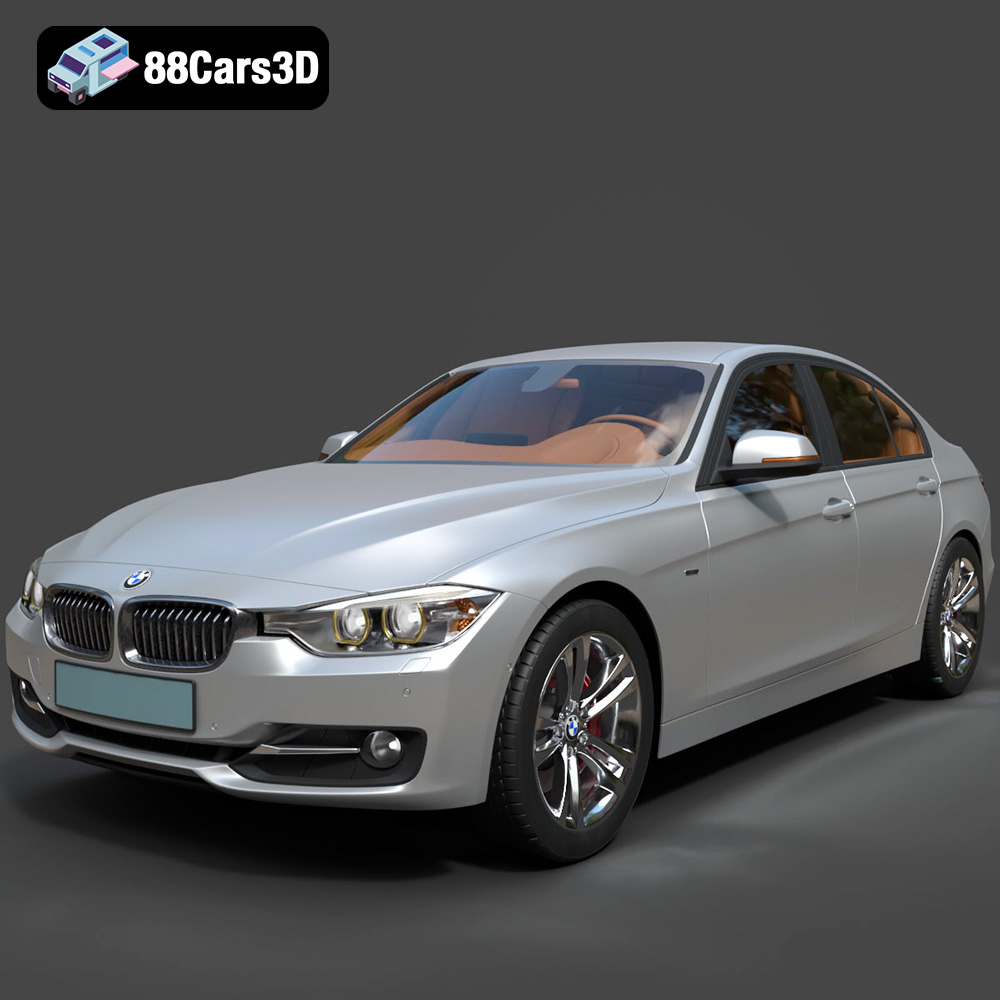
Download the BMW 3 F30 3D Model featuring a detailed exterior, realistic interior, and optimized mesh. Includes .blend, .fbx, .obj, .glb, .stl, .ply, .unreal, and .max formats for rendering, simulation, and game development.
Price: $10.79
Texture: Yes
Material: Yes
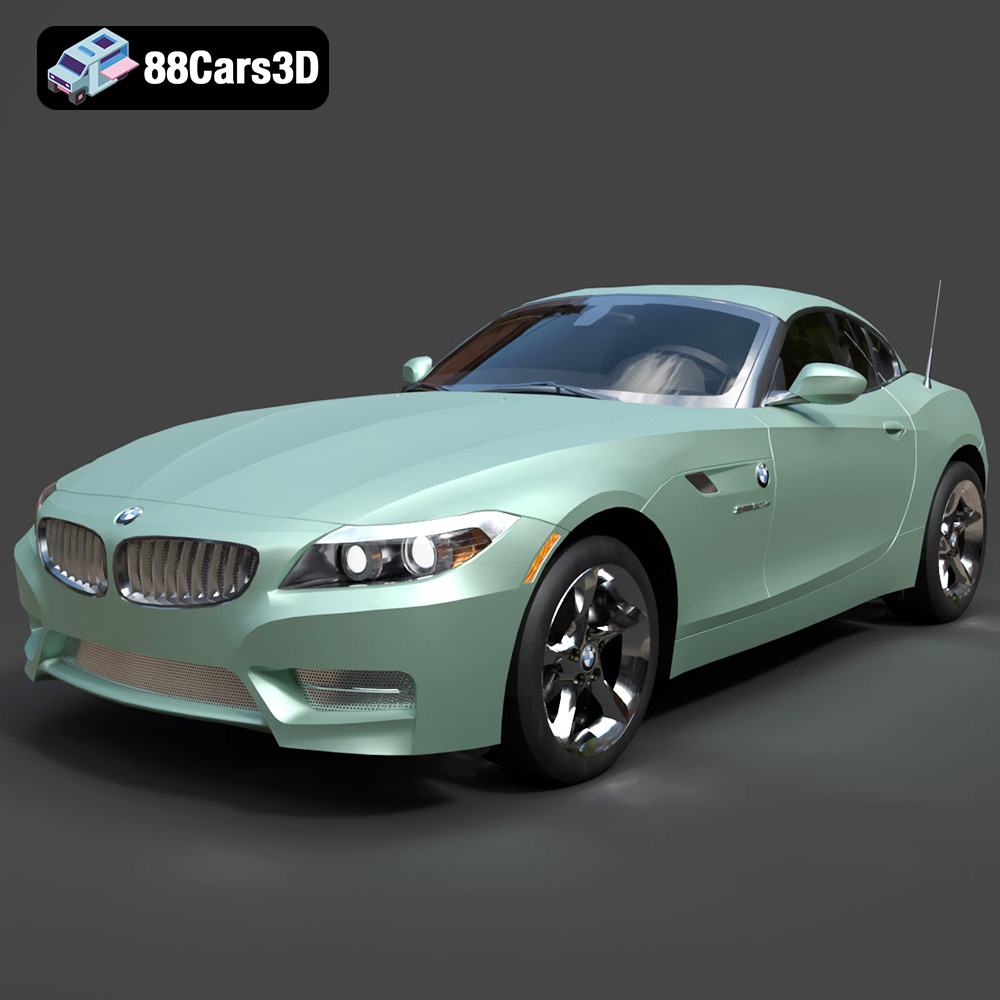
Download the BMW Z4 Roadster E89 3D Model featuring clean geometry, realistic detailing, and a fully modeled interior. Includes .blend, .fbx, .obj, .glb, .stl, .ply, .unreal, and .max formats for rendering, simulation, and game development.
Price: $13.99

Texture: Yes
Material: Yes
Download the BMW Z4 E85 3D Model featuring clean geometry, realistic detailing, and a fully modeled interior. Includes .blend, .fbx, .obj, .glb, .stl, .ply, .unreal, and .max formats for rendering, simulation, and game development.
Price: $13.99

Texture: Yes
Material: Yes
Download the BMW M3 2024 3D Model featuring clean geometry, realistic detailing, and a fully modeled interior. Includes .blend, .fbx, .obj, .glb, .stl, .ply, .unreal, and .max formats for rendering, simulation, and game development.
Price: $13.99
Texture: Yes
Material: Yes
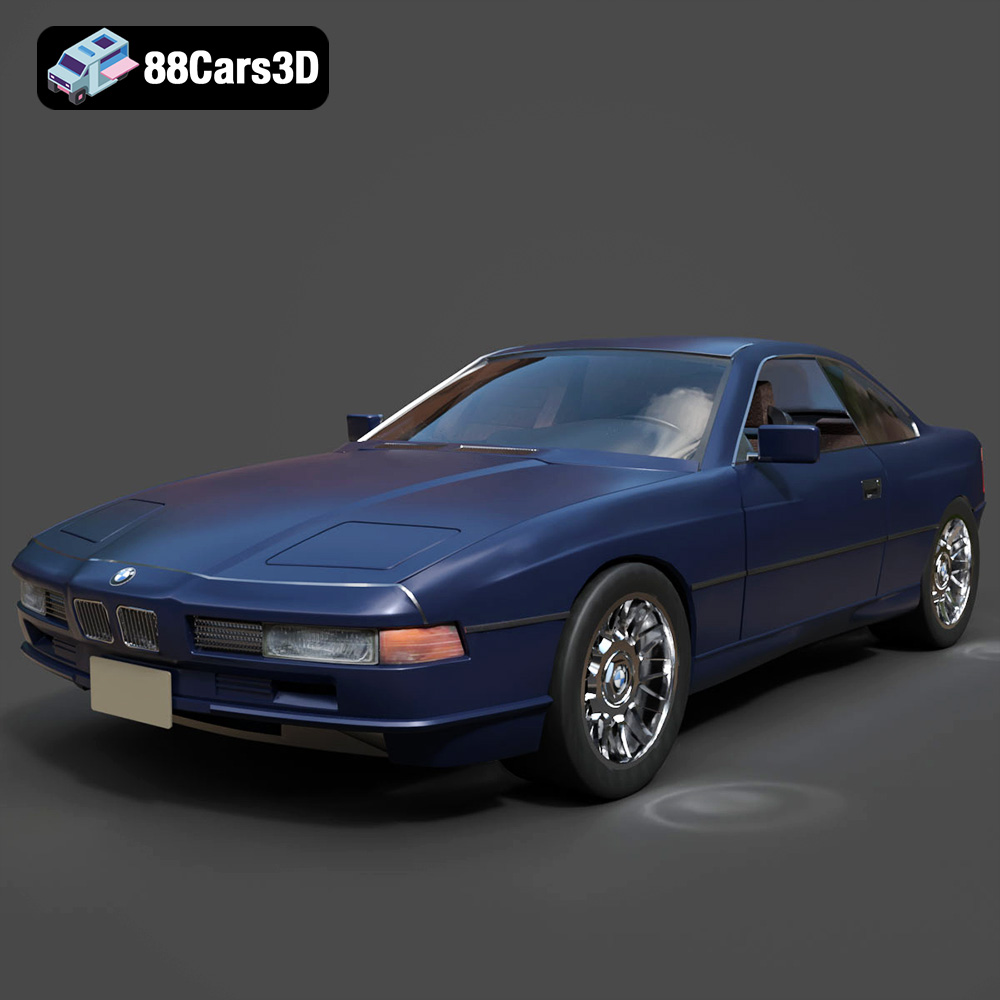
Download the BMW 850i Coupe 1990 3D Model featuring clean geometry, realistic detailing, and a fully modeled interior. Includes .blend, .fbx, .obj, .glb, .stl, .ply, .unreal, and .max formats for rendering, simulation, and game development.
Price: $13.99
Texture: Yes
Material: Yes
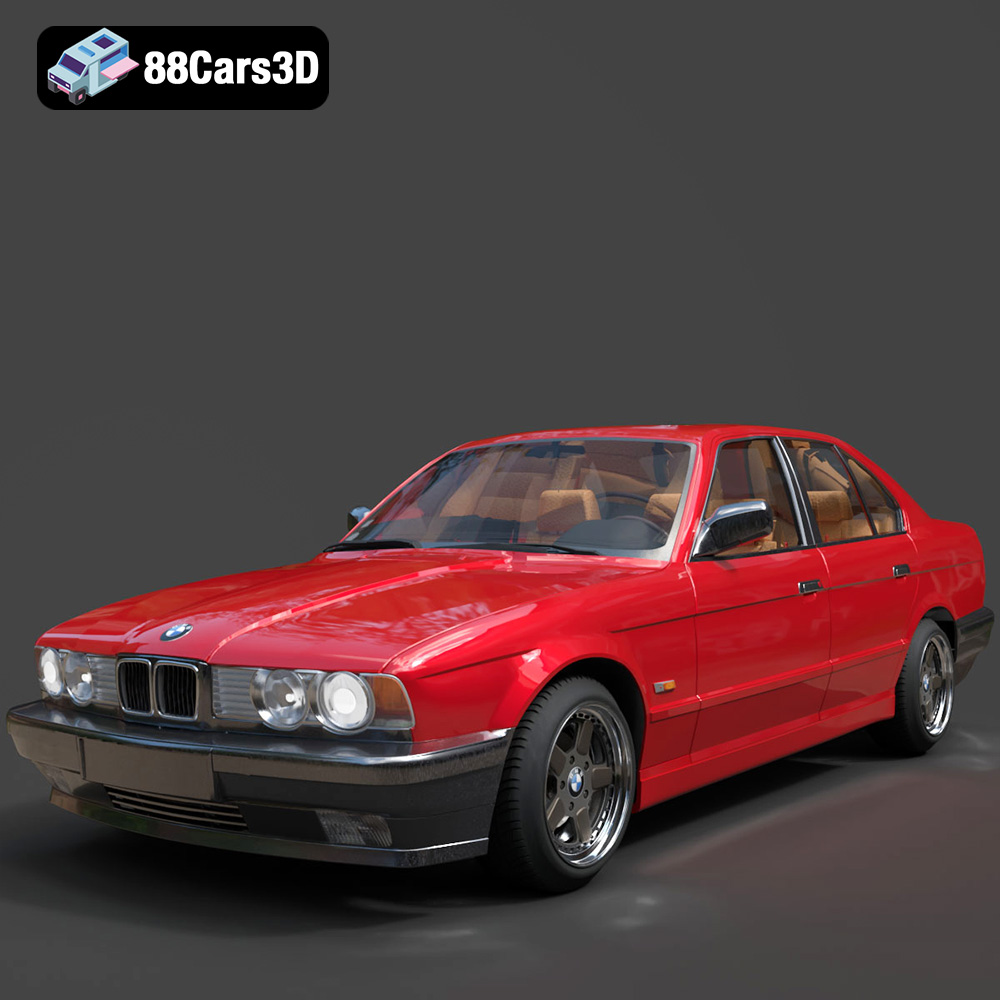
Download the BMW 525i E34 1993 3D Model featuring clean geometry, realistic detailing, and a fully modeled interior. Includes .blend, .fbx, .obj, .glb, .stl, .ply, .unreal, and .max formats for rendering, simulation, and game development.
Price: $12.99

Texture: Yes
Material: Yes
Download the BMW 7 Series 2016 3D Model featuring luxurious design, detailed interior, and accurate exterior. Includes .blend, .fbx, .obj, .glb, .stl, .ply, .unreal, and .max formats for rendering, simulation, and game development.
Price: $10.79
Texture: Yes
Material: Yes
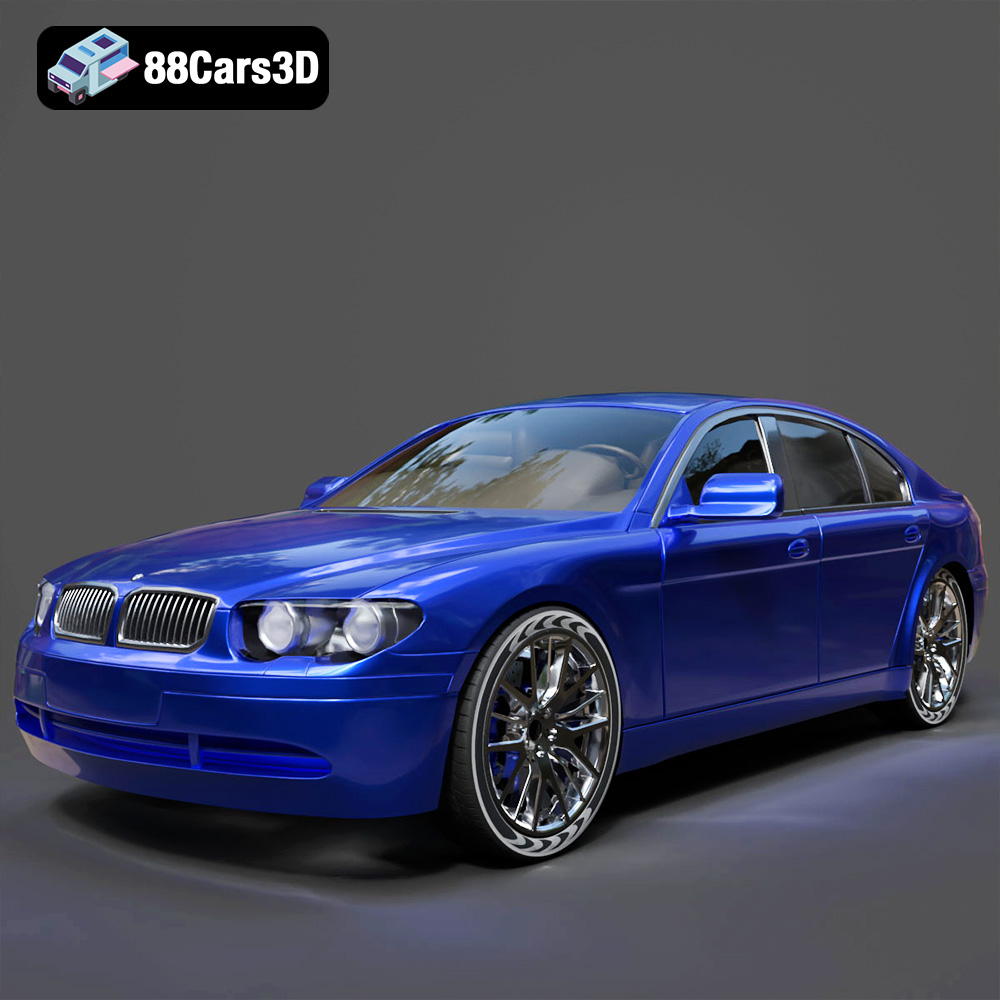
Download the BMW 7 Series 30th Anniversary 3D Model featuring a meticulously crafted exterior, detailed interior, and realistic wheels. Includes .blend, .fbx, .obj, .glb, .stl, .ply, .unreal, and .max formats for rendering, simulation, and game development.
Price: $35.79

