⚡ FLASH SALE: Get 60% OFF All Premium 3D & STL Models! ⚡

Welcome to the intricate world of 3D printing, where digital designs transform into tangible objects. If you’re passionate about bringing iconic vehicles to life through additive manufacturing, you’ve likely encountered the ubiquitous STL file format. But what exactly is an STL file, and why is it the lingua franca of 3D printing? Understanding the underlying structure of STL files – specifically their reliance on triangular meshes – is crucial for achieving high-quality prints, especially for complex models like those found on 88cars3d.com. This deep dive will demystify the STL format, exploring its mesh topology, the role of triangles, and how these elements directly impact the precision and success of your 3D printed car models. We’ll cover everything from basic mesh concepts to advanced file preparation techniques, ensuring you can confidently tackle any printable car model, from classic cruisers to futuristic concept cars.
At its core, a 3D printable model is a digital representation of a physical object. Before the advent of 3D printing, this often involved complex CAD (Computer-Aided Design) software used primarily for engineering and manufacturing. However, 3D printing necessitated a simpler, more universal format to describe surface geometry. This is where the STL (STereoLithography, or Standard Tessellation Language) file format emerged as the de facto standard. Developed by 3D Systems in the early 1980s, STL files describe the surface of a 3D object using a collection of connected triangles. It’s a deceptively simple approach that has powered the additive manufacturing revolution.
Unlike formats that store precise mathematical curves and surfaces (like NURBS), STL files represent geometry as a tessellated mesh. Think of it as approximating a smooth, curved surface with a multitude of tiny, flat triangles. The more triangles used, and the smaller they are, the smoother and more detailed the representation of the original surface becomes. This tessellation is the key to how 3D printers interpret and build objects layer by layer. Each triangle is defined by its three vertices (corner points) and a normal vector, which indicates which side of the triangle is “outward-facing” – essential information for the printer to understand the object’s solid form.
STL files come in two primary flavors: ASCII and Binary. The ASCII (American Standard Code for Information Interchange) format is human-readable, storing vertex coordinates and normal vectors as text. While useful for debugging and understanding the basic structure, ASCII STL files are significantly larger and slower to process. A typical ASCII STL file for a moderately complex object can easily run into megabytes, increasing slicing and transfer times. The binary format, on the other hand, is more compact and efficient. It stores the same data but in a compressed, machine-readable way. For most users, especially when dealing with intricate models like those found on 88cars3d.com, the binary format is the preferred choice due to its smaller file size and faster processing speeds by slicer software.
Every triangle in an STL file has an associated normal vector. This is a vector originating from the center of the triangle and pointing perpendicularly outwards from the surface. The normal vector is critical because it defines the “front” or “outside” of the triangle. This information tells the slicing software and ultimately the 3D printer which side is part of the solid object’s surface and which side faces the interior. Correctly oriented normal vectors are essential for creating manifold (watertight) models. If normals are inconsistently pointing inwards or outwards, it can lead to slicing errors, holes in the model, or print failures. Many mesh repair tools automatically recalculate and orient normal vectors to ensure consistency.
The collection of triangles forming the STL file is referred to as a mesh. The way these triangles connect and are arranged is known as the mesh topology. For 3D printing, a “clean” mesh topology is paramount. This means the mesh should represent a solid, watertight object without any holes, self-intersections, or disconnected components. Imagine trying to fill a leaky bucket with water – a mesh with holes will behave similarly, leading to printing errors and incomplete parts.
The quality of the mesh topology directly influences the print quality. A mesh with poorly defined edges or overlapping faces can confuse the slicing software, resulting in inaccurate extrusion paths, unintended gaps, or excessive supports. For highly detailed models, such as intricate automotive components or classic car bodies, the mesh resolution (the number of triangles used) is also a critical factor. Higher resolution meshes capture finer details but also result in larger file sizes. Striking the right balance is key – enough triangles to represent the detail without making the file unmanageably large or computationally intensive for the slicer.
A fundamental concept in mesh topology is “manifoldness.” A manifold mesh is one that locally resembles a plane or a smooth surface. In simpler terms, it’s “watertight” – it has no holes, no internal faces, and each edge is shared by exactly two faces. Think of the surface of a sphere or a cube; at any point on the surface, it behaves like a flat plane. Non-manifold geometry, conversely, includes issues like:
Most 3D printing slicers struggle with non-manifold geometry. They rely on the assumption that the mesh represents a solid volume. Non-manifold errors can lead to slicers generating incorrect toolpaths, failing to slice the model entirely, or producing parts with physical defects. Dedicated mesh repair software is often necessary to identify and fix these issues before printing.
The resolution of an STL file is determined by the density of triangles used to represent the surface. A low-resolution mesh might approximate a curved surface with only a few large triangles, resulting in a faceted or blocky appearance. Conversely, a high-resolution mesh uses a multitude of smaller triangles to capture subtle curves and intricate details. For 3D printable car models, higher resolution is generally desirable to reproduce the smooth lines of a car body, the details of a grille, or the intricate spokes of a wheel. However, there’s a trade-off: very high-resolution meshes can lead to extremely large file sizes, significantly increasing slicing time and potentially overwhelming less powerful computers or slicer software.
When sourcing models from marketplaces like 88cars3d.com, you’ll often find models optimized for printability. This means the mesh resolution has been carefully chosen to balance detail capture with manageable file size and complexity. If you’re exporting models from CAD or sculpting software yourself, consider the target print size and the capabilities of your 3D printer when deciding on the tessellation level. Tools like Blender or Meshmixer allow you to decimate (reduce triangle count) or subdivide (increase triangle count) meshes to achieve the desired balance.
The fundamental building block of the STL format is the triangle. Why triangles? Triangles are the simplest, most rigid two-dimensional polygon. Any two-dimensional shape, no matter how complex, can be approximated by a network of triangles (this process is called triangulation). Furthermore, a triangle is always planar; its three vertices define a unique plane. This simplicity is key to how 3D printers interpret and build objects.
When a slicing software processes an STL file, it essentially “slices” the 3D mesh into thin, horizontal layers. For each layer, it identifies the cross-section of the object at that height. This cross-section is then converted into a series of paths that the 3D printer’s nozzle (for FDM) or laser/projector (for resin) will follow to deposit material. The accuracy of these paths directly depends on the fidelity of the triangles in the STL file and how well they represent the original object’s intended shape. If the triangles are too large or poorly oriented, the calculated cross-sections will be approximations, leading to visible stepping artifacts or loss of detail on the printed object.
The orientation of each triangle, defined by its normal vector, is crucial. The “winding order” refers to the order in which the vertices of a triangle are listed (e.g., clockwise or counter-clockwise). This order, combined with a consistent coordinate system (e.g., Z-axis pointing up), determines the direction of the normal vector. Slicers use this information to distinguish between the exterior surface of the model and its interior. A consistent winding order (e.g., always counter-clockwise when viewed from outside the model) ensures that all normal vectors point outwards, defining a solid object. Inconsistent winding orders or inverted normals are a common source of errors, leading to holes or “inverted” sections of the model that the slicer cannot properly interpret.
Most mesh editing and repair software can automatically detect and correct winding order issues. For instance, in Blender, you can use the “Recalculate Outside” option in Edit Mode to fix inverted normals. Meshmixer also provides tools to ensure consistent face orientation. It’s good practice to check this, especially if you’ve exported a model from a CAD program that doesn’t inherently enforce watertight STL export.
The slicing software acts as the interpreter between the STL file and the 3D printer. Once a watertight STL file is loaded, the slicer performs several key operations:
The quality of the STL mesh directly impacts the accuracy of these slicing operations. A highly detailed, well-formed mesh will result in more accurate layer outlines, cleaner infill, and more effective support placement, ultimately leading to a better printed car model.
Even the most beautifully designed 3D printable car model can fail if the STL file isn’t properly prepared. This preparation phase is critical and often involves using specialized software to check, repair, and optimize the mesh before sending it to the slicer. Investing time in this step can save hours of frustration and wasted filament.
The primary goal is to ensure the STL file represents a **manifold** (watertight) object with clean geometry. Common issues include tiny holes, overlapping faces, disconnected components, and non-manifold edges. Fortunately, several powerful software tools are available to address these problems. For many users, a workflow involving a mesh editing tool like Meshmixer or Blender, followed by a slicer like Cura or PrusaSlicer, is highly effective. Platforms like 88cars3d.com often provide pre-checked and optimized files, but understanding the preparation process empowers you to tackle any model.
Software like Autodesk Meshmixer, Blender, or Netfabb offers robust tools for repairing STL files. The general process involves:
For engineers and those needing highly accurate repairs, Autodesk Netfabb offers advanced capabilities, including sophisticated analysis, repair, and optimization features specifically tailored for additive manufacturing. However, for most hobbyists, Meshmixer (which is free) or Blender provides sufficient tools.
Beyond just repairing errors, you might need to optimize the mesh for your specific printing needs.
When downloading models from marketplaces such as 88cars3d.com, the creators have often already performed these optimization steps, providing files that are both detailed and print-ready.
Once your STL file is repaired and optimized, the next step is to configure your slicing software. This is where you translate the digital mesh into instructions for your 3D printer. Key settings include:
Proper slicer setup ensures that the intricacies of the STL mesh are accurately reproduced in the physical print.
While the STL format is universal, the way it’s interpreted and the final print quality are heavily influenced by the chosen printing technology (FDM vs. resin) and the materials used. Understanding these interactions allows for further optimization of your 3D printed car models.
For instance, FDM (Fused Deposition Modeling) printers build objects layer by layer by extruding melted filament. The resolution is limited by the nozzle diameter (typically 0.4mm) and the layer height. This means fine details in an STL file might be smoothed over or lost if they are smaller than the nozzle width. Resin printers (SLA/DLP/MSLA) use UV light to cure liquid resin layer by layer. They offer significantly higher resolution, capable of reproducing much finer details, making them ideal for intricate models where capturing every curve and emblem is critical. However, resin printing often requires more extensive post-processing and uses more hazardous materials.
The choice between FDM and resin printing has direct implications for how you prepare and interpret your STL files:
Regardless of the technology, a clean, manifold STL file is the foundation. However, the specific settings in your slicer (layer height, exposure times for resin, print speed for FDM) will significantly influence how well that digital geometry translates into a physical object.
The choice of printing material affects not only the appearance and durability but also the printability of your car models:
For visually appealing car models, consider materials that can be easily sanded and painted. The ability to achieve a smooth surface finish after printing, often by sanding down layer lines, is crucial for high-quality automotive replicas.
The journey doesn’t end when the print is finished. Post-processing is essential for transforming a raw 3D print into a polished showpiece:
The detail and quality of your original STL file, combined with careful slicing and meticulous post-processing, are what elevate a simple 3D print into a stunning replica.
The STL file format, with its foundation in triangular meshes, is the cornerstone of 3D printing. Understanding how these triangles define the geometry, the importance of manifoldness, and the role of normal vectors is not just technical trivia; it’s the key to unlocking high-quality prints, especially for complex subjects like intricate car models. We’ve explored how mesh topology impacts print fidelity, the critical steps in repairing and optimizing STL files using various software tools, and how these digital representations are translated into physical objects by slicing software.
By mastering the nuances of STL files – from checking for non-manifold geometry and ensuring correct face orientation to optimizing mesh resolution and understanding the implications of different printing technologies and materials – you are empowering yourself to achieve professional-level results. Whether you’re downloading print-ready files from specialized marketplaces like 88cars3d.com or preparing your own creations, a solid grasp of these principles will significantly reduce print failures and enhance the detail and accuracy of your final models. Embrace the technical details, experiment with your slicer settings, and dedicate time to post-processing, and you’ll soon be printing a stunning collection of automotive masterpieces.

Texture: Yes
Material: Yes
Download the BMW 7 Series E38 3D Model featuring its iconic luxury sedan design and classic aesthetics. Includes .blend, .fbx, .obj, .glb, .stl, .ply, .unreal, and .max formats for rendering, simulation, and game development.
Price: $10.79

Texture: Yes
Material: Yes
Download the BMW 6 Series 640i F12 3D Model featuring a sleek design and detailed interior. Includes .blend, .fbx, .obj, .glb, .stl, .ply, .unreal, and .max formats for rendering, simulation, and game development.
Price: $10.79

Texture: Yes
Material: Yes
Download the BMW 3 F30 3D Model featuring a detailed exterior, realistic interior, and optimized mesh. Includes .blend, .fbx, .obj, .glb, .stl, .ply, .unreal, and .max formats for rendering, simulation, and game development.
Price: $10.79

Texture: Yes
Material: Yes
Download the BMW Z4 Roadster E89 3D Model featuring clean geometry, realistic detailing, and a fully modeled interior. Includes .blend, .fbx, .obj, .glb, .stl, .ply, .unreal, and .max formats for rendering, simulation, and game development.
Price: $13.99

Texture: Yes
Material: Yes
Download the BMW Z4 E85 3D Model featuring clean geometry, realistic detailing, and a fully modeled interior. Includes .blend, .fbx, .obj, .glb, .stl, .ply, .unreal, and .max formats for rendering, simulation, and game development.
Price: $13.99

Texture: Yes
Material: Yes
Download the BMW M3 2024 3D Model featuring clean geometry, realistic detailing, and a fully modeled interior. Includes .blend, .fbx, .obj, .glb, .stl, .ply, .unreal, and .max formats for rendering, simulation, and game development.
Price: $13.99
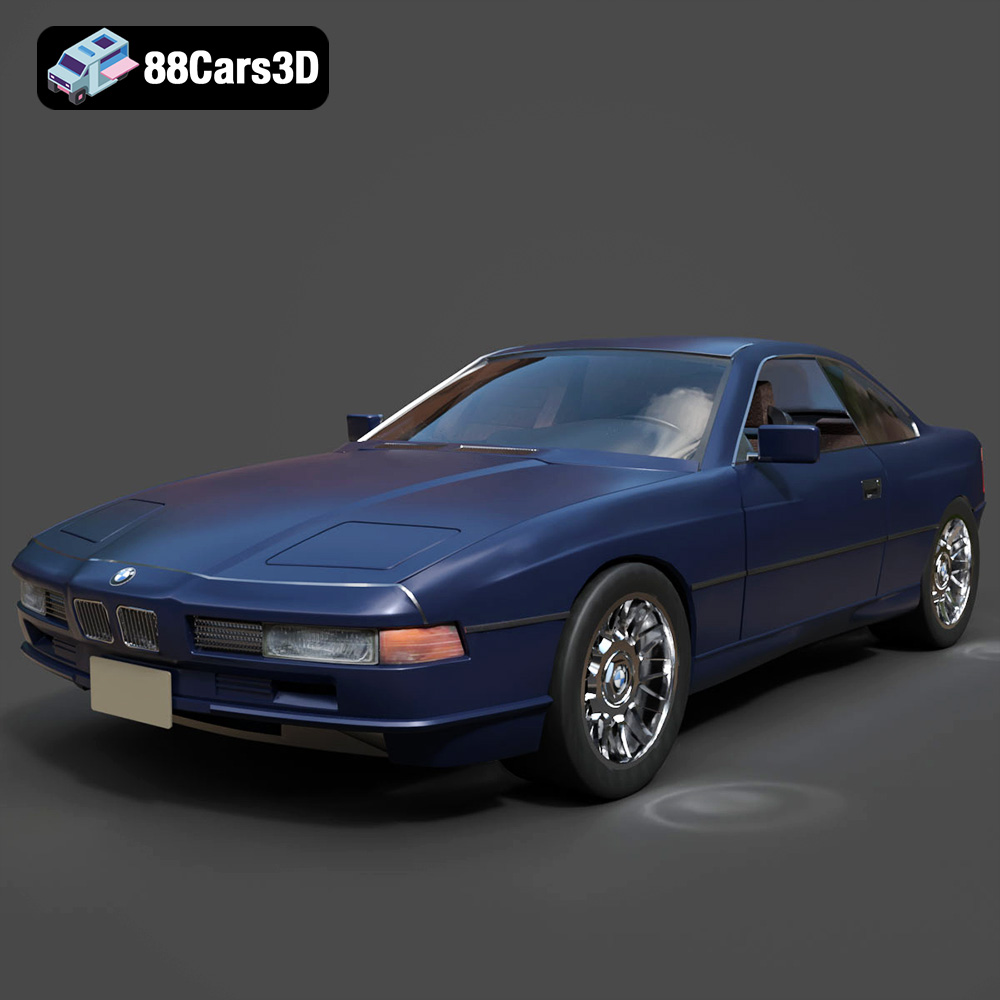
Texture: Yes
Material: Yes
Download the BMW 850i Coupe 1990 3D Model featuring clean geometry, realistic detailing, and a fully modeled interior. Includes .blend, .fbx, .obj, .glb, .stl, .ply, .unreal, and .max formats for rendering, simulation, and game development.
Price: $13.99
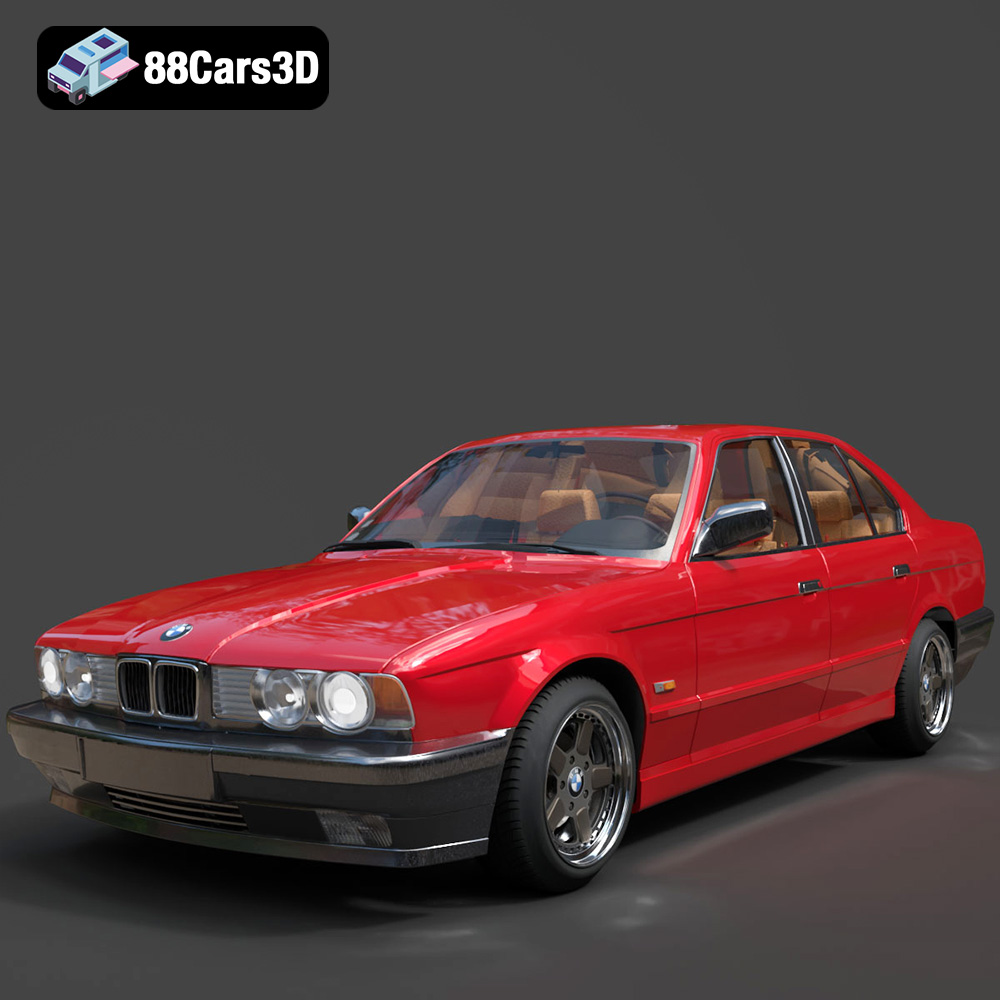
Texture: Yes
Material: Yes
Download the BMW 525i E34 1993 3D Model featuring clean geometry, realistic detailing, and a fully modeled interior. Includes .blend, .fbx, .obj, .glb, .stl, .ply, .unreal, and .max formats for rendering, simulation, and game development.
Price: $12.99

Texture: Yes
Material: Yes
Download the BMW 7 Series 2016 3D Model featuring luxurious design, detailed interior, and accurate exterior. Includes .blend, .fbx, .obj, .glb, .stl, .ply, .unreal, and .max formats for rendering, simulation, and game development.
Price: $10.79
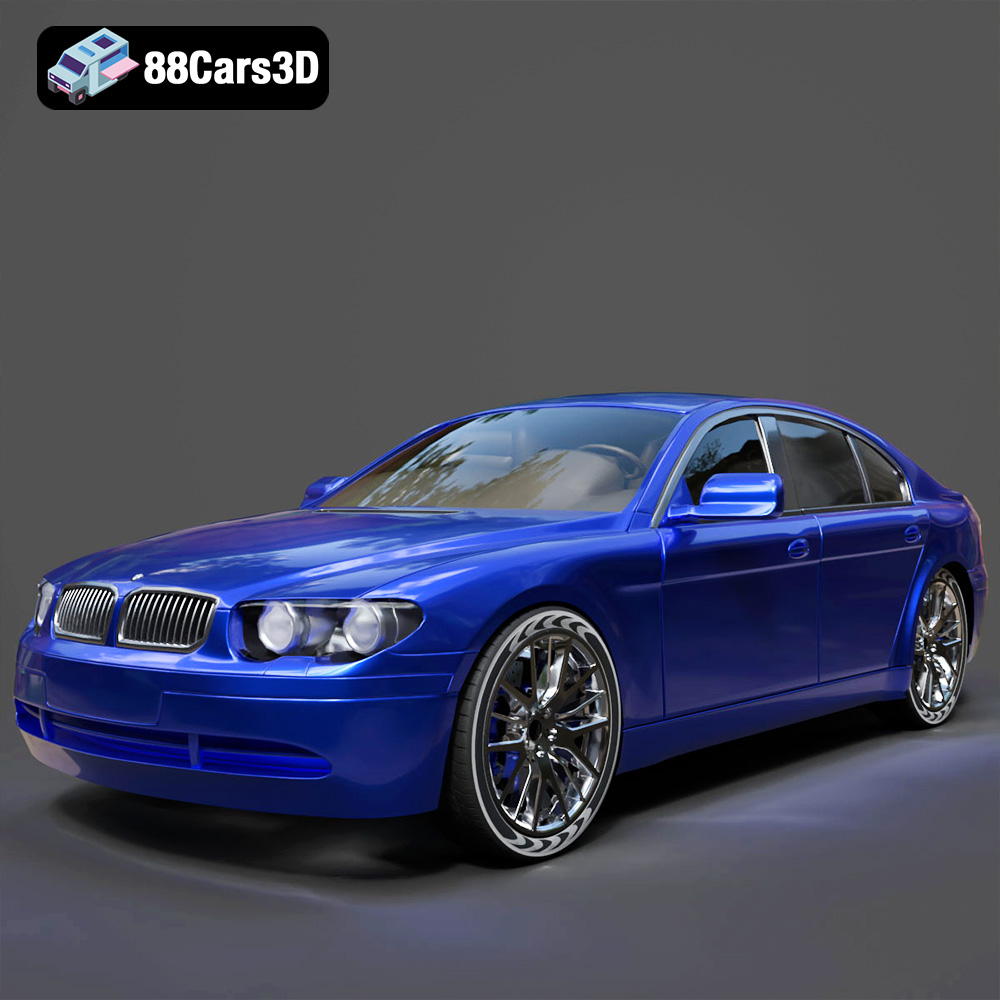
Texture: Yes
Material: Yes
Download the BMW 7 Series 30th Anniversary 3D Model featuring a meticulously crafted exterior, detailed interior, and realistic wheels. Includes .blend, .fbx, .obj, .glb, .stl, .ply, .unreal, and .max formats for rendering, simulation, and game development.
Price: $35.79

