⚡ FLASH SALE: Get 60% OFF All Premium 3D & STL Models! ⚡

In the realm of real-time rendering and immersive experiences, while stunning visuals often steal the spotlight, it’s the meticulous craft of sound design that truly breathes life into a virtual world. For professionals working with high-fidelity 3D car models and crafting engaging automotive visualization projects in Unreal Engine, mastering the audio system is as crucial as perfecting rendering techniques. Imagine a beautifully rendered vehicle from 88cars3d.com, visually impeccable, yet its engine hums generically, or its tires squeal without spatial accuracy. The immersion instantly shatters.
This comprehensive guide delves deep into Unreal Engine’s audio system, focusing on the critical aspects of spatial sound and professional audio mixing. We’ll explore how to transform static sound files into dynamic, location-aware audio experiences, from the subtle nuances of an engine idling to the thunderous roar of a high-performance vehicle passing by. Whether you’re developing an interactive configurator, a cutting-edge racing game, or a photorealistic automotive demo, understanding these principles is key to delivering a truly captivating and believable sensory experience. Prepare to elevate your projects beyond the visual, creating sonic landscapes that resonate with your audience.
Before diving into complex spatialization and mixing, the journey begins with properly importing and configuring your raw audio assets. Unreal Engine supports a variety of audio formats, but for optimal performance and quality, uncompressed WAV files are generally preferred during development, allowing for high-fidelity manipulation before final compression. When sourcing engine sounds, tire screeches, horn blasts, or environmental ambience, aim for clean, high-quality recordings with appropriate sample rates (e.g., 44.1 kHz or 48 kHz) and bit depths (16-bit or 24-bit).
Once imported, an audio file in Unreal Engine becomes a Sound Wave asset. While you can play a Sound Wave directly, the real power lies in encapsulating it within a Sound Cue. Sound Cues act as programmatic containers, allowing artists and developers to build complex sound behaviors from simpler audio assets. This includes adding randomization, looping, pitch variations, volume envelopes, and even basic sequential playback. For instance, a single car horn sound wave could be part of a Sound Cue that randomizes its pitch and volume slightly with each honk, preventing a repetitive, sterile sound.
The process of importing audio is straightforward: simply drag and drop your WAV or OGG files into the Content Browser, or use the “Import” button. Unreal Engine will automatically create Sound Wave assets. However, proper preparation involves more than just importing. Consider the following best practices:
A_Engine_Idle_Loop, A_Tire_Screech_Skid) to keep your project organized, especially with many audio assets.Sound Cues are the backbone of dynamic audio in Unreal Engine. To create one, right-click a Sound Wave in the Content Browser and select “Create Sound Cue.” Inside the Sound Cue Editor, you can drag and drop nodes representing various audio operations. Key nodes for initial setup include:
By experimenting with these nodes, you can quickly build expressive audio assets. For instance, an engine Sound Cue might involve a looped engine idle sound, with an occasional randomized “hiccup” mixed in to simulate minor engine fluctuations, providing a more organic feel than a simple, static loop.
Spatial sound is the art of placing audio sources within a 3D environment, allowing the listener to perceive their direction and distance. In Unreal Engine, this is primarily achieved through Attenuation Settings and advanced spatialization techniques like HRTF (Head-Related Transfer Function). For automotive visualization, realistic spatial audio is paramount: the engine sound should grow louder as a car approaches, its position should shift as it passes, and environmental sounds should react naturally to the player’s movement.
Attenuation defines how a sound’s volume, spatialization, and other properties change with distance from the listener. Without proper attenuation, all sounds would play at the same volume regardless of how far away they are, destroying any sense of realism. Unreal Engine provides robust Attenuation Settings that can be applied directly to a Sound Cue or dynamically overridden via Blueprint. Understanding these settings is crucial for conveying depth and presence in your automotive scenes, whether it’s the roar of a supercar or the subtle creak of a car door.
To apply attenuation, open a Sound Cue (or Sound Wave for simple cases) and navigate to the “Attenuation” section in its Details panel. Enable “Override Attenuation” to define custom settings, or create a reusable Attenuation Settings asset. Key properties include:
For high-quality 3D car models from marketplaces like 88cars3d.com, assigning distinct attenuation profiles for different components – a tight, interior-focused profile for dashboard clicks versus a broad, exterior-focused profile for the engine – significantly enhances the overall immersion.
While basic attenuation provides distance cues, HRTF (Head-Related Transfer Function) takes spatial audio to the next level. HRTF uses filters to simulate how human ears perceive sounds from different directions, accounting for the shape of the head, ears, and torso. When combined with binaural audio, HRTF creates a highly convincing 3D soundstage, making sounds feel like they are coming from specific points around the listener, not just left or right.
Unreal Engine supports various spatialization plugins, which often include HRTF implementations. Popular options include:
To implement a spatialization plugin, enable it in Project Settings and then set the “Spatialization Method” to “Binaural” (or the specific plugin’s equivalent) within your Attenuation Settings. For game developers creating interactive racing experiences or AR/VR automotive showrooms, the precise directional cues provided by HRTF can make the difference between a good experience and a truly unforgettable one.
Unreal Engine 5 introduced a revolutionary leap in audio design with MetaSounds, replacing the traditional Sound Cue system for many advanced use cases. MetaSounds provide a powerful, node-based procedural audio system, allowing sound designers to build complex, dynamic, and interactive audio experiences directly within the engine. Think of MetaSounds as Blueprint for audio – a visual scripting environment where you can generate, process, and manipulate sound in real-time based on game parameters, rather than simply playing back pre-recorded assets.
For automotive visualization and game development, MetaSounds are an absolute game-changer. They enable the creation of highly realistic engine sounds that dynamically respond to RPM, load, and gear changes; tire squeals that vary based on surface friction and vehicle speed; and even subtle creaks and rattles that procedurally generate based on the vehicle’s physics. This level of dynamic control eliminates the need for numerous pre-recorded samples and allows for unprecedented realism and variability.
One of the most compelling applications of MetaSounds for automotive projects is the creation of incredibly nuanced engine sounds. Instead of relying on a handful of RPM-specific loops, MetaSounds allow you to synthesize and blend multiple layers of engine noise, exhaust notes, and induction sounds in real-time. Here’s a simplified conceptual workflow:
RPM (float), Gear (int), ThrottleInput (float), or even Speed (float).RPM input to control the pitch and playback rate of these samplers using Multiply and Lerp nodes.RPM parameter.RPM or ThrottleInput thresholds.OnFinished output.The beauty of this system is that a single MetaSound can generate an infinite variety of engine sounds, making each acceleration and deceleration feel unique and responsive to the player’s input, dramatically enhancing the fidelity of 3D car models.
The true power of MetaSounds is realized when integrated with Blueprint visual scripting. Any input parameter exposed in a MetaSound Source can be directly controlled via Blueprint. This allows developers to link the audio directly to game logic and physics. For example:
RPM input parameter in real-time.ThrottleInput parameter in the MetaSound to control volume, intensity of exhaust notes, or the activation of specific engine layers.This deep integration between MetaSounds and Blueprint unlocks unprecedented creative freedom for sound designers and developers alike, moving beyond static audio playback to truly interactive and immersive sonic experiences. For further learning on MetaSounds, Epic Games’ official documentation at dev.epicgames.com/community/unreal-engine/learning is an excellent resource.
Once individual sounds are designed and spatialized, the next critical step is to blend them harmoniously into a cohesive and impactful soundscape. This is where audio mixing comes into play. Just like a music producer meticulously balances instruments, an Unreal Engine developer must balance engine sounds, environmental ambience, music, UI feedback, and voiceovers. Unreal Engine’s Submix system, alongside its array of built-in effects, provides the tools necessary to achieve a professional-grade mix.
A well-mixed project ensures clarity, prevents auditory fatigue, and guides the listener’s attention. For automotive visualization, this means ensuring the powerful roar of a car from 88cars3d.com doesn’t drown out crucial UI cues, or that interior sounds feel distinct from exterior ones. Submixes are essential for organizing your audio, allowing you to route different categories of sounds through dedicated signal chains, applying unique effects and levels to each.
Submixes are virtual mixing boards within Unreal Engine. They allow you to group related sounds and process them collectively. By default, all sounds route to the Master Submix. However, creating custom submixes is a fundamental step in professional mixing:
This hierarchical structure allows for granular control. You can, for instance, apply a compressor to the entire Engine Submix to ensure engine sounds maintain a consistent presence, or add a subtle reverb to the Ambience Submix to give environmental sounds more depth.
Unreal Engine provides a comprehensive suite of built-in audio effects that can be applied directly to Submixes or individual sounds. These effects are crucial for shaping the character and space of your audio:
Applying these effects strategically within your submixes creates a layered, professional soundscape. Remember to always listen critically, ideally on multiple speaker systems, to ensure your mix translates well across different playback environments.
While immersive audio is vital, it must not come at the cost of performance, especially in demanding real-time rendering scenarios like high-fidelity automotive visualization or complex game environments. An unoptimized audio setup can lead to CPU spikes, memory overruns, and ultimately, a compromised user experience. Unreal Engine offers several powerful tools and strategies to manage audio performance effectively, ensuring your sonic landscape remains rich without bogging down your project.
The goal of audio optimization is to strike a balance between quality and efficiency. This involves managing the number of simultaneous sounds, their processing complexity, and their memory footprint. For projects featuring numerous 3D car models, each with its own intricate engine sounds, tire effects, and interactive elements, careful optimization is not just a recommendation—it’s a necessity.
One of the primary performance considerations is the number of sounds playing concurrently. Every active sound component consumes CPU resources. Unreal Engine provides robust mechanisms to manage this:
Stop Oldest, Stop Farthest, Stop Not So Loud, Do Not Play). For dynamic automotive sounds, Stop Farthest or Stop Oldest are often good choices to prioritize relevant sounds.By judiciously applying concurrency rules and leveraging attenuation for culling, you can significantly reduce the audio engine’s workload without sacrificing audible fidelity.
Beyond CPU usage, memory footprint is another critical aspect of audio optimization. Uncompressed WAV files can quickly consume large amounts of RAM and increase build sizes. Unreal Engine provides robust compression and streaming options to mitigate this:
Regularly profiling your audio using the “Stat Sound” command in Unreal Engine (or the Audio Debugger) is essential to identify performance bottlenecks and fine-tune your optimization strategies. This ensures a smooth, high-performance experience for your interactive automotive visualization and game development projects.
To truly bring 3D car models and automotive visualization projects to life, audio needs to be more than just background noise; it needs to be interactive and responsive to player actions and game state. This is where Blueprint visual scripting becomes an indispensable tool, allowing developers to connect game logic directly to the Unreal Engine audio system. Whether it’s triggering an engine start, simulating gear shifts, or creating dynamic car configurator soundscapes, Blueprint offers the flexibility to create engaging sonic feedback.
Interactive audio elevates the user experience, providing immediate and intuitive feedback for every action. Imagine pressing the accelerator in a virtual car and hearing the engine’s RPM dynamically increase, or opening a door and hearing a distinct, spatialized “clunk.” These seemingly small details, orchestrated through Blueprint, significantly contribute to the overall immersion and realism of a project.
The most fundamental aspect of interactive audio is triggering sounds based on in-game events. Blueprint provides a clear and intuitive way to achieve this:
For high-fidelity 3D car models, this integration allows for detailed sound feedback for every interactive element: door opening/closing, window winding, seat adjustment, and more.
As discussed earlier, MetaSounds truly shine when their parameters are driven by real-time game variables via Blueprint. This allows for truly dynamic and procedural audio that reacts fluidly to the game state, which is particularly powerful for complex systems like vehicle physics:
EngineRPM (float).EngineRPM value.By leveraging Blueprint’s robust event system and its ability to feed real-time data into MetaSounds, developers can create automotive experiences where the audio is not merely decorative but an integral, interactive, and responsive part of the simulation. This deep integration is what separates basic sound implementation from a truly immersive and professional game development or automotive visualization project.
In the competitive landscape of real-time rendering and automotive visualization, achieving true immersion demands attention to every detail, and perhaps none is more impactful yet often underestimated than the power of sound. As we’ve explored, Unreal Engine’s audio system offers a sophisticated suite of tools, from basic Sound Cues and detailed Attenuation Settings to the revolutionary capabilities of MetaSounds, all unified by the flexibility of Blueprint scripting. Mastering spatial sound and professional audio mixing transforms static visual assets, such as the exquisite 3D car models found on 88cars3d.com, into vibrant, believable experiences.
By carefully importing and preparing audio assets, precisely defining how sounds behave in 3D space with attenuation and HRTF, and unleashing dynamic soundscapes with MetaSounds and Blueprint, developers can craft automotive projects that not only look stunning but also sound incredibly lifelike. Strategic optimization ensures these rich audio environments perform flawlessly, maintaining the delicate balance between quality and efficiency. The goal is to move beyond mere playback and create a sonic symphony that responds dynamically to every interaction, making users feel truly present within the virtual world.
As you embark on your next Unreal Engine project, remember that sound is the unseen architect of immersion. Invest time in honing your audio skills, experiment with MetaSounds, and always listen critically. The reward will be an experience that transcends the visual, captivating your audience on a deeper, more emotional level, and solidifying your work as a benchmark in interactive automotive visualization and game development.

Texture: Yes
Material: Yes
Download the BMW 7 Series E38 3D Model featuring its iconic luxury sedan design and classic aesthetics. Includes .blend, .fbx, .obj, .glb, .stl, .ply, .unreal, and .max formats for rendering, simulation, and game development.
Price: $10.79

Texture: Yes
Material: Yes
Download the BMW 6 Series 640i F12 3D Model featuring a sleek design and detailed interior. Includes .blend, .fbx, .obj, .glb, .stl, .ply, .unreal, and .max formats for rendering, simulation, and game development.
Price: $10.79

Texture: Yes
Material: Yes
Download the BMW 3 F30 3D Model featuring a detailed exterior, realistic interior, and optimized mesh. Includes .blend, .fbx, .obj, .glb, .stl, .ply, .unreal, and .max formats for rendering, simulation, and game development.
Price: $10.79
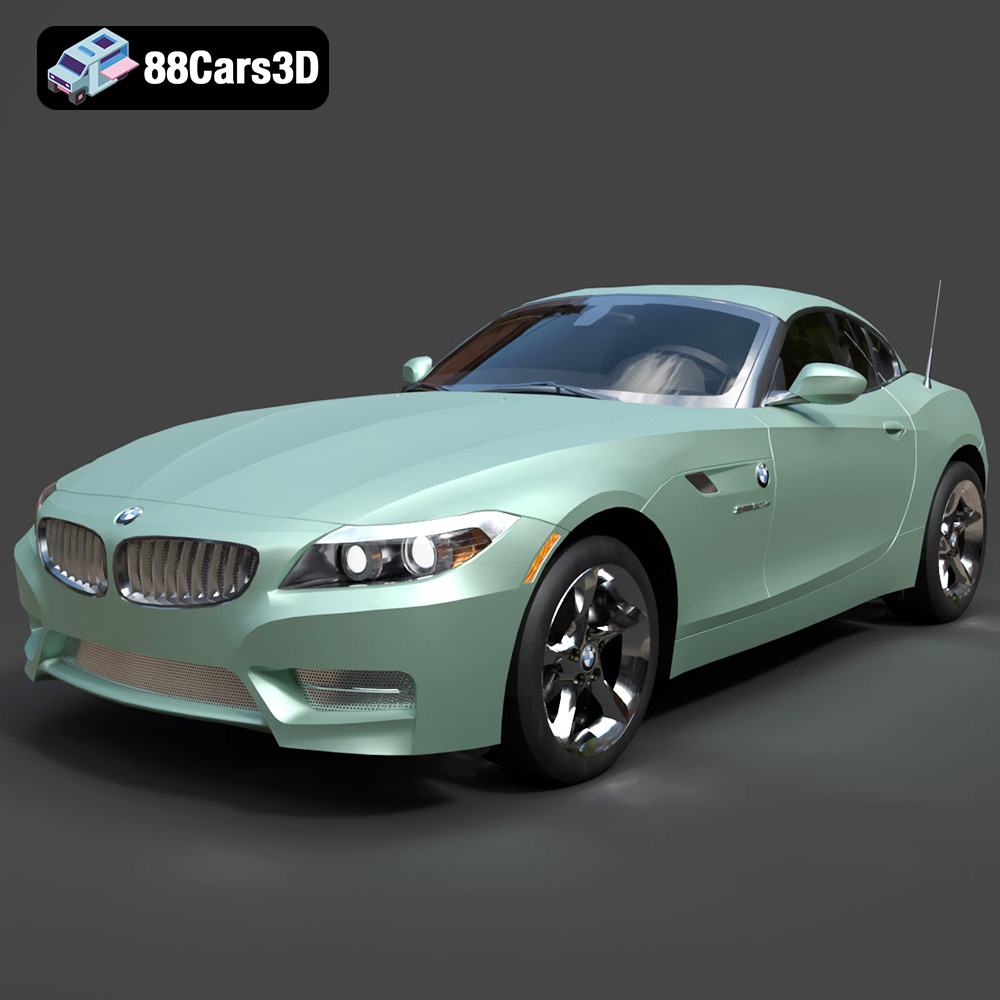
Texture: Yes
Material: Yes
Download the BMW Z4 Roadster E89 3D Model featuring clean geometry, realistic detailing, and a fully modeled interior. Includes .blend, .fbx, .obj, .glb, .stl, .ply, .unreal, and .max formats for rendering, simulation, and game development.
Price: $13.99

Texture: Yes
Material: Yes
Download the BMW Z4 E85 3D Model featuring clean geometry, realistic detailing, and a fully modeled interior. Includes .blend, .fbx, .obj, .glb, .stl, .ply, .unreal, and .max formats for rendering, simulation, and game development.
Price: $13.99

Texture: Yes
Material: Yes
Download the BMW M3 2024 3D Model featuring clean geometry, realistic detailing, and a fully modeled interior. Includes .blend, .fbx, .obj, .glb, .stl, .ply, .unreal, and .max formats for rendering, simulation, and game development.
Price: $13.99
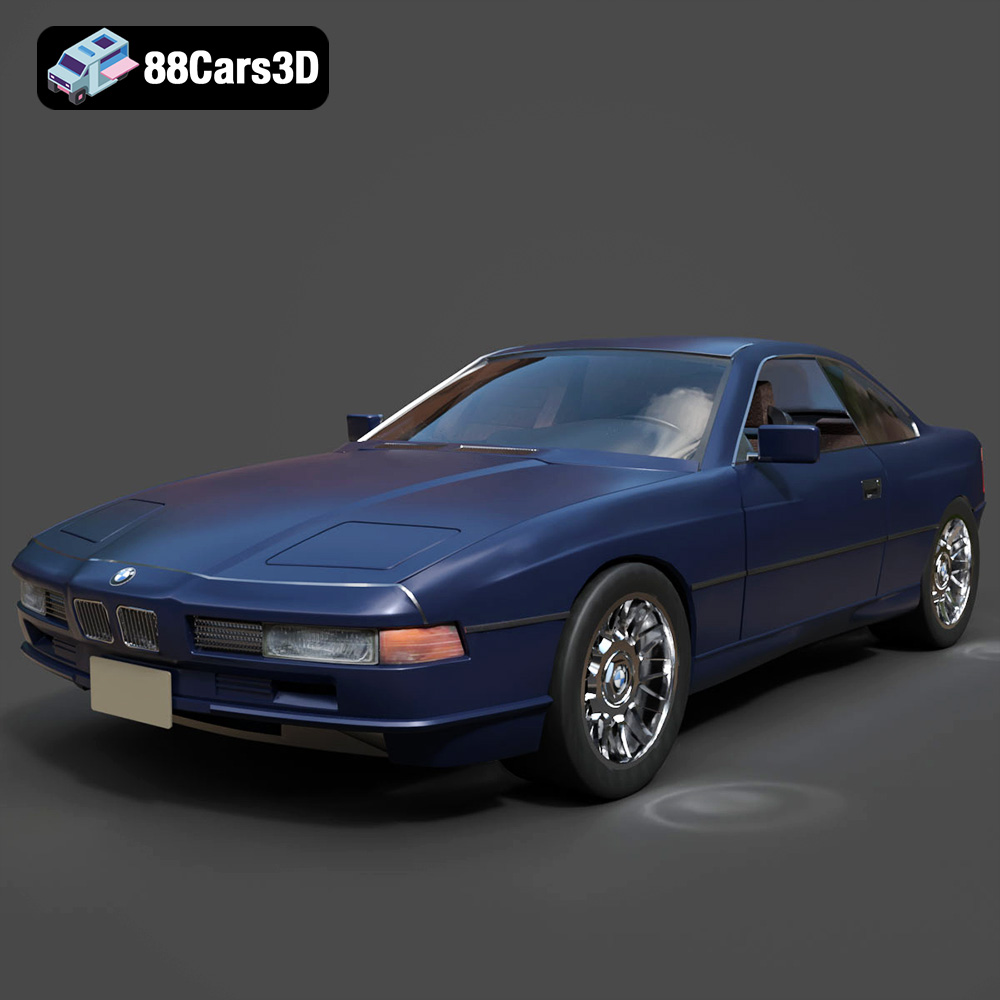
Texture: Yes
Material: Yes
Download the BMW 850i Coupe 1990 3D Model featuring clean geometry, realistic detailing, and a fully modeled interior. Includes .blend, .fbx, .obj, .glb, .stl, .ply, .unreal, and .max formats for rendering, simulation, and game development.
Price: $13.99
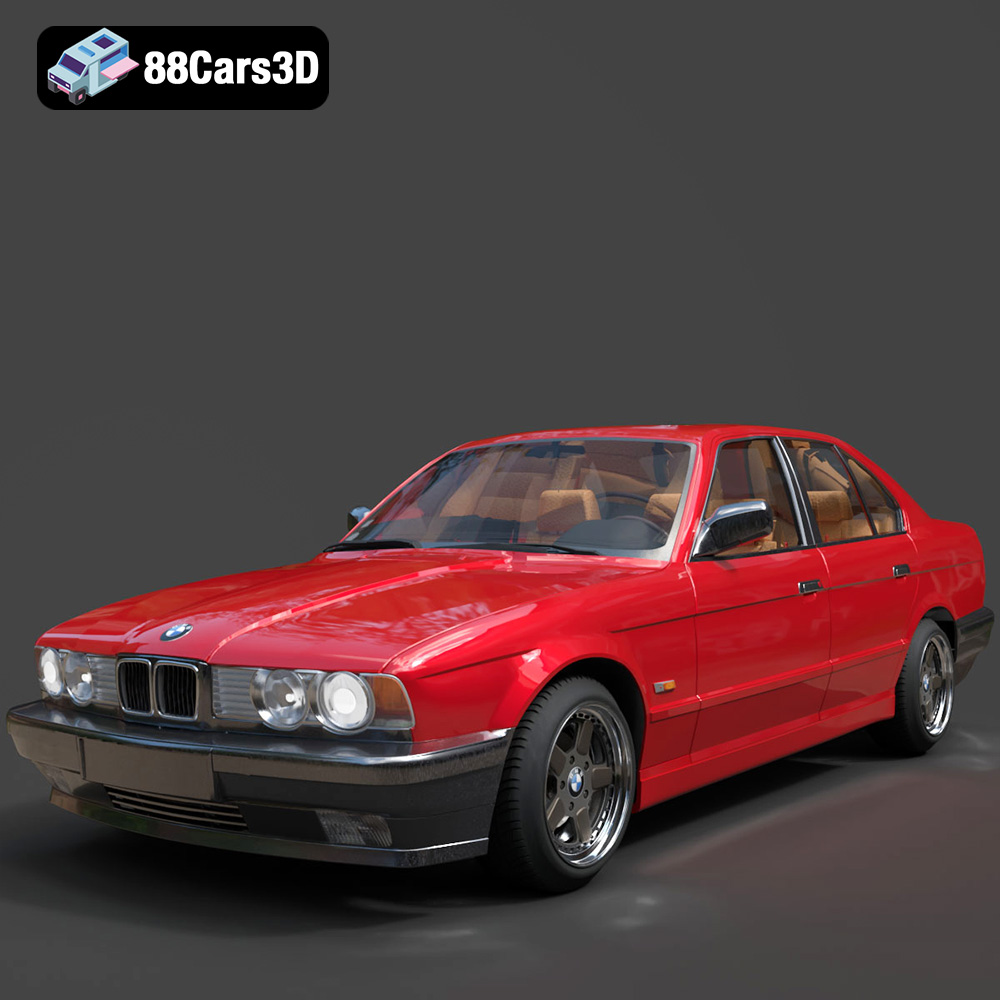
Texture: Yes
Material: Yes
Download the BMW 525i E34 1993 3D Model featuring clean geometry, realistic detailing, and a fully modeled interior. Includes .blend, .fbx, .obj, .glb, .stl, .ply, .unreal, and .max formats for rendering, simulation, and game development.
Price: $12.99

Texture: Yes
Material: Yes
Download the BMW 7 Series 2016 3D Model featuring luxurious design, detailed interior, and accurate exterior. Includes .blend, .fbx, .obj, .glb, .stl, .ply, .unreal, and .max formats for rendering, simulation, and game development.
Price: $10.79
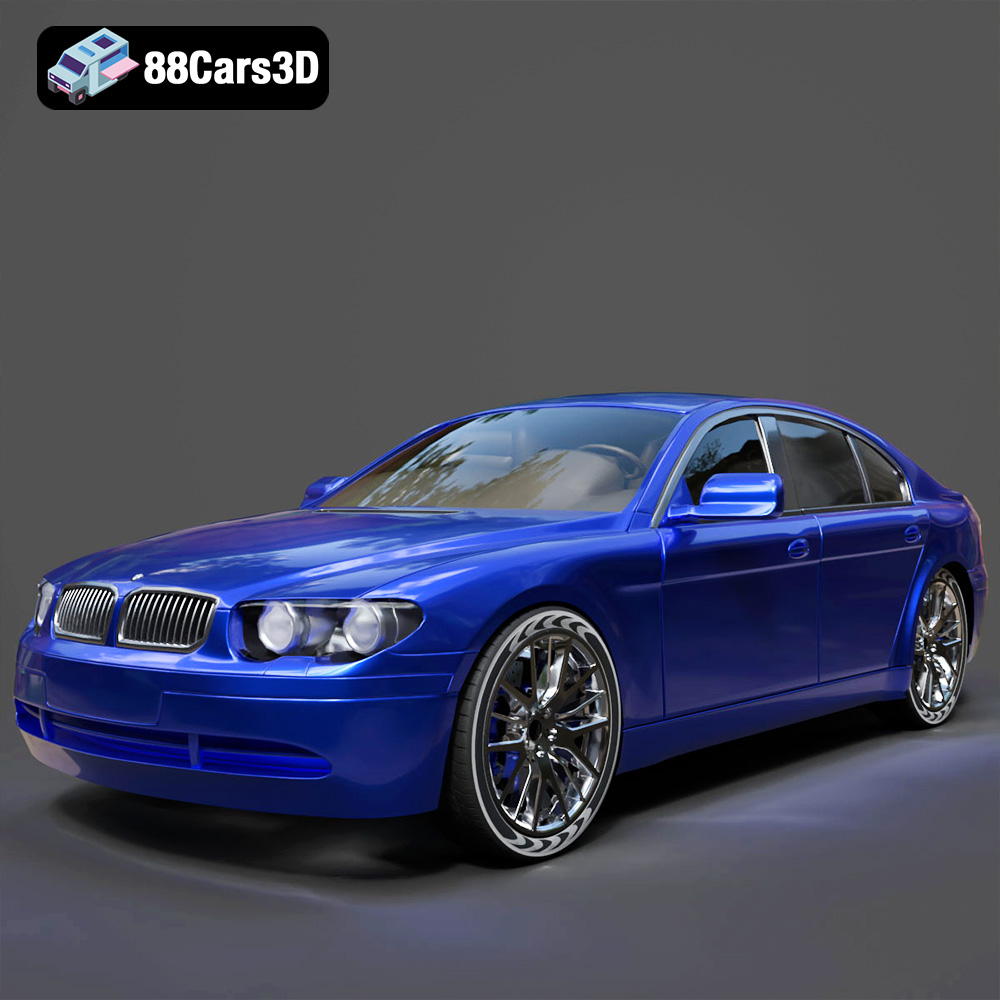
Texture: Yes
Material: Yes
Download the BMW 7 Series 30th Anniversary 3D Model featuring a meticulously crafted exterior, detailed interior, and realistic wheels. Includes .blend, .fbx, .obj, .glb, .stl, .ply, .unreal, and .max formats for rendering, simulation, and game development.
Price: $35.79

