⚡ FLASH SALE: Get 60% OFF All Premium 3D & STL Models! ⚡

“`html
The allure of a perfectly rendered 3D printable car model is undeniable. Whether you’re a seasoned maker looking to add a classic to your collection, an automotive enthusiast wanting a tangible representation of your dream car, or an educator demonstrating the power of additive manufacturing, the journey from a digital design to a physical object begins with a crucial step: transforming your vehicle model into a print-ready STL file. This process involves more than just a simple export; it demands a deep understanding of mesh topology, slicing parameters, and printer capabilities. This guide will walk you through the essential techniques and considerations for achieving flawless 3D prints, ensuring your digital automotive creations come to life with stunning accuracy and detail. We’ll delve into the intricacies of file preparation, explore optimal slicing strategies for both FDM and resin printing, and discuss how to overcome common challenges, ultimately empowering you to create professional-grade printable car models.
The STL (STereoLithography) file format is the de facto standard for 3D printing. It represents a 3D object’s surface geometry as a collection of triangular facets. Each triangle is defined by three vertices (points in 3D space) and a normal vector, which indicates the outward-facing direction of the surface. While simple and widely supported, this format has inherent limitations that necessitate careful preparation when working with complex models like vehicles.
The underlying structure of your 3D model, known as its mesh topology, is paramount for successful 3D printing. A clean, manifold mesh is crucial. A manifold mesh is a watertight surface with no holes, no non-manifold edges (edges shared by more than two faces), and no internal faces. If a mesh is non-manifold, the slicing software won’t know how to interpret the surface, leading to printing errors such as gaps, missing sections, or distorted geometry. For intricate automotive models, ensuring that all separate components (body panels, wheels, chassis) are properly joined or separated as intended is vital. Think of it like building a real car; every panel needs to fit seamlessly. Software like Blender, Meshmixer, or Autodesk Netfabb offer powerful tools to inspect, repair, and optimize mesh topology before exporting to STL. Common issues include inverted normals (where the outward-facing direction is pointing inwards), duplicate vertices, and holes in the mesh, all of which must be addressed.
When exporting your vehicle model from your preferred 3D modeling software (e.g., Blender, 3ds Max, Maya, SolidWorks), several settings within the STL export dialogue are critical. The most important is the resolution or tessellation. This determines how finely the curved surfaces of your model are approximated by flat triangles. A higher resolution results in a smoother surface but a larger file size and potentially more complex mesh for the slicer to process. Conversely, a lower resolution can lead to visible facets or “stair-stepping” on curved areas. For detailed car models, you’ll want a balance – enough triangles to capture subtle curves and details like panel lines, but not so many that the file becomes unmanageable. Most software allows you to control this through deviation or angle tolerances. Aim for a tolerance that results in smooth curves without excessive triangulation. For instance, setting a deviation of 0.01mm can often yield excellent results for most car models. Always check the exported STL in a mesh viewer or your slicer to confirm visual quality.
Even models that appear visually correct in modeling software can contain hidden errors that will cause problems during slicing and printing. Thorough mesh repair and optimization are non-negotiable steps for achieving high-quality printable car models. This is where the true technical expertise comes into play, ensuring that the digital file translates accurately to the physical realm.
Software like Meshmixer and Netfabb are invaluable for this stage. Their primary functions include identifying and fixing non-manifold geometry, repairing holes, removing intersecting faces, and ensuring consistent normals. For example, in Meshmixer, you can use the ‘Inspector’ tool to automatically detect errors and then employ ‘Make Solid’ or manual meshing tools to fix them. When repairing holes, pay attention to the fill method; a simple triangular fill might suffice, but for larger gaps, more complex reconstruction might be needed to maintain the surface integrity. Similarly, removing intersecting faces is critical, as these can confuse the slicer into printing solid blocks where there should be internal space. For complex assemblies that will be printed as a single STL, ensuring that parts don’t intersect unintentionally is key. If you’re downloading models from marketplaces such as 88cars3d.com, they are typically pre-checked for manifold integrity, but it’s always good practice to perform a quick check yourself, especially if you plan significant modifications.
A common pitfall in 3D printing is insufficient wall thickness. While a model might look great on screen, its thinnest features might be below the printable threshold of your 3D printer and chosen material. For instance, delicate trim pieces, mirrors, or door handles need to have a minimum wall thickness – typically at least 1mm for FDM printing, and potentially less for high-resolution resin printers. You can use the ‘Thickness Analysis’ tools in software like Meshmixer or Blender to identify areas that are too thin. You might need to manually thicken these areas or adjust the model’s scale. Furthermore, very fine details, such as small logos or intricate grilles, may not resolve well depending on your printer’s resolution and nozzle size (for FDM) or layer height (for resin). Consider whether these details are essential or if simplifying them slightly will improve overall print quality. For platforms like 88cars3d.com, models are often designed with these considerations in mind, offering a balance of detail and printability.
Once your STL file is repaired and optimized, the next critical step is slicing. Slicing software (like Cura, PrusaSlicer, Lychee Slicer, or ChiTuBox) converts your 3D model into a series of thin layers and generates the toolpath instructions (G-code for FDM, specific formats for resin printers) that your 3D printer follows. The settings you choose here have a direct impact on print quality, strength, and print time.
For FDM printing, layer height is a primary factor affecting detail and print time. A smaller layer height (e.g., 0.1mm) will produce smoother curves and finer details but significantly increase print duration. A larger layer height (e.g., 0.2mm or 0.3mm) prints much faster but can result in more visible layer lines. For high-quality car models, a layer height between 0.1mm and 0.15mm is often a good compromise. Infill provides internal support and affects the model’s strength and material usage. For display models, a low infill percentage (5-15%) with a pattern like ‘grid’ or ‘gyroid’ is usually sufficient. For parts that might experience stress, a higher infill (20-40%) and stronger pattern like ‘cubic’ might be necessary. Print speed is another crucial setting; printing too fast can lead to poor layer adhesion, ringing artifacts, and reduced detail. For detailed car models, printing outer walls and top layers at slower speeds (e.g., 40-60 mm/s) while allowing infill to print slightly faster is a common practice. Ensure your nozzle temperature and bed temperature are correctly calibrated for your chosen filament (e.g., PLA typically 190-220°C nozzle, 50-60°C bed; PETG 230-250°C nozzle, 70-80°C bed).
Resin printing (SLA, DLP, MSLA) excels at capturing intricate details, making it ideal for highly detailed automotive models. The key slicing parameters here are layer height and exposure time. Layer heights can be as low as 0.025mm to 0.05mm for exceptional surface finish. Exposure time is critical; under-exposure leads to prints detaching from the build plate or failing to cure properly, while over-exposure can cause loss of detail and difficult support removal. Each resin type and printer combination requires calibration. Typically, initial exposure times for the first layer are much longer (e.g., 30-60 seconds) to ensure good adhesion to the build plate, followed by standard exposure times for subsequent layers (e.g., 2-8 seconds, depending on resin and layer height). Orientation is vital in resin printing to minimize suction forces on flat surfaces, which can cause print failures. Angling the model at 10-30 degrees relative to the build plate and strategically placing supports can mitigate this. Using software like Lychee Slicer or ChiTuBox Pro allows for advanced orientation and auto-support generation, crucial for complex shapes like car bodies.
Without proper support, overhangs and bridges in your 3D model will collapse during printing, resulting in failed prints or significantly compromised quality. The generation and management of support structures are often the most challenging aspects of 3D printing complex objects like vehicles.
FDM printers require supports for any overhangs greater than approximately 45-60 degrees. Common support types include ‘Normal’ (tree-like structures directly under the overhang) and ‘Tree’ (more organic, branch-like supports that can be easier to remove and use less material). The ‘Support Interface’ setting is incredibly useful; it creates a denser, flatter surface at the top of the supports where they meet the model, resulting in a cleaner surface finish on the underside of overhangs. Key settings to tune include support density (how much material is used), support pattern (e.g., grid, zig-zag), support Z distance (the gap between the support and the model, affecting ease of removal and surface finish – a smaller gap provides better support but is harder to remove), and support XY distance (the horizontal gap). For car models, you’ll want to carefully consider where supports are placed to avoid damaging delicate details like spoilers or undercarriage components. Sometimes, orienting the model differently can minimize the need for supports in critical areas.
Resin printing supports are typically much finer than FDM supports, often using small ‘hollow needles’ or ‘islands’ that connect the model to the build plate or other support structures. The goal is to provide just enough contact points to hold the model in place against resin pull, while being minimal enough to reduce scarring upon removal. Critically important are the tip type (e.g., cone, sphere) and tip diameter, which determine the size of the contact point on the model. For detailed car models, using smaller tip diameters and strategically placing supports on less visible areas or panel lines is essential. The density and structure of the main supports also play a role. Many slicers offer auto-support generation, but manual refinement is often necessary for optimal results. Look for features that can automatically detect islands (sections of the model not supported by anything) and ensure all parts of the model have adequate support. Experimenting with different support types and densities on calibration prints is highly recommended to find the sweet spot for your specific resin and printer.
How you position your 3D model on the print bed and ensure it sticks reliably is fundamental to a successful print, especially for complex shapes like vehicles which can have significant surface area.
For FDM printing, the orientation of your car model on the build plate affects several factors: the need for supports, the strength of the final print (layer lines create anisotropic strength, meaning the model is weaker along the Z-axis), and the surface finish. Placing a car model with its wheels down often requires extensive supports for the wheel arches and undercarriage. Rotating it to print on its side or roof can reduce supports but might expose larger, flat areas to potential warping issues or create a less desirable surface finish on the most visible side. A common strategy for car models is to print them at a slight angle (e.g., 10-20 degrees) to minimize the need for supports on critical surfaces and improve adhesion. Experimentation is key. Consider printing vertically for maximum detail on the visible surfaces, or horizontally for easier support management, depending on the model’s specific features and your priorities. Ensure your bed adhesion is robust. Using a brim or raft in your slicer settings can significantly improve the chances of the first layer sticking firmly, especially for models with a small base area or made from warp-prone materials like ABS.
As mentioned in the resin printing section, orientation is paramount for minimizing suction forces. For car models, placing them at an angle (typically 10-30 degrees) is standard practice. This prevents large, flat surfaces from creating a vacuum seal against the FEP film in the resin vat, which can rip the print off the build plate or break supports. The goal is to have supports connect the model to the build plate in a way that allows resin to flow freely underneath during the lift stages. Positioning the car model so that its longest, flattest surfaces are angled away from the build plate and have supports connecting them is a good starting point. Consider printing the car upside down with supports attached to the underside of the chassis and wheels, as this often results in the cleanest finish on the top surfaces like the roof and hood.
The journey doesn’t end when the print is finished. Post-processing is where raw 3D prints are transformed into polished, display-ready models. This stage involves cleaning, curing, removing supports, and finishing.
For FDM prints, removing any stray filament strings or blobs is the first step. For resin prints, thorough cleaning is essential. This typically involves washing the print in Isopropyl Alcohol (IPA) or a specialized resin cleaner to remove uncured resin. Ensure you work in a well-ventilated area and wear gloves and eye protection. After cleaning, the part needs to be cured under UV light to achieve its final hardness and strength. This can be done using a dedicated UV curing station or even direct sunlight, though controlled environments generally yield more consistent results. Over-curing can make resin prints brittle, so follow the resin manufacturer’s recommendations.
Carefully removing support structures is a delicate process. For FDM, flush cutters, pliers, and hobby knives are common tools. For resin, the supports are often finer, and removing them with a sharp hobby knife or specialized tools is crucial to avoid damaging the model. Take your time and make clean cuts. Once supports are removed, you’ll likely have small marks or imperfections. Sanding is the primary method for achieving a smooth finish. Start with coarser grit sandpaper (e.g., 150-220 grit) to remove support marks and level surfaces, then progressively move to finer grits (e.g., 400, 800, 1000, 2000+ grit) for a glass-like finish. For resin prints, filler primers can be excellent for filling small imperfections and creating a uniform surface for painting. For both FDM and resin, priming the model before painting is highly recommended, as it helps reveal any remaining imperfections and provides a uniform base coat.
Painting your 3D printed car model is where you can truly bring it to life. Use model paints (acrylics, enamels) designed for plastic models. Applying primer first is crucial. Thinning your paints and applying multiple thin coats is far better than one thick, gloopy coat that obscures detail. Techniques like airbrushing can yield professional results for smooth finishes. If your vehicle model was printed in multiple parts (e.g., body, chassis, wheels), assembly is the final step. Use appropriate adhesives – super glue (cyanoacrylate) is common for FDM prints, while specialized plastic cement or super glue works for resin parts. If you’re downloading models from platforms like 88cars3d.com, they often come designed for easy assembly, with keys or pins to help align components correctly. With patience and attention to detail, your printed car model will look like it just rolled off the factory floor.
In conclusion, transforming vehicle models into print-ready STL files is a meticulous process that bridges the gap between digital design and physical creation. By understanding the intricacies of the STL file format, mastering mesh repair and optimization techniques, carefully configuring your slicer settings for either FDM printing or resin printing, and employing precise support strategies, you can overcome common printing challenges. Furthermore, diligent attention to print orientation, bed adhesion, and thorough post-processing will elevate your 3D printed car models from mere prototypes to stunning collectibles. Whether you’re using files from curated marketplaces like 88cars3d.com or preparing your own designs, these technical insights will empower you to achieve professional-quality results. Embrace the detailed workflows, experiment with settings, and enjoy the rewarding experience of seeing your favorite vehicles materialize layer by layer.
“`

Texture: Yes
Material: Yes
Download the BMW 7 Series E38 3D Model featuring its iconic luxury sedan design and classic aesthetics. Includes .blend, .fbx, .obj, .glb, .stl, .ply, .unreal, and .max formats for rendering, simulation, and game development.
Price: $10.79

Texture: Yes
Material: Yes
Download the BMW 6 Series 640i F12 3D Model featuring a sleek design and detailed interior. Includes .blend, .fbx, .obj, .glb, .stl, .ply, .unreal, and .max formats for rendering, simulation, and game development.
Price: $10.79

Texture: Yes
Material: Yes
Download the BMW 6 Coupe E63 3D Model featuring a sleek design, detailed interior, and realistic exterior. Includes .blend, .fbx, .obj, .glb, .stl, .ply, .unreal, and .max formats for rendering, simulation, and game development.
Price: $10.79

Texture: Yes
Material: Yes
Download the BMW 5 Series Touring F11-007 3D Model featuring a detailed exterior and interior. Includes .blend, .fbx, .obj, .glb, .stl, .ply, .unreal, and .max formats for rendering, simulation, and game development.
Price: $10.79

Texture: Yes
Material: Yes
Download the BMW 5 Series Gran Turismo F07-003 3D Model featuring a detailed exterior and interior. Includes .blend, .fbx, .obj, .glb, .stl, .ply, .unreal, and .max formats for rendering, simulation, and game development.
Price: $10.79
Texture: Yes
Material: Yes
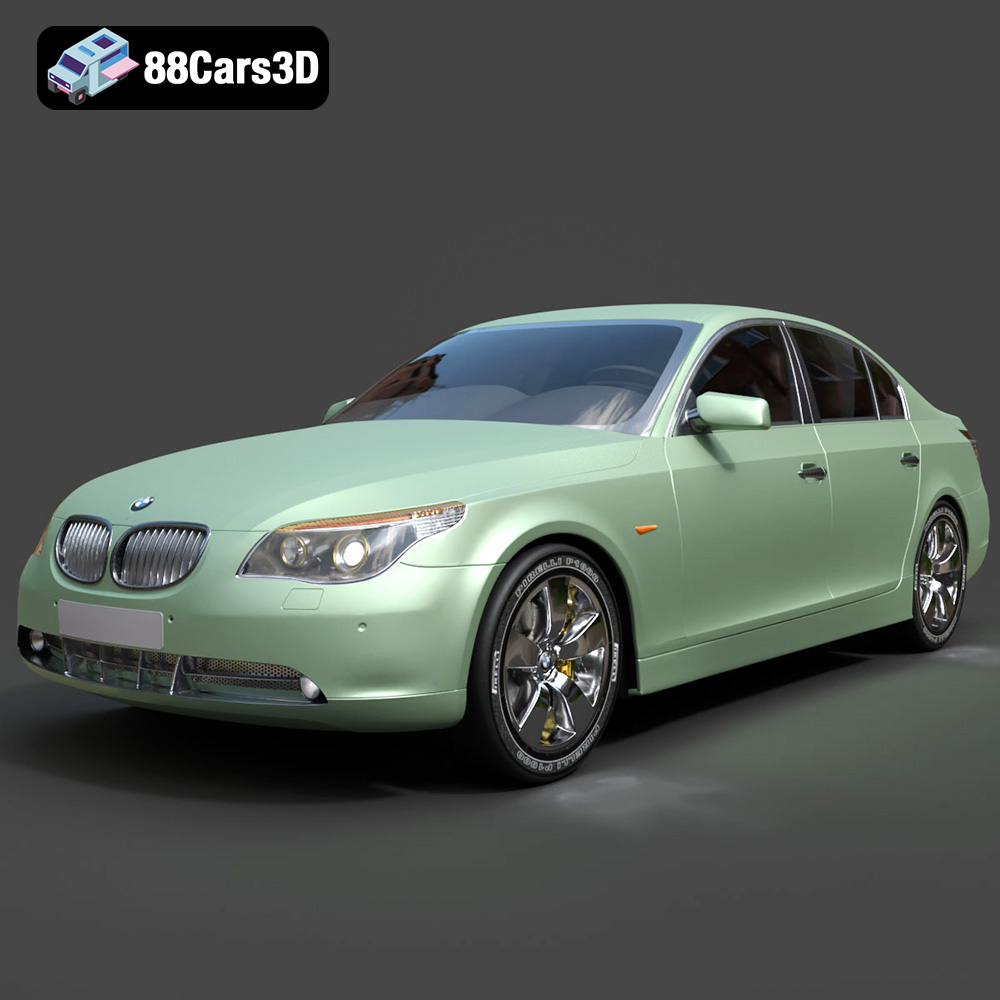
Download the BMW 5 Series E60 3D Model featuring its iconic sedan design, detailed exterior, and interior. Includes .blend, .fbx, .obj, .glb, .stl, .ply, .unreal, and .max formats for rendering, simulation, and game development.
Price: $10.79

Texture: Yes
Material: Yes
Download the BMW 5 E34-535i 3D Model featuring an iconic design, detailed exterior and interior, and accurate representation. Includes .blend, .fbx, .obj, .glb, .stl, .ply, .unreal, and .max formats for rendering, simulation, and game development.
Price: $10.79
Texture: Yes
Material: Yes
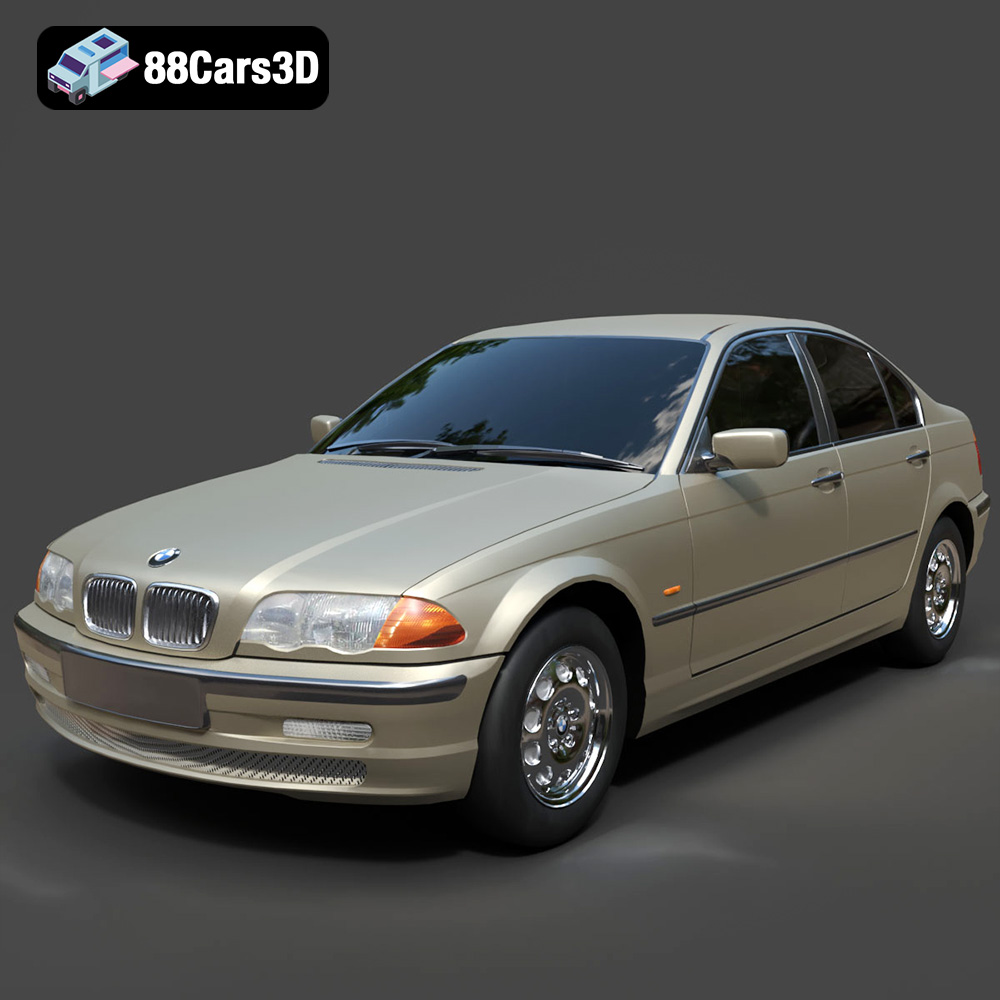
Download the BMW 3 Series E46 3D Model featuring authentic exterior lines, a detailed interior, and separated components for animation. Includes .blend, .fbx, .obj, .glb, .stl, .ply, .unreal, and .max formats for rendering, simulation, and game development.
Price: $10.79
Texture: Yes
Material: Yes
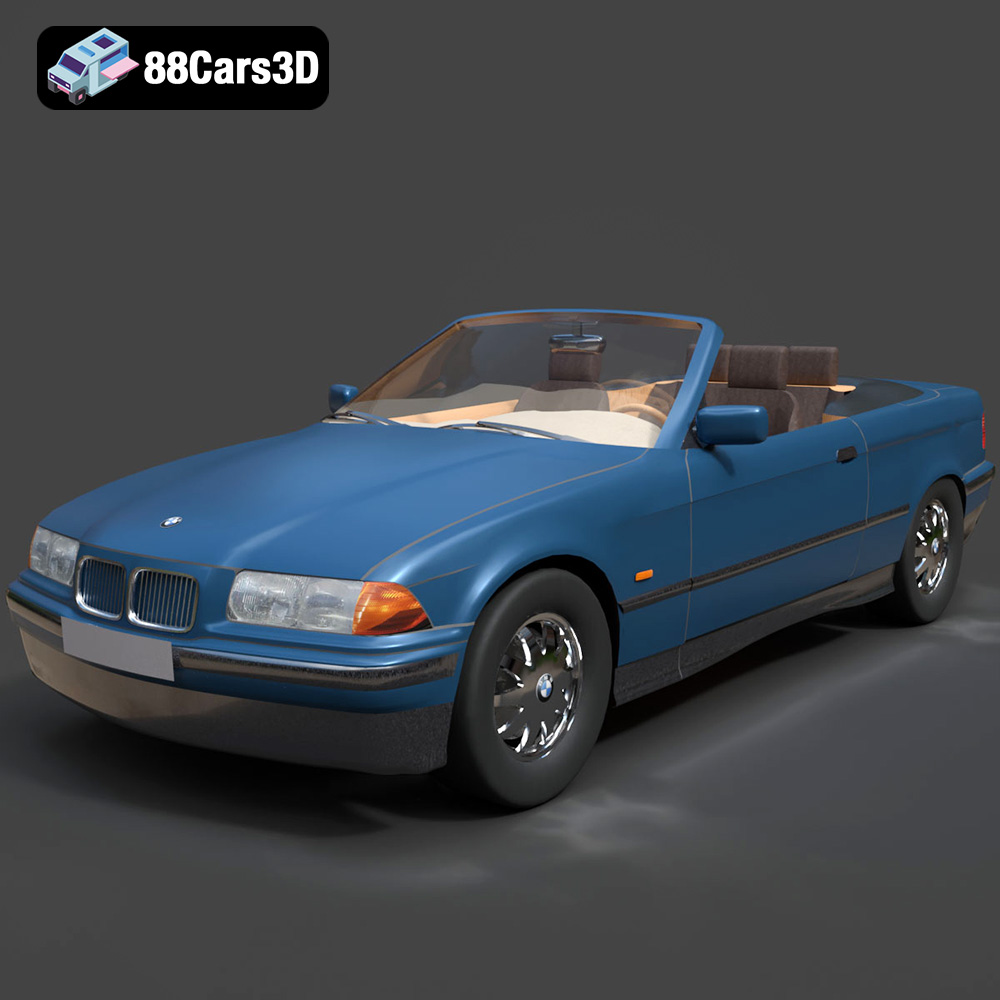
Download the BMW 3 Series E36 Cabrio 325i 1998 3D Model featuring a classic convertible design and detailed interior. Includes .blend, .fbx, .obj, .glb, .stl, .ply, .unreal, and .max formats for rendering, simulation, and game development.
Price: $10.79

Texture: Yes
Material: Yes
Download the BMW 3 F30 3D Model featuring a detailed exterior, realistic interior, and optimized mesh. Includes .blend, .fbx, .obj, .glb, .stl, .ply, .unreal, and .max formats for rendering, simulation, and game development.
Price: $10.79

