⚡ FLASH SALE: Get 60% OFF All Premium 3D & STL Models! ⚡

In the rapidly evolving world of real-time rendering and immersive experiences, the visual quality of 3D assets is paramount. Platforms like 88cars3d.com provide unparalleled high-fidelity 3D car models, ready for integration into a multitude of projects. However, even the most exquisitely detailed vehicle can fall flat without an intuitive and engaging user interface (UI) and user experience (UX). This is where Unreal Engine’s powerful UMG (Unreal Motion Graphics) Widget System becomes indispensable.
UMG empowers developers and artists to craft stunning, interactive UIs that elevate automotive visualization, car configurators, game interfaces, and AR/VR experiences. From dynamically changing a car’s paint color to navigating complex virtual showrooms, UMG provides the tools to build responsive, aesthetically pleasing, and performance-optimized interfaces. This comprehensive guide will take you through the intricacies of UMG, offering detailed technical insights, best practices, and real-world applications to help you transform your automotive projects into truly interactive masterpieces. You’ll learn how to leverage UMG to create seamless interactions, enhance visual feedback, and optimize performance, ensuring your high-quality 3D car models from 88cars3d.com shine in every interactive scenario.
Unreal Motion Graphics (UMG) is Unreal Engine’s declarative UI framework, enabling developers to create in-game UIs, menus, heads-up displays (HUDs), and interactive elements with incredible flexibility and power. Unlike traditional UI systems that might require extensive C++ coding, UMG leans heavily on visual scripting through Blueprint, making UI creation accessible to artists and designers while retaining deep functionality. At its core, UMG widgets are visual components that can be assembled, styled, and animated within a specialized editor. For automotive visualization, a well-designed UMG interface can transform a static render into a dynamic, user-driven experience, allowing exploration of various car models and customization options.
The design principles for automotive interfaces within UMG emphasize clarity, responsiveness, and aesthetic alignment with the vehicle’s brand. Buttons for customization options, sliders for camera control, or informational overlays – all must be intuitively placed and visually appealing. UMG provides a robust suite of pre-built widgets like Buttons, Text Blocks, Image widgets, Sliders, and Scroll Boxes, which form the building blocks of any complex interface. Understanding how to combine these widgets effectively and manage their hierarchy is crucial for developing scalable and maintainable UIs.
The Widget Blueprint Editor is the central hub for UMG development. It’s divided into several key areas: the Designer tab (for visual layout), the Graph tab (for Blueprint logic), the Palette (containing all available widgets), the Hierarchy (showing the nested structure of your widgets), and the Details panel (for modifying widget properties). When you create a new Widget Blueprint, you’re essentially defining a self-contained UI component that can be added to the viewport or nested within other widgets.
To begin, you typically start with a Canvas Panel as the root of your widget, providing a flexible surface for positioning and sizing other elements. Widgets are dragged from the Palette onto the Canvas, and their positions, sizes, and anchors are configured in the Details panel. Anchors are especially important for responsive UI, ensuring elements scale and reposition correctly across different resolutions and aspect ratios, a critical consideration for automotive configurators deployed on various devices, from desktop monitors to large showroom screens. The ability to visualize the UI layout in real-time within the Designer tab dramatically speeds up the iterative design process, allowing for immediate feedback on aesthetic choices and layout adjustments.
UMG offers a comprehensive set of widgets, each serving a specific purpose in UI construction. For automotive applications, several core widgets become workhorses:
* **Canvas Panel:** The primary layout panel for absolute positioning, ideal for fixed elements or complex overlays.
* **Vertical Box / Horizontal Box:** Essential for organizing elements in a linear fashion, perfect for lists of options (e.g., color swatches, wheel types).
* **Grid Panel:** Useful for tabular layouts, such as displaying car specifications or a gallery of features.
* **Button:** The fundamental interactive element, used for selecting options, navigating menus, or triggering actions like applying a new material to a 3D car model.
* **Text Block:** For displaying static or dynamic information, such as vehicle names, prices, or feature descriptions.
* **Image:** Crucial for displaying logos, icons, thumbnails, and background graphics, enhancing the visual appeal of the interface.
* **Slider:** Excellent for continuous input, like adjusting camera zoom levels or fine-tuning material properties in a visualization.
* **Scroll Box:** Allows for large lists of options to be contained within a limited screen space, preventing clutter.
Effective UI design involves strategically combining these widgets. For instance, a common pattern for a car color selector might involve a `Horizontal Box` containing several `Buttons`, each displaying an `Image` of a color swatch and a `Text Block` for the color name. When a button is clicked, its Blueprint logic would then communicate with the 3D car model, dynamically swapping out material instances to apply the chosen paint finish. This modular approach allows for complex interfaces to be broken down into manageable, reusable components, ensuring consistency and efficiency in your Unreal Engine projects.
The power of Unreal Engine in automotive visualization truly shines through interactive configurators. These applications allow users to customize a 3D car model in real-time, changing everything from paint color and wheel designs to interior trim and accessories. UMG is the backbone for creating the graphical user interface that drives these customizations. An intuitive car configurator UI must be clear, responsive, and provide immediate visual feedback, allowing users to effortlessly explore hundreds of options for their chosen vehicle, perhaps sourced from high-quality asset libraries like 88cars3d.com.
Designing such an interface begins with careful planning of the user flow. What are the primary customization categories (exterior, interior, performance)? How will users navigate between these categories? How will selections be presented (buttons, sliders, dropdowns)? Each decision impacts the overall user experience. Using UMG, you can construct distinct UI panels for each category, dynamically revealing or hiding them as the user progresses through the configuration process. This modularity not only simplifies development but also keeps the interface clean and uncluttered.
One of UMG’s strengths is its seamless integration with Blueprint visual scripting, enabling dynamic data binding and complex component interactions. For a car configurator, this means linking UI elements directly to the properties and behaviors of your 3D car model. For example, when a user selects a “Metallic Blue” paint option from a UMG button, a Blueprint function is called that retrieves the specific material instance for metallic blue and applies it to the car’s body mesh.
This interaction typically involves:
1. **Event Handling:** UMG widgets expose various events (e.g., `OnClicked` for Buttons, `OnValueChanged` for Sliders). You’ll hook into these events in the Widget Blueprint’s Graph tab.
2. **Blueprint Communication:** The Widget Blueprint needs a way to communicate with the 3D car model (often an Actor Blueprint) in the level. This can be achieved through Blueprint Interfaces, direct casting (if the car model is a known type), or Event Dispatchers. A common pattern is to have the car configurator UI widget maintain a reference to the main car Actor in the level.
3. **Applying Changes:** Once the car Actor receives the instruction (e.g., “change paint to blue”), it executes its own logic to swap materials, change static meshes (for wheels), or adjust other parameters. Using Material Parameter Collections or Material Instance Dynamic (MID) is highly efficient for color changes, as it avoids creating new materials for every option. For changing physical components like wheels, you might swap Static Mesh components or even entire child Actor Blueprints.
Implementing a robust customization system involves thoughtful management of assets and Blueprint logic.
* **Color Customization:** This is often achieved using `Material Instance Dynamic` (MID). When the car model is loaded, you create a MID from its base material. All subsequent color changes then modify parameters (like base color, metallic, roughness) on this single MID, which is then applied to the car’s mesh. This is highly performant. Alternatively, if colors have distinct textures or complex shaders, you might swap out pre-made material instances.
* **Step-by-step:** Create a `Button` for each color option. On `OnClicked` event for each button, call a custom event on your car’s Blueprint that takes a `Linear Color` or a `Material Instance` as input. Inside the car’s Blueprint, get the `Static Mesh Component` of the car body, create a `Material Instance Dynamic` if one doesn’t exist, and set the appropriate material parameters.
* **Wheel Customization:** Wheels typically involve swapping entire `Static Mesh` components or even `Skeletal Mesh` components if they have complex animations.
* **Step-by-step:** Create a `Horizontal Box` filled with `Image` buttons, each displaying a thumbnail of a wheel design. On `OnClicked`, pass the `Static Mesh` asset reference of the selected wheel to the car’s Blueprint. The car’s Blueprint would then use `Set Static Mesh` on its wheel components. Ensure proper scaling and attachment points.
* **Interior Customization:** This can range from changing seat upholstery materials (similar to color changes) to swapping out entire dashboard configurations (like wheel customization). For advanced features like opening doors or adjusting seats, UMG buttons can trigger `Timeline` animations or control `Sequencer` tracks within the car’s Blueprint.
By combining `UMG` widgets with robust `Blueprint` logic, you can create a highly interactive and visually rich car configurator. Remember to leverage asset naming conventions and data tables to manage a large number of customization options efficiently, ensuring your UI remains easy to update and expand, especially when integrating new 3D car models from marketplaces like 88cars3d.com.
A powerful UI isn’t just about functionality; it’s about providing an engaging and intuitive user experience. In Unreal Engine, UMG offers a rich set of tools to add dynamism, provide clear feedback, and ensure responsiveness across different platforms. For automotive visualization, smooth transitions, subtle animations, and immediate feedback mechanisms can significantly elevate the configurator or virtual showroom, making interactions feel natural and polished. A static, unresponsive UI can quickly detract from the high-fidelity 3D car models you’re showcasing.
Visual feedback is crucial: users need to know their actions have been registered. This could be a button subtly glowing on hover, a sound playing on click, or a panel smoothly sliding into view. These seemingly small details contribute immensely to the perceived quality and professionalism of your application. Furthermore, a truly effective UI must adapt gracefully to varying screen sizes, resolutions, and aspect ratios – from a desktop monitor to a large 4K display in a virtual showroom, or even a mobile device for AR applications.
UMG’s Animation system is built directly into the Widget Blueprint Editor, allowing you to create complex, timeline-based animations without leaving the UI context. You can animate properties like position, scale, rotation, opacity, and even material parameters.
* **Creating Animations:** In the Designer tab, click the “Animation” button to create a new animation track. Select a widget, add a track for a property (e.g., “Render Opacity”), and set keyframes at different points in the timeline to define its change over time.
* **Common Use Cases:**
* **Fade In/Out:** Animating the `Render Opacity` of a widget to smoothly appear or disappear. Ideal for menu panels or pop-up notifications.
* **Slide In/Out:** Animating the `Translation` (position) of a widget to slide it onto or off the screen. Useful for side menus or option panels.
* **Hover Effects:** While not a direct animation, you can use `OnHovered` and `OnUnhovered` events to play animations that provide visual feedback (e.g., a button slightly scaling up or changing color).
* **Loading Screens:** Combine multiple animations for text, images, and progress bars to create dynamic loading experiences.
* **Controlling Animations with Blueprint:** Animations created in the Designer tab can be played, paused, reversed, and stopped using Blueprint nodes in the Graph tab (e.g., `Play Animation`, `Reverse Animation`). This allows you to trigger animations based on user input or game state changes. For instance, when a user confirms a customization, a brief “Applying Changes” message could fade in and out.
Beyond visual animations, immediate and clear feedback is essential. UMG’s robust event system allows you to respond to various user inputs:
* **Input Events:** Widgets have built-in events like `OnClicked` (for buttons), `OnHovered`/`OnUnhovered` (for interactive elements), `OnValueChanged` (for sliders), and `OnTextCommitted` (for editable text boxes). You implement logic for these events in the Widget Blueprint’s Event Graph.
* **Custom Events & Event Dispatchers:** For more complex interactions, especially when communicating between multiple widgets or between a widget and an Actor in the scene, custom events and Event Dispatchers are invaluable. An Event Dispatcher allows a widget to “broadcast” information, and any other Blueprint listening to that dispatcher can react. This is powerful for decoupled UI architecture.
* **Sound Feedback:** Playing sound effects (e.g., a subtle click on button press, a swoosh for a panel transition) significantly enhances the tactile feel of the UI. Use the `Play Sound 2D` or `Play Sound at Location` nodes in Blueprint in response to UI events.
* **Tooltips and Pop-ups:** Providing additional information on hover via tooltips is excellent for complex options. UMG’s `Tooltip Widget` property allows you to assign another Widget Blueprint to appear when a user hovers over an element. For more intrusive information, dynamic pop-up widgets can be created and added to the viewport based on specific events.
* **Responsiveness:** For robust UI, utilize UMG’s layout panels (`Canvas Panel`, `Size Box`, `Scale Box`, `Vertical/Horizontal Box`, `Grid Panel`) and anchoring system judiciously. Anchors define how a widget’s position and size behave relative to its parent when the screen resolution or aspect ratio changes. A `Scale Box` can be used to automatically scale content to fit available space, while a `Size Box` can enforce minimum/maximum dimensions. Testing your UI on different resolutions and aspect ratios in the editor’s “Play in New Window” mode is critical for identifying and correcting layout issues. Remember to refer to the official Unreal Engine documentation for advanced UI design patterns: https://dev.epicgames.com/community/unreal-engine/learning.
While UMG provides immense flexibility, poor UI optimization can significantly impact the performance of your real-time automotive visualization. Even with cutting-edge hardware, a complex UI with unoptimized assets and excessive draw calls can lead to framerate drops, especially on lower-end machines or when targeting platforms like AR/VR. For projects featuring high-fidelity 3D car models from 88cars3d.com, ensuring your UMG UI runs smoothly is just as important as optimizing the 3D assets themselves. Efficient UI contributes to a polished and professional user experience.
Optimization in UMG involves several key strategies, from managing texture resources to streamlining widget hierarchy and minimizing redundant operations. Understanding how UMG renders and processes information is key to making informed decisions that balance visual complexity with performance.
The number of draw calls is a primary performance bottleneck in UI rendering. Each time the GPU needs to switch state (e.g., to draw a different material or texture), it incurs a draw call. Many UMG widgets, especially images and text, rely on textures and materials.
* **Texture Atlases for UI:** Consolidate multiple UI textures (icons, buttons, backgrounds) into a single, larger texture atlas. This allows many different UI elements to be rendered using a single material and texture, drastically reducing draw calls. Unreal Engine provides tools like the Sprite Editor for creating and managing sprites within an atlas.
* **Efficient UI Materials:**
* **Single Master Material:** For many UI elements, consider using a single, versatile master UI material that can be instanced and parameterized for different needs (e.g., color tinting, texture masks).
* **Avoid Complex Shaders:** UI materials should generally be simple. Avoid complex calculations, heavy post-processing effects, or expensive blend modes unless absolutely necessary.
* **Translucency Costs:** Transparent or translucent widgets are more expensive to render than opaque ones because they require sorting and additional blending passes. Minimize their use where possible, or use masked materials instead of translucent ones when appropriate (e.g., for icons with complex shapes).
* **Batching Widgets:** UMG attempts to batch widgets that use the same material and texture into a single draw call. To facilitate this:
* Group similar widgets together in your hierarchy.
* Use shared materials and atlases.
* Minimize changes to material properties between consecutive widgets.
A complex UI can result in a deep widget hierarchy, which can increase the cost of layout and invalidation.
* **Minimize Nesting:** Avoid excessively deep nesting of widgets. Each parent widget adds overhead. Can a `Canvas Panel` achieve the same layout with fewer nested `Vertical Boxes` and `Horizontal Boxes`?
* **Visibility vs. Removal:** When elements are hidden, consider whether they should be merely `Collapsed` (still present in memory, but not rendered or updated) or `Removed from Parent` (completely removed from the hierarchy). Collapsing is faster for elements that frequently toggle visibility, while removing and re-adding is better for elements that are rarely used or consume significant resources.
* **`InvalidateLayoutAndVolatility`:** This Blueprint node is powerful but should be used sparingly. It forces a widget and its children to recalculate their layout. Use it only when a significant structural change has occurred, not for simple property updates.
* **`Set Visibility` Correctly:** Using `Set Visibility` to `Collapsed` or `Hidden` prevents widgets from rendering and contributing to draw calls, but `Collapsed` will also prevent them from taking up layout space.
* **Lazy Loading / Dynamic Creation:** For very large lists or complex panels that aren’t immediately visible, consider creating and adding widgets to the viewport only when they are needed. For example, in a car configurator with hundreds of wheel options, only load the visible subset into a `Scroll Box` and dynamically create more as the user scrolls.
* **Profiling Tools:** Unreal Engine’s built-in profilers (e.g., `stat Slate`, `stat UI`, `GPU Visualizer`) are invaluable for identifying performance bottlenecks in your UMG UI. Use them regularly to measure draw calls, widget update times, and overall UI rendering performance. These tools can pinpoint specific widgets or operations that are contributing to performance issues, allowing you to target your optimizations effectively.
By adhering to these optimization strategies, you can ensure that your UMG interfaces provide a smooth, responsive experience, allowing your audience to fully appreciate the detail and interactivity of your automotive visualizations powered by assets from 88cars3d.com.
Beyond basic menu creation and configurator development, UMG offers advanced capabilities that push the boundaries of real-time interactive experiences. Integrating UMG with C++ for highly optimized or custom widgets, harnessing it for cutting-edge AR/VR automotive applications, or leveraging it in virtual production pipelines demonstrates the true versatility of Unreal Engine’s UI framework. These techniques are crucial for professionals aiming to deliver next-generation automotive visualization, leveraging the full potential of high-quality assets like those available on 88cars3d.com.
While Blueprint is incredibly powerful for UMG development, there are scenarios where C++ integration becomes necessary or highly beneficial:
* **Custom Widgets:** For unique UI elements not provided by UMG’s default library (e.g., a highly specialized gauge, a custom data visualization chart), C++ allows you to create entirely new UWidget classes. These custom widgets can expose properties and events to Blueprint, making them just as usable as native widgets. This is particularly useful for highly specialized automotive dashboards or real-time diagnostic displays.
* **Performance-Critical Logic:** For UI logic that requires extreme performance, such as complex calculations or rapid data processing (e.g., a real-time physics overlay for a car simulator), implementing core functions in C++ and exposing them to Blueprint can yield significant performance gains.
* **Large-Scale Projects:** In large team environments, C++ can enforce stricter architectural patterns and allow for easier code management and refactoring, especially for shared UI components.
* **Blueprint Interfaces for Decoupling:** Regardless of whether you use C++ or pure Blueprint, Blueprint Interfaces are essential for creating robust and decoupled UI systems. They define a contract of functions that different Blueprints can implement. For example, a “Configurator UI Interface” could define functions like `OnColorSelected(FLinearColor NewColor)` or `OnWheelTypeChanged(EWheelType NewType)`. The main car Actor (or a dedicated configuration manager) would implement this interface, allowing any UI widget to call these functions without needing a direct reference or knowledge of the car Actor’s specific class. This promotes modularity, reusability, and makes updating the UI or car model much easier.
UMG is not limited to 2D screen space UI; it can be fully integrated into immersive AR/VR environments and virtual production workflows.
* **3D Widgets (Widget Components):** For AR/VR, projecting a traditional 2D UMG UI into the 3D world is achieved using `Widget Components`. These components allow you to place a UMG Widget Blueprint onto a mesh in your 3D scene.
* **Usage:** Create a `Widget Component` on an Actor (e.g., a tablet in AR, a holographic display in VR). Assign your UMG Widget Blueprint to its `Widget Class` property. You can then interact with this 3D widget using the `Widget Interaction Component`.
* **Interaction:** The `Widget Interaction Component` (typically attached to a motion controller or camera) simulates mouse-like interactions (hover, click, drag) in 3D space, allowing users to naturally interact with your 3D UMG. This is perfect for interactive virtual showrooms where users can walk around a 3D car model from 88cars3d.com and interact with virtual information panels.
* **AR Overlay UIs:** For AR, UMG can provide persistent screen-space overlays for crucial information (e.g., car speed, navigation arrows, customization options) that remain visible regardless of the user’s head movement.
* **Virtual Production (VP):** In virtual production, UMG UIs often serve as control panels for directors, cinematographers, and technical artists.
* **LED Wall Control:** A UMG UI can control parameters for background environments rendered on LED walls, such as time of day, weather, or dynamically swapping virtual locations, often featuring a specific vehicle.
* **Camera Control:** Real-time UMG dashboards can provide sliders and buttons to adjust virtual camera settings (focal length, aperture, focus) or trigger pre-animated camera moves (Sequencer tracks).
* **Asset Management:** UMG can drive interfaces for quickly swapping between different vehicle models (e.g., instantly loading a different 88cars3d.com car model), applying variant materials, or controlling visual effects.
* **Remote Control API:** UMG, combined with Unreal Engine’s `Remote Control API`, allows web browsers or external applications to remotely control engine parameters, including UMG UI elements. This opens up possibilities for tablet-based control surfaces for virtual production stages.
These advanced UMG techniques empower developers to create truly immersive and highly functional interactive experiences across a range of cutting-edge applications, ensuring that the visual quality of their 3D automotive assets is matched by equally sophisticated and intuitive interfaces.
Creating a compelling automotive visualization or configurator with Unreal Engine and UMG isn’t just about technical implementation; it’s equally about adhering to robust UI/UX design principles. A technically flawless UI can still fail if it’s confusing, visually jarring, or difficult to use. For projects leveraging premium 3D car models from 88cars3d.com, the user interface is the gateway to showcasing that quality, making thoughtful design absolutely critical.
Good UI/UX focuses on the user, anticipating their needs, guiding their interactions, and providing an enjoyable and efficient experience. In the context of automotive visualization, this means allowing users to easily customize vehicles, access information, and explore features without frustration.
* **Consistency:** This is perhaps the most fundamental principle. All elements within your UI – fonts, colors, icons, button styles, spacing, and interaction patterns – should be consistent across the entire application.
* **Visual Language:** Establish a clear visual language early on. If your buttons are square with rounded corners, ensure all interactive buttons follow this rule. If your informational text is a specific font and size, apply it universally.
* **Interaction Patterns:** If clicking a button usually navigates to a new screen, don’t make another button reveal a pop-up without a clear distinction. Users build mental models of how your UI works; consistency reinforces these models.
* **Branding:** For automotive projects, consistency should extend to branding. The UI should subtly or overtly align with the car manufacturer’s brand guidelines, reinforcing the realism and professionalism.
* **Readability:** The UI must be easy to read and understand at a glance.
* **Font Choice & Size:** Select legible fonts. Avoid overly decorative or thin fonts, especially for critical information. Ensure text size is appropriate for the target display and viewing distance.
* **Color Contrast:** Use sufficient contrast between text and background colors. Adhere to accessibility guidelines (e.g., WCAG standards for contrast ratios) to ensure your UI is usable by individuals with visual impairments.
* **Whitespace:** Don’t overcrowd your UI. Use ample whitespace (negative space) around elements to improve clarity, reduce cognitive load, and make the interface feel less cluttered and more premium.
* **Accessibility:** Design your UI to be usable by as wide an audience as possible.
* **Clear Labeling:** All interactive elements should have clear, unambiguous labels or icons.
* **Multiple Input Methods:** Where feasible, support multiple input methods (mouse, keyboard, gamepad, touch, gaze in VR).
* **Colorblind-Friendly Design:** Avoid relying solely on color to convey information. Use icons, text labels, or patterns in addition to color.
UI/UX design is rarely a “one-and-done” process. It’s an iterative cycle of design, implementation, testing, and refinement.
* **Wireframing and Prototyping:** Before diving into Unreal Engine, sketch out your UI ideas on paper or use digital wireframing tools. Create simple prototypes to test basic user flows and get early feedback. This saves significant development time later.
* **User Personas and Scenarios:** Define your target users (e.g., potential car buyers, automotive designers, game players) and imagine specific scenarios where they would interact with your UI. This helps tailor the design to real-world needs.
* **Small-Scale Testing:** Even informal testing with a few colleagues or friends can uncover significant usability issues. Observe how users interact with your UMG interface. Do they find the “change color” button easily? Do they understand how to navigate?
* **A/B Testing (if applicable):** For larger projects, consider A/B testing different UI layouts or interaction patterns to determine which performs better in terms of user engagement or task completion.
* **Gathering Feedback and Iterating:** Actively solicit feedback, and be prepared to make changes. UI design is an ongoing process of improvement. What might seem obvious to you as the creator may be confusing to a fresh user. Implement changes based on feedback and repeat the testing process.
By adopting these UI/UX design best practices, you can ensure that your UMG interfaces are not only technically sound but also intuitive, enjoyable, and effective in showcasing the incredible detail and interactivity of your automotive projects, driven by the high-quality assets you acquire from marketplaces such as 88cars3d.com.
Developing compelling interactive experiences in Unreal Engine, especially for sophisticated applications like automotive visualization, demands not only high-quality 3D assets but also an expertly crafted user interface. Unreal Motion Graphics (UMG) provides a robust and flexible framework to build these critical UI components, transforming passive viewers into active participants in your virtual worlds. From configuring a dream car to exploring intricate design details in AR/VR, the UMG Widget System is the essential tool for creating engaging and intuitive user interactions.
Throughout this guide, we’ve explored the foundations of UMG, delved into building dynamic car configurator UIs, emphasized the importance of animation and feedback for a superior user experience, and provided critical strategies for performance optimization. We also touched upon advanced applications in AR/VR and virtual production, demonstrating UMG’s versatility across cutting-edge industry needs. By combining the technical prowess of Unreal Engine with thoughtful UI/UX design principles – focusing on consistency, readability, and accessibility – you empower users to fully appreciate the stunning visuals and interactivity of your projects.
The journey to mastering UI/UX with UMG is continuous, requiring practice, iteration, and a keen eye for detail. However, the effort yields immense rewards, bringing your 3D automotive models, particularly those meticulously crafted assets available on 88cars3d.com, to life in ways that captivate and inform. Begin by experimenting with the core widgets, build small interactive prototypes, and always prioritize the user’s journey. With Unreal Engine and UMG, the power to create truly immersive and unforgettable automotive experiences is at your fingertips.

Texture: Yes
Material: Yes
Download the BMW 7 Series E38 3D Model featuring its iconic luxury sedan design and classic aesthetics. Includes .blend, .fbx, .obj, .glb, .stl, .ply, .unreal, and .max formats for rendering, simulation, and game development.
Price: $10.79

Texture: Yes
Material: Yes
Download the BMW 6 Series 640i F12 3D Model featuring a sleek design and detailed interior. Includes .blend, .fbx, .obj, .glb, .stl, .ply, .unreal, and .max formats for rendering, simulation, and game development.
Price: $10.79
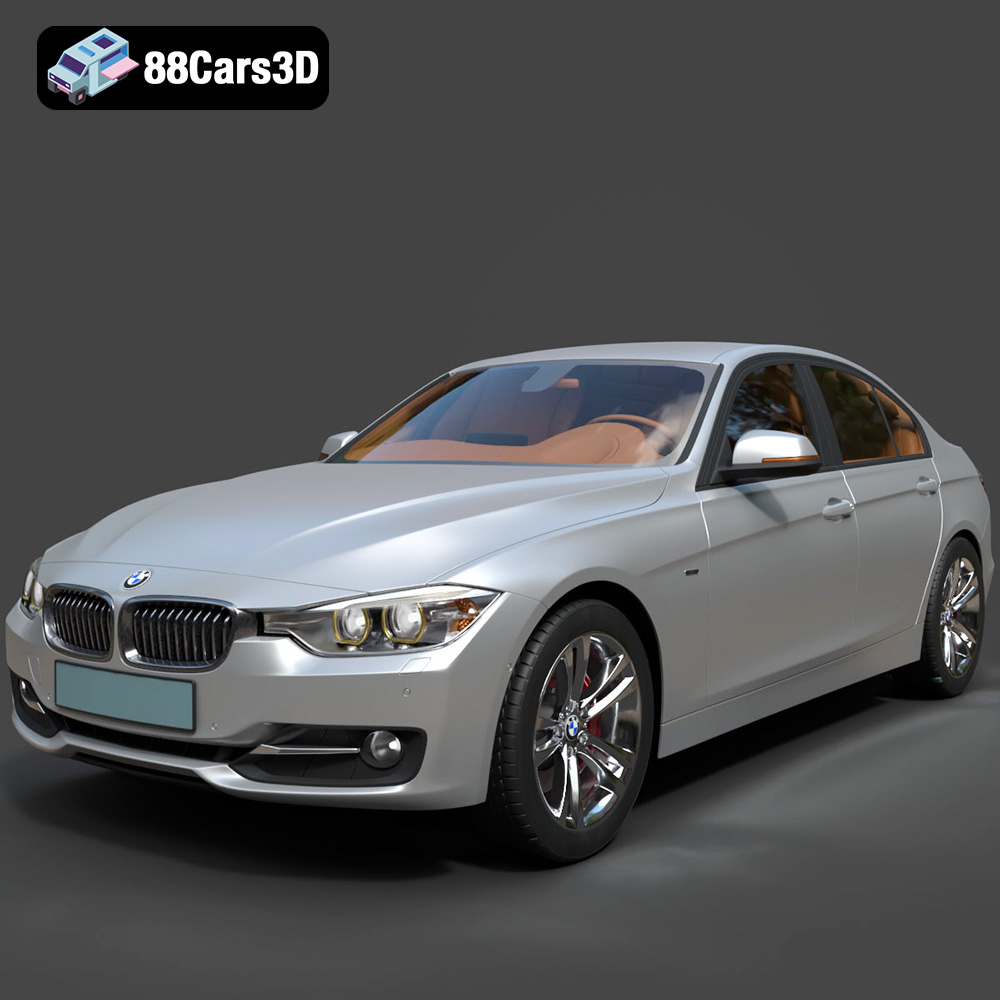
Texture: Yes
Material: Yes
Download the BMW 3 F30 3D Model featuring a detailed exterior, realistic interior, and optimized mesh. Includes .blend, .fbx, .obj, .glb, .stl, .ply, .unreal, and .max formats for rendering, simulation, and game development.
Price: $10.79
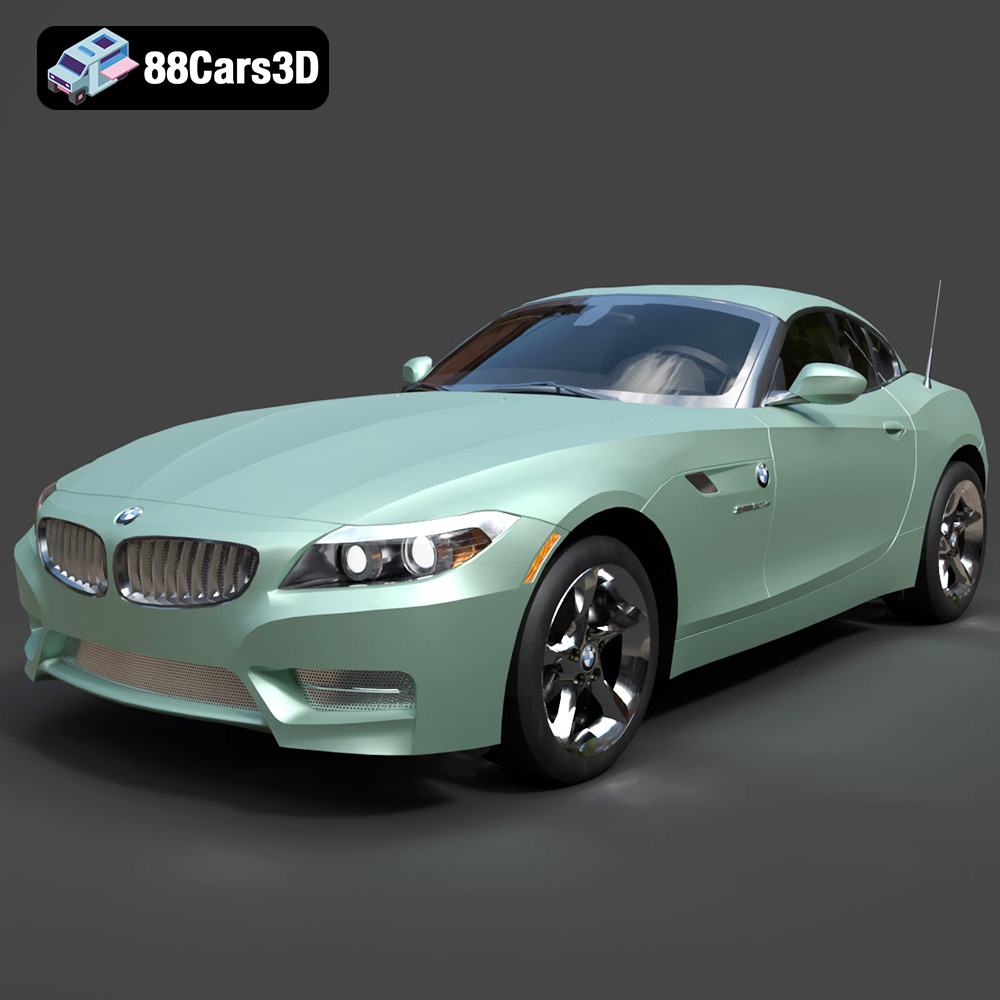
Texture: Yes
Material: Yes
Download the BMW Z4 Roadster E89 3D Model featuring clean geometry, realistic detailing, and a fully modeled interior. Includes .blend, .fbx, .obj, .glb, .stl, .ply, .unreal, and .max formats for rendering, simulation, and game development.
Price: $13.99

Texture: Yes
Material: Yes
Download the BMW Z4 E85 3D Model featuring clean geometry, realistic detailing, and a fully modeled interior. Includes .blend, .fbx, .obj, .glb, .stl, .ply, .unreal, and .max formats for rendering, simulation, and game development.
Price: $13.99

Texture: Yes
Material: Yes
Download the BMW M3 2024 3D Model featuring clean geometry, realistic detailing, and a fully modeled interior. Includes .blend, .fbx, .obj, .glb, .stl, .ply, .unreal, and .max formats for rendering, simulation, and game development.
Price: $13.99
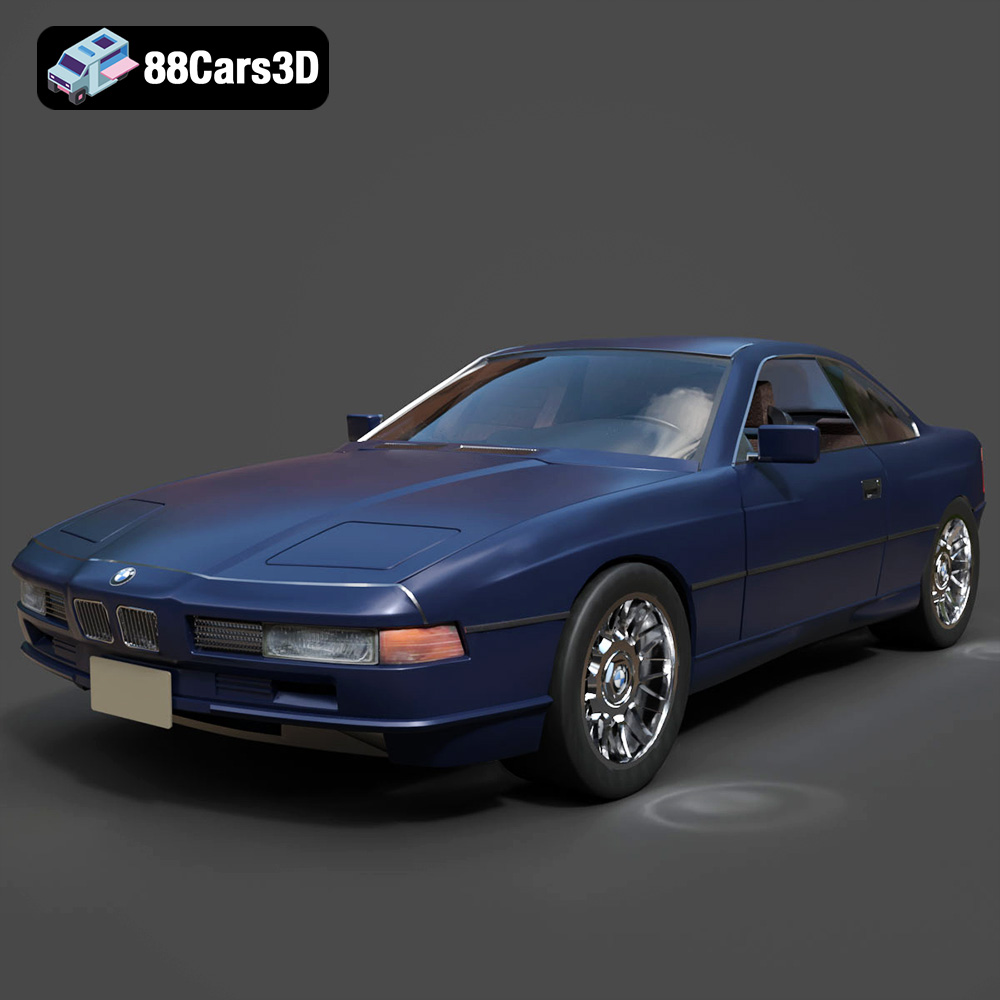
Texture: Yes
Material: Yes
Download the BMW 850i Coupe 1990 3D Model featuring clean geometry, realistic detailing, and a fully modeled interior. Includes .blend, .fbx, .obj, .glb, .stl, .ply, .unreal, and .max formats for rendering, simulation, and game development.
Price: $13.99
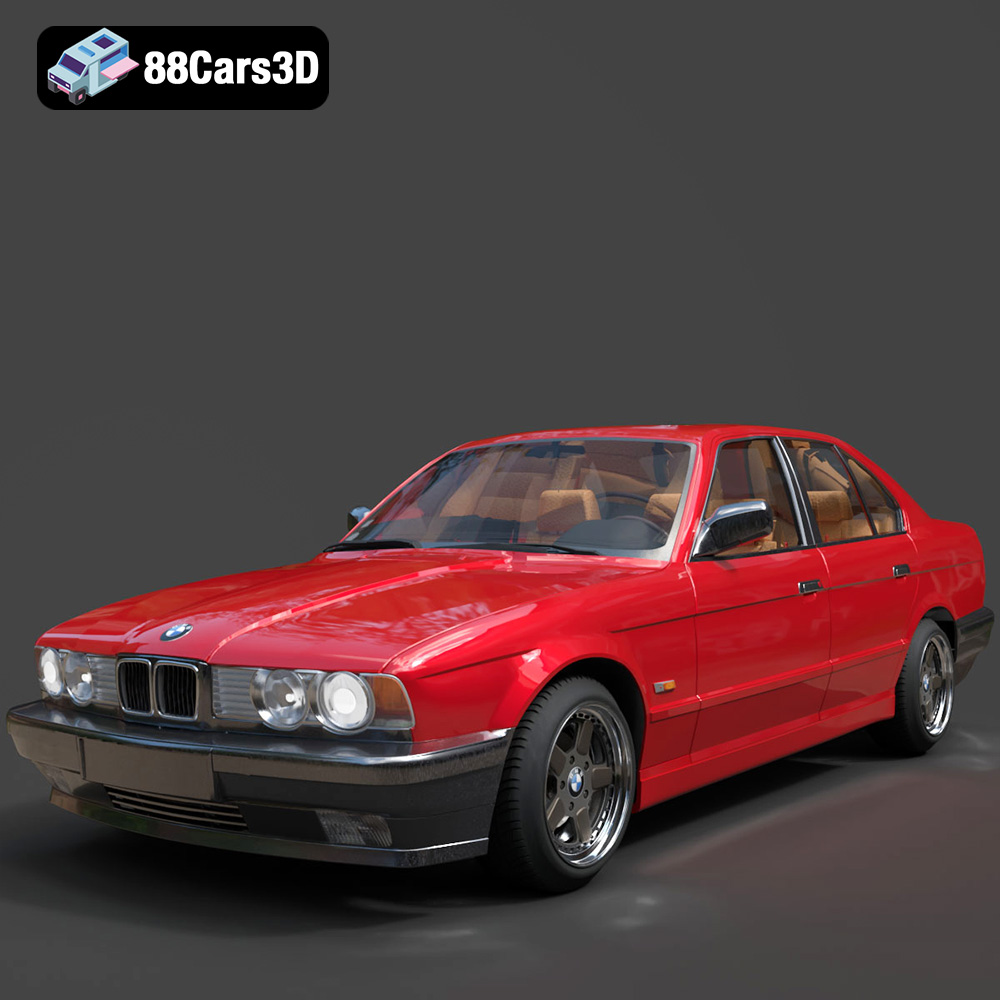
Texture: Yes
Material: Yes
Download the BMW 525i E34 1993 3D Model featuring clean geometry, realistic detailing, and a fully modeled interior. Includes .blend, .fbx, .obj, .glb, .stl, .ply, .unreal, and .max formats for rendering, simulation, and game development.
Price: $12.99

Texture: Yes
Material: Yes
Download the BMW 7 Series 2016 3D Model featuring luxurious design, detailed interior, and accurate exterior. Includes .blend, .fbx, .obj, .glb, .stl, .ply, .unreal, and .max formats for rendering, simulation, and game development.
Price: $10.79
Texture: Yes
Material: Yes
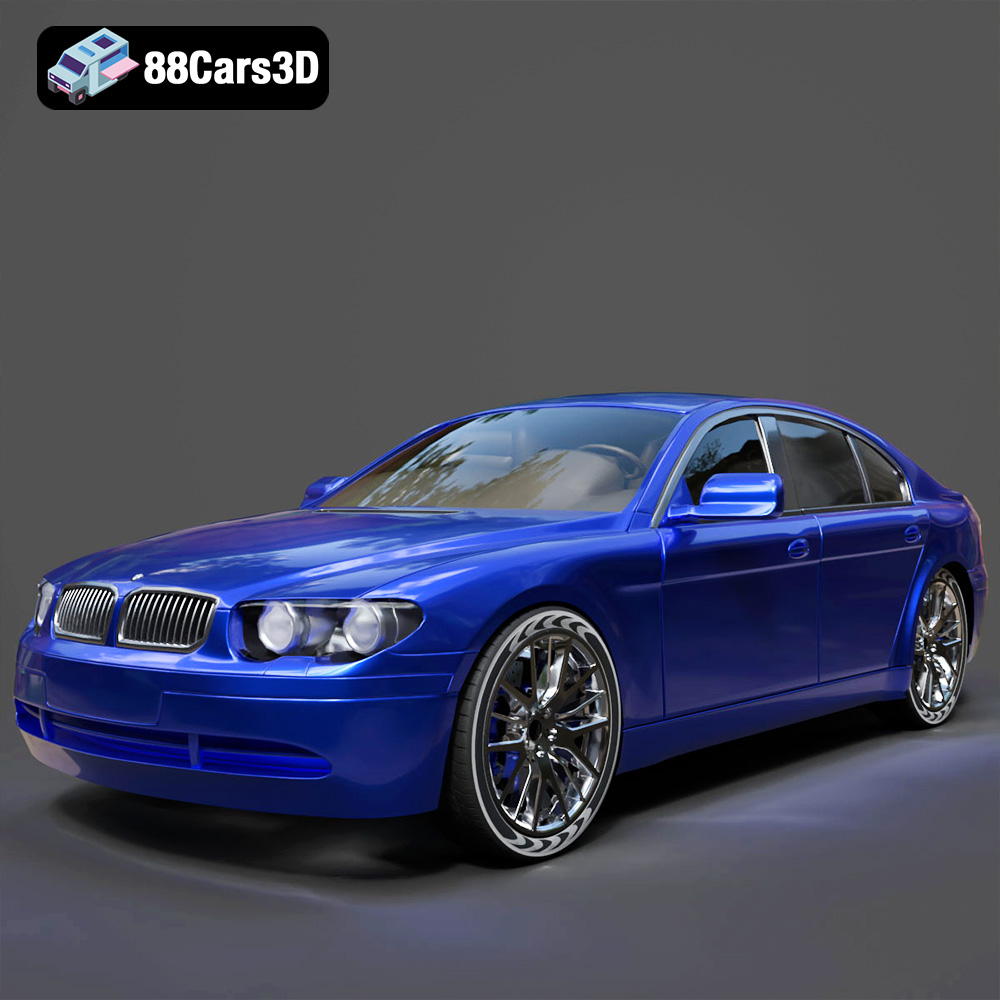
Download the BMW 7 Series 30th Anniversary 3D Model featuring a meticulously crafted exterior, detailed interior, and realistic wheels. Includes .blend, .fbx, .obj, .glb, .stl, .ply, .unreal, and .max formats for rendering, simulation, and game development.
Price: $35.79

