Mastering Your 3D Printer: A Deep Dive into Achieving Flawless Printable Car Models
The allure of automotive design, from sleek sports cars to rugged off-roaders, has captivated enthusiasts for generations. Today, 3D printing technology brings this passion to life in entirely new dimensions, allowing hobbyists and collectors to create intricate, detailed car models right at home. Whether you’re a seasoned maker or just starting your 3D printing journey, the quality of your final print hinges on several critical factors: the source STL files, your slicer settings, printer calibration, and post-processing techniques. This comprehensive guide will equip you with the knowledge to transform raw STL files of printable car models into stunning physical objects. We’ll explore the nuances of file preparation, delve into optimal slicing strategies for both FDM and resin printing, demystify support structures, and provide actionable tips for achieving professional-grade results. Get ready to elevate your collection with perfectly printed automotive marvels!
The Foundation: Understanding and Preparing Your Printable Car STL Files
The journey to a flawless 3D printed car model begins long before you hit the ‘print’ button. It starts with the STL files themselves. An STL (stereolithography) file is the de facto standard for 3D printing, representing a 3D model’s surface geometry as a collection of connected triangles. However, not all STL files are created equal. For automotive models, especially those with fine details like panel lines, grilles, and interior elements, the quality of the mesh topology is paramount. Poorly constructed meshes can lead to printing errors, surface imperfections, and significant frustration.
Mesh Quality and Manifold Integrity
A manifold mesh is one that is watertight, meaning it has no holes, non-manifold edges (where more than two polygons meet at an edge), or inverted normals. Most 3D modeling software and 3D printers require manifold meshes to slice and print accurately. A non-manifold model can cause slicing software to misinterpret the geometry, leading to gaps in the print or failed prints altogether. For collectors looking for highly detailed models, it’s crucial to source files from reputable providers. Platforms like 88cars3d.com specialize in offering high-quality, print-ready STL files for automotive models, ensuring clean geometry and proper manifold integrity. This significantly reduces the time spent on file repair.
Common File Repair Workflows
Even with high-quality sources, occasional issues can arise. Fortunately, powerful software exists to help. Meshmixer, a free tool from Autodesk, is invaluable for inspecting and repairing STL files. Key functions include “Make Manifold,” which attempts to automatically fix common mesh errors. You can also manually sculpt, smooth, and even hollow models within Meshmixer. For more complex repairs or for users who prefer a more integrated workflow, Autodesk’s Netfabb offers advanced diagnostics and repair tools, often used in professional settings. Blender also offers robust mesh editing capabilities, allowing users to manually fix individual vertices, edges, and faces if needed. The general workflow involves:
- Importing the STL file into your chosen repair software.
- Running an automatic repair function (e.g., “Make Manifold”).
- Visually inspecting the mesh for any remaining holes or inconsistencies.
- Using manual tools to address any identified issues, paying close attention to thin walls or disconnected components.
- Exporting the repaired file as a new STL.
For printable car models, paying special attention to elements like spoiler edges, mirror housings, and exhaust tips is essential, as these are often prone to being thin or detached.
File Formats Beyond STL
While STL is dominant, other 3D file formats are relevant. OBJ and FBX files often contain richer data, such as color information (though most 3D printers don’t directly use this for single-color prints) and UV mapping, which is crucial for advanced texturing or multi-material printing. However, for standard FDM and resin printing, a clean, manifold STL is usually sufficient. When downloading models from marketplaces such as 88cars3d.com, you’ll typically find STL files optimized for 3D printing, saving you valuable prep time.
Slicing Strategies: Translating Digital Models to Physical Prints
The slicer is your bridge between a digital 3D model and the physical object created by your 3D printer. Slicer software (like Cura, PrusaSlicer, or Lychee Slicer for resin) takes your STL file and converts it into layer-by-layer instructions (G-code for FDM, specific formats for resin) that the printer can understand. Optimizing these settings is crucial for achieving the desired level of detail, strength, and surface finish for your car models.
FDM Slicing: Balancing Detail and Print Time
For FDM (Fused Deposition Modeling) printers, which build objects by extruding melted plastic filament, several key settings significantly impact the outcome of car models:
- Layer Height: This is perhaps the most impactful setting for detail. A smaller layer height (e.g., 0.08mm to 0.12mm) results in finer layers, capturing subtle curves and details like body panel gaps and badges more accurately. However, it dramatically increases print time. For larger, less detailed parts or prototypes, a layer height of 0.2mm to 0.28mm might suffice. For the intricate components of a collectible car, aim for the lowest layer height your printer can reliably achieve.
- Print Speed: Higher speeds can reduce print time but often compromise surface quality and dimensional accuracy. For detailed car models, slowing down is usually beneficial. Printing outer walls at 30-50 mm/s and inner walls slightly faster (e.g., 50-70 mm/s) can yield better results. Fine details like small fins or grille elements might even benefit from speeds as low as 20 mm/s.
- Wall Thickness/Perimeters: A minimum of 2-3 perimeters (or a wall thickness of 0.8mm to 1.2mm with a standard 0.4mm nozzle) is recommended to ensure structural integrity, especially for delicate parts like mirrors or spoilers. For very small or thin features, consider increasing this to 3-4 perimeters.
- Infill Density and Pattern: For display models, high infill isn’t usually necessary for strength. An infill density of 10-20% is often sufficient. Patterns like “Gyroid” or “Cubic” offer good strength-to-weight ratios. For parts that might be handled frequently or require extra rigidity, increasing infill to 25-40% might be considered.
Resin Printing: Unlocking Microscopic Detail
Resin printers (SLA, DLP, MSLA) offer significantly higher resolution than most FDM printers, making them ideal for highly detailed automotive models. Key slicing considerations include:
- Layer Height: Resin printers excel at fine layers, typically ranging from 0.025mm to 0.05mm. Using the smallest practical layer height will capture the most intricate details, such as badges, interior textures, and panel lines.
- Exposure Time: This is critical for proper curing of each layer. Standard resins typically require 1.5-3 seconds per layer for a 0.05mm layer height. Over-exposure can lead to loss of detail and “blooming,” while under-exposure results in weak, incomplete prints. Calibration prints (like the AmeraKit or Cones of Calibration) are essential for dialing in correct exposure times for your specific resin and printer.
- Lift Speed and Distance: These settings control how the print plate lifts between layers to peel the cured resin off the FEP film. Slow lift speeds (e.g., 40-60 mm/min) and appropriate lift distances (e.g., 5-8mm) are crucial for larger models or those with significant surface area on each layer, preventing layer separation and print failures.
- Anti-Aliasing: Many resin slicers offer anti-aliasing settings, which smooth out the visible “stair-stepping” effect of layers, particularly on curved surfaces. Adjusting these levels can significantly improve the visual finish of a car model’s bodywork.
Optimizing Support Structures
Support structures are temporary scaffolding printed to hold up overhanging parts of the model during the printing process. Inadequate or poorly placed supports are a primary cause of print failures for complex models like cars.
- FDM Supports: Use “touching buildplate” and “everywhere” options judiciously. For car models, enable supports everywhere but consider carefully where they are needed. Overhangs steeper than 45-60 degrees typically require support. Use “tree” or “organic” supports if your slicer offers them, as they often use less material and are easier to remove without damaging the model’s surface. Adjust support density (e.g., 10-15%) and Z-distance (e.g., 0.2mm – 0.3mm) for easier removal.
- Resin Supports: These are crucial and often require manual placement for optimal results. Use a combination of “light” supports for small details and “medium” or “heavy” supports for larger overhangs. Place supports on less visible areas (underside, wheel wells) whenever possible. Ensure adequate “contact depth” (e.g., 0.5mm – 1.0mm) for good adhesion to the model, and adjust the “tip size” for different support types. For car models, pay special attention to supporting spoilers, bumpers, and undercarriage elements.
The goal is to provide sufficient support without leaving excessive scarring or difficult-to-remove remnants on the final print.
Print Orientation and Bed Adhesion: The Crucial First Layers
How you orient your 3D model on the print bed and ensuring it adheres properly are fundamental to a successful print, especially for the complex shapes of car models. A poorly adhered print can detach mid-print, ruining hours of work.
Strategic Model Orientation
The orientation of your car model on the build plate affects print quality, structural integrity, and the amount of support material needed. For FDM printing, consider the direction of layer lines. Orienting a car body so that the primary viewing surfaces (sides, hood, roof) are parallel to the build plate or printed with minimal overhangs generally yields the best surface finish. Printing a car upside down often minimizes the need for supports on the visible bodywork, requiring supports mainly for the wheel arches and underside. For resin printers, orientation is critical for minimizing peel forces on the FEP film. Orienting models at a slight angle (5-15 degrees) off the build plate can reduce the suction effect and prevent layer separation, especially for large, flat surfaces.
- FDM: Placing the car body directly on the build plate (hood/roof down) often provides excellent adhesion for the largest surface area but may require significant supports for the underside. Rotating the model 45-90 degrees can sometimes balance support needs and surface finish.
- Resin: Angle the model to break up continuous suction on the FEP. Avoid orienting large, flat surfaces parallel to the build plate. Ensure a good “lead-in” angle for supports to attach firmly.
Ensuring Robust Bed Adhesion
Proper bed adhesion is non-negotiable. For FDM printers, this involves:
- Leveling the Bed: An accurately leveled bed ensures the first layer is consistently squished onto the build surface across its entire area. Manual or automatic bed leveling routines are essential.
- Choosing the Right Surface: Glass, PEI sheets, BuildTak, or painter’s tape can all work, depending on the filament. PEI is often favored for its excellent adhesion and easy release properties.
- Using Adhesives: For materials like ABS or PETG, or when printing large models that can warp, applying a thin layer of glue stick (PVA), hairspray, or specialized bed adhesion sprays can be beneficial.
- First Layer Settings: Print the first layer significantly slower (e.g., 15-25 mm/s) and potentially slightly hotter (nozzle and bed) than subsequent layers. A “brim” or “raft” can also increase the surface area contacting the build plate, enhancing adhesion, though brims are usually sufficient for most car models.
For resin printers, the build plate itself is the adhesion surface. Ensuring it’s clean, free from cured resin residue, and properly trammed (leveled relative to the screen) is key. Sometimes, a light scuffing of the build plate surface can improve adhesion.
Addressing Warping and Lifting
Warping, especially on larger models with significant flat areas like car bodies, occurs when cooling plastic contracts, pulling the print away from the bed. ABS is particularly prone to warping. Solutions include:
- Enclosed Printer: An enclosure helps maintain a stable, warm ambient temperature, reducing thermal stress.
- Bed Temperature: Ensure the bed is heated sufficiently for the material being used (e.g., 90-110°C for ABS, 60-80°C for PLA/PETG).
- Cooling Fan Control: Reduce or disable the part cooling fan for the initial layers (e.g., first 5-10 layers) to allow better adhesion.
- Draft Shields: Printing a simple cylinder or wall around the model in your slicer can help trap heat.
For resin printers, lifting or detachment is often related to excessive peel forces or insufficient supports, particularly during the initial layers where adhesion is most critical.
Material Selection and Printer Calibration: The Building Blocks of Quality
The choice of printing material and the calibration status of your 3D printer play instrumental roles in the final quality and durability of your 3D printed car models. Different materials offer unique properties, and a well-calibrated printer ensures consistent, accurate results.
FDM Filament Choices for Automotive Models
Several FDM filaments are suitable for printing car models, each with pros and cons:
- PLA (Polylactic Acid): The most popular choice for hobbyists due to its ease of printing, low warping, and wide range of available colors. It’s rigid and holds detail well, making it excellent for display models. However, it has a lower glass transition temperature, meaning it can deform in high heat (like a car interior on a sunny windowsill).
- PETG (Polyethylene Terephthalate Glycol): Offers a good balance of strength, flexibility, and temperature resistance compared to PLA. It’s slightly harder to print, requiring higher temperatures and careful retraction tuning to avoid stringing, but its increased durability is beneficial for models that might be handled more.
- ABS (Acrylonitrile Butadiene Styrene): Known for its high strength, impact resistance, and temperature resistance, similar to commercial plastic parts. However, ABS is notoriously difficult to print due to significant warping and requires an enclosure and high bed temperatures. It also emits fumes, necessitating good ventilation. Post-processing with acetone vapor smoothing can achieve a very glossy, professional finish.
For highly detailed models where ease of printing is prioritized, PLA is often the best starting point. If durability or higher temperature resistance is needed, PETG is a good step up. ABS is for advanced users seeking specific material properties and willing to overcome its printing challenges.
Resin Types for High-Fidelity Prints
Resin printing offers a spectrum of materials for different needs:
- Standard Resins: Offer excellent detail and are available in various colors. They are relatively brittle but perfect for display models where impact is unlikely.
- Tough/ABS-Like Resins: Formulated to mimic the properties of ABS, offering increased impact resistance and reduced brittleness. Ideal for models that might be assembled or handled frequently.
- High-Temperature Resins: Designed to withstand higher temperatures without deforming, useful for models placed in warmer environments.
Choosing a standard or ABS-like resin with good detail capabilities is generally the best approach for collectible car models.
Printer Calibration Essentials
A well-calibrated printer is fundamental. Key calibration steps include:
- E-Steps Calibration (FDM): Ensures the extruder pushes the correct amount of filament.
- PID Tuning (FDM): Stabilizes nozzle and bed temperatures, preventing fluctuations that affect print quality.
- Flow Rate/Extrusion Multiplier Calibration: Fine-tunes the amount of filament extruded to match the material and ensure accurate dimensions and solid walls. This is crucial for fitting parts together during assembly.
- Temperature Towers: Printing a temperature tower for your chosen filament helps identify the optimal printing temperature for the best layer adhesion and surface finish.
- Retraction Calibration (FDM): Minimizes stringing and blobs, especially important for capturing fine details like grilles and badges.
- Resin Printer Calibration: As mentioned earlier, calibration prints are vital for determining correct exposure times. Ensuring the Z-axis is properly calibrated prevents issues with layer adhesion or excessive compression.
Regular printer maintenance, such as cleaning the nozzle, lubricating Z-axis rods, and checking belt tension (FDM), also contributes significantly to consistent print quality.
Post-Processing: Bringing Your 3D Printed Car Model to Perfection
Once your 3D printed car model is off the build plate, the journey isn’t over. Post-processing is where raw prints are transformed into polished, professional-looking models. This stage is particularly important for collectible car models, where aesthetics are paramount.
Support Removal Techniques
Careful removal of support structures is the first step. For FDM prints, tools like pliers, flush cutters, hobby knives (X-Acto), and needle-nose pliers are essential.:
- Gentle Approach: Start by carefully wiggling the support structure to break its adhesion points.
- Cutting and Prying: Use flush cutters to snip away larger sections of support, then use a hobby knife or small pliers to carefully pry away smaller remnants.
- Heat Application: For stubborn supports on PLA, briefly heating the area with a heat gun or even a hairdryer can soften the plastic, making removal easier. Be cautious not to overheat and warp the model.
- Resin Support Removal: Supports on resin prints are generally easier to remove cleanly, especially after a quick clean and partial cure. Use flush cutters and a hobby knife. Be patient, as breaking supports too aggressively can damage delicate features.
Sanding and Surface Smoothing
Achieving a smooth, paint-ready surface requires sanding. This is often the most time-consuming part of post-processing.
- Start Coarse, Go Fine: Begin with coarser grit sandpaper (e.g., 120-220 grit) to remove support marks and significant layer lines. Progress through finer grits (e.g., 400, 600, 800, 1200, and even higher) to achieve a mirror-smooth finish. Wet sanding (using sandpaper with water) can be very effective for finer grits, reducing dust and improving smoothness.
- Filling Gaps and Imperfections: Use model putty, Bondo (for larger models), or specialized 3D print fillers (like XTC-3D for resin prints) to fill layer lines, pinholes, or gaps between assembled parts. Apply filler, let it cure, and then sand it smooth. Multiple applications might be necessary.
- Automotive-Specific Fillers: For very high-quality finishes, automotive-grade primers and surfacers can be used. These spray-on coatings fill minor imperfections and provide a uniform surface for painting.
Painting and Finishing
Painting is where your car model truly comes alive.
- Priming: Always apply a primer coat before your main colors. This helps paint adhere better, reveals any remaining imperfections that need filling/sanding, and provides a uniform base color. Use light, even coats.
- Airbrushing vs. Hand Brushing: An airbrush provides the smoothest, most even finish for car bodies, mimicking factory paint jobs. Hand brushing is suitable for smaller details or when an airbrush isn’t available, but requires a steady hand and quality brushes.
- Clear Coats: Apply a clear coat (gloss, satin, or matte, depending on the desired finish) over the painted model to protect the paint job and enhance the final look. Gloss clear coats are typical for car bodies.
- Decals and Details: Use water-slide decals for emblems, racing stripes, or other markings. Hand-paint smaller details like headlights, taillights, and trim.
- Assembly: If your model is designed in multiple parts (e.g., body, chassis, wheels), use appropriate adhesives like super glue (cyanoacrylate), epoxy, or plastic cement for a strong bond.
The meticulous application of these post-processing steps can elevate a good 3D print into a truly exceptional collectible.
By understanding the intricacies of STL files, mastering your slicer’s capabilities, ensuring proper printer calibration, and dedicating time to post-processing, you can achieve incredibly detailed and professional-looking 3D printed car models. Whether you’re building a fleet for display, creating custom parts, or exploring automotive design principles, the power of additive manufacturing is in your hands. Explore the vast libraries of printable car models available, experiment with settings, and enjoy the rewarding process of bringing these automotive icons to life, one layer at a time.

Texture: Yes
Material: Yes
Download the BMW 7 Series E38 3D Model featuring its iconic luxury sedan design and classic aesthetics. Includes .blend, .fbx, .obj, .glb, .stl, .ply, .unreal, and .max formats for rendering, simulation, and game development.
Price: $10.79
View Product

Texture: Yes
Material: Yes
Download the BMW 6 Series 640i F12 3D Model featuring a sleek design and detailed interior. Includes .blend, .fbx, .obj, .glb, .stl, .ply, .unreal, and .max formats for rendering, simulation, and game development.
Price: $10.79
View Product

Texture: Yes
Material: Yes
Download the BMW 6 Coupe E63 3D Model featuring a sleek design, detailed interior, and realistic exterior. Includes .blend, .fbx, .obj, .glb, .stl, .ply, .unreal, and .max formats for rendering, simulation, and game development.
Price: $10.79
View Product

Texture: Yes
Material: Yes
Download the BMW 5 Series Touring F11-007 3D Model featuring a detailed exterior and interior. Includes .blend, .fbx, .obj, .glb, .stl, .ply, .unreal, and .max formats for rendering, simulation, and game development.
Price: $10.79
View Product

Texture: Yes
Material: Yes
Download the BMW 3 F30 3D Model featuring a detailed exterior, realistic interior, and optimized mesh. Includes .blend, .fbx, .obj, .glb, .stl, .ply, .unreal, and .max formats for rendering, simulation, and game development.
Price: $10.79
View Product
Texture: Yes
Material: Yes
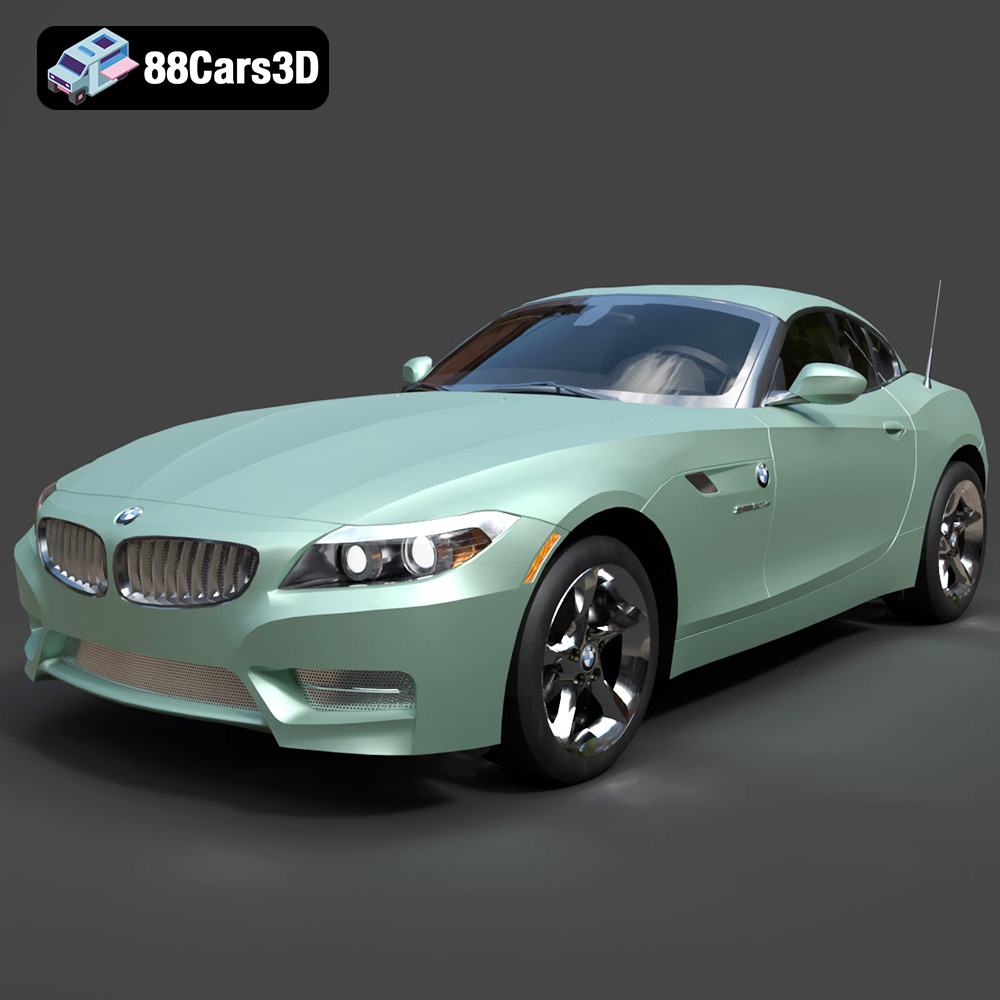
Download the BMW Z4 Roadster E89 3D Model featuring clean geometry, realistic detailing, and a fully modeled interior. Includes .blend, .fbx, .obj, .glb, .stl, .ply, .unreal, and .max formats for rendering, simulation, and game development.
Price: $13.99
View Product

Texture: Yes
Material: Yes
Download the BMW Z4 E85 3D Model featuring clean geometry, realistic detailing, and a fully modeled interior. Includes .blend, .fbx, .obj, .glb, .stl, .ply, .unreal, and .max formats for rendering, simulation, and game development.
Price: $13.99
View Product

Texture: Yes
Material: Yes
Download the BMW M3 2024 3D Model featuring clean geometry, realistic detailing, and a fully modeled interior. Includes .blend, .fbx, .obj, .glb, .stl, .ply, .unreal, and .max formats for rendering, simulation, and game development.
Price: $13.99
View Product
Texture: Yes
Material: Yes
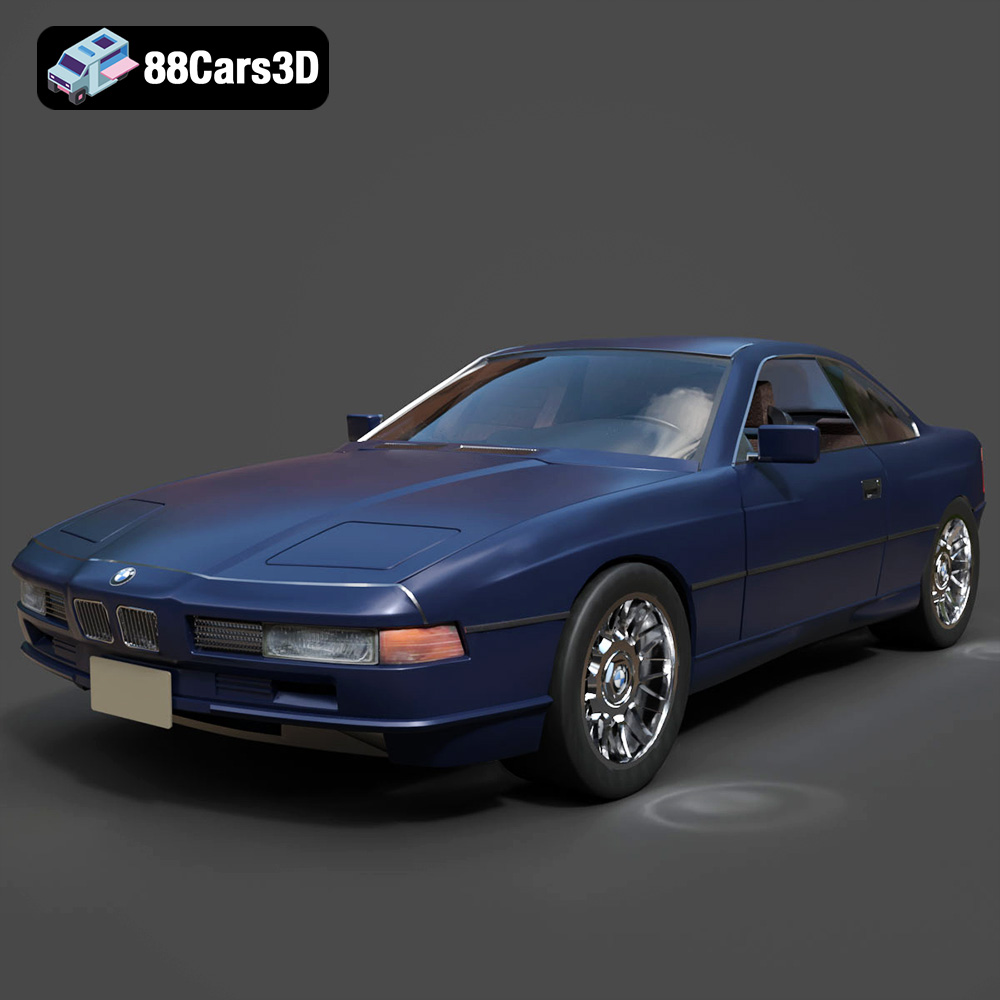
Download the BMW 850i Coupe 1990 3D Model featuring clean geometry, realistic detailing, and a fully modeled interior. Includes .blend, .fbx, .obj, .glb, .stl, .ply, .unreal, and .max formats for rendering, simulation, and game development.
Price: $13.99
View Product
Texture: Yes
Material: Yes
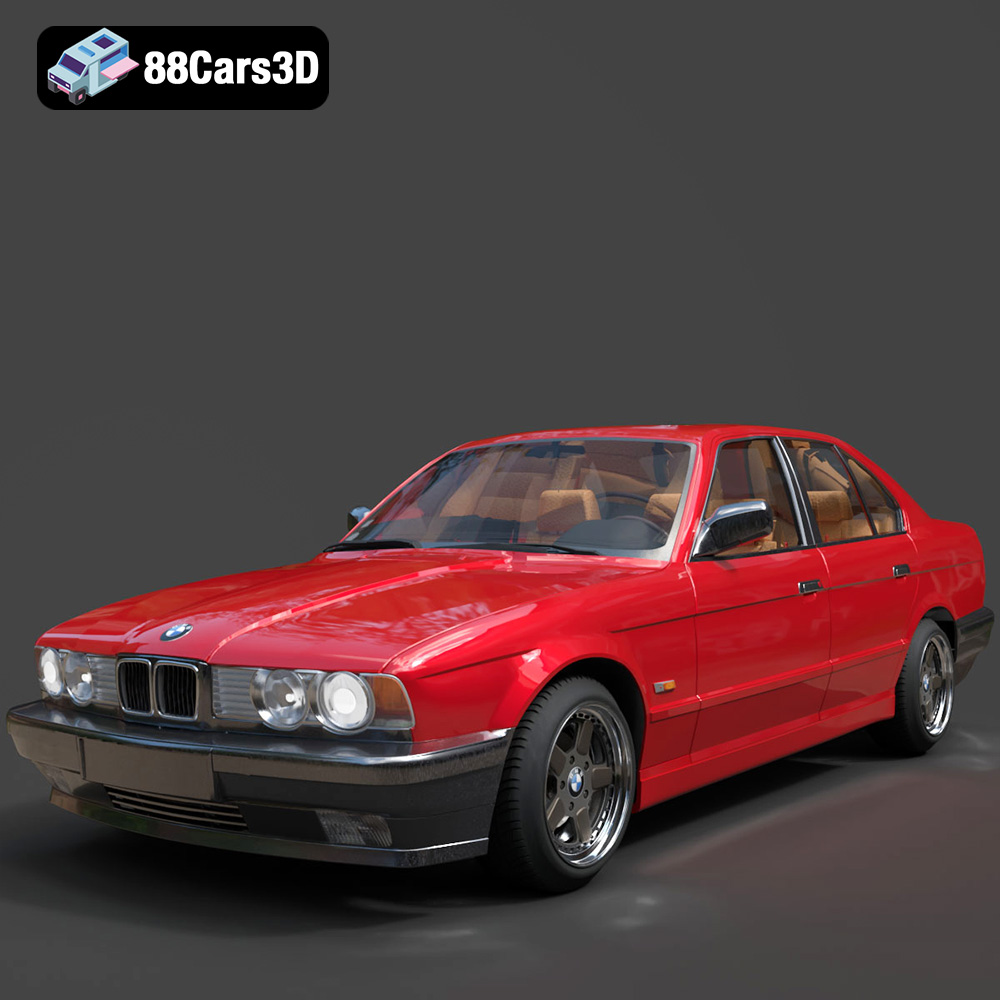
Download the BMW 525i E34 1993 3D Model featuring clean geometry, realistic detailing, and a fully modeled interior. Includes .blend, .fbx, .obj, .glb, .stl, .ply, .unreal, and .max formats for rendering, simulation, and game development.
Price: $12.99
View Product


