⚡ FLASH SALE: Get 60% OFF All Premium 3D & STL Models! ⚡

“`html
Welcome to the exciting world of 3D printing, where intricate designs can be brought to life layer by painstaking layer. For enthusiasts of automotive models, platforms like 88cars3d.com offer a treasure trove of high-quality, printable car models in STL file format. However, even the most meticulously crafted digital models can sometimes encounter issues, especially when preparing them for printing. A common hurdle is the dreaded “broken” or “non-manifold” mesh – a digital model that contains errors preventing your 3D printer from interpreting it correctly. These errors can manifest as holes, inverted faces, or intersecting geometry, leading to failed prints, corrupted slicer output, and a lot of frustration. This guide is your comprehensive manual to understanding and resolving these mesh issues, specifically focusing on powerful yet accessible tools like Meshmixer and Autodesk Netfabb. We’ll demystify the complexities of mesh topology, explore common STL file errors, and walk you through step-by-step repair processes. By the end of this article, you’ll be equipped with the knowledge and techniques to ensure your downloaded printable car models are always print-ready, transforming potential printing nightmares into stunning, detailed replicas.
The STL (STereoLithography) file format is the de facto standard for 3D printing, representing a 3D object’s surface geometry as a collection of triangular facets. Each triangle is defined by three vertices and a normal vector, which indicates the outward-facing direction of the surface. While simple, this format is susceptible to errors that can disrupt the printing process. Understanding these errors is the first step toward effective repair.
A digital 3D model for printing is essentially a surface made up of interconnected triangles. In a “watertight” or “manifold” mesh, these triangles form a closed surface with no holes, no self-intersections, and no edges shared by more than two triangles. Think of it like a balloon; it has a defined interior and exterior, and its surface is continuous. When preparing models, especially complex ones like those found on 88cars3d.com, ensuring this watertight integrity is paramount for successful slicing and printing.
Several types of errors can plague an STL file, each with specific consequences for your 3D printer settings and the final output:
These errors can arise from various sources: imperfect CAD modeling, issues during file conversion, or problems during the export process from 3D modeling software. Regardless of the origin, they all require attention before you can proceed with slicing and printing.
Fortunately, powerful software tools exist to diagnose and repair these mesh imperfections. Two of the most popular and effective options are Autodesk Meshmixer and Autodesk Netfabb. While both serve the purpose of mesh repair, they offer different workflows and capabilities, catering to varying user needs and complexities.
Meshmixer is a free, standalone application that excels at preparing 3D models for 3D printing. It’s incredibly user-friendly, making it an excellent starting point for beginners while offering advanced features for seasoned professionals. Its intuitive interface and robust selection of tools make it a go-to for tasks like mesh repair, sculpting, and model simplification. For many common STL issues encountered with downloadable models, Meshmixer provides efficient, automated, and manual repair options.
Autodesk Netfabb, available in various versions including a free basic version and more advanced paid options, is a more comprehensive platform geared towards professional additive manufacturing. It offers sophisticated analysis tools, advanced repair algorithms, and optimization capabilities that go far beyond basic mesh fixing. Netfabb is particularly powerful for complex assemblies, intricate designs, and high-volume production environments. Its automated repair functions are highly effective, and it provides detailed diagnostics that can pinpoint even the most obscure errors.
For most hobbyists and users downloading print-ready models from marketplaces like 88cars3d.com, Meshmixer often provides sufficient power and ease of use for typical STL repair tasks. Its automated “Auto Repair” feature is remarkably effective for common problems. However, if you encounter persistent issues, work with very complex geometries, or require advanced analysis and build preparation features, Netfabb (even its basic version) might be a more suitable choice. Many professionals use both, leveraging Meshmixer for quick fixes and Netfabb for more in-depth work.
Meshmixer’s strength lies in its user-friendly approach to fixing common STL errors. The process typically involves importing the file, analyzing it, and applying repair tools. Let’s walk through a typical workflow for repairing a downloaded car model.
1. Launch Meshmixer and go to File > Import. Select your downloaded STL file (e.g., a car model from 88cars3d.com).
2. Meshmixer will load the model. Immediately, you might see some visual cues indicating potential issues.
3. Use the View > Shading > Edge Display option to make it easier to spot holes or disconnected edges. Hover your mouse over different parts of the model; if a face appears as a solid color and doesn’t highlight, it might be inverted.
Meshmixer’s “Auto Repair” feature is often the first and most effective step.
1. Navigate to Edit > Auto Repair.
2. A dialog box will appear with options. For general repairs, select “Make Manifold” and set the “Hole Size” threshold. A good starting point for “Hole Size” is often around 1-2 mm, but this may need adjustment depending on the scale of your model.
3. Click “Accept.” Meshmixer will analyze the mesh and attempt to fix common errors like holes and non-manifold edges automatically.
4. Inspect the model again. Often, this single step resolves most issues.
If Auto Repair doesn’t fully fix the model, or if you want finer control, Meshmixer offers manual tools:
Once you’re satisfied with the repairs, go to File > Export and save your corrected model as an STL. Always save repaired files with a new name to preserve the original.
Netfabb takes mesh repair to a more professional level, offering deeper analysis and more sophisticated automated repair algorithms. While the interface can be more intimidating than Meshmixer’s, its capabilities are often unparalleled for complex models or critical prints.
1. Launch Netfabb and select File > Open Project to import your STL file.
2. Netfabb automatically performs an initial analysis upon import. You’ll see a list of detected errors in the “Errors” tab on the right-hand side panel. These typically include “Not Visible” (holes), “Non-Manifold” edges, “Self-Intersections,” and “Degenerate Triangles.”
3. Click the “Add basic platform” button (if prompted) to set up a virtual build platform.
4. To initiate repair, select your loaded model in the “Project” tree and click the “Repair” icon in the top toolbar (it looks like a wrench and a mesh).
5. The “Repair” dialog box offers several methods. For most STL files, the “Standard Repair” or “Expert Repair” are excellent choices. “Standard Repair” is generally sufficient for common issues.
6. Configure the repair settings. Netfabb allows fine-tuning parameters like “Max Edge Deviation” and “Max Triangle Deviation,” which control how aggressively it attempts to smooth out or correct geometry. For basic repairs, the defaults are often fine.
7. Click “Execute.” Netfabb will process the model and create a new repaired part, usually named with “_repair” appended.
8. Netfabb provides a detailed report of the repairs performed. You can review the “Errors” tab again to see if all issues have been resolved.
Beyond basic repair, Netfabb offers features crucial for preparing automotive models for printing:
After repair and optimization in Netfabb, export the model as an STL file for use in your preferred slicer software.
Once your STL file is repaired and watertight, the next critical phase is slicing – converting the 3D model into layer-by-layer instructions for your 3D printer. The slicer software interprets the geometry, and a clean mesh ensures this interpretation is accurate. Choosing the right 3D printer settings is crucial for achieving the desired quality, especially for detailed car models.
The layer height is one of the most significant settings affecting print quality and time. It dictates the thickness of each individual layer deposited by the printer.
For detailed automotive models, a layer height between 0.1mm and 0.15mm often strikes a good balance between quality and print duration. Always experiment based on the specific model and your printer’s capabilities.
Infill refers to the internal structure of a print. While car models are often printed solid or with very high infill for display purposes, understanding infill options is still beneficial.
For display car models, ensuring a solid infill (100%) guarantees that no internal structures will be visible through thin exterior walls and provides a satisfying heft.
3D printers build objects layer by layer, and unsupported overhangs or bridges will sag or fail. Support structures are temporary scaffolding generated by the slicer.
Removing supports cleanly is a critical post-processing step, especially for detailed automotive parts.
The choice of printing material and the calibration of your 3D printer significantly impact the success of printing detailed car models. A clean mesh is only half the battle; the other half lies in the physical printing process.
Different materials offer distinct properties suitable for various applications:
For detailed printable car models from 88cars3d.com intended for display, PLA or specialized resin printers are often the top choices due to their ease of use and high detail reproduction.
A well-calibrated printer is essential for producing accurate and reliable prints.
Performing these calibration steps before printing critical or detailed models ensures that your 3D printer settings in the slicer are applied effectively to a well-functioning machine.
The journey doesn’t end when the print is finished. Post-processing is where a good print becomes a great model. For detailed automotive replicas, this stage is particularly important for achieving a professional look. Careful handling of supports and skillful finishing techniques can elevate your printed object significantly.
Removing supports requires patience and the right tools.
The goal is to remove all traces of the support material without damaging the underlying model detail.
Achieving a smooth, paint-ready surface often requires more than just sanding.
This is where your 3D printed car model truly comes alive.
With meticulous post-processing, even FDM printed models can achieve stunning realism, showcasing the full potential of your printable car models.
Navigating the world of STL files and 3D printing, especially for intricate subjects like automotive models, can present challenges. However, by understanding the common pitfalls of mesh integrity and mastering the tools available for repair, you can overcome these obstacles. We’ve explored the fundamental structure of STL files, identified prevalent errors like holes and non-manifold geometry, and delved into the capabilities of powerful software like Meshmixer and Netfabb. You’ve learned step-by-step workflows for diagnosing and fixing these issues, ensuring your downloaded models from sources like 88cars3d.com are perfectly prepared for the slicing stage.
Furthermore, we’ve discussed how to translate a repaired mesh into a physical object by optimizing your 3D printer settings – from selecting the right materials and calibrating your machine to strategically generating supports. The importance of post-processing, including careful support removal, sanding, filling, priming, and painting, has been highlighted as the final, crucial step in achieving professional-quality results. Armed with this knowledge, you are now better equipped to tackle any mesh-related issue, refine your slicing strategies, and execute flawless prints. Embrace these techniques, and transform your passion for automotive design into a collection of stunning, tangible 3D printed models.
“`

Texture: Yes
Material: Yes
Download the BMW 7 Series E38 3D Model featuring its iconic luxury sedan design and classic aesthetics. Includes .blend, .fbx, .obj, .glb, .stl, .ply, .unreal, and .max formats for rendering, simulation, and game development.
Price: $10.79

Texture: Yes
Material: Yes
Download the BMW 6 Series 640i F12 3D Model featuring a sleek design and detailed interior. Includes .blend, .fbx, .obj, .glb, .stl, .ply, .unreal, and .max formats for rendering, simulation, and game development.
Price: $10.79

Texture: Yes
Material: Yes
Download the BMW 6 Coupe E63 3D Model featuring a sleek design, detailed interior, and realistic exterior. Includes .blend, .fbx, .obj, .glb, .stl, .ply, .unreal, and .max formats for rendering, simulation, and game development.
Price: $10.79

Texture: Yes
Material: Yes
Download the BMW 5 Series Touring F11-007 3D Model featuring a detailed exterior and interior. Includes .blend, .fbx, .obj, .glb, .stl, .ply, .unreal, and .max formats for rendering, simulation, and game development.
Price: $10.79

Texture: Yes
Material: Yes
Download the BMW 3 F30 3D Model featuring a detailed exterior, realistic interior, and optimized mesh. Includes .blend, .fbx, .obj, .glb, .stl, .ply, .unreal, and .max formats for rendering, simulation, and game development.
Price: $10.79

Texture: Yes
Material: Yes
Download the BMW Z4 Roadster E89 3D Model featuring clean geometry, realistic detailing, and a fully modeled interior. Includes .blend, .fbx, .obj, .glb, .stl, .ply, .unreal, and .max formats for rendering, simulation, and game development.
Price: $13.99

Texture: Yes
Material: Yes
Download the BMW Z4 E85 3D Model featuring clean geometry, realistic detailing, and a fully modeled interior. Includes .blend, .fbx, .obj, .glb, .stl, .ply, .unreal, and .max formats for rendering, simulation, and game development.
Price: $13.99

Texture: Yes
Material: Yes
Download the BMW M3 2024 3D Model featuring clean geometry, realistic detailing, and a fully modeled interior. Includes .blend, .fbx, .obj, .glb, .stl, .ply, .unreal, and .max formats for rendering, simulation, and game development.
Price: $13.99
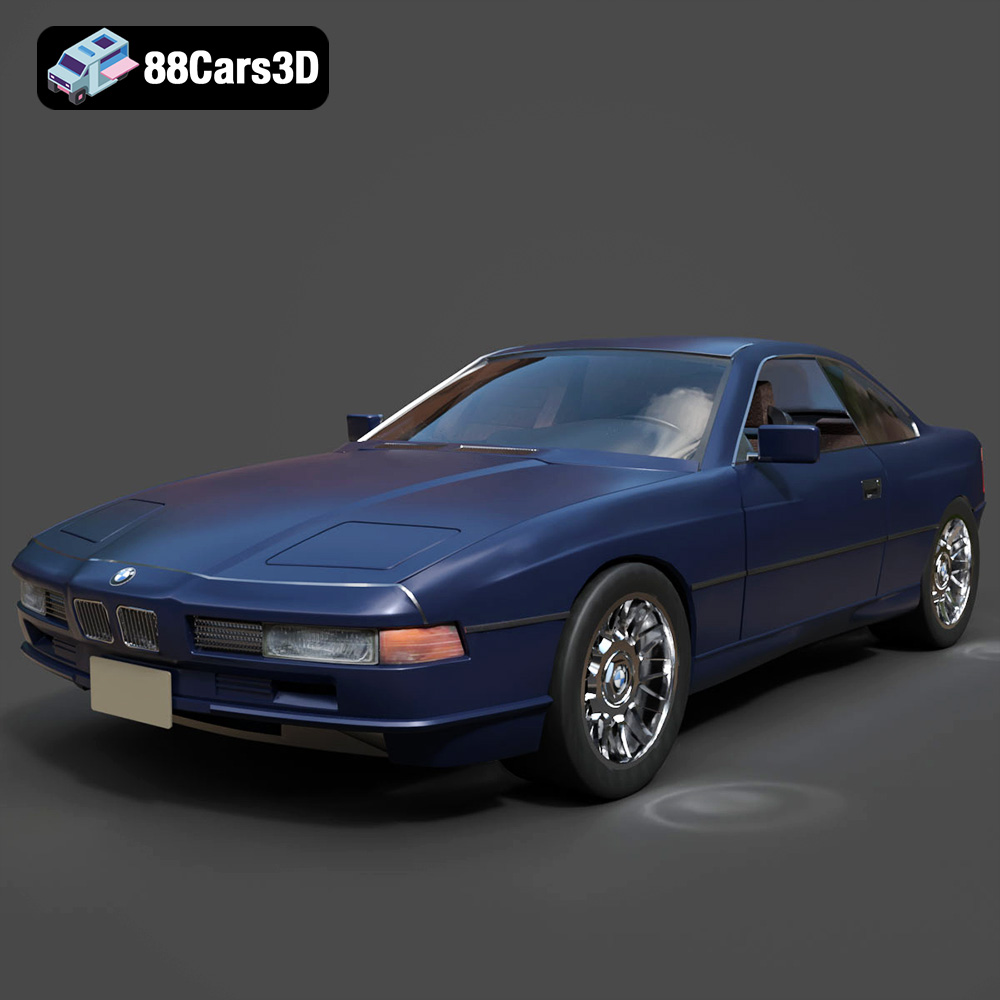
Texture: Yes
Material: Yes
Download the BMW 850i Coupe 1990 3D Model featuring clean geometry, realistic detailing, and a fully modeled interior. Includes .blend, .fbx, .obj, .glb, .stl, .ply, .unreal, and .max formats for rendering, simulation, and game development.
Price: $13.99
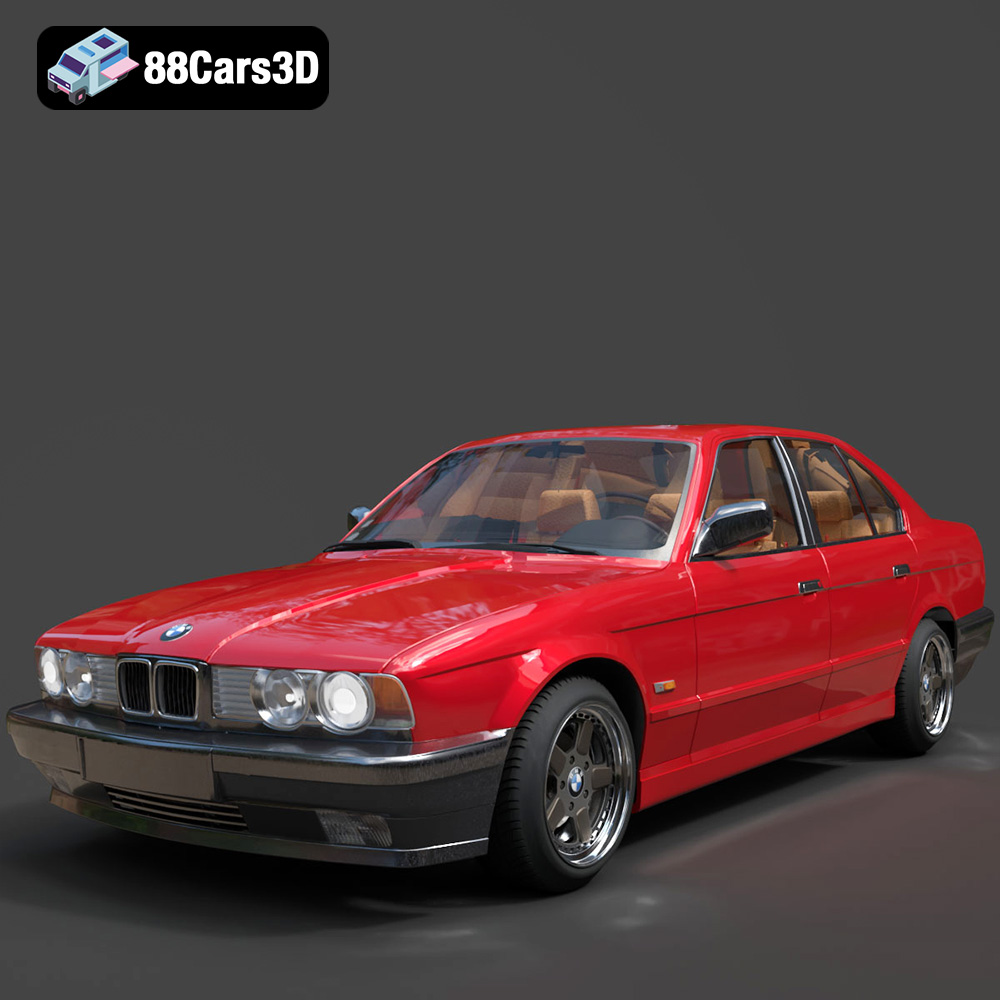
Texture: Yes
Material: Yes
Download the BMW 525i E34 1993 3D Model featuring clean geometry, realistic detailing, and a fully modeled interior. Includes .blend, .fbx, .obj, .glb, .stl, .ply, .unreal, and .max formats for rendering, simulation, and game development.
Price: $12.99

