⚡ FLASH SALE: Get 60% OFF All Premium 3D & STL Models! ⚡

“`html
The thrill of holding a perfectly rendered 3D printed car model, whether it’s a classic icon or a futuristic concept, is immense. At 88cars3d.com, we’re passionate about providing you with high-quality, print-ready STL files that capture the essence of automotive design. However, even the most meticulously crafted 3D models can sometimes encounter issues during the slicing or printing process. Often, these problems stem from underlying errors within the STL file itself – issues that can lead to failed prints, distorted geometry, or tedious hours spent troubleshooting. This comprehensive guide will equip you with the knowledge and practical techniques to identify and resolve common STL file errors, ensuring your 3D printing projects, especially those intricate printable car models, come to life flawlessly. We’ll delve into the anatomy of an STL, explore common pitfalls, and provide step-by-step solutions using popular software, ultimately setting you up for printing success.
Before we can fix errors, it’s crucial to understand what an STL file actually is. Standing for STereoLithography or Standard Tessellation Language, an STL file describes the surface geometry of a three-dimensional object using a collection of connected triangles. Think of it as a digital mosaic where each triangle is a small, flat piece of a larger surface. These triangles are defined by their three vertices (corner points) and a normal vector, which indicates which way the triangle is facing. This seemingly simple structure is the universal language for sending 3D models to 3D printers. However, the way these triangles are connected and oriented is critical for a successful print. When this tessellation isn’t perfect, or when the model’s surface isn’t properly defined, it creates ambiguities that slicing software struggles to interpret, leading directly to print failures. For complex objects like detailed printable car models, the sheer number of triangles increases the potential for these errors.
The most fundamental requirement for a printable STL file is that it must be “watertight” or “manifold.” This means the model’s surface must be a closed, continuous boundary with no holes, gaps, or self-intersections. Imagine trying to fill a bucket with water – if there are holes in the sides or bottom, the water will leak out. Similarly, a 3D printer’s slicing software needs a completely enclosed volume to accurately calculate how to fill it with material. A watertight mesh ensures that the software can define an “inside” and an “outside” for the object, allowing it to generate toolpaths for both solid infill and external shells. If the mesh isn’t watertight, the slicer might interpret the gaps as missing surfaces, leading to missing sections in your print, incorrect infill, or even complete print failures. This is particularly crucial when printing detailed models from sources like 88cars3d.com, where every surface needs to be perfectly represented.
Each triangle in an STL file is composed of three vertices, which are simply coordinates (X, Y, Z) in 3D space. These vertices define the corners of the triangle. Edges are the lines connecting these vertices, and faces are the triangles themselves. In a manifold mesh, each edge should be shared by exactly two faces. If an edge is shared by only one face, it indicates a hole or an opening in the surface. If an edge is shared by more than two faces, it suggests a self-intersection or a non-manifold geometry where the surface folds back on itself. Understanding this relationship is key to diagnosing issues. For instance, a common error is “non-manifold edges,” which signifies an edge that isn’t properly connected to form a continuous surface. Identifying these edges in software allows us to pinpoint the exact location of the error within the STL file.
Identifying errors within an STL file is the first step toward a successful print. Fortunately, most 3D modeling and mesh editing software packages include tools specifically designed to diagnose and highlight these common problems. Ignoring these potential issues can lead to hours of wasted print time and material, especially with larger or more complex models. For anyone downloading printable car models, understanding these common errors will save significant frustration. We’ll cover the most prevalent culprits that hinder the slicing process and ultimately compromise print quality. By recognizing the symptoms and knowing where to look, you can proactively address these problems before they manifest on your print bed.
This is perhaps the most frequent and problematic STL file error. Holes or gaps occur when the triangular facets that form the surface of the model do not completely enclose a volume. This can happen during the initial modeling process if surfaces aren’t properly joined, or during export from CAD software if there are small gaps between intersecting bodies. When a slicer encounters a hole, it cannot determine the boundary of the object, leading to unpredictable slicing behavior. The software might try to bridge the gap, creating thin, unsupported walls, or it might fail to generate infill for the intended internal volume, resulting in a hollow or incomplete part. Visually inspecting the model in a slicer or dedicated mesh editor is often enough to spot obvious holes. More subtle gaps might require specialized checking tools.
Non-manifold geometry refers to situations where the mesh topology is “broken” in ways that violate the rules of a valid, continuous surface. This includes:
These errors are harder to spot visually and often require automated checking tools within mesh editing software. They can cause printers to generate spurious geometry or fail to print entire sections.
Each triangle in an STL file has a normal vector, which is a vector perpendicular to the triangle’s surface, indicating which side is the “outside” of the model. If these normals are not consistently pointing outwards (or inwards, if that’s the convention being used), the slicing software can become confused about the orientation of the surfaces. This is known as “flipped normals.” When normals are flipped, the slicer might interpret the inside of the model as the outside, or vice-versa. This can lead to surfaces being rendered incorrectly, causing them to appear as holes, or the slicer might fail to generate proper toolpaths, resulting in missing or inverted sections of your print. Identifying flipped normals typically requires visualizing them in 3D modeling software.
Fortunately, you don’t need to be a seasoned 3D artist to repair common STL file errors. A range of powerful, accessible software tools are available, from free, open-source options to professional-grade solutions. The choice of tool often depends on the complexity of the error and your personal workflow. For most hobbyists and makers, a combination of a good slicer with built-in repair functions and a dedicated mesh editor will cover the vast majority of repair needs. When dealing with intricate models from platforms like 88cars3d.com, having these tools at your disposal is essential for ensuring a perfect print. We’ll explore some of the most popular and effective software for troubleshooting your STL files.
Many modern slicing programs, such as Ultimaker Cura, PrusaSlicer, and Simplify3D, come equipped with features to automatically detect and repair common STL file issues. When you import an STL file into these slicers, they often perform an initial check for errors like holes or non-manifold geometry. They might offer to automatically fix these issues with a single click. While these automatic repairs are incredibly convenient and often sufficient for minor errors, they can sometimes be too aggressive or fail to resolve more complex problems. It’s always a good practice to visually inspect the model after automatic repair to ensure the geometry hasn’t been unintentionally altered in undesirable ways. For basic maintenance on your downloaded printable car models, these built-in tools are your first line of defense.
For more intricate repairs or when automatic fixes in slicers aren’t enough, dedicated mesh editing software becomes indispensable.
These programs allow for manual correction of errors, enabling precise control over how the mesh is repaired, which is crucial for preserving the details of complex printable car models.
Now that we understand the common errors and the tools available, let’s walk through a typical workflow for repairing an STL file. This process generally involves importing the file, running automated checks, manually inspecting and correcting flagged issues, and finally exporting a clean, watertight STL. Whether you’re preparing a model downloaded from 88cars3d.com or one you’ve designed yourself, following these steps will significantly increase your chances of a successful print. The key is a methodical approach, using the strengths of different software to achieve the best results for your printable car models.
Start by importing your problematic STL file into your chosen mesh editing software (e.g., Meshmixer or Blender). Zoom in and visually inspect the model, looking for obvious holes, gaps, or areas where surfaces seem to intersect strangely. Most software allows you to change the display mode to highlight edges or faces, which can make errors more apparent. Pay close attention to areas with intricate details, such as panel gaps on car models, as these are often prone to small errors.
In Meshmixer, select the object and click “Edit” then “Make Manifold.” This tool attempts to automatically repair holes and non-manifold edges. In Blender, enable the “3D-Print Toolbox” add-on, select your object, and navigate to the “3D-Print” tab in the sidebar. Use the “Check All” button to identify errors like non-manifold edges, boundary errors (holes), and distorted faces. Click the corresponding “Fix” buttons to let the software attempt automatic repairs. In Netfabb, simply opening the file initiates a deep analysis, highlighting all detected errors.
Automated tools are not always perfect. If errors persist after automatic repair, manual intervention is necessary.
For complex models like detailed printable car models, be cautious when manually editing. Small changes can sometimes have ripple effects on surrounding geometry. It’s often best to save frequently and make small, incremental changes.
Once you believe the STL file is repaired, run the automated checks one last time to ensure no new errors were introduced during manual editing. Visually inspect the model again. If everything looks clean and watertight, export the file. When exporting, ensure you select “Binary” format (smaller file size, more common) or “ASCII” (larger file size, human-readable) as needed, and avoid options that might introduce new tessellation errors. Exporting as a new file name is good practice, preserving the original if further adjustments are needed.
A perfectly repaired STL file is just the first hurdle. Achieving a high-quality 3D print of your printable car models also heavily relies on how you configure your slicing software. Slicing software translates the 3D geometry of your STL into layer-by-layer instructions (G-code) that your 3D printer can understand. Incorrect or suboptimal slicing parameters can negate the benefits of a clean mesh, leading to weak parts, poor surface finish, or failed prints. This section will guide you through key slicing parameters and how to optimize them for exceptional results, covering both FDM and resin printing.
Layer height is one of the most impactful settings, determining the vertical resolution of your print. It refers to the thickness of each individual layer deposited by the printer.
For models from 88cars3d.com, a balance is often sought. A layer height of 0.1mm to 0.15mm is a common starting point for detailed car models on FDM printers, offering good detail without excessively long print times. For resin printers, layer heights can be much finer, often starting at 0.05mm or even 0.025mm for incredible detail.
Infill refers to the internal structure printed within the outer walls (shells) of your model. The pattern and density (percentage) of the infill significantly affect the part’s strength, weight, and print time.
For detailed car models, a Gyroid or Cubic pattern at 15-25% infill provides a good balance of strength for handling and reasonable print times.
Many printable car models feature overhangs and bridges – features that extend outwards without direct support from below. Support structures are temporary scaffolding printed alongside the model to hold these features in place during printing. Proper support generation and configuration are critical to prevent print failures.
When printing models from 88cars3d.com, carefully consider the overhangs. Using tree supports with a support interface, and adjusting the Z-distance (gap between support and model) to around 0.2mm, often yields the best results for minimizing surface scarring.
The way you orient your STL file on the virtual build plate and ensure it adheres well to the physical print bed are fundamental to a successful print. Incorrect orientation can lead to increased need for supports, weaker parts, and poor surface finish. Poor bed adhesion is one of the most common causes of print failures, leading to prints detaching mid-print and becoming a tangled mess of filament.
Orienting your model strategically can significantly improve print quality and reduce printing challenges. Consider the following:
For most printable car models, printing them upright on their wheels is the standard and usually best approach for visual appeal. However, always analyze your specific model for potential improvements.
Securely adhering the first layer to the print bed is paramount. This involves a combination of printer calibration and material settings:
For models with delicate wheels or narrow bases, using a brim is highly recommended to prevent detachment during longer prints.
The choice of printing material and the post-processing steps you undertake play a significant role in the final look and feel of your printable car models. Different materials offer unique properties, and post-processing techniques can elevate a good print to a show-quality finish. Understanding these aspects will help you achieve professional results, whether you’re printing for display, collection, or educational purposes.
The material you select directly impacts the model’s durability, surface finish, and ease of printing:
For high-detail printable car models from 88cars3d.com, standard or detailed resin is often preferred for unparalleled accuracy. If using FDM, PLA is usually the go-to for ease of use and finish.
Post-processing can transform a raw 3D print:
Patience is key during post-processing. Rushing these steps can undo the excellent work done in preparing the STL file and optimizing print settings.
By mastering the art of identifying and rectifying STL file errors, you unlock the full potential of 3D printing. From ensuring your downloaded printable car models from 88cars3d.com are perfectly formed to achieving flawless finishes, a solid understanding of mesh integrity is crucial. We’ve explored the technical underpinnings of STL files, common pitfalls like holes and non-manifold geometry, and the essential tools and techniques for repair using software like Meshmixer and Blender. Furthermore, we’ve delved into optimizing slicing parameters – layer height, infill, supports – and the importance of print orientation and bed adhesion. Finally, material selection and meticulous post-processing, including sanding and painting, are the finishing touches that bring your models to life. By applying these principles, you’ll significantly reduce print failures, save time and material, and elevate the quality of your 3D printed creations. So, before you hit ‘print’ on your next automotive masterpiece, take the time to check, repair, and optimize your STL files – the perfect print awaits!
“`

Texture: Yes
Material: Yes
Download the BMW 7 Series E38 3D Model featuring its iconic luxury sedan design and classic aesthetics. Includes .blend, .fbx, .obj, .glb, .stl, .ply, .unreal, and .max formats for rendering, simulation, and game development.
Price: $10.79

Texture: Yes
Material: Yes
Download the BMW 6 Series 640i F12 3D Model featuring a sleek design and detailed interior. Includes .blend, .fbx, .obj, .glb, .stl, .ply, .unreal, and .max formats for rendering, simulation, and game development.
Price: $10.79

Texture: Yes
Material: Yes
Download the BMW 3 F30 3D Model featuring a detailed exterior, realistic interior, and optimized mesh. Includes .blend, .fbx, .obj, .glb, .stl, .ply, .unreal, and .max formats for rendering, simulation, and game development.
Price: $10.79

Texture: Yes
Material: Yes
Download the BMW Z4 Roadster E89 3D Model featuring clean geometry, realistic detailing, and a fully modeled interior. Includes .blend, .fbx, .obj, .glb, .stl, .ply, .unreal, and .max formats for rendering, simulation, and game development.
Price: $13.99

Texture: Yes
Material: Yes
Download the BMW Z4 E85 3D Model featuring clean geometry, realistic detailing, and a fully modeled interior. Includes .blend, .fbx, .obj, .glb, .stl, .ply, .unreal, and .max formats for rendering, simulation, and game development.
Price: $13.99

Texture: Yes
Material: Yes
Download the BMW M3 2024 3D Model featuring clean geometry, realistic detailing, and a fully modeled interior. Includes .blend, .fbx, .obj, .glb, .stl, .ply, .unreal, and .max formats for rendering, simulation, and game development.
Price: $13.99
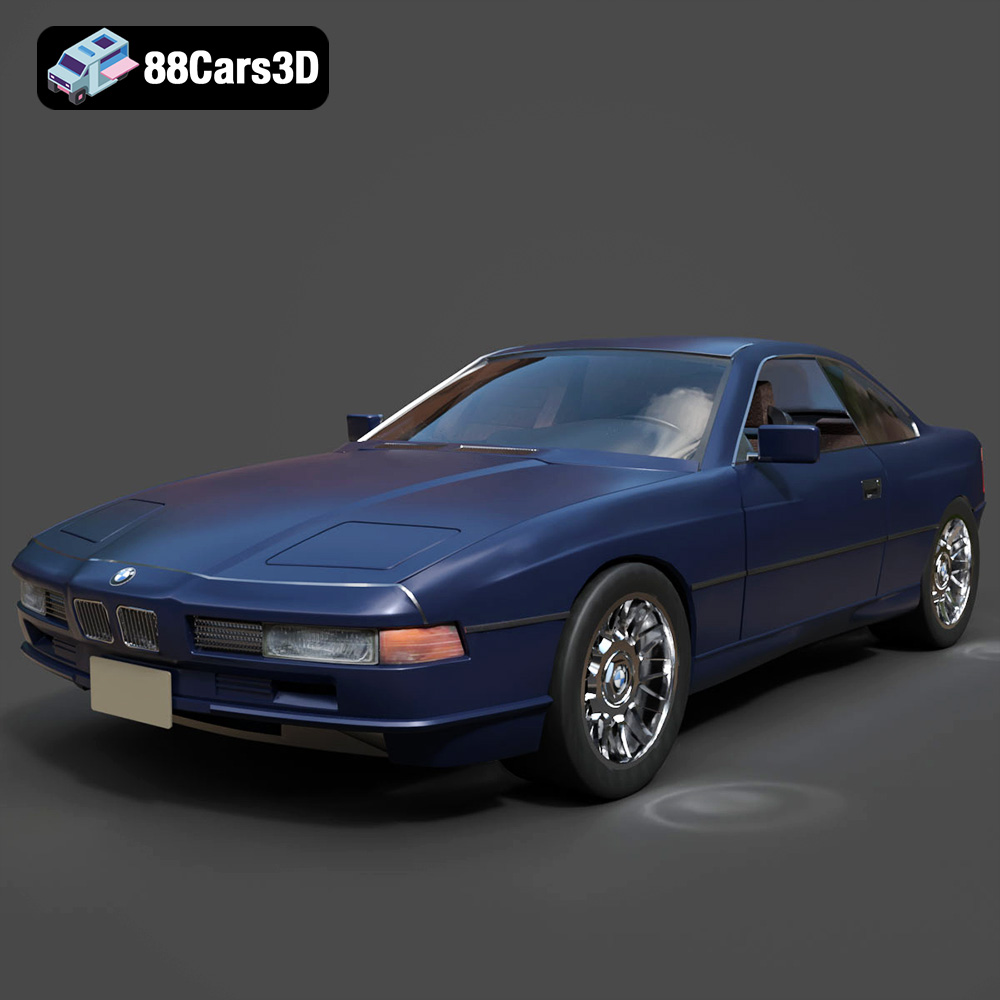
Texture: Yes
Material: Yes
Download the BMW 850i Coupe 1990 3D Model featuring clean geometry, realistic detailing, and a fully modeled interior. Includes .blend, .fbx, .obj, .glb, .stl, .ply, .unreal, and .max formats for rendering, simulation, and game development.
Price: $13.99
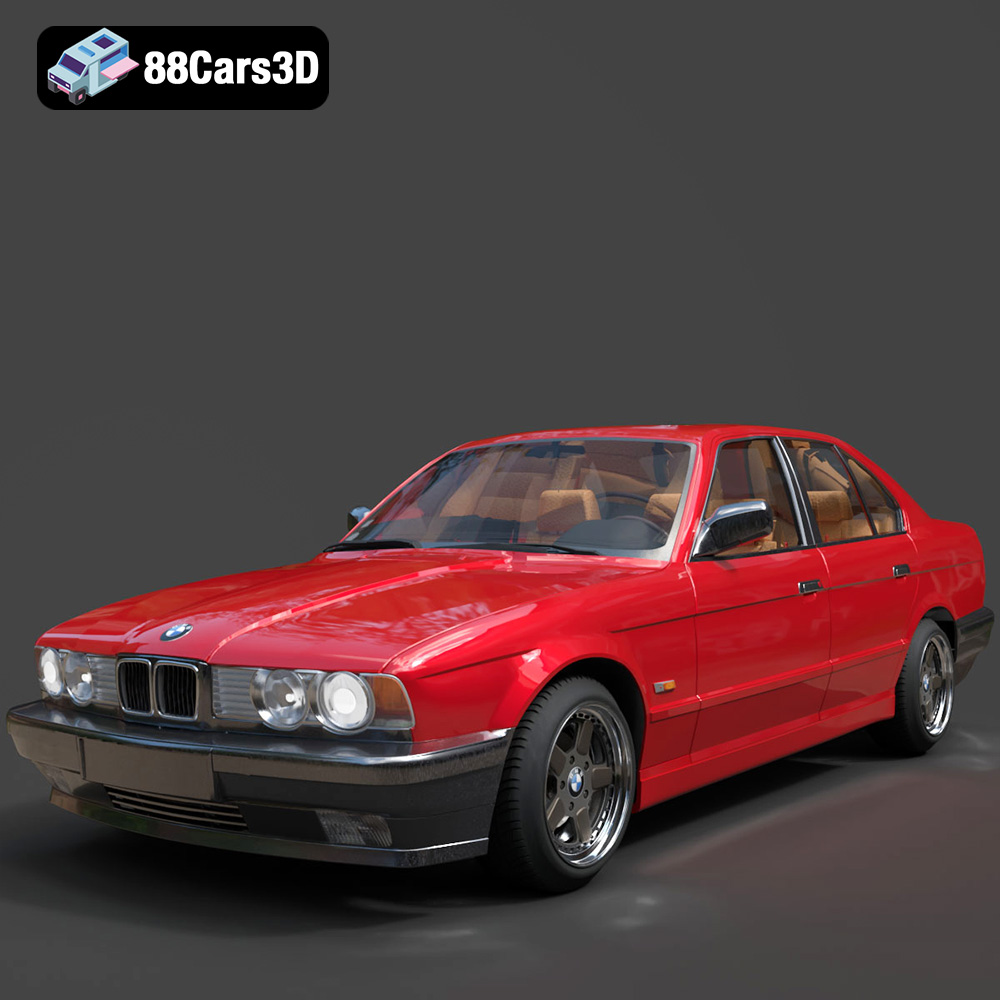
Texture: Yes
Material: Yes
Download the BMW 525i E34 1993 3D Model featuring clean geometry, realistic detailing, and a fully modeled interior. Includes .blend, .fbx, .obj, .glb, .stl, .ply, .unreal, and .max formats for rendering, simulation, and game development.
Price: $12.99

Texture: Yes
Material: Yes
Download the BMW 7 Series 2016 3D Model featuring luxurious design, detailed interior, and accurate exterior. Includes .blend, .fbx, .obj, .glb, .stl, .ply, .unreal, and .max formats for rendering, simulation, and game development.
Price: $10.79
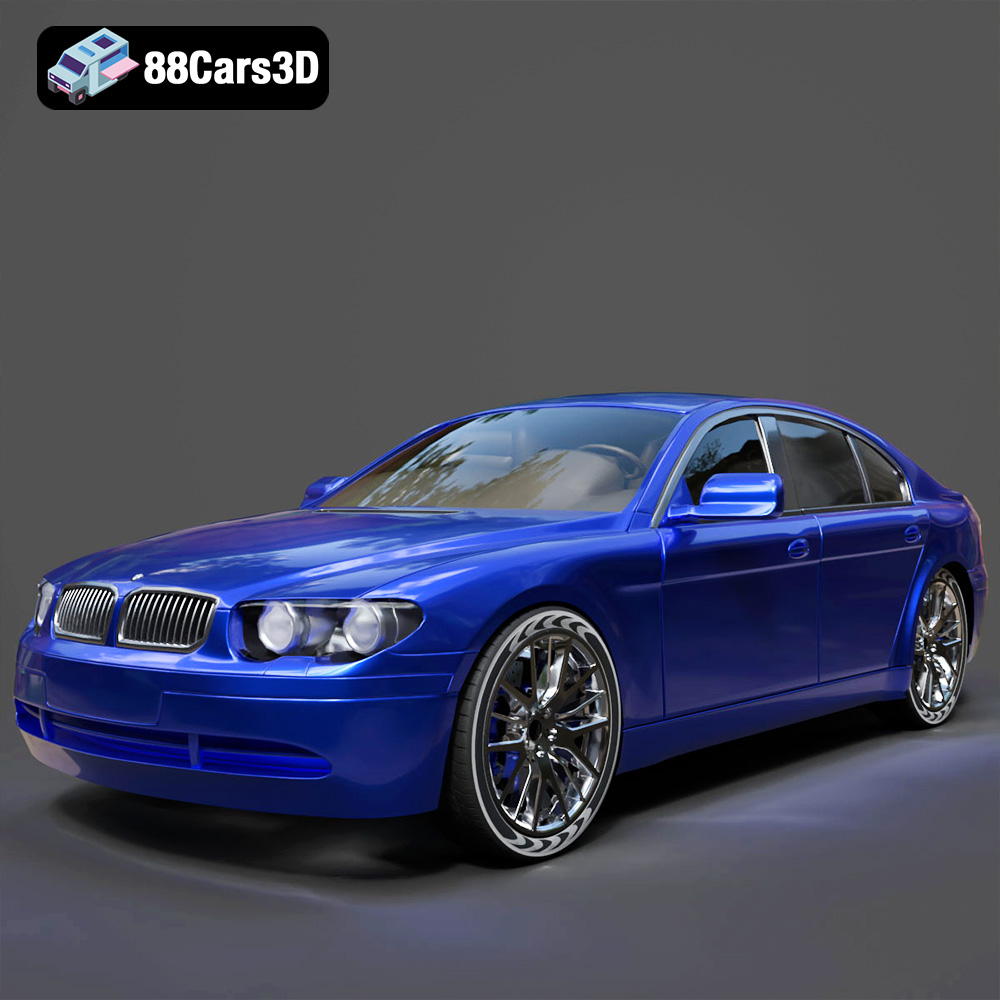
Texture: Yes
Material: Yes
Download the BMW 7 Series 30th Anniversary 3D Model featuring a meticulously crafted exterior, detailed interior, and realistic wheels. Includes .blend, .fbx, .obj, .glb, .stl, .ply, .unreal, and .max formats for rendering, simulation, and game development.
Price: $35.79

