⚡ FLASH SALE: Get 60% OFF All Premium 3D & STL Models! ⚡

The pursuit of photorealism in real-time environments has long been the holy grail for 3D artists, game developers, and visualization professionals. For years, achieving believable global illumination (GI)—the simulation of light bouncing off surfaces—was a complex and often pre-computed process in real-time engines. It involved baking lightmaps, which provided stunning static results but limited dynamism and interactivity. Any change to the environment, a new car color, or even a moving door, would necessitate a time-consuming re-bake, stifling creative iteration and responsiveness.
Enter Lumen, Unreal Engine 5’s groundbreaking fully dynamic global illumination and reflections system. Lumen represents a paradigm shift, enabling truly interactive and photorealistic lighting that reacts instantly to changes in the scene. For industries like automotive visualization, where presenting stunning vehicles in various dynamic settings is paramount, Lumen is a game-changer. It empowers artists and developers to create breathtaking virtual showrooms, interactive configurators, and cinematic sequences with unparalleled visual fidelity, all rendered in real-time. This deep dive will explore Lumen’s technical underpinnings, demonstrate its practical application within Unreal Engine, and reveal how you can leverage it to elevate your automotive projects, especially when working with high-quality 3D car models from platforms like 88cars3d.com.
Lumen is more than just a lighting solution; it’s an architectural leap forward for real-time rendering. Designed to provide truly global illumination, Lumen dynamically calculates diffuse inter-reflection and reflections for infinite bounces, adapting instantly to changes in geometry, lighting, and materials. This means light no longer behaves in an isolated, direct-only fashion. Instead, it realistically scatters throughout your scene, reflecting off surfaces, picking up their color, and illuminating indirect areas, mimicking the natural world with remarkable accuracy. Imagine a pristine white car reflecting ambient light from a vibrant red wall onto an adjacent grey floor – Lumen makes this subtle, yet crucial, color bleeding and light propagation a reality in real-time.
The beauty of Lumen lies in its ability to eliminate the laborious light baking process, freeing artists to iterate rapidly and make creative decisions on the fly. No longer are you bound by static lightmaps that become obsolete with every material tweak or object placement. This responsiveness is invaluable for automotive designers who need to visualize different paint finishes under varying lighting conditions or for game developers building dynamic open worlds where the time of day and destructible environments constantly change. Lumen underpins much of Unreal Engine 5’s visual prowess, making sophisticated real-time lighting accessible and manageable even for complex, high-fidelity scenes.
Lumen employs a sophisticated combination of techniques to achieve its dynamic global illumination. At its core, it’s a software ray tracing solution, meaning it doesn’t strictly require dedicated hardware ray tracing cores, although it can leverage them for higher quality and performance. Instead, Lumen generates a scene representation using what are known as **Mesh Distance Fields (MDFs)** for static meshes and **Signed Distance Fields (SDFs)** for the overall scene. MDFs are essentially low-resolution volumetric representations of your static geometry, capturing the distance to the nearest surface from any given point. These are automatically generated for Nanite meshes and can be manually enabled for other static meshes.
Lumen then traces rays against these distance fields to determine scene visibility and gather lighting information. For indirect lighting, Lumen uses a technique called **Surface Caching**. It caches illumination samples on surfaces, allowing for efficient lookup and propagation of bounced light. This system helps to resolve multiple bounces of diffuse light and specular reflections, creating the subtle and complex interactions we expect from realistic lighting. The system is constantly updating, generating new rays and re-evaluating cached data as objects move, lights change, or materials are altered. This dynamic recalculation is what gives Lumen its power and flexibility, ensuring that every visual element, from a polished car body to a reflective showroom floor, interacts realistically with light.
For automotive visualization, Lumen offers transformative advantages that were previously unattainable without offline rendering or extensive pre-computation. Firstly, it provides unparalleled **dynamic realism**. Designers can instantly preview a vehicle in countless scenarios—from a brightly lit studio to a sunset drive—observing how light reacts with various paint colors, metallic flakes, and interior materials in real-time. This immediate feedback loop drastically shortens iteration times, allowing for rapid experimentation with design choices and material finishes without ever leaving the engine. Imagine being able to toggle between a matte finish and a glossy metallic paint, and instantly see the accurate highlights and reflections update across the car’s sculpted surfaces, with correct color bleeding onto the environment.
Secondly, Lumen enables the creation of highly **interactive configurators and virtual showrooms**. Clients or prospective buyers can walk around a vehicle, change its specifications, open doors, and even drive it through different environments, all while experiencing consistent, high-fidelity global illumination. This level of immersion and interactivity enhances the presentation of vehicles and allows for a more engaging exploration of their features. The subtle nuances of soft shadows under the car, the reflections of ambient light in its windows, and the accurate light spill from its headlights onto the ground are all dynamically rendered, contributing to a truly convincing and immersive experience. When sourcing high-quality, pre-optimized 3D car models from marketplaces like 88cars3d.com, integrating them into a Lumen-enabled project immediately amplifies their visual impact and realism.
Before you can harness the full power of Lumen, it’s crucial to properly set up and configure your Unreal Engine project. Lumen is not enabled by default in every template, and its performance and quality can be significantly influenced by various project settings and how your scene is constructed. A well-configured project provides the optimal foundation for Lumen to shine, ensuring that your automotive models are lit beautifully and your real-time performance remains robust. This initial setup phase is critical for maximizing Lumen’s potential and avoiding common pitfalls that can lead to visual artifacts or suboptimal framerates.
The flexibility of Lumen allows you to tailor its behavior to suit different project needs, from high-fidelity cinematic renders to more performance-conscious interactive applications. Understanding where to make these adjustments, from global project settings to individual Post Process Volume overrides, empowers you to strike the right balance between visual quality and real-time performance. This section will guide you through the essential steps to enable Lumen, configure its core properties, and prepare your project for its dynamic global illumination capabilities, leveraging best practices for automotive visualization.
To enable Lumen, navigate to Edit > Project Settings > Engine > Rendering. Scroll down to the Global Illumination category and set the Dynamic Global Illumination Method to ‘Lumen’. Similarly, for reflections, set the Reflection Method to ‘Lumen’. It’s important to also enable Hardware Ray Tracing under the ‘Ray Tracing’ section if your target hardware supports it, as Lumen can leverage hardware ray tracing for improved quality and performance, especially for reflections. If hardware ray tracing is not available or desired, Lumen will fall back to its software ray tracing methods, which are still highly effective but may have different performance characteristics.
Once Lumen is enabled globally, its behavior is primarily controlled by a Post Process Volume in your scene. Add a Post Process Volume (if you don’t have one) and ensure its ‘Infinite Extent (Unbound)’ property is checked to apply settings globally. Within the Post Process Volume, under the ‘Global Illumination’ section, you’ll find numerous Lumen-specific settings. Key parameters include ‘Lumen Scene View Distance’ (determining how far Lumen traces rays) and ‘Max Trace Distance’ (the maximum length of a single ray trace). Under ‘Reflections’, you can adjust settings like ‘Lumen Reflection Quality’. For fine-tuning performance and quality, various console commands (e.g., r.Lumen.DiffuseIndirect.X, r.Lumen.Reflections.X) offer granular control, which you can find detailed on the official Unreal Engine documentation at dev.epicgames.com/community/unreal-engine/learning.
Lumen benefits immensely from clean, optimized geometry, and its integration with Unreal Engine 5’s Nanite virtualized geometry system is particularly powerful. Nanite allows you to import and render incredibly high-polygon models—like the detailed 3D car models often found on 88cars3d.com, which can easily exceed millions of polygons—without traditional LOD (Level of Detail) constraints or performance bottlenecks. When a Nanite mesh is used, Lumen automatically generates highly efficient Mesh Distance Fields (MDFs) from its source data. These MDFs are then used by Lumen to perform its software ray tracing calculations, making the process incredibly fast and accurate, even with complex automotive geometry.
For meshes that are *not* Nanite-enabled (e.g., skeletal meshes, translucent objects, or older assets), it’s crucial to ensure they have Generate Mesh Distance Fields enabled in their Static Mesh Editor settings. This ensures Lumen has the necessary volumetric representation of these objects to calculate global illumination correctly. For maximum efficiency, models should have clean, watertight topology. Avoid excessively thin geometry or intersecting meshes that can lead to artifacts. While Nanite handles high poly counts with grace, intelligent asset optimization, such as removing unseen interior geometry or unnecessary details on distant objects, can still contribute to overall scene performance and reduce the complexity of Lumen’s calculations, especially when dealing with large environments surrounding your automotive models.
With Lumen enabled, the way you approach lighting and material creation fundamentally shifts. No longer are you just placing direct lights; you’re orchestrating a symphony of light, bounces, and reflections that interact dynamically with every surface. This paradigm empowers artists to achieve unprecedented levels of realism, where every color, every surface property, and every light source contributes to a cohesive and believable illuminated environment. For automotive visualization, this means being able to accurately represent metallic paints that reflect their surroundings, or interior leathers that subtly absorb and re-emit light, bringing a new dimension of authenticity to your virtual vehicles.
The beauty of Lumen lies in its ability to take physically accurate input from your light sources and PBR materials and propagate that information throughout the scene. This eliminates guesswork and manual faking, allowing artists to focus on creative lighting design rather than technical workarounds. Understanding how different light types interact with Lumen and how PBR material properties influence light bounces is key to unlocking the system’s full potential. By mastering these interactions, you can create immersive automotive scenes that are not only visually stunning but also dynamically responsive to any changes you introduce, from adjusting a light’s intensity to swapping out a car’s entire material set.
All standard Unreal Engine light sources—Directional Lights (simulating sun/moon), Point Lights (omnidirectional), Spot Lights (conical beams), and Sky Lights (capturing ambient sky/HDRI) — are fully compatible with Lumen. The critical setting for any light source to contribute to Lumen’s global illumination is the ‘Affects Global Illumination’ checkbox in its details panel, which is typically enabled by default. For directional and sky lights, Lumen’s real-time GI system accurately propagates their light throughout the environment, generating realistic soft shadows and ambient light. Sky Lights, in particular, become incredibly powerful with Lumen, as they can capture and dynamically update their contribution based on a High Dynamic Range Image (HDRI), providing rich, environmental indirect lighting that changes with the virtual time of day or environment switch.
Beyond traditional light sources, Lumen also supports emissive materials acting as light sources. This is game-changing for elements like car headlights, tail lights, dashboard displays, or illuminated signage in a showroom. By assigning a sufficiently high emissive value to a material in the Material Editor, Lumen will treat that surface as a light emitter, realistically illuminating nearby geometry with appropriate color and intensity. While Lightmass traditionally required baking, Lumen updates these emissive contributions instantly. For achieving truly photorealistic results, always ensure your light intensities are set using physically plausible units (e.g., Lumens for Point/Spot Lights, Lux for Directional Lights) to maintain consistency with real-world lighting standards, as this directly influences how Lumen calculates light bounces.
The success of Lumen in achieving photorealism is inextricably linked to the quality and physical accuracy of your Physically Based Rendering (PBR) materials. Lumen uses the Base Color, Metallic, Roughness, and Specular inputs of your materials to calculate how light interacts with surfaces and how it propagates through the scene. For instance, a bright red car model will not only appear red directly but will also realistically ‘bleed’ red light onto a white floor or wall nearby, subtly tinting those surfaces with its reflected color. This effect, known as color bleeding, is a cornerstone of realistic global illumination, and Lumen performs it dynamically and accurately.
When crafting materials for automotive models, especially those from sources like 88cars3d.com, pay meticulous attention to their PBR properties:
Ensuring these material values are physically correct will maximize the realism of Lumen’s GI, leading to highly convincing and immersive automotive scenes.
While Lumen offers unparalleled visual fidelity, achieving smooth, real-time performance, especially in demanding automotive visualization scenarios, requires careful optimization. Lumen is a computationally intensive system, and without thoughtful management, it can quickly strain even high-end hardware. The key lies in understanding Lumen’s scalability options and applying strategic optimizations to your scene and assets. This balance between visual quality and performance is crucial, particularly when developing interactive experiences, virtual production stages, or even high-fidelity cinematic renders where consistent framerates are desired.
Optimization is not a one-time task but an ongoing process that involves monitoring performance, identifying bottlenecks, and making informed adjustments. Unreal Engine provides a rich set of tools and console commands that allow developers to fine-tune Lumen’s behavior, scale its quality, and debug potential issues. By systematically approaching optimization, you can harness Lumen’s full potential for dynamic global illumination without compromising the responsiveness and fluidity of your real-time automotive projects. This section will delve into practical strategies and tools to help you maintain optimal performance while retaining Lumen’s stunning visual quality.
Lumen provides several levers to balance quality and performance, primarily found within the Post Process Volume and via console commands. The main settings to adjust are under the ‘Global Illumination’ and ‘Reflections’ categories within your Post Process Volume:
Additionally, console variables like r.Lumen.DiffuseIndirect.X and r.Lumen.Reflections.HardwareRayTracing.X (where X is 0-4 for quality levels) offer more granular control. For example, r.Lumen.ScreenProbeGather.X variables can fine-tune the quality of screen space probes. Consider disabling ‘Two Sided Foliage’ for non-foliage meshes if not strictly needed, as it adds computation. Aggressive LODs for non-Nanite geometry and judicious use of light sources also contribute significantly to performance management.
Lumen, especially at higher quality settings, is designed for modern GPUs with good ray tracing capabilities. A powerful graphics card (e.g., NVIDIA RTX 30-series or AMD RX 6000-series and newer) is highly recommended for smooth performance, particularly for complex automotive scenes with detailed models and intricate materials. Even with powerful hardware, careful optimization is key. To diagnose performance bottlenecks, Unreal Engine offers several invaluable debugging tools:
Show LumenOverview), this visualization mode provides insights into Lumen’s internal processes, such as Mesh Distance Fields, Surface Caches, and the Lumen Scene representation. It helps identify areas where Lumen might be struggling.Common issues like light leaks (light bleeding through thin geometry) can often be resolved by ensuring meshes are watertight, have sufficient thickness, and that Mesh Distance Fields are properly generated. By leveraging these tools and understanding the relationship between settings and performance, you can create stunning automotive visualizations that run smoothly in real-time.
Lumen’s dynamic capabilities extend far beyond simply rendering beautiful static scenes. Its real-time global illumination is a foundational technology for a new era of interactive experiences, virtual production workflows, and immersive applications. For the automotive industry, this means moving from passive presentations to active engagement, allowing customers, designers, and marketers to interact with vehicles in ways that were once confined to science fiction. The ability to instantly change a car’s color, swap its wheels, or place it in a completely different environment, all while maintaining perfect lighting consistency, unlocks tremendous creative and commercial potential.
This dynamic fidelity makes Lumen an indispensable tool for developing sophisticated automotive configurators, where every selection by a user is reflected instantly and realistically. It also profoundly impacts virtual production, enabling seamless integration of real-time virtual environments with physical sets and actors. Furthermore, as AR/VR technologies become more prevalent, Lumen provides the visual quality needed to create truly convincing immersive automotive experiences, albeit with specific optimization considerations. By leveraging Lumen, developers can push the boundaries of real-time visualization, delivering experiences that are both visually breathtaking and functionally rich.
Lumen’s ability to recalculate global illumination in real-time makes it the perfect backbone for dynamic environments and interactive automotive configurators. Using Unreal Engine’s Blueprint visual scripting system, developers can create sophisticated logic to allow users to change virtually any aspect of a car or its environment. Imagine a showroom where a customer can press a button to:
This level of interactivity, combined with Lumen’s visual fidelity, provides an incredibly powerful tool for sales, marketing, and design review processes. It allows for a deeper, more engaging exploration of a vehicle’s customization options, offering a competitive edge in a visually driven market.
In the realm of Virtual Production, Lumen is a transformative technology. When shooting on LED walls, accurate real-time global illumination is crucial for seamlessly blending physical foreground elements with virtual backgrounds. Lumen ensures that the virtual environment’s light realistically bounces onto and illuminates physical objects and actors on set, matching the intensity, color, and direction of light, thus reducing the need for extensive post-production compositing. The dynamic nature of Lumen allows for real-time adjustments to the virtual background’s lighting, ensuring consistency with on-set changes or creative decisions, an invaluable capability for live-action shoots and film pre-visualization.
For AR/VR automotive applications, Lumen brings unparalleled realism. Imagine a virtual reality car configurator where you can physically walk around a vehicle, sit inside, and experience its features with photorealistic lighting. However, AR/VR introduces strict performance targets (e.g., 90 FPS minimum for comfortable VR). While Lumen significantly enhances immersion, its computational cost can be challenging. Optimization strategies for AR/VR often involve:
For mobile AR/VR, where hardware is more constrained, Lumen might be too demanding, and alternative real-time GI solutions or baked lighting may be more appropriate. However, for tethered PC VR or high-end AR experiences, Lumen can deliver breathtaking visual fidelity, making virtual automotive experiences indistinguishable from reality.
Lumen Global Illumination in Unreal Engine 5 is not just another feature; it’s a revolutionary leap that fundamentally redefines what’s possible in real-time rendering. By providing fully dynamic, photorealistic global illumination and reflections, Lumen has eliminated the cumbersome process of light baking, unleashing unprecedented creative freedom and iteration speed for artists and developers. For automotive visualization, this translates into breathtakingly realistic virtual showrooms, highly interactive configurators, and immersive virtual production environments that accurately portray every curve, material, and finish of a vehicle.
From understanding Lumen’s core mechanics and configuring your project settings to mastering lighting and material interactions, and finally optimizing for performance in demanding scenarios, this deep dive has aimed to equip you with the knowledge to harness this powerful technology. Whether you’re showcasing the intricate details of a luxury sedan, designing a cutting-edge sports car, or creating an interactive driving experience, Lumen ensures that your 3D car models from sources like 88cars3d.com are presented in the most visually compelling and physically accurate light possible.
The future of real-time automotive visualization is bright, and Lumen is at its forefront, empowering creators to deliver experiences that blur the lines between virtual and reality. Embrace this technology, experiment with its capabilities, and unlock new levels of visual fidelity and interactivity in your projects. Start exploring the possibilities today with high-quality, optimized 3D car models designed for Unreal Engine, and illuminate your creations like never before.

Texture: Yes
Material: Yes
Download the BMW 7 Series E38 3D Model featuring its iconic luxury sedan design and classic aesthetics. Includes .blend, .fbx, .obj, .glb, .stl, .ply, .unreal, and .max formats for rendering, simulation, and game development.
Price: $10.79

Texture: Yes
Material: Yes
Download the BMW 6 Series 640i F12 3D Model featuring a sleek design and detailed interior. Includes .blend, .fbx, .obj, .glb, .stl, .ply, .unreal, and .max formats for rendering, simulation, and game development.
Price: $10.79

Texture: Yes
Material: Yes
Download the BMW 6 Coupe E63 3D Model featuring a sleek design, detailed interior, and realistic exterior. Includes .blend, .fbx, .obj, .glb, .stl, .ply, .unreal, and .max formats for rendering, simulation, and game development.
Price: $10.79

Texture: Yes
Material: Yes
Download the BMW 5 Series Touring F11-007 3D Model featuring a detailed exterior and interior. Includes .blend, .fbx, .obj, .glb, .stl, .ply, .unreal, and .max formats for rendering, simulation, and game development.
Price: $10.79

Texture: Yes
Material: Yes
Download the BMW 3 F30 3D Model featuring a detailed exterior, realistic interior, and optimized mesh. Includes .blend, .fbx, .obj, .glb, .stl, .ply, .unreal, and .max formats for rendering, simulation, and game development.
Price: $10.79
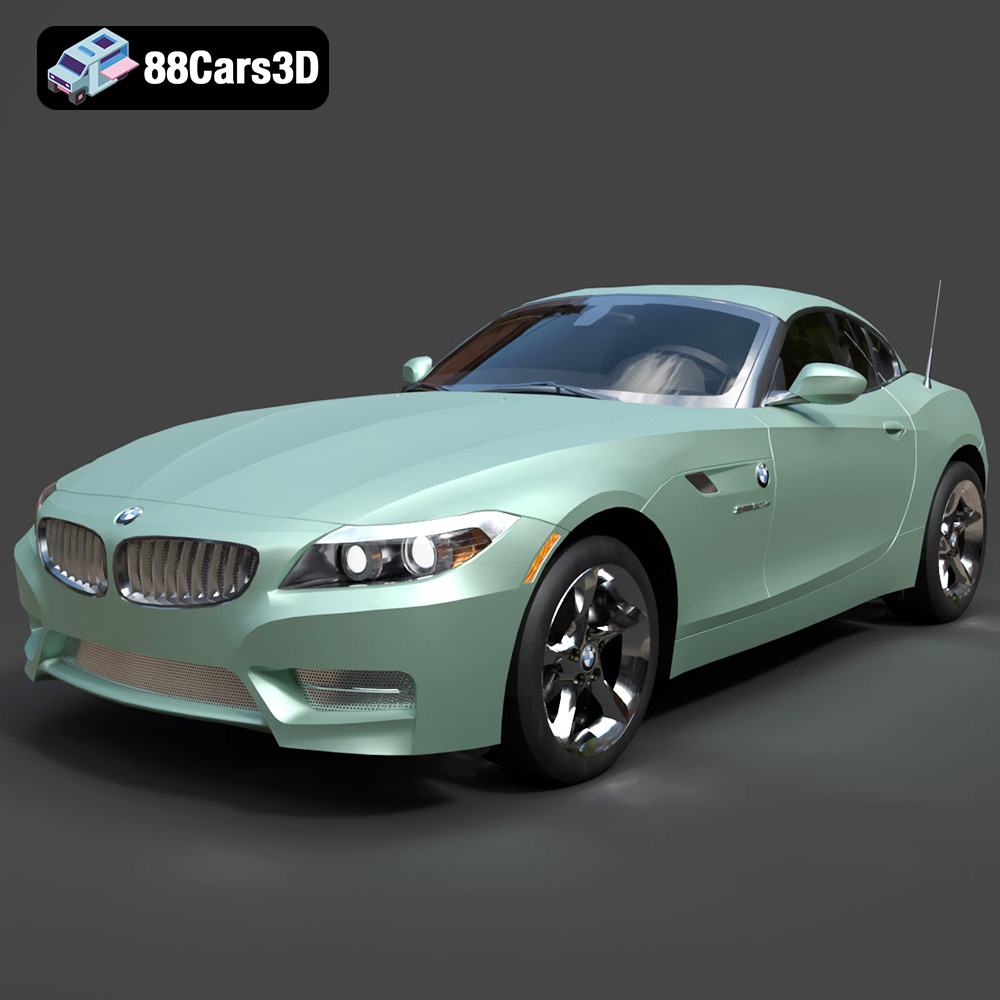
Texture: Yes
Material: Yes
Download the BMW Z4 Roadster E89 3D Model featuring clean geometry, realistic detailing, and a fully modeled interior. Includes .blend, .fbx, .obj, .glb, .stl, .ply, .unreal, and .max formats for rendering, simulation, and game development.
Price: $13.99

Texture: Yes
Material: Yes
Download the BMW Z4 E85 3D Model featuring clean geometry, realistic detailing, and a fully modeled interior. Includes .blend, .fbx, .obj, .glb, .stl, .ply, .unreal, and .max formats for rendering, simulation, and game development.
Price: $13.99

Texture: Yes
Material: Yes
Download the BMW M3 2024 3D Model featuring clean geometry, realistic detailing, and a fully modeled interior. Includes .blend, .fbx, .obj, .glb, .stl, .ply, .unreal, and .max formats for rendering, simulation, and game development.
Price: $13.99
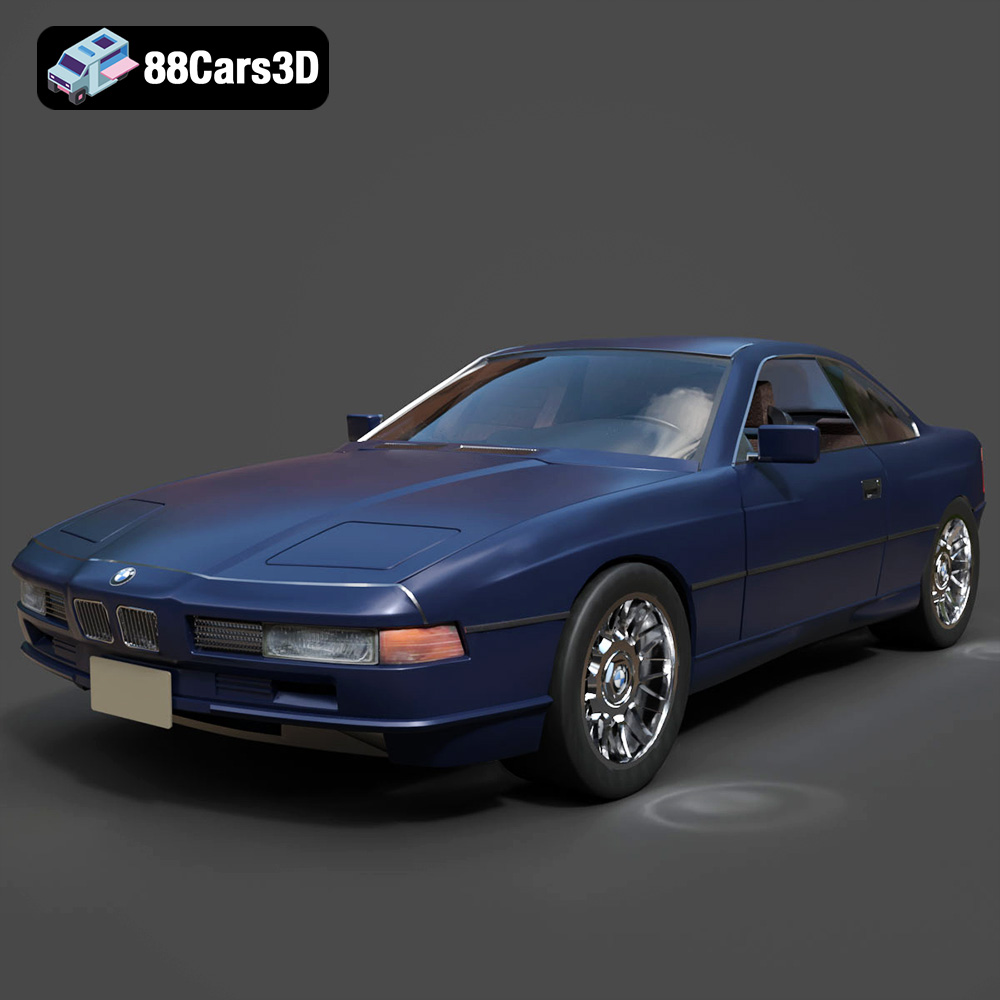
Texture: Yes
Material: Yes
Download the BMW 850i Coupe 1990 3D Model featuring clean geometry, realistic detailing, and a fully modeled interior. Includes .blend, .fbx, .obj, .glb, .stl, .ply, .unreal, and .max formats for rendering, simulation, and game development.
Price: $13.99
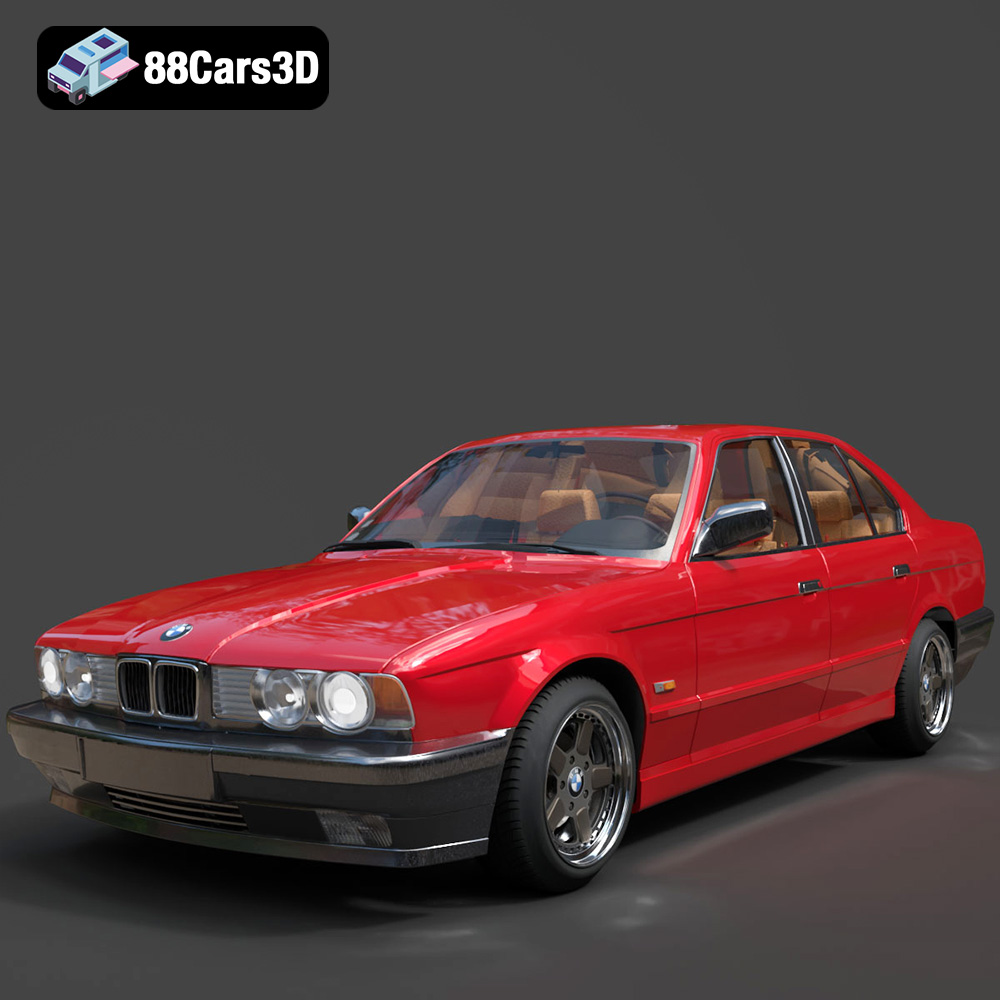
Texture: Yes
Material: Yes
Download the BMW 525i E34 1993 3D Model featuring clean geometry, realistic detailing, and a fully modeled interior. Includes .blend, .fbx, .obj, .glb, .stl, .ply, .unreal, and .max formats for rendering, simulation, and game development.
Price: $12.99

