⚡ FLASH SALE: Get 60% OFF All Premium 3D & STL Models! ⚡

The allure of a perfectly rendered automobile, gleaming under a cinematic light, is undeniable. For 3D artists, game developers, and automotive designers, creating these digital masterpieces is a journey that demands precision, technical prowess, and artistic vision. Whether you’re aiming for photorealistic marketing visuals, high-performance game assets, or interactive AR/VR experiences, the foundational workflow remains critical. Mastering the intricacies of 3D car modeling involves a blend of artistic intuition and rigorous technical application, from meticulously sculpting every curve to meticulously optimizing every polygon.
This comprehensive guide will take you through the entire professional 3D automotive workflow. We’ll explore the best practices, advanced techniques, and software-specific insights needed to transform an initial concept into a breathtaking final render or a highly optimized interactive asset. From the initial blueprint setup and advanced modeling topology to sophisticated UV mapping, PBR material creation, and robust rendering strategies, you’ll gain actionable knowledge to elevate your 3D automotive projects. Prepare to dive deep into the technical specifications, performance considerations, and industry standards that define excellence in digital car creation.
Every exceptional 3D car model begins with a clear vision and an abundance of accurate data. This foundational phase is paramount, as any inaccuracies here will propagate through the entire workflow, leading to costly corrections later. A strong conceptual understanding and precise reference setup are the bedrock upon which high-quality automotive models are built. Without a solid blueprint, even the most skilled modeler will struggle to achieve anatomical accuracy and maintain consistent proportions, especially critical when aiming for photorealism or specific brand fidelity.
The cornerstone of accurate automotive modeling is an exhaustive collection of reference images. This includes orthographic views (front, back, top, side), which are indispensable for establishing primary dimensions and silhouettes. Beyond these flat projections, gather a vast array of perspective photographs, detail shots of specific components (headlights, grilles, wheels, interior elements), and even images taken in varying lighting conditions to understand surface reflections and material responses. High-resolution images are preferred, allowing you to zoom in and discern subtle curves, panel gaps, and intricate details. For certain projects, such as recreating existing vehicles, access to manufacturer CAD data can provide an unparalleled level of precision, though this is often proprietary and difficult to obtain. If CAD data isn’t available, meticulous measurement and cross-referencing between multiple photographic sources become crucial to ensuring the model’s fidelity to the real-world counterpart. Consider also video references for observing how light plays across surfaces in motion.
Once you have your orthographic references, the next critical step is to import and meticulously calibrate them within your chosen Digital Content Creation (DCC) software, such as 3ds Max, Blender, or Maya. The goal is to create a perfectly aligned set of image planes that serve as a transparent guide for your modeling efforts. Ensure that all views are scaled uniformly and precisely match each other. For instance, the length of the car in the side view must correspond exactly to the length in the top view. Setting the correct real-world scale and units (e.g., meters or centimeters) in your scene from the outset is vital, especially if the model will interact with other assets, be used for 3D printing, or imported into game engines. In Blender, for example, you would typically use Empty objects with image displays, ensuring their scale and position are locked. According to the official Blender 4.4 documentation, the use of reference images or “Image Empties” is a standard practice for blueprint setup, allowing artists to accurately trace complex forms. This setup acts as a visual template, guiding the initial block-out and ensuring that the fundamental proportions and overall silhouette are correct before diving into intricate detailing. Take the time to double-check these alignments, as a misalignment of even a few pixels can lead to noticeable distortions in the final model.
With a solid blueprint in place, the journey into creating the 3D car body begins. Automotive modeling is an art form demanding extreme precision, especially when it comes to maintaining perfectly smooth, reflective surfaces and accurate panel gaps. The choice of modeling technique and the meticulous planning of topology are central to achieving photorealistic results and efficient performance across various applications.
For high-fidelity automotive models, subdivision surface modeling (often referred to as SubD or Catmull-Clark subdivision) is the industry-standard approach. This technique involves creating a relatively low-polygon base mesh (the “cage”) which is then smoothed by a subdivision modifier. This allows artists to work with a manageable number of control points while achieving incredibly smooth, organic curves essential for vehicle bodies. The primary advantage lies in its non-destructive nature and efficiency: adjustments to the base mesh propagate smoothly across the subdivided surface. However, mastering SubD requires a deep understanding of how edge flow influences surface curvature and hardness. Every edge added or removed impacts the resulting smooth mesh, making precise placement critical. The target polygon count for a high-poly, render-ready car model can range from 200,000 to 1,000,000+ polygons (triangles or quads), depending on the level of detail, with wheels and interior components often accounting for a significant portion. For game-ready assets, this count will be significantly lower, requiring intelligent retopology and baking processes, often targeting 50,000-150,000 triangles for hero vehicles, but can be as low as 10,000-30,000 triangles for background cars or mobile platforms, as found on platforms like 88cars3d.com.
Clean topology and intelligent edge flow are the hallmarks of a professional automotive model. Edge loops must flow naturally along the curvature of the car, defining its shape and guiding the subdivision process. Poor edge flow can lead to “pinching,” unwanted bumps, or shading artifacts that become glaringly obvious on reflective car surfaces. Strive for an all-quad topology where possible, as quads subdivide more predictably and are easier to manage than triangles or N-gons. When defining sharp edges, such as those found around wheel wells or window frames, you’ll need to strategically add “support loops” or “holding edges” close to the primary edge. These extra edges tighten the subdivision, preventing the area from becoming overly smooth while still maintaining an overall quad mesh structure. This meticulous approach ensures that when the light hits the surface, it reflects realistically without any visual distortions, providing a smooth, continuous highlight across the car’s body panels. In Blender 4.4, tools like the “Loop Cut and Slide” (Ctrl+R) and “Knife Tool” (K) are invaluable for precise edge loop placement and maintaining optimal edge flow. Additionally, understanding the “Crease” functionality on edges can help control subdivision behavior without adding excessive geometry, though it’s often preferred to use support loops for more robust control.
Achieving a convincing automotive model goes beyond just the main body shape; it’s the minute details that sell the realism. Recreating accurate panel gaps is a critical step. These aren’t simply extruded lines; they are carefully modeled recesses that allow separate body panels to sit flush. Techniques often involve duplicating edge loops, extruding them inwards, and then refining the surrounding geometry to maintain the correct width and depth of the gap. This ensures that light interacts with these recesses realistically, casting subtle shadows and defining the distinct parts of the vehicle. For interior modeling, a modular approach is often beneficial. Components like the dashboard, seats, steering wheel, and door panels are modeled as separate elements, allowing for easier detail work and asset management. Even for exterior renders, glimpses of a detailed interior through windows significantly enhance realism. Consider the necessary level of detail based on the final application: a close-up interior render will demand far more intricate modeling than a game asset where the interior is only seen through tinted windows. This stage also includes modeling intricate elements like headlights, taillights (often requiring complex refractive and reflective materials), grilles, and exhaust pipes, all adhering to the principles of clean topology and accurate proportions.
Once the 3D model is sculpted to perfection, it’s time to give it its skin: textures and materials. This phase is where the model truly comes to life, transitioning from a smooth gray mesh to a vibrant, realistic representation. Mastering UV unwrapping and Physically Based Rendering (PBR) workflows is essential for achieving visual fidelity and ensuring asset versatility across different rendering environments.
UV unwrapping is the process of flattening the 3D model’s surface into a 2D space, allowing 2D textures to be applied accurately. For complex automotive surfaces, strategic UV layout is paramount to minimize distortion, optimize texture resolution, and facilitate efficient texturing. The goal is to create clean, organized UV islands with minimal seams, ideally placed in inconspicuous areas. For car bodies, techniques often involve projecting UVs from multiple angles (e.g., planar projections for large, relatively flat panels, cylindrical for wheels) and then stitching and relaxing them. Texel density, the ratio of texture pixels to 3D surface area, must be consistent across the model to prevent blurry or overly sharp textures. High-resolution models often benefit from UDIM (U-Dimension) workflows, where different parts of the car (e.g., hood, door, roof) occupy separate UV tiles (e.g., 1001, 1002, 1003). This allows for extremely high-resolution textures without exceeding a single texture map’s limitations, crucial for detailed automotive finishes. For game assets, maximizing UV space efficiency by packing islands tightly (while maintaining proper padding to avoid texture bleeding) into a single 0-1 UV space is common, sometimes using multiple UV sets for lightmaps or specific detail maps. Tools within your DCC software, like Blender’s “Smart UV Project” or manual “Seam Marking” and “Unwrap” functions, are crucial for this precise task. Always ensure that the UVs are clean and ready for texture painting, as this directly impacts the quality of the final materials.
Physically Based Rendering (PBR) has become the industry standard for creating realistic materials due to its predictable and consistent behavior under various lighting conditions. PBR materials simulate real-world physical properties of surfaces, ensuring that a material looks correct whether it’s in a studio light setup or an outdoor HDRI environment. Key PBR texture maps typically include: Albedo/Base Color (the diffuse color without lighting information), Normal Map (adding surface detail without extra geometry), Roughness Map (controlling the micro-surface detail and specularity spread), Metalness Map (determining if a surface is metallic or dielectric), and Ambient Occlusion (AO) Map (simulating self-shadowing). A typical PBR workflow involves creating these maps in texture painting software like Substance Painter or Mari, often starting with baked maps like Normal, AO, Curvature, and Position from the high-poly model onto the low-poly version. In your DCC, these maps are then plugged into a PBR shader network (e.g., Blender’s Principled BSDF, 3ds Max’s Physical Material, or Maya’s aiStandardSurface). The precise values and interplay of these maps dictate how light interacts with the material, producing convincing reflections, refractions, and diffuse properties. Understanding the underlying physics behind each map is crucial for creating truly believable materials.
Automotive surfaces, particularly car paint, present unique challenges due to their complex optical properties. Realistic car paint often requires a multi-layered shader approach to accurately simulate flakes, clear coats, and metallic sheens. A common setup involves:
Similarly, other automotive materials like glass, rubber, and chrome require specific PBR considerations. Glass needs accurate IOR values and careful handling of absorption and transmission. Tire rubber benefits from detailed normal maps and varying roughness to represent its texture and wear. Chrome and other polished metals require low roughness values and high metalness. Crafting these advanced shader networks in software like 3ds Max (using Corona or V-Ray materials) or Blender (with Cycles or Eevee nodes) allows for unparalleled realism. Experimenting with Fresnel effects, anisotropy (for brushed metals), and subsurface scattering (for materials like certain plastics) can push the visual fidelity even further, ensuring that every material responds accurately to the scene’s lighting.
With a meticulously modeled and textured car, the next crucial step is to illuminate it in a way that accentuates its design, materials, and overall aesthetic. Lighting is arguably the most powerful tool in a 3D artist’s arsenal, capable of transforming a good model into an extraordinary render. This section delves into professional lighting setups, the nuances of various rendering engines, and the final touches of post-processing that give renders their cinematic polish.
Effective lighting can make or break a render. For showcasing a vehicle’s design and materials, two primary approaches dominate: studio lighting and image-based lighting (IBL) using High Dynamic Range Images (HDRIs).
Studio lighting involves placing virtual light sources strategically, mimicking real-world photography studios. A common setup is the three-point lighting system: a key light (main illuminator), a fill light (softens shadows from the key light), and a back/rim light (separates the subject from the background). For cars, additional lights might be used to highlight specific curves, add reflections to the bodywork, or illuminate the interior. Large area lights or softboxes are preferred to create smooth, even reflections on the car’s highly reflective surfaces. The color temperature and intensity of each light should be carefully balanced to create mood and emphasize form.
HDRI environments offer a highly efficient and realistic way to light a scene. An HDRI is a 360-degree panoramic image containing a wide range of light information. When used as an environment map in a rendering engine, it acts as a virtual light dome, casting realistic light, shadows, and reflections onto the model. This is particularly effective for outdoor automotive renders, as it provides instant, physically accurate global illumination and reflections from real-world environments. Combining HDRIs with subtle area lights for specific highlights often yields the most compelling results, allowing the HDRI to provide the ambient light and reflections, while direct lights add targeted drama and emphasis. Many platforms, including 88cars3d.com, showcase models rendered with sophisticated HDRI setups to achieve their stunning realism.
The choice of rendering engine significantly impacts the quality, speed, and workflow of your automotive renders. Each engine has its strengths and preferred use cases:
Regardless of the engine, understanding concepts like global illumination (GI), caustic effects, depth of field, and motion blur is crucial. Optimizing rendering settings—such as sample counts, ray depths, and noise thresholds—is a balancing act between render quality and time. Denoising features, now common in most modern renderers, can significantly reduce render times without compromising quality, especially for scenes with subtle lighting or complex materials.
The raw render output from your 3D software is rarely the final image. Post-processing and compositing in software like Adobe Photoshop, Affinity Photo, or Blackmagic Fusion/Adobe After Effects are indispensable for achieving a truly cinematic and polished look. This stage involves enhancing the render through various techniques:
This final stage is where the artistic vision truly solidifies, transforming a technical render into a captivating piece of visual art. It’s an iterative process of tweaking and refining until the image perfectly conveys the desired message and aesthetic.
While photorealistic renders are one major application, 3D car models serve a multitude of other purposes, each with its own set of technical requirements and optimization strategies. Game development, augmented/virtual reality, and even physical fabrication through 3D printing demand specialized workflows to ensure performance, immersion, and physical accuracy.
For deployment in real-time game engines like Unity or Unreal Engine, performance is paramount. High-polygon models suitable for offline rendering must undergo significant optimization.
When sourcing high-quality, game-ready assets, platforms like 88cars3d.com often provide models pre-optimized with multiple LODs and clean topology, ensuring seamless integration into game development pipelines.
Augmented Reality (AR) and Virtual Reality (VR) experiences place even stricter demands on 3D assets due to their real-time, interactive, and often mobile nature.
The goal is to maintain a high and stable frame rate (e.g., 90 FPS for VR to prevent motion sickness) while delivering a visually compelling and immersive experience. Every polygon, texture, and shader instruction must be considered for its impact on performance.
Taking a digital car model to the physical realm through 3D printing introduces an entirely different set of technical considerations centered around geometric integrity and printability.
3D printing a car model requires a shift in mindset from visual fidelity to structural integrity and manufacturability. The precision required for digital car modeling translates directly into the quality of the physical output.
In the dynamic world of 3D, models rarely stay within a single software environment. They are transferred between different DCC applications, imported into game engines, optimized for AR/VR platforms, and shared with collaborators. Understanding the intricacies of various 3D file formats and mastering efficient conversion techniques are essential skills for any professional.
A diverse array of 3D file formats exists, each with its strengths, limitations, and preferred use cases:
Other formats like DAE (Collada), ABC (Alembic for animated caches), and STL (for 3D printing) also play specialized roles in the 3D pipeline. Platforms like 88cars3d.com typically offer a range of these formats (FBX, OBJ, GLB, USDZ) to ensure maximum compatibility for their users across various workflows and applications.
Efficient asset transfer and seamless collaboration are vital in professional 3D production pipelines. When preparing a 3D car model for export or sharing, consider the following best practices:
By meticulously preparing your models and understanding the nuances of different file formats, you can ensure smooth transitions between software, foster effective collaboration, and maintain the integrity of your valuable 3D assets throughout their lifecycle.
The journey from a conceptual sketch to a stunning 3D automotive render or a highly optimized game asset is a testament to the blend of artistic skill and technical expertise. We’ve navigated through the critical stages, beginning with meticulous blueprint preparation and advanced subdivision modeling techniques that sculpt perfect surfaces and precise panel gaps. We then explored the art of UV unwrapping and the science of Physically Based Rendering, bringing materials like realistic car paint and glass to life. Illuminating these creations with professional lighting setups and rendering them through powerful engines like V-Ray, Corona, Cycles, or Arnold, we achieve photorealistic visual fidelity.
Beyond static renders, we delved into the essential optimization strategies for real-time applications, detailing how LODs, draw calls, and texture atlasing prepare models for demanding game engines and immersive AR/VR experiences. Finally, we touched upon the unique requirements for 3D printing, ensuring digital models can become tangible objects, and navigated the complex landscape of 3D file formats for seamless interoperability and collaboration. Mastering these workflows empowers you to create not just models, but truly captivating digital vehicles that excel in any application.
The world of 3D automotive design is continuously evolving, and continuous learning and practice are key to staying at the forefront. Armed with these comprehensive insights, you are now better equipped to tackle complex projects, overcome technical challenges, and consistently deliver high-quality results. To kickstart or enhance your projects, explore the vast selection of meticulously crafted 3D car models available on marketplaces like 88cars3d.com, where quality and versatility meet the demands of professional artists and developers alike. Your next masterpiece awaits.

Texture: Yes
Material: Yes
Download the BMW 7 Series E38 3D Model featuring its iconic luxury sedan design and classic aesthetics. Includes .blend, .fbx, .obj, .glb, .stl, .ply, .unreal, and .max formats for rendering, simulation, and game development.
Price: $10.79

Texture: Yes
Material: Yes
Download the BMW 6 Series 640i F12 3D Model featuring a sleek design and detailed interior. Includes .blend, .fbx, .obj, .glb, .stl, .ply, .unreal, and .max formats for rendering, simulation, and game development.
Price: $10.79
Texture: Yes
Material: Yes
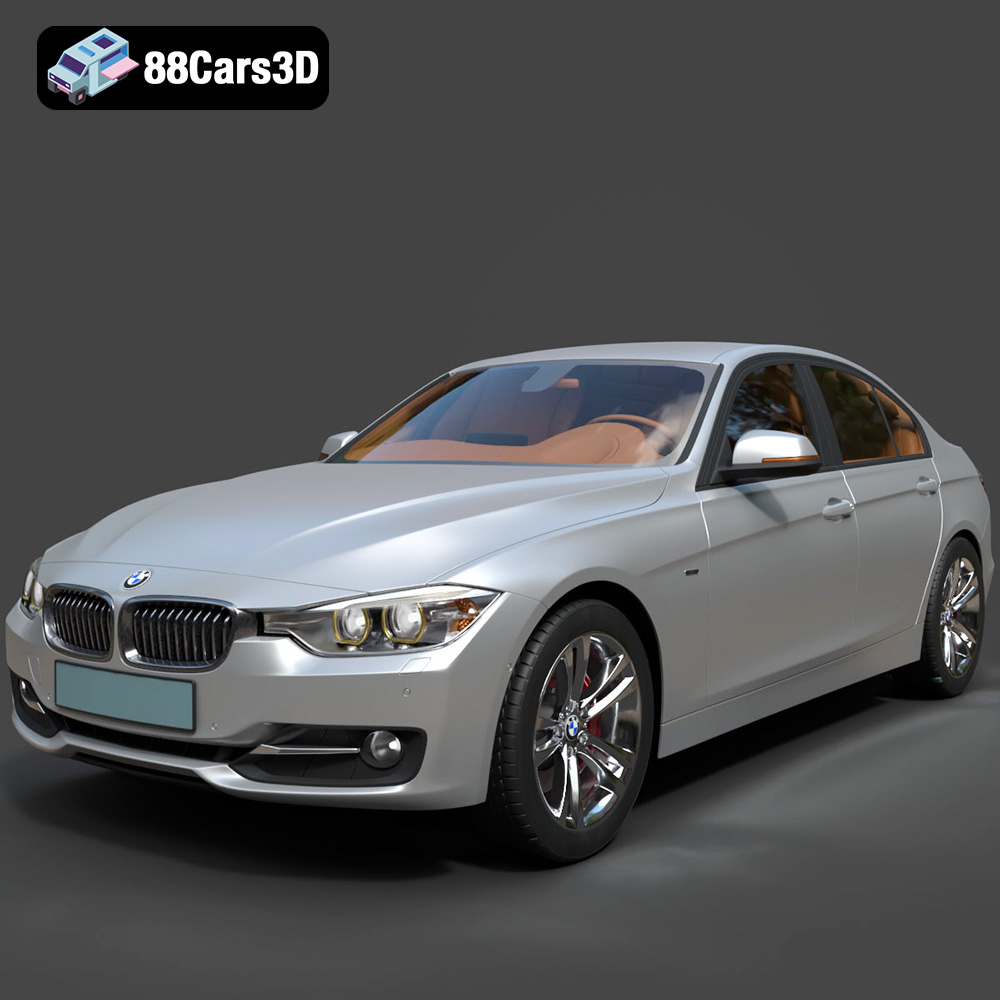
Download the BMW 3 F30 3D Model featuring a detailed exterior, realistic interior, and optimized mesh. Includes .blend, .fbx, .obj, .glb, .stl, .ply, .unreal, and .max formats for rendering, simulation, and game development.
Price: $10.79
Texture: Yes
Material: Yes
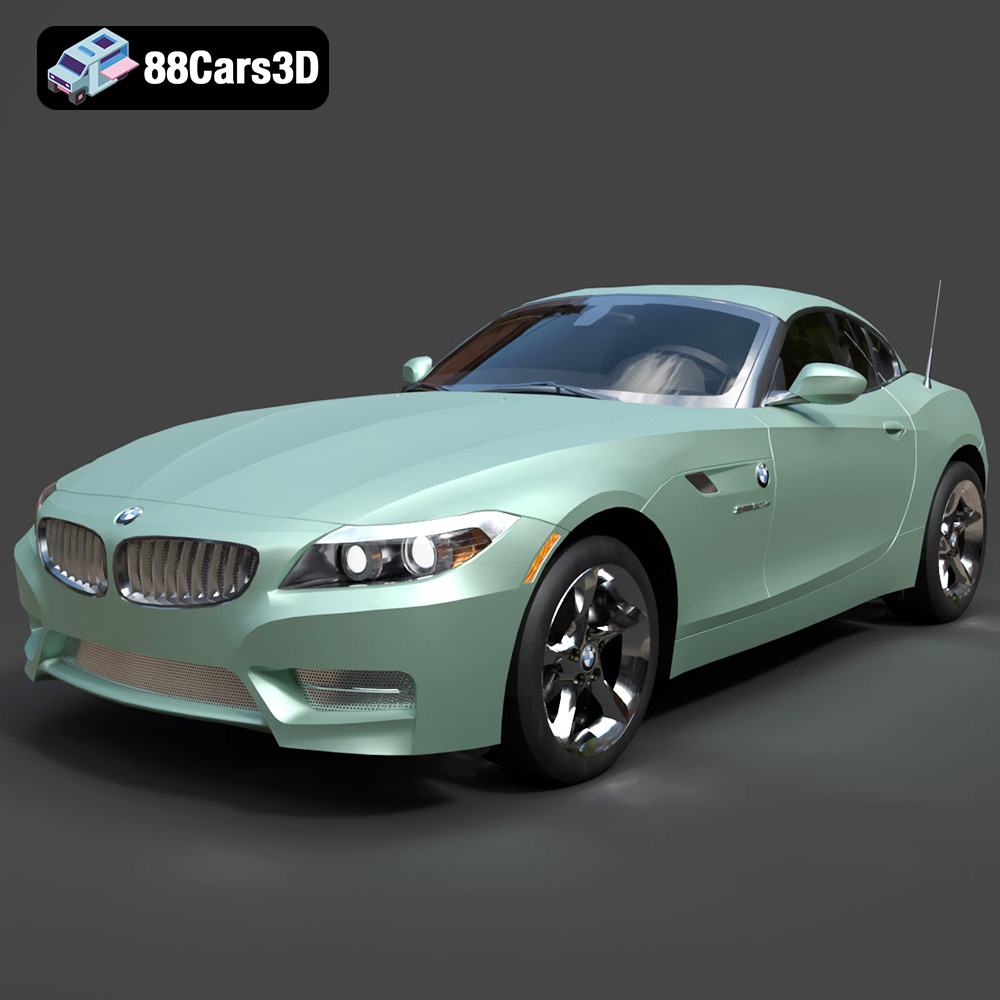
Download the BMW Z4 Roadster E89 3D Model featuring clean geometry, realistic detailing, and a fully modeled interior. Includes .blend, .fbx, .obj, .glb, .stl, .ply, .unreal, and .max formats for rendering, simulation, and game development.
Price: $13.99

Texture: Yes
Material: Yes
Download the BMW Z4 E85 3D Model featuring clean geometry, realistic detailing, and a fully modeled interior. Includes .blend, .fbx, .obj, .glb, .stl, .ply, .unreal, and .max formats for rendering, simulation, and game development.
Price: $13.99

Texture: Yes
Material: Yes
Download the BMW M3 2024 3D Model featuring clean geometry, realistic detailing, and a fully modeled interior. Includes .blend, .fbx, .obj, .glb, .stl, .ply, .unreal, and .max formats for rendering, simulation, and game development.
Price: $13.99
Texture: Yes
Material: Yes
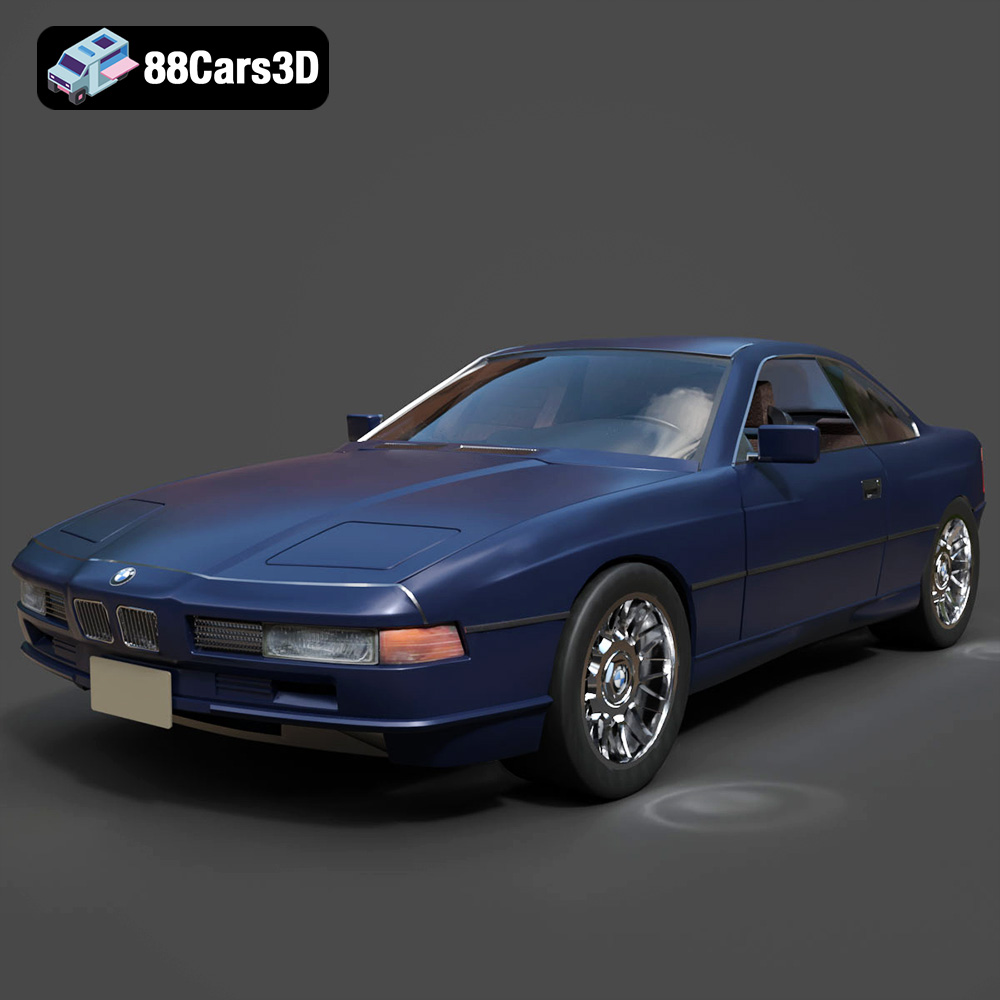
Download the BMW 850i Coupe 1990 3D Model featuring clean geometry, realistic detailing, and a fully modeled interior. Includes .blend, .fbx, .obj, .glb, .stl, .ply, .unreal, and .max formats for rendering, simulation, and game development.
Price: $13.99
Texture: Yes
Material: Yes
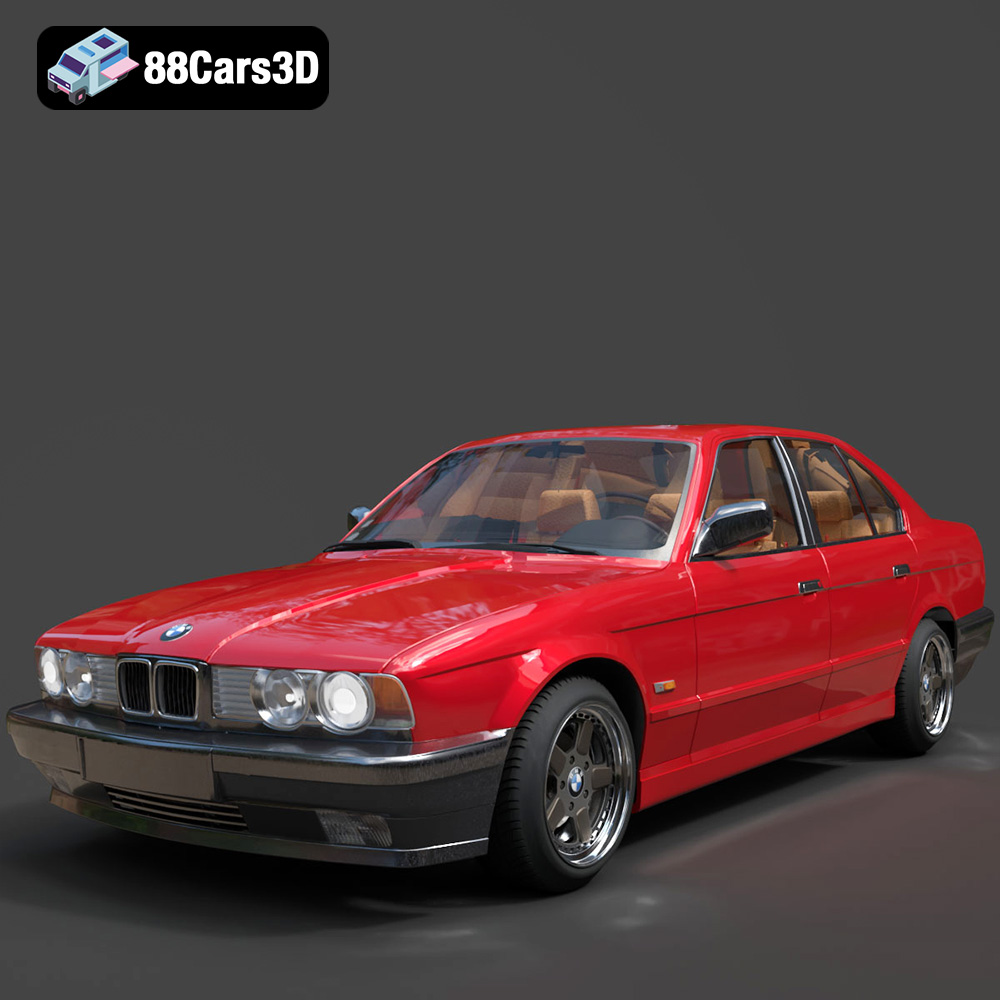
Download the BMW 525i E34 1993 3D Model featuring clean geometry, realistic detailing, and a fully modeled interior. Includes .blend, .fbx, .obj, .glb, .stl, .ply, .unreal, and .max formats for rendering, simulation, and game development.
Price: $12.99

Texture: Yes
Material: Yes
Download the BMW 7 Series 2016 3D Model featuring luxurious design, detailed interior, and accurate exterior. Includes .blend, .fbx, .obj, .glb, .stl, .ply, .unreal, and .max formats for rendering, simulation, and game development.
Price: $10.79
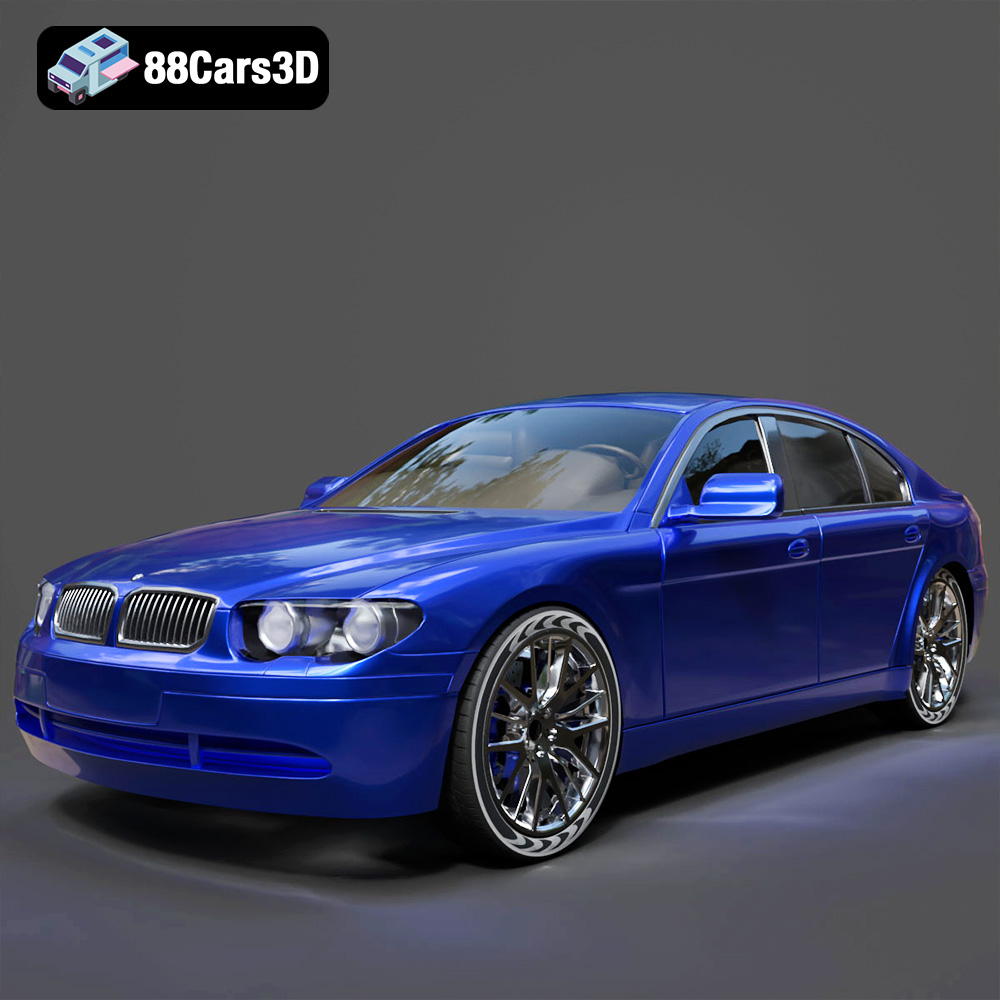
Texture: Yes
Material: Yes
Download the BMW 7 Series 30th Anniversary 3D Model featuring a meticulously crafted exterior, detailed interior, and realistic wheels. Includes .blend, .fbx, .obj, .glb, .stl, .ply, .unreal, and .max formats for rendering, simulation, and game development.
Price: $35.79

