⚡ FLASH SALE: Get 60% OFF All Premium 3D & STL Models! ⚡

The pursuit of photorealism in real-time applications demands an ever-increasing level of detail, especially when showcasing sophisticated assets like high-fidelity 3D car models. Whether you’re crafting an immersive automotive configurator, a cutting-edge virtual production scene, or a next-generation racing game, the textures adorning your models are paramount to achieving that coveted visual fidelity. However, this pursuit comes with a significant challenge: how do you manage gigabytes, or even terabytes, of texture data without exhausting GPU memory, crippling performance, or introducing unsightly hitches?
Unreal Engine provides powerful, sophisticated solutions to this very problem: **Texture Streaming** and **Virtual Texturing**. These technologies are the unsung heroes that allow artists and developers to push the boundaries of visual quality without compromise. In this comprehensive guide, we’ll dive deep into the mechanics of these essential Unreal Engine features, exploring how they work, how to leverage them effectively, and how they empower you to create breathtaking real-time experiences with models sourced from platforms like 88cars3d.com. By the end of this article, you’ll understand how to optimize your projects, maintain peak performance, and unlock the full potential of high-resolution textures for your automotive visualization and game development endeavors.
Texture Streaming is Unreal Engine’s primary mechanism for efficiently managing texture memory at runtime. Instead of loading every mipmap of every texture into GPU memory from the start, Texture Streaming intelligently loads only the mip levels (mipmaps) that are actually needed based on the texture’s on-screen size and distance from the camera. This dynamic loading process significantly reduces the GPU’s memory footprint, accelerates loading times, and helps prevent performance bottlenecks or “hitches” that can occur when large amounts of data are suddenly required.
At its core, Texture Streaming works by analyzing the projected screen size of a texture. If a texture is far from the camera or occupies only a few pixels on screen, only its smaller mipmaps will be loaded. As the camera moves closer or the texture occupies a larger screen area, higher-resolution mipmaps are streamed in. Conversely, when the camera moves away, higher-resolution mipmaps are streamed out, freeing up memory. This adaptive approach is absolutely crucial for projects featuring high-resolution 3D car models, which often utilize 4K or even 8K textures for intricate details like paint, carbon fiber weaves, or dashboard materials. Without streaming, rendering such complex assets would quickly overwhelm most GPUs.
Effective Texture Streaming relies on proper configuration both at the project level and on individual texture assets. The core setting to be aware of is the **Streaming Pool Size**, which dictates how much GPU memory is allocated for streamed textures. This can be adjusted in **Project Settings > Rendering > Texture Streaming** via the `r.TextureStreaming.PoolSize` console variable. A common issue is a too-small pool size, leading to textures appearing blurry as the engine struggles to load higher-resolution mips. Conversely, an overly large pool can consume excessive memory unnecessarily. It’s a balance that needs to be fine-tuned based on your project’s content and target hardware.
Within the **Texture Editor**, several important settings control how individual textures interact with the streaming system. The `Never Stream` flag, while useful for small UI elements or crucial detail textures that must always be sharp, should be used sparingly for large textures on 3D car models, as it bypasses the streaming system entirely. `Stream Out After N Mips` allows you to keep a certain number of the highest mips loaded even when not strictly needed, useful for hero assets. Perhaps most critical is the **UV Density** setting, which helps the streaming system accurately estimate the required mip level based on how much screen space the texture’s UVs occupy on the mesh. Inconsistent UV density across different parts of a vehicle model can lead to visual discrepancies in streaming quality. For detailed insights into texture streaming settings, refer to the official Unreal Engine documentation on Texture Streaming.
To debug and monitor Texture Streaming at runtime, several console commands are invaluable:
* `stat streaming`: Displays real-time statistics about the streaming pool, including current usage, budget, and desired mips.
* `VisualizeTexture Streaming`: Overlays colors on textures in the viewport, indicating their streaming status (green for optimal, red for under-streamed, blue for over-streamed).
* `r.Streaming.MipBias
Despite its benefits, Texture Streaming can introduce challenges if not managed correctly. The most common complaint is **texture blurriness**. This often stems from an insufficient streaming pool size, incorrect UV density, or accidentally marking large textures as `Never Stream`. When the streaming pool is exhausted, textures are forced to use lower mip levels, resulting in blurry visuals. Another issue is **hitching or stuttering**, which can occur if the engine is constantly struggling to stream textures, especially during rapid camera movements or scene changes. This “streaming thrashing” indicates an imbalance in your streaming settings or overly aggressive streaming requirements.
To solve these issues, start by auditing your texture memory usage using tools like `stat streaming` and the **Texture Stats** window (available via `Window > Developer Tools > Texture Stats`). Identify any textures consuming excessive memory or exhibiting poor streaming behavior. Adjust the global streaming pool size, ensuring it accommodates your scene’s average demands with a buffer. For individual textures, verify their UV density, compression settings (e.g., BC7 for normal maps, BC1/BC3 for color/masks), and ensure they are appropriately configured for streaming. Sometimes, simply increasing the `r.TextureStreaming.PoolSize` by a few hundred MB can resolve widespread blurriness, but always strive for a balance to avoid unnecessary memory consumption.
While Texture Streaming optimizes the loading of mipmaps, **Virtual Texturing (VT)** represents a more advanced paradigm shift in texture management. Instead of streaming entire mip levels, Virtual Texturing breaks enormous textures (often referred to as “mega-textures”) into tiny, virtual pages that are streamed on demand. This isn’t just about loading different mip levels; it’s about streaming only the *exact pixels* needed for a specific view, allowing for virtually limitless texture resolution without memory constraints. This technology is particularly transformative for high-fidelity automotive visualization and large-scale environments.
Unreal Engine offers two primary flavors of Virtual Texturing:
1. **Runtime Virtual Texturing (RVT):** Primarily used for environments, landscapes, and projected decals. RVT samples and renders properties like base color, normal, and roughness into a virtual texture target at runtime. This allows for seamless blending between meshes and terrain, dynamic decals that conform to complex surfaces, and a significant reduction in material instruction count by baking multiple texture lookups into a single virtual texture.
2. **Megatexture Virtual Texturing (VT) for individual assets:** This is the most powerful variant for highly detailed static meshes, especially when paired with Nanite. It enables incredibly high-resolution textures (e.g., multiple UDIMs from Substance Painter) to be treated as a single, massive virtual texture. The engine only ever samples the necessary virtual pages at render time, effectively removing the hard limits on texture resolution for individual assets and allowing for unprecedented detail on surfaces like a car’s chassis, interior, or engine components.
The core benefit of Virtual Texturing is its ability to eliminate texture memory constraints. You can literally use 16K, 32K, or even higher-resolution texture sets without blowing up your GPU memory budget, because only the visible portions are ever loaded. This not only boosts visual quality but also reduces draw calls and simplifies material setups for complex assets, as multiple textures can be effectively merged into a single virtual texture.
Runtime Virtual Texturing is often employed for environments, offering a powerful way to blend meshes, apply projected decals, and reduce material complexity. To set up RVT, you first create a **Runtime Virtual Texture** asset in the Content Browser. This asset defines the virtual texture’s resolution, format, and content. Next, you place an **RVT Volume** in your scene, which dictates the bounds and origin of your virtual texture. Any meshes or landscapes within this volume will contribute to the virtual texture.
In your materials, you’ll use the `Runtime Virtual Texture Output` node to write material properties (like Base Color, Normal, Roughness, Specular) into the RVT. For meshes that need to *read* from the RVT (e.g., a car tire blending with a muddy ground texture), you use the `Runtime Virtual Texture Sample` node in their material. This node takes the RVT asset as input and outputs the sampled properties. This allows for very convincing blend effects and reduces the need for complex blending logic within individual materials. For example, a vehicle’s tire tracks can dynamically interact with a virtual ground texture, showing wear or dirt accumulation without needing to paint onto a physical texture map.
While incredibly powerful, RVT does come with a shader cost for both writing to and sampling from the virtual texture. It’s essential to carefully consider the resolution of your RVT targets and the complexity of the materials writing to them. Overly large or numerous RVTs can impact performance.
For individual assets, particularly when combined with Nanite, Megatexture Virtual Texturing truly shines. This allows you to deploy extremely high-resolution texture sets – often multiple UDIMs from applications like Substance Painter – onto a single mesh without concerns about texture memory. When you import textures into Unreal Engine, you can simply enable the `Virtual Texture` checkbox in the texture’s properties. For UDIMs, Unreal Engine automatically handles the virtual texture conversion, treating the entire UDIM set as one giant, seamless virtual texture.
The workflow for high-detail automotive models from sources like 88cars3d.com involves exporting high-resolution PBR texture sets (Base Color, Normal, Roughness, Metallic, Ambient Occlusion, etc.), often with multiple UDIM tiles. When importing these into Unreal Engine, ensure that the `Virtual Texture` flag is enabled. When these textures are then used in materials applied to Nanite-enabled meshes, the engine leverages the combined power of Nanite (for geometry) and Virtual Texturing (for textures) to render incredible detail with minimal performance overhead. The memory savings are phenomenal, as only the visible virtual pages are loaded into memory, irrespective of the texture’s overall size. This is particularly impactful for intricate details on car interiors, complex engine bays, or highly detailed exterior finishes where every millimeter of surface needs to be rendered with precision.
The seamless integration of high-resolution 3D car models into Unreal Engine for automotive visualization hinges significantly on effective texture management. When you acquire meticulously crafted models from marketplaces such as 88cars3d.com, they often come with robust UV mapping and detailed PBR texture sets. Leveraging Unreal Engine’s Texture Streaming and Virtual Texturing capabilities ensures that the intrinsic quality of these assets translates into stunning real-time renders without compromising performance. Clean, non-overlapping UV mapping is paramount, as both streaming systems rely heavily on accurate UV coordinates to determine which portions of a texture need to be loaded. Poor UVs can lead to blurry artifacts or inefficient streaming.
PBR (Physically Based Rendering) materials thrive on high-resolution textures. The minute details in a normal map define the surface irregularities of a car’s body panel, a roughness map dictates how light scatters across polished chrome or matte paint, and the base color captures the precise hue and value. With Texture Streaming and Virtual Texturing, you can deploy 4K, 8K, or even higher-resolution maps for these PBR channels, ensuring that even under extreme close-ups, details remain crisp and photorealistic. This allows for an unprecedented level of visual fidelity, essential for high-end marketing renders, interactive car configurators, or virtual showrooms.
Beyond the engine’s core streaming systems, several best practices for PBR materials directly contribute to efficient texture management. **Texture packing** is a crucial technique where multiple grayscale maps (like roughness, metallic, ambient occlusion, and sometimes even height or emissive masks) are combined into the red, green, blue, and alpha channels of a single texture. This reduces the number of texture samples and memory lookups in your material, significantly improving performance. A common pack is an RMA (Roughness, Metallic, Ambient Occlusion) map, where each channel serves a specific purpose.
When creating materials for automotive assets, always use `Texture Sample Parameter 2D` nodes for your textures. This allows you to create **Material Instances**, which inherit properties from a parent Material and let you swap out textures, adjust scalar values, and change vector parameters without recompiling the entire shader. This is incredibly efficient for variations like different paint colors or interior trims on a single car model. Furthermore, strive to avoid unnecessary texture lookups within your material graphs. Each sample adds to the shader instruction count. For Virtual Textures, always use the dedicated `Virtual Texture Sample` node which is optimized for this workflow.
The introduction of Nanite in Unreal Engine 5 revolutionized geometry management, allowing for meshes with billions of polygons to be rendered in real-time. However, highly detailed geometry still requires equally detailed textures to truly shine. This is where Nanite and Virtual Texturing form a powerful, synergistic duo. Nanite efficiently handles the geometry, streaming only the necessary triangle data based on screen size, while Megatexture Virtual Texturing handles the texture data in a similar, pixel-streamed fashion.
When a Nanite-enabled mesh utilizes Virtual Textures, the engine no longer struggles with the memory overhead of huge texture sets. This combination enables the creation of incredibly detailed 3D car models, from the intricate stitching on leather seats to the minute grain of carbon fiber panels, without the traditional performance penalties. By simply enabling Nanite on your mesh and the `Virtual Texture` flag on your high-resolution textures, you unlock a new realm of detail. The performance benefits are profound: reduced draw calls, optimized memory usage, and a streamlined rendering pipeline that focuses only on what’s visible, pushing the boundaries of real-time automotive visualization. For further details on Nanite, refer to the official Unreal Engine documentation.
While Texture Streaming and Virtual Texturing are powerful tools, they are part of a larger ecosystem of performance optimization in Unreal Engine. A holistic approach is essential, especially when developing for demanding applications like automotive configurators, high-fidelity AR/VR experiences, or real-time cinematics. Understanding how to balance stunning visual fidelity with target framerates is key, and texture management plays a pivotal role in this delicate balance. Regularly auditing your project’s texture memory usage is a critical habit for any developer. The `stat rhi` and `stat gpu` console commands provide invaluable insights into overall GPU performance, while the `Texture Stats` window (found under `Window > Developer Tools > Texture Stats`) offers a granular view of every texture in memory, its resolution, size, and streaming status.
Beyond the core streaming technologies, several asset management strategies contribute to a lean and performant project. Always ensure your texture resolutions are powers of two (e.g., 256×256, 1024×1024, 4096×4096). While modern GPUs can handle non-power-of-two textures, using them can sometimes lead to inefficiencies in mipmap generation and streaming. **Appropriate compression settings** are vital:
* **Normal Maps:** Use `Normal Map (DXT5)` or `BC5` for high quality.
* **Color Maps:** `Default (DXT1/BC1)` for opaque, `Masks (DXT5/BC3)` for transparency.
* **RMA Maps:** `Masks (DXT5/BC3)` or `BC7` for better quality on individual channels.
Incorrect compression can lead to artifacts or unnecessary memory usage.
Leverage **Texture LOD Groups** to categorize textures with similar streaming requirements. Unreal Engine automatically assigns textures to a default LOD group, but you can create custom groups and define their streaming behavior more precisely. This provides a global way to control texture quality for entire categories of assets, like “CarExterior_High”, “Interior_Medium”, or “Environment_Low”. Finally, ensure **proper UV scaling and density** across all your assets. Inconsistent UV scales mean some textures will appear blurry while others are over-resourced, even if they have the same pixel density. A common target for hero assets is 10.24 pixels per centimeter.
Unreal Engine’s cutting-edge rendering features, such as **Lumen** (global illumination and reflections) and **Nanite** (virtualized geometry), place increased demands on texture quality. Lumen, in particular, relies on accurate surface properties (like base color and roughness) to calculate indirect lighting and reflections, meaning high-quality textures directly contribute to the realism of the global illumination. When using **Sequencer** for cinematic renders, where every frame is meticulously crafted, the full fidelity of your high-resolution textures, often enabled by Virtual Texturing, becomes critical. Even textures far from the camera may need to resolve clearly for wide shots or reflections.
For **AR/VR optimization** for automotive applications, the balance is even more critical due to the strict performance targets (e.g., 90 FPS+ for comfortable VR). Here, aggressive texture streaming profiles might be necessary, and while Virtual Texturing offers incredible detail, its shader cost needs careful profiling. You might use VT for the hero car, but rely more on optimized traditional streaming for less critical environment assets. **Blueprint visual scripting** allows for dynamic texture changes, such as swapping out a car’s paint material or interior fabric. When implementing such features, ensure that the new textures are configured for optimal streaming to avoid hitches during material updates. For example, a Blueprint script could trigger a pre-load of higher-resolution mips for a new material before it’s visually applied, using `UTexture2D::SetForceResidentMips`.
The practical applications of advanced texture management in Unreal Engine are vast, particularly within the automotive industry and high-end visualization. From interactive configurators to cutting-edge virtual production, Texture Streaming and Virtual Texturing are essential for delivering unparalleled visual quality and performance.
Consider a high-end interactive automotive configurator where customers can customize a vehicle’s paint, wheel designs, interior materials, and optional features in real-time. These configurators demand instant visual feedback and photorealistic quality. Megatexture Virtual Texturing, especially when combined with Nanite, makes this possible. Different paint finishes (matte, metallic, pearl), intricate carbon fiber weaves, or various leather textures for the interior can all utilize ultra-high-resolution texture sets without blowing up memory. When a user selects a new paint color, instead of reloading an entire texture asset, a Material Instance with a new Virtual Texture reference (or just a color change via a parameter) can be applied almost instantaneously, ensuring smooth transitions and a seamless user experience. This setup allows configurators to display 8K textures for a car’s body, 4K for interior components, and still maintain high framerates, which is crucial for a premium user experience.
Virtual Production environments, particularly those leveraging massive LED volumes, require an extreme level of detail across vast scenes. Actors interact with virtual elements on LED screens, demanding that foreground and background assets appear perfectly integrated and photorealistic, even at very close inspection. Here, Virtual Texturing is indispensable. It allows filmmakers to render incredibly detailed environments and foreground vehicle assets, ensuring that even large textures viewed up close on a high-resolution LED wall appear sharp and free of pixelation. The ability to dynamically stream only the visible virtual pages means that artists can populate an entire virtual world with high-fidelity assets – from textured terrain to detailed vehicle props – without hitting VRAM ceilings. This ensures consistent visual integrity across the entire LED display, critical for convincing in-camera effects.
Developing immersive AR/VR experiences with 3D car models presents a unique set of challenges, primarily balancing stunning visuals with extremely strict performance requirements (e.g., maintaining a consistent 90 frames per second or higher). Aggressive Texture Streaming becomes a primary optimization tool. For the hero car, Virtual Texturing can be strategically employed for critical details that the user is likely to examine closely, such as dashboard instruments or wheel finishes, where traditional mip streaming might not be sufficient. For less critical background elements or distant environmental textures, a well-tuned Texture Streaming profile ensures memory efficiency. The goal is to achieve photorealism and immersion without causing motion sickness due to frame drops. This often involves creating specific texture LOD groups, meticulously optimizing texture resolutions, and carefully profiling the GPU cost of Virtual Texturing to ensure it aligns with the target hardware’s capabilities.
In the dynamic world of real-time rendering, particularly within demanding fields like automotive visualization and game development, the ability to manage texture data efficiently is paramount. Unreal Engine’s **Texture Streaming** and **Virtual Texturing** systems are not just features; they are foundational technologies that empower artists and developers to achieve unprecedented levels of visual fidelity without sacrificing performance. From optimizing memory usage with intelligent mipmap streaming to breaking free from resolution constraints with pixel-level virtual page streaming, these tools are indispensable for any high-end project.
By understanding how these systems work, configuring them correctly, and integrating them into your PBR material workflows and Nanite-powered scenes, you unlock the potential to create stunningly detailed 3D car models and immersive environments. Whether you’re developing an interactive configurator for a luxury vehicle, a groundbreaking virtual production experience, or a high-octane racing game, mastering texture management will enable you to push visual boundaries while maintaining smooth, responsive performance. Take advantage of high-quality, optimized models from platforms like 88cars3d.com, and apply these advanced texture management techniques to bring your visions to life with unparalleled realism. Experiment with these settings, profile your projects diligently, and continually refine your approach to harness the full power of Unreal Engine’s texture pipeline. The future of real-time rendering is about detail without compromise, and smart texture management is your key to unlocking it.

Texture: Yes
Material: Yes
Download the BMW 7 Series E38 3D Model featuring its iconic luxury sedan design and classic aesthetics. Includes .blend, .fbx, .obj, .glb, .stl, .ply, .unreal, and .max formats for rendering, simulation, and game development.
Price: $10.79

Texture: Yes
Material: Yes
Download the BMW 6 Series 640i F12 3D Model featuring a sleek design and detailed interior. Includes .blend, .fbx, .obj, .glb, .stl, .ply, .unreal, and .max formats for rendering, simulation, and game development.
Price: $10.79

Texture: Yes
Material: Yes
Download the BMW 6 Coupe E63 3D Model featuring a sleek design, detailed interior, and realistic exterior. Includes .blend, .fbx, .obj, .glb, .stl, .ply, .unreal, and .max formats for rendering, simulation, and game development.
Price: $10.79

Texture: Yes
Material: Yes
Download the BMW 5 Series Touring F11-007 3D Model featuring a detailed exterior and interior. Includes .blend, .fbx, .obj, .glb, .stl, .ply, .unreal, and .max formats for rendering, simulation, and game development.
Price: $10.79
Texture: Yes
Material: Yes
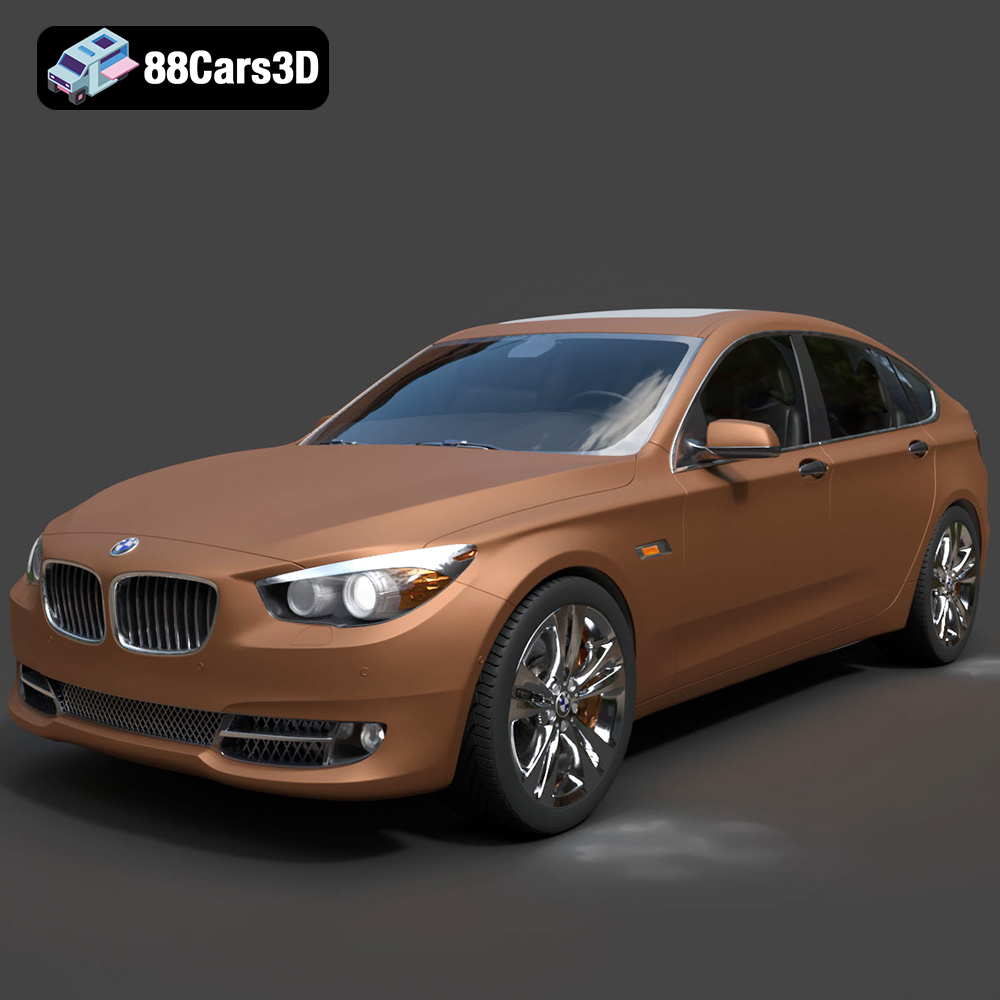
Download the BMW 5 Series Gran Turismo F07-003 3D Model featuring a detailed exterior and interior. Includes .blend, .fbx, .obj, .glb, .stl, .ply, .unreal, and .max formats for rendering, simulation, and game development.
Price: $10.79
Texture: Yes
Material: Yes
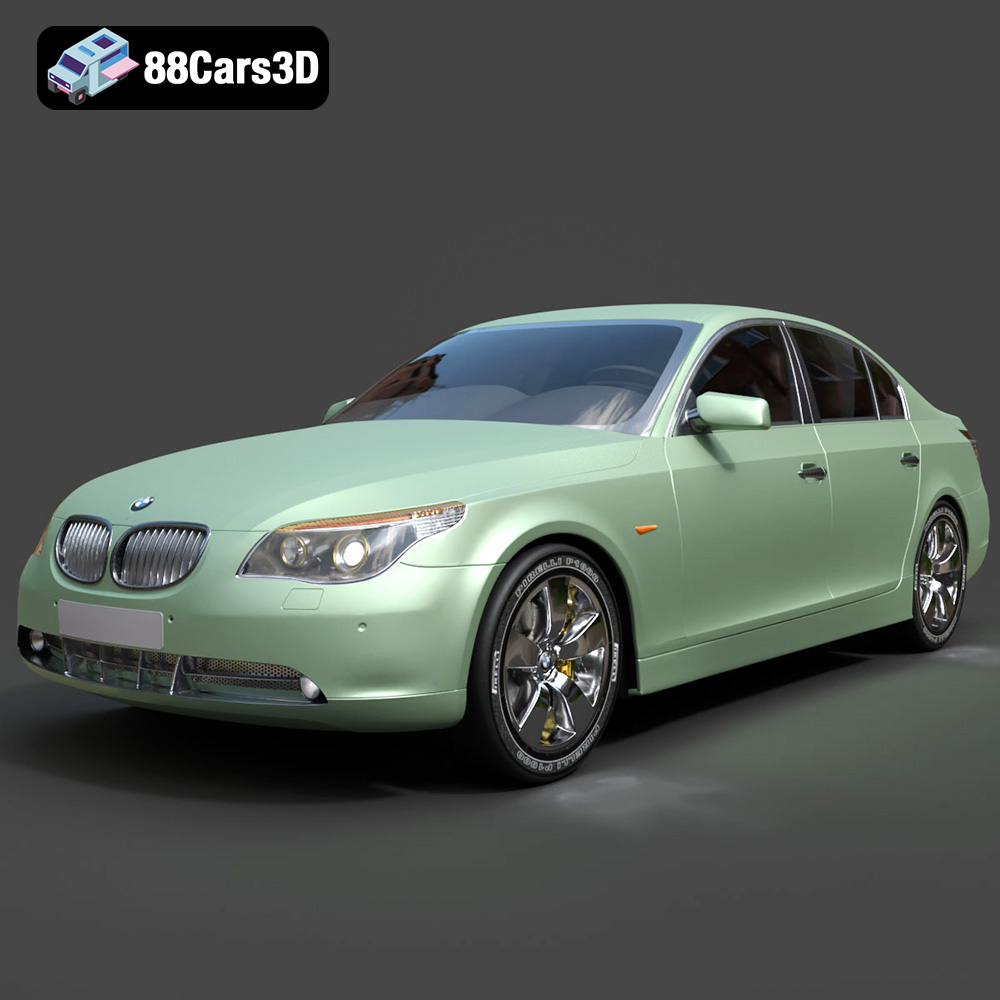
Download the BMW 5 Series E60 3D Model featuring its iconic sedan design, detailed exterior, and interior. Includes .blend, .fbx, .obj, .glb, .stl, .ply, .unreal, and .max formats for rendering, simulation, and game development.
Price: $10.79

Texture: Yes
Material: Yes
Download the BMW 5 E34-535i 3D Model featuring an iconic design, detailed exterior and interior, and accurate representation. Includes .blend, .fbx, .obj, .glb, .stl, .ply, .unreal, and .max formats for rendering, simulation, and game development.
Price: $10.79
Texture: Yes
Material: Yes
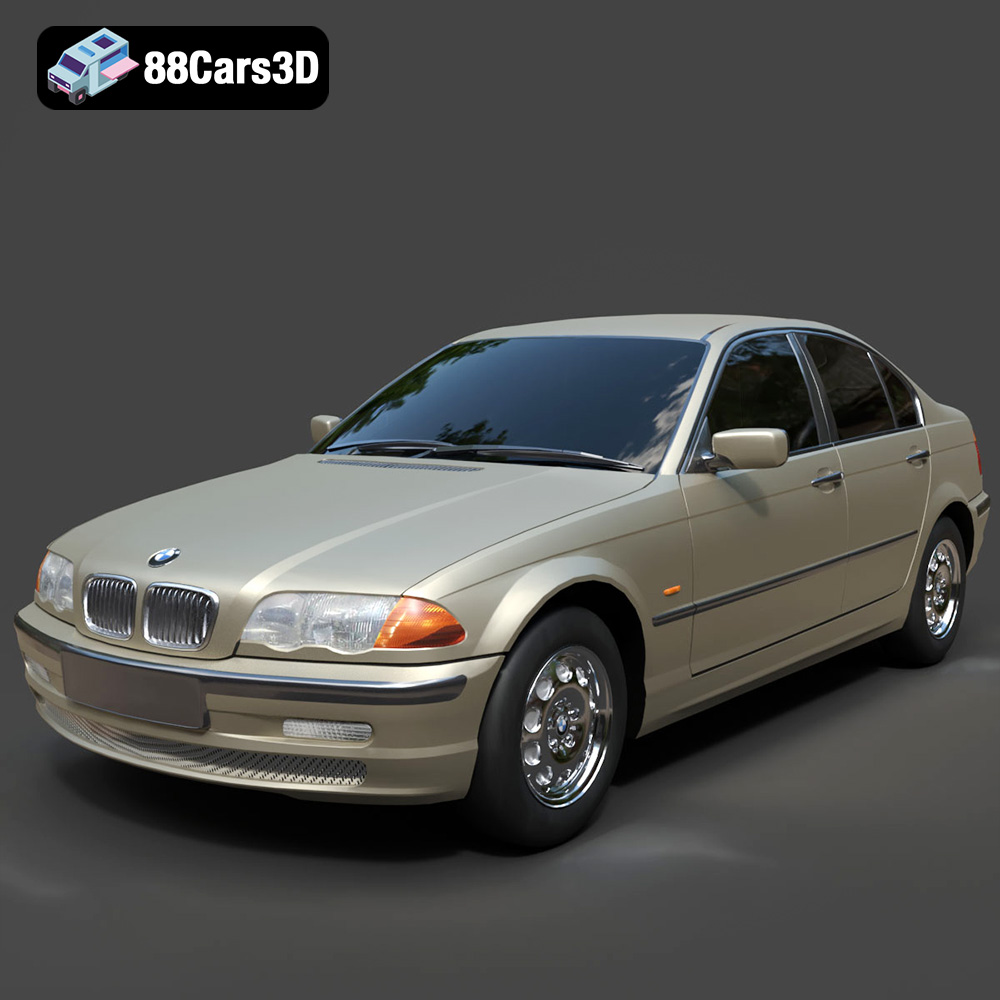
Download the BMW 3 Series E46 3D Model featuring authentic exterior lines, a detailed interior, and separated components for animation. Includes .blend, .fbx, .obj, .glb, .stl, .ply, .unreal, and .max formats for rendering, simulation, and game development.
Price: $10.79
Texture: Yes
Material: Yes
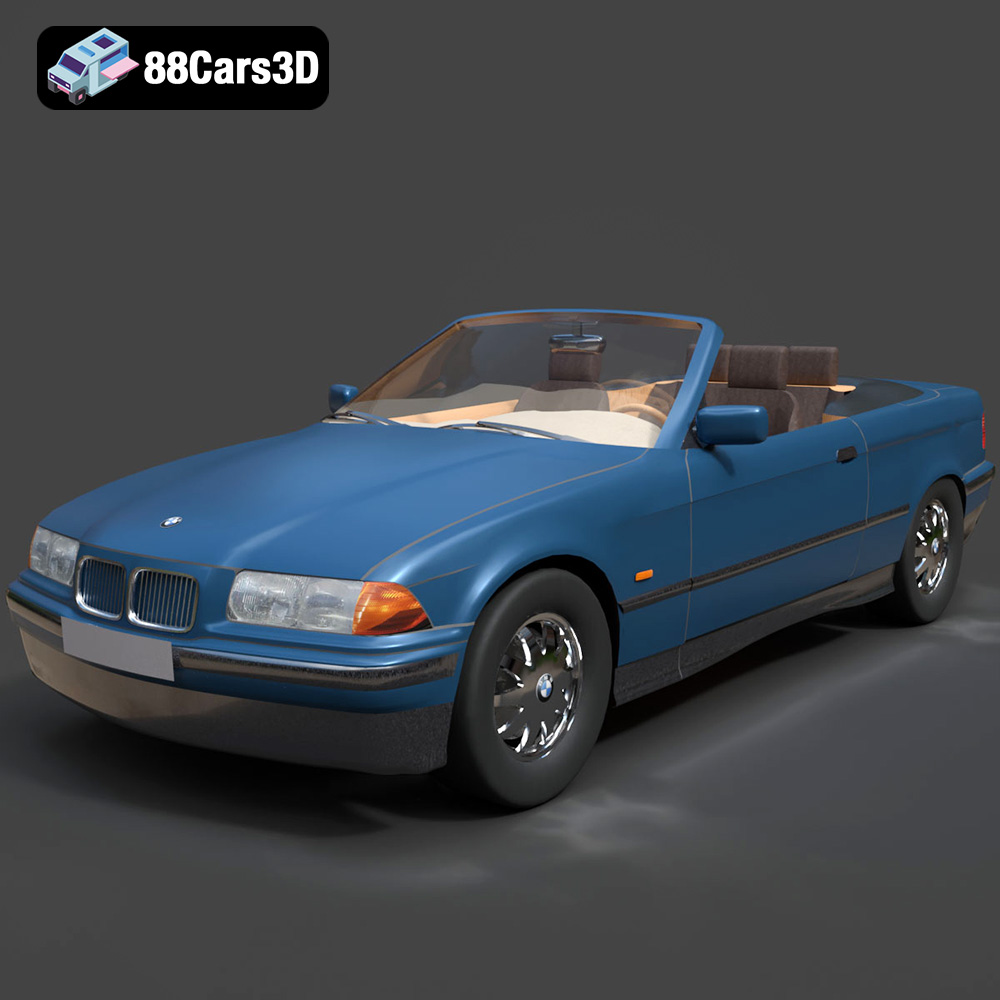
Download the BMW 3 Series E36 Cabrio 325i 1998 3D Model featuring a classic convertible design and detailed interior. Includes .blend, .fbx, .obj, .glb, .stl, .ply, .unreal, and .max formats for rendering, simulation, and game development.
Price: $10.79

Texture: Yes
Material: Yes
Download the BMW 3 F30 3D Model featuring a detailed exterior, realistic interior, and optimized mesh. Includes .blend, .fbx, .obj, .glb, .stl, .ply, .unreal, and .max formats for rendering, simulation, and game development.
Price: $10.79

