⚡ FLASH SALE: Get 60% OFF All Premium 3D & STL Models! ⚡

The sleek lines, the dynamic curves, the intricate engineering – automotive design is an art form. For engineers and designers, Computer-Aided Design (CAD) software is the canvas, allowing for unparalleled precision and functional integrity. However, the journey from these meticulously engineered CAD files to stunning visual representations in renders, interactive game environments, or immersive AR/VR experiences is not a direct one. CAD models, optimized for engineering accuracy and manufacturing, are often ill-suited for the demanding world of 3D visualization and real-time applications. They are typically composed of NURBS surfaces or highly dense tessellated meshes, which translate poorly into the clean, quad-based topology required for high-fidelity rendering, animation, and performance-efficient game assets.
This comprehensive guide will demystify the complex process of converting raw CAD automotive designs into production-ready 3D models. We’ll explore essential workflows, from optimizing geometry and advanced UV mapping to crafting realistic PBR materials and fine-tuning models for various applications like cinematic rendering, game development, and even 3D printing. Whether you’re a 3D artist aiming for photorealistic renders, a game developer seeking performant vehicle assets, or an automotive designer pushing into visualization, understanding this conversion pipeline is critical. By the end, you’ll possess the knowledge to transform technical CAD data into visually compelling and functionally optimized 3D car models, ready for any project on platforms like 88cars3d.com.
Before diving into the transformation, it’s crucial to understand the fundamental differences between CAD geometry and polygonal meshes used in 3D modeling and rendering. CAD software predominantly uses Non-Uniform Rational B-Splines (NURBS) or parametric surfaces. These mathematical representations allow for infinite precision and perfect curves, making them ideal for engineering and manufacturing where accuracy is paramount. Each surface is defined by control points, weights, and knots, enabling smooth transitions and easy modifications without losing geometric integrity. This is fantastic for design iterations and manufacturing, but when these NURBS surfaces are converted to polygons, they often result in overly dense, triangulated, or poorly structured meshes with numerous N-gons (faces with more than four vertices) and irregular topology.
The initial import of CAD files into a polygonal modeling environment like 3ds Max, Blender, or Maya presents its own set of challenges. Common CAD file formats such as STEP (.stp), IGES (.igs), SAT (.sat), or Parasolid (.x_t) need to be tessellated, meaning the smooth NURBS surfaces are approximated with a polygonal mesh. The tessellation settings are critical here; a low tessellation will result in faceted surfaces, while a high tessellation can create an astronomically high polygon count, leading to unmanageable file sizes and slow viewport performance. Furthermore, these tessellated meshes often lack clean edge flow, feature overlapping geometry, disconnected elements, and inverted normals, all of which require significant cleanup before any serious modeling or texturing can begin. Understanding these initial hurdles is the first step towards a successful conversion process, highlighting why platforms like 88cars3d.com invest heavily in providing optimized, clean-topology models from the outset.
The core distinction lies in how geometry is defined. NURBS are mathematical equations, allowing for flawless curves and surfaces that can be scaled infinitely without pixelation or loss of detail. They are precise, resolution-independent, and excellent for design iterations where exact measurements and smooth transitions are vital. Polygons, on the other hand, are discrete faces (triangles or quads) that approximate surfaces. While less mathematically perfect, they are highly efficient for rendering, animation, and real-time graphics because GPUs are optimized to process them. The challenge arises when converting NURBS to polygons: how do you translate infinite mathematical precision into a finite, discrete mesh that is both visually accurate and performant?
The import process typically involves specialized plugins or built-in importers within your 3D software. For instance, in 3ds Max, you might use the Datasmith importer for richer data, or simply import a STEP file. Blender can import various formats through add-ons or built-in options, often requiring a manual mesh cleanup. Maya also offers robust import options. Regardless of the software, key steps include:
This initial preparation is tedious but crucial for a clean foundation.
Once the raw CAD data has been imported and given a preliminary cleanup, the most critical phase for creating a truly versatile 3D car model begins: topology optimization. This isn’t just about reducing polygon count; it’s about structuring the mesh in a way that is efficient, visually appealing, and functionally robust for various applications. Good topology, typically quad-dominant, ensures clean deformations during animation, produces smooth subdivision surfaces without pinching, and facilitates efficient UV mapping and texturing. For automotive models, where subtle curves and reflections are paramount, a meticulous approach to edge flow is non-negotiable. Bad topology can lead to shading artifacts, difficulty in applying subdivision modifiers, and complications further down the pipeline.
Retopology is often the answer, especially for game assets or highly stylized renders where a very clean, quad-based mesh is required. This process involves rebuilding the mesh over the existing high-density CAD-converted model, carefully placing new polygons to define the contours and details. It’s an art form that balances detail with polygon efficiency, ensuring that the model looks smooth and accurate while remaining performant. Polygon budgeting also comes into play here; a high-resolution render model might tolerate hundreds of thousands of polygons (or millions with subdivision), whereas a game asset for a mobile platform might need to stay under 50,000 triangles for the entire vehicle. Understanding these constraints and applying appropriate retopology techniques, often involving tools specific to your 3D software, is key to producing professional-grade 3D car models suitable for rigorous use.
Retopology is the process of creating a new, optimized mesh on top of an existing, high-resolution mesh (often the CAD-converted model). The primary goals are:
Popular tools for retopology include Blender’s Retopology tools (using snapping to faces, the Shrinkwrap modifier, and manual modeling), 3ds Max’s Graphite Modeling Tools (especially the Quad Draw feature), and Maya’s Quad Draw. These tools allow artists to draw new polygons directly on the surface of the high-poly mesh, making the process intuitive and precise.
The polygon count of your automotive model heavily depends on its intended use:
Subdivision surfaces are crucial for creating smooth, curved surfaces from a low-poly cage. The quality of the subdivision depends entirely on the underlying topology. Poor edge flow will result in pinching or undesirable creases. Techniques like adding control loops (extra edge loops close to existing edges) help sharpen details and control the behavior of subdivision modifiers without significantly increasing base mesh density. This careful balancing act ensures aesthetic quality and performance, a standard upheld by professional 3D car models available on marketplaces like 88cars3d.com.
Once your automotive model boasts pristine topology, the next critical step is creating efficient and clean UV maps. UV mapping is the process of flattening the 3D surface of your model into a 2D space, allowing you to apply 2D textures. For complex, curved surfaces like those found on cars, this process can be challenging, but excellent UVs are foundational for realistic texturing and efficient material application. Poor UVs lead to texture stretching, visible seams, or inefficient use of texture space, all of which detract from realism and performance. A well-executed UV layout ensures that textures appear crisp, consistent, and correctly aligned across the entire vehicle.
Strategic UV unwrapping involves careful placement of seams to minimize visibility while allowing the mesh to flatten without distortion. For automotive models, this often means considering the natural panel lines, edges, and areas of high curvature. Beyond basic unwrapping, advanced techniques like UDIMs (Unique Digital Identity Maps) are often employed for very high-resolution models, allowing different parts of the car to have their own dedicated texture sets, avoiding resolution limitations of a single UV space. Conversely, for game-optimized assets, texture atlasing (combining multiple textures into one larger image) becomes important to reduce draw calls and improve real-time performance. Mastering these UV strategies is paramount for creating visually stunning and technically sound 3D car models.
The goal of UV unwrapping is to create a seamless, non-overlapping, and distortion-free 2D representation of your 3D model’s surface. Key strategies for automotive models include:
Software like Blender (UV Editor, Seams, Unfold operations, Average Island Scale, Pack Islands – Blender UV Editing Manual), 3ds Max (Unwrap UVW modifier), and Maya (UV Editor) provide robust tools for this process. It’s often beneficial to isolate parts of the car (e.g., body, wheels, interior) into separate UV sets if not using UDIMs.
For models requiring extremely high texture detail, especially in cinematic renders or VFX, a single 0-1 UV space might not provide enough resolution. This is where UDIMs come in. UDIMs extend the UV space beyond the 0-1 quadrant, allowing artists to assign multiple texture files (e.g., U1_V1, U2_V1, U3_V1, etc.) to different parts of the model. This is particularly useful for large vehicles where individual panels need high-resolution textures without compromising overall texel density. Software like Mari, Substance Painter, and even Blender (with appropriate node setups in Cycles/Eevee) support UDIM workflows. For example, a car’s main body might occupy several UDIM tiles, while smaller parts like mirrors or door handles get their own.
Conversely, for game development and real-time applications, texture atlasing is a common optimization technique. Instead of having multiple small texture files for different components, these textures are combined into a single, larger texture atlas. This reduces the number of draw calls (requests sent to the GPU to render an object), which can significantly improve game performance. UV islands from different parts of the car (e.g., a headlight, a fender piece, a small vent) are packed together into one UV map, pointing to a single texture file. While requiring careful planning, texture atlasing is crucial for creating optimized game assets, a key feature of the high-quality 3D car models found on 88cars3d.com.
With a meticulously modeled and UV-mapped vehicle, the next step is to breathe life into it with realistic materials. Physically Based Rendering (PBR) has become the industry standard for achieving photorealistic results, simulating how light interacts with surfaces in the real world. Unlike older rendering techniques, PBR materials are designed to be physically accurate, ensuring consistency across different lighting conditions and rendering environments. For automotive models, where materials like car paint, chrome, glass, and rubber are crucial for realism, mastering PBR is essential. It moves beyond subjective artistic interpretation to a more scientific approach to material definition, producing stunningly believable surfaces.
Creating compelling automotive materials goes beyond simply applying base colors. It involves understanding various PBR maps (Albedo/Base Color, Metallic, Roughness, Normal, Ambient Occlusion) and constructing sophisticated shader networks. A car paint shader, for instance, is far more complex than a simple colored surface; it needs to simulate metallic flakes, a clear coat layer with Fresnel reflections, and varying levels of roughness. Similarly, glass requires accurate refraction, absorption, and reflection properties, while rubber needs fine-detail normal maps and a specific roughness profile. By carefully constructing these material properties and integrating them into robust shader networks within your chosen renderer, you can transform a technical 3D model into an object of visual desire, capable of captivating audiences in any virtual scene.
PBR relies on two main workflows: Metallic/Roughness and Specular/Glossiness. Metallic/Roughness is more commonly used and simpler to understand:
Understanding how these maps interact is key to creating physically accurate materials. For instance, the metallic map directly influences how the Albedo map is interpreted – if metallic, the Albedo contributes to the reflection color; if dielectric, it contributes to the diffuse color.
Automotive materials are notoriously complex due to the interplay of various layers and optical properties.
This layered approach is achievable in most node-based material editors (e.g., Blender’s Shader Editor with Principled BSDF and layer weight nodes, 3ds Max’s Physical Material, V-Ray Material, Corona Material, Arnold Standard Surface).
Experimentation with these parameters and understanding the underlying physics will lead to stunningly realistic automotive visuals, much like the caliber of assets found at 88cars3d.com.
With an optimized model and meticulously crafted PBR materials, the next stage is bringing your automotive creation to life through rendering. This is where all the hard work in modeling and texturing culminates in a photorealistic image or animation. Automotive rendering is a specialized field, demanding a keen eye for detail, an understanding of lighting principles, and proficiency with advanced render engines. The goal is not just to show the car, but to evoke emotion, highlight design features, and tell a story through light and shadow. Whether you’re aiming for a pristine studio look or an ambient outdoor scene, the choices you make in lighting, environment setup, and render settings will profoundly impact the final image.
Modern renderers like Corona Renderer, V-Ray, Cycles (Blender), and Arnold offer incredibly powerful tools to achieve photorealism. However, simply using these tools isn’t enough; knowing how to leverage them effectively is crucial. This involves strategic lighting setups, from traditional three-point studio lighting to complex HDRI-based (High Dynamic Range Image) environment lighting that captures real-world illumination. It also encompasses optimizing render settings for speed and quality, utilizing render passes for greater control in post-processing, and understanding how to composite these elements to achieve cinematic results. A well-executed rendering workflow can transform a great 3D model into an iconic visual, making your automotive design truly shine.
Lighting is arguably the most crucial element in automotive rendering. It defines shape, highlights reflections, and sets the mood.
The goal is clean, even illumination that highlights the car’s form without harsh shadows or distracting reflections.
Each render engine has its nuances, but general optimization principles apply:
By meticulously controlling these elements, artists can produce truly captivating automotive renders, showcasing the highest quality of 3D car models, akin to those found on 88cars3d.com.
While cinematic renders aim for absolute photorealism with fewer performance constraints, preparing automotive models for real-time environments like game engines (Unity, Unreal Engine) or AR/VR applications demands a different set of optimizations. Here, performance is king. Every polygon, every material, and every texture must be meticulously managed to ensure smooth framerates, efficient memory usage, and responsive interactions. A visually stunning model that brings a game engine to its knees is ultimately unusable. The conversion from high-fidelity render-ready assets to game-ready assets is a specialized skill, requiring a deep understanding of engine limitations and optimization strategies.
The core philosophy shifts from maximum detail to optimized efficiency without sacrificing visual quality. This involves techniques like creating multiple Levels of Detail (LODs) to dynamically swap meshes based on distance, reducing draw calls through texture atlasing and efficient material setup, and creating simplified collision meshes to handle physics accurately without burdening the renderer. Furthermore, understanding appropriate file formats like FBX, GLB, and USDZ, and their respective export settings, is crucial for seamless integration into the target real-time platform. By mastering these optimization techniques, 3D artists can ensure their automotive models not only look fantastic but also perform flawlessly in the most demanding interactive environments.
Levels of Detail (LODs) are essential for real-time performance. They allow game engines to dynamically swap out a high-polygon model for a simpler one as the player’s camera moves further away. This significantly reduces the processing load on the GPU. A typical automotive asset might have 3-5 LODs:
Creating LODs involves careful decimation or manual retopology of duplicate meshes. The goal is to reduce polygon count without noticeable visual degradation at its intended viewing distance. It’s crucial to bake high-detail normal maps from the LOD0 mesh onto lower LODs to retain surface details.
Optimizing for game engines involves several other critical considerations:
When exporting, ensure correct scaling, embedded media (textures), and appropriate axis settings for the target engine (e.g., Z-up vs. Y-up).
By adhering to these rigorous optimization practices, developers can create truly immersive and performant automotive experiences, leveraging assets from marketplaces like 88cars3d.com that are already designed with these real-time applications in mind.
The utility of a high-quality 3D car model extends far beyond traditional static renders and game engines. The rise of Augmented Reality (AR) and Virtual Reality (VR), alongside advancements in 3D printing technology, has opened up new avenues for automotive visualization and prototyping. However, each of these emerging applications presents its own unique set of technical requirements and optimization challenges. A model perfectly suited for a high-end cinematic render will likely be too heavy for a mobile AR experience and geometrically unsound for physical 3D printing. Therefore, understanding these specific needs and tailoring your 3D model accordingly is crucial for maximizing its versatility.
For AR/VR, the focus is on extreme optimization for mobile chipsets while maintaining visual fidelity, requiring meticulous polygon budgets and efficient PBR texturing. For 3D printing, the challenge shifts to ensuring geometric integrity, creating watertight meshes, and addressing physical constraints like wall thickness. The ability to adapt a core 3D automotive design to these diverse platforms demonstrates a true mastery of 3D content creation and future-proofs your assets. Whether for interactive showrooms, virtual test drives, or rapid physical prototyping, the foundational work in creating a clean, optimized 3D car model unlocks a wealth of possibilities.
AR/VR applications, especially on mobile devices, demand the strictest performance budgets.
The goal is a highly performant model that loads quickly and runs smoothly, providing an immersive experience without lag. The models from 88cars3d.com are often optimized for various uses, including these demanding real-time scenarios.
Converting a render-ready 3D car model for 3D printing involves a different set of considerations, focusing on physical manufacturability:
This process transforms a virtual representation into a tangible object, offering designers and enthusiasts a physical manifestation of their digital automotive creations.
The journey from a precision-engineered CAD file to a versatile, production-ready 3D car model is a complex but incredibly rewarding one. We’ve navigated the intricate path of understanding CAD geometry, meticulously optimizing topology for various applications, mastering advanced UV mapping techniques, and crafting photorealistic PBR materials. We’ve explored the nuances of cinematic rendering workflows, emphasizing the critical role of lighting and render settings, and delved into the rigorous demands of real-time game engine optimization with LODs and draw call reduction. Finally, we touched upon the specialized requirements for AR/VR experiences and the geometric considerations for successful 3D printing.
This comprehensive pipeline, while demanding, empowers 3D artists, game developers, and automotive designers to unlock the full potential of their vehicle designs. By embracing clean topology, intelligent UVs, physically accurate materials, and targeted optimizations, you can transform raw engineering data into visually stunning assets for any medium. The skills honed in this process are invaluable, allowing you to create high-fidelity, performant, and adaptable 3D car models that stand out in any professional context. Whether your goal is a breathtaking render, an immersive game asset, or a tangible prototype, the principles outlined here are your blueprint for success.
Ready to jumpstart your projects with professional-grade models? Explore the vast collection of meticulously crafted 3D car models available on platforms like 88cars3d.com. These assets are built with these very principles in mind, offering clean topology, optimized UVs, and PBR materials, saving you valuable time and ensuring a high-quality foundation for your next automotive visualization, game development, or AR/VR endeavor.

Texture: Yes
Material: Yes
Download the BMW 7 Series E38 3D Model featuring its iconic luxury sedan design and classic aesthetics. Includes .blend, .fbx, .obj, .glb, .stl, .ply, .unreal, and .max formats for rendering, simulation, and game development.
Price: $10.79

Texture: Yes
Material: Yes
Download the BMW 6 Series 640i F12 3D Model featuring a sleek design and detailed interior. Includes .blend, .fbx, .obj, .glb, .stl, .ply, .unreal, and .max formats for rendering, simulation, and game development.
Price: $10.79

Texture: Yes
Material: Yes
Download the BMW 6 Coupe E63 3D Model featuring a sleek design, detailed interior, and realistic exterior. Includes .blend, .fbx, .obj, .glb, .stl, .ply, .unreal, and .max formats for rendering, simulation, and game development.
Price: $10.79
Texture: Yes
Material: Yes
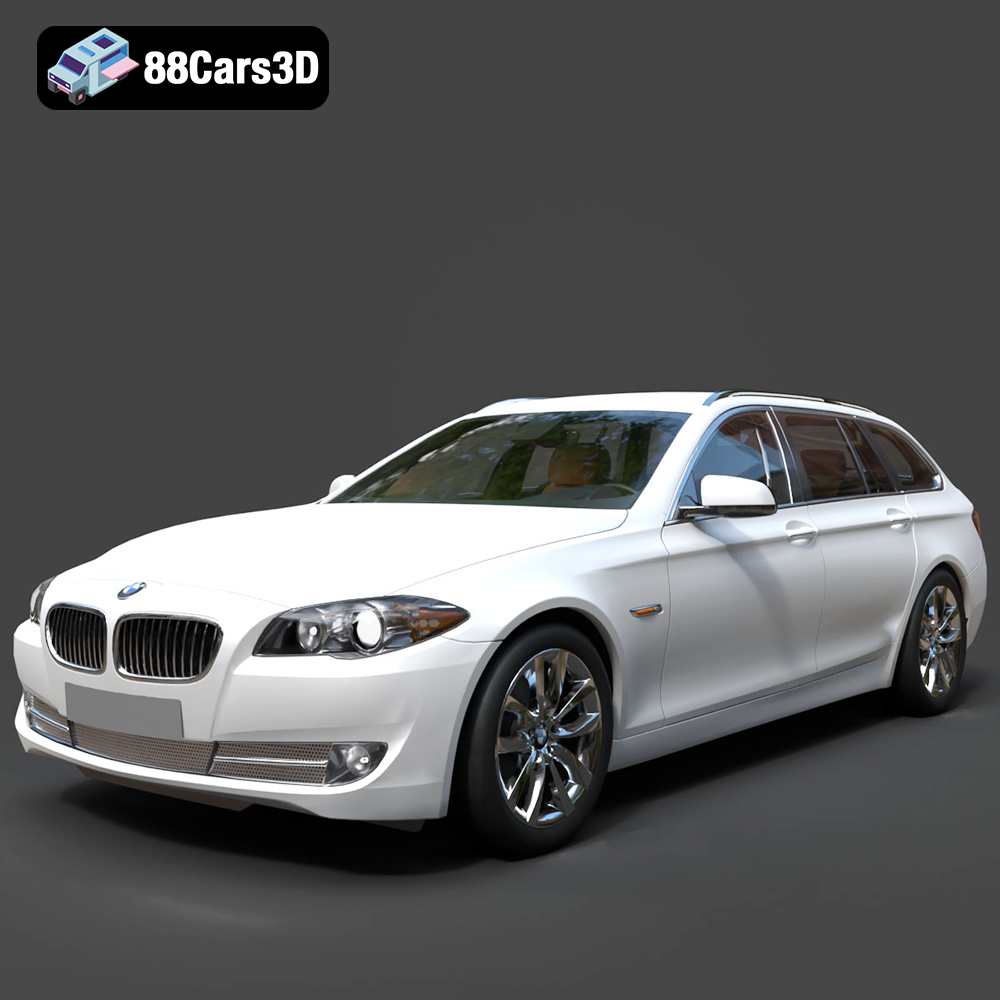
Download the BMW 5 Series Touring F11-007 3D Model featuring a detailed exterior and interior. Includes .blend, .fbx, .obj, .glb, .stl, .ply, .unreal, and .max formats for rendering, simulation, and game development.
Price: $10.79
Texture: Yes
Material: Yes
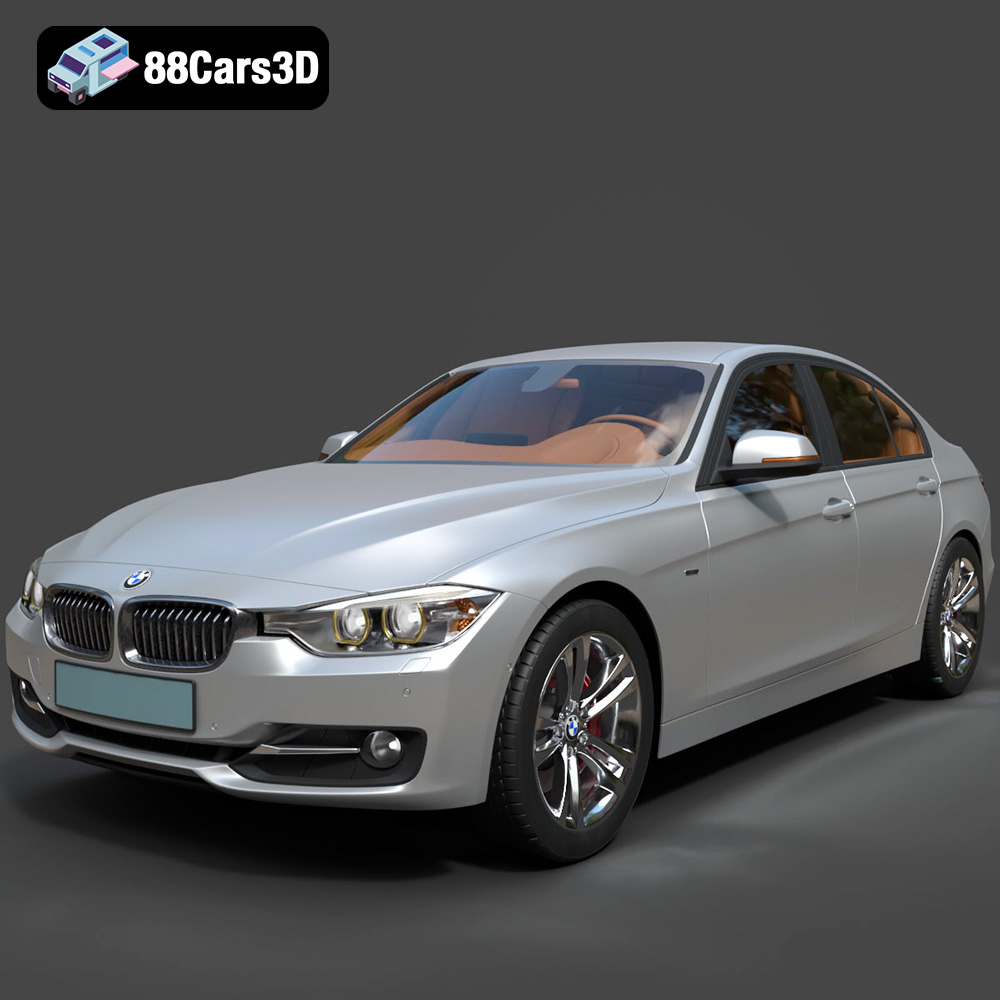
Download the BMW 3 F30 3D Model featuring a detailed exterior, realistic interior, and optimized mesh. Includes .blend, .fbx, .obj, .glb, .stl, .ply, .unreal, and .max formats for rendering, simulation, and game development.
Price: $10.79
Texture: Yes
Material: Yes
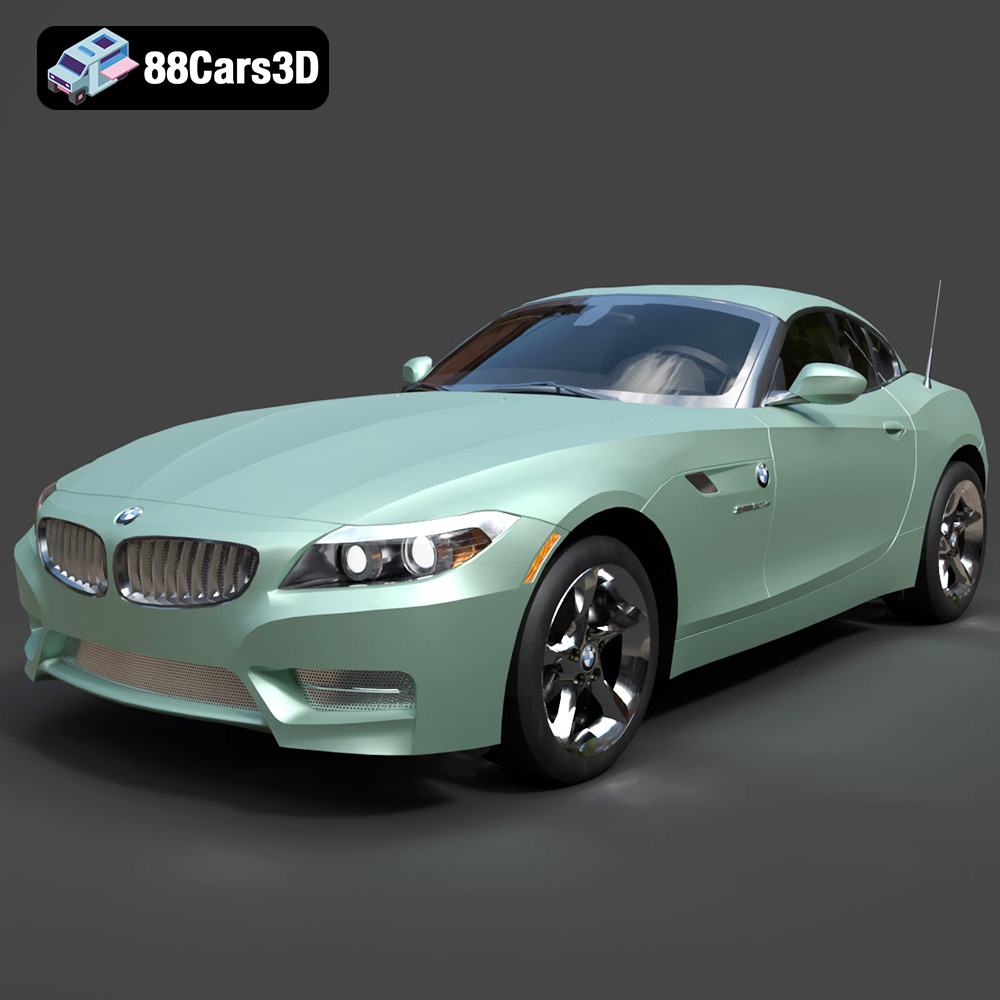
Download the BMW Z4 Roadster E89 3D Model featuring clean geometry, realistic detailing, and a fully modeled interior. Includes .blend, .fbx, .obj, .glb, .stl, .ply, .unreal, and .max formats for rendering, simulation, and game development.
Price: $13.99

Texture: Yes
Material: Yes
Download the BMW Z4 E85 3D Model featuring clean geometry, realistic detailing, and a fully modeled interior. Includes .blend, .fbx, .obj, .glb, .stl, .ply, .unreal, and .max formats for rendering, simulation, and game development.
Price: $13.99

Texture: Yes
Material: Yes
Download the BMW M3 2024 3D Model featuring clean geometry, realistic detailing, and a fully modeled interior. Includes .blend, .fbx, .obj, .glb, .stl, .ply, .unreal, and .max formats for rendering, simulation, and game development.
Price: $13.99
Texture: Yes
Material: Yes
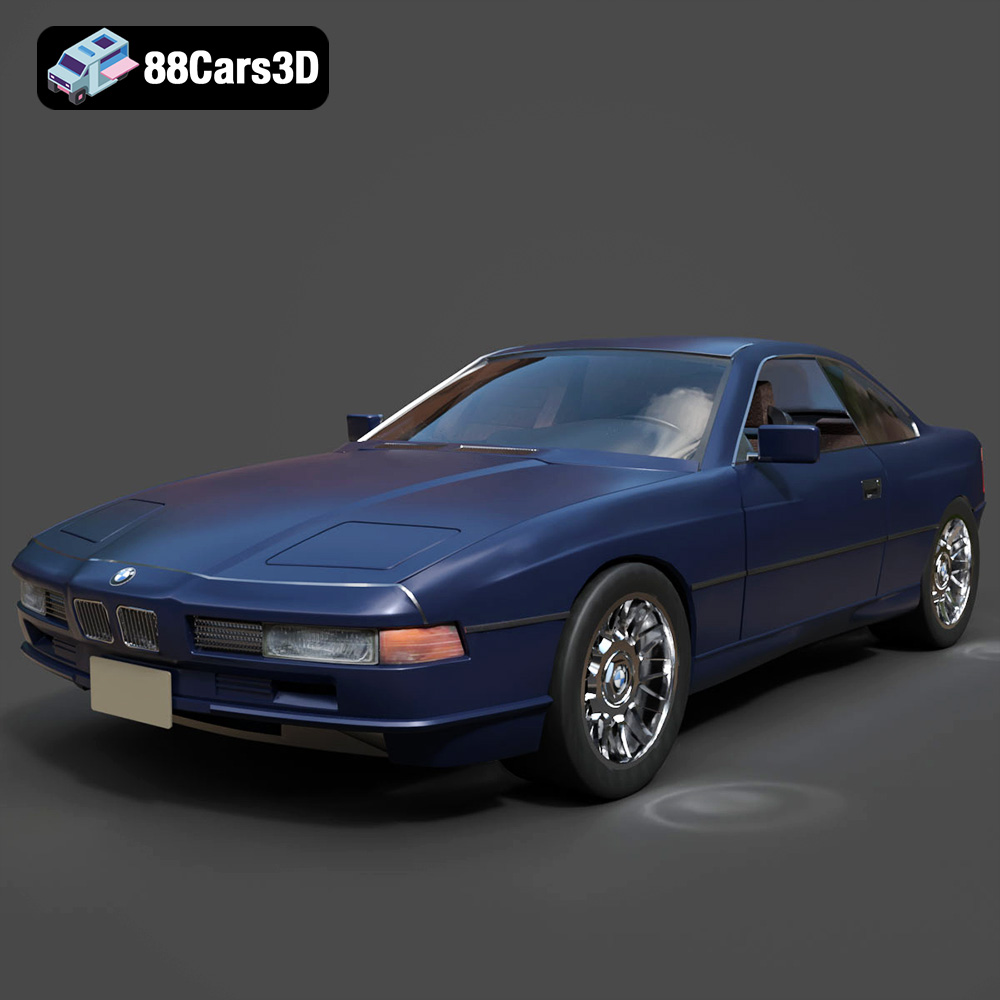
Download the BMW 850i Coupe 1990 3D Model featuring clean geometry, realistic detailing, and a fully modeled interior. Includes .blend, .fbx, .obj, .glb, .stl, .ply, .unreal, and .max formats for rendering, simulation, and game development.
Price: $13.99
Texture: Yes
Material: Yes
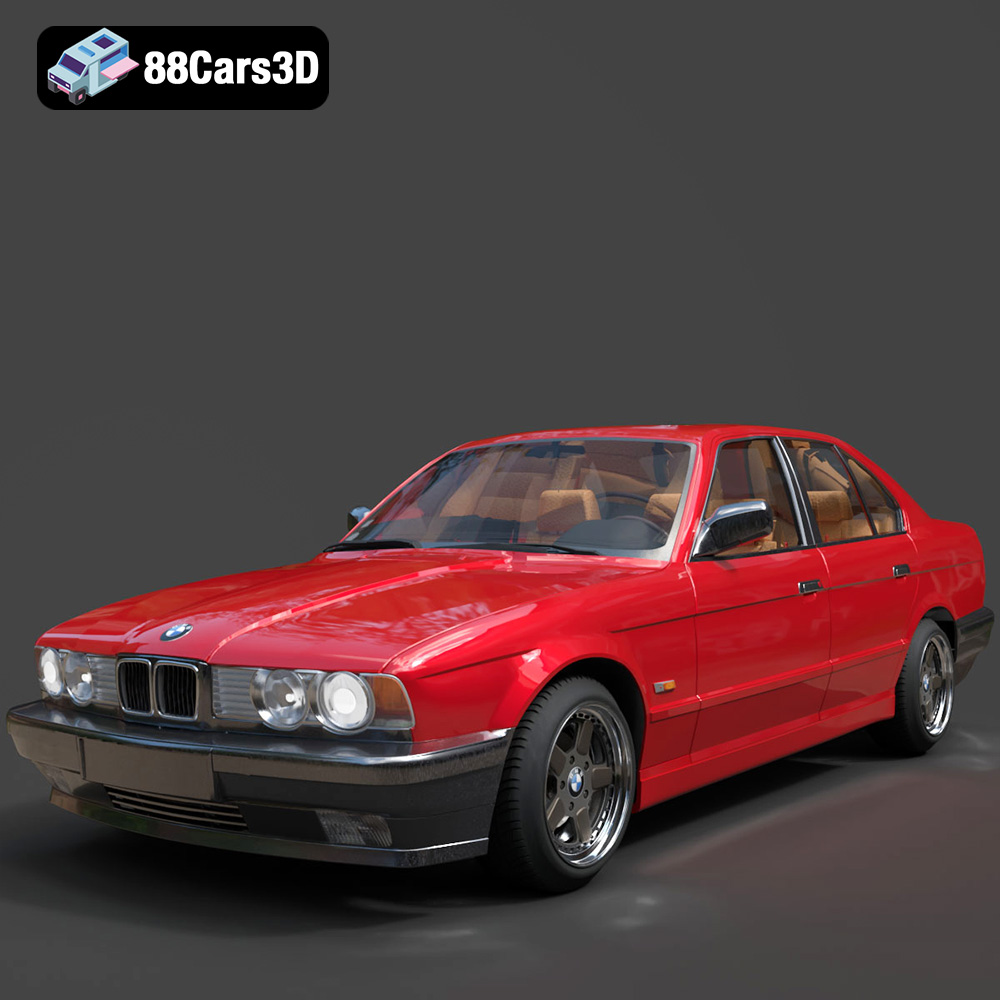
Download the BMW 525i E34 1993 3D Model featuring clean geometry, realistic detailing, and a fully modeled interior. Includes .blend, .fbx, .obj, .glb, .stl, .ply, .unreal, and .max formats for rendering, simulation, and game development.
Price: $12.99

