⚡ FLASH SALE: Get 60% OFF All Premium 3D & STL Models! ⚡

The world of 3D printing is an exciting frontier, allowing hobbyists and professionals alike to bring digital designs into the physical realm. For automotive enthusiasts, this means the possibility of holding a meticulously crafted replica of your favorite car right in your hands. At the heart of this process lies the STL file – the universal language of 3D printing. But what exactly is an STL file, and how does it work its magic? If you’ve ever wondered about the file format behind those stunning printable car models you see on platforms like 88cars3d.com, you’re in the right place. This comprehensive guide will demystify the STL file format, from its fundamental structure to practical considerations for achieving flawless prints. We’ll explore how these files are created, what makes them suitable for 3D printing, and the essential steps involved in preparing them for your 3D printer. Whether you’re a complete beginner looking to print your first model or an experienced maker seeking to refine your workflow, understanding STL files is your crucial first step towards a successful 3D printing journey.
At its core, an STL (STereoLithography) file is a way of representing the surface geometry of a three-dimensional object. Unlike formats like OBJ or FBX that can store color, texture, and material information, an STL file is purely about shape. It achieves this by breaking down the entire surface of the 3D model into a series of connected triangles, known as facets. Imagine meticulously tiling a complex curved surface with tiny, flat triangles; that’s essentially what an STL file does for your 3D model.
Each triangle in an STL file is defined by three vertices (points in 3D space) and a normal vector. The vertices dictate the position of the triangle’s corners, while the normal vector points perpendicularly outward from the surface of the triangle. This normal vector is crucial because it indicates which side of the triangle is the “outside” of the object, ensuring that the 3D printer understands the intended solid form rather than an infinitely thin surface. This simple yet effective approach makes STL files incredibly efficient for describing complex shapes, making them the de facto standard for 3D printing data exchange.
The precise arrangement of these vertices and normals is what defines the model’s shape. A well-formed STL file will have triangles that connect seamlessly, forming a “watertight” or “manifold” mesh. This means there are no holes, gaps, or self-intersecting surfaces. Think of it like a perfectly sealed balloon; the surface is continuous. If there are any defects, such as a missing triangle or two triangles sharing only a single point instead of an edge, the 3D printer’s slicing software might struggle to interpret the model correctly, leading to printing errors. The accuracy of the vertices and the consistency of the normal vectors are paramount for a successful print. For intricate models, such as those found on 88cars3d.com, the quality of these triangular facets directly impacts the level of detail and smoothness achievable in the final print.
STL files can be stored in two primary formats: ASCII and binary. ASCII STL files are human-readable text files, where each triangle and its properties are described using plain text commands. While easy to inspect and edit manually (with the right tools), they tend to be significantly larger in file size. Binary STL files, on the other hand, store the same information more compactly using binary code. This results in much smaller file sizes, which is advantageous for storing and transferring larger, more complex models. Most modern 3D printing software and hardware work seamlessly with both formats, but for practical purposes, binary STL is generally preferred due to its efficiency. When you download a high-quality printable car model, it’s likely to be a binary STL.
STL files are rarely created from scratch directly. Instead, they are typically exported from 3D modeling software, Computer-Aided Design (CAD) programs, or 3D scanning applications. These programs allow designers and engineers to create intricate virtual models with precise dimensions and complex geometries. Once the design is complete, the software uses an algorithm to tessellate (break down) the model’s surface into triangles, generating the STL file.
The quality of the resulting STL file heavily depends on the settings used during the export process. Key parameters include the deviation or tolerance, which dictates how closely the triangles approximate the original curved surfaces. A lower tolerance value will result in more triangles, leading to a smoother surface but a larger file size. Conversely, a higher tolerance value will use fewer triangles, resulting in a smaller file but potentially a more faceted or “blocky” appearance, especially on curved areas. Finding the right balance is crucial for creating print-ready STL files that capture the intended detail without becoming unmanageably large.
When exporting from CAD or modeling software, pay close attention to the tessellation settings. For most FDM (Fused Deposition Modeling) printing, a relatively moderate level of detail is sufficient. However, for resin printers, which offer higher resolutions, you might opt for finer tessellation. For instance, exporting a model from software like Blender or Fusion 360 might involve setting a maximum deviation of 0.01mm to 0.05mm for good detail. This ensures that subtle curves and features of car models are accurately represented. Conversely, if you’re printing a large, less detailed object, you can increase the tolerance to reduce file size and processing time. Always preview your exported STL in a viewer or your slicer software to ensure the level of detail meets your expectations before committing to a print.
A wide array of software can be used to create and export STL files. For professional CAD work, programs like SolidWorks, AutoCAD, and Autodesk Inventor are common. For more artistic modeling and sculpting, Blender, ZBrush, and Autodesk Maya are popular choices. Even simpler, user-friendly applications like Tinkercad can export STL files. For 3D scanning, software bundled with the scanner often handles the conversion to STL. For those seeking high-quality automotive models, marketplaces like 88cars3d.com offer meticulously prepared STL files, saving users the complex design and export process and ensuring a print-ready product.
An STL file, by itself, is just a description of geometry. Your 3D printer doesn’t understand triangles directly; it understands G-code, a set of precise instructions telling it exactly where to move, how fast, and how much material to extrude (or cure, in the case of resin printers). This is where slicing software comes in. Slicers like Cura, PrusaSlicer, Simplify3D, and Chitubox take your STL file and “slice” it into hundreds or thousands of thin, horizontal layers. For each layer, the slicer generates the specific toolpath commands that the 3D printer will follow.
The slicing process is arguably the most critical step after obtaining a suitable STL file. It’s where you define all the crucial print settings that will determine the success and quality of your print. These settings include layer height, infill density and pattern, print speed, temperatures, support structures, and much more. A well-optimized slice file ensures that the printer accurately translates the digital STL model into a physical object.
When slicing a car model, several parameters are particularly important. Layer height significantly impacts both print time and surface finish. For FDM printing, a layer height of 0.1mm to 0.2mm is common for a balance of detail and speed. For finer details, especially on smaller models or for resin printing, you might use layer heights as low as 0.02mm to 0.05mm. Infill percentage determines the internal structure’s density; for display models, a low infill (5-15%) is often sufficient to save material and time, providing internal support without adding excessive weight. However, for functional parts or larger models requiring rigidity, higher infill might be necessary. Print speed should be adjusted based on material and layer height; slower speeds generally yield better quality, particularly for intricate details like car grilles or emblems.
Car models often feature overhangs and bridges – parts of the model that extend horizontally or at an angle without direct support from the layer below. Think of a spoiler, a side mirror, or the underside of a car. Without support, these areas would droop or fail during printing. Slicing software can automatically generate support structures, which are temporary structures printed alongside the model. These are designed to be easily removed after the print is finished. The type, density, and placement of supports are critical. Too few or poorly placed supports will lead to print failure, while too many or overly dense supports can be difficult to remove and may damage the model’s surface. Experimenting with different support types (e.g., trees, normal) and settings like support Z distance and interface layers can significantly improve print quality and ease of post-processing.
Once your STL file has been sliced and saved as a G-code file (or similar printer-specific format), the next step is preparing your 3D printer. This involves ensuring the printer is properly calibrated, the build surface is clean and ready for adhesion, and the filament (for FDM) or resin (for resin printing) is loaded correctly.
Bed adhesion is paramount. A model that detaches from the build plate partway through a print is a common and frustrating failure. This can be caused by a dirty build surface, incorrect bed temperature, or issues with the first layer height and extrusion. For detailed car models, a perfectly smooth first layer is essential for a clean base. Using adhesion aids like glue stick, hairspray, or specialized build surfaces (e.g., PEI sheets) can often help. The orientation of the model on the build plate also plays a role in adhesion and the need for supports. Some orientations might require fewer supports or provide better stability during printing.
Choosing the right print orientation can dramatically affect the success of printing complex car models. Generally, you want to minimize overhangs and the number of support structures needed. For many car models, printing them upright (wheels on the build plate) is common, but sometimes printing them upside down or at an angle can be beneficial. For example, printing a convertible model with the top down might be better oriented upside down to support the interior more effectively. Always consider how the layers will build up and where stresses might occur. For bed adhesion, ensuring your build plate is perfectly level is the first step. For FDM, a slightly lower first layer extrusion (e.g., 105-110% of normal) and a slower print speed (e.g., 15-20 mm/s) for the first layer can create a strong foundation. Cleaning the build plate with isopropyl alcohol before each print is a simple yet highly effective practice.
The material you choose for your 3D print will influence the appearance, durability, and post-processing options for your car model.
For most hobbyist car models, PLA on FDM printers or standard resin on resin printers offer the best combination of ease of use, cost, and achievable detail.
Once your 3D print is complete and successfully removed from the build plate, the journey isn’t over. Post-processing is essential for transforming a raw print into a polished, display-worthy model. This stage involves cleaning up support structures, smoothing surfaces, and potentially assembling multi-part prints.
Support removal is the first step. This can be done carefully with tools like pliers, flush cutters, hobby knives, or specialized deburring tools. For resin prints, this is often followed by washing the print in isopropyl alcohol (IPA) or a dedicated resin cleaner to remove uncured resin, and then a final UV curing step to fully harden the print. Sanding is a common technique for both FDM and resin prints to remove layer lines and support marks, achieving a smoother surface finish. Various grits of sandpaper, from coarse to very fine, are used sequentially. For FDM prints, filler primers can be applied and sanded to further fill layer lines.
Careful support removal is critical. When removing supports from delicate car model parts, take your time. Sometimes, gently wiggling a support to break its connection point is better than a forceful pull. If supports leave marks, sanding is your best friend. Start with a lower grit sandpaper (e.g., 220 or 320 grit) to remove the bulk of the imperfections, then gradually move to higher grits (e.g., 600, 1000, 2000 grit) for a glass-smooth finish. For very fine details, a set of needle files can be invaluable. For FDM prints, applying a few thin coats of filler primer and sanding between each coat is a professional technique for achieving a perfectly smooth surface ready for painting.
Many complex car models are designed to be printed in multiple parts (e.g., chassis, body, wheels, interior) to facilitate printing and improve detail. These parts are then assembled using adhesives like super glue (cyanoacrylate) or specific plastic cements. Ensure you have a clean, well-lit workspace and good ventilation, especially if using strong adhesives or paints. Painting can truly elevate your 3D printed car model. After sanding and priming, you can use spray paints, airbrush paints, or hand-brush acrylics to bring your replica to life. Adding details like painting headlights, window trim, and emblems can make a significant difference. For those who prefer not to paint, many 3D printing filaments come in a wide range of colors, allowing for a finished look straight off the printer.
Even with well-prepared STL files and careful slicing, 3D printing can present challenges. Understanding common issues and their causes is key to overcoming them and achieving consistent, high-quality prints. Many problems stem from issues with the STL file itself, printer calibration, or slicing settings. For example, “ghosting” or “ringing” (wavy artifacts on the print surface) can be related to print speed or vibration. Warping (corners lifting off the build plate) is often due to poor bed adhesion or cooling issues, especially with materials like ABS. Under-extrusion (gaps in layers or thin walls) can indicate a clogged nozzle, incorrect filament diameter settings, or insufficient hotend temperature. Over-extrusion results in blobs and dimension inaccuracies.
As mentioned, STL files must be “watertight” or “manifold” for successful slicing and printing. Errors like holes, non-manifold edges (where more than two triangles share an edge), or inverted normals can cause slicers to fail or produce corrupted toolpaths. Fortunately, many tools exist to repair these mesh errors.
Always inspect your STL file in a mesh editor or your slicer after downloading or exporting it to catch potential problems early. For complex car models, ensuring the mesh integrity is fundamental.
A well-calibrated printer is the foundation of successful 3D printing. Key calibration steps include:
Regular maintenance, such as cleaning the nozzle, checking belts for tension, and lubricating moving parts, also prevents issues and ensures consistent print quality over time. A clean nozzle, for instance, is vital for preventing clogs that can lead to under-extrusion and surface defects on your printed car models.
Mastering the STL file format and understanding the surrounding processes – from export and slicing to printing and post-processing – is your key to unlocking the vast potential of 3D printing for automotive enthusiasts. Whether you’re aiming for a simple desktop display or a complex, multi-part replica, the principles discussed here will guide you toward successful and rewarding prints. Platforms like 88cars3d.com provide access to a curated library of high-quality, print-ready STL files, allowing you to focus on the creative and technical aspects of bringing these incredible vehicles to life. Remember that practice and patience are your greatest assets. Don’t be discouraged by initial setbacks; each print is a learning opportunity. By understanding the anatomy of an STL file and applying the best practices in slicing, preparation, and post-processing, you’ll be well on your way to creating stunning 3D printed car models that you can be proud of.

Texture: Yes
Material: Yes
Download the BMW 7 Series E38 3D Model featuring its iconic luxury sedan design and classic aesthetics. Includes .blend, .fbx, .obj, .glb, .stl, .ply, .unreal, and .max formats for rendering, simulation, and game development.
Price: $10.79

Texture: Yes
Material: Yes
Download the BMW 6 Series 640i F12 3D Model featuring a sleek design and detailed interior. Includes .blend, .fbx, .obj, .glb, .stl, .ply, .unreal, and .max formats for rendering, simulation, and game development.
Price: $10.79

Texture: Yes
Material: Yes
Download the BMW 6 Coupe E63 3D Model featuring a sleek design, detailed interior, and realistic exterior. Includes .blend, .fbx, .obj, .glb, .stl, .ply, .unreal, and .max formats for rendering, simulation, and game development.
Price: $10.79

Texture: Yes
Material: Yes
Download the BMW 5 Series Touring F11-007 3D Model featuring a detailed exterior and interior. Includes .blend, .fbx, .obj, .glb, .stl, .ply, .unreal, and .max formats for rendering, simulation, and game development.
Price: $10.79

Texture: Yes
Material: Yes
Download the BMW 5 Series Gran Turismo F07-003 3D Model featuring a detailed exterior and interior. Includes .blend, .fbx, .obj, .glb, .stl, .ply, .unreal, and .max formats for rendering, simulation, and game development.
Price: $10.79

Texture: Yes
Material: Yes
Download the BMW 5 Series E60 3D Model featuring its iconic sedan design, detailed exterior, and interior. Includes .blend, .fbx, .obj, .glb, .stl, .ply, .unreal, and .max formats for rendering, simulation, and game development.
Price: $10.79

Texture: Yes
Material: Yes
Download the BMW 5 E34-535i 3D Model featuring an iconic design, detailed exterior and interior, and accurate representation. Includes .blend, .fbx, .obj, .glb, .stl, .ply, .unreal, and .max formats for rendering, simulation, and game development.
Price: $10.79
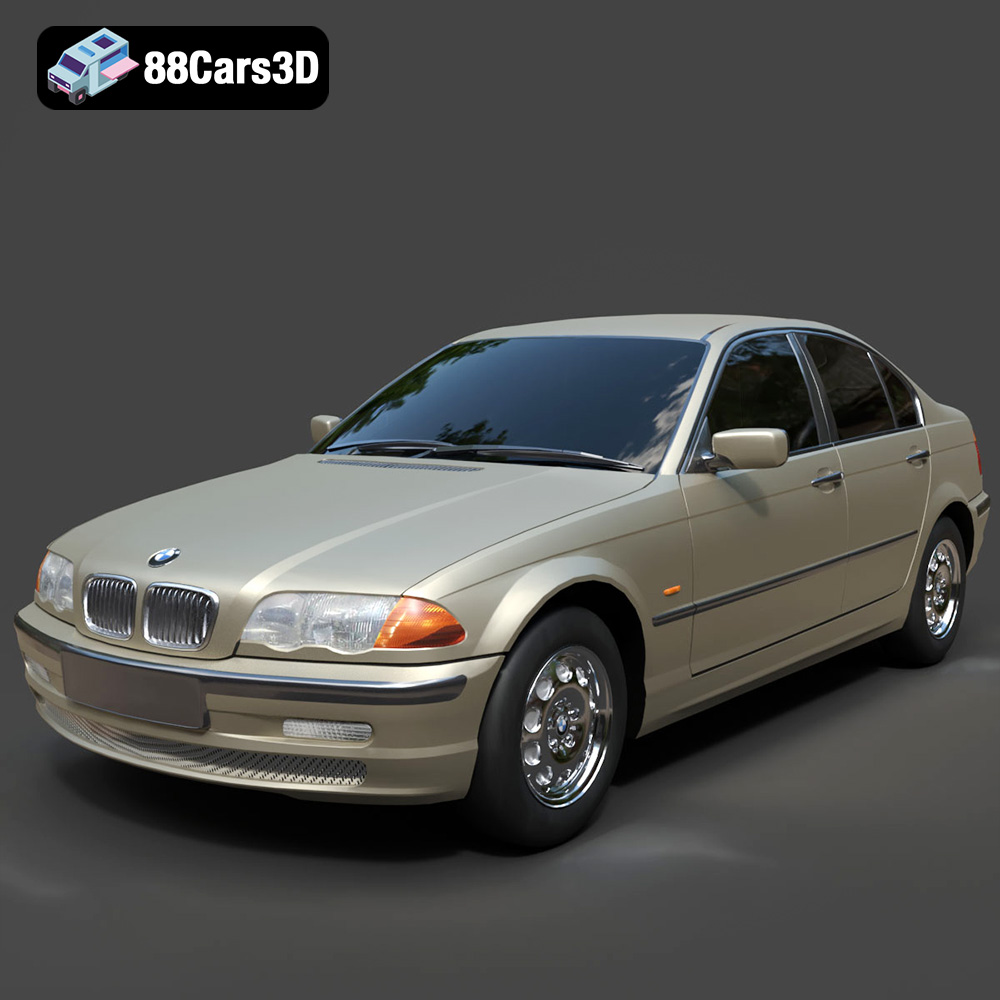
Texture: Yes
Material: Yes
Download the BMW 3 Series E46 3D Model featuring authentic exterior lines, a detailed interior, and separated components for animation. Includes .blend, .fbx, .obj, .glb, .stl, .ply, .unreal, and .max formats for rendering, simulation, and game development.
Price: $10.79
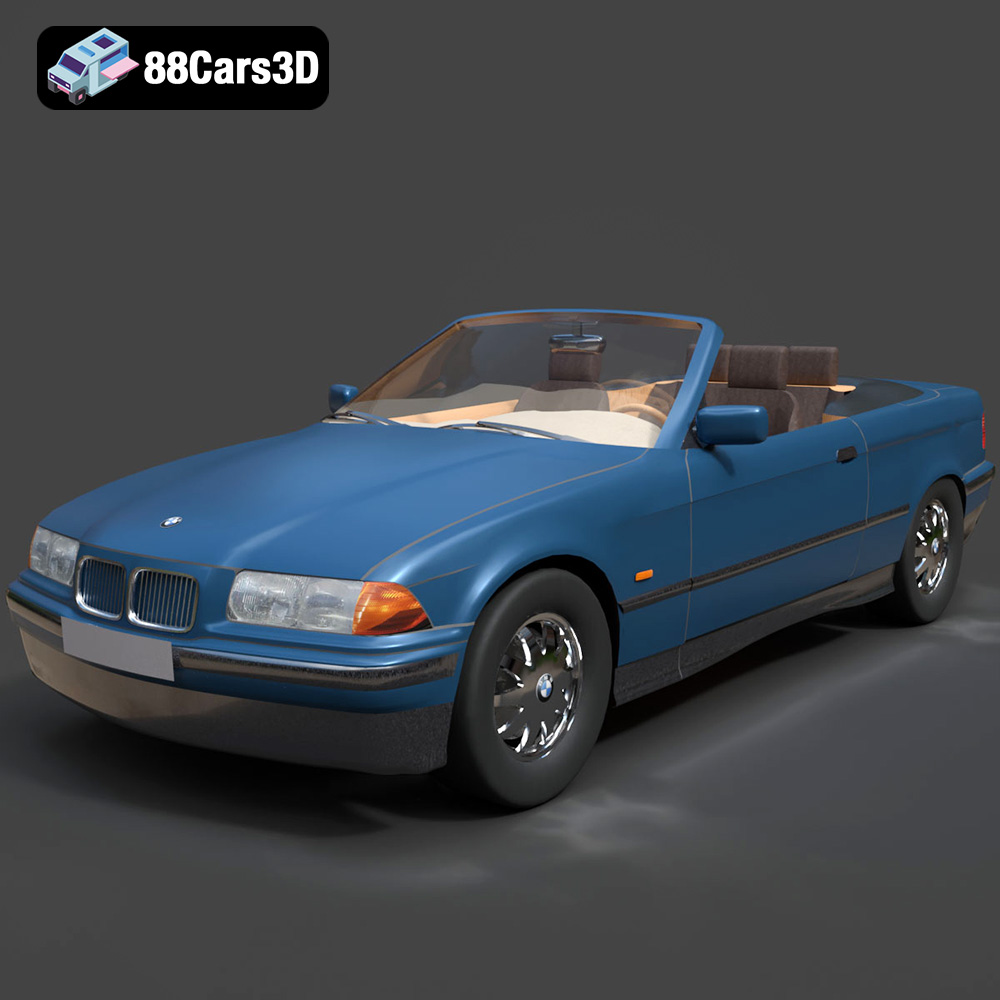
Texture: Yes
Material: Yes
Download the BMW 3 Series E36 Cabrio 325i 1998 3D Model featuring a classic convertible design and detailed interior. Includes .blend, .fbx, .obj, .glb, .stl, .ply, .unreal, and .max formats for rendering, simulation, and game development.
Price: $10.79

Texture: Yes
Material: Yes
Download the BMW 3 F30 3D Model featuring a detailed exterior, realistic interior, and optimized mesh. Includes .blend, .fbx, .obj, .glb, .stl, .ply, .unreal, and .max formats for rendering, simulation, and game development.
Price: $10.79

