⚡ FLASH SALE: Get 60% OFF All Premium 3D & STL Models! ⚡

The automotive industry is undergoing a digital revolution, driven by the relentless pursuit of photorealism and interactive experiences. From concept design and marketing campaigns to virtual showrooms and immersive training simulations, the demand for high-fidelity automotive visualization has never been greater. At the forefront of this transformation stands Unreal Engine, a powerful real-time 3D creation tool that empowers artists and developers to bring automotive visions to life with unparalleled realism and performance.
This comprehensive guide will take you on a deep dive into mastering Unreal Engine for automotive visualization. We’ll explore the entire workflow, from acquiring and optimizing high-quality 3D car models – crucial assets you can find on specialized platforms like 88cars3d.com – to crafting stunning PBR materials, setting up dynamic lighting with Lumen, creating interactive experiences with Blueprint, and leveraging cutting-edge features like Nanite for unprecedented detail. Whether you’re an experienced Unreal Engine developer, a 3D artist seeking to enhance your automotive renders, or a professional aiming to create captivating real-time experiences, this article will equip you with the knowledge and actionable insights to elevate your automotive projects. Prepare to unlock the full potential of Unreal Engine for your next automotive masterpiece.
Embarking on an automotive visualization project in Unreal Engine requires a thoughtful initial setup to ensure optimal performance and visual fidelity. The foundation of any successful project lies in selecting the right project template and configuring crucial engine settings from the outset. While a ‘Blank’ project offers maximum flexibility, Unreal Engine’s ‘Automotive Product Design’ template provides a great starting point, pre-configured with industry-specific settings, Post-Process Volumes, and lighting setups optimized for rendering vehicles. Understanding fundamental concepts like engine scalability and performance metrics is paramount, as maintaining a stable framerate is critical for real-time interactivity and smooth user experiences, especially when dealing with the high-poly nature of detailed car models.
Before importing any assets, it’s wise to consider your target hardware and desired visual quality. High-end workstations can handle more complex scenes and higher resolutions, but optimizing for a broader range of hardware will expand your project’s reach. This involves making informed decisions about texture resolutions, mesh density, and the complexity of your lighting scenarios. A well-organized project structure, with dedicated folders for meshes, materials, textures, and Blueprints, will also streamline your workflow and make collaboration significantly easier. Regularly reviewing and adjusting engine scalability settings will allow you to dynamically balance visual quality and performance, ensuring your automotive creations shine brightly without compromising user experience.
When starting a new project in Unreal Engine, navigating to File > New Project and selecting the appropriate template is the first step. For automotive, the “Automotive Product Design” template within the “Games” or “Film, Television & Live Events” categories offers pre-configured settings tailored for high-quality renders. If you choose a “Blank” project, remember to enable “Ray Tracing” and “Lumen” in Project Settings under “Rendering” for next-generation lighting and reflections.
* Project Settings: Go to Edit > Project Settings.
* Under Engine > Rendering:
* Enable Hardware Ray Tracing if your hardware supports it for accurate reflections and global illumination.
* Ensure Lumen Global Illumination and Lumen Reflections are enabled for dynamic, real-time GI and reflections.
* Set Virtual Texture Support to enabled for potential use with large textures on landscapes, though less critical for single car scenes.
* Set Nanite to enabled for managing high-polygon meshes.
* Under Engine > Input: Configure any custom inputs you might need for interactive camera controls or vehicle interaction.
* Scalability Settings: Access these via the ‘Settings’ dropdown in the editor toolbar. These global settings control various rendering quality options (e.g., view distance, anti-aliasing, post-processing) and directly impact performance. Start with ‘Epic’ for high-quality visualization, but be prepared to lower specific settings if performance becomes an issue during development or for lower-spec target platforms. Use console commands like `stat fps` and `stat unit` to monitor performance. For more details on these initial configurations, refer to the official Unreal Engine documentation at https://dev.epicgames.com/community/unreal-engine/learning.
Unreal Engine provides several templates that can serve as excellent starting points for automotive projects:
* Automotive Product Design Template: This is arguably the most suitable template. It comes pre-packaged with a studio environment, basic lighting setups, a camera rig, and post-processing volumes optimized for product visualization. This saves significant setup time and provides a solid foundation for achieving professional-grade renders of your 3D car models. It often includes examples of high-quality materials, which can be adapted for your specific vehicle components.
* Blank Project: For those who prefer complete control from scratch, a ‘Blank’ project allows you to build every aspect of your scene. While more time-consuming, it ensures there’s no extraneous content, keeping your project lean. You would then manually add lighting, cameras, and post-processing, configuring each element to your precise specifications. This template is ideal if you have a very specific vision for your scene environment that doesn’t align with pre-built templates.
* Games (Third Person/Vehicle) Template: If your automotive project involves interactive gameplay or complex vehicle physics simulations, starting with a Game template that includes basic character or vehicle controls can be beneficial. You can then swap out the default assets with your high-fidelity car models and integrate your custom visualizations within a game-like framework. This is particularly useful for developing driving simulators or automotive-themed games.
The quality of your 3D car models is the bedrock of any compelling automotive visualization. Sourcing high-quality assets from reputable marketplaces, such as 88cars3d.com, ensures you start with models featuring clean topology, proper UV mapping, and a structure designed for PBR materials. These assets are often optimized or come with multiple LODs (Levels of Detail), significantly reducing the heavy lifting required for integration into Unreal Engine. The import process itself, typically using FBX, USD, or USDZ formats, needs careful attention to scale, pivot points, and material assignment to avoid common pitfalls.
Once imported, optimization becomes a continuous process. High-fidelity car models can be extremely dense, potentially comprising millions of polygons, which can quickly cripple real-time performance. Initial optimization strategies include verifying mesh simplification, ensuring accurate collision meshes for physics and interaction, and setting up appropriate pivot points for moving parts like doors or wheels. Unreal Engine’s built-in tools for LOD generation, coupled with manual adjustments, are invaluable here. The goal is to strike a balance between visual fidelity and performance, ensuring that your vehicle looks stunning up close but remains efficient when viewed from a distance or within a complex scene.
Before importing your precious 3D car models into Unreal Engine, a meticulous preparation phase in your 3D modeling software (e.g., Blender, 3ds Max, Maya) is crucial. This minimizes issues and streamlines your workflow.
* Preferred File Formats:
* FBX (.fbx): The industry-standard interchange format. It supports meshes, materials (basic properties), animations, and cameras. Ensure you export with embedded media (textures) if desired, or handle textures separately.
* USD/USDZ (.usd/.usdz): Universal Scene Description is gaining traction as a robust format for scene description, collaboration, and interchange. It can encapsulate complex scenes, materials, and animations, making it excellent for multi-software pipelines and virtual production. Unreal Engine has growing support for USD.
* Pre-Import Checklist:
* Units and Scale: Ensure your model is exported in real-world units (e.g., centimeters) matching Unreal Engine’s default. Incorrect scale is a common issue.
* Pivot Points: Verify that pivot points for interactive parts (doors, wheels, steering wheel) are correctly placed (e.g., at the hinge for a door, at the center of a wheel). This is critical for animation and Blueprint interaction.
* Clean Topology: Check for non-manifold geometry, overlapping faces, or stray vertices. While Nanite can handle dense meshes, clean topology aids in UV mapping, baking, and traditional LOD generation.
* UV Mapping: Crucial for textures. Ensure UV channel 0 (for diffuse/normal maps) is clean, non-overlapping, and efficiently packed. Create a separate UV channel 1 for lightmaps if you plan on using baked lighting, ensuring no overlaps and sufficient padding.
* Material Separation: Group meshes by material where appropriate (e.g., body, glass, tires, interior). This helps in organizing materials in Unreal Engine and creating Material Instances. Give meaningful names to your materials and objects.
* Naming Conventions: Adopt a consistent naming convention (e.g., `SM_CarBody_01`, `M_CarPaint_Red`). This aids in organization and makes asset management much easier within Unreal Engine.
Even with optimized models from platforms like 88cars3d.com, further adjustments within Unreal Engine are often necessary to balance visual fidelity with performance, especially for real-time applications.
* Levels of Detail (LODs):
* Unreal Engine can automatically generate LODs for Static Meshes (right-click mesh in Content Browser > Create LODs). However, manual LOD creation in your 3D software offers superior control, allowing you to selectively reduce polygon count on less visible parts.
* For highly detailed car models, aim for at least 3-5 LODs:
* LOD0: Full detail, for close-ups.
* LOD1: ~50-75% poly reduction, for medium distances.
* LOD2: ~25-50% poly reduction, for further distances.
* LOD3+: Aggressive reduction, potentially billboard or simplified proxy for very far distances.
* Adjust the “Screen Size” value for each LOD to control when it switches.
* Collision Meshes:
* Auto-Generated: Unreal Engine can automatically generate simple collision meshes (e.g., sphere, box, convex hull) when importing. This is often sufficient for basic blocking or simple physics.
* Custom (UCX_ prefix): For complex or accurate collisions (e.g., for vehicle physics or precise interaction), it’s best to create a simplified, convex collision mesh in your 3D software, name it with a `UCX_` prefix (e.g., `UCX_CarBody`), and export it alongside your main mesh. This prevents the physics engine from calculating complex collisions on high-poly meshes, which can be a significant performance drain.
* Per-Poly Collision: Avoid using per-poly collision on high-poly models as it’s extremely expensive. Reserve it for specific, very low-poly interactable objects if absolutely necessary.
* Pivot Adjustment: If your pivot points weren’t perfect on import, you can adjust them in the Static Mesh Editor. This is crucial for animating parts or attaching other components correctly. For instance, wheels should have their pivots at their rotational center for accurate spinning.
The realism of your 3D car models hinges critically on the quality and accuracy of their PBR (Physically Based Rendering) materials. PBR materials meticulously simulate how light interacts with surfaces in the real world, producing incredibly convincing results when correctly implemented in Unreal Engine. From the metallic flakes of a dazzling car paint to the subtle reflections on glass and the gritty texture of rubber tires, each material requires a precise blend of maps: Albedo (or Base Color), Normal, Roughness, Metallic, Ambient Occlusion, and sometimes Emissive or Opacity.
The Unreal Engine Material Editor is a node-based powerhouse that allows for the creation of incredibly complex and layered materials. Understanding how to construct shaders that mimic real-world properties—like clear coats over metallic paint or anisotropic reflections on brushed metal—is fundamental. High-resolution textures (4K, 8K, or even higher for hero assets) are paramount for capturing minute details, but efficient use of texture memory through texture streaming and careful material instancing is also key. By mastering the Material Editor, you can transform a basic mesh into a hyper-realistic automotive masterpiece, captivating your audience with stunning visual fidelity.
PBR is not just a buzzword; it’s a methodology that ensures consistent and realistic lighting response across all conditions. For automotive materials, understanding each PBR map is vital:
* Albedo (Base Color): This map defines the fundamental color of the surface without any lighting information. For a car, this would be the primary color of the paint, the base grey of the tire rubber, or the tint of the glass. It should be flat and contain no shadows or highlights.
* Normal Map: Provides per-pixel surface normal information, simulating fine surface details without adding geometry. This is crucial for adding subtle imperfections, panel gaps, or the texture of leather seats.
* Roughness Map: Controls the microscopic surface irregularities that scatter light. A value of 0 (black) is perfectly smooth (like polished chrome), and 1 (white) is extremely rough (like matte plastic). Car paint often has varying roughness from clear coat to underlying metallic layers.
* Metallic Map: Determines if a surface is metallic (value of 1, white) or non-metallic/dielectric (value of 0, black). Car bodies are typically metallic (or have metallic flakes under a clear coat), while glass, plastic, and rubber are dielectric. Metals have colored reflections and monochromatic diffuse, while dielectrics have monochromatic reflections and colored diffuse.
* Ambient Occlusion (AO) Map: Simulates soft shadows where light is occluded, typically in crevices and corners, enhancing depth. While Lumen provides real-time GI, an AO map can still provide subtle, pre-calculated contact shadows that enhance realism.
* Opacity Map: Used for transparent or semi-transparent materials like glass, headlights, or tail lights. It dictates which parts are visible or hidden.
* Emissive Map: For light-emitting surfaces, such as headlights, tail lights, or dashboard displays, providing their own light output.
Unreal Engine’s Material Editor allows for incredible complexity. Here’s how to tackle some challenging automotive materials:
* Layered Car Paint Shaders:
* Real car paint has multiple layers: a base color coat, a metallic flake layer, and a clear coat. You can simulate this using `Material Attributes` and `Blend Material Attributes` nodes.
* Create a base material for the metallic flakes (using a noise texture for a masked metallic map).
* Blend this with a clear coat layer that primarily affects roughness and specular.
* Use a `Fresnel` node to control reflection intensity at glancing angles, common for clear coats.
* Consider using the `Anisotropic` input for brushed metal effects on rims or interior trims, which requires a tangent map.
* Realistic Glass & Headlights:
* For transparent materials, set the Material’s `Blend Mode` to `Translucent` and `Shading Model` to `Default Lit` (or `Thin Translucent` for simpler glass).
* Use a `Refraction` input node for physically accurate bending of light, driven by an `IOR` (Index of Refraction) value (e.g., 1.52 for typical glass).
* Combine this with `Roughness` and `Metallic` maps to control reflections (e.g., a clean glass has low roughness).
* For headlights and taillights, incorporate `Emissive` maps for glowing elements and `Normal` maps for intricate lens patterns. You might need separate materials for the glass cover and the light source itself.
* Ensure the `Two Sided` option is enabled for glass to render correctly from both sides.
When developing materials, leverage Material Instances. Create a master material for each generic type (e.g., `M_CarPaint_Master`, `M_Glass_Master`) and then create instances for specific variations (e.g., `MI_CarPaint_Red`, `MI_CarPaint_Blue`). This allows you to quickly change parameters like color, roughness, or texture inputs without recompiling the shader, saving significant development time and improving optimization. For detailed guides on Material Editor, explore the comprehensive resources available on https://dev.epicgames.com/community/unreal-engine/learning.
Lighting is the ultimate sculptor of realism in any 3D scene, and for automotive visualization, it’s critical for showcasing the intricate curves, reflections, and luxurious finishes of a vehicle. Unreal Engine 5’s Lumen Global Illumination and Reflections system is a game-changer, providing fully dynamic, real-time GI and reflections that react instantly to changes in light and geometry. This eliminates the need for complex lightmap baking, allowing for unprecedented creative freedom in studio setups, exterior environments, or interactive configurators.
Beyond Lumen, a comprehensive lighting strategy often involves a blend of techniques. High Dynamic Range Image (HDRI) environments are indispensable for providing realistic ambient light and crisp reflections, mimicking real-world studio or outdoor conditions. Directional lights simulate the sun, while strategically placed spot and point lights can accentuate details, create dramatic shadows, or highlight specific design elements. Understanding the interplay between these light sources and how they interact with your PBR materials is key to achieving photorealistic results that truly make your 3D car models pop.
Lumen is Unreal Engine 5’s revolutionary dynamic Global Illumination and Reflection system, providing a robust solution for automotive lighting that previously required extensive lightmap baking or approximated solutions.
* Enabling Lumen:
1. Go to Edit > Project Settings.
2. Under `Engine > Rendering > Global Illumination`, set `Dynamic Global Illumination Method` to `Lumen`.
3. Under `Engine > Rendering > Reflections`, set `Reflection Method` to `Lumen`.
4. Ensure `Hardware Ray Tracing` is enabled if your hardware supports it for higher quality Lumen results.
* Configuring Lumen for Quality:
* Post Process Volume: Add a `Post Process Volume` to your scene. Ensure its `Unbound` property is checked to apply settings globally.
* Inside the Post Process Volume, navigate to `Global Illumination` and `Reflections`.
* Lumen Global Illumination > Quality: Increase this value for higher quality GI. Values like 1.5 or 2.0 often provide good results for hero shots.
* Lumen Global Illumination > Final Gather Lighting Update Speed: Adjust to control how quickly GI updates. Lower values might reduce flickering but increase perceived latency.
* Lumen Reflections > Max Trace Distance: Increase this for larger reflections, especially in expansive environments.
* Lumen Reflections > Quality: Similar to GI, higher values improve reflection quality.
* Mesh Distance Fields: Lumen heavily relies on Mesh Distance Fields. Ensure `Generate Mesh Distance Fields` is enabled in Project Settings under `Engine > Rendering`. Static Meshes, including your car models, will generate these fields automatically, which Lumen uses for its calculations. For very small details, you might need to adjust their `Distance Field Resolution Scale` in the Static Mesh Editor.
While Lumen handles real-time GI and reflections dynamically, combining it with other lighting methods creates a more refined and visually stunning automotive scene.
* HDRI Environment Map:
* An HDRI (High Dynamic Range Image) acts as both an ambient light source and a detailed reflection map. It’s essential for achieving realistic outdoor or studio lighting setups.
* Import a high-resolution `.hdr` or `.exr` file into Unreal Engine.
* Drag and drop the HDRI into your scene or create a `Skylight` and assign the HDRI to its `Source Cubemap`.
* Adjust the `Intensity Scale` of the Skylight to control the overall brightness.
* Rotate the `Skylight` or the `HDRI Backdrop` actor in your scene to find the most flattering lighting and reflection angles for your car.
* For static environments, consider using `HDRI Backdrop` actor available from the Quixel Bridge, as it also provides a background sphere for your HDRI.
* Directional Light (Sun):
* Simulates sunlight or a primary strong light source.
* Add a `Directional Light` actor to your scene.
* Adjust its `Intensity` and `Color`. Crucially, rotate it to control the direction of the harsh shadows and primary highlights on your car.
* Enable `Cast Shadows` and `Light Shafts Bloom` for atmospheric effects.
* Ensure `Cast Ray Traced Shadows` is enabled for sharper, more accurate shadows with Lumen.
* Spot & Point Lights (Accentuation):
* Use `Spot Lights` and `Point Lights` to selectively highlight specific features of your car, such as chrome accents, design lines, or interior details.
* These can be used as “rim lights” to separate the car from the background or to emphasize its silhouette.
* Adjust `Intensity`, `Attenuation Radius`, `Source Radius` (for softer shadows), and `IES Profiles` (for realistic light patterns) to fine-tune their effect.
* In a studio setup, multiple spot lights with varying intensities and colors can mimic professional photographic lighting rigs.
Beyond static renders, Unreal Engine excels at creating dynamic and interactive automotive experiences. Imagine changing a car’s color with a click, opening doors, or taking it for a spin in a virtual environment. This level of engagement is primarily achieved through Unreal Engine’s powerful visual scripting system, Blueprint, complemented by the cinematic sequencing capabilities of Sequencer and the robust Chaos Vehicle physics system. These tools empower artists and developers to build automotive configurators, interactive showcases, engaging driving simulations, and stunning marketing animations.
The ability to integrate real-time physics simulation adds another layer of realism, allowing vehicles to respond authentically to terrain and driving inputs. Combining these elements transforms passive viewing into an immersive journey, enabling users to explore, customize, and even drive their dream cars in a virtual space. This interactivity is what sets real-time automotive visualization apart, creating memorable and impactful user experiences that resonate deeply with potential buyers, designers, and enthusiasts alike.
Blueprint Visual Scripting is Unreal Engine’s node-based scripting system, enabling non-programmers to create complex logic and interactivity. It’s perfect for building automotive configurators.
* Changing Car Color:
1. Create a `Material Instance Dynamic` (MID) of your car paint master material in Blueprint. This allows you to change parameters at runtime.
2. Expose a `Vector Parameter` (e.g., “BaseColor”) in your car paint master material.
3. In a `Widget Blueprint` (UI), add buttons for different colors.
4. On button click, use `Set Vector Parameter Value` on your MID, feeding in the desired RGB color.
5. Apply the MID back to the car body mesh.
* Opening/Closing Doors, Changing Wheels:
1. Ensure your car model’s doors and wheels are separate meshes with correctly placed pivot points.
2. In a `Blueprint Actor` for your car, create `Timeline` nodes for smooth animation of rotations (for doors) or visibility (for changing wheels).
3. Attach custom events to `Input` actions (e.g., pressing ‘D’ for door) or UI buttons.
4. For changing wheels, you might toggle the visibility of different `Static Mesh Components` or dynamically load new wheel models.
* Camera Control:
1. Implement different camera views (e.g., exterior orbit, interior driver’s seat) using `Camera Components` attached to sockets on your car.
2. Use `Set View Target with Blend` in Blueprint to smoothly transition between cameras.
3. For a free-look orbit camera, use a `Spring Arm Component` and connect mouse input to its `Rotation`.
Sequencer is Unreal Engine’s multi-track non-linear editor for creating cinematic sequences, animations, and in-game cutscenes. It’s perfect for automotive reveals and marketing content.
* Creating a Car Reveal Sequence:
1. Open `Sequencer` (Window > Cinematics > Sequencer).
2. Add your car `Blueprint Actor` to Sequencer.
3. Add `Camera Actors` and create camera cuts for dynamic shots. Use `Attach` tracks to link cameras to moving car parts for handheld effects, or use `Transform` tracks for smooth dolly or crane shots.
4. Animate the car’s movement using its `Transform` track (translation, rotation). Keyframe acceleration, braking, and steering.
5. Animate material parameters (e.g., a fade-in effect, or color change at specific moments).
6. Add `Light Actors` and animate their intensity or color for dramatic lighting shifts.
7. Integrate particle effects (Niagara) for exhaust, dust, or dramatic atmospheric elements.
* Vehicle Dynamics with Chaos Vehicles:
* Unreal Engine’s Chaos Physics system includes robust vehicle dynamics.
* Create a `Wheeled Vehicle Blueprint` from the `Vehicle` class.
* Assign your car body mesh and wheel meshes to the appropriate components.
* Configure `Wheel Setup` (radius, width, offset) and `Engine` (torque curves, max RPM) parameters for realistic behavior.
* Adjust `Suspension` and `Tire` parameters to fine-tune handling, grip, and damping.
* This allows for interactive driving experiences, letting users control the vehicle with keyboard/gamepad inputs within your visualization, making for a truly immersive experience. For a deep dive into Chaos Vehicles, refer to the official Unreal Engine documentation.
Achieving photorealism with automotive models often means working with extremely high polygon counts – intricate interiors, detailed engine components, and smooth body panels can quickly push meshes into millions of triangles. Traditionally, this was a performance killer, requiring extensive manual optimization. However, Unreal Engine 5’s Nanite virtualized geometry system has revolutionized this, allowing artists to import and render film-quality assets with virtually no polygon budget constraints.
Yet, Nanite isn’t a magic bullet for every scenario. Strategic Levels of Detail (LODs) remain vital for non-Nanite meshes and for optimizing scenes for specific use cases like AR/VR. Comprehensive performance optimization involves a multi-faceted approach, tackling draw calls, texture streaming, shader complexity, and culling strategies. Leveraging Unreal Engine’s powerful profiling tools helps identify bottlenecks, ensuring your automotive experiences not only look stunning but also run smoothly across target platforms. Balancing visual fidelity with performance is an ongoing challenge, but with the right tools and techniques, it’s a manageable one.
Nanite virtualized geometry is one of Unreal Engine 5’s most groundbreaking features, allowing artists to import and render meshes with millions or even billions of polygons without significant performance degradation. This is revolutionary for automotive visualization where intricate details are paramount.
* How Nanite Works: Nanite intelligently streams and renders only the necessary detail, at the necessary resolution, for what’s visible on screen. It essentially takes highly detailed meshes and processes them into a hierarchical mesh structure that can be streamed very efficiently.
* Enabling Nanite:
1. Ensure Nanite is enabled in Project Settings (Edit > Project Settings > Engine > Rendering > Nanite).
2. Import your high-poly 3D car model.
3. In the Content Browser, double-click your Static Mesh to open the Static Mesh Editor.
4. Under `Details > Nanite Settings`, check `Enable Nanite`.
5. Adjust `Fallback Relative Error` (determines how much detail is preserved at distance) and `Preserve Area` if necessary.
* Benefits for Automotive:
* No LOD Management: For Nanite meshes, manual LOD creation becomes largely obsolete, as Nanite handles detail reduction automatically.
* High-Fidelity Interiors: Render every button, stitch, and vent without worrying about poly count.
* Detailed Engine Bays: Showcase every component of a complex engine.
* Smooth Surfaces: Nanite helps maintain smooth curves on car bodies, even at extreme close-ups, by effectively rendering massive amounts of geometry.
* Considerations:
* Nanite currently works with Static Meshes, not directly with Skeletal Meshes (e.g., animated characters or complex physics-driven vehicle deformers).
* Some rendering features (e.g., translucent materials, hair grooms) don’t fully support Nanite meshes yet. You may need to create non-Nanite versions for these components or use workarounds.
* While Nanite reduces draw calls and mesh processing, texture memory and shader complexity still need to be managed.
Even with Nanite, a holistic approach to optimization is essential for smooth real-time performance.
* Texture Optimization:
* Resolution: Use appropriate texture resolutions. 4K or 8K for hero assets like the main car body, but 2K or 1K for less prominent parts (underside, small interior elements).
* Compression: Ensure textures are correctly compressed (e.g., BC7 for normal/color, BC5 for normal maps, uncompressed for masks).
* Texture Streaming: Enable texture streaming in Project Settings and for individual textures (`Stream in DDC`) to load textures based on camera distance, reducing memory footprint.
* Draw Call Optimization:
* Batching: Combine meshes with the same materials where possible to reduce draw calls.
* Instancing: Use `Instanced Static Mesh Components` for repeated objects (e.g., bolts, small trim pieces) to render them efficiently.
* Shader Complexity:
* Complex materials with many instructions can be performance heavy.
* Use `Shader Complexity` view mode (Lit > Shader Complexity) to identify expensive materials (red indicates high cost).
* Optimize materials by simplifying nodes, using `Material Functions`, and leveraging `Material Instances`.
* Culling Volumes:
* Occlusion Culling: Automatically hides objects obscured by others.
* Frustum Culling: Hides objects outside the camera’s view.
* Precomputed Visibility Volumes: For static scenes, these can further optimize rendering by pre-calculating what’s visible from specific camera positions.
* Profiling Tools:
* `stat fps` / `stat unit`: Displays overall framerate and breakdown of CPU/GPU costs.
* `stat gpu`: Provides detailed GPU performance metrics, identifying expensive passes.
* `stat rhi`: Shows rendering hardware interface statistics, helpful for tracking draw calls.
* `Profile GPU`: Opens a detailed GPU profiler that graphically breaks down rendering costs. Use these tools regularly to pinpoint and address performance bottlenecks. For a deeper dive into profiling, consult the Unreal Engine documentation.
The versatility of Unreal Engine extends far beyond desktop applications, opening up exciting new frontiers for automotive visualization. Immersive technologies like Augmented Reality (AR) and Virtual Reality (VR) are transforming how we interact with cars, from virtual test drives and collaborative design reviews to interactive showrooms that can be experienced anywhere. While demanding on performance, optimizing 3D car models for AR/VR platforms offers unparalleled levels of engagement.
Simultaneously, the realm of virtual production has embraced Unreal Engine, utilizing its real-time capabilities for automotive commercials, films, and live events. LED volumes, in-camera VFX, and virtual cameras allow filmmakers to create stunning car sequences against dynamic, photorealistic backdrops without leaving the studio. These advanced applications underscore Unreal Engine’s role not just as a visualization tool, but as a central hub for innovation across the entire automotive lifecycle, from concept to marketing and beyond.
AR/VR places stringent demands on performance, particularly high framerates (e.g., 72fps, 90fps, 120fps) to prevent motion sickness. Optimizing automotive models for these immersive platforms requires specific strategies.
* Aggressive LODs: While Nanite is powerful, it might be too heavy for some mobile VR/AR devices. Manual, aggressive LODs are crucial. Consider having a “VR LOD0” that is already heavily optimized, with lower poly counts than a desktop-level LOD0.
* Baked Lighting (Lightmaps): For most mobile AR/VR, dynamic lighting (like Lumen) is often too performance-intensive. Baking lighting into lightmaps provides excellent visual quality with minimal runtime cost.
* Ensure all meshes have a proper second UV channel for lightmaps (UV Channel 1) without overlaps.
* Increase lightmap resolution for critical areas (like the car body) for better detail.
* Simpler Materials: Reduce shader complexity. While PBR principles remain, simplify complex material graphs. Avoid expensive features like complex clear coats, intricate transparency, or heavy parallax occlusion mapping. Use simpler blend modes where possible.
* Texture Optimization: Reduce texture resolutions further for AR/VR. 2K or 1K textures are often sufficient, and ensure proper compression.
* Draw Call Reduction: Merge meshes where possible, especially for static background elements. Use static batching efficiently.
* Occlusion Culling: Ensure effective occlusion culling to reduce rendered geometry.
* Target Platform Testing: Continuously test on your target AR/VR device (e.g., Oculus Quest, HoloLens, mobile phone) throughout development to identify bottlenecks early.
Virtual Production, powered by Unreal Engine, is revolutionizing how automotive content is created for film, television, and commercials. LED volumes are a cornerstone of this workflow.
* LED Wall Workflows:
* Instead of shooting cars on greenscreen or on location, vehicles are placed on a stage surrounded by large LED screens displaying photorealistic Unreal Engine environments.
* The Unreal Engine environment dynamically reacts to camera movement, creating a seamless background and realistic reflections on the car in real-time.
* This allows for “in-camera VFX” – the final visual effects are captured directly by the camera, reducing post-production time and increasing realism by providing real-time interactive lighting on the car from the environment.
* Benefits for Automotive Shoots:
* Creative Control: Change time of day, weather, or location instantly, providing unparalleled creative flexibility.
* Realistic Reflections: The LED wall provides real, dynamic light and reflections on the car’s reflective surfaces, which is incredibly difficult to achieve with greenscreen.
* Cost & Time Savings: Eliminates the need for expensive location shoots, complex lighting setups, and extensive greenscreen keying in post-production.
* Real-time Feedback: Directors and cinematographers can see the final shot in real-time, making creative decisions on the fly.
* Virtual Camera (VCam):
* VCam systems, often running on an iPad or another mobile device, allow cinematographers to virtually “walk through” the Unreal Engine scene and frame shots as if they were on a physical set.
* This empowers them to compose shots, adjust camera settings, and even record camera movements that can then be used in Sequencer for final cinematic output.
* For automotive virtual production, a VCam allows filmmakers to choreograph complex car movements and camera angles within the virtual environment, providing pre-visualization before final LED wall shoots or even for entirely virtual productions.
These applications demonstrate Unreal Engine’s profound impact on the automotive industry, empowering creators to push the boundaries of realism and interactivity across a diverse range of platforms and production pipelines.
The journey through Unreal Engine for automotive visualization is a testament to the power and flexibility of real-time rendering. We’ve explored the critical steps, from the meticulous setup of your Unreal Engine project and the careful import and optimization of high-fidelity 3D car models – essential assets found on platforms like 88cars3d.com – to the art of crafting photorealistic PBR materials and mastering dynamic lighting with Lumen. We delved into Blueprint for creating interactive configurators, Sequencer for cinematic storytelling, and Chaos for realistic vehicle dynamics, ultimately bringing static models to life.
Furthermore, we examined how cutting-edge features like Nanite manage extreme geometric detail and discussed comprehensive optimization strategies crucial for maintaining performance across various applications, including demanding AR/VR experiences and sophisticated virtual production workflows. The automotive industry’s future is undeniably real-time, and Unreal Engine is at its heart. By embracing these workflows and continuously honing your skills, you are well-positioned to create groundbreaking automotive experiences that captivate, inform, and inspire. The tools are here; now it’s up to you to drive innovation forward. Start building your next automotive masterpiece today!

Texture: Yes
Material: Yes
Download the BMW 7 Series E38 3D Model featuring its iconic luxury sedan design and classic aesthetics. Includes .blend, .fbx, .obj, .glb, .stl, .ply, .unreal, and .max formats for rendering, simulation, and game development.
Price: $10.79

Texture: Yes
Material: Yes
Download the BMW 6 Series 640i F12 3D Model featuring a sleek design and detailed interior. Includes .blend, .fbx, .obj, .glb, .stl, .ply, .unreal, and .max formats for rendering, simulation, and game development.
Price: $10.79

Texture: Yes
Material: Yes
Download the BMW 6 Coupe E63 3D Model featuring a sleek design, detailed interior, and realistic exterior. Includes .blend, .fbx, .obj, .glb, .stl, .ply, .unreal, and .max formats for rendering, simulation, and game development.
Price: $10.79
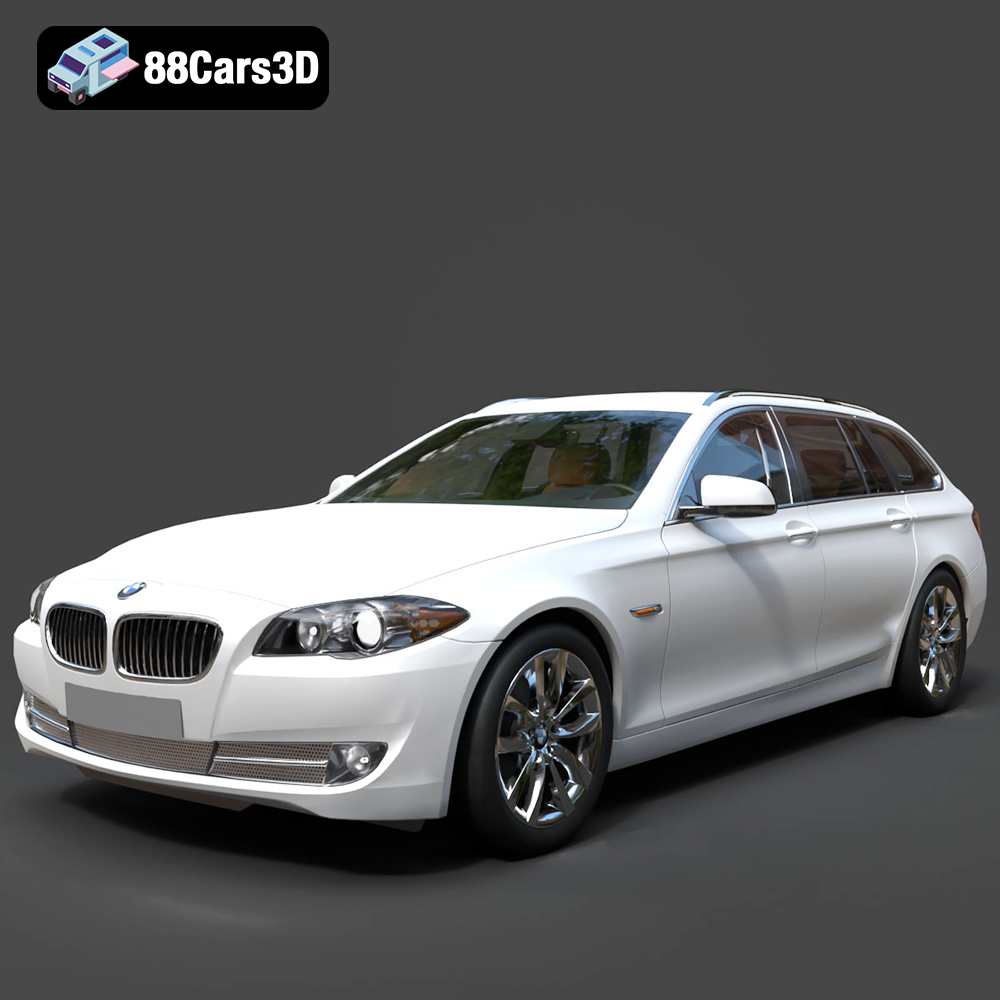
Texture: Yes
Material: Yes
Download the BMW 5 Series Touring F11-007 3D Model featuring a detailed exterior and interior. Includes .blend, .fbx, .obj, .glb, .stl, .ply, .unreal, and .max formats for rendering, simulation, and game development.
Price: $10.79
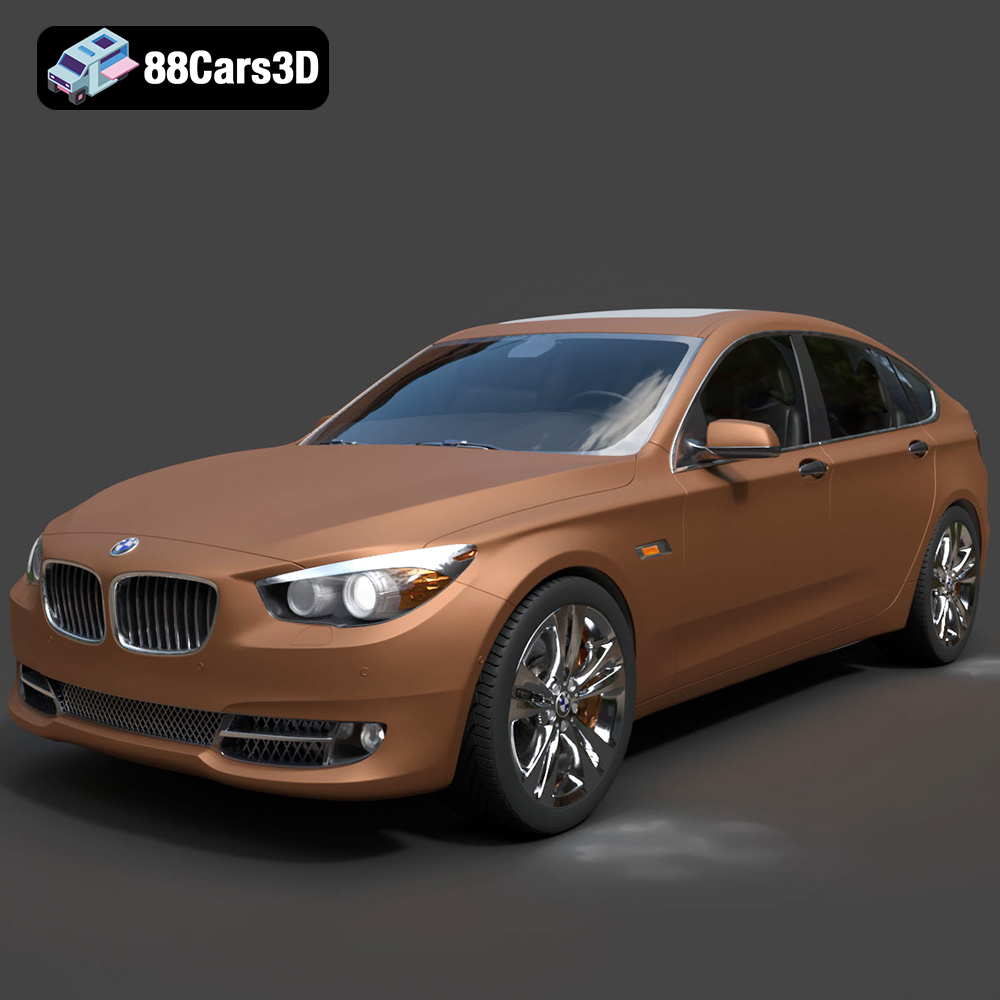
Texture: Yes
Material: Yes
Download the BMW 5 Series Gran Turismo F07-003 3D Model featuring a detailed exterior and interior. Includes .blend, .fbx, .obj, .glb, .stl, .ply, .unreal, and .max formats for rendering, simulation, and game development.
Price: $10.79
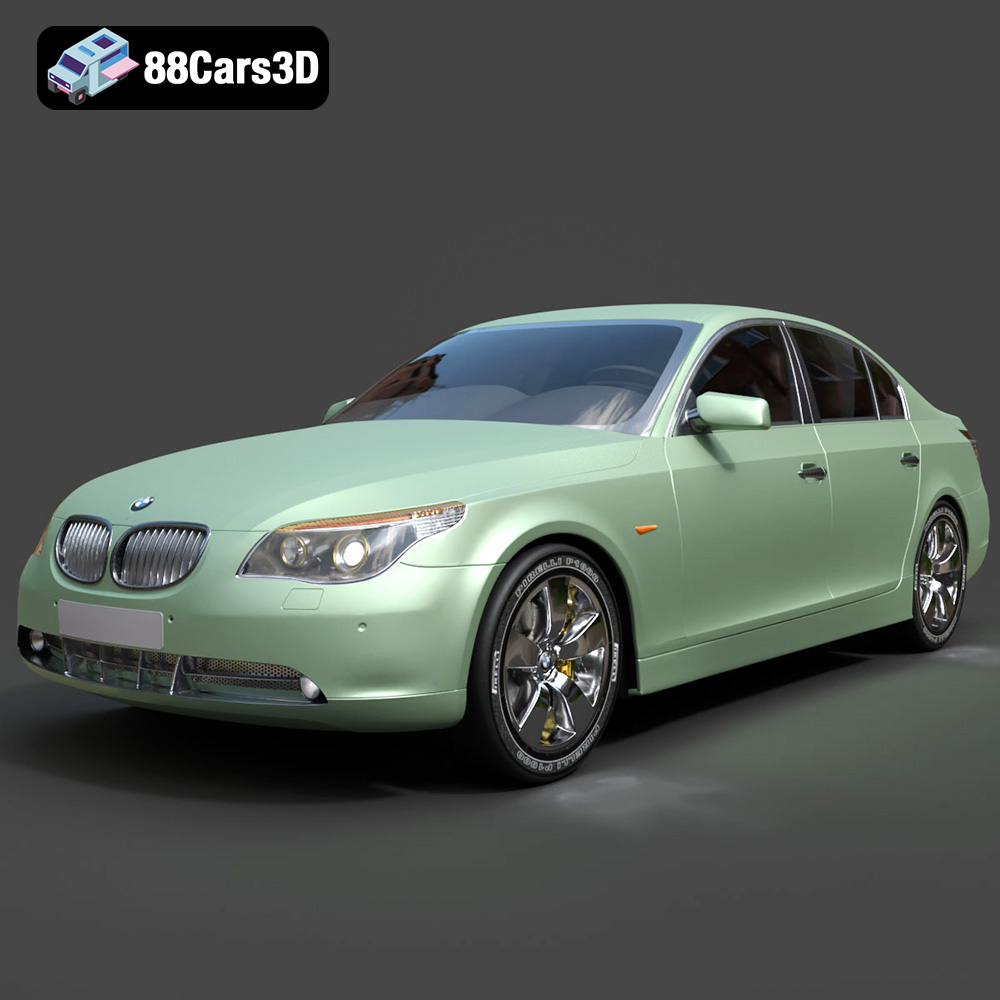
Texture: Yes
Material: Yes
Download the BMW 5 Series E60 3D Model featuring its iconic sedan design, detailed exterior, and interior. Includes .blend, .fbx, .obj, .glb, .stl, .ply, .unreal, and .max formats for rendering, simulation, and game development.
Price: $10.79
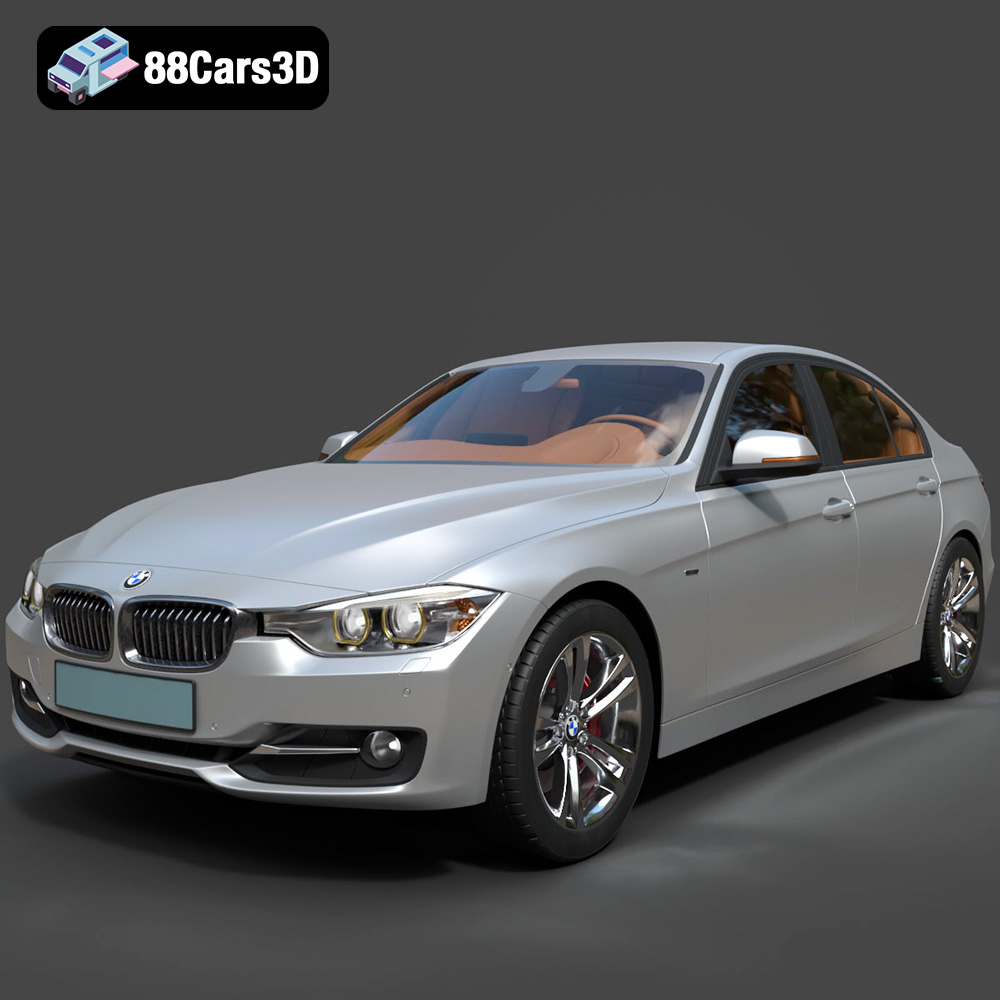
Texture: Yes
Material: Yes
Download the BMW 3 F30 3D Model featuring a detailed exterior, realistic interior, and optimized mesh. Includes .blend, .fbx, .obj, .glb, .stl, .ply, .unreal, and .max formats for rendering, simulation, and game development.
Price: $10.79
Texture: Yes
Material: Yes
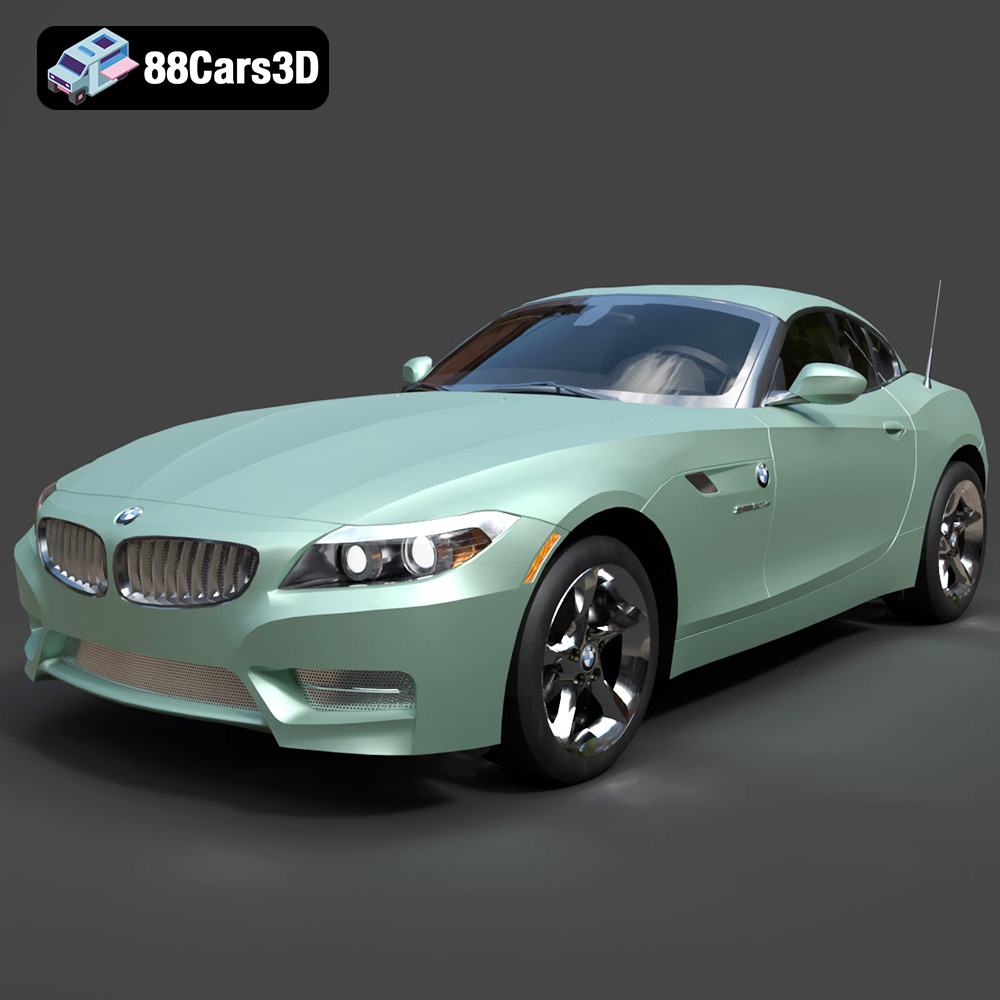
Download the BMW Z4 Roadster E89 3D Model featuring clean geometry, realistic detailing, and a fully modeled interior. Includes .blend, .fbx, .obj, .glb, .stl, .ply, .unreal, and .max formats for rendering, simulation, and game development.
Price: $13.99

Texture: Yes
Material: Yes
Download the BMW Z4 E85 3D Model featuring clean geometry, realistic detailing, and a fully modeled interior. Includes .blend, .fbx, .obj, .glb, .stl, .ply, .unreal, and .max formats for rendering, simulation, and game development.
Price: $13.99

Texture: Yes
Material: Yes
Download the BMW M3 2024 3D Model featuring clean geometry, realistic detailing, and a fully modeled interior. Includes .blend, .fbx, .obj, .glb, .stl, .ply, .unreal, and .max formats for rendering, simulation, and game development.
Price: $13.99

